
Descriere produs
Descriere produs
Product Parameters
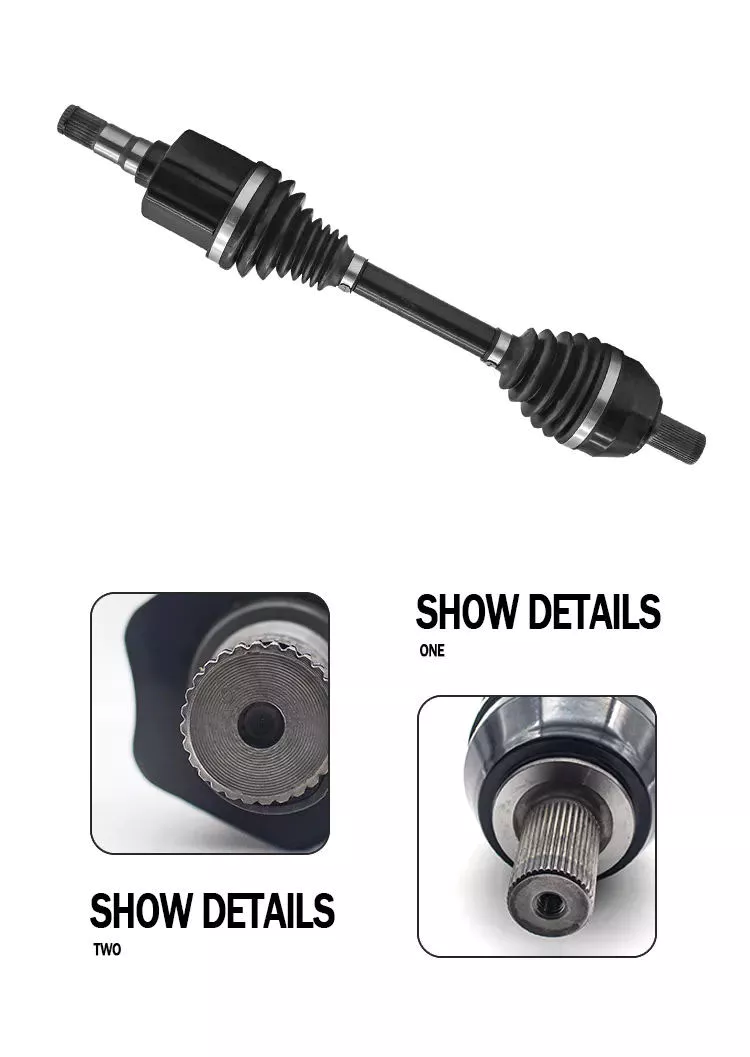
| Item | Spur Gear Axle Shaft |
| Material | 4140,4340,40Cr,42Crmo,42Crmo4,20Cr,20CrMnti, 20Crmo,35Crmo |
| OEM NO | Customize |
| Certificare | ISO/TS16949 |
| Test Requirement | Magnetic Powder Test, Hardness Test, Dimension Test |
| Culoare | Paint , Natural Finish ,Machining All Around |
| Material | Aluminum: 5000series(5052…)/6000series(6061…)/7000series(7075…) |
| Steel: Carbon Steel,Middle Steel,Steel Alloy,etc. | |
| Stainess Steel: 303/304/316,etc. | |
| Copper/Brass/Bronze/Red Copper,etc. | |
| Plastic:ABS,PP,PC,Nylon,Delrin(POM),Bakelite,etc. | |
| Size | According to Customer’s drawing or samples |
| Process | CNC machining,Turning,Milling,Stamping,Grinding,Welding,Wire Injection,Cutting,etc. |
| Tolerance | ≥+/-0.03mm |
| Tratament de suprafață | (Sandblast)&(Hard)&(Color)Anodizing,(Chrome,Nickel,Zinc…)Plating,Painting,Powder Coating,Polishing,Blackened,Hardened,Lasering,Engraving,etc. |
| File Formats | ProE,SolidWorks,UG,CAD,PDF(IGS,X-T,STP,STL) |
| Sample | Disponibil |
| Packing | Spline protect cover ,Wood box ,Waterproof membrane; Or per customers’ requirements. |
Our Advantages
Why Choose US ???
1. Equipment :
Our company boasts all necessary production equipment,
including Hydraulic press machines, Japanese CNC lathe (TAKISAWA), Korean gear hobbing machine (I SNT), gear shaping machine, machining center, CNC grinder, heat treatment line etc.
2. Processing precision:
We are a professional gear & gear shafts manufacturer. Our gears are around 6-7 grade in mass production.
3. Company:
We have 90 employees, including 10 technical staffs. Covering an area of 20000 square meters.
4. Certification :
Oue company has passed ISO 14001 and TS16949
5.Sample service :
We provide free sample for confirmation and customer bears the freight charges
6.OEM service :
Having our own factory and professional technicians,we welcome OEM orders as well.We can design and produce the specific product you need according to your detail information
Cooperation Partner
Profilul Companiei
Our Featured Products
| Material: | Alloy Steel |
|---|---|
| Load: | Arbore de transmisie |
| Axis Shape: | Straight Shaft |
| Appearance Shape: | Round |
| Sample Service: | Free |
| Lester Nos: | 6468, 6469 |
| Mostre: |
US$ 0/Piece
1 bucată (comandă minimă) | |
|---|
| Personalizare: |
Disponibil
| Cerere personalizată |
|---|
Are there any limitations or disadvantages associated with drive shafts?
While drive shafts are widely used and offer several advantages, they also have certain limitations and disadvantages that should be considered. Here’s a detailed explanation of the limitations and disadvantages associated with drive shafts:
1. Length and Misalignment Constraints:
Drive shafts have a maximum practical length due to factors such as material strength, weight considerations, and the need to maintain rigidity and minimize vibrations. Longer drive shafts can be prone to increased bending and torsional deflection, leading to reduced efficiency and potential driveline vibrations. Additionally, drive shafts require proper alignment between the driving and driven components. Misalignment can cause increased wear, vibrations, and premature failure of the drive shaft or its associated components.
2. Limited Operating Angles:
Drive shafts, especially those using U-joints, have limitations on operating angles. U-joints are typically designed to operate within specific angular ranges, and operating beyond these limits can result in reduced efficiency, increased vibrations, and accelerated wear. In applications requiring large operating angles, constant velocity (CV) joints are often used to maintain a constant speed and accommodate greater angles. However, CV joints may introduce higher complexity and cost compared to U-joints.
3. Maintenance Requirements:
Drive shafts require regular maintenance to ensure optimal performance and reliability. This includes periodic inspection, lubrication of joints, and balancing if necessary. Failure to perform routine maintenance can lead to increased wear, vibrations, and potential driveline issues. Maintenance requirements should be considered in terms of time and resources when using drive shafts in various applications.
4. Noise and Vibration:
Drive shafts can generate noise and vibrations, especially at high speeds or when operating at certain resonant frequencies. Imbalances, misalignment, worn joints, or other factors can contribute to increased noise and vibrations. These vibrations may affect the comfort of vehicle occupants, contribute to component fatigue, and require additional measures such as dampers or vibration isolation systems to mitigate their effects.
5. Weight and Space Constraints:
Drive shafts add weight to the overall system, which can be a consideration in weight-sensitive applications, such as automotive or aerospace industries. Additionally, drive shafts require physical space for installation. In compact or tightly packaged equipment or vehicles, accommodating the necessary drive shaft length and clearances can be challenging, requiring careful design and integration considerations.
6. Cost Considerations:
Drive shafts, depending on their design, materials, and manufacturing processes, can involve significant costs. Customized or specialized drive shafts tailored to specific equipment requirements may incur higher expenses. Additionally, incorporating advanced joint configurations, such as CV joints, can add complexity and cost to the drive shaft system.
7. Inherent Power Loss:
Drive shafts transmit power from the driving source to the driven components, but they also introduce some inherent power loss due to friction, bending, and other factors. This power loss can reduce overall system efficiency, particularly in long drive shafts or applications with high torque requirements. It is important to consider power loss when determining the appropriate drive shaft design and specifications.
8. Limited Torque Capacity:
While drive shafts can handle a wide range of torque loads, there are limits to their torque capacity. Exceeding the maximum torque capacity of a drive shaft can lead to premature failure, resulting in downtime and potential damage to other driveline components. It is crucial to select a drive shaft with sufficient torque capacity for the intended application.
Despite these limitations and disadvantages, drive shafts remain a widely used and effective means of power transmission in various industries. Manufacturers continuously work to address these limitations through advancements in materials, design techniques, joint configurations, and balancing processes. By carefully considering the specific application requirements and potential drawbacks, engineers and designers can mitigate the limitations and maximize the benefits of drive shafts in their respective systems.

Puteți oferi exemple din lumea reală de vehicule și utilaje care utilizează arbori de transmisie?
Arborii de transmisie sunt utilizați pe scară largă în diverse vehicule și utilaje pentru a transmite puterea de la motor sau sursa de alimentare la roți sau componentele acționate. Iată câteva exemple din lumea reală de vehicule și utilaje care utilizează arbori de transmisie:
1. Automobile:
Arborii de transmisie se găsesc frecvent în automobile, în special în cele cu sisteme de tracțiune spate sau integrală. La aceste vehicule, arborele de transmisie transferă puterea de la transmisie sau cutia de transfer la diferențialul spate sau, respectiv, la diferențialul față. Acest lucru permite distribuirea puterii motorului către roți, propulsând vehiculul înainte.
2. Camioane și vehicule comerciale:
Arborii de transmisie sunt componente esențiale în camioane și vehicule comerciale. Aceștia sunt utilizați pentru a transfera puterea de la transmisie sau cutia de transfer la puntea spate sau la mai multe punți în cazul camioanelor grele. Arborii de transmisie din vehiculele comerciale sunt proiectați să suporte sarcini de cuplu mai mari și sunt adesea mai mari și mai robusti decât cei utilizați în autoturisme.
3. Utilaje de construcții și terasamente:
Diverse tipuri de echipamente de construcții și terasamente, cum ar fi excavatoarele, încărcătoarele, buldozerele și nivelatoarele, se bazează pe arbori de transmisie pentru transmiterea puterii. Aceste mașini au de obicei sisteme complexe de transmisie care utilizează arbori de transmisie pentru a transfera puterea de la motor la roți sau șenile, permițându-le să efectueze sarcini grele pe șantierele de construcții sau în operațiunile miniere.
4. Mașini agricole:
Mașinile agricole, inclusiv tractoarele, combinele și combinele de recoltat, utilizează arbori de transmisie pentru a transmite puterea de la motor la roți sau componentele acționate. Arborii de transmisie din utilajele agricole sunt adesea supuși unor condiții solicitante și pot avea caracteristici suplimentare, cum ar fi secțiuni telescopice, pentru a se adapta distanțelor variabile dintre componente.
5. Utilaje industriale:
Mașinile industriale, cum ar fi echipamentele de producție, generatoarele, pompele și compresoarele, încorporează adesea arbori de transmisie în sistemele lor de transmisie a puterii. Acești arbori de transmisie transferă puterea de la motoare electrice, motoare sau alte surse de alimentare către diverse componente acționate, permițând mașinilor să îndeplinească sarcini specifice în medii industriale.
6. Nave maritime:
În aplicațiile marine, arborii de transmisie sunt utilizați în mod obișnuit pentru a transmite puterea de la motor la elice în bărci, nave și alte ambarcațiuni. Arborii de transmisie marini sunt de obicei mai lungi și proiectați pentru a rezista provocărilor unice reprezentate de mediile acvatice, inclusiv rezistența la coroziune și mecanismele de etanșare adecvate.
7. Vehicule de agrement (RV-uri) și autorulote:
Rulotele și autorulotele folosesc adesea arbori de transmisie ca parte a sistemelor lor de transmisie. Acești arbori de transmisie transferă puterea de la transmisie la puntea spate, permițând vehiculului să se miște și asigurând propulsia. Arborii de transmisie din rulote pot avea caracteristici suplimentare, cum ar fi amortizoare sau componente de reducere a vibrațiilor, pentru a spori confortul în timpul călătoriei.
8. Vehicule off-road și de curse:
Vehiculele off-road, cum ar fi SUV-urile, camioanele și vehiculele de teren accidentat (ATV-urile), precum și vehiculele de curse, utilizează frecvent arbori de transmisie. Acești arbori de transmisie sunt proiectați să reziste rigorilor condițiilor off-road sau curselor de înaltă performanță, transmițând eficient puterea către roți și asigurând o tracțiune și performanță optime.
9. Material rulant feroviar:
În sistemele feroviare, arborii de transmisie sunt utilizați în locomotive și în unele tipuri de material rulant. Aceștia transferă puterea de la motorul locomotivei la roți sau la sistemul de propulsie, permițând trenului să se deplaseze pe șine. Arborii de transmisie ai căilor ferate sunt de obicei mult mai lungi și pot avea caracteristici suplimentare pentru a se adapta naturii articulate sau flexibile a unor configurații de tren.
10. Turbine eoliene:
Turbinele eoliene de mari dimensiuni utilizate pentru generarea de energie electrică încorporează arbori de transmisie în sistemele lor de transmisie a puterii. Arborii de transmisie transferă energia de rotație de la palele turbinei la generator, unde este convertită în energie electrică. Arborii de transmisie din turbinele eoliene sunt proiectați pentru a gestiona cuplul semnificativ și forțele de rotație generate de vânt.
Aceste exemple demonstrează gama largă de vehicule și utilaje care se bazează pe arbori de transmisie pentru o transmisie eficientă a puterii și a propulsiei. Arborii de transmisie sunt componente esențiale în diverse industrii, permițând transferul de putere de la sursă la componentele acționate, facilitând în cele din urmă mișcarea, funcționarea sau îndeplinirea unor sarcini specifice.

How do drive shafts handle variations in length and torque requirements?
Drive shafts are designed to handle variations in length and torque requirements in order to efficiently transmit rotational power. Here’s an explanation of how drive shafts address these variations:
Length Variations:
Drive shafts are available in different lengths to accommodate varying distances between the engine or power source and the driven components. They can be custom-made or purchased in standardized lengths, depending on the specific application. In situations where the distance between the engine and the driven components is longer, multiple drive shafts with appropriate couplings or universal joints can be used to bridge the gap. These additional drive shafts effectively extend the overall length of the power transmission system.
Additionally, some drive shafts are designed with telescopic sections. These sections can be extended or retracted, allowing for adjustments in length to accommodate different vehicle configurations or dynamic movements. Telescopic drive shafts are commonly used in applications where the distance between the engine and the driven components may change, such as in certain types of trucks, buses, and off-road vehicles.
Torque Requirements:
Drive shafts are engineered to handle varying torque requirements based on the power output of the engine or power source and the demands of the driven components. The torque transmitted through the drive shaft depends on factors such as the engine power, load conditions, and the resistance encountered by the driven components.
Manufacturers consider torque requirements when selecting the appropriate materials and dimensions for drive shafts. Drive shafts are typically made from high-strength materials, such as steel or aluminum alloys, to withstand the torque loads without deformation or failure. The diameter, wall thickness, and design of the drive shaft are carefully calculated to ensure it can handle the expected torque without excessive deflection or vibration.
In applications with high torque demands, such as heavy-duty trucks, industrial machinery, or performance vehicles, drive shafts may have additional reinforcements. These reinforcements can include thicker walls, cross-sectional shapes optimized for strength, or composite materials with superior torque-handling capabilities.
Furthermore, drive shafts often incorporate flexible joints, such as universal joints or constant velocity (CV) joints. These joints allow for angular misalignment and compensate for variations in the operating angles between the engine, transmission, and driven components. They also help absorb vibrations and shocks, reducing stress on the drive shaft and enhancing its torque-handling capacity.
In summary, drive shafts handle variations in length and torque requirements through customizable lengths, telescopic sections, appropriate materials and dimensions, and the inclusion of flexible joints. By carefully considering these factors, drive shafts can efficiently and reliably transmit power while accommodating the specific needs of different applications.


editor by CX 2023-10-08























