
Descrição do produto
|
General Products |
Metal Parts Solution for Vehicle, Agriculture machine, Construction Machine, transportation equipment, Valve and Pump system, Agriculture machine metal Parts, engine bracket, truck chassis bracket, gear box , gear housing , gear cover, shaft, spline shaft , pulley, flange, connection pipe, pipe, hydraulic valve , valve housing ,Fitting , flange, wheel, fly wheel, oil pump housing, starter housing, coolant pump housing, transmission shaft , transmission gear, sprocket, chains etc. |
| Main blank Process for Steel Casting |
Investment casting (wax mold made by middle temperature wax) /Precision casting ; |
| Blanks Tolerance -Casting Tolerance | CT7-8 for Lost wax Casting Process CT4-6 for Investment casting Process |
| Applicable Material | Stainless Steel: CF8, CF8M, . G-X6CrNiMo1810, G-X7CrNiNb1189, SUS 304, 304L, 316, 316L. OR According to customer requirement Carbon steel, Low Carbon steel, middle carbon steel, G35, G45, WCB, WCA, WCC, ISO 340-550, Alloy Carbon steel: G25CrMo4, Heat Resistant Steel, Copper alloy |
| Casting Blank Size /Dimensions | 2 mm-600mm / 0.08inch-24inch according to customer requirement |
| Casting Blank Weight | Range from 0.01kg-85kg |
| Applicable Machining Process |
CNC Machining/ Lathing/ Milling/ Turning/ Boring/ Drilling/ Tapping/ Broaching/Reaming /Grinding/Honing and etc. |
| Machining Tolerance | From 0.005mm-0.01mm-0.1mm |
| Machined Surface Quality | Ra 0.8-Ra3.2 according to customer requirement |
| Applicable Heat Treatment |
Normalization , annealing, quenching and tempering, Case Hardening, Nitriding, Carbon Nitriding, Induction Quenching |
| Applicable Finish Surface Treatment | Shot/sand blast, polishing, Surface passivation, Primer Painting , Powder coating, ED- Coating, Chromate Plating, zinc-plate, Dacromat coating, Finish Painting, |
| MOQ | For casting: 200pcs For machining: 50pcs |
| Lead Time | 45days from the receipt date of deposit for stainless steel aisi 304 casting |
Products shown here are made to the requirements of specific customers and are illustrative of the types of manufacturing capabilities available within CHINAMFG group of companies. CHINAMFG policy is that none of these products will be sold to 3rd parties without written consent of the customers to whom the tooling, design and specifications belong.
Product Profile
| 1. Marterial percentage | alloy steel:45% carbon steel:35% stainless steel:10% iron:10% |
| 2. Casting weight percentage | 0.1-5kg:40% 5-20kg:30% 20-40kg:20% above 40kg:10% |
| 3. Industry percentage | Components for train & railway: 25% Components for automobile & truck: 30% Components for construction machinery & forklift: 25% Components for agricultural machinery: 10% Other machinery compponents: 10% |
| 4. Globa market share | United States:30% Europe:35% Japan& Korea:15% Domestic market:15% Other:5% |
| 5. Production capacity | Production Capacity: 20,000 tons / year The Current Production Output: 15,000 tons / year Open Capacity Percentage: 25% |
Manufacturing Process
Process design⇒ Tooling making ⇒ Wax injection ⇒Wax pattern assembly⇒ Mold preheat ⇒ Wax removal ⇒Stuccoing ⇒Dipping Casting⇒ Mold shake out ⇒Work piece cut-off ⇒ Grinding ⇒ Pack& transport ⇒ Final inspection ⇒Machining ⇒ Heat treatment
APQP and Inspection Report
| APQP-Casting 1. Process Flow Diagrams 2. Control Plan 3. Process FMEA 4. Casting Process Instruction 5. Solidification Simulation Report 6. Heat Treatment Work Instruction 7. Casting Final Quality Control WI 8. Visual Inspection VI For Surface Irregularities |
Inspection Report-Casting 1. Material Test Report(A) 2. Material Test Report(B) 3. Magnetic Particle Inspection Report 4. Ultrasonic Examination Report 5. Radiographic Test Report 6. Destructive Test Report 7. Coating Test Report 8. Visual Inspection Report 9. Casting Inspection Report |
| APQP-Machining 1. Process Flow Diagrams 2. Control Plan 3. Process FMEA 4. Machining Process Instruction 5. Gauge List And Validation Plan 6. Final Quality Control |
Other Quality Document 1. PPAP Checklist 2.Measurement System Analysis Study 3. Process Capability Studies 4. Corrective Action Report(8D) 5. Packaging Instruction |
|
Inspection Report-Machining 1. Dimensional Inspection Report(A) 2. Dimensional Inspection Report(B) 3. CMM Report |
|
Key Testing Equipment
|
Aplicativo |
|||||
|
• Agricultural equipment |
• Armament |
• Automobile industry |
• Computing equipment |
• Medical / dental instruments |
• Measuring instruments |
|
•Miscellaneous equipment |
•Pharmaceutical industry |
• Orthopedic implants |
• Safety equipment |
• Petrochemical industry |
• Industrial valves |
|
•Fixing and movable equipment |
• Sanitary fittings |
• General machinery |
• Pumps and general connections |
• Food and beverage processing |
• Instrumentation equipment |
Technical Support:
ZheJiang CHINAMFG is professional at independent development and design. Our engineers are skilled at AUTO CAD, PRO ENGINEER, CHINAMFG WORKS and other 2D & 3D softwares. We are able to design, develop,produce and deliver your PO according to your drawings, samples or just an idea. Dural control of standard products and OEM products.
Quality Control:
1) Checking the raw material after they reach our factory——- Incoming quality control ( IQC)
2) Checking the details before the production line operated
3) Have full inspection and routing inspection during mass production—In process quality control(IPQC)
4) Checking the goods after they are finished—- Final quality control(FQC)
5) Checking the goods after they are finished—–Outgoing quality control(OQC)
Send Inquiry>>>
Our Company
ZheJiang CHINAMFG Machinery Manufacture Co., Ltd.
–Branch of CHINAMFG Industry Ltd.
We specialize in Metal Parts Solution for Vehicle, Agriculture machine, Construction Machine, transportation equipment, Valve and Pump system.
With keeping manufacturing process design, quality plHangZhou, key manufacturing processes and final quality control in house.
We are mastering key competence to supply quality mechanical parts and assembly to our customers for both Chinese and Export Market.
To satisfy different mechanical and functional requirements from our customers we are making a big range of metal products for our clients on base of different blanks solutions and technologies.
These blanks solutions and technologies include processes of Iron Casting, Steel Casting, Stainless Steel Casting, Aluminum Casting and Forging.
During the early involvement of the customer’s design process we are giving professional input to our customers in terms of process feasibility, cost reduction and function approach.
You are welcome to contact us for technical enquiry and business cooperation.
Our Team
Why Choose Us ?
YOUR DESIGN WE HELP TO ACHIEVE, AS YOUR SINCERE PARTNER
1. Over 15 years professional manufacture experience. → We know better to your needs.
2. One-stop Service of Custom mold design from Initial drawing design, Material selection assistance, Mold structure/Mold flow analysis, Trial & mass production to Final assembly & shipment. → To ensure you get finished products with good assembly function.
3. High skilled and well-trained working team under good management environment. → To make sure high quality of your products.
4. Large and strong production capacity. → To meet your high demands very well.
5.Best price based on same quality requirements. →To help your project with most economical solution.
6. We have very strict quality control process as below. → To deliver the qualified products for you.
In coming Quality control (IQC) : All incoming raw material are checked before used.
In process quality control (IPQC) : Perform inspections during the manufacturing process.
Final quality control (FQC) : All finished goods are inspected according to our quality standard for each products.
Outgoing Quality Control (OQC) : Our QC team will 100% full inspection before it goes out for shipment.
7.Reliable Package & flexible in-time delivery. →To guarantee the product are well received in your side.
8. 24 hours on-line service with quick response. → To support your any inquiry or question.
Customer photos
Core Competence
Advantages 1:High Engineering and Technical Capability
* An industry’s senior engineering technical team , with special skills and rich experience in product design, casting ,heat treating and machining fields.
* Based on customer needs, in the beginning of product development, offer a solution, casting design, by structural component designed to casting parts, optimize the product design, then reduce costs and creating the more value for the customers.
* Special Techniques Enable us to Be Competent with Those Difficulties at Wax Injection & Shell Making Procedures When Manufacturing the Parts with Inner-Sophisticated-Structures.
* Use casting simulation analysis system software, try our best to ensure the success of the one-time trial sample.
Advantages 2: Advanced Inspection Equipment & Strong Quality Assurance Capacity
* Our testing equipments are not only leading in the industry, and also has a very complete range, they are hardware guarantee to ensure us continue to provide high-quality products for our customers.
* Carrying out ISO9001 and TS16949 quality management system, full implementation of 5S and Kanban site management, which is software guarantee of the quality.
* IQC, IPQC and FQC quality management team to control the whole production process, effectively prevent the generation of unqualified product.
* Our casting’ PPM ≤1000 Machining ‘ PPM ≤600
* We sticks to the quality management philosophy that “Starting from the customer needs and ending with their satisfaction,focusing on customer demands and exceeding their expectations”
Advantages3: Good Customer Service
* CHINAMFG can provide customers with good service, our staff have abundant commercial experience, good language ability, and rich foundry or mechanical background. We are committed to providing customers with accurate, careful and speedy service.
* Quotation, Quality Complaints and Email Response can usually be quickly and efficiently feedback within 48 hours.
* We have carried out an information-based management which is driven by an ERP and PMC system, to ensure on time delivery rate:95%
Advantages 4: Powerful Deep-processing Ability It is our core competitive ability in the industry
* Machining capability as the same as casting, the machining facility is fully independent from the casting foundry and has an independent management team and tailored business model to suit.
* CHINAMFG has completed a transformation and upgraded to a deep-processing manufacturer with expanded production capabilities and is committed to be equipped with other capabilities except casting, we focus on developing terminal products for top-end markets.
* High technical content in machining, and casting with sheet metal, welding, assembling, CHINAMFG has the most competitive advantage, it is the good choice for you.
Embalagem e envio
1, Bundles Packing: Inside: packed with plastic protective film to protect each piece. Outside: Wrap to be bundles by waterproof
craft paper or EPE film.
2, Carton Packing: Inside: Each pcs pack in 1 plastic bag. Outside: Numbers of quantity put in 1 carton.
3, Wood Pallet Packing: Inside: Bundles or cartons packing; Outside: Numbers of bundles or cartons laden on 1 wood pallet.
4, Customized Packing As Clients Request is Available.
FAQ:
1. Are you a manufacturer or a trading company?
We are a professional manufacturer with over 15 years’ export experience for designing and producing vehicle machinery parts.
2. How can I get some samples?
If you need, we are glad to offer you samples for free, but the new clients are expected to pay the courier cost,
and the charge will be deducted from the payment for formal order.
3. Can you make casting according to our drawing?
Yes, we can make casting according to your drawing, 2D drawing, or 3D cad model. If the 3D cad model can be supplied,
the development of the tooling can be more efficient. But without 3D, based on 2D drawing we can still make the samples properly approved.
4. Can you make casting based on our samples?
Yes, we can make measurement based on your samples to make drawings for tooling making.
5. What’s your quality control device in house?
We have spectrometer in house to monitor the chemical property, tensile test machine to control the mechanical property and UT Sonic as NDT checking method to control the casting detect under the surface of casting
/* 22 de janeiro de 2571 19:08:37 */!function(){function s(e,r){var a,o={};try{e&&e.split(“”,).forEach(function(e,t){e&&(a=e.match(/(.*?):(.*)$/))&&1
| Casting Method: | Investment Casting |
|---|---|
| Casting Form Material: | G25crmo4, G35, Wcb |
| Casting Metal: | Cast Steel |
| Casting Form Usage Count: | Permanent |
| Tratamento de superfície: | Dacromat Coating, Finish Painting |
| Surface Roughness: | 0.005mm-0.01mm-0.1mm |
| Exemplos: |
US$ 4.56/kg
1 kg(Min.Order) | |
|---|
| Personalização: |
Disponível
| Solicitação personalizada |
|---|
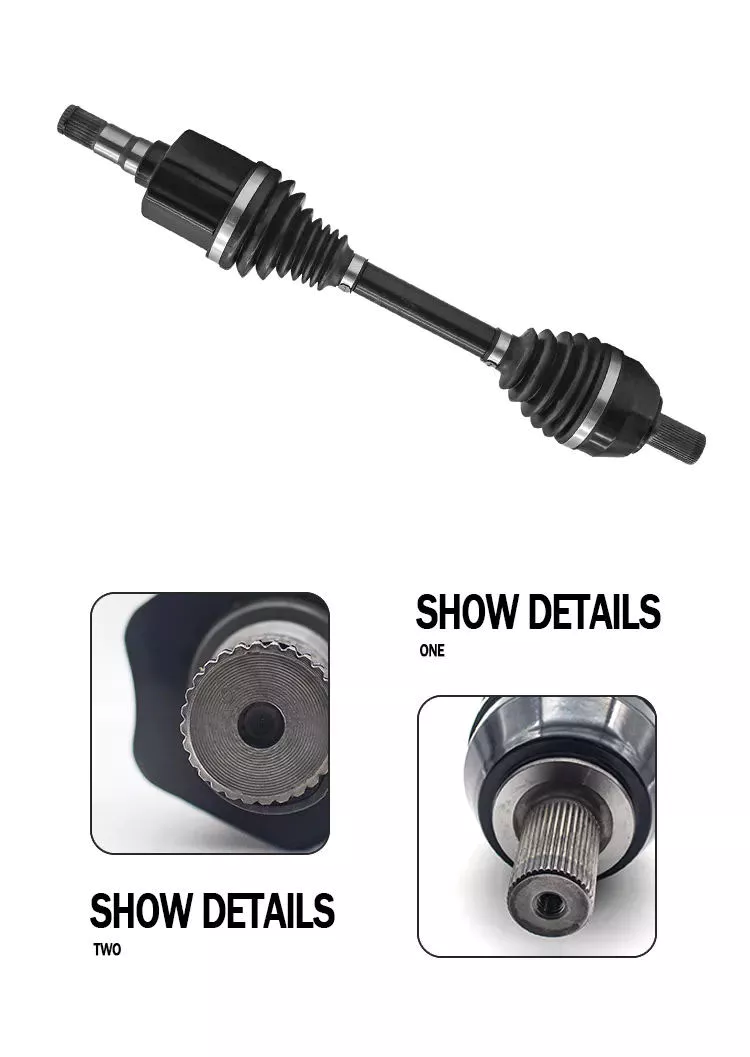
How do manufacturers ensure the compatibility of PTO shafts with different equipment?
Manufacturers employ various measures to ensure the compatibility of PTO (Power Take-Off) shafts with different equipment. Compatibility is crucial to ensure that PTO shafts can effectively transfer power from the power source to the driven machinery without compromising performance, safety, or ease of use. Here’s a detailed explanation of how manufacturers ensure compatibility:
1. Padronização: PTO shafts are designed and manufactured based on standardized specifications. These specifications outline the essential parameters such as shaft dimensions, spline sizes, torque ratings, and safety requirements. By adhering to standardized designs, manufacturers ensure that PTO shafts are compatible with a wide range of equipment that meets the same standards. Standardization allows for interchangeability, meaning that PTO shafts from one manufacturer can be used with equipment from another manufacturer as long as they conform to the same specifications.
2. Collaboration with Equipment Manufacturers: PTO shaft manufacturers often collaborate closely with equipment manufacturers to ensure compatibility. They work together to understand the specific requirements of the equipment and design PTO shafts that seamlessly integrate with the machinery. This collaboration may involve sharing technical specifications, conducting joint testing, and exchanging feedback. By working in partnership, manufacturers can address any compatibility issues early in the design and development process, resulting in PTO shafts that are tailored to the equipment’s needs.
3. Opções de personalização: PTO shaft manufacturers offer customization options to accommodate different equipment configurations. They provide flexibility in terms of shaft length, spline sizes, yoke designs, and coupling mechanisms. Equipment manufacturers can specify the required parameters, and the PTO shafts can be customized accordingly. This ensures that the PTO shafts precisely match the equipment’s power input/output requirements and connection methods, guaranteeing compatibility and efficient power transfer.
4. Testing and Validation: Manufacturers conduct rigorous testing and validation processes to ensure the compatibility and performance of PTO shafts. They subject the shafts to various tests, including torque testing, rotational speed testing, and durability testing. These tests verify that the PTO shafts can handle the expected power loads and operating conditions without failure. By validating the performance of the PTO shafts, manufacturers can ensure that they are compatible with a wide range of equipment and can reliably transfer power under different operating scenarios.
5. Compliance with Industry Standards: PTO shaft manufacturers adhere to industry standards and regulations to ensure compatibility. Organizations such as the American Society of Agricultural and Biological Engineers (ASABE) establish safety and performance standards for PTO shafts. Manufacturers design and produce their shafts in accordance with these standards, ensuring that their products meet the necessary requirements for compatibility and safety. Compliance with industry standards provides assurance to equipment manufacturers and end-users that the PTO shafts are compatible and suitable for use with different equipment.
6. Documentation and Guidelines: Manufacturers provide comprehensive documentation and guidelines to assist equipment manufacturers and end-users in ensuring compatibility. This documentation includes technical specifications, installation instructions, maintenance guidelines, and safety recommendations. The documentation helps equipment manufacturers select the appropriate PTO shaft for their equipment and provides guidance on proper installation and use. By following the manufacturer’s guidelines, equipment manufacturers can ensure compatibility and optimize the performance of the PTO shafts.
7. Pesquisa e Desenvolvimento em Andamento: PTO shaft manufacturers continuously invest in research and development to enhance compatibility with different equipment. They stay updated with industry trends, technological advancements, and evolving equipment requirements. This ongoing research and development enable manufacturers to improve the design, materials, and features of PTO shafts, ensuring compatibility with the latest equipment innovations and addressing any compatibility challenges that may arise.
By employing standardization, collaborating with equipment manufacturers, offering customization options, conducting thorough testing, complying with industry standards, providing documentation and guidelines, and investing in research and development, manufacturers ensure the compatibility of PTO shafts with different equipment. This compatibility allows for seamless integration, efficient power transfer, and optimal performance across a wide range of machinery and equipment in various industries.
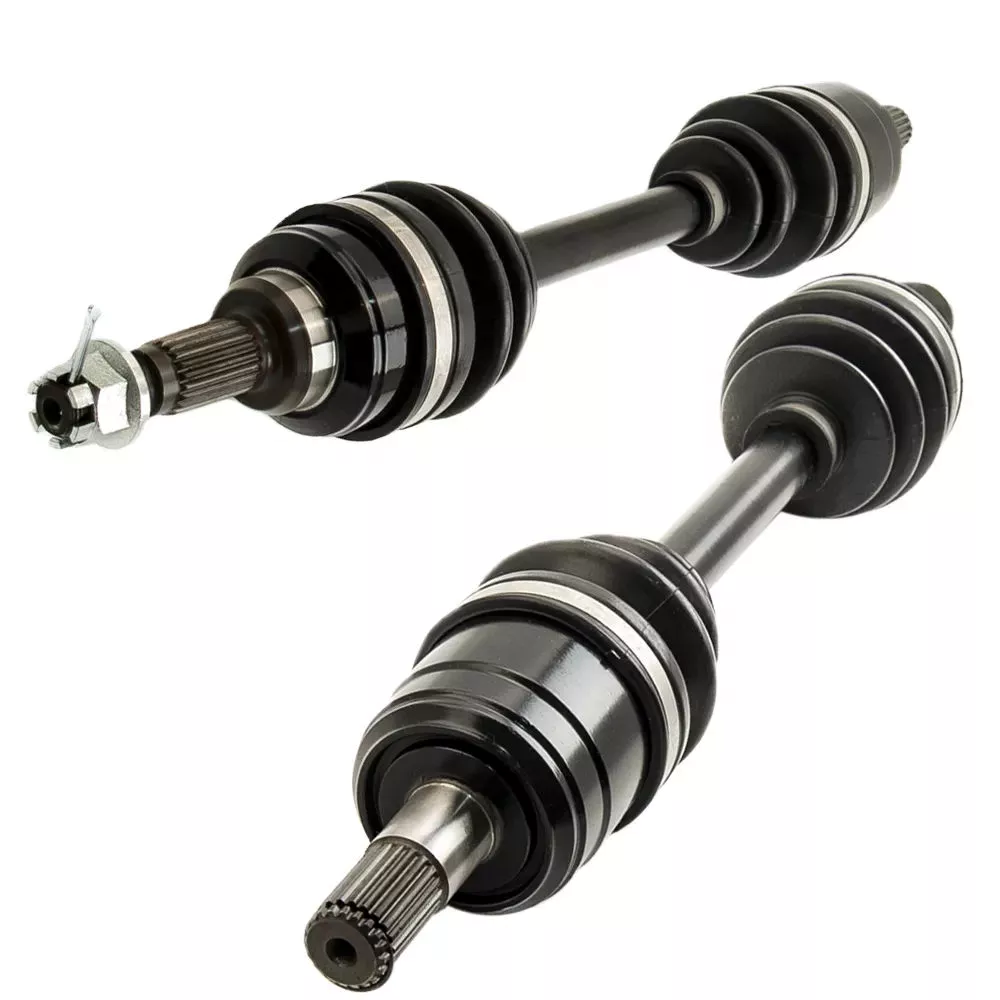
Can PTO shafts be customized for specific machinery and power requirements?
Yes, PTO (Power Take-Off) shafts can be customized to meet the specific machinery and power requirements of different applications. Manufacturers offer customization options to ensure that PTO shafts are precisely tailored to the power source, driven machinery, and the intended application. Here’s a detailed explanation of how PTO shafts can be customized:
1. Shaft Length: PTO shafts can be customized in terms of length to accommodate different equipment configurations. The length of the PTO shaft is critical to ensure proper alignment and connection between the power source and driven machinery. Manufacturers can provide PTO shafts with adjustable or fixed-length options, allowing for flexibility in meeting specific length requirements. Customizing the shaft length ensures that the PTO shaft fits the equipment properly, optimizing power transfer efficiency and reducing the risk of misalignment or excessive stress.
2. Spline Sizes: PTO shafts are available with different spline sizes to match the input and output shafts of various equipment. Spline size customization allows the PTO shaft to seamlessly connect to the power source and driven machinery. Manufacturers can offer different spline configurations, such as 1-3/8 inch, 1-3/4 inch, or metric sizes, to accommodate specific machinery requirements. Customizing the spline size ensures a proper fit and secure connection, enabling efficient power transfer without the need for additional adapters or modifications.
3. Yoke Designs: PTO shafts can be customized with different yoke designs to match the connection points on the power source and driven machinery. The yoke is the component that attaches to the shaft and connects to the equipment. Manufacturers can provide various yoke designs, such as round, triangular, or splined yokes, to ensure compatibility with specific machinery. Customizing the yoke design allows for a secure and reliable connection, aligning the PTO shaft with the equipment’s input/output shafts and optimizing power transmission efficiency.
4. Torque Ratings: PTO shafts can be customized to handle specific torque requirements based on the power demands of the application. Torque is the rotational force that the PTO shaft needs to transmit from the power source to the driven machinery. Manufacturers can design PTO shafts with different torque ratings by using appropriate materials, dimensions, and reinforcement techniques. Customizing the torque rating ensures that the PTO shaft can safely and reliably handle the required power levels without premature wear or failure.
5. Coupling Mechanisms: PTO shafts can be customized with different coupling mechanisms to match the connection requirements of specific equipment. Coupling mechanisms are the means by which the PTO shaft connects and disconnects from the power source and driven machinery. Manufacturers can provide various coupling options, such as quick-release couplings, shear pin couplings, or mechanical lock couplings, to accommodate different machinery designs and operational needs. Customizing the coupling mechanism ensures ease of use, secure attachment, and quick disengagement when necessary.
6. Protective Features: PTO shafts can be customized with additional protective features to enhance safety and durability. These features may include guard shields, safety covers, or slip clutches. Guard shields and safety covers provide physical protection by enclosing the rotating shaft and preventing accidental contact, reducing the risk of injuries. Slip clutches offer overload protection by allowing the PTO shaft to slip or disengage when excessive torque or resistance is encountered, preventing damage to the shaft and associated equipment. Customizing the protective features ensures compliance with safety regulations and addresses specific safety requirements of the machinery or application.
7. Material Selection: PTO shafts can be customized with different materials based on the application’s demands. Manufacturers can offer a range of material options, such as steel, aluminum, or composite materials, with varying strength, weight, and corrosion resistance properties. Customizing the material selection allows for optimizing the PTO shaft’s performance, considering factors like operating conditions, environmental exposure, and weight restrictions.
By providing customization options such as shaft length, spline sizes, yoke designs, torque ratings, coupling mechanisms, protective features, and material selection, manufacturers can ensure that PTO shafts are specifically tailored to meet the machinery and power requirements of different applications. Customized PTO shafts facilitate seamless integration, efficient power transfer, and reliable operation, enhancing the overall performance and productivity of the equipment.

Quais setores industriais utilizam comumente eixos de tomada de força (PTO) para transmissão de potência?
Eixos de tomada de força (PTO, na sigla em inglês) são amplamente utilizados em diversas indústrias onde a transmissão de potência é necessária para acionar máquinas e equipamentos. Sua versatilidade, eficiência e compatibilidade com diferentes tipos de máquinas os tornam componentes valiosos em vários setores. A seguir, uma explicação detalhada das indústrias que comumente utilizam eixos de tomada de força (PTO) para transmissão de potência:
1. Agricultura: O setor agrícola depende amplamente de eixos de tomada de força (TDF) para a transmissão de potência. Tratores equipados com TDF são comumente usados para acionar uma ampla gama de implementos e máquinas agrícolas. Equipamentos acionados por TDF incluem segadoras, enfardadeiras, cultivadores, semeadoras, pulverizadores, transportadores de grãos, colheitadeiras e muitos outros. Os eixos de TDF permitem a transferência eficiente de potência do motor do trator para esses implementos, possibilitando diversas operações agrícolas, como corte, enfardamento, aração, plantio, pulverização e colheita. O setor agrícola depende fortemente dos eixos de TDF para aumentar a produtividade e otimizar os processos agrícolas.
2. Construção e terraplenagem: Na indústria da construção civil e terraplenagem, os eixos de tomada de força (TDF) são utilizados em máquinas para escavação, nivelamento e movimentação de materiais. Equipamentos acionados por TDF, como retroescavadeiras, pás carregadeiras, escavadeiras, valeteiras e destocadores, utilizam eixos de TDF para transferir a potência dos motores principais, geralmente sistemas hidráulicos, para acionar os implementos necessários. Esses implementos exigem o alto torque e a potência fornecidos pelos eixos de TDF para realizar tarefas como escavação, carregamento, abertura de valas e trituração. Os eixos de TDF permitem uma transmissão de potência versátil e eficiente em operações de construção civil e terraplenagem.
3. Silvicultura: A indústria florestal utiliza eixos de tomada de força (TDF) para a transmissão de potência em diversos equipamentos de extração e processamento de madeira. Máquinas acionadas por TDF, como picadores de madeira, serrarias, rachadores de toras e descascadores, dependem de eixos de TDF para transferir a potência de tratores ou unidades de potência dedicadas para realizar tarefas como picar, serrar, rachar e descascar madeira. Os eixos de TDF fornecem a potência e o torque necessários para acionar os mecanismos de corte e processamento, possibilitando operações florestais eficientes e produtivas.
4. Paisagismo e manutenção de jardins: Os eixos de tomada de força (TDF) desempenham um papel crucial no setor de paisagismo e manutenção de áreas verdes. Equipamentos como cortadores de grama, roçadeiras, roçadeiras de martelo e aeradores utilizam eixos de TDF para transferir a potência de tratores ou unidades de potência dedicadas para acionar os mecanismos de corte ou manutenção. Os eixos de TDF permitem uma transmissão de potência eficiente, possibilitando que os operadores mantenham gramados, parques, campos de golfe e outros espaços externos com precisão e produtividade.
5. Mineração e extração de pedreiras: Os eixos de tomada de força (TDF) têm aplicações na indústria de mineração e extração, particularmente em equipamentos usados para extração, britagem e peneiramento de materiais. Máquinas acionadas por TDF, como britadores, peneiras e transportadores, dependem dos eixos de TDF para transferir a potência de motores ou motores elétricos para acionar os mecanismos de britagem e peneiramento, bem como os sistemas de manuseio de materiais. Os eixos de TDF fornecem a potência e o torque necessários para processar e transportar materiais a granel de forma eficiente em operações de mineração e extração.
6. Manufatura Industrial: Eixos de tomada de força (TDF) são utilizados em diversos processos industriais que requerem transmissão de potência para acionar máquinas e equipamentos específicos. Indústrias como a de processamento de alimentos, a têxtil, a de produção de papel e a química podem utilizar máquinas acionadas por TDF para tarefas como mistura, homogeneização, corte, extrusão e transporte. Os eixos de TDF permitem a transferência eficiente de potência para essas máquinas, garantindo uma operação suave e confiável em ambientes industriais.
7. Manutenção de infraestrutura e serviços públicos: Eixos de tomada de força (TDF) são utilizados em operações de serviços públicos e manutenção de infraestrutura. Equipamentos como varredoras de rua, máquinas de limpeza de esgoto, máquinas de manutenção de estradas e desentupidores de drenos utilizam eixos de TDF para transferir energia de caminhões ou unidades de potência dedicadas para realizar tarefas como varrição, limpeza e manutenção de estradas, esgotos e outras infraestruturas públicas. Os eixos de TDF permitem a transmissão eficiente de energia, garantindo a operação eficaz e confiável dessas máquinas de serviços públicos e manutenção.
8. Outros: Os eixos de tomada de força (PTO) também são utilizados em diversos outros setores e indústrias onde a transmissão de potência é necessária. Isso inclui aplicações na indústria de transportes para acionar unidades de refrigeração, bombas de combustível e sistemas hidráulicos em caminhões e reboques. Os eixos de tomada de força também encontram aplicações na indústria naval para acionar guinchos, bombas e outros equipamentos em barcos e navios.
Em resumo, os eixos de tomada de força (TDF) são comumente usados em uma ampla gama de indústrias para transmissão de potência. Essas indústrias incluem agricultura, construção civil e terraplenagem, silvicultura, paisagismo e manutenção de áreas verdes, mineração e extração, manufatura industrial, serviços públicos e manutenção de infraestrutura, transporte e setor marítimo. Os eixos de TDF desempenham um papel fundamental no aumento da produtividade, permitindo a operação eficiente de máquinas e facilitando diversas tarefas nessas indústrias.

editor by CX 2024-04-04























