
Descrição do produto
Descrição do produto
Customized Fabrication of Cast and Forged Components
Welcome to our comprehensive custom fabrication services for cast and forged components. Our commitment to precision, quality, and versatility makes us your ideal partner for tailor-made solutions to meet your unique requirements.
Principais características:
1. **Versatile Customization:** We offer a wide array of customization options, including materials, manufacturing techniques, and on-site measurements. With independent design capabilities, we can bring your concepts to life, ensuring a product that aligns perfectly with your needs.
2. **Multiple Guarantees:** We prioritize your satisfaction and provide multiple guarantees to ensure a seamless experience. Payment is required prior to shipment, with support for various payment methods. Detailed drawings will be provided for your approval before production begins. Weekly progress reports, accompanied by images, will keep you informed about the status of your project, ensuring transparency throughout the process.
3. **Expertise in After-Sales Support:** Our commitment extends beyond the completion of your project. A dedicated and professional after-sales team is at your disposal, ready to provide maintenance and ongoing support whenever you require it.
| Aspect | Our Company | Competitors |
|---|---|---|
| Personalização | Versatile options | Limited choices |
| Design Capability | Design independente | Limited design input |
| Payment Flexibility | Multiple options | Restricted payment methods |
| Progress Updates | Weekly detailed reports | Irregular communication |
| After-Sales Support | Dedicated professional team | Limited support |
Partner with us for an exceptional experience in custom cast and forged component fabrication. Your satisfaction is our priority, and we are dedicated to delivering products that meet your exact specifications. Contact us today to discuss your project and explore the possibilities of customized solutions tailored to your needs.
perfil de companhia
HangZhou Metal Co., Ltd. is a leading company based in HangZhou City, China, specializing in special steel and aluminum production. We also serve the mining, mineral, and cement industries, offering a range of integrated services, including manufacturing, engineering, and international trade. Our commitment to customer satisfaction is our top priority. We provide pre-sales assistance, transparent in-sales support, and comprehensive after-sales service to ensure lasting partnerships and success.
Serviço pós-venda
At HangZhou Metal Co., Ltd., we prioritize excellent after-sales service for our customers. Our dedicated team is committed to providing support and assistance beyond the initial purchase. Here’s what our after-sales service includes:
1. Technical Support: Our experts are available to provide guidance and troubleshooting for seamless product usage.
2. Warranty Coverage: We provide timely resolutions for any manufacturing defects or issues through our warranty coverage.
3. Spare Parts: We keep a comprehensive inventory of spare parts to minimize downtime and ensure smooth operations.
4. Training: We offer programs to optimize product usage and enhance your skills.
5. Feedback and Improvement: We value your input to continuously improve our products and services.
Perguntas frequentes
1. What is your minimum order quantity?
Our minimum order quantity typically ranges from 100 to 500 pieces, depending on the product and material.
2. Can you provide custom designs?
Yes, we specialize in providing custom designs based on your specific requirements.
3. What is your production capacity?
Our production capacity varies depending on the product and material, but we have the capability to produce millions of pieces per year.
4. What is your lead time for orders?
Our lead time for orders is typically 4-6 weeks for production and delivery.
5. Do you offer quality control and testing?
Yes, we have strict quality control measures in place and offer testing services, including non-destructive testing, to ensure the quality of our products.
Please contact us with your project specifications and 1 of our sales representatives will provide you with a quote within 48 hours. We look CHINAMFG to the opportunity to work with you.
/* 22 de janeiro de 2571 19:08:37 */!function(){function s(e,r){var a,o={};try{e&&e.split(“”,).forEach(function(e,t){e&&(a=e.match(/(.*?):(.*)$/))&&1
| Serviço pós-venda: | 10 Years |
|---|---|
| Garantia: | 10 Years |
| Doença: | Novo |
| Certificação: | CE, RoHS, GS, ISO9001 |
| Padrão: | DIN, ASTM, GOST, GB, JIS, ANSI, BS |
| Personalizado: | Personalizado |
| Personalização: |
Disponível
| Solicitação personalizada |
|---|
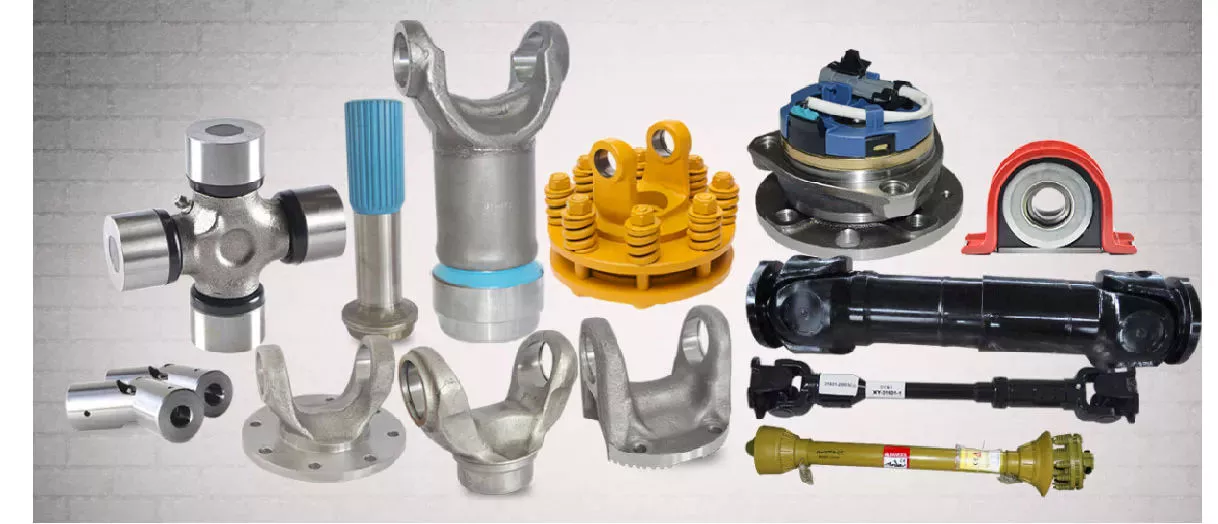
Are there variations in PTO shaft designs for different types of machinery?
Yes, there are variations in PTO (Power Take-Off) shaft designs to accommodate the specific requirements of different types of machinery. PTO shafts are highly versatile and adaptable components used to transfer power from a power source, such as a tractor or engine, to driven machinery or equipment. The design variations in PTO shafts are necessary to ensure compatibility, efficiency, and safety in various applications. Here’s a detailed explanation of the different PTO shaft designs for different types of machinery:
1. Standard PTO Shafts: Standard PTO shafts are the most common design and are widely used in a variety of applications. They typically consist of a solid steel shaft with a universal joint at each end. These universal joints allow for angular misalignment between the power source and the driven machinery. Standard PTO shafts are suitable for applications where the distance between the power source and the driven machinery remains relatively fixed. They are commonly used in agricultural implements, such as mowers, balers, tillers, and seeders, as well as in industrial applications.
2. Telescopic PTO Shafts: Telescopic PTO shafts feature a telescoping design that allows for length adjustment. These shafts consist of two or more concentric shafts that can slide within each other. Telescopic PTO shafts are beneficial in applications where the distance between the power source and the driven machinery varies. By adjusting the length of the shaft, operators can ensure proper power transmission without the risk of the shaft dragging on the ground or being too short to reach the equipment. Telescopic PTO shafts are commonly used in front-mounted implements, snow blowers, self-loading wagons, and other applications where the distance between the power source and the implement changes.
3. CV (Constant Velocity) PTO Shafts: CV PTO shafts incorporate Constant Velocity joints to accommodate misalignment and angular variations. These joints maintain a constant speed and torque transfer even when the driven machinery is at an angle relative to the power source. CV PTO shafts are beneficial in applications where the driven machinery requires flexibility and a wide range of movement. They are commonly used in articulated loaders, telescopic handlers, self-propelled sprayers, and other equipment that requires continuous power transmission while operating at various angles.
4. Gearbox Driven PTO Shafts: Some machinery requires specific speed or torque ratios between the power source and the driven equipment. In such cases, PTO shafts may incorporate gearbox systems. Gearbox driven PTO shafts allow for speed reduction or increase and can change the rotational direction if necessary. The gear ratios in the gearbox can be adjusted to match the speed and torque requirements of the driven machinery. These PTO shafts are commonly used in applications where the power source operates at a different speed or torque level than the equipment it drives, such as in certain industrial manufacturing processes and specialized machinery.
5. High-Torque PTO Shafts: Some heavy-duty machinery requires high torque levels for power transmission. High-torque PTO shafts are designed to handle these demanding applications. They are constructed with reinforced components, including larger diameter shafts and heavier-duty universal joints, to withstand the increased torque requirements. High-torque PTO shafts are commonly used in equipment such as wood chippers, crushers, and heavy-duty agricultural implements that require substantial power and torque for their operation.
6. Safety PTO Shafts: Safety is a crucial consideration when using PTO shafts. Safety PTO shafts incorporate mechanisms to reduce the risk of accidents and injuries. One common safety feature is the use of protective guards that cover the rotating shaft to prevent accidental contact. These guards are typically made of metal or plastic and are designed to shield the rotating components while allowing the necessary movement for power transmission. Safety PTO shafts are used in various applications where the risk of entanglement or accidental contact with the rotating shaft is high, such as in grass mowers, rotary cutters, and other equipment used in landscaping and agriculture.
These are some of the key variations in PTO shaft designs for different types of machinery. The specific design used depends on factors such as the application requirements, power source characteristics, torque levels, movement flexibility, and safety considerations. PTO shaft manufacturers offer a range of designs to ensure compatibility and efficient power transmission in diverse industries and applications.

How do PTO shafts handle variations in load and torque during operation?
PTO (Power Take-Off) shafts are designed to handle variations in load and torque during operation by employing specific mechanisms and features that ensure efficient power transfer and protection against overload conditions. Here’s a detailed explanation of how PTO shafts handle variations in load and torque:
1. Mechanical Design: PTO shafts are engineered with robust mechanical design principles that enable them to handle variations in load and torque. They are typically constructed using high-strength materials such as steel, which provides durability and resistance to bending or twisting forces. The shaft’s diameter, wall thickness, and overall dimensions are carefully calculated to withstand the expected torque levels and load variations. The mechanical design of the PTO shaft ensures that it can transmit power reliably and accommodate the dynamic forces encountered during operation.
2. Universal Joints: Universal joints are a key component of PTO shafts that allow for flexibility and compensation of misalignment between the power source and driven machinery. These joints can accommodate variations in angular alignment, which may occur due to changes in load or movement of the machinery. Universal joints consist of a cross-shaped yoke with needle bearings that allow for smooth rotation and transfer of torque, even when the shafts are not perfectly aligned. The design of universal joints enables PTO shafts to handle variations in load and torque while maintaining consistent power transmission.
3. Embreagens deslizantes: Slip clutches are often incorporated into PTO shafts to provide overload protection. These clutches allow the PTO shaft to slip or disengage momentarily when excessive torque or resistance is encountered. Slip clutches typically consist of friction plates that can be adjusted to a specific torque setting. When the torque surpasses the predetermined limit, the clutch slips, preventing damage to the PTO shaft and connected equipment. Slip clutches are particularly useful when sudden changes in load or torque occur, providing a safety mechanism to protect the PTO shaft and associated machinery.
4. Torque Limiters: Torque limiters are another protective feature found in some PTO shafts. These devices are designed to automatically disengage the power transmission when a predetermined torque threshold is exceeded. Torque limiters can be mechanical, such as shear pin couplings or friction clutches, or electronic, utilizing sensors and control systems. When the torque exceeds the set limit, the torque limiter disengages, preventing further power transfer and protecting the PTO shaft from overload conditions. Torque limiters are effective in handling sudden spikes in torque and safeguarding the PTO shaft and associated equipment.
5. Manutenção e Inspeção: Regular maintenance and inspection of PTO shafts are essential to ensure their proper functioning and ability to handle variations in load and torque. Routine maintenance includes lubrication of universal joints, inspection of shaft integrity, and tightening of fasteners. Regular inspections allow for early detection of wear, misalignment, or other issues that may affect the PTO shaft’s performance. By addressing maintenance and inspection requirements, operators can identify and address any concerns that may arise due to variations in load and torque, ensuring the continued safe and efficient operation of the PTO shaft.
6. Operator Awareness and Control: Operators play a crucial role in managing variations in load and torque during PTO shaft operation. They should be aware of the machinery’s operational limits, including the recommended torque ratings and load capacities of the PTO shaft. Proper training and understanding of the equipment’s capabilities enable operators to make informed decisions and adjust the operation when encountering significant load or torque changes. Operators should also be vigilant in monitoring the equipment’s performance, watching for any signs of excessive vibration, noise, or other indications of potential issues related to load and torque variations.
By incorporating robust mechanical design, utilizing universal joints, slip clutches, torque limiters, and implementing proper maintenance practices, PTO shafts are equipped to handle variations in load and torque during operation. These features ensure reliable power transmission, protect against overload conditions, and contribute to the safe and efficient functioning of the PTO shaft and the machinery it drives.

Quais são os benefícios que os eixos de tomada de força (PTO) oferecem para diferentes tipos de máquinas?
Os eixos de tomada de força (PTO, na sigla em inglês) oferecem diversas vantagens para vários tipos de máquinas em aplicações agrícolas e industriais. Eles proporcionam um meio flexível e eficiente de transmissão de potência, permitindo que as máquinas executem tarefas e funções específicas. A seguir, uma explicação detalhada dos benefícios que os eixos de tomada de força oferecem para diferentes tipos de máquinas:
Versatilidade: Os eixos de tomada de força (TDF) contribuem para a versatilidade das máquinas, permitindo que sejam acionadas por uma fonte de energia comum, como um trator ou um motor. Isso significa que uma única fonte de energia pode ser usada para acionar vários implementos ou máquinas, simplesmente conectando e desconectando o eixo de TDF. Por exemplo, na agricultura, um trator equipado com um eixo de TDF pode acionar diversos implementos, como segadoras, enfardadeiras, cultivadores, pulverizadores e transportadores de grãos. Da mesma forma, em aplicações industriais, os eixos de TDF permitem o uso de um único motor para acionar diferentes máquinas ou equipamentos, como geradores, bombas, compressores e misturadores industriais.
Eficiência: Os eixos de tomada de força (TDF) oferecem um método eficiente de transferência de potência da fonte de energia para a máquina. Ao conectar diretamente a fonte de energia à máquina acionada, os eixos de TDF minimizam as perdas de energia que podem ocorrer com outros métodos de transmissão de potência. Essa transferência direta de potência resulta em maior eficiência e melhor desempenho geral da máquina. Além disso, os eixos de TDF permitem o ajuste da velocidade de rotação e da potência de saída para atender às necessidades específicas da máquina, garantindo a operação ideal e reduzindo o consumo desnecessário de energia.
Redução de custos: A utilização de eixos de tomada de força (TDF) pode gerar economia de custos de diversas maneiras. Primeiramente, ao utilizar uma única fonte de energia para acionar várias máquinas ou implementos, elimina-se a necessidade de motores separados para cada equipamento, reduzindo os custos de capital. Em segundo lugar, os eixos de TDF eliminam a necessidade de fontes adicionais de combustível ou energia, pois utilizam a fonte de energia existente, resultando em menores despesas com combustível ou energia. Além disso, a versatilidade oferecida pelos eixos de TDF permite uma melhor utilização dos equipamentos, maximizando o retorno do investimento.
Flexibilidade: Os eixos de tomada de força (TDF) oferecem flexibilidade em termos de configuração e instalação dos equipamentos. Seu comprimento pode ser ajustado ou podem ser equipados com seções telescópicas, permitindo fácil adaptação a diferentes arranjos de equipamentos e distâncias variáveis entre a fonte de energia e a máquina acionada. Essa flexibilidade permite que os operadores conectem e desconectem os eixos de TDF rapidamente, conforme necessário, facilitando trocas de equipamentos eficientes e reduzindo o tempo de inatividade. Além disso, a capacidade de ajustar a velocidade de rotação e a potência dos eixos de TDF adiciona ainda mais flexibilidade, atendendo aos requisitos específicos de diferentes máquinas e aplicações.
Facilidade de uso: Os eixos de tomada de força (TDF) são relativamente fáceis de usar, tornando-os acessíveis a operadores com treinamento mínimo. O processo de conexão e desconexão dos eixos de TDF é simples, geralmente envolvendo um acoplamento ou mecanismo de travamento fácil. Essa facilidade de uso aprimora a operabilidade do equipamento, permitindo que os operadores alternem rapidamente entre diferentes implementos ou máquinas sem grande esforço ou procedimentos demorados. Além disso, a transferência direta de potência por meio dos eixos de TDF simplifica a operação do equipamento, pois a máquina pode ser alimentada pela fonte de energia existente sem a necessidade de controles adicionais ou sistemas de gerenciamento de energia.
Aumento da produtividade: Os eixos de tomada de força (TDF) contribuem para o aumento da produtividade em operações agrícolas e industriais. Ao possibilitar o uso de configurações versáteis de máquinas, os operadores podem executar uma ampla gama de tarefas utilizando uma única fonte de energia. Isso elimina a necessidade de mão de obra manual ou o uso de múltiplas máquinas, otimizando o fluxo de trabalho e reduzindo o tempo necessário para concluir diversas operações. A eficiência e a confiabilidade da transmissão de potência por meio dos eixos de TDF também contribuem para o aumento da produtividade, garantindo a operação consistente e eficaz das máquinas, resultando em maior produção e menor tempo de inatividade.
Segurança: Embora não estejam diretamente relacionados ao desempenho da máquina, os eixos da tomada de força (TDF) também oferecem benefícios de segurança. A implementação de proteções ou resguardos de segurança nos eixos da TDF ajuda a prevenir o contato acidental com o eixo rotativo, reduzindo o risco de lesões aos operadores. Esses recursos de segurança são projetados para cobrir o eixo rotativo e as juntas universais, garantindo que os operadores não entrem em contato com eles durante a operação. O treinamento adequado na operação do eixo da TDF e a adesão às normas de segurança aumentam ainda mais a segurança do operador ao trabalhar com máquinas acionadas por TDF.
Em resumo, os eixos de tomada de força (TDF) oferecem uma série de benefícios para diversos tipos de máquinas. Esses benefícios incluem maior versatilidade, melhoria da eficiência, redução de custos, flexibilidade na configuração dos equipamentos, facilidade de uso, aumento da produtividade e maior segurança para o operador. Os eixos de TDF desempenham um papel crucial em aplicações agrícolas e industriais, permitindo a transferência direta de potência de uma fonte comum para diferentes máquinas ou implementos, resultando em desempenho otimizado e maior eficácia operacional.


editor by CX 2024-04-15























