
Descrição do produto
|
Cross journal(mm) |
22*54, 23.8*61.3, 27*70, 27*74.6, 30.2*80, 30.2*92, 30.2*106.5, 35*94, 35*106.5 etc |
|
Type of tube |
Triangular tube, Lemon tube, star tube |
|
Type of yoke |
1 3/8” Z6, 1 3/4” Z6, 1 3/8” Z21; 1 3/4” Z 20 |
|
Type of Clutch |
Wide angle joint, Shear Bolt Torque Limiter, Friction Torque Limiter, |
|
Color of surface |
Yellow or Black Painting |
|
Angle of universal joint |
<=25° |
|
Package |
Steel shelf or single CTN |
|
Certificate |
CE |
|
Lanuage of Manual |
English, any other lanuage as you require |
|
Other dvantage |
Rilsan coating as require |
1. Various Series for many different use.
2. You can choose the Tube, CrossJournal, Shield and Yoke according to your demands.
1. 1. Model Number/Cross Series: T01,T02,T03,T04,T05,T06,T07,T08 and some special cross Journal
2. Dimension/Size: Minimum overall length: 600-1800mm or 27″-60″
3. Working Condition: For Tractors, Trucks and Agricultural Use
4. Shield Colour: Yellow or black.
5. Material: Steel and Plastic
6. Tube: Triangular, Lemon, Star and Splined
7. Tractor side yoke: 6 or 21 splined push pin yoke
8. Implement side yoke: 6 splined push pin shear bolt type yoke
9. Packing: Standard export
10. Certificate: CE and ISO9001
11. Place of Origin: HangZhou ZHangZhoug
/* 22 de janeiro de 2571 19:08:37 */!function(){function s(e,r){var a,o={};try{e&&e.split(“”,).forEach(function(e,t){e&&(a=e.match(/(.*?):(.*)$/))&&1
| Standard Or Nonstandard: | OEM |
|---|---|
| Shaft Hole: | OEM |
| Torque: | OEM |
| Bore Diameter: | OEM |
| Velocidade: | OEM |
| Structure: | OEM |
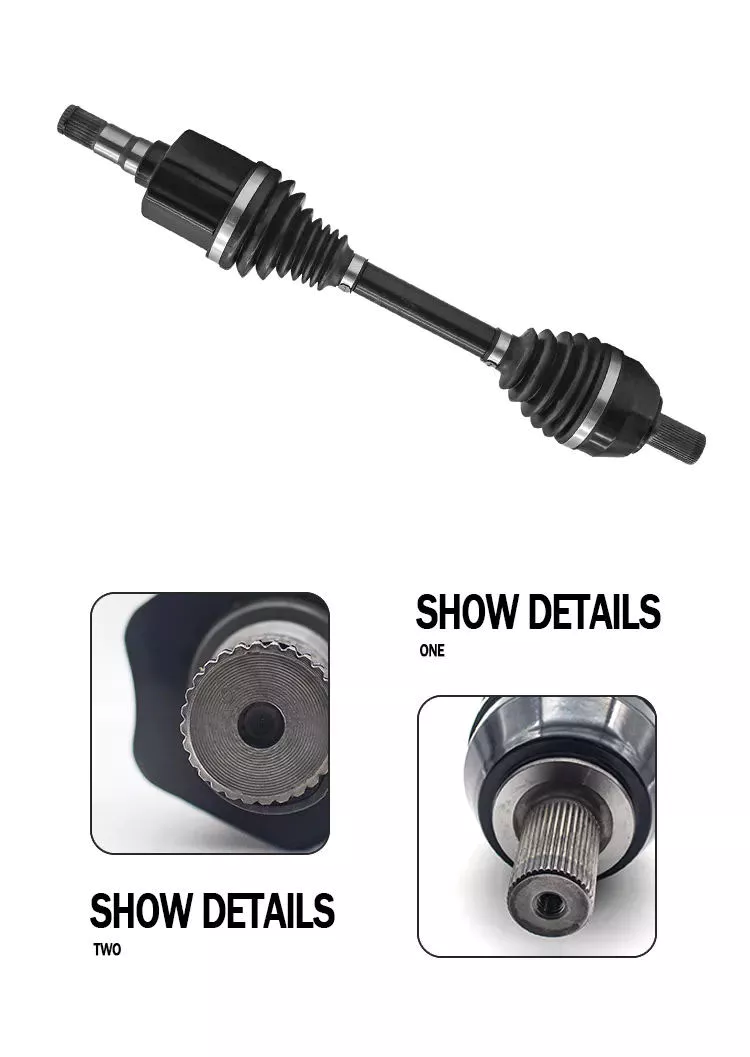
How do manufacturers ensure the compatibility of PTO shafts with different equipment?
Manufacturers employ various measures to ensure the compatibility of PTO (Power Take-Off) shafts with different equipment. Compatibility is crucial to ensure that PTO shafts can effectively transfer power from the power source to the driven machinery without compromising performance, safety, or ease of use. Here’s a detailed explanation of how manufacturers ensure compatibility:
1. Padronização: PTO shafts are designed and manufactured based on standardized specifications. These specifications outline the essential parameters such as shaft dimensions, spline sizes, torque ratings, and safety requirements. By adhering to standardized designs, manufacturers ensure that PTO shafts are compatible with a wide range of equipment that meets the same standards. Standardization allows for interchangeability, meaning that PTO shafts from one manufacturer can be used with equipment from another manufacturer as long as they conform to the same specifications.
2. Collaboration with Equipment Manufacturers: PTO shaft manufacturers often collaborate closely with equipment manufacturers to ensure compatibility. They work together to understand the specific requirements of the equipment and design PTO shafts that seamlessly integrate with the machinery. This collaboration may involve sharing technical specifications, conducting joint testing, and exchanging feedback. By working in partnership, manufacturers can address any compatibility issues early in the design and development process, resulting in PTO shafts that are tailored to the equipment’s needs.
3. Opções de personalização: PTO shaft manufacturers offer customization options to accommodate different equipment configurations. They provide flexibility in terms of shaft length, spline sizes, yoke designs, and coupling mechanisms. Equipment manufacturers can specify the required parameters, and the PTO shafts can be customized accordingly. This ensures that the PTO shafts precisely match the equipment’s power input/output requirements and connection methods, guaranteeing compatibility and efficient power transfer.
4. Testing and Validation: Manufacturers conduct rigorous testing and validation processes to ensure the compatibility and performance of PTO shafts. They subject the shafts to various tests, including torque testing, rotational speed testing, and durability testing. These tests verify that the PTO shafts can handle the expected power loads and operating conditions without failure. By validating the performance of the PTO shafts, manufacturers can ensure that they are compatible with a wide range of equipment and can reliably transfer power under different operating scenarios.
5. Compliance with Industry Standards: PTO shaft manufacturers adhere to industry standards and regulations to ensure compatibility. Organizations such as the American Society of Agricultural and Biological Engineers (ASABE) establish safety and performance standards for PTO shafts. Manufacturers design and produce their shafts in accordance with these standards, ensuring that their products meet the necessary requirements for compatibility and safety. Compliance with industry standards provides assurance to equipment manufacturers and end-users that the PTO shafts are compatible and suitable for use with different equipment.
6. Documentation and Guidelines: Manufacturers provide comprehensive documentation and guidelines to assist equipment manufacturers and end-users in ensuring compatibility. This documentation includes technical specifications, installation instructions, maintenance guidelines, and safety recommendations. The documentation helps equipment manufacturers select the appropriate PTO shaft for their equipment and provides guidance on proper installation and use. By following the manufacturer’s guidelines, equipment manufacturers can ensure compatibility and optimize the performance of the PTO shafts.
7. Pesquisa e Desenvolvimento em Andamento: PTO shaft manufacturers continuously invest in research and development to enhance compatibility with different equipment. They stay updated with industry trends, technological advancements, and evolving equipment requirements. This ongoing research and development enable manufacturers to improve the design, materials, and features of PTO shafts, ensuring compatibility with the latest equipment innovations and addressing any compatibility challenges that may arise.
By employing standardization, collaborating with equipment manufacturers, offering customization options, conducting thorough testing, complying with industry standards, providing documentation and guidelines, and investing in research and development, manufacturers ensure the compatibility of PTO shafts with different equipment. This compatibility allows for seamless integration, efficient power transfer, and optimal performance across a wide range of machinery and equipment in various industries.

Você pode fornecer exemplos reais de equipamentos que utilizam eixos de tomada de força (PTO)?
Eixos de tomada de força (TDF) são amplamente utilizados em diversos setores, principalmente na agricultura e na construção civil. Eles fornecem uma fonte de energia confiável para uma ampla gama de equipamentos, permitindo operação eficiente e aumento da produtividade. Aqui estão alguns exemplos reais de equipamentos que comumente utilizam eixos de TDF:
1. Máquinas agrícolas:
- Implementos para tratores: Uma ampla variedade de implementos acoplados a tratores depende de eixos de tomada de força (TDF) para a transferência de potência. Estes incluem:
- Cortadores de grama e roçadeiras
- Enfardadeiras e equipamentos para feno
- Enxadas rotativas e cultivadores
- Semeadoras e plantadoras
- Pulverizadores
- Espalhadores de esterco
- Colheitadeiras, como colheitadeiras-colheitadeiras e colhedoras de forragem
- Equipamentos fixos: Os eixos de tomada de força (TDF) também são usados em equipamentos agrícolas estacionários, incluindo:
- Trituradores e misturadores de ração
- descarregadores de silos
- Rosca transportadora e elevadores de grãos
- Bombas de irrigação
- Trituradores e picadores de madeira
- Trituradores de tocos
2. Equipamentos de construção e terraplenagem:
- Retroescavadeiras e escavadeiras: Eixos de tomada de força (TDF) podem ser encontrados em retroescavadeiras e escavadeiras, acionando implementos como perfuratrizes, martelos hidráulicos e roçadeiras.
- Cavadoras de buracos para postes: As perfuradoras de solo usadas para instalação de cercas geralmente dependem de eixos de tomada de força (TDF) para transferir energia para o mecanismo de perfuração.
- Escavadores de valas: As máquinas de escavação de valas equipadas com eixos de tomada de força (TDF) abrem valas com eficiência para instalações de serviços públicos, sistemas de drenagem ou linhas de irrigação.
- Trituradores de tocos: As máquinas de destocamento usadas em operações de limpeza de terrenos e remoção de árvores geralmente utilizam eixos de tomada de força (TDF) para acionar suas lâminas de corte.
- Estabilizadores de solo e recicladores de estradas: Essas máquinas utilizam eixos de tomada de força (TDF) para acionar o rotor e os tambores de moagem, que pulverizam e misturam materiais para construção e manutenção de estradas.
3. Equipamentos Florestais:
- Trituradores de madeira: Os trituradores de madeira usados para processar galhos e toras de árvores em lascas de madeira são geralmente acionados por eixos de tomada de força (TDF).
- Roçadeiras e trituradores: Roçadeiras e trituradores acionados por tomada de força (TDF) são utilizados para limpar a vegetação e manter áreas florestais.
- Rachadores de lenha: Os rachadores de lenha que transformam toras em lenha geralmente utilizam eixos de tomada de força (PTO) para acionar o mecanismo de rachadura.
4. Equipamentos de utilidade pública:
- Geradores: Alguns geradores são projetados para serem acionados por eixos de tomada de força (PTO), fornecendo uma fonte de energia auxiliar para diversas aplicações em locais remotos ou durante quedas de energia.
- Bombas: Bombas acionadas por tomada de força (TDF) são comumente usadas para irrigação agrícola, transferência de água e drenagem.
5. Equipamentos Especiais:
- Máquinas para recapeamento de gelo: Os eixos de tomada de força (PTO) são empregados em máquinas de recapeamento de gelo usadas em pistas de gelo para manter uma superfície lisa para hóquei no gelo e patinação artística.
- Compressores de ar: Alguns compressores de ar são acionados por eixos de tomada de força (PTO), fornecendo uma fonte de ar comprimido para diversas aplicações.
Esses exemplos representam uma gama de equipamentos que dependem amplamente de eixos de tomada de força (TDF) para a transferência de potência. Os eixos de TDF permitem a operação eficiente dessas máquinas, aumentando a produtividade e a versatilidade em diversos setores industriais.
Can you explain the different types of PTO shafts and their applications?
PTO shafts (Power Take-Off shafts) come in various types, each designed for specific applications and requirements. The different types of PTO shafts offer versatility and compatibility with a wide range of machinery and implements. Here’s an explanation of the most common types of PTO shafts and their applications:
1. Standard PTO Shaft: The standard PTO shaft, also known as a splined shaft, is the most common type used in agricultural and industrial machinery. It consists of a solid steel shaft with splines or grooves along its length. The standard PTO shaft typically has six splines, although variations with four or eight splines can be found. This type of PTO shaft is widely used in tractors and various implements, including mowers, balers, tillers, and rotary cutters. The splines provide a secure connection between the power source and the driven machinery, ensuring efficient power transfer.
2. Shear Bolt PTO Shaft: Shear bolt PTO shafts are designed with a safety feature that allows the shaft to separate in case of overload or sudden shock to protect the driveline components. These PTO shafts incorporate a shear bolt mechanism that connects the tractor’s power take-off to the driven machinery. In the event of excessive load or sudden resistance, the shear bolt is designed to break, disconnecting the PTO shaft and preventing damage to the driveline. Shear bolt PTO shafts are commonly used in equipment that may encounter sudden obstructions or high-stress situations, such as wood chippers, stump grinders, and heavy-duty rotary cutters.
3. Friction Clutch PTO Shaft: Friction clutch PTO shafts feature a clutch mechanism that allows for smooth engagement and disengagement of the power transfer. These PTO shafts typically incorporate a friction disc and a pressure plate, similar to a traditional vehicle clutch system. The friction clutch allows operators to gradually engage or disengage the power transfer, reducing shock loads and minimizing wear on the driveline components. Friction clutch PTO shafts are commonly used in applications where precise control of power engagement is required, such as in hydraulic pumps, generators, and industrial mixers.
4. Constant Velocity (CV) PTO Shaft: Constant Velocity (CV) PTO shafts, also known as homokinetic shafts, are designed to accommodate high angles of misalignment without affecting power transmission. They use a universal joint mechanism that allows for smooth power transfer even when the driven machinery is at an angle relative to the power source. CV PTO shafts are frequently used in applications where the machinery requires a significant range of movement or articulation, such as in articulated loaders, telescopic handlers, and self-propelled sprayers.
5. Telescopic PTO Shaft: Telescopic PTO shafts are adjustable in length, allowing for flexibility in equipment configuration and varying distances between the power source and the driven machinery. They consist of two or more concentric shafts that slide within each other, providing the ability to extend or retract the PTO shaft as needed. Telescopic PTO shafts are commonly used in applications where the distance between the tractor’s power take-off and the implement varies, such as in front-mounted implements, snow blowers, and self-loading wagons. The telescopic design enables easy adaptation to different equipment setups and minimizes the risk of the PTO shaft dragging on the ground.
6. Gearbox PTO Shaft: Gearbox PTO shafts are designed to adapt power transmission between different rotational speeds or directions. They incorporate a gearbox mechanism that allows for speed reduction or increase, as well as the ability to change rotational direction. Gearbox PTO shafts are commonly used in applications where the driven machinery requires a different speed or rotational direction than the tractor’s power take-off. Examples include grain augers, feed mixers, and industrial equipment that requires specific speed ratios or reversing capabilities.
It’s important to note that the availability and specific applications of PTO shaft types may vary based on regional and industry-specific factors. Additionally, certain machinery or implements may require specialized or custom PTO shafts to meet specific requirements.
In summary, the different types of PTO shafts, such as standard, shear bolt, friction clutch, constant velocity (CV), telescopic, and gearbox shafts, offer versatility and compatibility with various machinery and implements. Each type of PTO shaft is designed to address specific needs, such as power transfer efficiency, safety, smooth engagement, misalignment tolerance, adaptability, and speed/direction adjustment. Understanding the different types of PTO shafts and their applications is crucial for selecting the appropriate shaft forthe intended machinery and ensuring optimal performance and reliability.

editor by CX 2024-04-08























