
Descrição do produto
Descrição do produto
Descrição do produto
SWC BH Cardan Shaft Basic Parameter And Main Dimension
Cardan shaft is widely used in rolling mill, punch, straightener, crusher, ship drive, paper making equipment, common machinery, water pump equipment, test bench, and other mechanical applications.
Advantage:
1. Low life-cycle costs and long service life;
2. Increase productivity;
3. Professional and innovative solutions;
4. Reduce carbon dioxide emissions, and environmental protection;
5. High torque capacity even at large deflection angles;
6. Easy to move and run smoothly;
Fotos detalhadas
Parâmetros do produto
| Modelo | Tn kN • m |
T. |
p (.) |
LS mm |
Lmin | Tamanho mm |
I kg. m2 | m kg |
|||||||||||
| Di js11 |
d2 H7 |
Da | Lm | n-d | k | t | b h9 |
g | Lmin | 100mm | Lmin | 100mm | |||||||
| SWC58BH | 58 | 0.15 | 0.075 | ≤22 | 35 | 325 | 47 | 30 | 38 | 35 | 4-5 | 3.5 | 1.5 | – | – | – | – | 2.2 | – |
| SWC65BH | 65 | 0.25 | 0.125 | ≤22 | 40 | 360 | 52 | 35 | 42 | 46 | 4-6 | 4.5 | 1.7 | – | – | – | – | 3.0 | – |
| SWC75BH | 75 | 0.50 | 0.25 | ≤22 | 40 | 395 | 62 | 42 | 50 | 58 | 6-6 | 5.5 | 2.0 | – | – | – | – | 5.0 | – |
| SWC90BH | 90 | 1.0 | 0.50 | ≤22 | 45 | 435 | 74.5 | 47 | 54 | 58 | 4-8 | 6.0 | 2.5 | – | – | – | – | 6.6 | – |
| SWC100BH | 100 | 1.5 | 0.75 | ≤25 | 55 | 390 | 84 | 57 | 60 | 58 | 6-9 | 7 | 2.5 | – | – | 0.0044 | 0.00019 | 6.1 | 0.35 |
| SWC120BH | 120 | 2.5 | 1.25 | ≤25 | 80 | 485 | 102 | 75 | 70 | 68 | 8-11 | 8 | 2.5 | – | – | 0.5719 | 0.00044 | 10.8 | 0.55 |
| SWC150BH | 150 | 5 | 2.5 | ≤25 | 80 | 590 | 13.0 | 90 | 89 | 80 | 8-13 | 10 | 3.0 | – | – | 0.0423 | 0.00157 | 24.5 | 0.85 |
| SWC160BH | 160 | 10 | 5 | ≤25 | 80 | 660 | 137 | 100 | 95 | 110 | 8-15 | 15 | 3.0 | 20 | 12 | 0.1450 | 0.0060 | 68 | 1.72 |
| SWC180BH | 180 | 20 | 10 | ≤25 | 100 | 810 | 155 | 105 | 114 | 130 | 8-17 | 17 | 5.0 | 24 | 14 | 0.1750 | 0.0070 | 70 | 2.8 |
| SWC200BH | 200 | 32 | 16 | ≤15 | 110 | 860 | 170 | 120 | 127 | 135 | 8-17 | 19 | 5.0 | 28 | 16 | 0.3100 | 0.0130 | 86 | 3.6 |
| SWC225BH | 225 | 40 | 20 | ≤15 | 140 | 920 | 196 | 135 | 152 | 120 | 8-17 | 20 | 5.0 | 32 | 9.0 | 0.5380 | 0.5714 | 122 | 4.9 |
| SWC250BH | 250 | 63 | 31.5 | ≤15 | 140 | 1035 | 218 | 150 | 168 | 140 | 8-19 | 25 | 6.0 | 40 | 12.5 | 0.9660 | 0.5717 | 172 | 5.3 |
| SWC285BH | 285 | 90 | 45 | ≤15 | 140 | 1190 | 245 | 170 | 194 | 160 | 8-21 | 27 | 7.0 | 40 | 15.0 | 2.0110 | 0.571 | 263 | 6.3 |
| SWC315BH | 315 | 125 | 63 | ≤15 | 140 | 1315 | 280 | 185 | 219 | 180 | 10-23 | 32 | 8.0 | 40 | 15.0 | 3.6050 | 0.571 | 382 | 8.0 |
| SWC350BH | 350 | 180 | 90 | ≤15 | 150 | 1410 | 310 | 210 | 267 | 194 | 10-23 | 35 | 8.0 | 50 | 16.0 | 7.571 | 0.2219 | 582 | 15.0 |
| SWC390BH | 390 | 250 | 125 | ≤15 | 170 | 1590 | 345 | 235 | 267 | 215 | 10-25 | 40 | 8.0 | 70 | 18.0 | 12.164 | 0.2219 | 738 | 15.0 |
| SWC440BH | 440 | 355 | 180 | ≤15 | 190 | 1875 | 390 | 255 | 325 | 260 | 16-28 | 42 | 10 | 80 | 20.0 | 21.420 | 0.4744 | 1190 | 21.7 |
| SWC490BH | 490 | 500 | 250 | ≤15 | 190 | 1985 | 435 | 275 | 325 | 270 | 16-31 | 47 | 12 | 90 | 22.5 | 32.860 | 0.4744 | 1452 | 21.7 |
| SWC550BH | 550 | 710 | 355 | ≤15 | 240 | 2300 | 492 | 320 | 426 | 305 | 16-31 | 50 | 12 | 100 | 22.5 | 68.920 | 1.3570 | 2380 | 34 |
Embalagem e envio
perfil de companhia
HangZhou CHINAMFG Machinery Manufacturing Co., Ltd. is a high-tech enterprise specializing in the design and manufacture of various types of coupling. There are 86 employees in our company, including 2 senior engineers and no fewer than 20 mechanical design and manufacture, heat treatment, welding, and other professionals.
Advanced and reasonable process, complete detection means. Our company actively introduces foreign advanced technology and equipment, on the basis of the condition, we make full use of the advantage and do more research and innovation. Strict to high quality and operate strictly in accordance with the ISO9000 quality certification system standard mode.
Our company supplies different kinds of products. High quality and reasonable price. We stick to the principle of “quality first, service first, continuous improvement and innovation to meet the customers” for the management and “zero defect, zero complaints” as the quality objective.
Our Services
1. Design Services
Our design team has experience in Cardan shafts relating to product design and development. If you have any needs for your new product or wish to make further improvements, we are here to offer our support.
2. Product Services
raw materials → Cutting → Forging →Rough machining →Shot blasting →Heat treatment →Testing →Fashioning →Cleaning→ Assembly→Packing→Shipping
3. Samples Procedure
We could develop the sample according to your requirement and amend the sample constantly to meet your need.
4. Research & Development
We usually research the new needs of the market and develop new models when there are new cars in the market.
5. Quality Control
Every step should be a particular test by Professional Staff according to the standard of ISO9001 and TS16949.
Perguntas frequentes
Q 1: Are you a trading company or a manufacturer?
A: We are a professional manufacturer specializing in manufacturing
various series of couplings.
P 2: Vocês fazem OEM?
Yes, we can. We can do OEM & ODM for all customers with customized PDF or AI format artwork.
Q 3:How long is your delivery time?
Generally, it is 20-30 days if the goods are not in stock. It is according to quantity.
Q 4: Do you provide samples? Is it free or extra?
Yes, we could offer the sample but not for free. Actually, we have an excellent price principle, when you make the bulk order the cost of the sample will be deducted.
Q 5: How long is your warranty?
A: Our Warranty is 12 months under normal circumstances.
Q 6: What is the MOQ?
A: Usually our MOQ is 1pcs.
Q 7: Do you have inspection procedures for coupling?
A:100% self-inspection before packing.
Q 8: Can I have a visit to your factory before the order?
A: Sure, welcome to visit our factory.
Pergunta 9: Qual é o seu pagamento?
A:1) T/T.
♦Contate-nos
Web: huadingcoupling
Add: No.11 HangZhou Road,Chengnan park,HangZhou City,ZheJiang Province,China
/* 10 de março de 2571 17:59:20 */!function(){function s(e,r){var a,o={};try{e&&e.split(“”,).forEach(function(e,t){e&&(a=e.match(/(.*?):(.*)$/))&&1
| Doença: | Novo |
|---|---|
| Cor: | as Required |
| Certificação: | ISO |
| Tipo: | Universal Joint |
| Material: | Carbon Steel or as Required |
| Size: | Standard Size |
| Personalização: |
Disponível
| Solicitação personalizada |
|---|
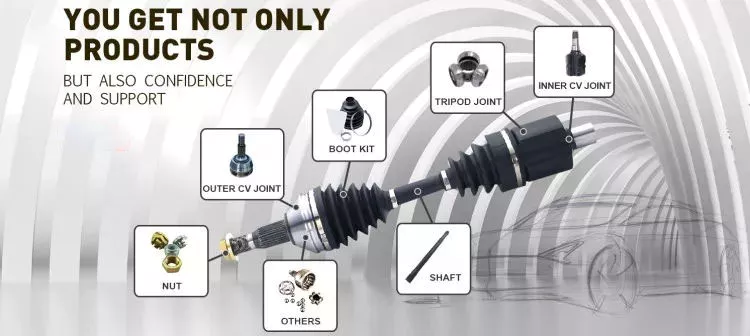
What factors should be considered when selecting the right PTO shaft for an application?
When selecting the right Power Take-Off (PTO) shaft for an application, several factors need to be considered to ensure optimal performance, safety, and compatibility. PTO shafts are crucial components that transmit power from a power source to driven machinery or equipment. Here are the key factors to consider when selecting the appropriate PTO shaft for an application:
1. Power Requirements: The power requirements of the driven machinery play a vital role in determining the appropriate PTO shaft. Consider the horsepower (HP) or kilowatt (kW) rating of the power source and ensure that the PTO shaft can handle the required power transmission. It is essential to match the power capacity of the PTO shaft with the power output of the power source to ensure efficient and reliable operation.
2. Speed and Torque Requirements: Consider the speed and torque requirements of the driven machinery. Determine the desired rotational speed and torque levels necessary for the equipment to operate effectively. Some applications require specific speed or torque ratios, while others may require variable speeds. Ensure that the selected PTO shaft can handle the required speed and torque range to provide the necessary power transfer.
3. Shaft Type and Design: Evaluate the type and design of the PTO shaft to ensure compatibility with the application. Consider factors such as the distance between the power source and the driven machinery, the need for angular misalignment, and the flexibility of movement required. Different shaft types, such as standard, telescopic, or Constant Velocity (CV) shafts, offer varying capabilities to accommodate different application requirements.
4. Considerações de segurança: Safety is a critical factor when selecting a PTO shaft. Assess the safety features provided by the PTO shaft, such as protective guards, shear bolt mechanisms, or other safety devices. Protective guards should be in place to prevent accidental contact with the rotating shaft. Shear bolt mechanisms can protect the driveline components from damage in case of excessive torque or sudden resistance. Prioritize safety features that align with the specific hazards and risks associated with the application.
5. Application Specifics: Consider the unique requirements of the application. Factors such as the type of machinery, industry sector, environmental conditions, and operating conditions should be taken into account. For example, agricultural applications may require PTO shafts that can handle debris and dirt accumulation, while industrial applications may require PTO shafts with high corrosion resistance or special sealing to protect against contaminants.
6. Compatibility and Interchangeability: Ensure that the selected PTO shaft is compatible with the power source and the driven machinery. Consider factors such as the shaft diameter, spline size, and connection type. Check if the PTO shaft adheres to industry standards and if it can be easily interchanged with other compatible components in case of replacement or upgrading needs. Compatibility and interchangeability can simplify maintenance and reduce downtime.
7. Manufacturer and Quality: Choose a reputable manufacturer or supplier to ensure the quality and reliability of the PTO shaft. Look for manufacturers with a track record of producing high-quality PTO shafts that meet industry standards and regulations. Consider factors such as warranty, after-sales support, and availability of spare parts when making a selection.
By considering these factors, you can select the right PTO shaft that meets the power, speed, torque, safety, and application requirements. It is advisable to consult with experts, such as equipment manufacturers or PTO shaft specialists, to ensure an optimal match between the PTO shaft and the application.
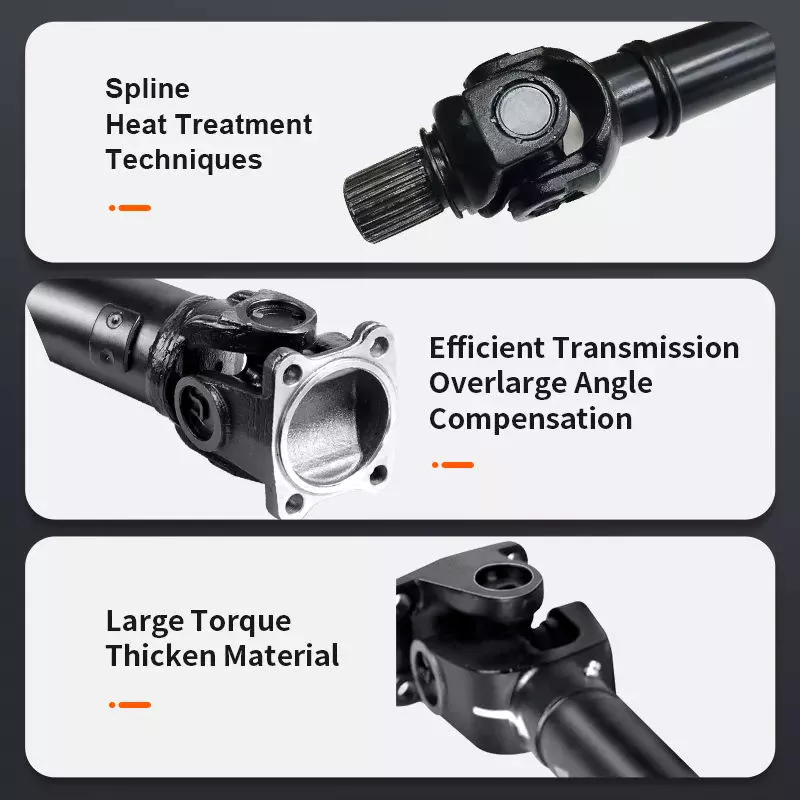
What safety precautions should be followed when working with PTO shafts?
Working with Power Take-Off (PTO) shafts requires strict adherence to safety precautions to prevent accidents and ensure the well-being of individuals operating or working in the vicinity of the equipment. PTO shafts involve rotating machinery and can pose significant hazards if not handled properly. Here are several important safety precautions that should be followed when working with PTO shafts:
1. Familiarize Yourself with the Equipment: Prior to operating or working near a PTO shaft, it is crucial to thoroughly understand the equipment’s operation, including the specific PTO shaft configuration, safety features, and any associated machinery. Read and follow the manufacturer’s instructions and safety guidelines pertaining to the PTO shaft and associated equipment. Training and familiarity with the equipment are essential to ensure safe practices.
2. Utilize os Equipamentos de Proteção Individual (EPI) adequados: When working with PTO shafts, individuals should wear appropriate personal protective equipment to minimize the risk of injury. This may include safety glasses, hearing protection, gloves, and sturdy footwear. PPE protects against potential hazards such as flying debris, noise, and accidental contact with rotating components.
3. Guarding and Shielding: Ensure that the PTO shaft and associated machinery are equipped with appropriate guarding and shielding. Guarding helps prevent accidental contact with rotating parts, reducing the risk of entanglement or injury. PTO shafts should have guard shields covering the rotating shaft and any exposed universal joints. Machinery driven by the PTO shaft should also have adequate guarding in place to protect against contact with moving parts.
4. Securely Fasten and Align PTO Shaft Components: Before operating or connecting the PTO shaft, ensure that all components are securely fastened and aligned. Loose or misaligned components can lead to shaft dislodgement, imbalance, and potential failure. Follow the manufacturer’s guidelines for proper installation and tightening of couplings, yokes, and other connecting points. Proper alignment is crucial to prevent excessive stress, vibrations, and premature wear on the PTO shaft and associated equipment.
5. Avoid Loose Clothing and Jewelry: Loose clothing, jewelry, or other items that can become entangled in the PTO shaft or associated machinery should be avoided. Secure long hair, tuck in loose clothing, and remove or properly secure any dangling accessories. Loose items can get caught in rotating parts, leading to serious injury or entanglement hazards.
6. Do Not Modify or Remove Safety Features: PTO shafts are equipped with safety features such as guard shields, safety covers, and torque limiters for a reason. These features are designed to protect against potential hazards and should not be modified, bypassed, or removed. Altering or disabling safety features can significantly increase the risk of accidents and injury. If any safety features are damaged or not functioning correctly, they should be repaired or replaced promptly.
7. Shut Down Power Source Before Maintenance: Before performing any maintenance, repairs, or adjustments on the PTO shaft or associated machinery, ensure that the power source is completely shut down and disconnected. This includes turning off the engine, disconnecting power supply, and engaging any safety locks or mechanisms. Lockout/tagout procedures should be followed to prevent accidental energization or startup during maintenance activities.
8. Regular Maintenance and Inspection: Regular maintenance and inspection of the PTO shaft and associated equipment are vital for safe operation. Follow the manufacturer’s recommended maintenance schedule and perform routine inspections to identify any signs of wear, damage, or misalignment. Lubricate universal joints as per the manufacturer’s guidelines to ensure smooth operation. Promptly address any maintenance or repair needs to prevent potential hazards.
9. Training and Communication: Ensure that individuals operating or working near PTO shafts receive proper training on safe work practices, hazard identification, and emergency procedures. Promote clear communication regarding the presence and operation of PTO shafts to prevent accidental contact or interference. Establish effective communication methods, such as signals or radios, when working in teams or near noisy equipment.
10. Be Aware of Surroundings: Maintain situational awareness when working with PTO shafts. Be mindful of the location of bystanders, obstacles, and potential hazards. Ensure a clear and safe work area around the PTO shaft. Avoid distractions and focus on the task at hand to prevent accidents caused by inattention.
By following these safety precautions, individuals can minimize the risk of accidents and injuries when working with PTO shafts. Safety should always be the top priority to ensure a safe and productive work environment.

Quais setores industriais utilizam comumente eixos de tomada de força (PTO) para transmissão de potência?
Eixos de tomada de força (PTO, na sigla em inglês) são amplamente utilizados em diversas indústrias onde a transmissão de potência é necessária para acionar máquinas e equipamentos. Sua versatilidade, eficiência e compatibilidade com diferentes tipos de máquinas os tornam componentes valiosos em vários setores. A seguir, uma explicação detalhada das indústrias que comumente utilizam eixos de tomada de força (PTO) para transmissão de potência:
1. Agricultura: O setor agrícola depende amplamente de eixos de tomada de força (TDF) para a transmissão de potência. Tratores equipados com TDF são comumente usados para acionar uma ampla gama de implementos e máquinas agrícolas. Equipamentos acionados por TDF incluem segadoras, enfardadeiras, cultivadores, semeadoras, pulverizadores, transportadores de grãos, colheitadeiras e muitos outros. Os eixos de TDF permitem a transferência eficiente de potência do motor do trator para esses implementos, possibilitando diversas operações agrícolas, como corte, enfardamento, aração, plantio, pulverização e colheita. O setor agrícola depende fortemente dos eixos de TDF para aumentar a produtividade e otimizar os processos agrícolas.
2. Construção e terraplenagem: Na indústria da construção civil e terraplenagem, os eixos de tomada de força (TDF) são utilizados em máquinas para escavação, nivelamento e movimentação de materiais. Equipamentos acionados por TDF, como retroescavadeiras, pás carregadeiras, escavadeiras, valeteiras e destocadores, utilizam eixos de TDF para transferir a potência dos motores principais, geralmente sistemas hidráulicos, para acionar os implementos necessários. Esses implementos exigem o alto torque e a potência fornecidos pelos eixos de TDF para realizar tarefas como escavação, carregamento, abertura de valas e trituração. Os eixos de TDF permitem uma transmissão de potência versátil e eficiente em operações de construção civil e terraplenagem.
3. Silvicultura: A indústria florestal utiliza eixos de tomada de força (TDF) para a transmissão de potência em diversos equipamentos de extração e processamento de madeira. Máquinas acionadas por TDF, como picadores de madeira, serrarias, rachadores de toras e descascadores, dependem de eixos de TDF para transferir a potência de tratores ou unidades de potência dedicadas para realizar tarefas como picar, serrar, rachar e descascar madeira. Os eixos de TDF fornecem a potência e o torque necessários para acionar os mecanismos de corte e processamento, possibilitando operações florestais eficientes e produtivas.
4. Paisagismo e manutenção de jardins: Os eixos de tomada de força (TDF) desempenham um papel crucial no setor de paisagismo e manutenção de áreas verdes. Equipamentos como cortadores de grama, roçadeiras, roçadeiras de martelo e aeradores utilizam eixos de TDF para transferir a potência de tratores ou unidades de potência dedicadas para acionar os mecanismos de corte ou manutenção. Os eixos de TDF permitem uma transmissão de potência eficiente, possibilitando que os operadores mantenham gramados, parques, campos de golfe e outros espaços externos com precisão e produtividade.
5. Mineração e extração de pedreiras: Os eixos de tomada de força (TDF) têm aplicações na indústria de mineração e extração, particularmente em equipamentos usados para extração, britagem e peneiramento de materiais. Máquinas acionadas por TDF, como britadores, peneiras e transportadores, dependem dos eixos de TDF para transferir a potência de motores ou motores elétricos para acionar os mecanismos de britagem e peneiramento, bem como os sistemas de manuseio de materiais. Os eixos de TDF fornecem a potência e o torque necessários para processar e transportar materiais a granel de forma eficiente em operações de mineração e extração.
6. Manufatura Industrial: Eixos de tomada de força (TDF) são utilizados em diversos processos industriais que requerem transmissão de potência para acionar máquinas e equipamentos específicos. Indústrias como a de processamento de alimentos, a têxtil, a de produção de papel e a química podem utilizar máquinas acionadas por TDF para tarefas como mistura, homogeneização, corte, extrusão e transporte. Os eixos de TDF permitem a transferência eficiente de potência para essas máquinas, garantindo uma operação suave e confiável em ambientes industriais.
7. Manutenção de infraestrutura e serviços públicos: Eixos de tomada de força (TDF) são utilizados em operações de serviços públicos e manutenção de infraestrutura. Equipamentos como varredoras de rua, máquinas de limpeza de esgoto, máquinas de manutenção de estradas e desentupidores de drenos utilizam eixos de TDF para transferir energia de caminhões ou unidades de potência dedicadas para realizar tarefas como varrição, limpeza e manutenção de estradas, esgotos e outras infraestruturas públicas. Os eixos de TDF permitem a transmissão eficiente de energia, garantindo a operação eficaz e confiável dessas máquinas de serviços públicos e manutenção.
8. Outros: Os eixos de tomada de força (PTO) também são utilizados em diversos outros setores e indústrias onde a transmissão de potência é necessária. Isso inclui aplicações na indústria de transportes para acionar unidades de refrigeração, bombas de combustível e sistemas hidráulicos em caminhões e reboques. Os eixos de tomada de força também encontram aplicações na indústria naval para acionar guinchos, bombas e outros equipamentos em barcos e navios.
Em resumo, os eixos de tomada de força (TDF) são comumente usados em uma ampla gama de indústrias para transmissão de potência. Essas indústrias incluem agricultura, construção civil e terraplenagem, silvicultura, paisagismo e manutenção de áreas verdes, mineração e extração, manufatura industrial, serviços públicos e manutenção de infraestrutura, transporte e setor marítimo. Os eixos de TDF desempenham um papel fundamental no aumento da produtividade, permitindo a operação eficiente de máquinas e facilitando diversas tarefas nessas indústrias.

editor by CX 2024-01-17























