
Descrição do produto
Specification OF PTO Drive Shaft —Speedway:
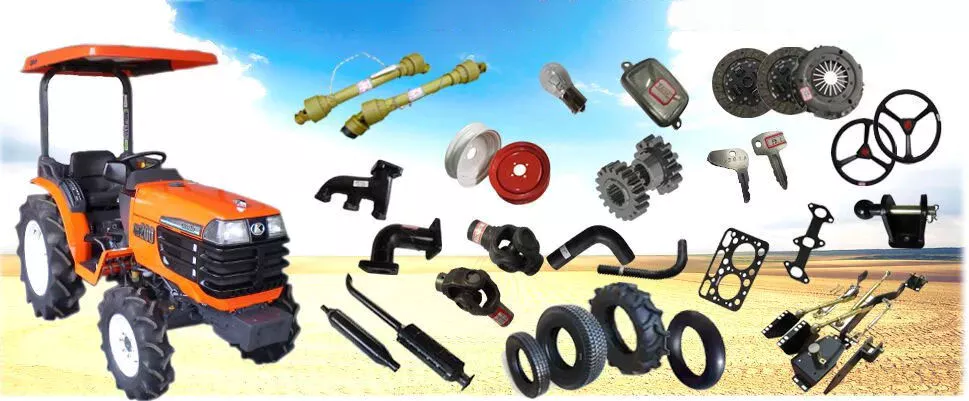
We developed and produced many tractor spare parts for Japanese Tractors .
Product Name: Japanese tractor transmission clutch disc parts for B1400 B7000
Tractor Model we can supply: B1500/1400,B5000,B6000, B7000, TU1400, TX1400, TX1500, YM F1401, YM1400 ETC.
The parts for example: Tyres, rim Jante, Kit coupling KB-TX 3 point linkage. Exhaust pipe Steering wheel. Kit coupling YM F14/F15, gear shaft, PTO shaft, PTO cardan, key, regulator ect.
Most of the spare parts are with stock. If you are interested in, please feel easy to contact me.
Other relevant parts for cars or machinery we have made in our workshop are as follows:
Drive shaft parts and assemblies,
Universal joint parts and assemblies,
PTO drive shafts,
Spline shafts,
Slip yokes,
Weld yokes,
Flange yokes,
Steering columns,
Connecting rods,
etc.
Descrição do produto
Pto Drive Shaft Item:
| Item | Cross journal size | 540dak-rpm | 1000dak-rpm | |||
| Série 1 | 22mm | 54mm | 12KW | 16HP | 18KW | 25HP |
| Series 2 | 23.8mm | 61.3mm | 15KW | 21HP | 23KW | 31HP |
| Series 3 | 27mm | 70mm | 26KW | 35HP | 40KW | 55HP |
| Série 4 | 27mm | 74.6mm | 26KW | 35HP | 40KW | 55HP |
| Series 5 | 30.2mm | 80mm | 35KW | 47HP | 54KW | 74HP |
| Série 6 | 30.2mm | 92mm | 47KW | 64HP | 74KW | 100HP |
| Series 7 | 30.2mm | 106.5mm | 55KW | 75HP | 87KW | 18HP |
| Series 8 | 35mm | 106.5mm
|
70KW | 95HP | 110KW | 150HP |
| Series 38 | 38mm | 102mm | 70KW | 95HP | 110KW | 150HP |
perfil de companhia
Certificações
Perguntas frequentes
/* 22 de janeiro de 2571 19:08:37 */!function(){function s(e,r){var a,o={};try{e&&e.split(“”,).forEach(function(e,t){e&&(a=e.match(/(.*?):(.*)$/))&&1
| Tipo: | Haste |
|---|---|
| Uso: | Agricultural Products Processing, Farmland Infrastructure, Harvester, Planting and Fertilization, Grain Threshing, Cleaning and Drying |
| Material: | Stainless Steel |
| Fonte de alimentação: | Eixo de acionamento da tomada de força |
| Peso: | Padrão |
| Serviço pós-venda: | 1 Year |
| Exemplos: |
US$ 300/Piece
1 unidade (pedido mínimo) | |
|---|
How do PTO shafts handle variations in length and connection methods?
PTO (Power Take-Off) shafts are designed to handle variations in length and connection methods to accommodate different equipment setups and ensure efficient power transfer. PTO shafts need to be adjustable in length to bridge the distance between the power source and the driven machinery. Additionally, they must provide versatile connection methods to connect to a wide range of equipment. Here’s a detailed explanation of how PTO shafts handle variations in length and connection methods:
1. Design telescópico: PTO shafts often feature a telescoping design, allowing them to be adjusted in length to suit different equipment configurations. The telescoping feature enables the shaft to extend or retract, accommodating varying distances between the power source (such as a tractor or engine) and the driven machinery. By adjusting the length of the PTO shaft, it can be properly aligned and connected to ensure optimal power transfer. Telescoping PTO shafts typically consist of multiple tubular sections that slide into one another, providing flexibility in length adjustment.
2. Splined Shafts: PTO shafts commonly employ splined shafts as the primary connection method between the power source and driven machinery. Splines are a series of ridges or grooves along the shaft that interlock with corresponding grooves in the mating component. The splined connection allows for torque transfer while maintaining alignment between the power source and driven machinery. Splined shafts can handle variations in length by extending or retracting the telescoping sections while still maintaining a solid connection between the power source and the driven equipment.
3. Adjustable Sliding Yokes: PTO shafts typically feature adjustable sliding yokes on one or both ends of the shaft. These yokes allow for angular adjustment, accommodating variations in the alignment between the power source and driven machinery. The sliding yokes can be moved along the splined shaft to achieve the desired angle and maintain proper alignment. This flexibility ensures that the PTO shaft can handle length variations while ensuring efficient power transfer without placing excessive strain on the universal joints or other components.
4. Universal Joints: Universal joints are integral components of PTO shafts that allow for angular misalignment between the power source and driven machinery. They consist of a cross-shaped yoke with bearings that transmit torque between connected shafts while accommodating misalignment. Universal joints provide flexibility in connecting PTO shafts to equipment that may not be perfectly aligned. As the PTO shaft length varies, the universal joints compensate for the changes in angle, allowing for smooth power transmission even when there are variations in length or misalignment between the power source and driven machinery.
5. Coupling Mechanisms: PTO shafts utilize various coupling mechanisms to securely connect to the power source and driven machinery. These mechanisms often involve a combination of splines, bolts, locking pins, or quick-release mechanisms. The coupling methods can vary depending on the specific equipment and industry requirements. The versatility of PTO shafts allows for the use of different coupling methods, ensuring a reliable and secure connection regardless of the length variation or equipment configuration.
6. Customization Options: PTO shafts can be customized to handle specific length variations and connection methods. Manufacturers offer options to select different lengths of telescoping sections to match the specific distance between the power source and driven machinery. Additionally, PTO shafts can be tailored to accommodate various connection methods through the selection of splined shaft sizes, yoke designs, and coupling mechanisms. This customization enables PTO shafts to meet the specific requirements of different equipment setups, ensuring optimal power transfer and compatibility.
7. Safety Considerations: When handling variations in length and connection methods, it is essential to consider safety. PTO shafts incorporate protective guards and shields to prevent accidental contact with rotating components. These safety measures must be appropriately adjusted and installed to provide adequate coverage and protection, regardless of the PTO shaft’s length or connection configuration. Safety guidelines and regulations should be followed to ensure the proper installation, adjustment, and use of PTO shafts in order to prevent accidents or injuries.
By incorporating telescoping designs, splined shafts, adjustable sliding yokes, universal joints, and versatile coupling mechanisms, PTO shafts can handle variations in length and connection methods. The flexibility of PTO shafts allows them to adapt to different equipment setups, ensuring efficient power transfer while maintaining alignment and safety.

Você pode fornecer exemplos reais de equipamentos que utilizam eixos de tomada de força (PTO)?
Eixos de tomada de força (TDF) são amplamente utilizados em diversos setores, principalmente na agricultura e na construção civil. Eles fornecem uma fonte de energia confiável para uma ampla gama de equipamentos, permitindo operação eficiente e aumento da produtividade. Aqui estão alguns exemplos reais de equipamentos que comumente utilizam eixos de TDF:
1. Máquinas agrícolas:
- Implementos para tratores: Uma ampla variedade de implementos acoplados a tratores depende de eixos de tomada de força (TDF) para a transferência de potência. Estes incluem:
- Cortadores de grama e roçadeiras
- Enfardadeiras e equipamentos para feno
- Enxadas rotativas e cultivadores
- Semeadoras e plantadoras
- Pulverizadores
- Espalhadores de esterco
- Colheitadeiras, como colheitadeiras-colheitadeiras e colhedoras de forragem
- Equipamentos fixos: Os eixos de tomada de força (TDF) também são usados em equipamentos agrícolas estacionários, incluindo:
- Trituradores e misturadores de ração
- descarregadores de silos
- Rosca transportadora e elevadores de grãos
- Bombas de irrigação
- Trituradores e picadores de madeira
- Trituradores de tocos
2. Equipamentos de construção e terraplenagem:
- Retroescavadeiras e escavadeiras: Eixos de tomada de força (TDF) podem ser encontrados em retroescavadeiras e escavadeiras, acionando implementos como perfuratrizes, martelos hidráulicos e roçadeiras.
- Cavadoras de buracos para postes: As perfuradoras de solo usadas para instalação de cercas geralmente dependem de eixos de tomada de força (TDF) para transferir energia para o mecanismo de perfuração.
- Escavadores de valas: As máquinas de escavação de valas equipadas com eixos de tomada de força (TDF) abrem valas com eficiência para instalações de serviços públicos, sistemas de drenagem ou linhas de irrigação.
- Trituradores de tocos: As máquinas de destocamento usadas em operações de limpeza de terrenos e remoção de árvores geralmente utilizam eixos de tomada de força (TDF) para acionar suas lâminas de corte.
- Estabilizadores de solo e recicladores de estradas: Essas máquinas utilizam eixos de tomada de força (TDF) para acionar o rotor e os tambores de moagem, que pulverizam e misturam materiais para construção e manutenção de estradas.
3. Equipamentos Florestais:
- Trituradores de madeira: Os trituradores de madeira usados para processar galhos e toras de árvores em lascas de madeira são geralmente acionados por eixos de tomada de força (TDF).
- Roçadeiras e trituradores: Roçadeiras e trituradores acionados por tomada de força (TDF) são utilizados para limpar a vegetação e manter áreas florestais.
- Rachadores de lenha: Os rachadores de lenha que transformam toras em lenha geralmente utilizam eixos de tomada de força (PTO) para acionar o mecanismo de rachadura.
4. Equipamentos de utilidade pública:
- Geradores: Alguns geradores são projetados para serem acionados por eixos de tomada de força (PTO), fornecendo uma fonte de energia auxiliar para diversas aplicações em locais remotos ou durante quedas de energia.
- Bombas: Bombas acionadas por tomada de força (TDF) são comumente usadas para irrigação agrícola, transferência de água e drenagem.
5. Equipamentos Especiais:
- Máquinas para recapeamento de gelo: Os eixos de tomada de força (PTO) são empregados em máquinas de recapeamento de gelo usadas em pistas de gelo para manter uma superfície lisa para hóquei no gelo e patinação artística.
- Compressores de ar: Alguns compressores de ar são acionados por eixos de tomada de força (PTO), fornecendo uma fonte de ar comprimido para diversas aplicações.
Esses exemplos representam uma gama de equipamentos que dependem amplamente de eixos de tomada de força (TDF) para a transferência de potência. Os eixos de TDF permitem a operação eficiente dessas máquinas, aumentando a produtividade e a versatilidade em diversos setores industriais.
How do PTO shafts handle variations in speed and torque requirements?
PTO shafts (Power Take-Off shafts) are designed to handle variations in speed and torque requirements between the power source (such as a tractor or engine) and the driven machinery or equipment. They incorporate various mechanisms and components to ensure efficient power transmission while accommodating the different speed and torque demands. Here’s a detailed explanation of how PTO shafts handle variations in speed and torque requirements:
1. Gearbox Systems: PTO shafts often incorporate gearbox systems to match the speed and torque requirements between the power source and the driven machinery. Gearboxes allow for speed reduction or increase and can also change the rotational direction if necessary. By using different gear ratios, PTO shafts can adapt the rotational speed and torque output to suit the specific requirements of the driven equipment. Gearbox systems enable PTO shafts to provide the necessary power and speed compatibility between the power source and the machinery they drive.
2. Shear Bolt Mechanisms: Some PTO shafts, particularly in applications where sudden overloads or shock loads are expected, use shear bolt mechanisms. These mechanisms are designed to protect the driveline components from damage by disconnecting the PTO shaft in case of excessive torque or sudden resistance. Shear bolts are designed to break at a specific torque threshold, ensuring that the PTO shaft separates before the driveline components suffer damage. By incorporating shear bolt mechanisms, PTO shafts can handle variations in torque requirements and provide a safety feature to protect the equipment.
3. Friction Clutches: PTO shafts may incorporate friction clutch systems to enable smooth engagement and disengagement of power transfer. Friction clutches use a disc and pressure plate mechanism to control the transmission of power. Operators can gradually engage or disengage the power transfer by adjusting the pressure on the friction disc. This feature allows for precise control over torque transmission, accommodating variations in torque requirements while minimizing shock loads on the driveline components. Friction clutches are commonly used in applications where smooth power engagement is essential, such as in hydraulic pumps, generators, and industrial mixers.
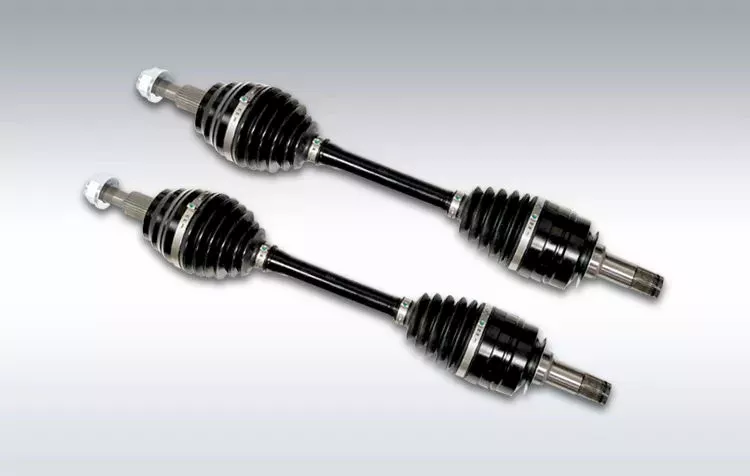
4. Constant Velocity (CV) Joints: In cases where the driven machinery requires a significant range of movement or articulation, PTO shafts may incorporate Constant Velocity (CV) joints. CV joints allow the PTO shaft to accommodate misalignment and angular variations without affecting power transmission. These joints provide a smooth and constant power transfer even when the driven machinery is at an angle relative to the power source. CV joints are commonly used in applications such as articulated loaders, telescopic handlers, and self-propelled sprayers, where the machinery requires flexibility and a wide range of movement.
5. Telescopic Designs: Some PTO shafts feature telescopic designs that allow for length adjustment. These shafts consist of two or more concentric shafts that slide within each other, providing the ability to extend or retract the PTO shaft as needed. Telescopic designs accommodate variations in the distance between the power source and the driven machinery. By adjusting the length of the PTO shaft, operators can ensure proper power transmission without the risk of the shaft dragging on the ground or being too short to reach the equipment. Telescopic PTO shafts are commonly used in applications where the distance between the power source and the implement varies, such as in front-mounted implements, snow blowers, and self-loading wagons.
By incorporating these mechanisms and designs, PTO shafts can handle variations in speed and torque requirements effectively. They provide the necessary flexibility, safety, and control to ensure efficient power transmission between the power source and the driven machinery. PTO shafts play a critical role in adapting power to meet the specific needs of various equipment and applications.


editor by CX 2024-02-28























