
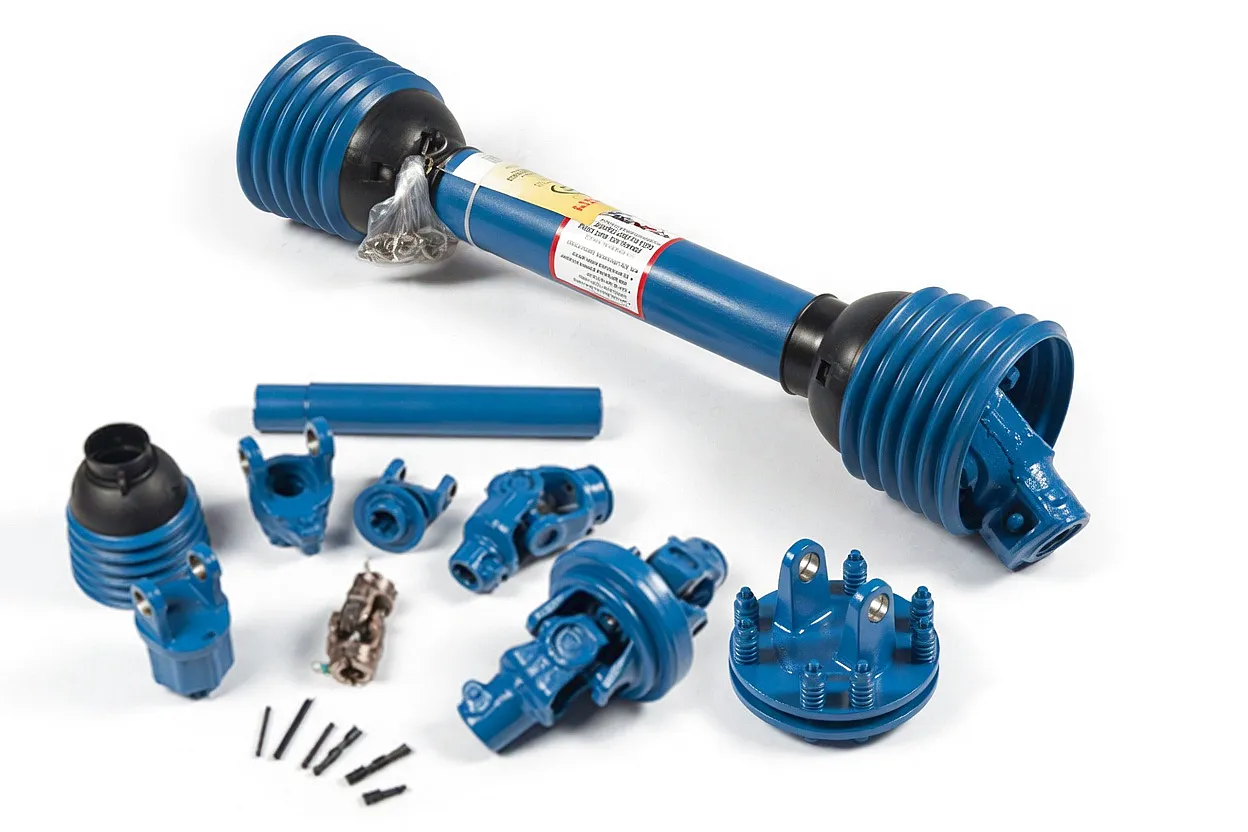
Fast response for UK enquiries · Custom shaft specifications available
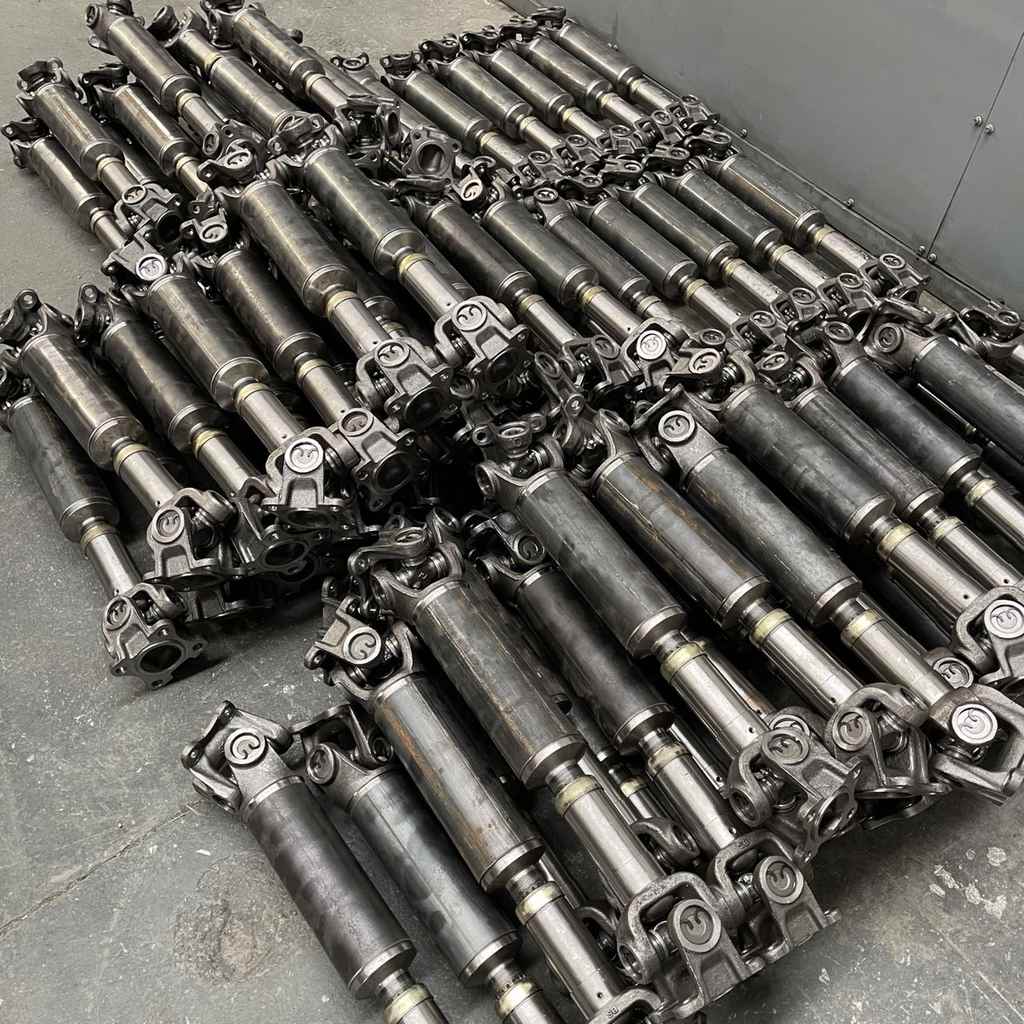 Across Yorkshire’s grain farms, the heavy manufacturing corridors of Birmingham, and the arable flatlands of East Anglia, the power take-off shaft sits at the mechanical heart of a vast range of driven equipment. Rotary cutters, feed mixers, hydraulic pumps, balers, slurry tankers — all depend on a PTO shaft transmitting reliable torque from the tractor’s gearbox output to the implement’s input. When that shaft begins to deteriorate, the entire operational chain is at risk. The trouble is that early-stage wear rarely announces itself loudly. By the time a PTO shaft fails catastrophically — a splintered yoke, a seized universal joint, a guard wrapping around an axle — the opportunity to perform low-cost preventive maintenance has long since passed.
Understanding the mechanical language your shaft speaks before failure is not optional knowledge for a serious operator — it is fundamental to protecting both expensive equipment and personal safety. The Health and Safety Executive (HSE) in the UK continues to list PTO-related accidents among the most serious and avoidable incidents in agricultural settings. This article dissects the five most important warning signs that your power take-off shaft is demanding attention, explains the underlying causes of each symptom, and provides actionable guidance drawn from real maintenance practice in UK industrial and farming environments.
Unusual Vibration or Shudder During Operation
Symptom
A PTO shaft that runs smoothly under no load but begins vibrating noticeably once it is transmitting torque to an implement is communicating a mechanical imbalance or alignment problem. The vibration may manifest as a rhythmic shudder felt through the tractor cab, a rattling sound emanating from beneath or behind the machine, or a visible wobble in the shaft itself when observed from a safe distance. In some cases, operators in areas like the Lincolnshire fenlands report that vibration appears only at specific engine rpm ranges, which points toward a resonance frequency coinciding with a damaged component rather than a continuously degraded system. Do not mistake this cyclic roughness for normal operational noise — it is your shaft telling you that something is mechanically out of balance.
Root Causes
The most common underlying cause is a worn or damaged universal joint (UJ). The cross-and-bearing assembly inside each UJ tolerates enormous cyclical stress, and once its needle bearings begin to pit or seize, the smooth transfer of angular motion degrades into an uneven, jerky output. A bent shaft tube — surprisingly common on equipment used across rough Midlands terrain or rutted farmyards — will also introduce bowing vibration proportional to shaft speed. Equally, a damaged or missing guard that has contacted the spinning shaft can cause asymmetric loading which creates its own characteristic shudder. Incorrect phasing of the yokes, where the two outer yokes of a double-jointed shaft are not aligned in the same plane, is another textbook cause of second-order vibration that can be easily corrected but is frequently overlooked during reassembly after service.
Immediate Action
Stop operation immediately and disengage the PTO before investigating. Inspect each universal joint for play by gripping the yoke and attempting to rock it axially — any detectable movement indicates worn bearing cups that require replacement. Check yoke alignment with both outer yokes parallel before reconnecting. Visually inspect the full tube length for bending. Do not resume powered work until any bent, cracked, or excessively worn component has been replaced with a dimensionally correct substitute from a qualified UK drivetrain supplier.
Universal Joint Wear: The Primary Vibration Source
A standard agricultural PTO shaft running at 540 rpm completes over 32,000 rotations per hour. Each rotation cycles the needle bearings inside every UJ through their full load range. After approximately 1,000 to 1,500 operating hours without adequate lubrication, wear patterns accelerate rapidly — particularly in shafts used across uneven ground where operating angles exceed 15 degrees.
Clicking, Clunking or Grinding Noises Under Load
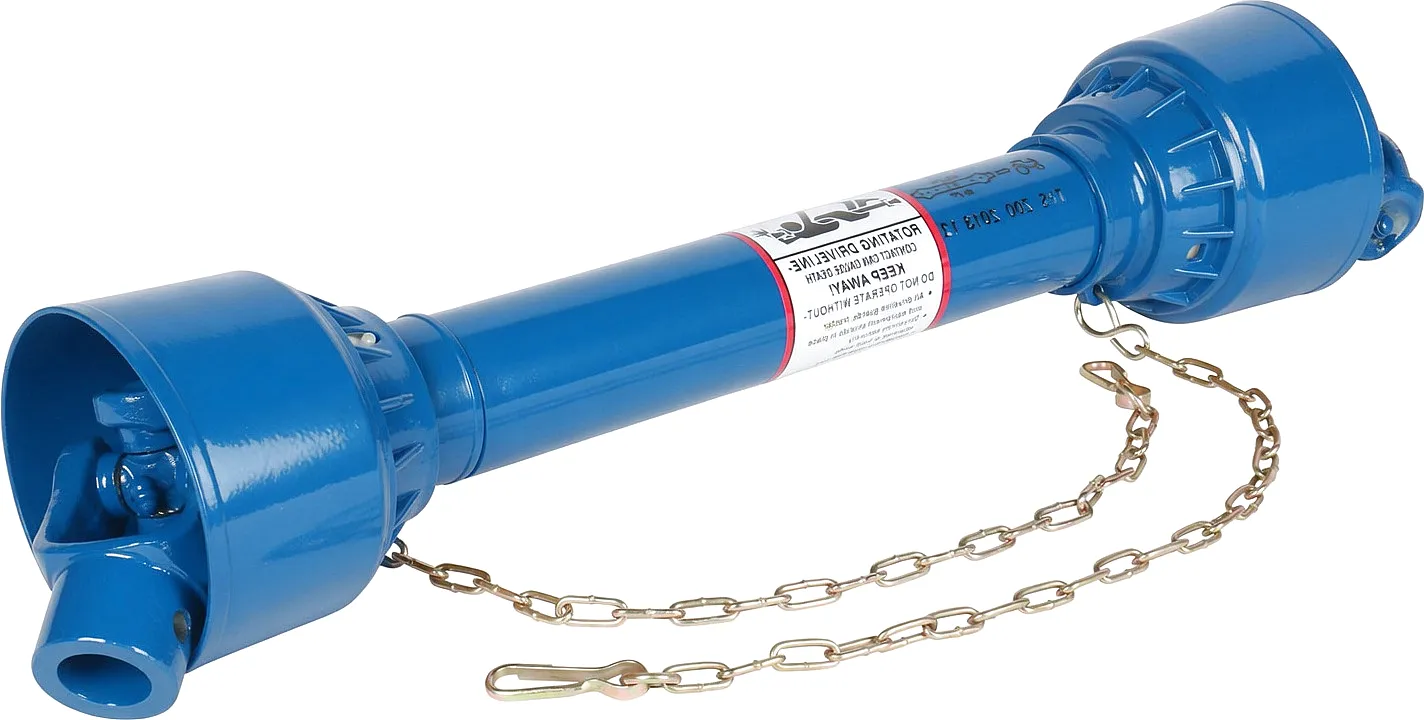
Mechanical noise is one of the clearest distress signals in any drivetrain component, and a PTO shaft is no exception. A sharp clicking or ticking sound that occurs once per shaft revolution almost always indicates a cracked or spalled bearing cup within a universal joint — the damaged surface impacts under load at a predictable frequency tied directly to rotational speed. A deeper, more irregular clunking tends to point toward excessive spline wear in the telescoping section, where the male and female splined tubes that allow the shaft to extend and retract have developed too much radial play. This looseness causes the teeth to bang against each other during torque reversals, such as when a baler plunger reaches the top of its stroke or when a rotary mower blade strikes hard material.
Grinding noises represent the most serious acoustic warning. This sound typically means that metal-to-metal contact has progressed beyond lubrication starvation into active abrasive wear — material is being removed from the bearing surfaces or spline teeth with each revolution. Operators in Sheffield’s industrial belt who run heavy hydraulic pump drives often encounter this symptom when shafts are operated at steep angles on compact or raised equipment, angles that accelerate internal wear in both the joints and the sliding section. A grinding PTO shaft should be considered a failure in progress, not an impending one.
Visible Grease Leaks or Dried Lubricant Residue
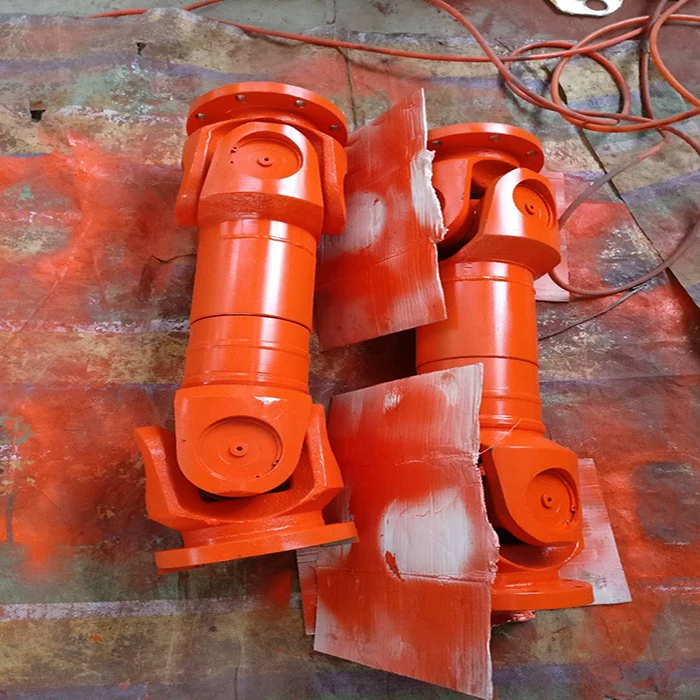 Grease is the lifeblood of a PTO shaft’s universal joints and sliding spline section. A correctly maintained shaft should retain its lubricant within sealed bearing caps and behind properly functioning grease nipples — you should never see fresh grease migrating outward across the yoke faces or crusted brown deposits ringing the spline sleeve after a season of work. When grease does appear on external surfaces, it signals one of several failure modes that are each worth investigating in detail.
Blown bearing cup seals are the most frequent culprit in UJ grease loss. When excessive operating angles, over-greasing under pressure, or simple seal age causes the cup retention clips to relax, grease is expelled centrifugally during rotation. The resulting dry bearing then accelerates its own wear in a self-reinforcing cycle. Across the agricultural spreads of Cambridgeshire and Norfolk, this pattern is commonly seen on shafts that have spent winters parked outdoors without protective treatment, where seal rubber hardens and cracks in cold conditions. Conversely, a sliding spline section that shows dried, chalky grease residue rather than fresh contamination indicates that the spline has been running without adequate lubrication — meaning the telescoping action is generating abrasive friction internally with every stroke.
Damaged, Missing or Rotating Safety Guard
The plastic safety guard that surrounds a PTO shaft is not merely a regulatory compliance item to be tolerated — it is a precision component that protects both the operator and the shaft itself. In the UK, the Provision and Use of Work Equipment Regulations 1998 (PUWER) and related agricultural safety guidance from the HSE make it explicitly clear that PTO shafts must be guarded when in use, and that employers have a legal duty to ensure those guards are intact and functioning. From a purely mechanical standpoint, a guard that has been knocked into contact with the spinning shaft and is now rotating along with it is inflicting an outward imbalance force on the shaft tube, generating heat through friction at the contact point, and transmitting vibration back into the tractor’s PTO stub. An impact-damaged guard with cracks or missing sections may allow grass, string, or crop debris to wrap around the shaft — a scenario that can end in seconds with a wrapped limb or broken coupling.
Under PUWER 98, a PTO-driven machine without an intact guard must be taken out of service. HSE inspectors attending farm incidents in regions from Devon to Northumberland routinely cite missing or disabled shaft guards as primary contributing factors. Non-compliance can result in prohibition notices, fines, and — in the event of an injury — prosecution. Replace a damaged guard before the next work session, not at the end of the season.
Overheating, Discolouration or Shaft Stiffness
After shutting down the PTO and allowing a brief cooldown period — critical for safety before any physical inspection — place the back of your hand near (not on) the universal joint housings and the spline section. A correctly operating PTO shaft will be warm but never uncomfortably hot to approach. A shaft running significantly above ambient temperature after a moderate work session suggests that friction losses within the component are far exceeding acceptable limits. Thermally degraded grease will also lose its viscosity and separation properties far faster than mechanically worn grease, meaning heat accelerates the very wear it is causing.
Discolouration of the shaft tube or yoke components from their original painted or zinc-plated finish is a reliable visual indicator of sustained heat exposure. A blue or golden-brown heat tint on a yoke face that was previously painted silver indicates temperatures in excess of 250°C have been reached at that location — temperatures that would have long since destroyed whatever lubricant was present. This is often seen on shafts running continuous-duty applications like PTO generator drives or high-speed hydraulic pump arrangements in fabrication workshops across the West Midlands.
Stiffness in the sliding spline section — where the shaft resists axial movement during length adjustment — is equally revealing. A correctly lubricated steel-on-steel spline should slide smoothly with hand pressure across its full range of travel. Any spline section that requires a mallet, requires significant effort, or binds at a particular point in its range has either suffered corrosion seizure, debris contamination, or mechanical deformation from over-compression. Operating a stiff-splined shaft will distribute bending stresses abnormally along the tube during angular work, accelerating fatigue cracking at the most severely loaded points.
PTO Shaft Performance & Specification Table
The following table consolidates key technical parameters for standard agricultural and industrial PTO drive shafts. These figures provide a reference baseline for selecting the correct shaft specification and for assessing whether an existing shaft is operating within its designed limits. Exceeding any of these parameters consistently will accelerate every one of the warning sign conditions described above.
| Parâmetro | Standard Ag (540 rpm) | High-Speed (1000 rpm) | Industrial Heavy-Duty |
|---|---|---|---|
| Max Continuous Torque | Up to 2,000 Nm | Up to 1,500 Nm | Up to 8,000 Nm |
| Max Operating Angle (per joint) | 15° (optimal <10°) | 12° (optimal <8°) | Up to 35° (CV joint) |
| Material do tubo | High-strength steel (S355) | High-strength steel (S355) | Alloy steel / EN19 / EN24 |
| Material do jugo | Forged carbon steel | Forged carbon steel | Drop-forged alloy steel |
| Tratamento de superfície | Zinc phosphate + paint | Zinc phosphate + paint | Hot-dip galvanise / nickel plate |
| Perfil Spline | 6-spline, 20° involute | 6-spline, 20° involute | Custom: 6 to 21-spline |
| Proteção contra sobrecarga | Friction clutch / shear bolt | Friction clutch | Torque limiter / overrunning |
| Recommended Service Interval | Every 8 hrs (greasing) | Every 8 hrs (greasing) | Per OEM schedule |
| Typical Service Life | 2–5 years (maintained) | 1.5–3 years | 5–10+ years (custom spec) |
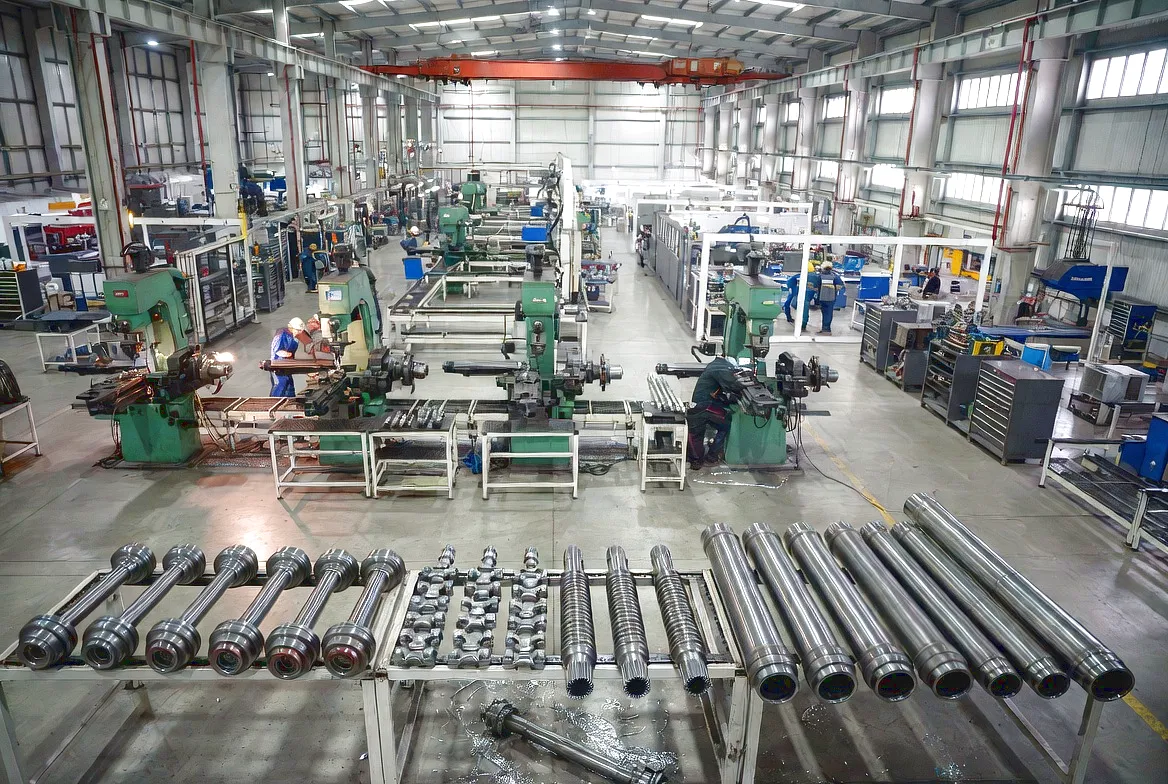
Derbyshire Contractor Eliminates Seasonal Shaft Failures with Ever Power Custom Units
 Hargreaves Agricultural Contracting, based on the outskirts of Chesterfield in Derbyshire, runs a fleet of eight large tractors performing silage cutting, muck spreading, and round baling across a 25-kilometre working radius. For three consecutive seasons, the company’s fleet manager, David Hargreaves, had contended with a pattern of recurring PTO shaft failures specifically on two of the four-wheel-drive tractors assigned to slurry tanker work on the Peak District fringe — ground that involves steep gradients, constant headland turning, and tanker drawbar weights that push the PTO system to its continuous-duty limit throughout spreading season.
The original-equipment shafts were designed for standard agricultural duty at angles up to 15 degrees. The slurry work regularly demanded 18 to 22 degrees of articulation on side-sloping ground, and the combination of high continuous torque and excessive operating angle was wearing through UJ bearing kits within a single spreading season — roughly 300 to 350 operating hours. David was replacing both inner joint kits on each shaft every spring at significant cost, both in parts and in the day of workshop time required per shaft.
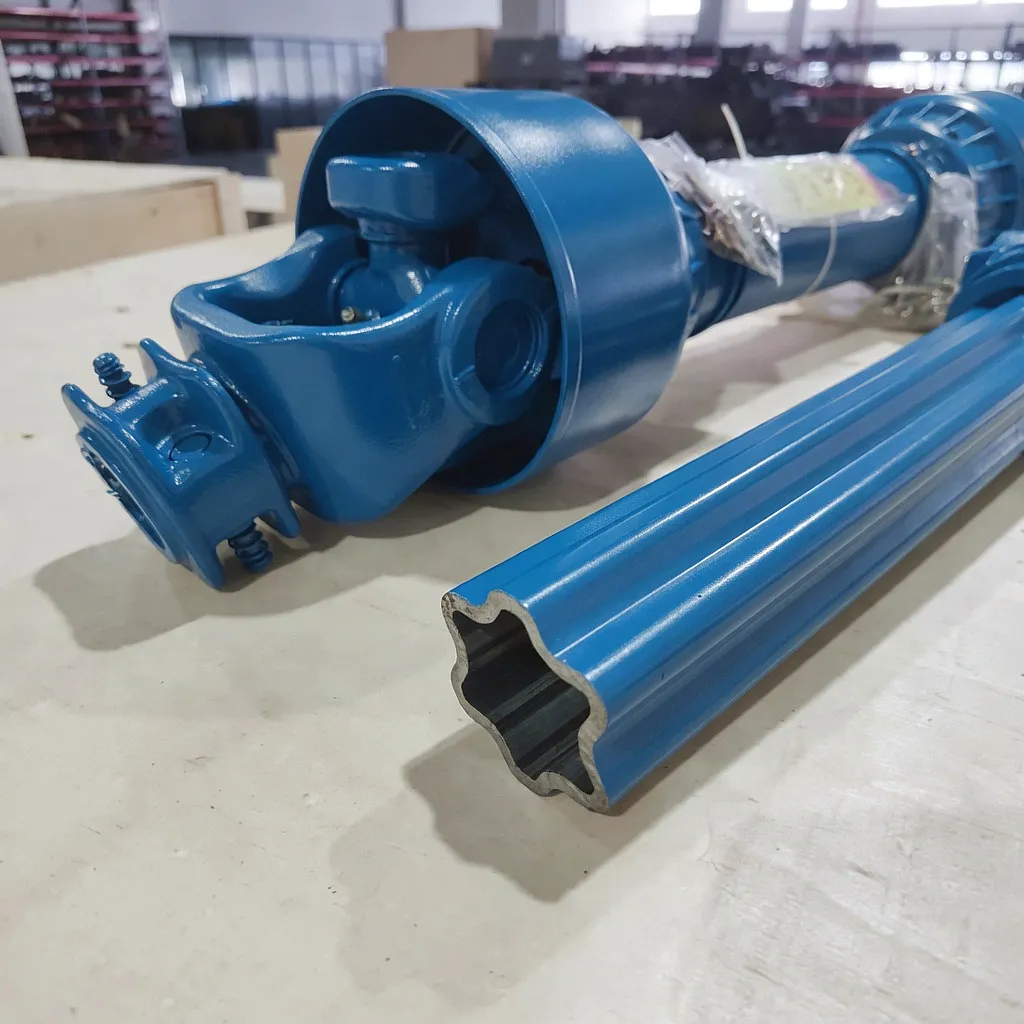
Following contact with Ever Power’s technical team, a custom wide-angle CV joint shaft was engineered specifically for this application. The new design incorporated constant-velocity bell-and-cage joints rated to 35 degrees of articulation, EN24 alloy steel tube, and an upgraded overrunning clutch integrated into the tractor-end yoke to manage torque reversal spikes. Ever Power produced four shafts to David’s exact hitch-point dimensions and supplied them with full inspection documentation. Two seasons on, none of the four units has required joint replacement. The return on investment, measured against the previous annual parts and labour cost, was realised within the first operating season. The entire supply interaction, from initial technical enquiry to delivery at Hargreaves’ Chesterfield yard, took 22 working days.
What UK Customers Say About Ever Power PTO Shafts
“After two years of replacing cheap shaft kits every season, we specified a custom EN19 unit from Ever Power for our Merlo telehandler front PTO hydraulic pump. Twelve months later the shaft still runs without so much as a squeak. The fit was exact — every dimension they asked us for was right. Would recommend to any contractor running non-standard equipment.”
“We operate a dozen PTO-driven drum shredders in our Birmingham recycling facility. Sourcing shafts that match our specific drum input flange and handle the torque shock loads from compacted material has always been difficult. Ever Power supplied us with eight matched shafts in under three weeks, complete with friction clutch limiters calibrated to our overload threshold. The technical support during the specification phase was genuinely impressive — they clearly understand the engineering, not just the catalogue.”
“We had a vibration issue on our compost turner that had been annoying us for two seasons — a mild but persistent shudder that our local supplier told us was just the nature of the machine. After reading up on PTO shaft yoke phasing, I contacted Ever Power about a replacement that was correctly phased for our application. They verified the geometry from the photos I sent, built a new shaft to match, and the vibration completely disappeared on the first test run. Never going back to the local catalogue option.”
Your PTO Shaft Questions Answered
Real questions from UK operators, contractors, and plant engineers.
Seeing One or More of These Warning Signs?
Don’t wait for a field breakdown or a workshop shutdown to act. Contact Ever Power’s technical sales team today for expert advice, a dimensionally correct replacement shaft, or a custom design engineered for your specific UK application. Fast response, full documentation, and reliable delivery to anywhere in Britain.
[email protected] · UK enquiries welcomed · Custom specifications available
Content prepared for Ever Power · PTO Drive Shafts · United Kingdom · Technical accuracy verified against current HSE guidance and ISO 500-1 agricultural tractor standards. · edit by gzl























