
✉ Get a Free Quote — [email protected]
Response within 24 hours · UK-optimised lead times available
Why PTO Shaft Longevity Is a Serious Business Issue
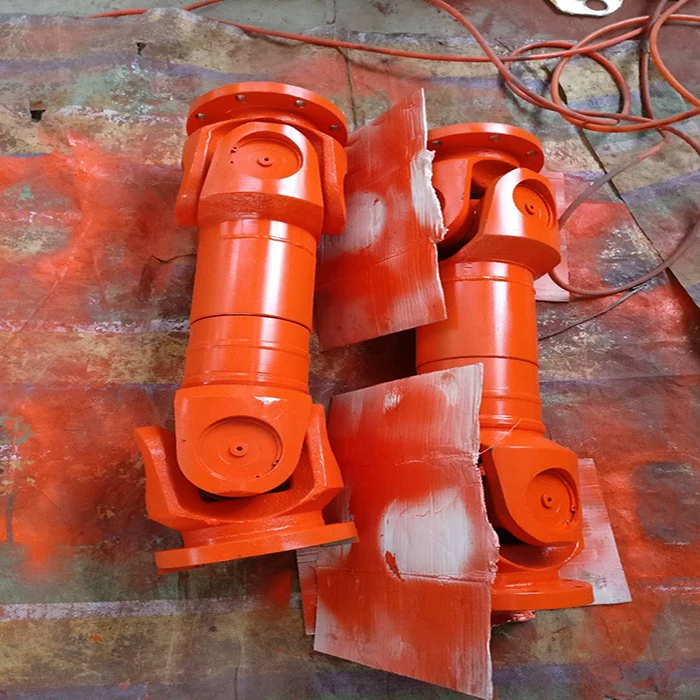 On a working farm or a large-scale contracting operation anywhere from the Lincolnshire Fens to the Vale of York, a failed PTO shaft rarely fails quietly. It takes down the implement, delays the job, and sometimes damages the tractor’s gearbox or the connected equipment in the same moment. Anyone who has tried to source a replacement yoke assembly on a Bank Holiday weekend knows precisely how much leverage one small rotating component has over an entire day’s plan. Yet despite this operational reality, the PTO drive shaft remains one of the most frequently overlooked items in a preventive maintenance schedule. It gets greased occasionally, perhaps inspected when something rattles, and replaced only once it has already broken — a reactive approach that costs far more than a proactive one over any realistic five-year operating window.
This guide exists to change that pattern. Drawing on the practical realities of UK agricultural engineering, heavy groundcare contracting, and industrial power transmission, it sets out a complete framework for understanding how a PTO shaft actually works, what materials and design features determine its working life, how to carry out systematic maintenance, and how to identify the early warning signs that predict failure before it happens. The goal throughout is not theoretical perfection but practical durability — getting measurably more productive years out of every PTO drive shaft you put into service.
How a PTO Shaft Works: Mechanics You Need to Understand
The Rotational Power Path
A PTO shaft connects the tractor’s power take-off stub — rotating at either 540 RPM or 1,000 RPM depending on configuration — to an implement’s input gearbox. Power is transmitted in pure rotational form, converted from the tractor’s engine torque without hydraulic fluid, belts, or chains in the primary transfer line. The shaft’s cross-and-yoke universal joints (Hooke joints) allow the driveline to accommodate the angular misalignment that inevitably exists between a tractor’s PTO stub and a mounted or trailed implement, particularly when turning, traversing slopes, or operating on the irregular ground of a typical British farm.
Telescoping Action and Torque Slip
The telescoping inner and outer tubes of a PTO shaft allow the overall driveline length to change dynamically as the implement moves relative to the tractor — lifting on the three-point linkage, pitching over uneven terrain, or pulling away from a close-coupled headland position. This sliding action, usually facilitated by splined profiles, must happen smoothly under zero or minimal load; attempting to extend or compress a seized telescope under operating torque is one of the most common causes of tube fracture in working conditions. Many shafts also include a slip clutch — a friction or cam-ratchet assembly — designed to absorb sudden shock loads and prevent drivetrain damage when a mower strikes a buried object or a forage harvester hits an unexpected obstruction.
Safety Guarding — Not Optional
UK health and safety legislation — most directly the Provision and Use of Work Equipment Regulations 1998 (PUWER) — mandates that all rotating PTO components remain guarded throughout operation. Beyond legal compliance, an intact plastic or steel guard protects the shaft itself from impact damage, UV degradation, and entanglement with crop residues. Guards that are cracked, split, or missing create a failure pathway: debris wraps around the shaft, creates heat through friction, accelerates bearing wear in the yokes, and can physically deform the driveline before the operator is even aware of the problem. Treating the guard as a structural and mechanical asset — not just a regulatory inconvenience — is an attitude that measurably extends PTO shaft service life.
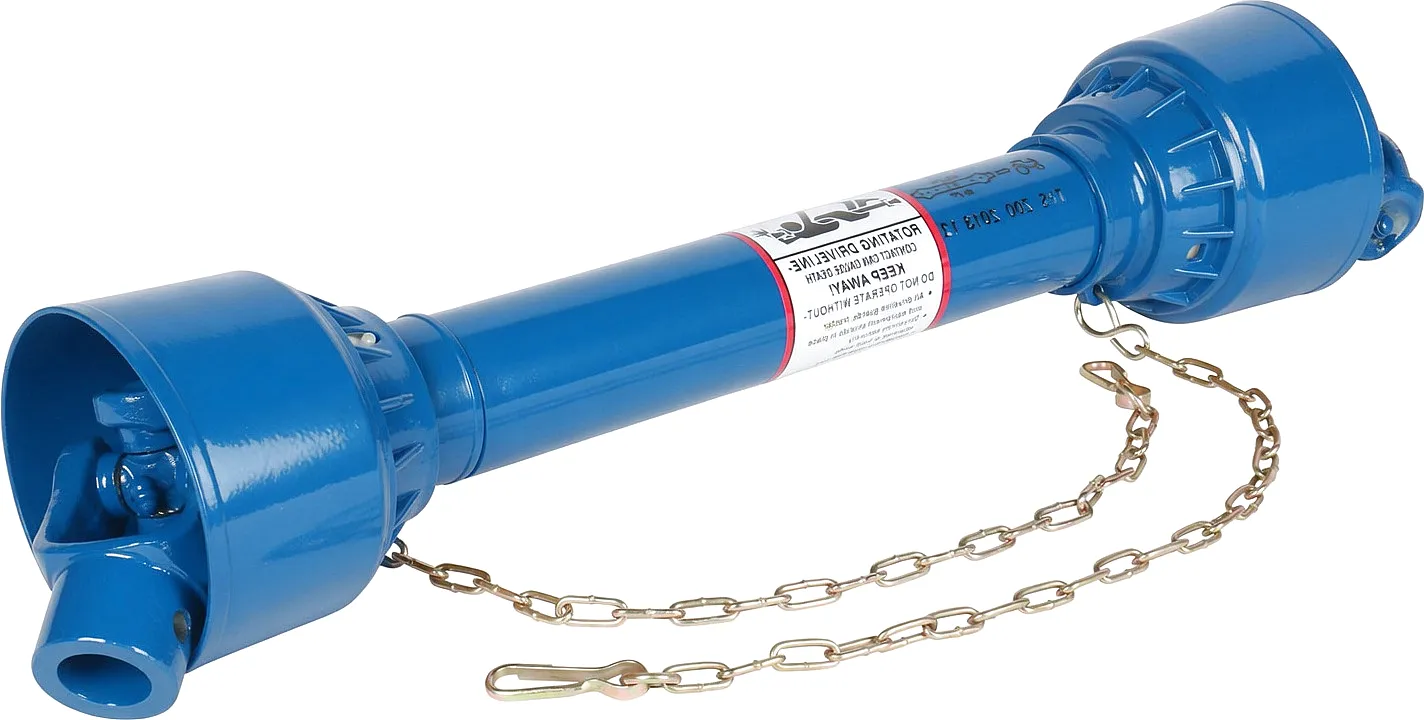
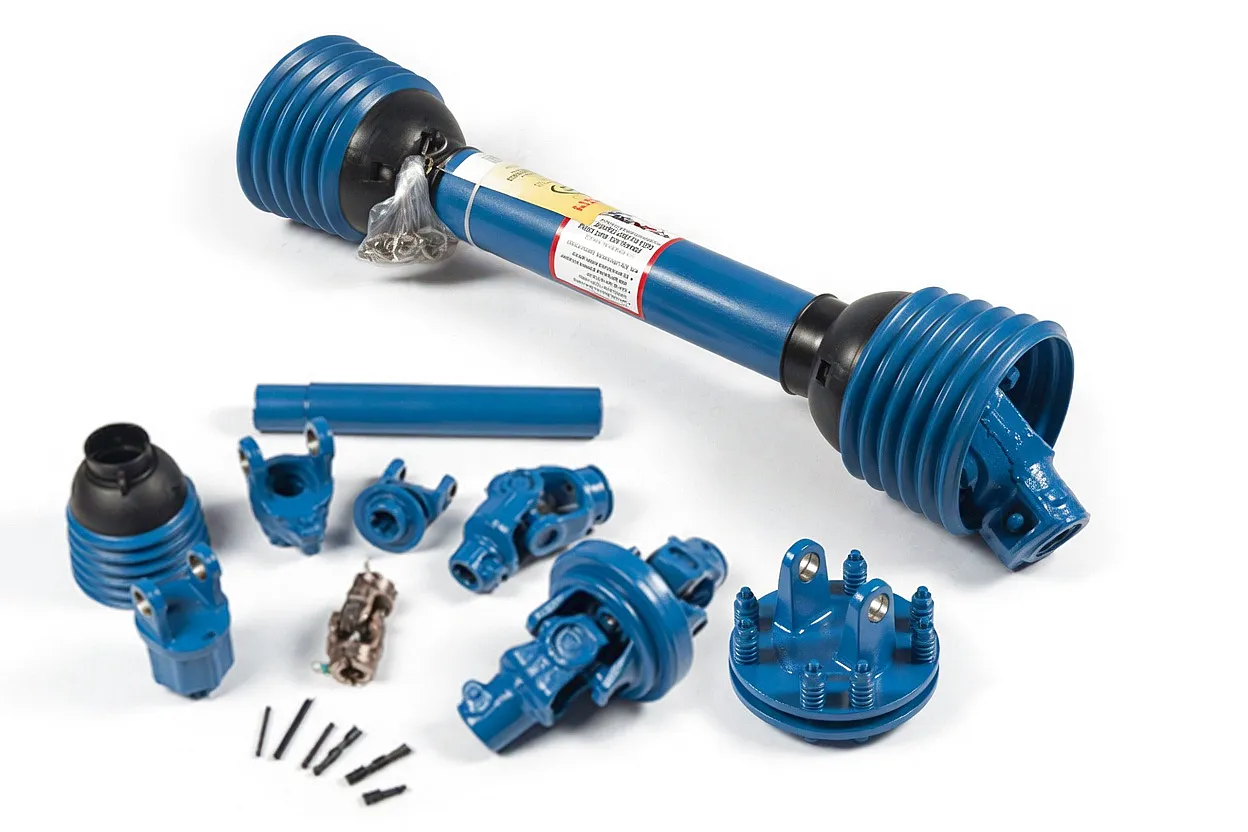
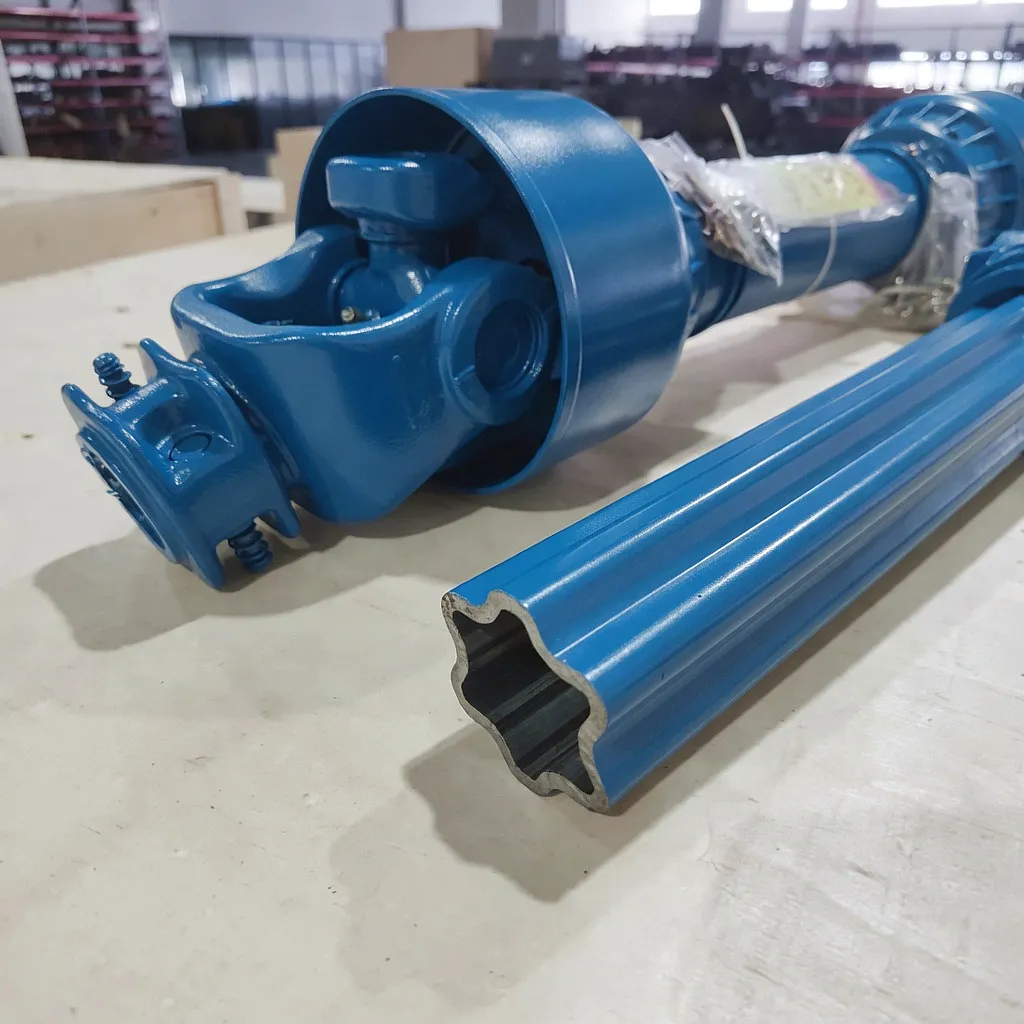
Cross-and-yoke universal joint assembly — the most stress-critical component in any PTO driveline
Materials That Determine Real-World Service Life
The difference between a PTO shaft that lasts one season and one that gives ten years of reliable service almost always comes back to material selection and manufacturing quality. A low-cost imported shaft may look identical to a premium unit at the point of purchase. The divergence only becomes apparent once both have experienced a full harvest season of peak torque loads, a winter of moisture exposure in an unheated implement shed, and the micro-vibration fatigue that accumulates in every operating hour. Understanding what materials genuinely perform under UK agricultural and contracting conditions lets buyers make defensible procurement decisions and helps operators know what they are working with.
Medium Carbon Steel (40Cr / 42CrMo4)
This alloy is the foundation of serious PTO shaft cross-pins, yokes, and tube sections. Chromium-molybdenum grades offer a tensile strength typically exceeding 900 MPa after heat treatment, combined with excellent notch toughness — the property that resists crack propagation under the cyclic impact loads that universal joints experience thousands of times per working hour. UK contractors running forage harvesters in Yorkshire silage operations and heavy cultivation equipment across heavy Midlands clay soils will find that only properly specified steel cross-pins survive reliably across multiple seasons.
Case-Hardened Steel for Spline Tubes
The telescoping spline profile that allows length adjustment is subject to both sliding wear and occasional point-contact overload. Case hardening — typically carburising and quenching to achieve a surface hardness of 58–62 HRC while retaining a tough core — gives the splines the resistance they need without making the tube section brittle. In practice, the quality difference between a properly case-hardened spline and a homogenously hardened one is most apparent at the three-year mark: the former shows minimal lobe wear under normal greasing intervals; the latter can develop perceptible slop that translates into vibration and yoke stress at operating speed.
Polyamide (PA66) and HDPE Guard Components
The outer safety guard sees impact from stone throw, UV from British summer exposure (limited as it is), and chemical contact from crop sprays and fertilisers. Glass-fibre reinforced polyamide maintains its dimensional stability and impact resistance across a wider temperature range than basic polypropylene — a relevant consideration for early-morning or late-evening work in February, when polypropylene guards become brittle at sub-zero temperatures and crack on first contact with a frozen hedgerow or implement frame. HDPE cones over yoke ends add further stone-strike tolerance without adding weight that might cause the guard to sag and contact the rotating driveline.
Nitrile and Polyurethane Sealing Compounds
The needle roller bearings in a quality universal joint cap are small, lightly loaded relative to their rotational speed, and entirely dependent on retained lubrication for their service life. Nitrile rubber lip seals in the bearing caps hold grease in and keep water, grit, and silage effluent out. In UK agricultural practice — where a PTO shaft may work through a spring grass cut in wet conditions and then sit outside through a wet autumn — seal quality is the decisive factor in bearing life far more often than shaft diameter or cross-pin grade. Polyurethane retention rings in the slip-clutch assembly similarly determine how consistently the clutch re-engages at its rated torque across multiple operating seasons.
Technical Performance & Specification Parameters
Key data for procurement, engineering, and field maintenance reference
| Parametr | Standardowe Rolnictwo | Heavy-Duty Industrial | Custom / OEM Grade |
|---|---|---|---|
| Rated Torque | 500 – 2,500 Nm | 2,500 – 8,000 Nm | Up to 18,000 Nm |
| Prędkość robocza | 540 / 1,000 RPM | 540 / 1,000 / 1,200 RPM | Custom (up to 3,000 RPM) |
| Max. Operating Angle | 15° – 25° (single joint) | Up to 35° (double joint) | Up to 50° (CV joint) |
| Primary Tube Material | S355 / E355 welded steel | 42CrMo4 seamless tube | Alloy or stainless per spec |
| Cross Pin / Yoke Grade | Forged 20CrMo heat-treated | Forged 40CrMo4, deep-case | Full material cert. (EN10204) |
| Surface Protection | Zinc phosphate + lacquer | Hot-dip galvanised / epoxy | Geomet® / Dacromet available |
| Typical Extension Range | 100 – 400 mm | 150 – 600 mm | Custom to ±800 mm |
| Slip Clutch Torque Setting | Preset (±15%) | Adjustable (5 positions) | Electronic / torque-limiting |
A Structured Maintenance Programme That Actually Works
The most effective maintenance programmes are simple enough to be followed consistently — not elaborate enough to be skipped. For PTO drive shafts operating in UK conditions, the following interval-based framework has been developed from field experience across a range of implement types and operating environments. It is designed to be adapted, not followed rigidly: a shaft fitted to a contractor’s bale wrapper running twelve hours a day during a July heatwave needs the weekly checks applied daily; a shaft on a rarely-used post-hole borer might remain on the monthly schedule for years. The point is habitual, structured attention rather than reactive crisis management.
Check guard integrity. Confirm attachment pins are secured. Listen for abnormal vibration or clicking during engagement. Verify correct overlap of telescoping tubes (minimum 1/3 of inner tube engaged). Never exceed the maximum operating angle marked on the shaft.
Apply lithium-complex EP2 grease to all grease nipples: universal joint cross bearings (typically 4 points per cross), spline tube nipple, and slip clutch hub bearing if fitted. Two to three pump-strokes per point under normal conditions — over-greasing causes seals to push outward and admit contamination. Wipe excess from around seal faces.
Remove guard sections and inspect cross-pin needle roller bearings for radial play: more than 0.5 mm of movement in any direction indicates replacement is due. Check spline engagement for lobe-edge wear. Inspect guard brackets and chains. Verify slip clutch engages at rated torque and re-engages cleanly after activation. Repaint any surface rust on tube sections before it progresses to pitting.
Full disassembly, clean-down, and bearing replacement as a precautionary measure on any shaft with 500+ operating hours. Check tube ovality with a gauge (more than 0.3% out-of-round on the spline section warrants replacement). Lubricate guard bearing with specialist semi-fluid grease. Replace any guard sections showing UV embrittlement. Record hours and findings for procurement planning purposes.
Early Warning Signs: Reading Your PTO Shaft Before It Fails
Experienced tractor operators often say they can hear a failing PTO shaft before they can see it — which speaks to how much diagnostic information is available to someone who knows what to listen and feel for. Universal joint wear generates a characteristic cyclic vibration at twice the rotational frequency of the shaft, which transmits through the implement frame and into the tractor cab as a rhythmic shudder that increases in severity with shaft speed. Spline wear tends to produce a different signature: a low-frequency thumping or knocking on engagement and disengagement, particularly noticeable when transitioning between loaded and unloaded conditions. Catching either of these early — during a routine working round rather than mid-task at peak demand — is the difference between a £40 cross-kit repair and a £400 full shaft replacement, to say nothing of downtime costs during a critical weather window. Below are the specific indicators to act on without delay.
⚠
Visible Rust Seeping from Guard Joints
Red-brown staining on the outside of plastic guard sections is moisture being expelled from corroding metal inside. This almost always indicates that bearing cap seals have failed and water has entered the cross bearing assembly. Left unaddressed, complete needle-roller failure follows within 20–40 operating hours.
🔈
Uncharacteristic Vibration at Operating Speed
A shaft that ran smoothly last season but now generates cab vibration at 540 RPM may have a worn cross-pin, an imbalanced section from impact damage, or equal-length yokes that have shifted into a phased rather than in-phase alignment. Phasing errors are particularly deceptive — the shaft looks physically undamaged but creates severe second-order vibration that fatigue-loads everything in the driveline.
🔬
Grease Nipples That Won’t Accept Lubricant
A nipple that resists grease under normal gun pressure suggests one of two conditions: the bearing cavity is already packed solid with contaminated, dried lubricant — indicating long-term neglect — or the needle roller assembly has seized and there is no void to accept fresh grease. In either case, simple re-greasing is not a remedy. The cross assembly needs replacing before operating load is reapplied.
🛠
Slip Clutch Activating at Incorrect Loads
A slip clutch that trips during normal operation — not just on shock events — is either set incorrectly or has worn friction plates. The resulting repeated engagement-slip cycles accelerate heat generation in the clutch pack, distort the pressure springs, and ultimately destroy the clutch’s ability to protect the driveline from the genuine overloads it was designed to absorb. The cost of a new clutch assembly is always lower than replacing both the tractor PTO gearbox and the implement input shaft simultaneously.
Application Scenarios Across UK Industries
While the agricultural sector remains the dominant user of PTO shafts in the UK, the application base extends significantly further into groundcare, waste processing, construction support, and light industrial power transfer. Each application domain brings its own combination of duty cycle, operating angle, torque profile, and environmental exposure — which is precisely why correctly matching the shaft specification to the application matters as much as maintenance quality. A contractor operating heavy flail mulching equipment across the Somerset Levels will face very different shaft stresses than a Sheffield industrial site running a PTO-driven hydraulic power unit for maintenance equipment, yet both benefit from the same principles of specification accuracy, lubrication discipline, and early-warning awareness.
Ever Power: Precision Manufacturing & Full Customisation
Delivering specification-accurate PTO drive shafts to UK and international customers
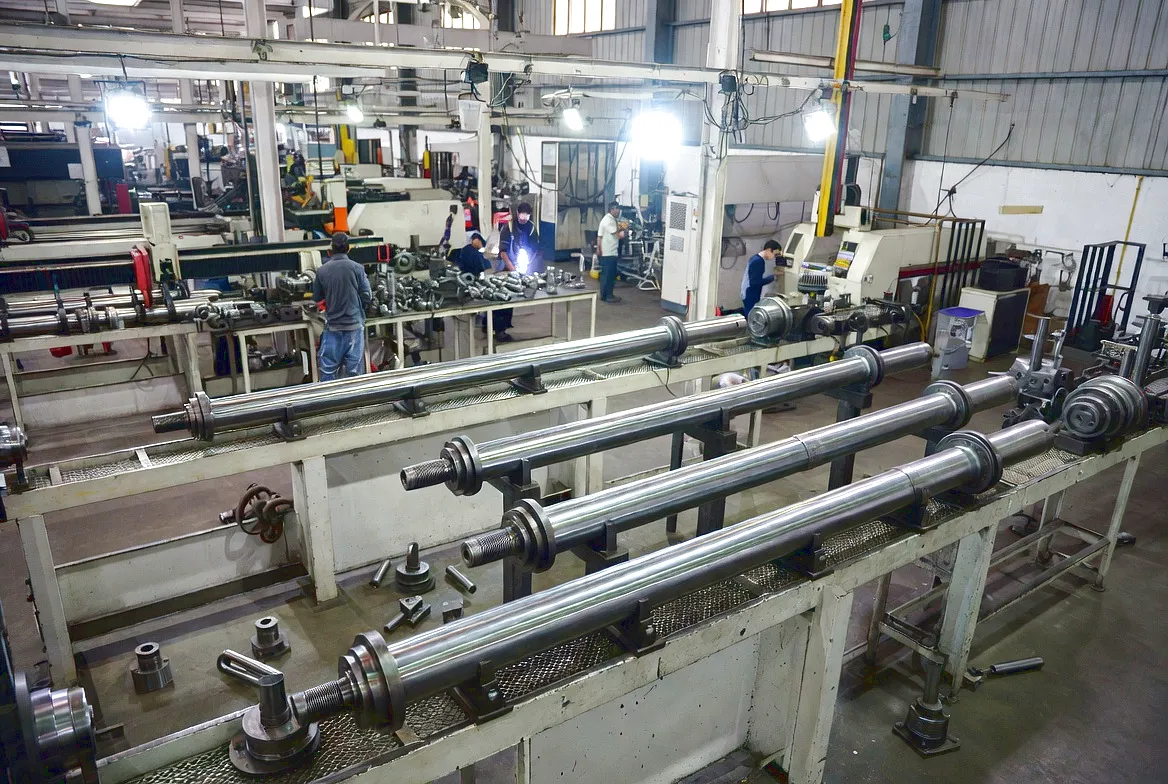
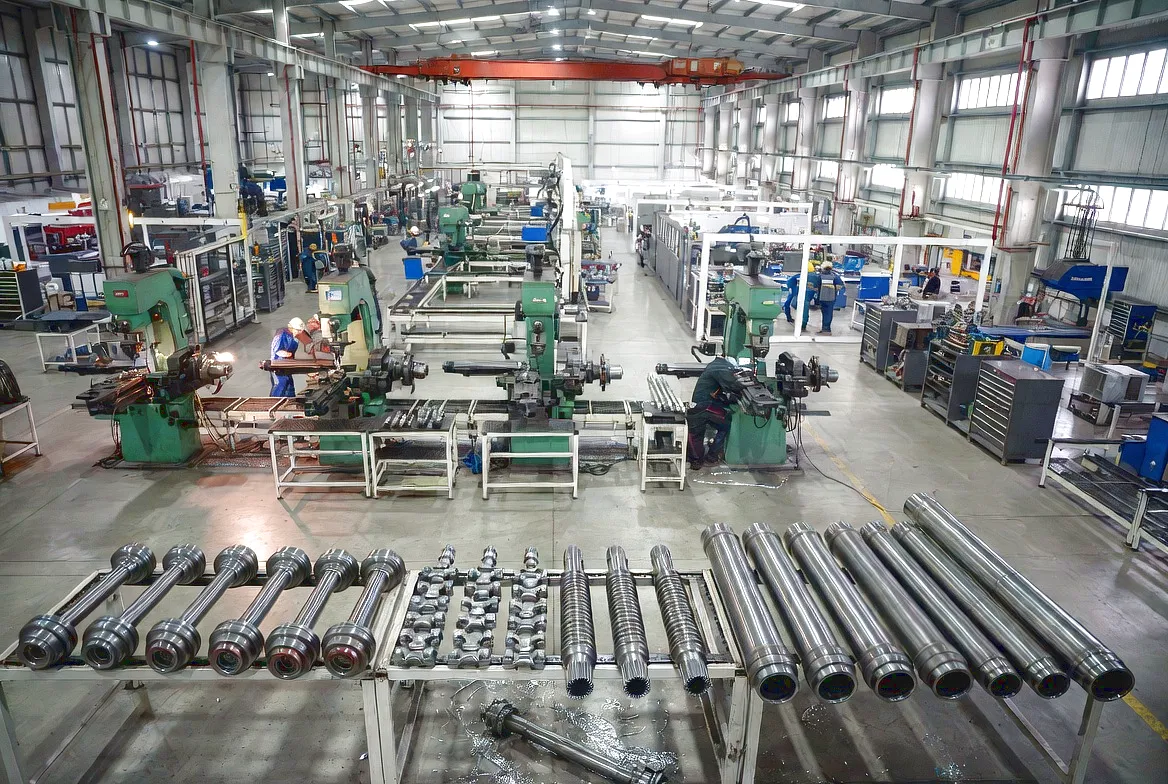
Ever Power operates a purpose-built manufacturing facility specifically designed for precision PTO driveline components, with a production capability that covers everything from standard catalogue specifications to fully bespoke assemblies developed against customer-supplied drawings and performance requirements. Where many suppliers offer a catalogue and a lead time, Ever Power offers a genuine engineering partnership — one that begins at the enquiry stage with a technical review of the application, operating environment, torque profile, and any regulatory or certification requirements, and continues through production with in-process inspection at every key stage. For UK buyers in sectors ranging from the highly competitive agricultural contracting market to niche industrial applications requiring specific material certificates, this approach translates into a PTO shaft that is built for the job rather than selected as the nearest standard fit.
Custom Dimensional Engineering
Every dimensional parameter — tube length, spline count and module, yoke bore diameter, extended and compressed length, connection type at each end — can be specified to customer requirement. Non-standard yoke configurations for unusual implement input shafts are routinely accommodated within standard lead times.
Material & Surface Specification Flexibility
Material grades from standard S355 through 42CrMo4 and stainless steel variants are available with EN10204 3.1 or 3.2 certificates on request. Surface treatment options include hot-dip galvanising, electroless nickel, Geomet®, and customer-matched paint or powder coat finishing for OEM integration.
Supply Chain & UK Delivery
Ever Power’s supply chain structure supports both volume OEM contracts and small-batch replacement orders, with documented quality records that satisfy the procurement requirements of UK agricultural machinery dealers, plant hire companies, and industrial MRO operations. Air freight options are available for urgent replacement orders in support of active UK customer commitments.
✉ Request a Custom Quote from Ever Power
Email: [email protected] · Technical drawings accepted · UK export documentation available
Customer Success Story: A Sheffield Contracting Operation
 Highfields Agricultural Contracting Ltd runs a mixed fleet from their base on the eastern edge of Sheffield, providing forage harvesting, baling, and heavy cultivation services across South Yorkshire and into the Derbyshire Peak fringe. Their operation is typical of UK contracting businesses that punch above their weight: eight tractors, twelve implements covering the full arable and grassland service range, and a workshop team of two that carries full responsibility for maintaining a fleet that cannot afford unplanned downtime during the May to September peak. Their previous PTO shaft supplier had provided adequate catalogue parts for several years, but a run of three cross-pin failures during a single July silage campaign — each requiring a half-day machine-off-road event to source and fit a replacement — prompted the business to approach Ever Power directly, initially for an emergency replacement supply and subsequently for a complete fleet refit programme.
Ever Power’s technical team reviewed the failed components alongside Highfields’ operating records and identified a consistent pattern: the previous shafts had been specified for standard 540 RPM operation at nominal torque, but the forage harvester application involved repeated shock-load events substantially above nominal that were exceeding the fatigue limit of the standard cross-pin grade. The remedy was a specification upgrade to 40CrMo4 deep-case cross assemblies with an improved nitrile seal grade and a revised slip clutch torque setting that better matched the combine harvester application profile. The new shafts were in service within the agreed lead time — which Ever Power’s logistics team structured to arrive at Sheffield in advance of the next cut — and the following silage season passed without a single unplanned shaft-related downtime event.
By the end of the second season, Highfields had extended their Ever Power supply relationship to cover their full baling and cultivation shaft inventory, with a standing stock agreement that allows rapid in-season replacement of wear items without the purchase-order lead time that had previously created delays. The commercial value of the arrangement — measured in reduced workshop hours, lower parts cost per operating hour, and near-elimination of peak-season failures — was substantial enough that the business’s owner credited the supply change as one of the better operational decisions the business had made in recent years.
What Our UK Customers Say
“The 40CrMo4 cross assemblies Ever Power recommended have now completed two full silage seasons and two autumn ploughing campaigns without any bearing issues. Before the switch, we were replacing cross-kits every twelve weeks on the forage harvester driveline. The upgrade paid for itself inside the first season.”
“We run trommel screeners and shredding equipment at our composting site outside Birmingham. The wet, abrasive conditions destroy standard shafts within months. Ever Power’s sealed, epoxy-coated assemblies have been a genuine step change — we’re at fourteen months on the first pair and they’re still within spec on the cross-pin check.”
“We procure replacement PTO components for groundcare contracts covering over forty local authority sites across Yorkshire and Humberside. Ever Power’s standing stock programme and their ability to turn around urgent replacement orders to our Leeds depot within the lead time we need has removed the supply bottleneck that previously caused us real problems during peak cutting weeks.”
Często zadawane pytania
Real questions from UK agricultural operators, plant engineers, and procurement teams
Ready to Extend the Working Life of Your PTO Drivetrain?
Talk to Ever Power’s engineering team today. We cover standard replacements, fleet supply agreements, and fully bespoke specifications for UK customers.
edytuj przez gzl























