
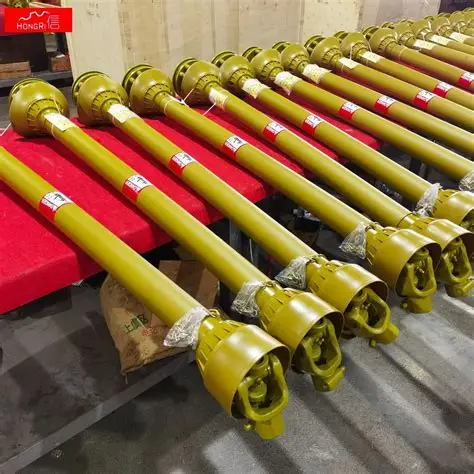
 In virtually every corner of UK agriculture, construction, and industrial machinery, a single mechanical component quietly transmits enormous quantities of power between a driving machine and its attached equipment. The PTO shaft — or Power Take-Off shaft — is that unsung workhorse. From the rolling farmlands of Lincolnshire to the heavy fabrication workshops of Sheffield and the construction fleets operating across Birmingham’s expanding infrastructure corridors, PTO shafts form the critical mechanical bridge between a prime mover and the implements that do real work. Understanding how these shafts are designed, built, and selected is not merely academic; it is a matter of operational efficiency, safety compliance, and total lifecycle cost. This guide dissects every layer of PTO shaft engineering — from raw material metallurgy to torque capacity tables — giving engineers and procurement specialists the technical depth they need to make confident decisions.
What Exactly Is a PTO Shaft — and Why Does It Matter?
Foundations of Power Transmission
A Power Take-Off shaft is a mechanical drive component that transfers rotational energy from a vehicle’s gearbox or engine to an external piece of machinery or implement. The concept originated in the agricultural sector, where tractors needed an efficient means of running mowers, balers, ploughs, and pumps without requiring each implement to carry its own engine. The technology has since spread far beyond farming, now serving as a cornerstone in construction equipment, marine propulsion ancillaries, road maintenance vehicles, and a wide spectrum of industrial machinery found throughout the UK’s manufacturing heartlands.
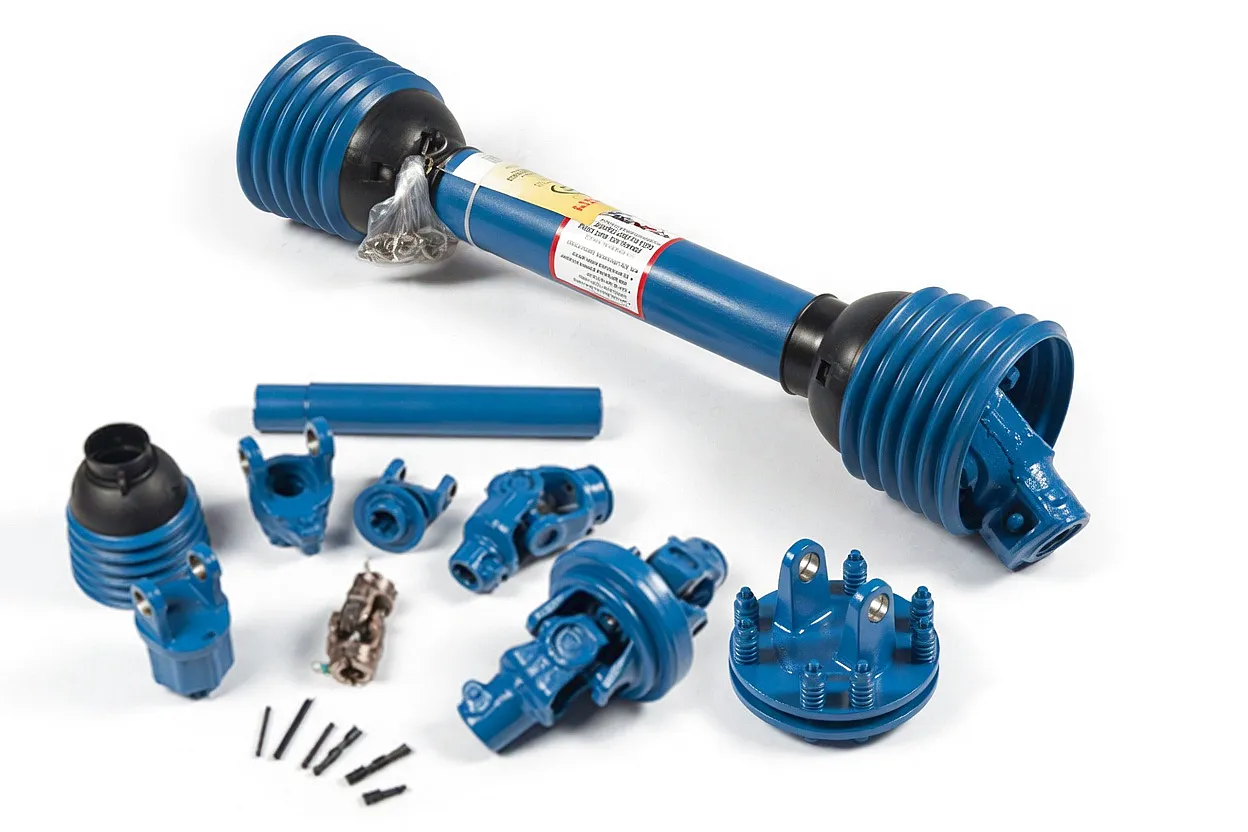
The core function sounds straightforward — spin one end, and the other end spins too — but the engineering reality is considerably more complex. A working PTO shaft must handle dynamic torque loads that spike far above steady-state values, accommodate angular misalignment between the driving and driven machines, telescope in length as the geometry between tractor and implement changes, and do all of this reliably across years of demanding field or factory use. Each one of these demands shapes how PTO shafts are designed, what materials are selected, and how they are assembled and protected.
Torque Transmission
Transfers rotational power from prime mover to implement with minimal energy loss, handling peak torques that can exceed 3,000 Nm in heavy-duty configurations.
Telescopic Flexibility
Overlapping inner and outer tubes allow the shaft to extend and retract as operating geometry changes, maintaining constant power transfer across variable distances.
Angular Compensation
Universal joints accommodate misalignment angles typically up to 15–25°, allowing implements to tilt, pivot, and articulate without interrupting power delivery.
How a PTO Shaft Works: The Engineering Principle
Mechanism & Dynamics
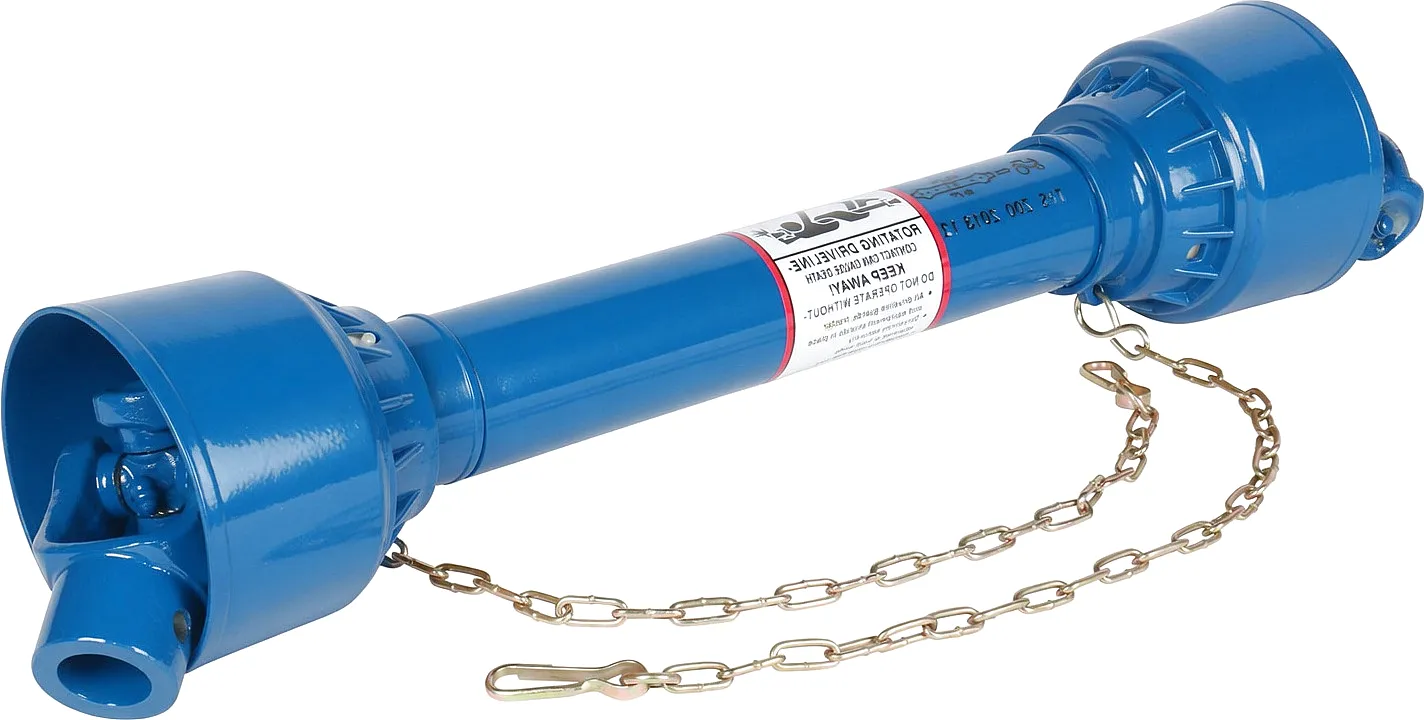
The working principle of a PTO shaft is rooted in the physics of rotational kinetic energy transfer through a linked mechanical assembly. Power originates at the vehicle’s PTO stub — a splined output shaft projecting from the gearbox — that spins at a standardised speed, most commonly 540 rpm or 1,000 rpm for agricultural applications, or at application-specific speeds for industrial machinery. A connection yoke locks onto this stub via spline engagement and clip-pin retention, forming the first mechanical link in the chain.
Core Component Chain
Core Materials Used in PTO Shaft Manufacturing
Metallurgy & Material Science
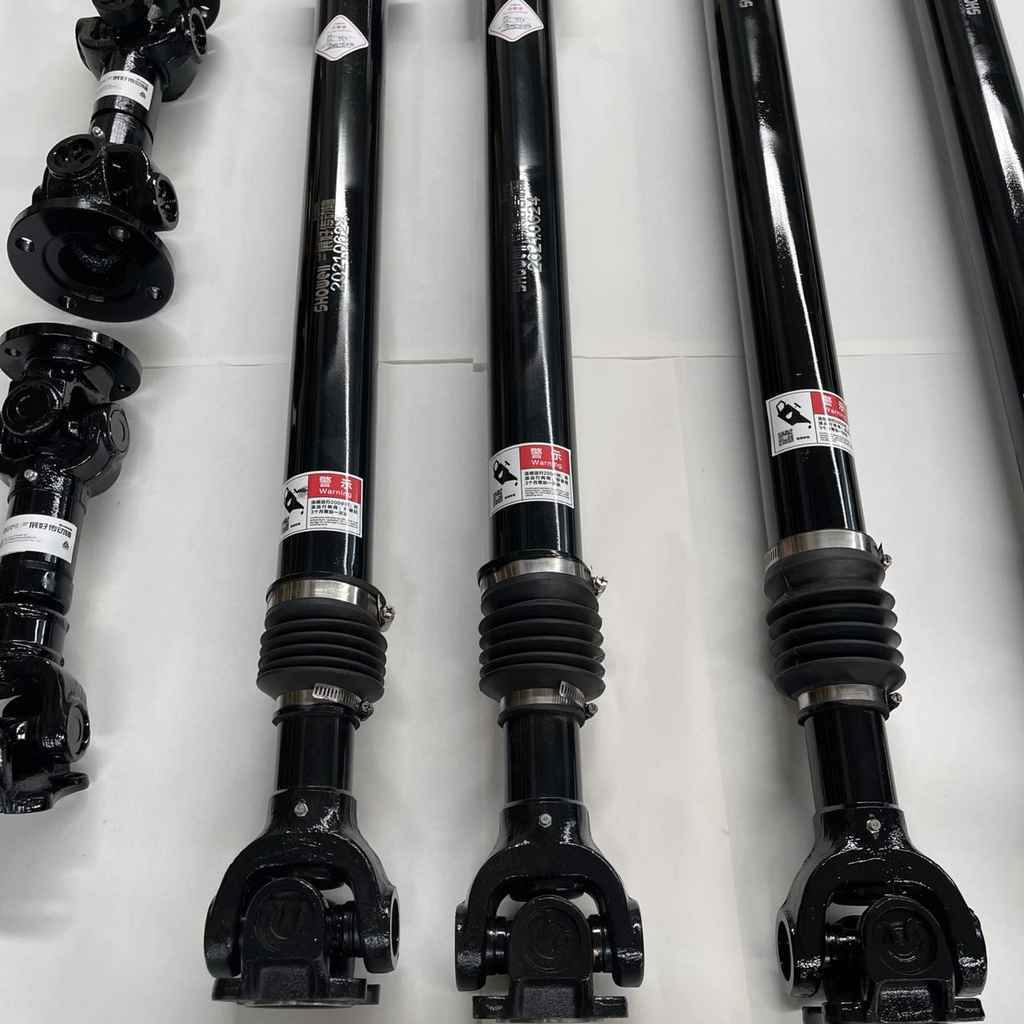
Material selection is the silent architect of PTO shaft performance. The right alloy choice affects fatigue life under cyclic torsional loading, resistance to impact shock — prevalent in agricultural and construction use — corrosion resistance in outdoor environments, and the shaft’s ability to withstand elevated temperatures in prolonged high-duty-cycle industrial operations. There is no single “best” material for all applications; instead, the specification must balance mechanical demands, environmental exposure, weight constraints, and cost targets. Here is how the major material groups perform in real-world PTO shaft applications.
The workhorse of PTO shaft manufacture. Chromium-molybdenum steels like 42CrMo4 (equivalent to SCM440 or AISI 4140) offer tensile strengths exceeding 1,000 MPa after heat treatment, excellent fatigue resistance, and strong torsional rigidity. Shafts, yokes, and cross trunnions are routinely manufactured from this grade because it machines cleanly, responds predictably to induction hardening, and maintains structural integrity under repeated shock loading — a non-negotiable requirement when a British combine harvester encounters a stony field or a PTO-driven road sweeper hits a kerb.
Medium carbon steel is widely employed for telescopic tube sections where cost efficiency is paramount. With a carbon content around 0.45%, C45 steel delivers adequate strength for the sliding tube body while keeping per-unit material costs competitive — an important factor for high-volume OEM supply chains serving UK farm equipment manufacturers in the Lincolnshire and Yorkshire regions. Normalised or quenched and tempered variants provide yield strengths in the range of 450–650 MPa, suitable for mid-duty agricultural PTO shafts.
Where the operating environment involves consistent moisture, chemical exposure, or food-grade compliance requirements — such as PTO shafts used in irrigation systems across East Anglian agricultural operations or in food processing plants in the West Midlands — austenitic stainless steel becomes the preferred tube material. Grade 316L, with its enhanced molybdenum content, offers superior chloride corrosion resistance compared to standard 304, extending service intervals and reducing lifetime maintenance costs significantly.
Connection yokes — particularly for standard agricultural PTO shafts — are often cast from malleable or spheroidal graphite (SG) iron because the near-net-shape casting process produces complex geometries economically. SG iron, also known as ductile iron, delivers elongation values of 10–18%, meaning it deforms plastically rather than fracturing suddenly under overload — a critical safety property. Surface hardness in the bearing seating areas is typically increased through localised heat treatment or hard chrome plating.
Key Technical Advantages of Modern PTO Shafts
Engineering Superiority
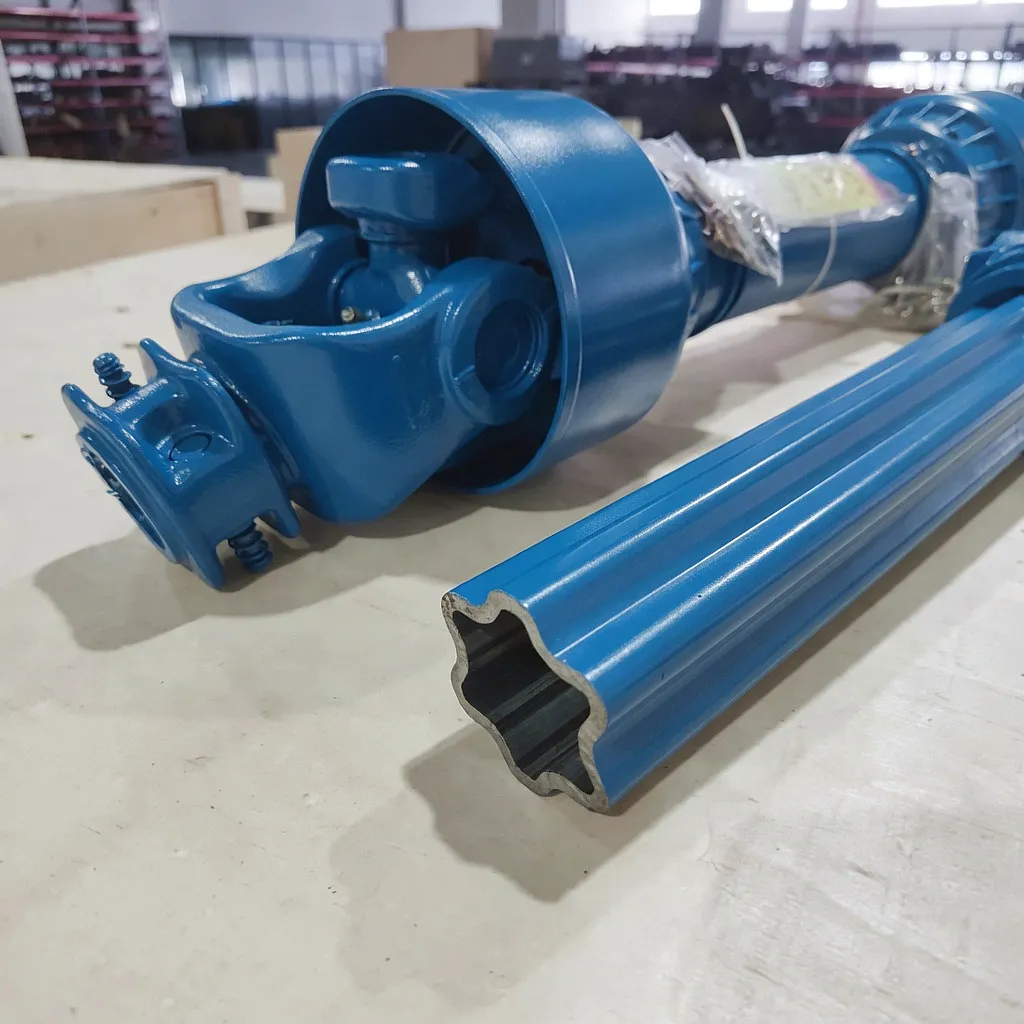 The evolution of PTO shaft technology over the past three decades has delivered measurable gains across every performance dimension. Today’s engineered PTO shafts — particularly those manufactured to modern DIN, ASAE, and ISO standards — offer a set of advantages that translate directly into lower operating costs, higher machine availability, and better operator safety on worksites from the Scottish Highlands to the industrial estates of the English Midlands.
🔒 Overload Protection via Slip Clutch or Shear Bolt
Integrated torque limiting devices — either friction-plate slip clutches or sacrificial shear bolts — protect both the prime mover’s gearbox and the implement’s drivetrain from sudden overload spikes. In the event of a blockage or impact, the limiter slips or fractures, preventing damage that could cost thousands of pounds in downtime and repairs. This is particularly valuable in UK agricultural operations where stones, roots, or debris can instantaneously load the driveline far beyond its rated torque.
⚡ High Efficiency Power Transmission
Precision-machined splines, correctly greased U-joints, and low-friction telescopic tube profiles allow well-maintained PTO shafts to transmit in excess of 98% of input power to the implement. This near-lossless transfer is critical for fuel economy on large farms operating multiple PTO-driven implements simultaneously, as well as for energy efficiency in industrial facilities in Sheffield and Birmingham where power costs represent a significant operational overhead.
📋 Versatile Compatibility with Standard & Custom Configurations
Modern PTO shafts are designed to interface with the full range of industry-standard spline profiles — including 6-spline 1 3/8″ (35mm), 21-spline 1 3/8″, and 20-spline 1 3/4″ profiles used across European and North American tractor brands. Beyond these standards, custom yoke configurations, non-standard spline counts, and bespoke overall lengths are readily available from specialist manufacturers, making it possible to retrofit or upgrade older machinery without requiring complete drivetrain redesigns.
🛠 Extended Service Life Through Precision Lubrication Design
Grease nipples positioned on each U-joint cross trunnion and on the telescopic overlap section allow targeted, condition-based lubrication without shaft removal. Sealed-for-life U-joint variants are now available for low-to-medium duty cycles, eliminating the maintenance step entirely in applications where greasing intervals are difficult to observe. The incorporation of high-quality lip seals on the telescopic section prevents soil ingress — a chronic problem in UK tillage operations — extending overhaul intervals by a factor of two or more compared to unsealed designs.
🛡 Integrated Safety Guarding
Regulatory compliance with the UK’s PUWER 98 and the European Machinery Directive 2006/42/EC demands that rotating PTO shafts operating in accessible areas are guarded against contact. Contemporary PTO shaft assemblies include a co-rotating inner shield and a stationary outer shield held by retention chains, preventing the shield from spinning with the shaft while ensuring it stays in position. The materials used for guarding — typically high-density polyethylene (HDPE) or glass-fibre reinforced polymer — are impact-resistant and UV-stabilised for extended outdoor service life.
PTO Shaft Technical & Performance Specification Table
Reference Data for Engineers & Procurement
The following table compiles key technical parameters across the main PTO shaft series, from light agricultural models to heavy industrial configurations. These figures represent typical values for well-manufactured PTO shafts and are intended as a starting framework for application engineering; actual specifications must be verified against your specific operating conditions, duty cycle, and compliance requirements.
| Series / Series Code | Peak Torque (Nm) | Nominal Speed (rpm) | Max Operating Angle | Profil splajnu | Materiał rurki | Zabezpieczenie przed przeciążeniem | Typical Application |
|---|---|---|---|---|---|---|---|
| Series 1 (Light) | Up to 210 Nm | 540 / 1000 | 15° | 6-spline, 1 3/8″ (35mm) | C45 Carbon Steel | Shear Bolt | Small tractors, mowers, seeders |
| Series 4 (Standard Agri) | Up to 710 Nm | 540 / 1000 | 20° | 6-spline, 1 3/8″ (35mm) | Stal stopowa 42CrMo4 | Friction Slip Clutch | Balers, ploughs, spreaders |
| Series 6 (Medium Duty) | Up to 1,480 Nm | 540 / 1000 | 20° | 21-spline, 1 3/8″ (35mm) | Stal stopowa 42CrMo4 | Ratchet / Slip Clutch | Forage harvesters, heavy balers |
| Series 8 (Heavy Duty) | Up to 3,000 Nm | 1000 | 25° | 20-spline, 1 3/4″ (44.4mm) | 42CrMo4 / Alloy Steel | Multi-plate Slip Clutch | Industrial pumps, conveyors, crushers |
| CV Wide Angle Series | Up to 1,200 Nm | 540 | Up to 80° (CV end) | 6-spline, 1 3/8″ (35mm) | Stal stopowa 42CrMo4 | Slip Clutch Optional | Steep terrain, front-mount implements |
| Industrial Custom Series | 3,000 – 20,000+ Nm | Custom (up to 3,000 rpm) | Per design spec | Custom spline / flange | 316L SS / 42CrMo4 | Torque limiter / Custom | Mining, power generation, process plant |
* All values are indicative. Specifications vary by manufacturer and configuration. Contact our technical team for application-specific sizing.
Industrial Application Scenarios Across the UK
Where PTO Shafts Drive Real Industry
The range of machinery that relies on PTO shaft technology is genuinely remarkable. Across the UK’s diverse industrial and agricultural landscape, these drive components are quietly enabling operations that would otherwise require fundamentally different mechanical architectures. The following scenarios represent the principal application categories where PTO drive shaft assemblies are critical components, drawing on the specific industry profiles of the UK’s leading manufacturing and primary production regions.
Ever Power: Precision Manufacturing & Custom PTO Shaft Solutions
Factory Capability & OEM Partnership
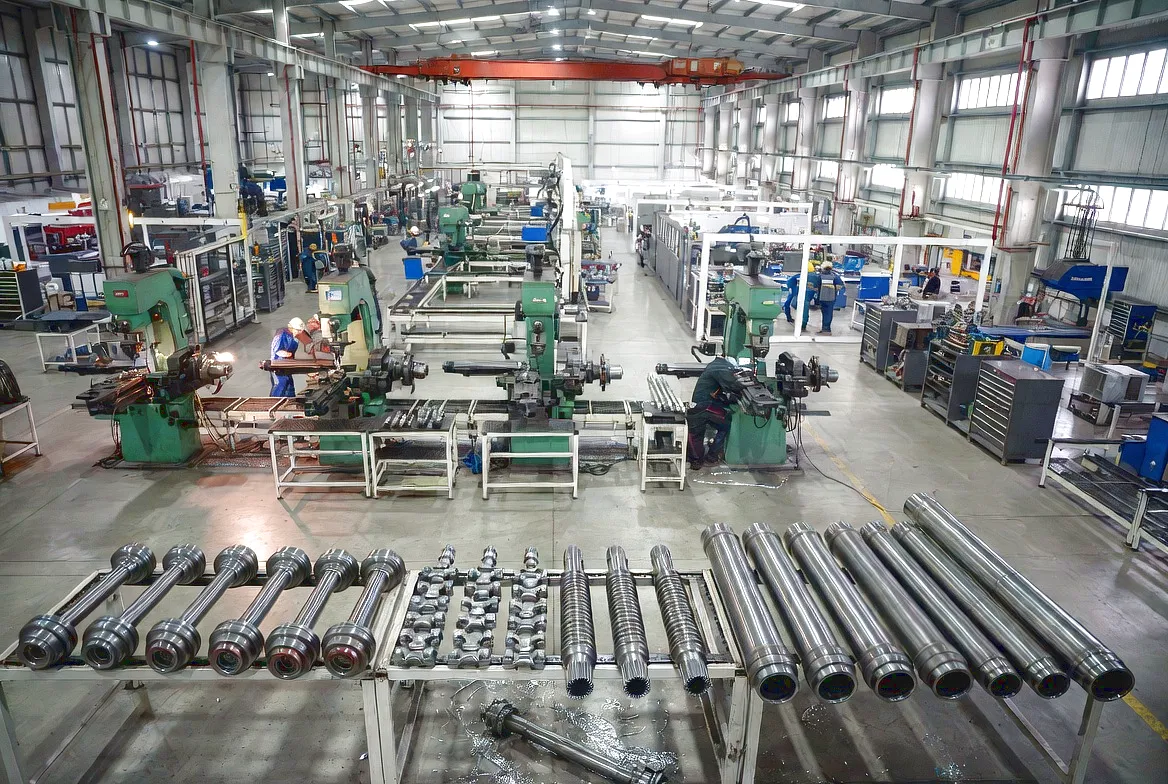
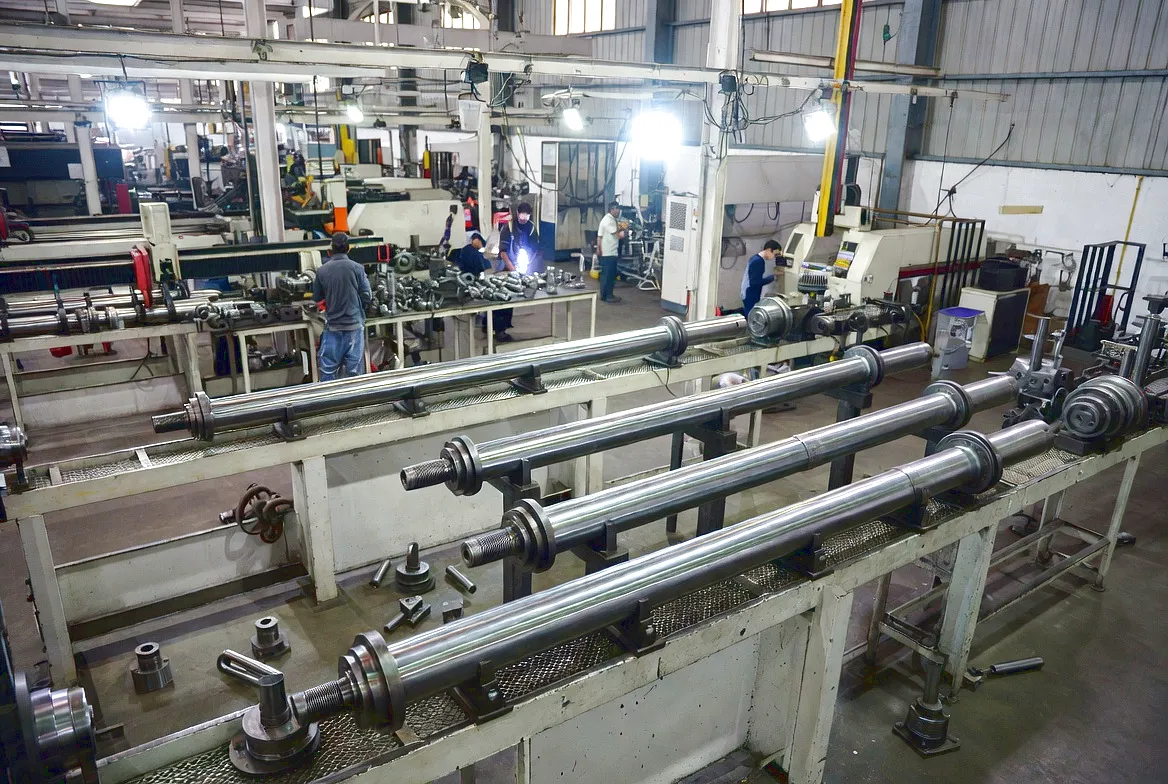
At Ever Power, we have built our reputation on manufacturing PTO shafts and drive systems that perform when standard solutions fall short. Our engineering and production infrastructure is purpose-built for the demands of global B2B supply — combining deep material science knowledge, precision machining capabilities, and a supply chain that keeps lead times competitive for UK customers from procurement bases in Birmingham, Leeds, Bristol, and beyond. What distinguishes Ever Power is not merely what we can manufacture; it is the depth of our collaborative engineering process. From the moment a customer shares a specification — whether it is a dimensional drawing, a torque map, an application description, or simply a problem statement — our team begins the systematic process of arriving at the most reliable, cost-effective PTO shaft solution that engineering can deliver.
Full Custom Engineering
Non-standard lengths, unique spline profiles, bespoke yoke geometries, custom torque limiter settings — all designed and validated to your operating parameters.
Precision CNC Machining
Our CNC turning and milling centres achieve tight dimensional tolerances on splines, bores, and bearing seats. Induction hardening lines bring surface hardness to the precise values required for long bearing life.
Reliable UK Supply Chain
Air freight and sea freight options keep delivery schedules aligned with your production plans. Buffer stock agreements are available for high-volume OEM customers requiring just-in-time delivery into UK manufacturing facilities.
Full Traceability & QC
Material certification, dimensional inspection reports, torque test certificates, and full batch traceability come as standard with every order — meeting the documentation requirements of ISO 9001-compliant procurement processes.
Ready to Specify Your Custom PTO Shaft?
Share your application details with Ever Power’s engineering team for a fast, no-obligation technical quotation. We respond to UK enquiries within one business day.
Customer Success Story: Rotherham Steel Processor Cuts Downtime by 60%
Case Study | South Yorkshire Heavy Industry
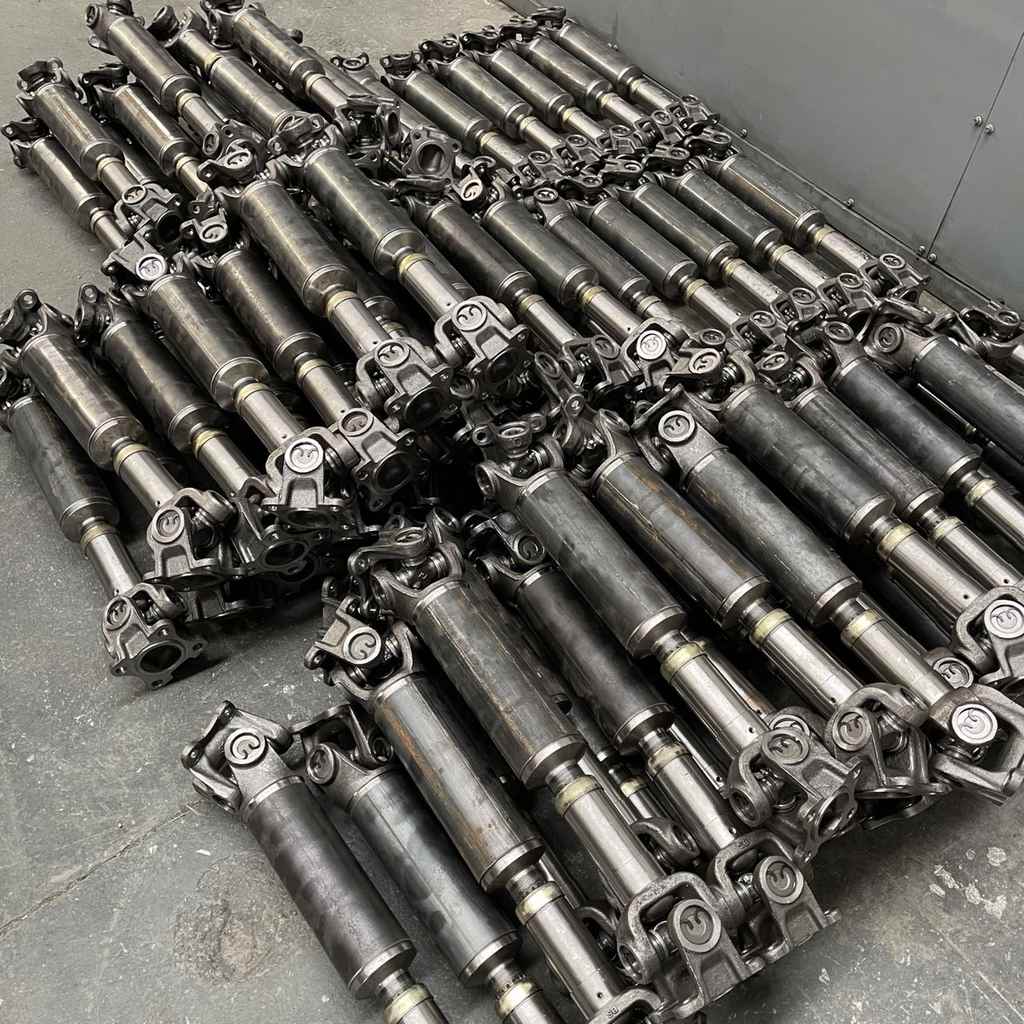 Background: A Rotherham-based secondary steel processing company operating several hydraulic shear lines and steel bar transfer conveyors was experiencing chronic drive shaft failures on their production floor. The cardan shaft assemblies connecting the transfer table motors to the roller drive gearboxes were rated to 2,800 Nm nominal torque, but repeated peak overloads — caused by occasional bar pile-ups at the transfer table — were fracturing yokes and destroying U-joint crosses at a rate of roughly one failure per six weeks per line. With four active shear lines, this translated to near-constant replacement work and an annual maintenance cost that the plant engineering manager described as “eye-watering.”
The Challenge: The company needed a PTO drive shaft solution that could handle the application’s steady-state torque of around 2,200 Nm while providing reliable, calibrated overload protection at a threshold of 3,200 Nm — preserving the downstream gearboxes from catastrophic damage during bar pile-up events. The shafts also needed to operate at the existing centre distance of 1,850 mm with ±3° of angular misalignment.
Ever Power’s Solution: After a detailed technical review, Ever Power specified a custom heavy-duty industrial cardan shaft assembly manufactured from 42CrMo4 alloy steel tube and yokes, incorporating an integrated multi-plate friction torque limiter preset to 3,200 Nm ± 5%. The shaft outer tube was surface-treated with a two-part epoxy zinc phosphate primer and topcoat for corrosion protection in the mill environment. Four custom assemblies were manufactured, inspected, and delivered to the Rotherham facility within four weeks of order confirmation.
Result: Across an eight-month monitoring period following installation, the Rotherham facility recorded zero shaft fracture events. The torque limiters slipped on 14 occasions during bar pile-ups — exactly as designed — preventing energy from reaching and damaging the gearboxes. Unplanned downtime attributable to drive shaft failure dropped by approximately 60%. The plant maintenance manager estimates total annual savings on replacement parts and associated downtime at over £28,000 per year across the four lines.
What Our Customers Say
“The torque limiter setting was exactly as specified — we verified it on the test bench before installation. In eight months of continuous operation, not a single drive shaft failure. The difference in plant availability has been substantial. Ever Power’s technical team actually understood our application rather than just selling us a catalogue item.”
“We asked for a PTO shaft assembly with a non-standard 1,620 mm collapsed length and a specific wide-angle CV joint at the implement end. Most suppliers came back with ‘we can do a modified standard unit.’ Ever Power sent us a full dimensional proposal with material specs and torque curves within two days. Delivery was on schedule. Product fit was perfect first time.”
“We switched to Ever Power for our PTO shaft supply after previous suppliers were inconsistent on dimensional tolerances between batches. Ever Power’s quality documentation — full dimensional inspection reports with each shipment, traceable material certs — is exactly what our ISO-certified procurement process demands. The shafts have been in service for over a year without a single warranty issue.”
Selecting and Installing a PTO Shaft: Practical Engineering Guidance
Specification & Installation Best Practices
Choosing the correct PTO shaft is an engineering task, not a catalogue exercise. Many drive failures in the field originate not from substandard manufacturing but from under-specification — either in torque capacity, angular operating envelope, or telescopic range. The following guidance summarises the key decision points that every engineer or procurement professional should work through before finalising a specification.
| Selection Parameter | What to Determine | Common Pitfall to Avoid |
|---|---|---|
| Design Torque | Continuous running torque plus peak shock torque multiplied by a service factor (typically 1.5–2.5x for impulsive loads) | Sizing only to nameplate power rating and ignoring dynamic overloads from start-up inertia or sudden load changes |
| Prędkość robocza | Maximum rpm under all operating conditions, accounting for gear ratio differences between PTO stub and implement input | Exceeding the critical speed of a given tube diameter and wall thickness, causing resonance vibration and early failure |
| Angular Operating Range | Maximum angle between driving and driven centrelines across all implement positions — measure at full lift and full descent, not just at average working height | Using a standard U-joint shaft on angular applications above 15°, causing velocity irregularity, vibration, and bearing fatigue |
| Length & Telescopic Range | Minimum and maximum distances between input and output flanges; ensure adequate overlap remains in both extended and collapsed positions (minimum overlap typically 150 mm) | Allowing the telescopic overlap to fully compress or extend, which can cause the shaft to pull apart or lock solid mid-operation |
| Spline Compatibility | Confirm spline count, pitch, bore diameter, and fit class at both input and output ends against the equipment’s actual stubs | Assuming all 1 3/8″ splined yokes are interchangeable — 6-spline and 21-spline profiles share the same diameter but are mechanically incompatible |
Frequently Asked Questions About PTO Shafts
Voice-Search & Expert Answers
How do I select the correct PTO shaft size for an agricultural tractor working on a Yorkshire farm? +
What is the typical cost of a heavy-duty industrial PTO shaft in the UK, and how do I get a price quote? +
Which PTO shaft supplier in the UK can provide custom-length shafts with non-standard spline profiles for industrial machinery in Birmingham? +
How often should a PTO shaft be serviced and lubricated when used in UK agricultural operations? +
What is the difference between a 540 rpm and 1000 rpm PTO shaft, and which should I choose for a forage harvester in Scotland? +
Where can I find a reliable PTO drive shaft supplier who offers fast delivery to Sheffield and South Yorkshire manufacturing businesses? +
How does a PTO shaft torque limiter work, and when should I specify one for industrial machinery in a UK processing plant? +
Need a PTO Shaft for Your UK Operation?
Tell us your torque, speed, and dimensional requirements — our engineering team responds within one business day with a full technical proposal and competitive quotation.
© Ever Power | PTO Drive Shafts | Technical Content for B2B Procurement & Engineering Professionals | UK Market | edit by gzl























