
Productbeschrijving
Tractor Pto Driveshaft Driveline Factory Hollow Spline Cardan Adapter Universal Joint Yoke Flexible Front Prop Rear CV Axle Propeller Automobile Drive Shaft
Productbeschrijving
Agricultural truck universal joint steering
PTO Shaft
| Function of PTO Shaft | Aandrijfasonderdelen en krachtoverbrenging |
| Usage of PTO Shaft | Soorten tractoren en landbouwwerktuigen |
| Yoke Types for PTO Shaft | Double push pin, Bolt pins, Split pins, Pushpin, Quick release, Ball attachment, Collar….. |
| Verwerking van juk | Smeden |
| PTO Shaft Plastic Cover | YW; BW; YS; BS; Etc |
| Kleuren van de aftakas | Green; Orange; Yellow; Black Ect. |
| PTO-asserie | T1-T10; L1-L6; S6-S10; 10 pk-150 pk met SA, RA, SB, SFF, WA, CV enz. |
| Buistypen voor aftakas | Lemon, Triangular, Star, Square, Hexangular, Spline, Special Ect |
| Verwerking van buizen | Koud getrokken |
| Spline Types for PTO Shaft | 1 1/8″ Z6;1 3/8″ Z6; 1 3/8″ Z21 ;1 3/4″ Z20; 1 3/4″ Z6; 8-38*32*6 8-42*36*7; 8-48*42*8; |
We also sell accessories for the pto shaft, including :
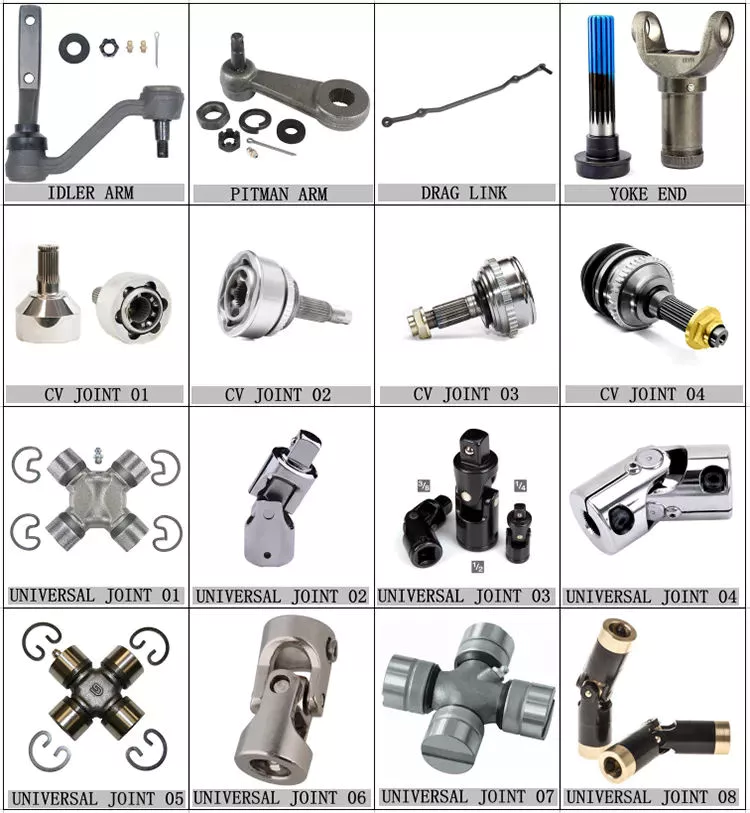
Yoke: CV socket yoke, CV weld yoke, flange yoke, end yoke, weld yoke, slip yoke
CV center housing, tube, spline, CV socket flange, u-joint, dust cap
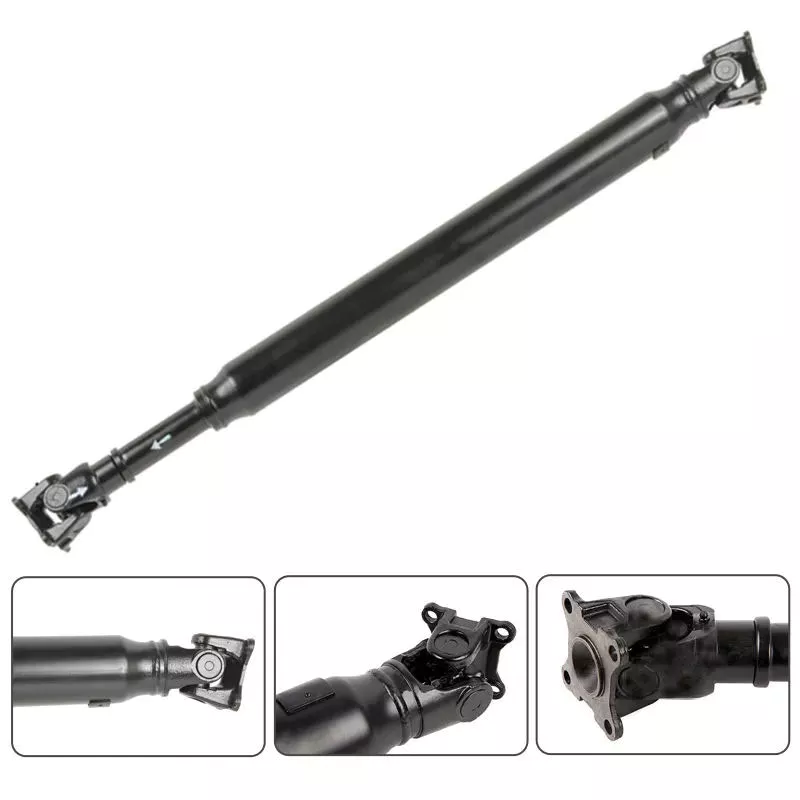
Light vehicle drive line
Our products can be used for transmission shafts of the following brands
Toyota, Mitsubishi, Nissan, Isu zu, Suzuki, Dafa, Honda, Hyundai, Mazda, Fiat, Re nault, Kia, Dacia, Ford. Dodge, Land Rover, Peu geot, Volkswagen Audi, BMW Benz Volvo, Russian models
Gear shaft
Bedrijfsprofiel
Gerelateerde producten
Sollicitatie:
Company information:
/* 22 januari 2571 19:08:37 */!function(){function s(e,r){var a,o={};try{e&&e.split(“,”).forEach(function(e,t){e&&(a=e.match(/(.*?):(.*)$/))&&1
| Materiaal: | Koolstofstaal |
|---|---|
| Laden: | Aandrijfas |
| Stijfheid en flexibiliteit: | Stijfheid / Starre as |
| Dimensionale nauwkeurigheid van de asdiameter: | IT6-IT9 |
| Asvorm: | Rechte as |
| Schachtvorm: | Real Axis |
| Voorbeelden: |
US$ 38/Piece
1 stuk (minimale bestelling) | |
|---|
How do manufacturers ensure the compatibility of PTO drive shafts with different equipment?
Manufacturers of PTO (Power Take-Off) drive shafts employ various strategies and considerations to ensure the compatibility of their products with different types of equipment. These measures are implemented during the design, manufacturing, and testing phases, and they include:
1. Standaardisatie:
Manufacturers adhere to industry standards and specifications when designing and producing PTO drive shafts. Standards such as ISO 5676 and ASAE S205.6 provide guidelines for dimensions, safety requirements, and performance characteristics. By following these standards, manufacturers can ensure that their drive shafts are compatible with a wide range of equipment that conforms to the same industry standards.
2. Engineering Design:
Manufacturers employ experienced engineers who design PTO drive shafts with compatibility in mind. They consider factors such as torque requirements, speed ratings, operating conditions, and power transfer efficiency. The engineering design process involves selecting appropriate materials, calculating component dimensions, determining connection methods, and considering factors like misalignment compensation. Attention to these design aspects ensures that the drive shafts can handle the demands of different equipment while maintaining compatibility.
3. Aanpassingsopties:
Manufacturers often provide customization options to meet specific equipment requirements. Customers can request PTO drive shafts with customized lengths, connection types, and protective features. By offering customization, manufacturers can tailor the drive shafts to fit specific equipment setups, ensuring compatibility with different machines and applications.
4. Compatibility Guidelines:
Manufacturers provide compatibility guidelines and specifications for their PTO drive shafts. These guidelines outline the recommended application, power limits, connection methods, and other relevant information. Equipment manufacturers and end-users can refer to these guidelines to ensure that the PTO drive shafts they select are compatible with their specific equipment and operating conditions.
5. Testing and Validation:
Manufacturers subject PTO drive shafts to rigorous testing and validation procedures. The testing process includes evaluating various performance parameters such as torque transmission, speed ratings, durability, and vibration resistance. By conducting extensive testing, manufacturers verify the compatibility of their drive shafts with different equipment and ensure that they meet or exceed the necessary standards and specifications.
6. Collaboration with Equipment Manufacturers:
Manufacturers often collaborate with equipment manufacturers to ensure compatibility between their PTO drive shafts and the related machinery. By working closely with equipment manufacturers, drive shaft manufacturers can obtain detailed specifications and requirements for the equipment. This collaboration allows for the development of PTO drive shafts that are specifically designed to integrate seamlessly with the equipment, ensuring optimal compatibility and performance.
7. Lopende onderzoeks- en ontwikkelingsactiviteiten:
Manufacturers invest in research and development initiatives to continuously improve the compatibility of PTO drive shafts. They stay abreast of industry trends, technological advancements, and evolving equipment requirements. By staying proactive and innovative, manufacturers can develop drive shaft designs that anticipate the compatibility needs of new and emerging equipment technologies.
8. Technical Support and Documentation:
Manufacturers provide technical support and documentation to assist equipment manufacturers and end-users in selecting and installing PTO drive shafts. This support may include detailed installation instructions, troubleshooting guides, and compatibility charts. By offering comprehensive technical resources, manufacturers ensure that the drive shafts are correctly integrated into different equipment configurations.
In conclusion, manufacturers ensure the compatibility of PTO drive shafts with different equipment through standardization, engineering design, customization options, compatibility guidelines, testing and validation, collaboration with equipment manufacturers, ongoing research and development, and providing technical support and documentation. These efforts ensure that PTO drive shafts can be seamlessly integrated into a wide range of equipment, enabling efficient power transfer and reliable operation.
How do PTO drive shafts handle variations in load and torque during operation?
PTO (Power Take-Off) drive shafts are designed to handle variations in load and torque during operation, providing a flexible and efficient power transmission solution. They incorporate several mechanisms and features that enable them to accommodate changes in load and torque. Here’s how PTO drive shafts handle variations in load and torque:
1. Flexible Couplings:
PTO drive shafts typically utilize flexible couplings, such as universal joints or constant velocity joints, at both ends. These couplings allow for angular misalignment and compensate for variations in load and torque. They can accommodate changes in the orientation and position of the driven equipment relative to the power source, reducing stress on the drive shaft and its components.
2. Spring-Loaded Friction Discs:
Some PTO drive shafts incorporate spring-loaded friction discs, commonly known as torque limiters or overload clutches. These devices provide a mechanical means of protecting the drive shaft and connected equipment from excessive torque. When the torque exceeds a predetermined threshold, the friction discs slip, effectively disconnecting the drive shaft from the power source. This protects the drive shaft from damage and allows the system to handle sudden increases or spikes in torque.
3. Slip Clutches:
Slip clutches are another mechanism used in PTO drive shafts to handle variations in torque. Slip clutches allow controlled slippage between the input and output shafts when a certain torque level is exceeded. They provide a means of limiting torque transmission and protecting the drive shaft from overload. Slip clutches can be adjustable, allowing the desired torque setting to be customized based on the specific application.
4. Torque Converters:
In certain applications, PTO drive shafts may incorporate torque converters. Torque converters are fluid coupling devices that use hydraulic principles to transmit torque. They provide a smooth and gradual ramp-up of torque, which helps in handling variations in load and torque. Torque converters can also provide additional benefits such as dampening vibrations and mitigating shock loads.
5. Load-Bearing Capacity:
PTO drive shafts are designed with sufficient load-bearing capacity to handle variations in load during operation. The material selection, diameter, and wall thickness of the drive shaft are optimized based on the anticipated loads and torque requirements. This allows the drive shaft to effectively transmit power without excessive deflection or deformation, ensuring reliable and efficient operation under different load conditions.
6. Regular Maintenance:
Proper maintenance is essential for the reliable operation of PTO drive shafts. Regular inspection, lubrication, and adjustment of the drive shaft components help ensure optimal performance and longevity. By maintaining the drive shaft in good condition, its ability to handle variations in load and torque can be preserved, reducing the risk of failures or unexpected downtime.
It’s important to note that while PTO drive shafts are designed to handle variations in load and torque, there are limits to their capacity. Exceeding the recommended load or torque limits can lead to premature wear, damage to the drive shaft and connected equipment, and compromise safety. It is crucial to operate within the specified parameters and consult the manufacturer’s guidelines for the specific PTO drive shaft model being used.
By incorporating flexible couplings, torque limiters, slip clutches, torque converters, and ensuring adequate load-bearing capacity, PTO drive shafts can effectively handle variations in load and torque during operation. These features contribute to the versatility, efficiency, and reliability of PTO drive shaft systems across a wide range of applications.
Zijn er verschillende configuraties voor de aftakas, afhankelijk van het type machine?
Ja, er bestaan verschillende soorten aftakasconfiguraties (PTO) afhankelijk van het type machine waarmee ze worden gebruikt. Aftakasassen zijn ontworpen om te voldoen aan de specifieke eisen van verschillende machinetypes, waardoor een efficiënte krachtoverbrenging en compatibiliteit worden gegarandeerd. Hieronder vindt u een gedetailleerde uitleg van enkele veelvoorkomende aftakasconfiguraties op basis van het machinetype:
1. Aftakas-aandrijfassen van de tractor:
Tractoren behoren tot de belangrijkste voertuigen die gebruikmaken van aftakas-aandrijfassen. Aftakas-aandrijfassen van tractoren zijn doorgaans voorzien van een spieverbinding aan het ene uiteinde voor aansluiting op de aftakas van de tractor, en een overeenkomstige spieverbinding aan het andere uiteinde voor aansluiting op werktuigen of machines. De lengte van de aandrijfas kan vaak worden aangepast aan variaties in de afmetingen van de apparatuur en de bedrijfsomstandigheden. Aftakas-aandrijfassen van tractoren worden veel gebruikt in de landbouw, tuinbouw en andere toepassingen waar tractoren de primaire krachtbron vormen.
2. Implementeer aftakas-aandrijfassen:
Aftakasassen voor werktuigen zijn specifiek ontworpen voor verschillende soorten werktuigen en machines. Deze aandrijfassen hebben vaak een spieverbinding aan het ene uiteinde om aan te sluiten op de ingaande as van het werktuig, terwijl het andere uiteinde een ander type verbinding kan hebben, afhankelijk van het ontwerp van het werktuig. De specifieke configuratie van aftakasassen kan sterk variëren, afhankelijk van het type werktuig, zoals maaiers, balenpersen, grondfrezen, zaaimachines, sproeiers en oogstmachines. Aftakasassen worden veel gebruikt in de landbouw, de bouw en andere sectoren waar werktuigen worden aangedreven door een primaire krachtbron.
3. Aftakas-aandrijfassen van vrachtwagens:
Vrachtwagens, met name zware vrachtwagens, maken vaak gebruik van aftakas-aandrijfassen voor het aandrijven van diverse hulpapparatuur en -systemen. Aftakas-aandrijfassen van vrachtwagens zijn doorgaans ontworpen om vermogen over te brengen van de motor of transmissie van de vrachtwagen naar hydraulische systemen, lieren, kranen of andere apparatuur die op de vrachtwagen is gemonteerd. Deze aandrijfassen kunnen verschillende configuraties hebben, afhankelijk van het specifieke vrachtwagenmodel en de beoogde toepassing. Aftakas-aandrijfassen van vrachtwagens kunnen hogere koppel- en vermogensvereisten aan dan aandrijfassen die in kleinere voertuigen worden gebruikt.
4. Industriële aftakas-aandrijfassen:
In industriële toepassingen zijn vaak aftakas-aandrijfassen nodig om machines en apparatuur aan te drijven in sectoren zoals mijnbouw, productie, materiaalverwerking en -transport. Industriële aftakas-aandrijfassen zijn ontworpen voor zware toepassingen en kunnen qua configuratie variëren afhankelijk van de specifieke eisen van de machine. Ze kunnen kenmerken bevatten zoals een versterkte constructie, assen met een grotere diameter en speciale koppelingsmechanismen om te voldoen aan de hoge eisen op het gebied van koppel, snelheid en vermogen.
5. Speciale aftakas-aandrijfassen:
Naast de hierboven genoemde veelgebruikte configuraties bestaan er ook speciale aftakas-aandrijfassen die ontworpen zijn voor specifieke toepassingen. Denk hierbij aan aandrijfassen voor gespecialiseerde machines in sectoren zoals bosbouw, olie en gas, scheepvaart en de bouw. Deze speciale aandrijfassen kunnen unieke configuraties en eigenschappen hebben die zijn afgestemd op de specifieke eisen en bedrijfsomstandigheden van de apparatuur die ze aandrijven.
Over het algemeen kunnen de configuraties van de aftakas variëren afhankelijk van het type machine en de specifieke toepassing. Bij het ontwerp spelen factoren zoals het type aansluiting, lengteverstelmechanismen, koppel- en vermogenscapaciteit en eventuele specifieke vereisten van de machine een rol. Door verschillende aftakasconfiguraties te gebruiken, kunnen diverse machinetypes efficiënt vermogen overbrengen van een primaire krachtbron naar werktuigen, machines of hulpsystemen.


editor by CX 2024-04-23























