
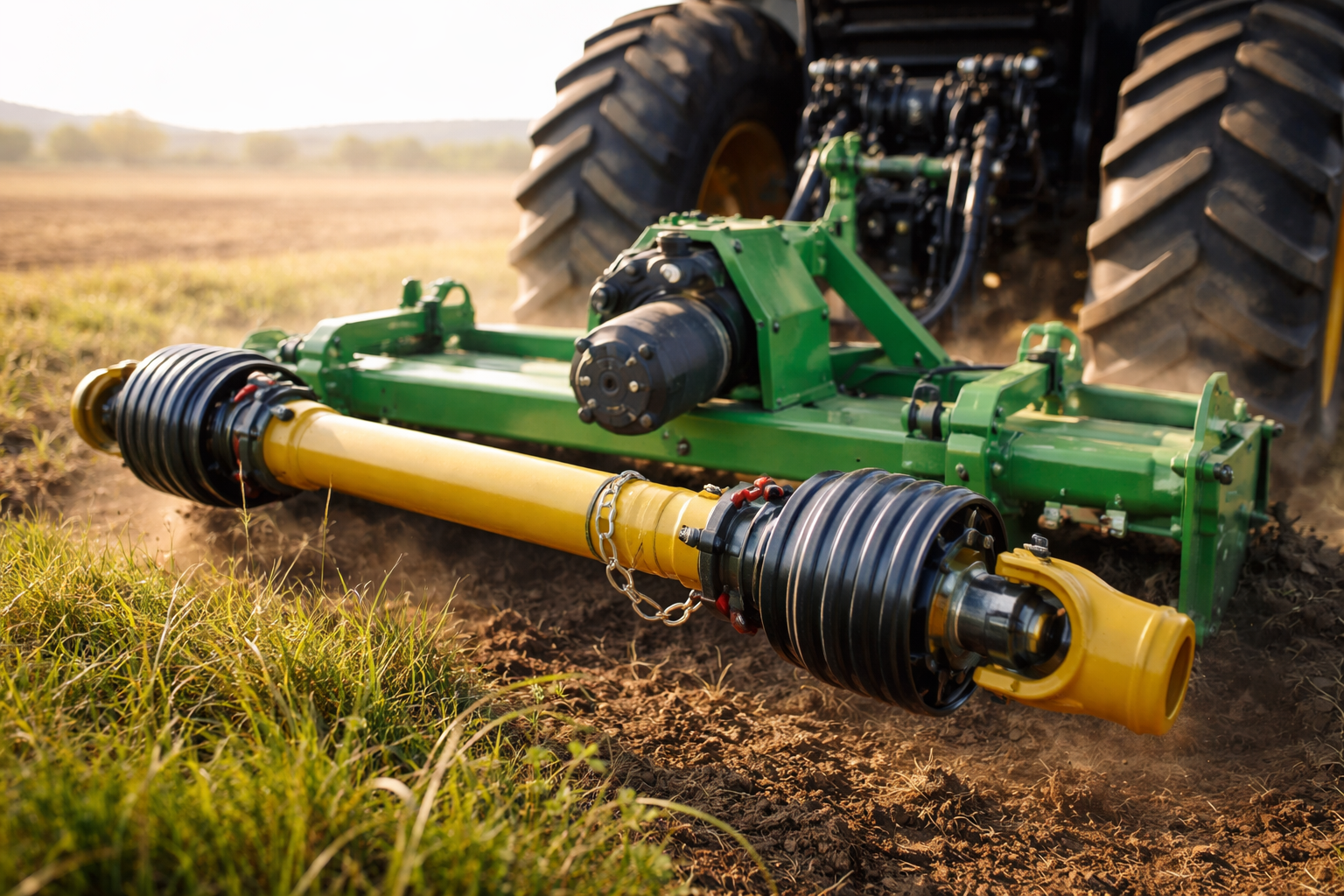
In the ever-evolving fields of mechanical engineering and automotive research, precision test benches represent the pinnacle of technological advancement. These devices are often hailed as the “gold standard” in driveshaft applications, continuously pushing the performance limits of power take-off shafts. pto-drive-shafts.com Ltd. in the UK specializes in providing high-performance driveshafts for demanding applications. This blog will delve into the role of general-purpose industrial driveshafts in precision test benches, focusing on powertrain dynamometers, where extremely high speeds and zero backlash are absolutely essential. Whether you are a researcher, engineer, or industry expert, understanding these components will revolutionize your testing processes.
Understanding Precision Test Benches and Their Critical Role
Precision test benches represent the pinnacle of driveshaft technology, designed to withstand extremely high speeds while maintaining absolute zero backlash. These benches are indispensable in scientific research and product development, particularly in dynamic testing equipment. They simulate real-world conditions with unparalleled precision, allowing engineers to evaluate component performance under pressure without the risks of on-site testing.
At the heart of these systems is the powertrain dynamometer, a precision instrument used to test engines, transmissions, or electric motors. The dynamometer connects the device under test (DUT) to a loading mechanism, such as an eddy current brake or electric motor loader, via a universal joint. This connection must be able to adapt to different directions and seamlessly transmit torque. For example, in electric vehicle (EV) motor testing, speeds can reach 10,000 to 20,000 rpm or even higher, requiring the driveshaft to resist centrifugal forces and maintain perfect synchronization.
Why is zero backlash so important? Any minute clearance in the transmission can cause deviations in test data, leading to inaccurate performance metrics. In high-risk R&D projects such as developing next-generation hybrid power systems, even a torsional deformation of only a fraction of a degree can invalidate hours of test results. Driveshafts from pto-drive-shafts.com Ltd. in the UK are meticulously designed to eliminate these problems, ensuring data integrity and operational safety.
The Demands of High-Speed Operations in Powertrain Dynamometers
Powertrain dynamometers present unique challenges to driveshafts. For example, extremely high rotational speeds: conventional universal joints can fail at these speeds due to angular velocity fluctuations and imbalances. Therefore, advanced structures such as constant velocity joints (CVs) or metal diaphragm couplings are required. CV joints ensure constant angular velocity even with angular deviations, making them ideal for dynamometer setups where the device under test (DUT) position may shift during testing.
Dynamic stiffness is another critical factor. Driveshafts must possess exceptional torsional stiffness to prevent any significant torsion or backlash. This can be achieved using materials such as high-strength alloys or carbon fiber composites, which offer excellent strength-to-weight ratios. In our product range, we utilize these materials to withstand torques up to several thousand Newton-meters while minimizing deformation.
To illustrate this, consider a typical electric vehicle motor testing scenario. The motor may need to simulate highway speeds, requiring the driveshaft to operate continuously at 15,000 rpm. Here, if not handled properly, centrifugal forces can cause shaft expansion or vibration. Our precision-balanced shafts, achieving a balance grade of G1 or G2.5, mitigate this effect through symmetrical design and high-precision machining. Furthermore, some models incorporate damping media within the shaft tube to absorb residual vibrations and ensure smooth operation.
Besides speed, the environmental factors of the test bench must also be considered. While laboratories typically employ controlled environments, heat generated by high-speed friction can still accumulate. Our shafts are equipped with advanced sealing and lubrication systems to maintain stable performance during extended test cycles.
Advanced Configurations for Optimal Performance
On precision testing benches, the choice of joint structure is crucial. Traditional universal joints are generally unsuitable for high-speed applications due to their inherent speed variations and potential imbalances. Constant velocity joints (CV joints), on the other hand, provide uniform torque transmission, unaffected by angle. They are particularly suitable for dynamometers, where the shaft must bend without compromising speed consistency.
Another superior option is the diaphragm coupling. These couplings utilize thin, flexible metal diaphragms to transmit torque without backlash, making them ideal for high-speed environments. They require no lubrication and can withstand misalignments of up to several degrees. Diaphragm couplings from UK pto-drive-shafts.com Co., Ltd. are precision-designed for testing benches, maintenance-free, and have a long service life.
Balancing is not just a function, but a necessity. Achieving a G2.5 or G1 balance grade requires rigorous testing on specialized equipment. We use computer-aided balancing machines to detect and correct even minute imbalances. For ultra-long shafts in large dynamometers, we employ self-centering crossheads or segmented designs to prevent critical speed resonance.
For example, in a recent collaboration with a British automotive R&D company, our custom-designed driveshaft equipped with a constant velocity joint achieved torque variation of less than 0.1% at 18,000 rpm. This high precision enables accurate measurement of motor efficiency, thus driving advancements in electric vehicle technology.
Material Science and Manufacturing Excellence
On precision testing benches, the choice of joint structure is crucial. Traditional universal joints are generally unsuitable for high-speed applications due to their inherent speed variations and potential imbalances. Constant velocity joints (CV joints), on the other hand, provide uniform torque transmission, unaffected by angle. They are particularly suitable for dynamometers, where the shaft must bend without compromising speed consistency.
Another superior option is the diaphragm coupling. These couplings utilize thin, flexible metal diaphragms to transmit torque without backlash, making them ideal for high-speed environments. They require no lubrication and can withstand misalignments of up to several degrees. Diaphragm couplings from UK pto-drive-shafts.com Co., Ltd. are precision-designed for testing benches, maintenance-free, and have a long service life.
Balancing is not just a function, but a necessity. Achieving a G2.5 or G1 balance grade requires rigorous testing on specialized equipment. We use computer-aided balancing machines to detect and correct even minute imbalances. For ultra-long shafts in large dynamometers, we employ self-centering crossheads or segmented designs to prevent critical speed resonance.
For example, in a recent collaboration with a British automotive R&D company, our custom-designed driveshaft equipped with a constant velocity joint achieved torque variation of less than 0.1% at 18,000 rpm. This high precision enables accurate measurement of motor efficiency, thus driving advancements in electric vehicle technology.
Selection and Integration Guidelines
Selecting the appropriate drive shaft for a powertrain dynamometer requires a specific decision-making process. First, consider the load type: for high-impact testing, a heavy-duty fork structure with a high utilization factor should be chosen. For steady-state operation, balance and service life should be prioritized.
Speed is a key factor in differentiating drive shafts. Ultra-high speeds require lightweight, high-strength materials, such as carbon fiber, and precise balancing. Low-speed, high-torque conditions require a robust design with sufficient safety margins.
Environmental factors: in humid or corrosive environments, stainless steel with reinforced seals should be selected. For confined spaces, a compact design with internal splines ensures proper installation without hindering movement.
Installation tips: Always ensure correct shaft alignment to minimize misalignment stress. Use a torque limiter to prevent overload during peak testing periods. Regular maintenance, including lubrication checks and balance verification, extends service life.
Real-World Applications and Case Studies
In the aerospace industry, precision test benches equipped with our driveshafts can test turbine components at speeds exceeding 20,000 rpm. For example, on dynamometers of jet engine prototypes, our constant velocity universal joint shafts achieve zero backlash, enabling precise thrust measurements.
Automotive giants also utilize these devices for gearbox durability testing. One European manufacturer reported a 30% improvement in testing accuracy after switching to our metal diaphragm couplings, eliminating speed fluctuations.
In renewable energy R&D, wind turbine simulations rely on long-span shafts. Our internally damped carbon fiber models can withstand various loads without resonance issues, accelerating prototype verification.
These examples highlight the versatility of our products. Customer feedback also underscores their reliability: “Zero backlash performance significantly improves our testing efficiency,” noted a chief engineer from our Suffolk laboratory.

Future Trends in Drive Shaft Technology for Test Benches
Looking ahead, smart sensors integrated into drive shafts will monitor real-time parameters like torque and vibration, feeding data to AI-driven analytics for predictive maintenance. Materials advancements, such as nanocomposites, promise even lighter, stronger shafts.
Sustainability is key: Recyclable composites and eco-friendly lubricants align with green initiatives. As EVs dominate, expect shafts optimized for ultra-high speeds and regenerative braking simulations.
At UK pto-drive-shafts.com Co.,Ltd., we’re at the forefront, investing in R&D to meet these challenges. Our precision test bench solutions are ready for tomorrow’s innovations.
Comparative Analysis with Industry Standards
Comparing our shafts to competitors, we excel in balance precision. While standard cardan shafts might achieve G6.3, ours hit G1, reducing vibration by up to 80%. In torque capacity, our designs handle 50% more than average without deformation.
Compatibility is broad: Our shafts interface seamlessly with dynamometers from brands like AVL or Horiba, adhering to standards like SAE J2711. For custom needs, we offer modular kits for quick adaptations.
Cost-benefit: Initial investment yields long-term savings through reduced downtime and accurate data, often paying off within months of intensive testing.
Maintenance and Safety Protocols
Proper maintenance ensures longevity. Inspect for wear quarterly, focusing on joints and seals. Lubricate with high-temperature greases suited for high RPM. Safety-wise, enclose rotating parts and use overload protectors.
In labs, adhere to ISO 12100 for risk assessment. Our shafts include fail-safe features like shear pins to prevent catastrophic failures.
Why Choose UK pto-drive-shafts.com Co.,Ltd.?
As a leading provider in the UK, we offer unmatched expertise in PTO drive shafts for precision applications. Our products are backed by rigorous testing and a commitment to innovation. Contact us for tailored solutions that elevate your test bench performance.
UK pto-drive-shafts.com Co.,Ltd.
Alamat: Bury St Edmunds, Suffolk IP32 7LX, UK
Emel: [email protected]
suntingan oleh gzl























