
Wide-Angle PTO Shafts:
Benefits for High-Angle Applications
Engineering precision for demanding drive configurations — a comprehensive technical guide for UK industrial and agricultural professionals.
🇬🇧 UK Market Focus
📐 High-Angle Drive Technology
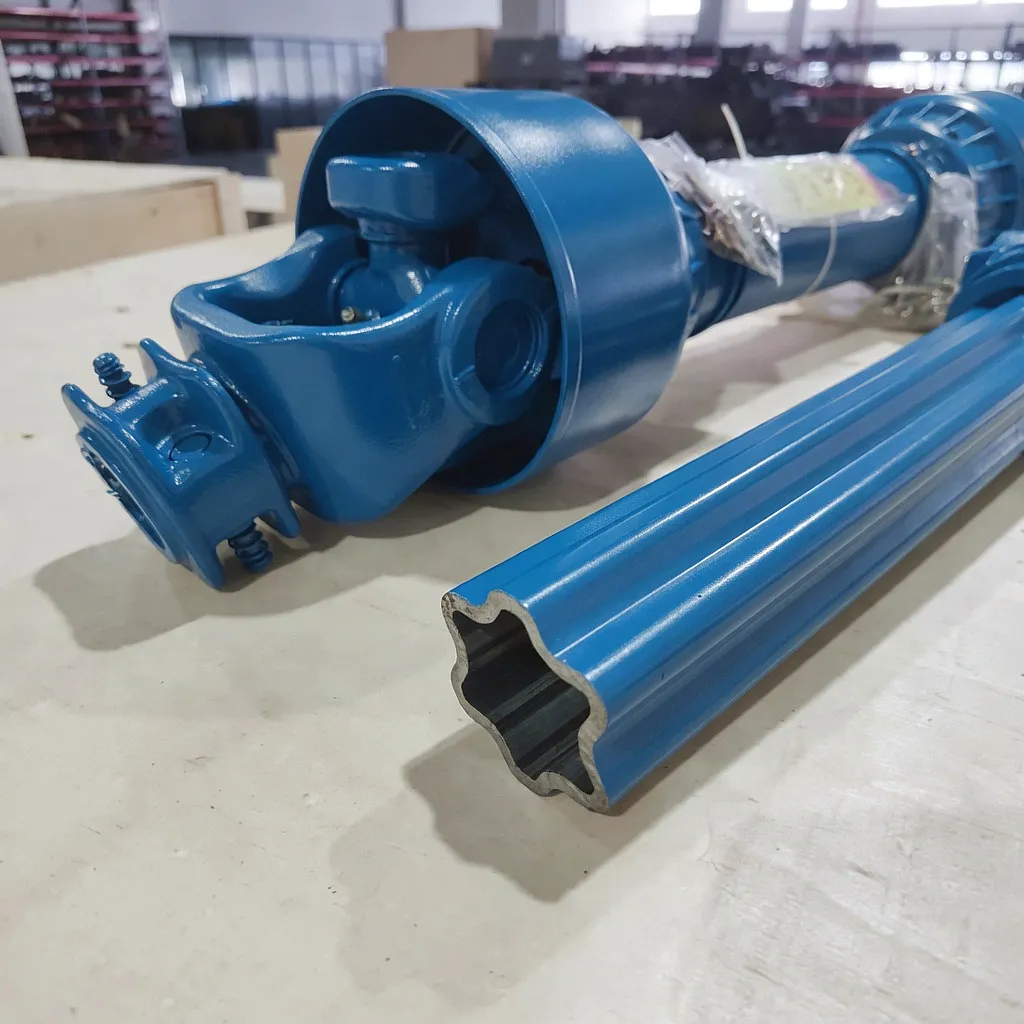 In the world of mechanical power transmission, few challenges are as persistent — and as commonly underestimated — as maintaining efficient, smooth torque delivery at steep operating angles. Standard PTO shafts are engineered for relatively modest angular displacement. When machinery demands drive angles that push beyond those conventional limits, the result is accelerated wear, vibration fatigue, and in severe cases, catastrophic component failure. Wide-angle PTO shafts were developed precisely to address this gap. By incorporating specially engineered wide-angle universal joints and optimised yoke geometry, these drive shafts extend the functional operating range dramatically, enabling reliable power transfer in configurations that would be entirely impractical — even dangerous — with conventional designs.
Whether you operate heavy agricultural machinery across the undulating landscapes of the Yorkshire Dales, run PTO-driven attachments in confined urban utility spaces around Birmingham, or manage mobile processing equipment in Sheffield’s thriving industrial corridor, the geometry of your drive connection matters enormously. A wide-angle PTO shaft is not simply a longer or heavier version of a standard unit — it is a fundamentally different engineering solution. This article unpacks the technology in depth, covering working principles, material science, performance parameters, industrial application contexts, and the specific advantages that make wide-angle PTO drive shafts a preferred choice among UK engineering and agricultural specialists.
Need a Wide-Angle PTO Shaft for Your Application?
Custom specifications · Fast UK despatch · Competitive trade pricing
How Wide-Angle PTO Shafts Actually Work
Universal Joint Engineering
At the heart of every wide-angle PTO shaft lies a modified universal joint — often called a Cardan joint — that has been re-engineered to accommodate significantly larger deflection angles without the velocity irregularities and torque fluctuations that plague standard joints at high angles. In a conventional Cardan joint, the output velocity is not perfectly constant throughout each revolution when operated at an angle; this effect, known as the Cardan error or velocity ripple, becomes pronounced above roughly 15 degrees. Wide-angle joints address this through a double-joint configuration at one or both ends, where two universal joints are paired in a phase-corrected arrangement. This phasing cancels out the velocity variation of each individual joint, producing a smooth, near-constant output velocity even at working angles of up to 80 degrees — a figure that is simply unachievable with a standard single-joint design. The result is dramatically reduced vibration, far lower heat generation, and extended service life across the entire drivetrain.
Torque Transmission Physics
The physics governing a PTO shaft’s torque transmission are relatively straightforward: the shaft must transfer rotational force from the tractor’s power take-off stub to the implement’s input gearbox. However, the moment angular misalignment enters the equation, the mechanical demands escalate sharply. At high angles, the stress distribution within each cross bearing of the universal joint becomes highly asymmetric. The needle roller bearings on the cross trunnions experience peak loads at two points per revolution, creating cyclical stress waves that, at standard joint angles above 20 degrees, quickly exceed the material’s fatigue limit. Wide-angle shaft designs use enlarged cross kits — featuring larger-diameter trunnions, a greater number of needle rollers, and hardened journal surfaces — to distribute these loads across a broader bearing area. Some designs also incorporate a centring ball within the wide-angle joint housing. This centring mechanism ensures that the two cross joints articulate around a common geometric centre, which is the fundamental reason why the velocity cancellation works correctly and the PTO shaft remains dynamically balanced even under peak torque loads.
Key Principle
“Phase cancellation in double-joint geometry is what separates a wide-angle shaft from a standard PTO — it’s not a minor upgrade, it’s a different machine.”
— Ever Power Engineering Technical Brief
Material Science Behind the Shaft
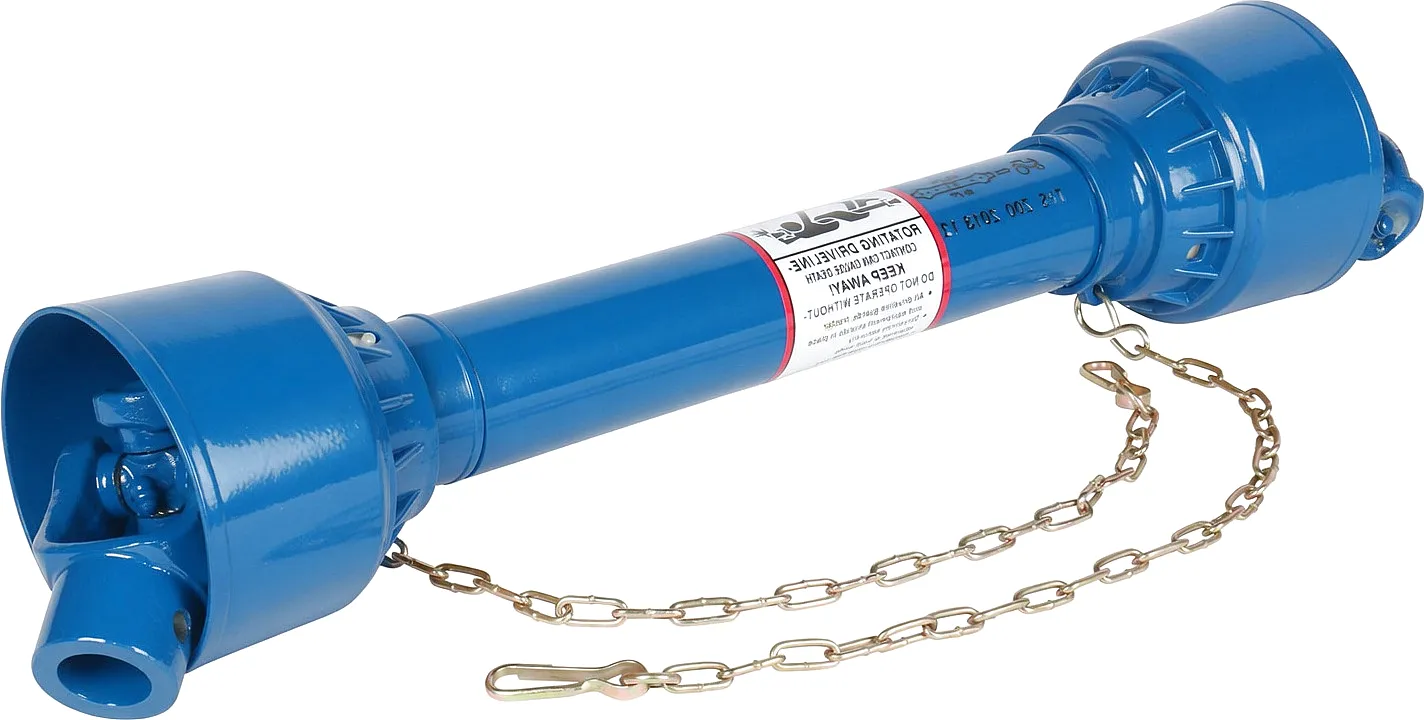
The material specification of a wide-angle PTO shaft is not peripheral — it is the engineering foundation on which every performance claim rests. Because these components operate under cyclical torque, high rotational speed, and significant angular stress simultaneously, the metals used must exhibit an exceptional combination of tensile strength, toughness, and fatigue resistance. A material that is strong in a static test is not necessarily suitable for a dynamic rotating environment where stress reversals occur thousands of times per working hour.
Alloy Steel Tube (SAE 1045 / 4140)
The main shaft tube is typically manufactured from medium-carbon alloy steel — most commonly SAE 1045 or the chromium-molybdenum grade SAE 4140. SAE 1045 provides an excellent balance of machinability and strength with tensile values around 570–700 MPa in normalised condition. SAE 4140, when quench-and-tempered, delivers tensile strength exceeding 1000 MPa alongside impressive impact toughness — a critical combination for wide-angle applications where shock loading from sudden engagement is common. The tube is often seamlessly drawn to eliminate weld seam stress concentrations, which can initiate fatigue cracking under the torsional loading pattern inherent to PTO operation.
Forged Cross Kits & Yokes
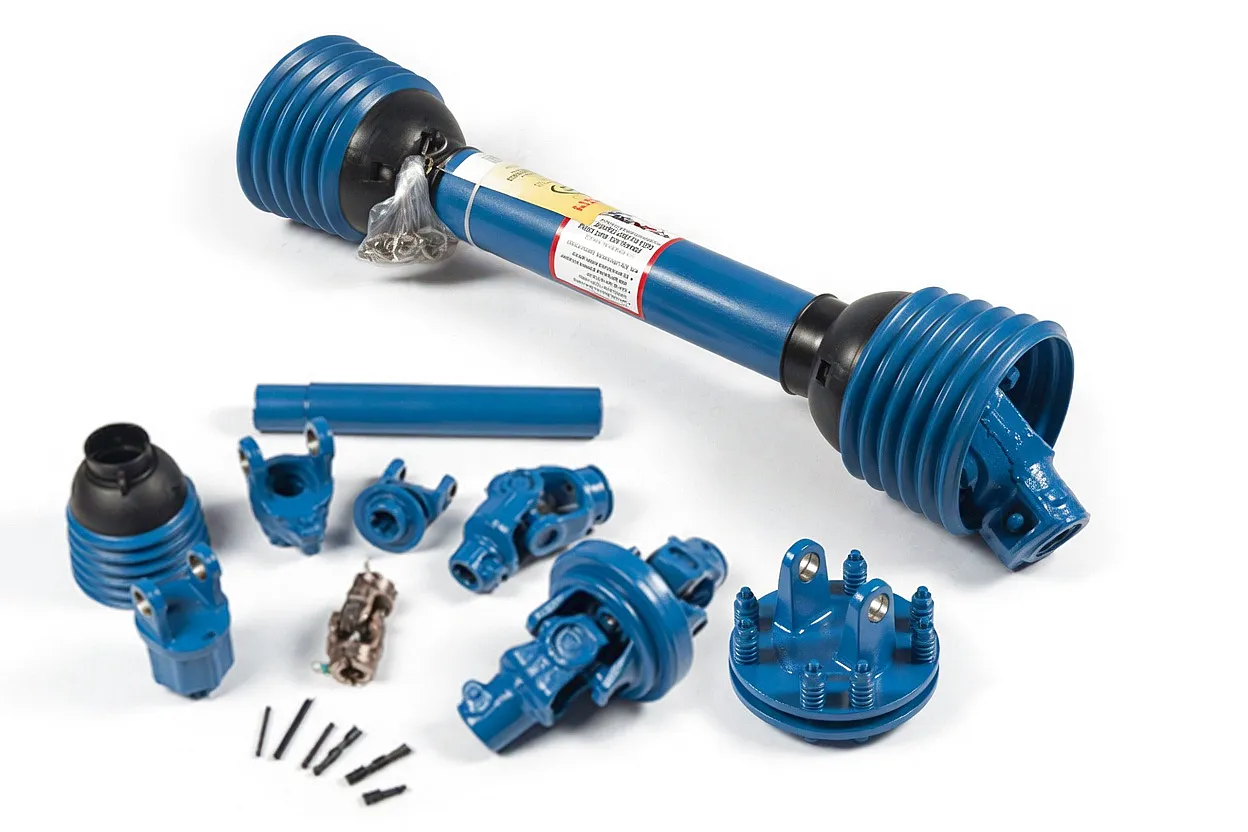
The cross kit — the four-pointed journal body at the heart of each universal joint — is consistently drop-forged from case-hardening steel grades such as 20CrMnTi or the equivalent European 20MnCr5. Drop forging aligns the grain structure of the metal with the geometry of the cross, giving it superior fatigue strength compared to machined-from-billet alternatives. The outer surfaces of the trunnion journals are then carburised and case-hardened to a typical depth of 0.8–1.4 mm, achieving a surface hardness of 58–64 HRC while leaving the core soft and ductile. This gradient hardness is ideal: the hard shell resists the rolling contact stress from needle bearings, while the tough core absorbs impact energy without brittle fracture — a particularly important property in UK agricultural applications where sudden PTO engagement under load is routine.
Safety Guard & Profile Tube Materials
The outer profile tubes — which telescope to accommodate length changes during operation — are manufactured from either rectangular-profile steel (for standard duty) or from composite polyamide (PA66+GF30) materials in specialised lightweight variants. The telescoping plastic overshield that protects operators from the rotating shaft is injection-moulded from high-density polyethylene (HDPE) or ABS copolymer, both of which meet CE safety standards required across UK and EU markets. All exposed metal surfaces are zinc-phosphate treated and finished with a corrosion-resistant paint or powder coat layer to withstand the harsh, wet conditions typical of British agricultural environments — where exposure to mud, fertiliser residue, and frequent pressure washing is an everyday reality rather than an edge case.
Core Technical Advantages
Extended Operating Angle
Wide-angle joints reliably operate at angles of up to 70–80 degrees, compared to 15–25 degrees maximum for standard Cardan joints. This isn’t just a quantitative improvement — it unlocks entirely new machinery configurations that were previously mechanically impossible, enabling implement-to-tractor connections on compact urban machines, folding conveyors, and articulated vehicles where tight geometry is non-negotiable.
Constant Velocity Transmission
The double-jointed wide-angle configuration delivers constant velocity output regardless of operating angle, eliminating the sinusoidal velocity fluctuation that causes vibration in standard shafts. This directly reduces wear on implement input bearings, gearboxes, and tractor PTO stubs — protecting expensive downstream components that are far costlier to replace than the shaft itself.
Dramatically Extended Service Life
Because velocity ripple is eliminated and bearing loads are distributed more evenly, wide-angle PTO shafts operating within their rated angular range experience significantly lower fatigue cycles per hour than misapplied standard shafts. Field experience among UK contractors and hire fleet operators consistently shows service life increases of 200–400% when switching from oversized standard joints to correctly specified wide-angle units on high-angle applications.
Integrated Overload Protection
Premium wide-angle PTO shafts incorporate friction clutch or shear bolt overload protection devices as standard. These act as mechanical fuses — disengaging instantly when torque exceeds a preset threshold to protect both the implement gearbox and the tractor PTO stub. In UK agricultural and municipal utility contexts, where unexpected blockages, rock strikes, and sudden terrain changes are common hazards, this protection can prevent thousands of pounds of damage from a single incident.
Compact Installation Envelope
Paradoxically, the wide-angle design often enables a more compact overall installation compared to workaround solutions such as intermediate bearing supports or gearbox angle reducers. By accommodating steep angles directly within the shaft, the need for additional structural brackets, housings, and alignment components is removed — simplifying the machine design and reducing overall assembly weight. This is particularly valued by machinery manufacturers in the West Midlands and East Midlands who are under pressure to reduce vehicle weights for road compliance.
CE Compliance & Safety
All wide-angle PTO shafts supplied for the UK market by reputable manufacturers carry CE marking in compliance with the Machinery Directive 2006/42/EC. The full plastic overshield — designed to prevent clothing or body parts from contacting the rotating shaft — is a mandatory safety feature, and the wide-angle joint’s smooth rotation profile means the shield can be designed with tighter clearances without risk of contact at high angles, further improving the overall guard geometry and operator safety record.
Technical & Performance Parameter Table
| 매개변수 | Series WA-1 (Light) | Series WA-2 (Medium) | Series WA-3 (Heavy) |
|---|---|---|---|
| Nominal Torque | 200 – 600 Nm | 600 – 2,500 Nm | 2,500 – 8,000 Nm |
| Peak Torque (momentary) | Up to 900 Nm | Up to 3,750 Nm | Up to 12,000 Nm |
| Max Operating Angle (wide-angle joint) | Up to 80° | Up to 80° | Up to 70° |
| Standard Rotational Speed | 540 / 1000 rpm | 540 / 1000 rpm | 540 rpm |
| 샤프트 튜브 재질 | SAE 1045 / C45 | SAE 1045 / 4140 | SAE 4140 Alloy |
| 크로스 키트 소재 | 20CrMnTi, case-hardened | 20MnCr5, case-hardened | 18CrNiMo, case-hardened |
| Surface Hardness (journals) | 58–62 HRC | 60–64 HRC | 60–64 HRC |
| 과부하 보호 | Shear bolt / friction clutch | Friction clutch / slip clutch | Friction clutch (heavy-duty) |
| Typical CE Category | Cat. 1 / Cat. 2 | Cat. 2 / Cat. 3 | Cat. 4 / Cat. 6 |
| Standard Connection | 1-3/8″ 6-spline | 1-3/8″ / 1-3/4″ 6-spline | 1-3/4″ 20-spline |
| Safety Guard Standard | CE / ISO 4254-1 | CE / ISO 4254-1 | CE / ISO 4254-1 |
* All values are indicative. Exact specifications depend on application requirements. Contact Ever Power for a custom engineering review.
Industrial Application Scenarios Across the UK
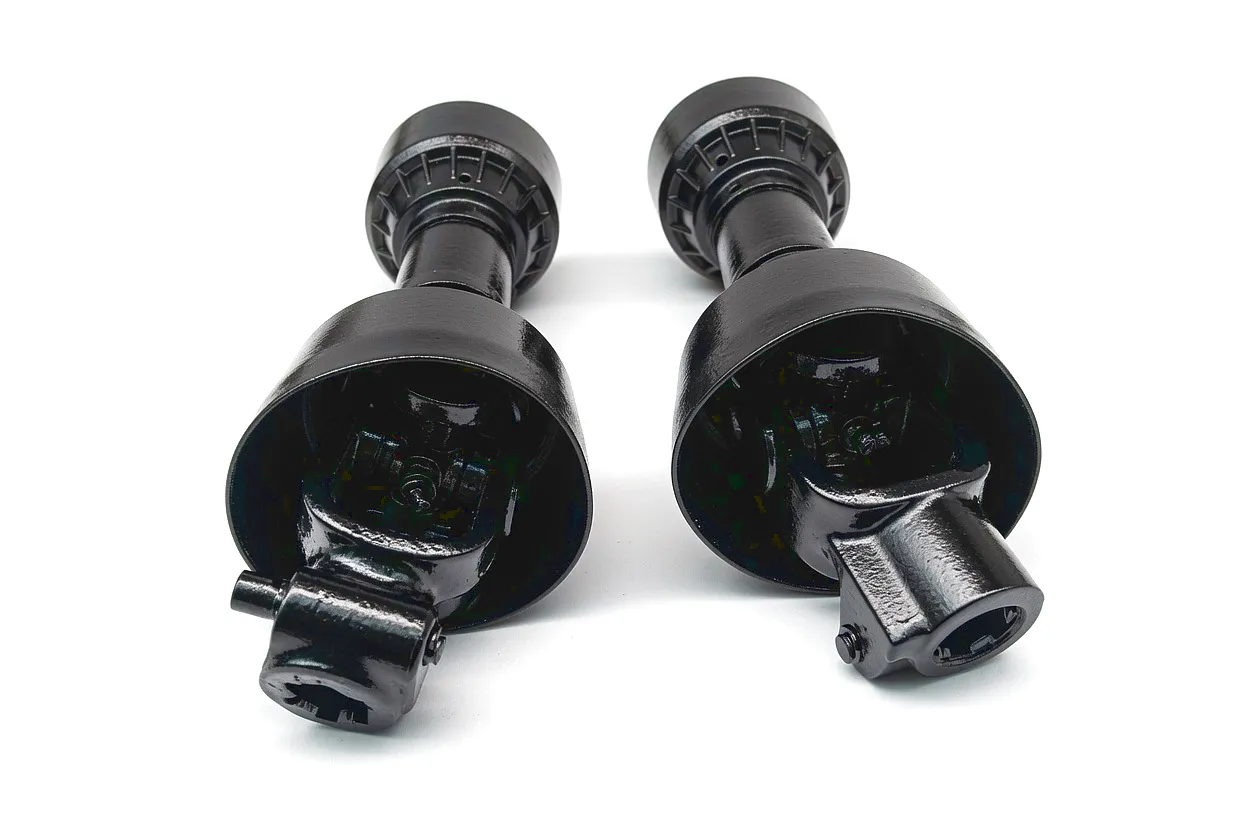
Agricultural Machinery — UK Farms
Wide-angle PTO shafts are indispensable in modern UK agriculture, particularly where compact utility tractors are coupled to front-mounted implements such as front mowers, hedge cutters, and crop sprayers — configurations that regularly demand drive angles well above 30 degrees. In the hilly terrain around Yorkshire and the Lake District, where tractor articulation is constant and unpredictable, standard PTO shafts fail prematurely at joints. Wide-angle units handle this dynamic environment without complaint. They are equally critical in row-crop farming in East Anglia and the Fens, where precise machinery positioning — often at the headland — requires maximum manoeuvrability without disengaging the drive. Vegetable harvesters, root crop elevators, and PTO-driven irrigation pumps all benefit from the extended angular capability and smooth torque delivery that only a wide-angle design can reliably provide.
Construction & Groundwork Equipment
The construction and civil engineering sector across Birmingham, Manchester, and the broader North West generates significant demand for wide-angle PTO drive shafts. Mini-excavator attachments, compact post-hole borers, trench-filling augers, and soil stabilisation machines all operate in confined spaces where drive angles cannot always be optimised. Groundwork contractors operating in urban regeneration zones — an increasingly prominent activity across UK city centres undergoing infrastructure renewal — particularly value the ability to power implements through tight geometric connections. Wide-angle PTO shafts on skid-steer loaders and compact tracked carriers eliminate the need for dedicated hydraulic drive motors on some attachments, providing a simpler, lighter, and more energy-efficient solution for lower-power applications where the host machine’s PTO is already available.
Industrial Processing Machinery
Sheffield’s advanced manufacturing sector — traditionally anchored in metalworking and now broadened into precision engineering and speciality materials — makes extensive use of wide-angle PTO drive shafts in rotary processing lines. Applications include powered conveyor transfer points, agitator drives in batch processing vessels, and drive connections in automated cutting and shaping machinery where machine geometry demands non-coaxial input and output shafts. The city’s long heritage of demanding mechanical engineering standards means that plant engineers in this region are particularly rigorous in specifying shaft quality, and the performance credentials of wide-angle designs — especially their vibration-free operation at rated angles — are well-matched to the precision demands of high-value manufacturing processes.
Municipal & Groundcare Operations
Local authority groundcare teams and private landscape contractors throughout the UK — from county council depot operations in Somerset to urban parks management in London boroughs — rely on wide-angle PTO shafts for verge mowers, flail mulchers, and roadside vegetation management equipment. The roadsides and embankments managed by Highways England contractors present precisely the kind of steep-angle challenges that wide-angle joints were designed for. A flail mower working a motorway embankment might be operating at angles between 40 and 60 degrees; for standard shafts, this would cause premature joint failure within a single season. Wide-angle units operate confidently across these gradients, making them the default specification for this type of work across UK councils and public realm contractors.
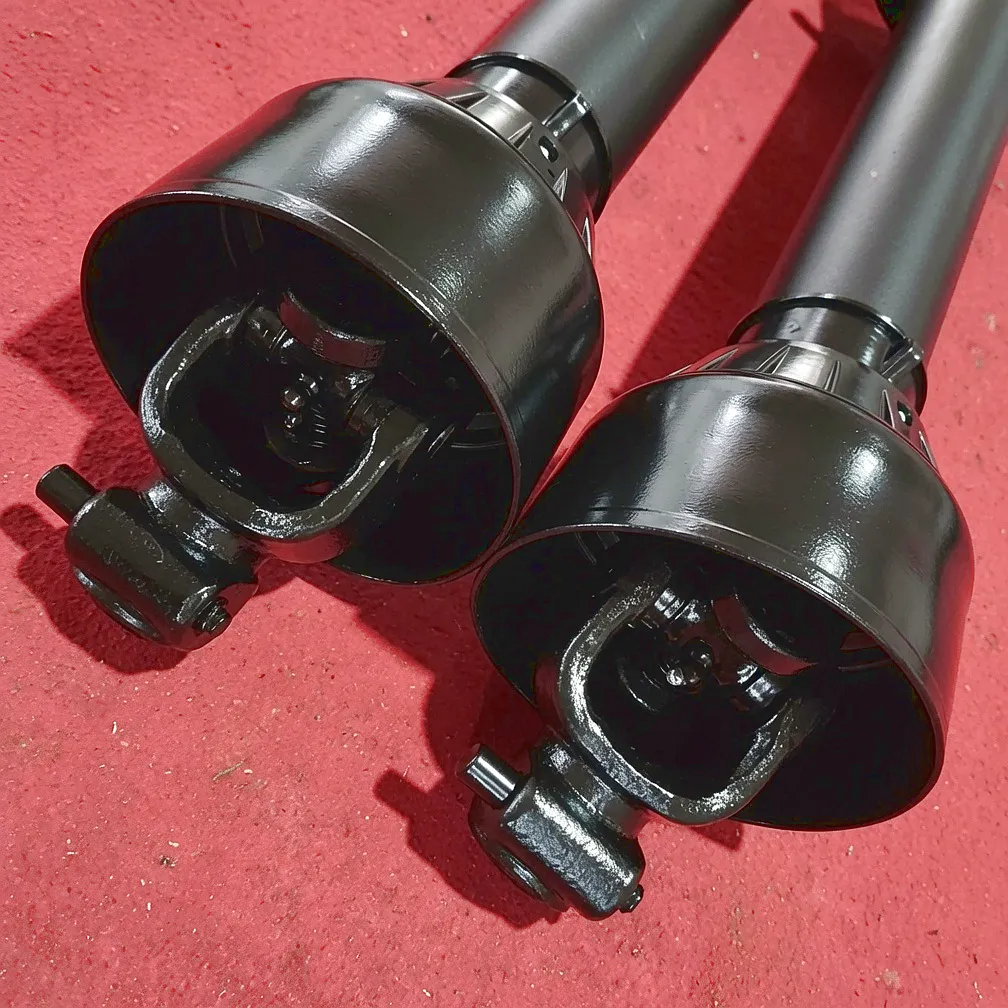
Ever Power: Precision Manufacturing & Custom Drive Shaft Solutions
Ever Power operates one of the most comprehensive wide-angle PTO shaft manufacturing facilities in its sector. Every stage of the production process — from raw tube selection and heat treatment scheduling through to precision cross-grinding, needle roller assembly, and final dynamic balancing — is carried out under strict in-house quality control. This vertical integration is not incidental; it is the deliberate strategy that allows Ever Power to offer a level of customisation that most distributors and assembly-only suppliers simply cannot match. When a UK machinery builder in Birmingham presents an unusual installation geometry, or when a specialist agricultural machinery OEM in Lincolnshire requires a non-standard spline-to-flange combination, Ever Power’s engineering team designs around the requirement rather than forcing the application to adapt to a catalogue limitation.
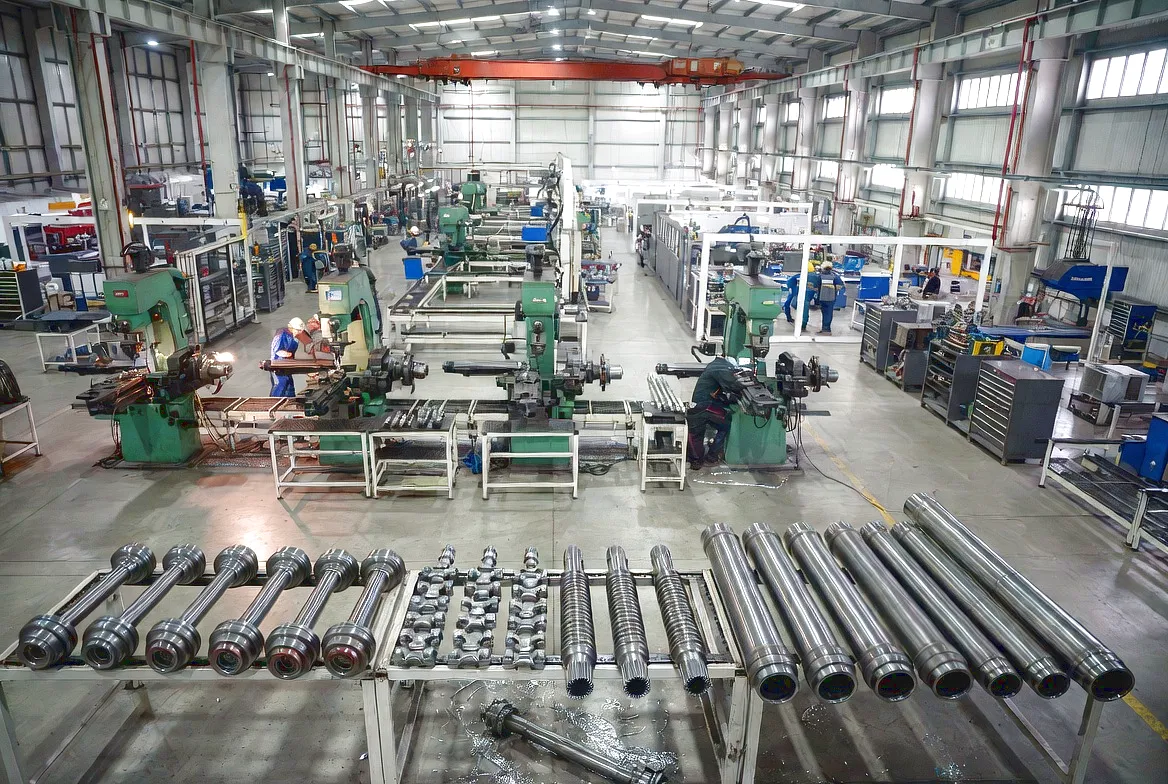
The Ever Power customisation programme covers modifications to shaft length, spline profile, yoke style, overload clutch torque setting, and safety guard design. For clients with particularly demanding operating environments — such as forestry contractors in Scotland who subject their equipment to exceptional impact loads, or offshore support vessel operators requiring corrosion-resistant coatings beyond standard specifications — Ever Power’s technical sales team works from first principles, specifying materials, heat treatments, and surface finishes that are appropriate to the actual duty cycle rather than simply defaulting to the nearest standard catalogue entry. Prototypes are produced, validated on the test bench to simulate the client’s rated torque and operating angle, and only then progressed to production.
Supply chain reliability is a subject that has risen sharply up the agenda for UK purchasing managers since the post-Brexit trade environment and global logistics disruptions made extended lead times from conventional offshore sources a genuine operational risk. Ever Power has responded to this concern by maintaining buffer stocks of high-runners in a dedicated export inventory, offering guaranteed despatch windows for urgent orders, and providing full material traceability documentation — including heat batch certificates, hardness test reports, and dimensional inspection records — as standard with every batch. UK trade clients benefit from DDP (Delivered Duty Paid) pricing options that eliminate customs uncertainty, with all duties and import VAT accounted for in the quoted price.
15+
Years Manufacturing Experience
500+
Custom SKUs Engineered
30+
Countries Supplied
100%
Batch Test Documentation
Request a Custom Engineering Proposal
Ever Power specialists respond to UK trade enquiries within 24 hours.
Customer Success Story: Sheffield Heavy Fabrication Plant
Midlands Steel Processing: Eliminating Repeat Shaft Failures on a Coil Feed Line
Forgemaster Components Ltd., a specialist steel coil processing and fabrication business based in Sheffield’s Lower Don Valley industrial estate, approached Ever Power with a persistent and costly maintenance problem. Their coil straightener and feed line incorporated a PTO-driven roller assembly where the input shaft connection required a fixed operating angle of approximately 52 degrees — well beyond the comfortable operating range of the standard-catalogue Cardan joint they had been using. Despite operating within the machine’s rated torque limits, the standard cross kits were failing every four to six weeks on average, costing the business both in replacement parts and in unplanned production downtime that disrupted their just-in-time delivery commitments to fabrication clients.
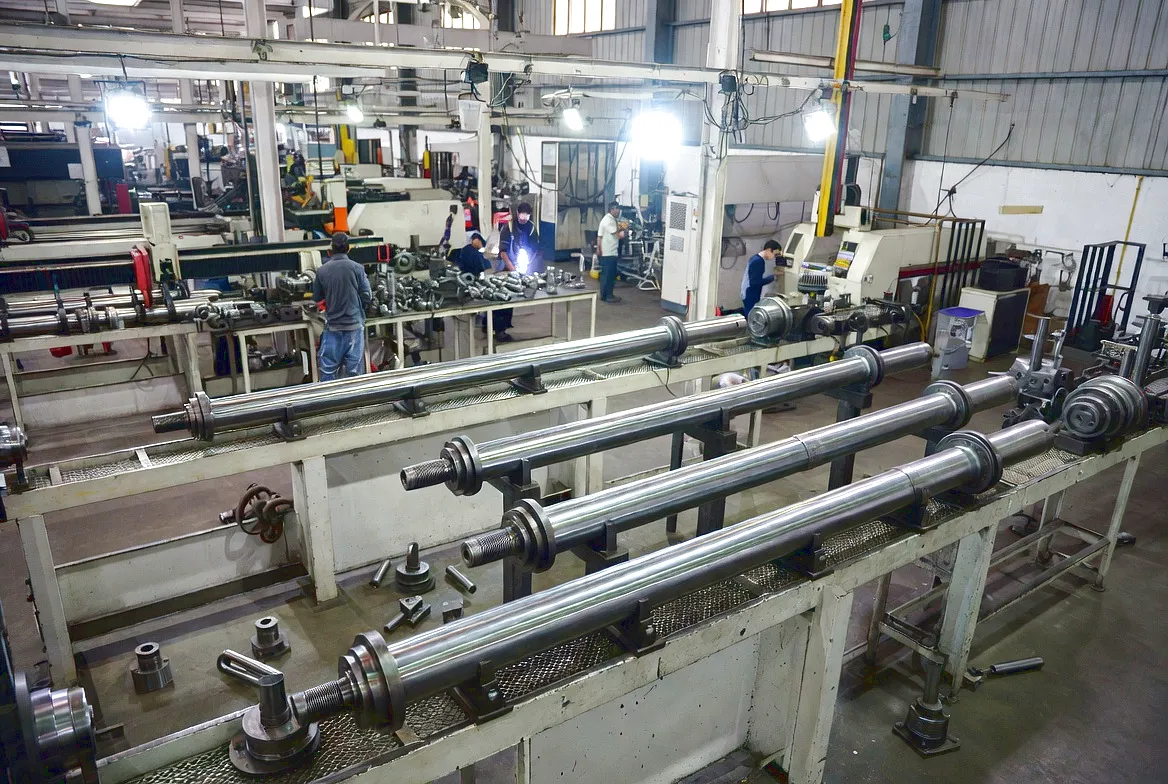
After reviewing the installation drawings and duty cycle data, Ever Power’s application engineers recommended a bespoke wide-angle PTO shaft unit from the WA-2 range, specifically configured with a heavy-duty friction overload clutch preset to 1,400 Nm and modified yoke geometry to accommodate the existing machine interface without requiring structural modification to the feed line frame. The shaft was manufactured, dynamically balanced, and supplied with full material certification within three weeks of the initial technical enquiry — a lead time that Forgemaster’s maintenance manager described as “genuinely impressive given the non-standard spec.”
Following installation, the replacement interval for the shaft assembly extended from six weeks to over fourteen months — a service life improvement of more than 900%. The vibration signature on the connected roller bearings also fell measurably, contributing to a further reduction in bearing replacement frequency across the feed line. Forgemaster subsequently ordered three additional WA-2 units for other drive points on the same production line, and has since become a standing trade account with Ever Power for their UK plant maintenance requirements.
900%+
Service Life Improvement
3 wks
From Enquiry to Delivery
52°
Fixed Operating Angle
4+
Units Now in Service
What UK Clients Say About Ever Power
“We’d been through four suppliers trying to solve our high-angle drive problem on our hedge-cutter mounting frame. Ever Power was the first manufacturer who actually analysed the geometry before quoting. The wide-angle shaft they built has now done a full cutting season without any joint issues — compared to every six to eight weeks with our previous supplier. The torque smoothness is noticeable at the operator end too; there’s no vibration at all through the machine frame.”
James Whitfield
Procurement Manager, Midlands Groundcare Contractors Ltd. — Coventry, West Midlands
“The customisation capability at Ever Power is genuinely different from what I’ve seen with other PTO shaft suppliers. We needed a non-standard spline interface on one end and a specific overload torque setting that doesn’t exist in their catalogue — both were accommodated without a premium surcharge and with proper engineering documentation. DDP pricing to our Yorkshire depot eliminated the usual customs headache. I’d recommend them to any UK plant manufacturer working with non-standard drive geometries.”
Rachel Forsyth
Technical Director, Forsyth Agri-Engineering Ltd. — Harrogate, North Yorkshire
“Our forestry mulching attachment was chewing through cross kits at a rate that was genuinely unsustainable — we’re talking three to four replacements per season on a single machine. Ever Power’s WA-3 series shaft with the heavy friction clutch has completely resolved the failure pattern. The material cert and hardness test reports were also a requirement for our insurance compliance audit, and Ever Power provided these without any fuss. Proper professional-level documentation that other suppliers just can’t produce.”
Duncan McAllister
Fleet Manager, Highland Forestry Services Ltd. — Inverness, Scotland
자주 묻는 질문
Q
What is a wide-angle PTO shaft and how is it different from a standard PTO drive shaft used in UK agricultural machinery?
A wide-angle PTO shaft incorporates a specially engineered double-joint universal joint at one or both ends, allowing it to operate reliably at angles of up to 70–80 degrees. A standard PTO shaft uses a single Cardan joint at each end, which is typically limited to 15–25 degrees of angular deflection before velocity ripple and bearing fatigue become prohibitive. For UK agricultural and industrial users coupling implements with steep or fixed high-angle geometries — such as front-mounted mowers, verge cutters, or compact machine attachments — a wide-angle unit is the technically correct solution rather than an upgrade to a heavier standard shaft.
Q
How much does a wide-angle PTO shaft cost in the UK, and what factors most significantly affect the price of a custom unit?
The cost of a wide-angle PTO shaft varies considerably depending on the duty rating, operating angle, overall length, spline specification, overload clutch type, and whether the application requires custom yoke geometry or non-standard material grades. Catalogue-standard units from reputable suppliers typically range from approximately GBP 120 to GBP 450 for light to medium agricultural duty. Heavy-industrial and custom-engineered variants can range from GBP 600 upward, depending on material certifications and test documentation requirements. Requesting a specific quote from the Ever Power technical sales team is the most reliable way to receive accurate, application-specific pricing with full delivery terms to your UK site.
Q
Which type of UK industrial applications most commonly need a wide-angle PTO shaft, and how do I know whether my machinery qualifies?
Any application where the angle between the driving shaft axis and the driven shaft axis regularly exceeds 25 degrees is a candidate for a wide-angle PTO shaft. Common UK applications include front-mounted agricultural implements, verge and embankment mowing equipment operated by councils and highways contractors, compact machine attachments in construction and groundwork, and fixed-angle industrial drive connections in processing or manufacturing plant. If your current standard shaft is exhibiting accelerated cross-kit wear, unusual vibration, or bearing overheating, these are strong indicators that the operating angle exceeds the joint’s design limit.
Q
Where in the UK can I find a reliable supplier who can provide custom wide-angle PTO drive shafts with fast delivery and proper technical support?
Ever Power supplies custom wide-angle PTO shafts to UK trade clients across all major industrial regions — including the West Midlands engineering cluster around Birmingham, the South Yorkshire manufacturing corridor in Sheffield, the agricultural equipment sector in Lincolnshire and East Anglia, and the construction and groundworks sector across the M25 corridor and beyond. All UK orders are processed with DDP pricing, meaning customs duties and import VAT are included in the quoted price. Standard delivery to UK mainland addresses is typically 5–10 working days for catalogue items, with custom-engineered units quoted individually. Contact the technical sales team by email for a rapid response to your application requirements.
Q
How do I calculate or specify the correct torque rating when ordering a wide-angle PTO shaft for a new machinery installation in the UK?
The nominal torque transmitted through a PTO shaft is calculated as: Torque (Nm) = (Power in kW x 9550) / Speed in rpm. For example, a 50 kW implement input running at 1000 rpm requires a nominal torque of 477 Nm. However, you must always apply an application service factor — typically 1.5 to 2.5 for agricultural and industrial applications — to account for shock loads and peak torque events during operation. This means the above example would require a shaft rated for at least 715–1,190 Nm. The overload clutch should be set to approximately 1.5 times the nominal torque to protect the drivetrain without nuisance tripping. Ever Power’s technical team can perform this calculation for you if you supply the drive power, speed, and application type.
Q
When is the right time to replace a wide-angle PTO shaft on agricultural equipment working in the Yorkshire or Scottish farming regions?
A wide-angle PTO shaft should be inspected at the start and end of each major working season, and replaced when any of the following conditions are observed: excessive play in the universal joint cross bearings (more than 0.5 mm of rotational play when manually rocked), cracking or deformation of the plastic overshield, noticeably increased vibration during operation compared to previous seasons, or physical corrosion of the telescoping profile tube to the point where it no longer slides smoothly. For high-usage applications — such as year-round verge management in Scottish and Yorkshire council operations — an annual replacement programme for cross kits and an 18-month full shaft replacement cycle is a common and cost-effective maintenance strategy.
Q
Who should I contact to request a bulk quote for wide-angle PTO shafts for a fleet of groundcare machines operated across multiple UK council sites?
For fleet and volume purchasing enquiries from UK local authorities, groundcare contractors, or agricultural machinery hire businesses, Ever Power’s trade sales team handles B2B accounts with dedicated pricing structures, scheduled delivery programmes, and technical support for fleet-wide specification standardisation. Reaching out directly by email to the sales team is the most efficient route; providing your fleet size, machine types, current shaft specifications, and approximate annual consumption allows the team to prepare a meaningful trade proposal rather than a generic quotation. Volume discounts and standing blanket order arrangements are both available for qualifying accounts.
Ready to Engineer the Right Solution?
Talk to Ever Power’s technical sales team about your high-angle PTO shaft requirement. Custom specifications, fast UK despatch, and full material documentation — all in one supplier.
gzl님이 편집함























