
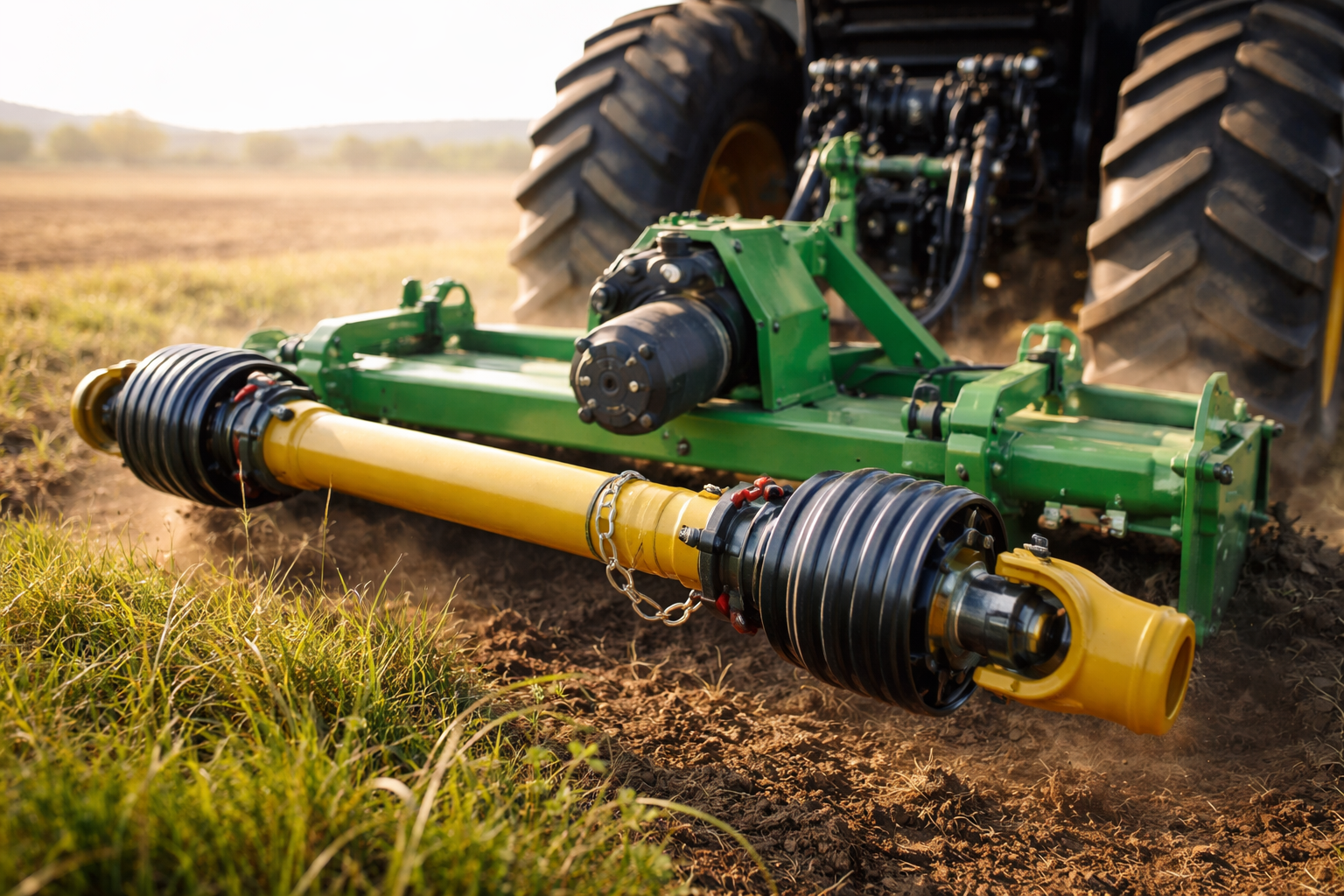
In highly regulated industries such as food processing and pharmaceuticals, every component on the production line must meet stringent hygiene, reliability, and precision standards. Universal joints (also known as spindles or universal joints) play a crucial role in these industries, efficiently transmitting power while compensating for equipment misalignment. UK pto-drive-shafts.com Ltd., located in Bury St Edmunds, Suffolk, UK (IP32 7LX), specializes in providing custom-designed, high-quality driveshafts for these demanding applications. Our solutions ensure smooth equipment operation, minimize the risk of contamination, and meet global hygiene standards. Whether you’re using a high-speed mixer or an aseptic filling line, understanding how universal joints are integrated can significantly improve equipment performance. Contact us at [email protected] for expert consultations.
Understanding Universal Drive Shafts in Sensitive Industries
Universal driveshafts are mechanical components used to transmit rotational power between two shafts that are not perfectly aligned. In the food and pharmaceutical machinery industries, these driveshafts must go beyond basic functionality, addressing unique challenges such as preventing contamination, corrosion resistance, and precise torque transmission. The food industry alone processes billions of tons of products annually, and any downtime or contamination can lead to massive recalls and economic losses. Similarly, the pharmaceutical industry requires absolutely sterile environments to maintain drug efficacy and patient safety. Driveshafts manufactured by pto-drive-shafts.com Ltd. in the UK are designed based on these priorities, employing advanced materials and designs that meet the standards of organizations such as the European Hygiene Engineering & Design Group (EHEDG) and 3-A hygiene standards.
The evolution of driveshaft technology in these industries is driven by increasingly stringent regulatory pressures. For example, the US Food and Drug Administration’s (FDA) Food Safety Modernization Act (FSMA) emphasizes preventative controls, including equipment design. In Europe, directives such as EU Regulation 1935/2004 stipulate that materials in contact with food must not transfer hazardous substances. Therefore, universal driveshafts must be designed to withstand rigorous cleaning procedures without compromising performance, ensuring they do not become breeding grounds for bacteria or allergens. This article delves into the applications, specifications, and best practices of universal driveshafts, providing a comprehensive analysis combining industry insights and the expertise of pto-drive-shafts.com Ltd. in the UK.
Applications in Food Processing Equipment
Overview of Equipment Types
Food processing equipment is diverse, encompassing mixers, dough mixers, conveyors, canning machines, and capping systems. Each piece of equipment uses a universal drive shaft to connect the motor to the working parts, allowing for slight misalignment during assembly or operation. For example, in a high-speed mixer used for dough preparation, the drive shaft must withstand continuous rotation up to 1500 rpm while remaining hygienic. Thermal expansion or vibration can cause misalignment, and without a flexible connection like a universal drive shaft, equipment failure would be inevitable.
Conveyors in food production lines often span long distances, requiring drive shafts capable of transmitting power over long distances without sacrificing efficiency. In canning machines, precise synchronization is crucial to prevent spills or blockages, and drive shafts ensure stable torque output. Drive shafts from pto-drive-shafts.com Ltd. in the UK are custom-designed for these applications and equipped with quick-release mechanisms for easy maintenance. Industry reports indicate that inappropriate shaft selection can lead to 15-20% downtime in food factories, highlighting the necessity of specialized components.
Depth Analysis of Operating Conditions
Food processing takes place in harsh environments, requiring frequent contact with water, detergents, and food residue. Clean-in-situ (CIP) and sterilization-in-situ (SIP) processes involve high-pressure water jets at temperatures up to 80°C and chemical reagents such as caustic soda or acids. Drive shafts must withstand these environmental conditions without corrosion or lubricant leakage, which could otherwise contaminate the product. Hygiene standards such as the Meat Institute’s *Hygienic Equipment Design Principles* emphasize that all joints and surfaces must be smooth and seamless to prevent microbial growth.
Sustained high-speed operation further increases complexity. For example, centrifuges operate at speeds of 3,000–5,000 rpm, requiring drive shafts with high torsional stiffness to minimize backlash and vibration. Vibration can affect product quality, such as causing uneven emulsion mixing. Furthermore, food processing areas must meet protection standards such as IP69K, requiring equipment to withstand 1450 PSI water pressure from all angles. Driveshafts manufactured by UK-based pto-drive-shafts.com Ltd. meet these standards, ensuring reliability in humid environments.
Another key factor is allergen control. Cross-contamination from equipment residues is a major risk for plants processing nuts, dairy products, or gluten. Driveshafts with a sealed design prevent particulate matter from entering or escaping, complying with HACCP (Hazard Analysis and Critical Control Point) guidelines. Actual data from USDA guidelines indicate that hygienic design can reduce contamination incidents by up to 30%, making hygienic driveshafts crucial.
Configuration Requirements for Food Applications
Food processing takes place in harsh environments, requiring frequent contact with water, detergents, and food residue. Clean-in-situ (CIP) and sterilization-in-situ (SIP) processes involve high-pressure water jets at temperatures up to 80°C and chemical reagents such as caustic soda or acids. Drive shafts must withstand these environmental conditions without corrosion or lubricant leakage, which could otherwise contaminate the product. Hygiene standards such as the Meat Institute’s *Hygienic Equipment Design Principles* emphasize that all joints and surfaces must be smooth and seamless to prevent microbial growth.
Sustained high-speed operation further increases complexity. For example, centrifuges operate at 3,000–5,000 rpm, requiring drive shafts with high torsional stiffness to minimize backlash and vibration. Vibration can affect product quality, such as causing uneven emulsion mixing. Furthermore, food processing areas must meet protection standards such as IP69K, requiring equipment to withstand 1450 PSI water pressure from all angles. Driveshafts manufactured by UK-based pto-drive-shafts.com Ltd. meet these standards, ensuring reliability in humid environments.
Another key factor is allergen control. Cross-contamination from equipment residues is a major risk for plants processing nuts, dairy products, or gluten. Driveshafts with a sealed design prevent particulate matter from entering or escaping, complying with HACCP (Hazard Analysis and Critical Control Point) guidelines. Actual data from USDA guidelines indicate that hygienic design can reduce contamination incidents by up to 30%, making hygienic driveshafts crucial.
| 매개변수 | 값 범위 | 표준 준수 |
|---|---|---|
| 재료 | AISI 304/316 Stainless Steel | FDA, EHEDG |
| 토크 용량 | 100-2000 Nm | ISO 5674 |
| 속도 | 최대 5000RPM | ASABE S203 |
| 보호 등급 | IP69K | 3-A Sanitary |
| Lubricant | FDA H1 Grade | USP Certification |
Applications in Pharmaceutical and Cleanroom Equipment
Overview of Equipment Types
Pharmaceutical machinery includes mixers, capsule filling machines, aseptic filling lines, and cleanroom equipment for biotechnology laboratories. Universal drive shafts transmit power in sterile environments, and even minor contamination can result in batches worth millions of dollars being scrapped. For example, in capsule filling machines, drive shafts connect the drive motor and metering mechanism, ensuring precise rotation for uniform drug distribution. Cleanroom equipment in the electronics or biopharmaceutical industries also uses these drive shafts to achieve vibration-free operation.
The risks are extremely high: a single contamination incident could lead to a regulatory shutdown. Drive shafts must be seamlessly integrated into GMP (Good Manufacturing Practice) compliant cleanrooms, with cleanliness levels ranging from ISO 5 to ISO 8. Products from the UK-based pto-drive-shafts.com Ltd. are designed to meet these high-precision requirements; for example, in tablet presses, even a 0.1% synchronization error can affect dosage accuracy.
Depth Analysis of Operating Conditions
In the pharmaceutical industry, cleanliness is paramount and cannot be compromised. Particulate matter concentrations in the equipment operating environment are below 100 particles per cubic foot, meaning drive shafts cannot shed particles due to wear or lubrication. Vaporized hydrogen peroxide (VHP) sterilization exposes components to oxidants at concentrations up to 1000 ppm, necessitating the use of chemically resistant materials. High-precision control is crucial; for example, in peristaltic pumps, drive shafts must provide torque with a recoil of less than 0.5° to maintain flow rate.
The extreme temperatures during sterilization (up to 121°C in autoclaves) test material integrity. Standards such as 3-A SSI require joints to be polished and pit-free. Minimizing the risk of electrostatic discharge (ESD) in cleanrooms is essential, making conductive materials the preferred choice. Industry data shows that hygienic design can reduce validation time by 25%, accelerating the time to market for new drugs.
Chemical durability requirements include resistance to solvents such as isopropanol or bleach used during wiping processes. Drive shafts exposed to these solvents must maintain structural integrity, and seals must not swell or crack. Precision requirements include dynamic balancing according to ISO G2.5 standards to minimize vibrations that could interfere with sensitive processes such as freeze-drying.
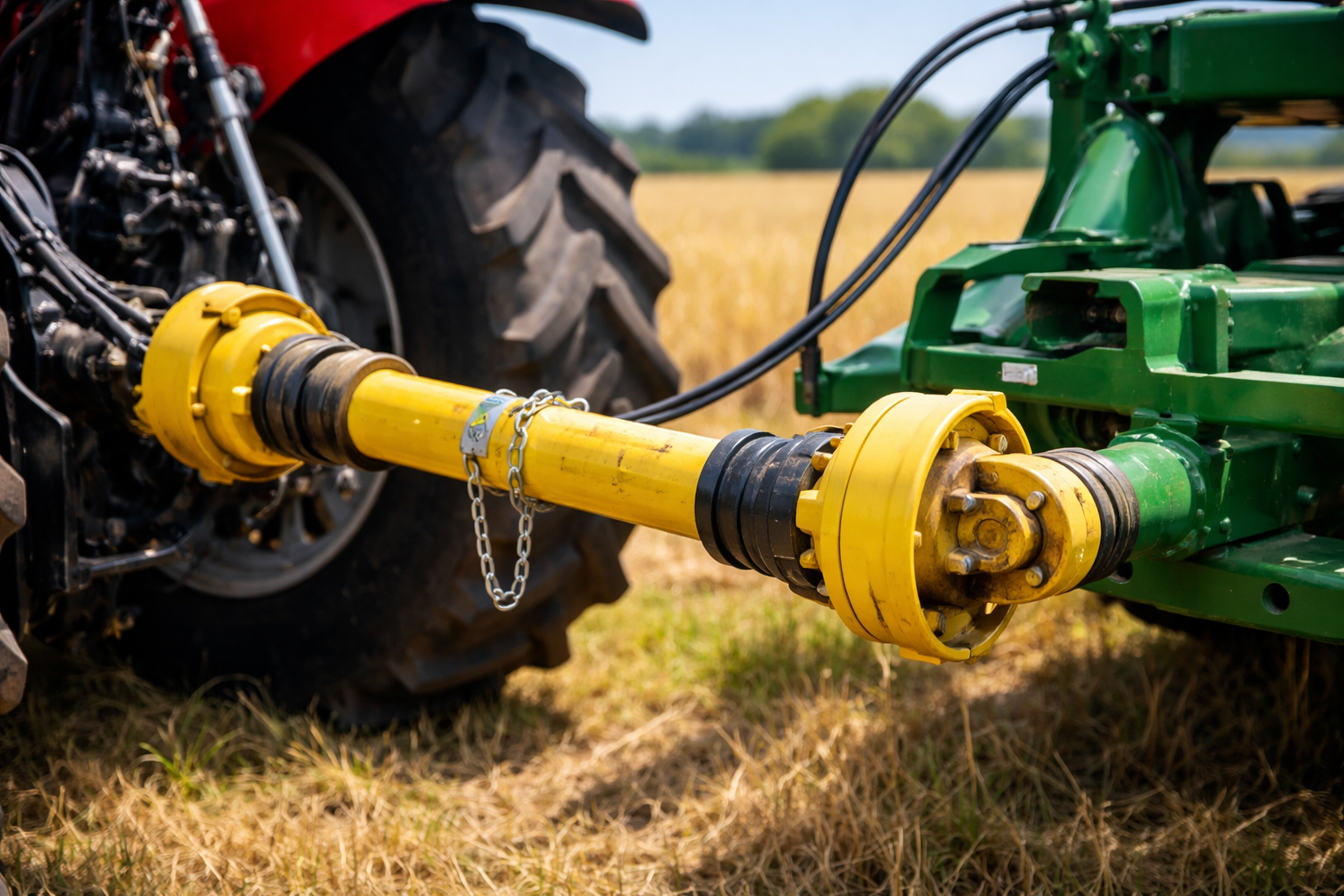
Configuration Requirements for Pharma Applications
Fully enclosed designs are standard, with stainless steel housings encapsulating joints and filled with long-life lubricants. Materials like 316L stainless or 17-4PH alloys provide strength and corrosion resistance, often electropolished to Ra < 0.4 μm for superior cleanability. Seals use high-temperature silicone or PTFE, rated for 150°C and compliant with USP Class VI for biocompatibility.
For precision, double cardan joints ensure constant velocity, ideal for high-speed fillers running at 10,000 cycles/hour. Lubricants are USP-certified, or shafts use dry-film coatings to eliminate fluids. At UK pto-drive-shafts.com Co.,Ltd., we incorporate torque reserves of 1.5x nominal to handle occasional overloads without failure.
| 매개변수 | 값 범위 | 표준 준수 |
|---|---|---|
| 재료 | 316L Stainless Steel | USP Class VI |
| 백래시 | <0.5° | GMP Guidelines |
| 균형 등급 | G2.5 | ISO 1940 |
| Sterilization Temp | Up to 121°C | EHEDG |
| 밀봉 | PTFE/Silicone | 3-A SSI |
Key Technical Features of Hygienic Drive Shafts
Hygiene-focused driveshafts incorporate several advanced technologies. Surface finish is paramount; electropolishing removes microburrs, which studies show can reduce bacterial adhesion by up to 50%. Sealing systems, such as the three-lip design, prevent cleaning agent penetration while ensuring lubricant sealing. All materials must pass migration testing required by EU Regulation 10/2011 to ensure no leakage of hazardous substances.
An innovative feature is the use of a silver ion-containing antibacterial coating, which inhibits the growth of pathogens such as E. coli. For the pharmaceutical industry, vacuum-compatible products prevent the release of harmful gases in cleanrooms. Integrated torque limiters prevent overload, extending equipment life by 20-30%. The product range from pto-drive-shafts.com Ltd. in the UK features a modular design for easy upgrades.
Testing procedures comply with ISO standards, including over 1 million fatigue cycle tests and 1000 hours of salt spray testing. These tests ensure product lifespan in corrosive environments. Furthermore, energy efficiency is a significant advantage. Low-friction joints can reduce energy consumption by up to 5% during continuous operation.
Case Studies: Real-World Implementations
In a UK bakery, our stainless steel drive shaft replaced corroded parts in a dough mixer, reducing cleaning time by 40% and preventing contamination incidents. Its IP69K protection rating allows it to withstand daily CIP cleaning cycles, while its quick-release design enables tool-free maintenance.
A pharmaceutical company in Suffolk integrated our precision drive shaft into its capsule filling machine, achieving 99.9% dosage accuracy. The enclosed design is GMP-compliant, and the electropolished surface minimizes particle generation. Customer feedback indicates a 25% reduction in downtime.
Globally, a US food processor used our drive shaft in its canning production line, complying with FSMA regulations. Food-grade lubricant prevented product recalls and saved thousands of dollars in potential losses. These examples clearly demonstrate how customized drive shafts can improve operational efficiency and safety.
Benefits and Advantages
Adopting hygienic universal drive shafts yields multiple benefits. Enhanced hygiene reduces contamination risks, protecting brand reputation. Precision improves product consistency, crucial for pharmaceuticals where variances can affect efficacy. Durability lowers total ownership costs through extended service intervals.
Compliance with standards like EHEDG streamlines certifications, speeding market entry. Energy savings from efficient transmission contribute to sustainability goals. At UK pto-drive-shafts.com Co.,Ltd., our shafts also offer customization, ensuring perfect fits for unique machinery setups.
Selection and Maintenance Guidelines
Selecting the right shaft involves assessing torque, speed, misalignment angle, and environmental factors. Use calculators for sizing, ensuring a safety factor of 1.5-2.0. Maintenance includes regular inspections for wear, lubricant checks, and post-cleaning verifications. Follow OEM guidelines to avoid voids in warranties.
For pharma, validate shafts under actual conditions before full deployment. Training staff on quick-disconnects maximizes uptime. Our team at [email protected] provides selection tools and maintenance kits.
Future Trends in Hygienic Drive Shaft Technology
Emerging trends include smart sensors for predictive maintenance and real-time monitoring of vibration and temperature. Advanced composites and other materials achieve lighter weights without sacrificing strength. Integration with the Internet of Things (IoT) enables remote diagnostics, reducing on-site maintenance in cleanrooms.
Sustainability is driving the use of recyclable materials and low-emission manufacturing. In the food sector, antimicrobial nanotechnology is gaining increasing attention. UK pto-drive-shafts.com Co., Ltd. is committed to investing in these innovations to maintain its leading position.
In conclusion, universal driveshafts are crucial for maintaining the hygiene and precision of food and pharmaceutical machinery. By choosing high-quality, compliant solutions from UK pto-drive-shafts.com Co., Ltd., manufacturers can ensure safe and efficient operation. For inquiries or custom designs, reach out to us at [email protected] or visit our facility in Bury St Edmunds, Suffolk IP32 7LX, UK. Let’s optimize your machinery today.
gzl님이 편집함























