
Metallurgy & Metal Processing Equipment: Defining the Challenge
The “Ultimate Battlefield” description is not hyperbole. Industrial Cardan shafts in this sector must deliver extreme torque density while surviving environmental factors that would destroy standard automotive or light-industrial shafts within hours. The engineering philosophy here shifts from “sufficiency” to “survival and reliability.”
Our technical team has categorized the challenges into three distinct zones, each requiring a specialized approach to materials, kinematics, and tribology.
Main Mill Drives: The Heart of the Beast
Equipment Definition
Main Mill Drives are the core power units responsible for driving the work rolls of hot or cold rolling mills. These systems transmit colossal torque from large DC or AC motors (often via gearboxes) directly to the mill rolls that deform the steel slab or billet.
Deep Dive: Operational Conditions & Load Analysis
The Shock Loading Phenomenon: The key characteristic of the main rolling mill drive lies not only in its high torque but also in its rate of torque change. When the billet enters the rolls (a process known as “biting”), the resistance generates a huge instantaneous impact load. The torque does not rise smoothly but surges dramatically.
Based on industry data and our extensive field experience, the rated service factor (K) for such applications must be between 3.0 and 10.0. This means the universal joint design must be able to withstand a breaking torque 3 to 10 times higher than the motor’s rated output. Furthermore, modern rolling mills typically employ reverse rolling processes, subjecting the universal joint to severe alternating fatigue stress.
Thermal & Environmental Stress: The physical environment is equally harsh. The heat emanating from the scorching steel billets (temperatures typically exceeding 1000°C) can burn the transmission system. Simultaneously, high-pressure descaling water spray mixes with iron oxide scale, forming a corrosive and abrasive slurry. This combination can easily lead to seal failure, resulting in bearing contamination.
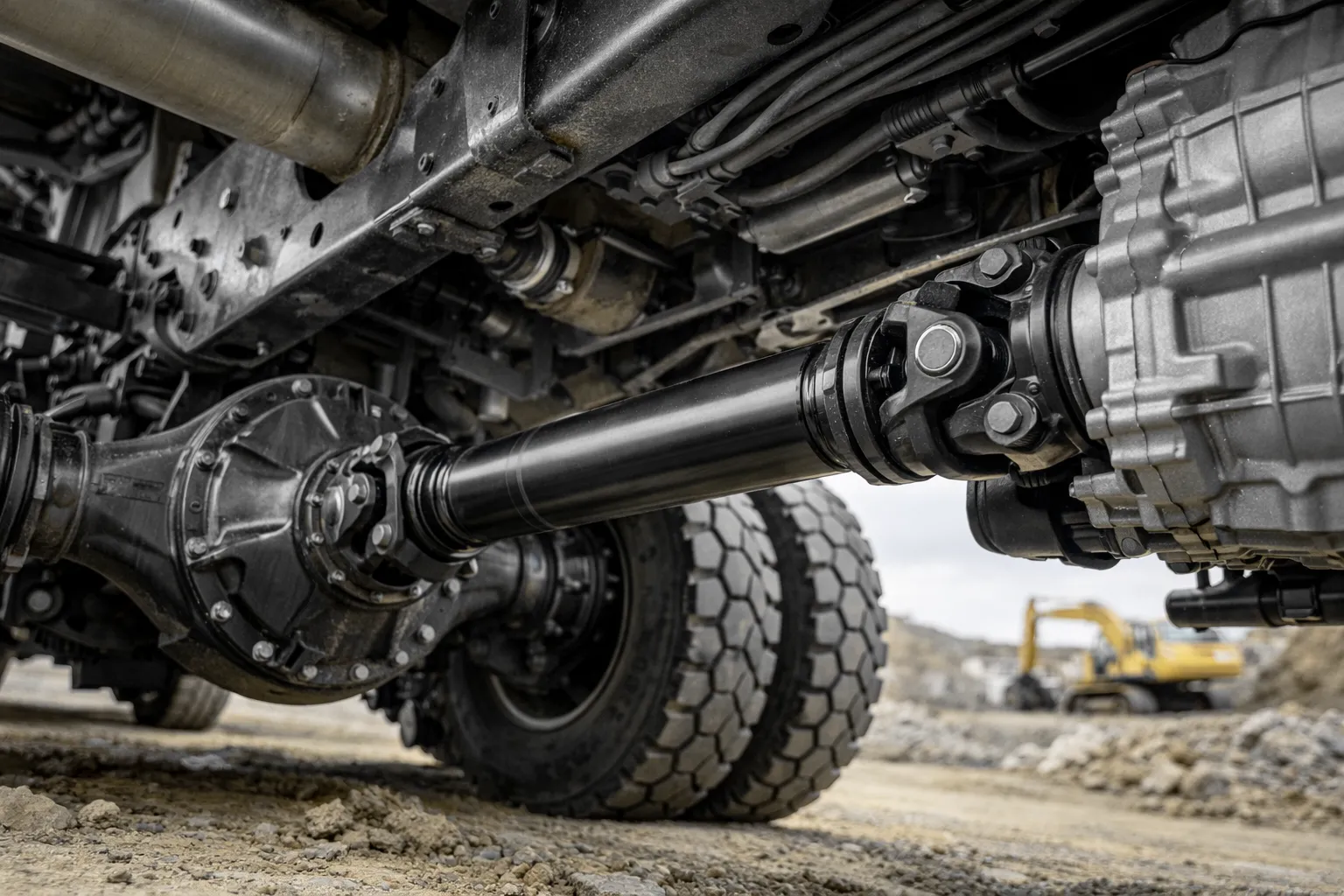
Technical Configuration by UK pto-drive-shafts.com Co.,Ltd.
1. Structural Integrity: Closed Eye Yoke Design (SWC)
For the main mill drive unit, the traditional split bearing housing design (where the bearing housing is bolted to the yoke) has drawbacks. Under extreme impact loads (3 to 10 times the rated load), the bolts in the split design become failure points, prone to shear or tensile stress.
We mandate the use of an integral fork head (SWC type/closed yoke). By forging the yoke into a single structure, we completely eliminate bolted connections. This significantly improves structural rigidity and allows for a smaller rotation diameter at torque capacity, which is crucial for mill design.
2. Torque Transmission: Hirth Serrations & Face Keys
Friction connections are insufficient for mill drives. Relying solely on the friction between flange faces clamped by bolts will lead to slippage under shock loads. Once a flange slips, bolt shear is inevitable.
Our solution involves positive locking mechanisms:
- Face Keys: A large keyway across the flange face to physically lock the connection.
- Hirth Serrations (End-Face Teeth): Precision-ground teeth on the mating faces of the flanges. This provides the highest possible torque density and self-centering capability. It ensures that torque is transmitted through the solid metal teeth, not the bolts.
3. Metallurgy: High-Strength Alloys
The core components (cross spiders, yokes) are forged from premium high-strength alloy steels, such as 42CrMo4 (AISI 4140) or equivalent heavy-duty grades.
However, material selection is only half the battle. We employ Deep Case Carburizing and quenching processes. This creates a hard, wear-resistant surface layer (60-62 HRC) to prevent trunnion wear, while maintaining a tough, ductile core capable of absorbing the energy from impact shocks without brittle fracture.
Straightener Drives: Precision in Restricted Spaces
Equipment Definition
Straighteners are positioned after the rolling mill to correct bow, sweep, and edge waves in the steel. They utilize two rows of offset rolls. The drive shafts connect the distribution gearbox to these rolls, often in a vertical stack.
Deep Dive: Kinematics & Spatial Constraints
The Geometric Paradox:
Straighteners present a classic engineering conflict: high torque requirements versus minimal available space. To effectively straighten the product, the roll pitch (distance between roll centers) must be kept small. This severely limits the Swing Diameter allowed for the Cardan shaft. Yet, the torque required to straighten high-strength steel plates is immense. Achieving high torque density in a slender profile is the primary challenge.
Variable Kinematics:
Unlike a fixed conveyor, the upper rolls of a straightener move vertically to adjust the “gap” or pressure applied to the steel. This movement means the drive shafts must operate at varying angles, often sustaining high angles (10°–15°) for prolonged periods.
Standard Cardan joints introduce “non-uniform velocity” (the rotational speed fluctuates twice per revolution) when operating at an angle. At high angles and speeds, this can cause vibration and leave “chatter marks” on the surface of the finished metal product.
Technical Configuration by UK pto-drive-shafts.com Co.,Ltd.
1. Super Short Series Design
To address the spatial constraints, we utilize Super Short series designs. We optimize the yoke geometry to minimize the distance from the flange face to the center of the cross.
In extreme cases, we employ an In-Board Slip Spline design. Instead of the sliding spline being located in the intermediate tube (which adds length), the splines are machined directly inside the joint assembly. This maximizes the spline engagement length while keeping the overall shaft length to an absolute minimum.
2. Angle Management & CV Joints
For applications where surface finish is critical, and operating angles are steep, standard Cardan joints may be insufficient due to the velocity fluctuation. In these scenarios, we offer Constant Velocity (CV) Joints.
CV joints transmit power with zero velocity fluctuation, regardless of the angle. This ensures the rolls rotate at a perfectly constant speed, eliminating chatter marks and ensuring a mirror-like finish on high-quality steel products.
Roller Table Drives: The Unsung Heroes of Logistics
Equipment Definition
Roller tables are the arteries of the steel plant, transporting slabs, plates, and coils between processes. While individual motors are smaller than main mill drives, the sheer volume of shafts (often hundreds per line) makes their reliability critical.
Deep Dive: Fatigue & Tribology
The Cycle of Fatigue:
Roller tables operate in a “Start-Stop-Reverse” cycle. This frequent direction change creates a specific failure mode in the spline section known as Fretting Corrosion (or micro-fretting).
Every time the torque reverses, minute movements occur between the male and female splines. Under metal-to-metal contact, this micro-motion tears away surface particles, which then oxidize and act as an abrasive, rapidly wearing out the splines. This leads to excessive backlash and eventual shaft failure.
Thermal Degradation:
Stationary shafts sitting under hot slabs soak up heat. This can bake the grease inside the bearings, causing the oil to separate from the thickener. Without lubrication, the needle bearings overheat and seize.
Technical Configuration by UK pto-drive-shafts.com Co.,Ltd.
1. Advanced Sealing: Viton/FKM Technology
To combat thermal degradation, standard NBR (Nitrile) seals are replaced with Viton (FKM/Fluoroelastomer) seals. Viton maintains its elasticity and sealing properties at temperatures exceeding 200°C, ensuring the grease stays in and the mill scale stays out.
We also implement multi-lip labyrinth seals protected by metal dust covers to mechanically shield the rubber lips from the abrasive iron oxide dust.
2. Anti-Fretting Solution: Rilsan® Nylon Coating
To solve the fretting wear issue caused by frequent reversing, we apply a specialized Nylon 11/12 (Rilsan®) coating to the male splines.
This blue polymeric coating offers three distinct advantages:
- Self-Lubrication: It drastically reduces the coefficient of friction, protecting the splines even if grease is low.
- 진동 감쇠: The polymer layer absorbs the shock of torque reversal.
- Elimination of Fretting: By placing a polymer barrier between the steel surfaces, we physically prevent metal-on-metal contact, effectively halting the fretting corrosion process.
This technology significantly extends the maintenance intervals and lifespan of roller table shafts.
Engineering for the Long Haul
In the metallurgy industry, the cost of a 구동축 is insignificant compared to the cost of the production loss caused by its failure. The difference between a standard off-the-shelf component and a purpose-built solution lies in the details: the depth of heat treatment, the geometry of the splines, the chemistry of the seals, and the precision of the flanges.
At UK pto-drive-shafts.com Co.,Ltd., we do not just sell shafts; we provide continuity to your production line. Our solutions are forged in the fires of industry experience and refined by British engineering precision. Whether you are upgrading a vintage rolling mill or designing a state-of-the-art continuous casting line, our team is ready to assist with calculations, selection, and custom manufacturing.
Do not let your drive train be the weak link in your metallurgy process.
Ready to Optimize Your Drive Systems?
Contact our engineering team today for a consultation or quote.
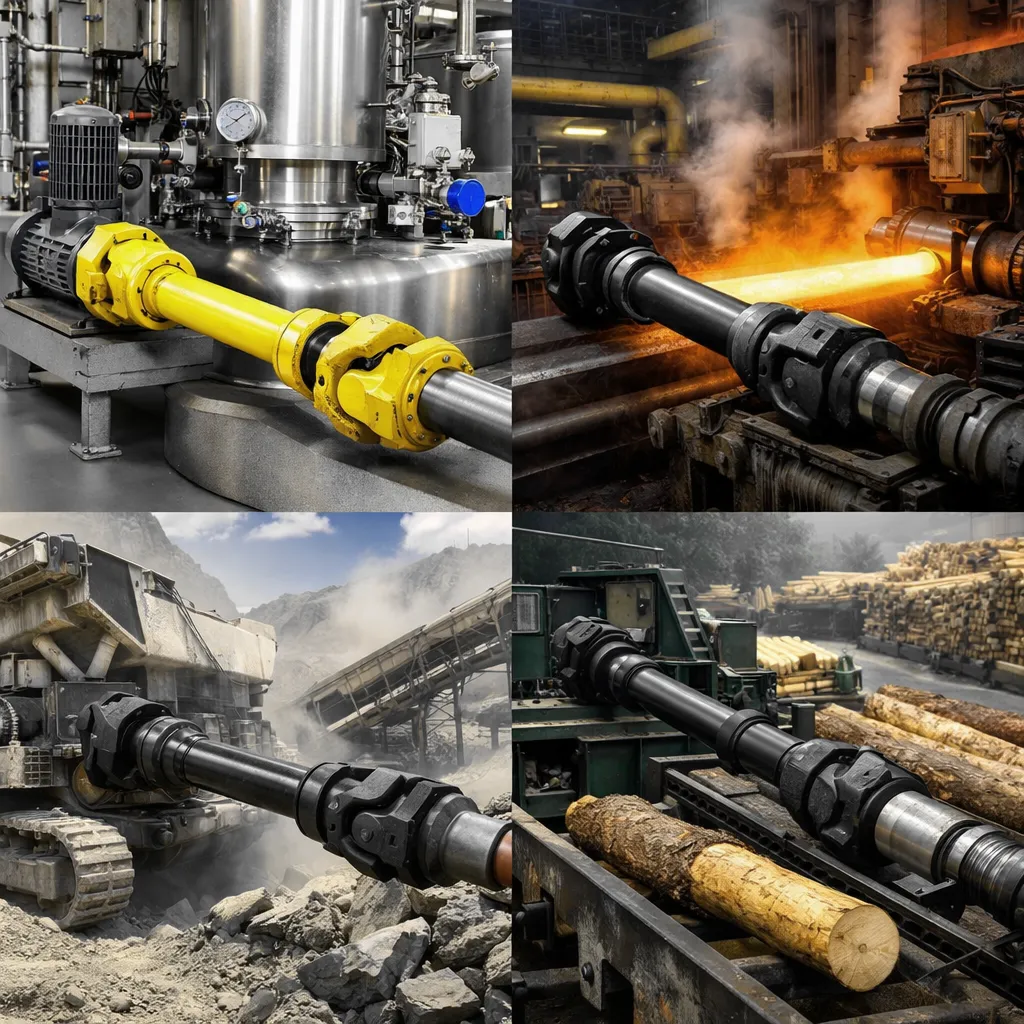
UK pto-drive-shafts.com Co.,Ltd.
주소: Bury St Edmunds, Suffolk IP32 7LX, UK
이메일: [email protected]























