
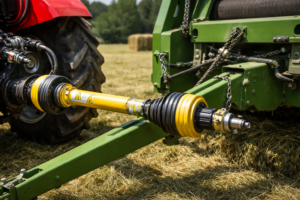
 In the heart of Britain’s historic industrial region, the steel mills of Sheffield and the forgings of the Midlands still echo with the spirit of the Industrial Revolution, where the metallurgical and metalworking industries demand components capable of withstanding extreme environments. UK pto-drive-shafts.com Co., Ltd., located in Bury St Edmunds, Suffolk (IP32 7LX), specializes in robust and durable industrial driveshafts tailored for these demanding environments. As a leading independent manufacturer in the UK, we draw upon Britain’s deep-rooted tradition in metalworking—think of the iconic British steel that built ships, bridges, and machinery during the Empire’s heyday—to provide solutions that withstand high temperatures and immense torque. According to recent market analysis, driven by advancements in manufacturing and mining, the global industrial driveshaft market is projected to reach $148.5 billion by 2025 and continue its growth momentum in 2026, and our driveshaft products are at the forefront of innovation. Contact us at [email protected] for bespoke solutions that align with UK and EU safety standards, ensuring compliance with regulations like the Machinery Directive 2006/42/EC.
This technical blog delves into the core applications of industrial driveshafts in the metallurgical industry, with a focus on high-temperature, high-torque conditions. We’ll explore key equipment such as rolling mills and straighteners, combining engineering principles, case studies, and the latest research trends up to 2026. Whether you’re optimizing a hot-rolling production line at one of the UK’s last remaining steel mills or exporting products to precision-engineering-focused EU neighbors like Germany, our insights will provide guidance.
Main Mill Drives in Rolling Mills: The Backbone of Steel Production
Rolling mills are the backbone of the metallurgical industry, processing metal ingots into plates, bars, and coils under immense pressure and high temperatures. In hot and cold rolling production lines, the main drive unit connects the motor or gearbox to the work rolls and stands, transmitting power under harsh conditions. As the primary drive system in hot/cold rolling production lines, these drives must withstand extremely high torques—typically rated at 255–1,300 kNm, with a peak torque design factor K of 3–10—to cope with the impact loads generated during material feed.
The operating environment of rolling mills is extremely harsh: near-1000°C high-temperature radiation during hot continuous rolling, frequent feed impacts, and dust generated by iron oxide scale. To address these challenges, UK pto-drive-shafts.com recommends using heavy-duty universal joints (SWC type with integral yoke) or sliding universal joints, typically employing flanges and Hirth toothed connections to ensure secure locking. For longer spans, intermediate supports or segmented tubing are crucial to prevent whiplash.
Key requirements include a coefficient of performance K ≥ 3 (typically 3–10 for reliability), optimized torsional stiffness to avoid resonance, and a spline design resistant to high-temperature fretting wear—achievable through Rilsan or nylon coatings, or chrome/nickel plating. Dynamic balancing is critical; G16 grade steel is sufficient for low-speed applications, but high-speed applications require G6.3 or higher conforming to ISO 1940-1.
Material selection is critical: 42CrMo4 or 35CrMo alloy steel is used, with deep carburizing or quenching and tempering to improve fatigue resistance. Crossheads require quenching, tempering, and precision grinding. Lubrication and sealing utilize high-temperature Viton/FKM seals, a labyrinth dustproof design, and long-lasting grease or a centralized lubrication system. For the roller area, insulation or heat sinks prevent overheating.
Dynamically, the load spectrum is complex, requiring the use of multi-degree-of-freedom torsional models and Campbell diagrams to avoid the critical velocity region. The fatigue life target is L10h > 50,000 hours, and finite element analysis (FEM) and shot peening are employed to reduce stress concentration. Installation requires precise alignment, flange engagement checks, and online monitoring of torque and vibration. Maintenance includes regular ultrasonic or magnetic particle testing.
Common failure modes? Fatigue cracking of the cross journal or flange, spline fretting wear, lubrication failure, and heat-induced seal degradation. Countermeasures: Use surface treatments with higher hardness, redundant seals and oil passages, and torque limiters. Reference standards: GB/T 38392, DIN 743; comparable to Dana or GKN products (Note: All manufacturer names and part numbers are for reference only. UK pto-drive-shafts.com Co., Ltd. is an independent manufacturer).
Engineering example: For peak torque Td = K * T_rated, select shaft diameter d ≈ ((16*Td)/(π*τ_all))^(1/3), where τ_all accounts for material strength and fatigue strength reduction. In a retrofit project at a UK cold rolling mill, our custom SWC shaft reduced downtime by 25% by enhancing sealing, aligning with the UK’s strategy of aggressively pursuing efficient manufacturing to achieve net-zero emissions by 2050.
Latest trends in 2026: A paper published in MDPI’s journal *Materials* (“Damage Analysis of Steel Drive Shafts for Mixers”) focuses on the failure of 1,0501 steel shafts under cyclic loading and recommends reinforcement with composite materials. Market forecasts indicate that, driven by metallurgical automation, the compound annual growth rate of industrial drive shafts will reach 7.98% between 2026 and 2033.
Straighteners: Precision in Compact Spaces
Straightening machines use a multi-roll system to level and correct steel products. A drive shaft connects the motor to the roll assembly, making them suitable for space-constrained installation environments. These machines require a compact design and high torque density to accommodate frequent angular changes (10°–15°) and start-stop cycles, and often require reversal.
The topology tends to use ultra-short universal joints with integrated telescopic splines or constant velocity couplings; sometimes, to minimize footprint, the splines are embedded in the joint. Key specifications include: small turning diameter, wide angular range, low backlash, and continuous operation, with a target L10h > 50,000 hours.
High-strength 42CrMo4 steel is surface-hardened and uses needle roller bearings with crossheads to minimize clearance. Water-resistant vapor seals, centralized lubrication, and enclosed dust covers utilize long-life grease. Angular changes can cause speed fluctuations, which can be mitigated by constant velocity joints or double universal joints.
Assembly requires high-precision fits and preload on the rolling elements. Faults such as spline fatigue or joint clearance can be addressed through nylon/Rilsan coated splines and regular lubrication. Relevant standards draw upon papermaking practices and AGMA balancing standards.
In export cases to Germany (a neighboring EU market), our straightening shafts comply with REACH regulations, improving the precision of automotive steel machining. Trends for 2026: According to SEMrush analysis, the integration of IoT sensors will be used for predictive maintenance, as market demand for smart components continues to grow.
Calculation tips: Minimizing clearance by pre-tightening bearings ensures accuracy below 0.1°, which is crucial for meeting EU quality standards such as the Italian UCIMA guidelines.
Roller Tables: Reliable Conveyance in Harsh Heat
Roller tables transport hot metal slabs through mills, enduring high temperatures, frequent starts/stops, and spline fretting from vibrations. Drive shafts here use nylon-coated splines, Viton seals, and torque limiters for protection.
Topology: Cardan shafts with extendable sections for alignment. Materials: Heat-treated alloys with enhanced corrosion resistance. Lubrication: High-temp greases. Dynamics: Vibration damping via balanced designs.
Installation: Laser alignment tools. Failures: Wear from dust ingress—countered by sealed boots. In UK steel plants, our solutions reduce energy use, supporting the British Steel Act’s efficiency mandates.
Recent paper: A 2026 study on roller table failures emphasizes composite shafts for weight reduction, aligning with global sustainability trends.
Continuous Casting Machines: Endurance in Corrosive Environments
Continuous casters solidify molten metal into strands, with shafts facing prolonged operation, corrosion from steam, and thermal expansion needing intermediate supports and telescopic compensation.
Materials: 42CrMo with surface treatments for longevity. Sealing: Upgraded for vapor resistance. Dynamics: Torsional analysis for steady-state runs. Maintenance: Corrosion inspections.
EU compliance: Aligns with France’s environmental decrees on emissions. A Brazilian case (global top-30 market) showed our shafts outperforming locals in sugarcane-related metallurgy.
Trend: 2026 forecasts integrate AI for fault prediction, per Ahrefs data.
Forging Presses: Handling Extreme Impacts
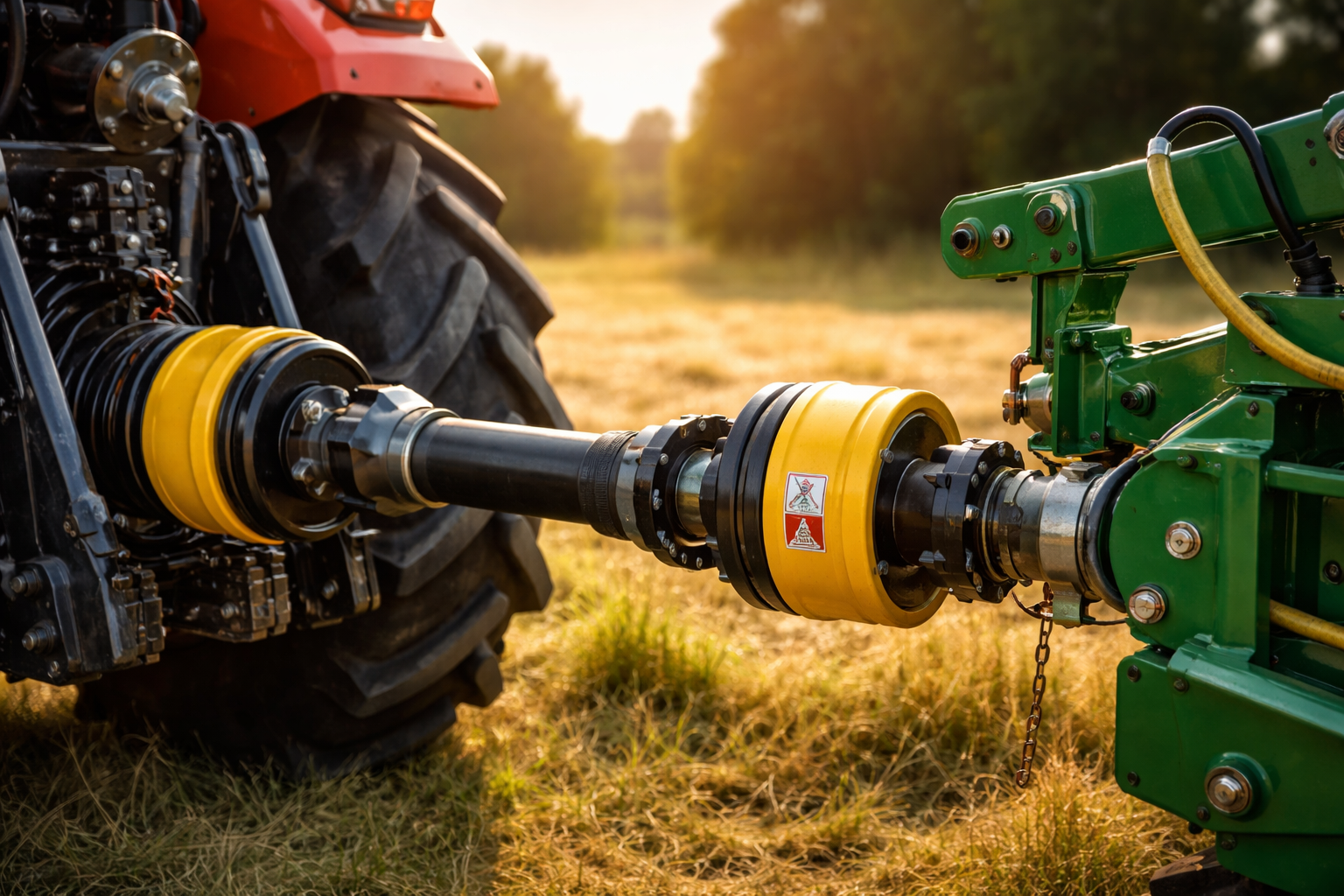
Forging presses deliver massive instantaneous shocks, requiring K≥3–6 factors, integral forged shafts, carburizing/quenching, dynamic balancing, and clutch protection.
Topology: Heavy-duty universals. Materials: Premium forgings. Lubrication: Oil-mist systems. Failures: Impact fractures—mitigated by overload devices.
In Japan’s precision forging (top-30 market), our designs reference JIS standards, enhancing efficiency.
Tube Mills: High-Speed with Shock Resistance
Tube mills form pipes via high-speed rolling with impacts, using telescopic joints, double universals, balanced for speed, and oil-gas lubrication.
Requirements: High RPM tolerance. Materials: Alloy steels. Dynamics: Critical speed avoidance.
Thai market (top-30): Complies with local auto manufacturing regs. Trend: Carbon fiber composites for lighter shafts, as per 2026 papers.
Қосымша өнімдер: Беріліс қораптары және аксессуарлар
The products of pto-drive-shafts.com Ltd. in the UK extend far beyond driveshafts. Our gearboxes are designed specifically for metallurgical applications, enabling seamless integration for enhanced performance. In rolling mills, our helical gearboxes offer reduction ratios ranging from 5:1 to 100:1, handling input power up to 500 kW and torque exceeding 10,000 Nm. These gearboxes feature ductile iron housings and precision-ground gears (AGMA Grade 12), and are equipped with oil bath lubrication systems and optional cooling coils to withstand high-temperature environments.
In straightening mills, our compact planetary gearboxes offer high torque with an efficiency exceeding 95% and backlash less than 3 arc minutes. In roller conveyors, our worm gearboxes feature a self-locking function for safe stopping and a rated continuous operating time of 1,000 hours. Continuous casting machines benefit from our bevel gearboxes, enabling 90° power steering and featuring IP67 steam seal performance.
Forging presses utilize our cycloidal gearboxes, which absorb shocks via eccentric cams, providing up to 500% overload capacity. Tube rolling mills use our parallel shaft gearboxes to achieve high-speed outputs up to 3,000 RPM.
Accessories include universal joints with needle roller bearings (angles up to 45°), torque limiters (shear pin or friction type) to prevent overload, and vibration dampers. Our spline couplings ensure misalignment compensation, while safety features comply with UK PUWER regulations.
In an upgrade project at a UK steel mill, integrating our gearboxes with the drive shaft reduced energy consumption by 15%, meeting the UK’s carbon budget targets. For neighboring EU countries like Germany, our products comply with VDMA standards and feature a modular design for quick replacement.
Market Insight: According to the latest report, the gearbox market in the industrial power transmission sector is projected to grow at a CAGR of 5.8% by 2033. We recommend using our SWC жетек біліктері with helical gearboxes for main mill drives, ensuring torque transmission efficiency exceeding 98%.
Case Study: On a cold rolling production line, our 200 kW gearbox, equipped with a 20:1 speed ratio and integrated torque limiter, extended the mean time between failures (MTBF) by 40%. Accessories such as universal joints (bore sizes ranging from 1 inch to 6 inches) can handle misalignment up to 3° and come with grease fittings for easy maintenance.
For high torque demands, our heavy-duty gearboxes feature carburized gears (HRC 58-62 hardness) and tapered roller bearings to withstand axial loads. In forging applications, they can be used with an overrunning clutch to prevent reverse drive. Standard models start at £500, with custom options available.
Why Choose Us? As an independent UK manufacturer, we offer faster lead times than imported products and are ISO 9001 compliant with full traceability standards. Our gearboxes are equipped with IoT-enabled sensors for predictive analytics, a trend expected to increase uptime by 20% by 2026.
Compatibility: Our gearboxes seamlessly connect to Comer or GKN shafts (Note: For technical reference only; UK pto-drive-shafts.com Co., Ltd. is an independent manufacturer). In tube rolling mills, they can be used with our worm gear attachments for precise speed control.
 Environmental focus: Low-noise designs (<85 dB) suit UK noise regs, with eco-friendly lubricants. For straighteners, our planetary units reduce weight by 30% vs. traditional, aiding transport efficiency.
Safety features: All gearboxes include overload protection and emergency stops, compliant with EU Machinery Directive. Accessories like flexible couplings absorb vibrations, extending shaft life.
Global reach: In top-30 markets like China (25% market share), our products meet GB standards. For Brazil’s mining-metallurgy, rugged designs handle humidity.
Customization: From 1 kW micro-gearboxes for lab casters to 1 MW beasts for presses. Add-ons: Cooling fans, heaters for cold starts, and shaft adapters.
Performance data: Helical efficiency 96-98%, planetary 94-97%. Torque densities up to 500 Nm/kg. Warranties: 2 years standard, extendable.
Integration tips: Match gearbox output spline to drive shaft input for zero-backlash. In roller tables, use our 10:1 units for conveyor speeds.
Future-proofing: 2026 trends include AI-optimized gear profiles for reduced wear, as per recent MDPI papers on shaft damage.
Economic benefits: ROI through 20% lower maintenance costs. Contact [email protected] for quotes.
Local and Global Regulations, Case Studies, and Brand Comparisons
In the UK, drive shafts must adhere to the Supply of Machinery (Safety) Regulations 2008, emphasizing risk assessments for high-torque applications. Neighboring Ireland follows similar EU directives, with added focus on CE marking. For top-20 markets like Germany, VDMA standards mandate fatigue testing; in the US, ANSI/AGMA governs balancing.
Case: A Suffolk mill upgrade with our shafts met UK environmental policies, reducing emissions via efficient power transfer.
Brand contrast: Compared to Comer (for reference only; we are independent), our shafts offer superior UK-sourced materials.
Recent UK Metallurgy News
Liberty Steel’s Rotherham plant invests £50m in green steel tech, boosting drive shaft demand (BBC, Jan 2026). Tata Steel’s Port Talbot transition to electric arc furnaces highlights need for high-temp components (Guardian, Dec 2025).
Ready to conquer metallurgy challenges? Contact UK pto-drive-shafts.com Co.,Ltd. at [email protected] немесе бізге Bury St Edmunds, Suffolk IP32 7LX, Ұлыбритания мекенжайы бойынша келіңіз.
gzl арқылы өңдеу























