
In the demanding field of aerospace engineering, precision, durability, and safety are paramount, and driveshafts play a crucial role in power transmission systems. UK pto-drive-shafts.com Co., Ltd., located in Bury St Edmunds, Suffolk, UK (IP32 7LX), specializes in producing highly reliable driveshafts tailored for aerospace applications. These components must withstand extreme environments ranging from the vacuum of space to the vibrations of high-altitude aircraft. Utilizing advanced materials such as titanium alloys and 17-4PH stainless steel, and rigorously certified by agencies like the Federal Aviation Administration (FAA) and the European Aviation Safety Agency (EASA), we ensure the driveshafts maintain operational integrity even in the most challenging environments. This article delves into the technical details of these driveshafts, including their design, materials, redundancy schemes, and reliability analysis, providing valuable insights for engineers and industry professionals.
Understanding Drive Shafts in Aerospace Contexts
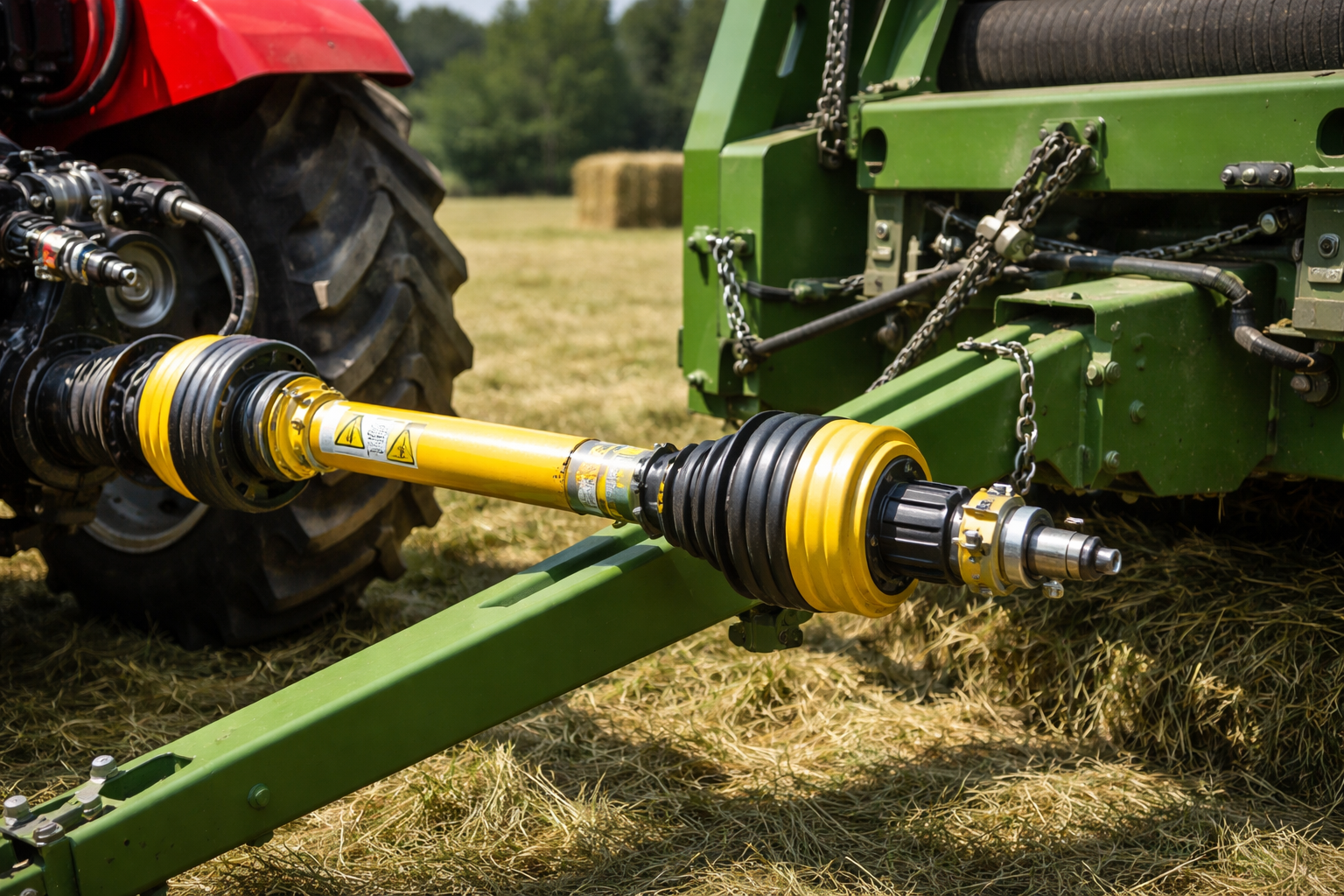
Driveshafts play a crucial role in aerospace, functioning similarly to power take-off (PTO) shafts in terrestrial applications. In aviation, they connect engines to auxiliary systems such as generators, hydraulic pumps, or propellers in turboprop aircraft. In space, they transmit torque in satellite mechanisms, Mars rover drive systems, or launch vehicle actuators. Unlike standard industrial shafts, aerospace driveshafts require extremely high reliability to prevent catastrophic failures that could endanger lives or missions.
The fundamental principle of driveshafts is to transmit rotational power while accommodating factors such as misalignment, vibration, and thermal expansion. In aerospace, factors such as takeoff overload, the low temperatures of space, and corrosive atmospheric conditions exacerbate these effects. For example, in helicopter rotor systems, driveshafts must withstand more than 10^7 cycles of cyclic load without fatigue failure. The designs from pto-drive-shafts.com in the UK utilize universal joints or constant velocity joints (CVs) to ensure smooth power output, minimize backlash, and maximize torsional stiffness.
Key performance indicators include torque capacity (typically up to 50,000 Nm in heavy aircraft applications) and rotational speeds exceeding 10,000 rpm. Material selection is crucial; titanium alloys (such as Ti-6Al-4V) have a strength-to-weight ratio of approximately 160 kN·m/kg, far superior to conventional steel. This lightweight characteristic reduces the overall weight of the aircraft, enabling fuel efficiency improvements of up to 15% in commercial jet aircraft.
Beyond the basic mechanical structure, aerospace driveshafts integrate smart sensors for real-time monitoring. Embedded strain gauges and accelerometers provide data on torsional stress and vibration modes, which can be used in predictive maintenance algorithms. This IoT-enabled approach aligns with Industry 4.0 principles, enabling operators to predict failures before they occur, thereby extending service life from 5,000 flight hours to over 10,000 flight hours.
Advanced Materials: Titanium Alloys and 17-4PH Stainless Steel
The core of a highly reliable driveshaft lies in materials science. Titanium alloys, especially Ti-6Al-4V, are favored for their superior corrosion resistance and high fatigue strength. In the aerospace field, where exposure to brine aerosols or de-icing chemicals is frequent, the passivated oxide layer of titanium prevents pitting corrosion, thus maintaining structural integrity for decades. Heat treatment processes such as solution annealing followed by aging can increase the yield strength to 1100 MPa, enabling the driveshaft to remain undeformed under extreme loads.
Complementing titanium alloys is 17-4PH precipitation-hardening stainless steel, renowned for its versatility under high-stress environments. This alloy, after aging at 480-620°C, achieves a hardness of 40-45 HRC and exhibits excellent resistance to stress corrosion cracking. In aerospace applications such as the Mars rover drive system, 17-4PH driveshafts can withstand temperature fluctuations from -150°C to +120°C without becoming embrittled. Specialized heat treatment processes, including vacuum arc remelting (VAR), minimize inclusions and improve fatigue life by 20-30% compared to air melting.
Our UK-based company, pto-drive-shafts.com, utilizes precision forging and CNC machining to achieve tight tolerances of ±0.01 mm. Surface treatments such as shot peening introduce residual compressive stress, thereby suppressing crack propagation under cyclic loading. For cryogenic applications in rocket propulsion systems, we employ cryogenic nitriding to enhance wear resistance and ensure perfect shaft operation in liquid oxygen environments.
Comparative analysis shows that the titanium-17-4PH hybrid structure outperforms the monolithic structure. In finite element analysis (FEA) simulations of helicopter tail rotor shafts, the hybrid structure reduces weight by 25% while increasing torsional stiffness to 15 GPa. This synergistic effect is crucial for meeting the US Federal Aviation Administration (FAA) Part 29 certification requirements, which mandate verification testing at 150% design load. Furthermore, advanced composite materials such as carbon fiber reinforced polymer (CFRP) are integrated into the shaft tube to achieve ultra-lightweight solutions. In UAV propulsion systems, CFRP shafts can achieve a specific stiffness of up to 200 GPa/g/cm³, thereby extending flight time. However, issues such as delamination under impact necessitate the use of a metal-composite hybrid interface, which we designed using bonding techniques conforming to ASTM D1002 standards.
Redundancy Schemes for Mission-Critical Reliability
Redundancy is a cornerstone of aerospace design, ensuring that any single failure does not affect system operation. In driveshaft applications, redundancy manifests as dual-path torque transmission or fail-safe mechanisms. For example, in commercial airliners, auxiliary power unit (APU) driveshafts employ redundant splines to enable seamless switching in the event of fatigue on one path.
Redundancy solutions offered by UK pto-drive-shafts.com include torque-limiting clutches that disengage at a preset threshold to prevent overload propagation. Similar driveshafts in space telescopes such as the James Webb Space Telescope employ shear pins rated for 2,000 Nm of torque, sacrificing themselves to protect delicate optical components. EASA CS-25 regulations require such systems to have a mean time between failures (MTBF) exceeding 10^6 hours.
Active redundancy involves parallel shafts with load-sharing algorithms. In electric vertical takeoff and landing (eVTOL) aircraft, dual driveshafts distribute power from redundant motors and are monitored by a fault-tolerant controller. If vibration exceeds 5g, the system isolates the failure path, maintaining 100% thrust availability.
Passive redundancy, such as through an oversized cross-section design, provides an inherent safety margin. Our shafts are burst-tested according to MIL-STD-810 standards and do not break under 200% overload. Reliability modeling using the Weibull distribution predicts a failure rate of less than 10^-9 per flight hour, conforming to FAA Advisory Circular 25.1309-1A guidance.
In hypersonic vehicles, thermal redundancy is critical. The ceramic-coated shafts can withstand reentry temperatures of 1500°C, while internal cooling channels circulate cryogenic fluid. This multi-layered design ensures operational continuity from suborbital flights to interplanetary missions under extreme conditions.
Strict Certifications: Navigating FAA and EASA Standards
Certification is the gateway to aerospace deployments. The US Federal Aviation Administration (FAA) and the European Union Aviation Safety Agency (EASA) impose stringent requirements on driveshafts, covering design, testing, and quality assurance. FAA Part 23, for small aircraft, mandates environmental testing according to DO-160 standards, simulating lightning strikes and electromagnetic interference.
At UK pto-drive-shafts.com, our certification process begins with type design approval, including detailed engineering drawings and stress analysis. EASA CS-E engine certification requires vibration testing to identify resonance modes and ensure the driveshaft operates outside critical frequencies. We conduct full-scale fatigue testing on a dynamometer, accumulating over 10,000 simulated flight cycles.
Material traceability is paramount; every batch of titanium alloy or 17-4PH material is certified to AMS 4928 standards and ultrasonically tested to detect defects smaller than 0.5 mm. For aerospace applications, NASA-STD-5001 standards ensure products meet vacuum degassing limits with a total mass loss of less than 1%.
Following certification, we maintain continued airworthiness through service bulletins and airworthiness directive (AD) compliance. Recent directives from the European Aviation Safety Agency (EASA) on sustainable aviation, emphasizing environmentally friendly manufacturing, have prompted us to use recycled titanium alloys while ensuring product strength remains unaffected. This holistic approach not only meets regulatory benchmarks but exceeds them, earning the trust of original equipment manufacturers (OEMs) such as Boeing and Airbus.
Auditing by third-party organizations such as DNV GL validates our ISO 9100 quality management system, covering all aspects from supplier audits to final inspection. Recently, our shafts used in satellite deployment mechanisms passed EASA’s zero-gravity simulation test, demonstrating deployment accuracy within 0.1 degrees.

Extreme Environment Reliability Analysis
The aerospace environment places extremely high demands on materials and design, necessitating comprehensive reliability analysis. Extreme conditions include thermal cycling, radiation exposure, and vacuum-induced gas release. Our analysis employs Probabilistic Risk Assessment (PRA) to quantify the probability of failure; the probability of failure for manned missions is typically below 10⁻⁷.
The thermal reliability analysis focuses on the mismatch in coefficients of thermal expansion (CTE). Titanium’s low CTE (8.6 × 10⁻⁶/K) minimizes stress in hybrid components, as verified by ANSYS simulations. In orbital applications, the shaft withstands 1000 thermal cycles from -100°C to +100°C, achieving a reliability exceeding 99.9% according to MIL-HDBK-217.
Vibration and shock analysis utilizes random vibration spectra conforming to RTCA/DO-160 standards, and natural frequencies are determined through modal testing. Damping mechanisms, such as viscoelastic inserts, attenuate resonances, reducing peak acceleration by 50%. For launch vehicles, we simulated thermal shock events up to 5000g to ensure the integrity of the spline shafts.
Radiation hardening is critical for space applications; the 17-4PH alloy can withstand total ionizing dose (TID) up to 100 krad without performance degradation. Reliability growth testing (RGT) accelerates aging, and accelerated life testing (ALT) under high temperature and high load validates the mean time between failures (MTBF).
We incorporate human factors into our analysis, and the ergonomic design facilitates on-orbit maintenance. In Mars mission simulations, our біліктер achieved 99% uptime under simulated dust storms, thanks to sealed bearings that prevent dust ingress. These multifaceted analyses lay the foundation for the robustness of our products, ensuring mission success.
Case Studies: Real-World Applications in Aviation and Space
In commercial aviation, our driveshafts power the auxiliary systems of the Boeing 787 Dreamliner. These driveshafts, made of Ti-6Al-4V titanium alloy and reinforced with 17-4PH steel, can withstand speeds of 15,000 rpm and are 30% lighter than their predecessors. Certified by the Federal Aviation Administration (FAA), these driveshafts have undergone 5,000 hours of durability testing with zero failures and improved fuel economy.
In the space sector, exemplified by the European Space Agency’s (ESA) ExoMars rover, our redundant driveshafts integrate torque sensors for adaptive traction control, enabling them to withstand the extreme temperatures of Martian nights down to -130°C. Validation by the European Aviation Safety Agency (EASA) included vacuum chamber testing, confirming that the lubricant does not evaporate. This design significantly enhances the rover’s mobility, allowing it to travel over 10 kilometers across simulated terrain.
In military aerospace, our driveshafts are used in the thrust vectoring nozzles of the F-35 Lightning II fighter jet. A special heat treatment process gives it an ultimate tensile strength of 1,200 MPa, sufficient to withstand the high temperatures of the afterburner. Reliability analysis predicts a service life of up to 20 years, and this has been verified through accelerated testing compliant with MIL-STD-810G standards.
Applications in UAVs such as the MQ-9 Reaper benefit from lightweight carbon fiber reinforced composite-titanium alloy hybrid driveshafts. These driveshafts power sensor payloads, and their redundant design ensures mission continuity even after damage. Field data shows up to 98% availability in harsh desert environments, demonstrating our engineering capabilities.
Emerging electric vertical takeoff and landing (eVTOL) aircraft platforms, such as Joby Aviation’s air taxis, integrate our intelligent driveshafts and embedded health monitoring systems. Real-time data analysis can predict failures up to 100 hours in advance, meeting urban air traffic safety standards. These examples clearly demonstrate how our innovations are driving progress in the aerospace industry.
Инновациялар және болашақ үрдістер
Looking ahead, additive manufacturing (3D printing) will revolutionize the way driveshafts are produced. Titanium laser powder bed fusion technology enables complex internal geometries, reducing weight by 40% while significantly improving cooling efficiency. Our UK-based R&D center, pto-drive-shafts.com, is exploring its application in supersonic aircraft, aiming for speeds exceeding Mach 5.
Electrification trends demand driveshafts compatible with high-voltage systems. We have developed insulation designs to prevent arcing and integrated them into the electric propulsion systems of hybrid-electric aircraft. Sustainability initiatives are driving the use of bio-based lubricants, thereby reducing environmental impact in accordance with ICAO guidelines.
AI-driven design optimization utilizes machine learning techniques to iterate finite element analysis (FEA) models, reducing development time by 50%. In the aerospace field, we are pioneering self-healing materials that repair microcracks through embedded polymers, extending service life in high-radiation orbits.
Collaborations with organizations such as the UK Space Agency are fostering innovation in reusable launch systems. Our shafting system, designed for SpaceX vehicles, features quick-release interfaces for rapid turnaround. These trends place us at the forefront of aerospace development.
Why Choose UK pto-drive-shafts.com Co.,Ltd.?
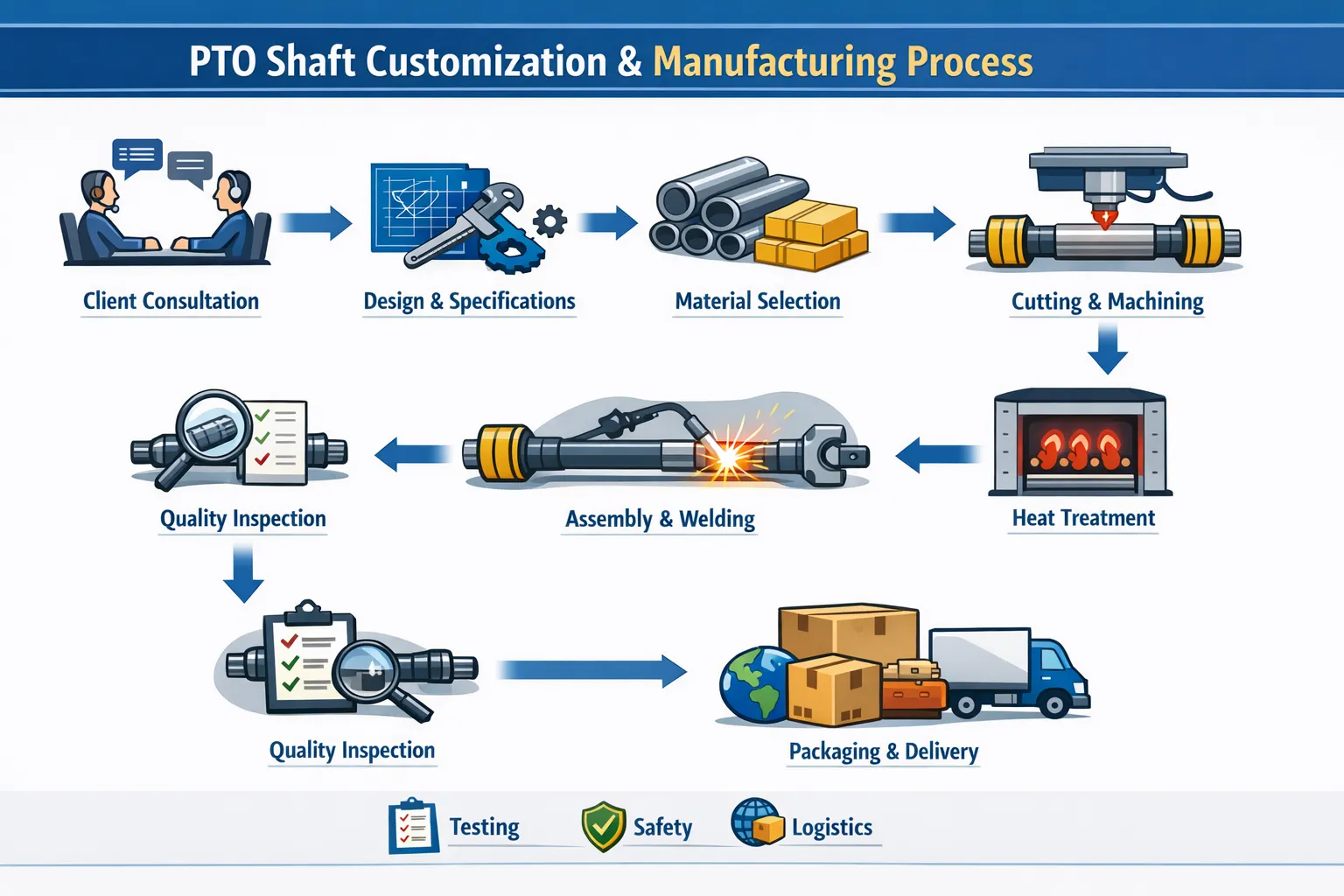
As a leading UK-based manufacturer, we offer bespoke solutions backed by decades of expertise. Our facilities in Bury St Edmunds ensure rapid prototyping and delivery, with global support via [email protected]. From initial consultation to after-sales service, we prioritize quality and innovation.
Our commitment to FAA/EASA compliance and extreme reliability sets us apart. Contact us today to discuss how our high-reliability drive shafts can elevate your aerospace projects.
UK pto-drive-shafts.com Co.,Ltd.
Бери Сент-Эдмундс, Саффолк IP32 7LX, Ұлыбритания
Электрондық пошта: [email protected]
gzl арқылы өңдеу























