
Why Your Automatic Forklift Fleet’s Performance Starts With the Industrial Shaft
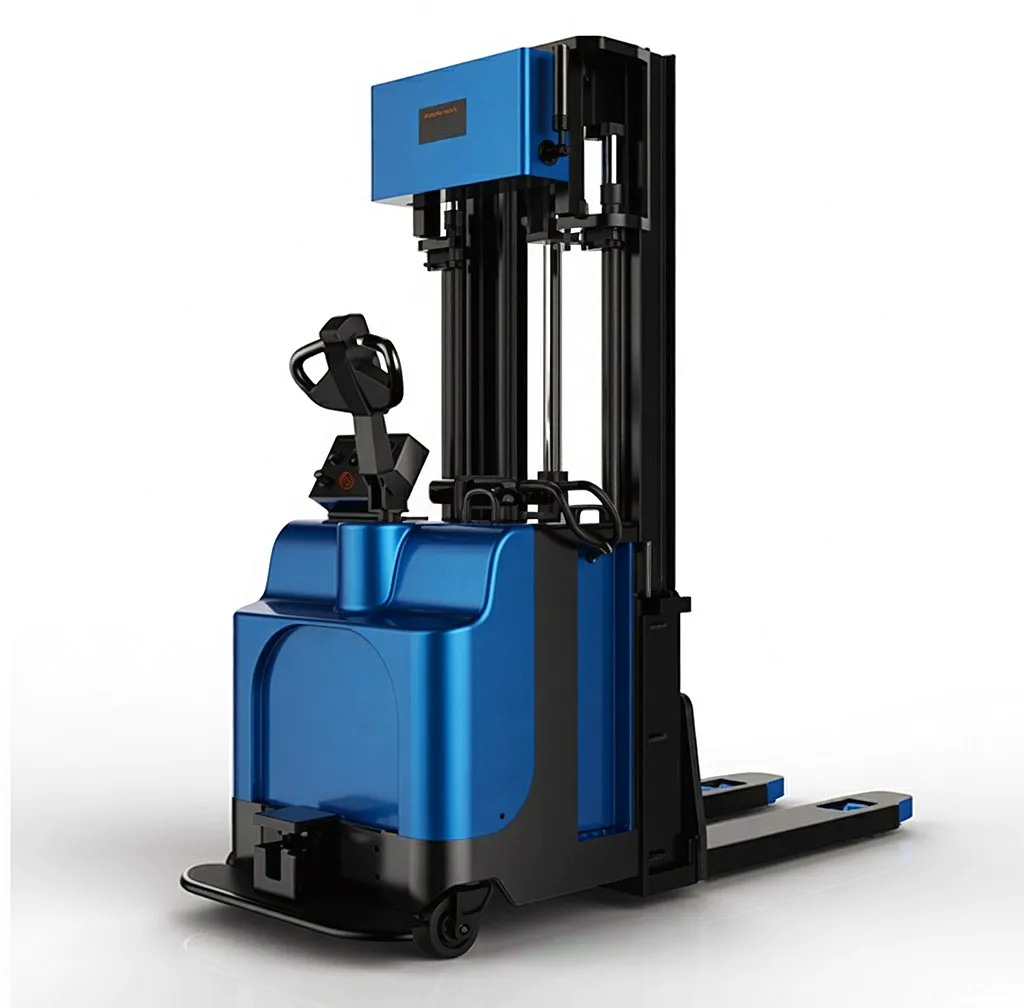 The rapid expansion of warehouse automation across the United Kingdom has placed a renewed spotlight on a component that rarely appears in procurement brochures but sits at the heart of every powered attachment system: the industrial drive shaft. Whether you are managing a 250,000 sq ft e-commerce fulfilment centre in the East Midlands, directing fleet maintenance for a cold-chain logistics operation near Manchester, or overseeing equipment specification for a new automated pallet-handling line in a West Yorkshire food manufacturing plant, the reliability of your industrial shaft for automatic forklift applications is not a secondary engineering concern. It is a production-critical factor that directly determines throughput capacity, maintenance intervals, and total cost of ownership across your entire materials handling fleet. A single unexpected shaft failure during a peak despatch window can translate into thousands of pounds of lost throughput — and in the tightly synchronised world of warehouse automation, there is rarely a convenient moment for unplanned downtime.
The engineering demands placed on a industrial shaft within an automated forklift system are fundamentally different from those encountered in agricultural or general industrial applications. Automated warehouse forklifts — including AGV-based reach trucks, automated counterbalance trucks, and robotic pallet stackers fitted with intelligent control units — operate under continuous duty cycles with extremely consistent load patterns, but they also demand a level of positional repeatability from their drive systems that requires shaft assemblies with near-zero backlash, precisely controlled torsional stiffness, and robust protection against the shock loads generated by rapid acceleration and deceleration of heavy attachment mechanisms. This guide draws on over 18 years of specialist application engineering at pto-drive-shafts.com to give UK procurement professionals, plant engineers, and fleet managers the technical grounding they need to specify, source, and maintain high-performance industrial drive shafts for their automatic forklift operations.
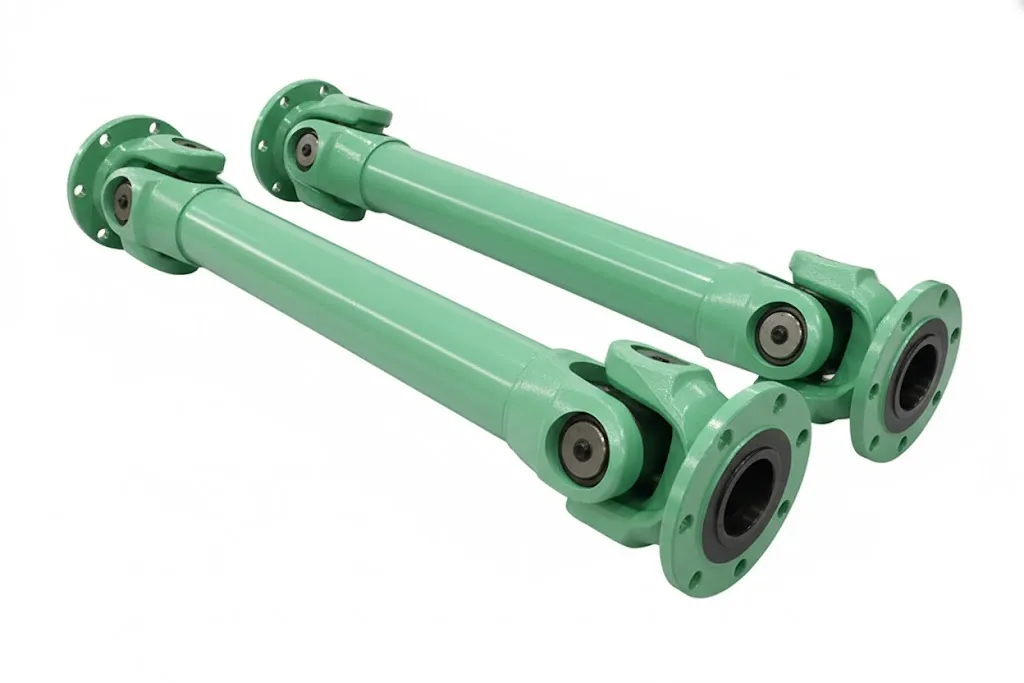
Understanding Industrial Drive Shafts in Automatic Forklift Systems
Mechanics · Function · Engineering Context
The Core Function
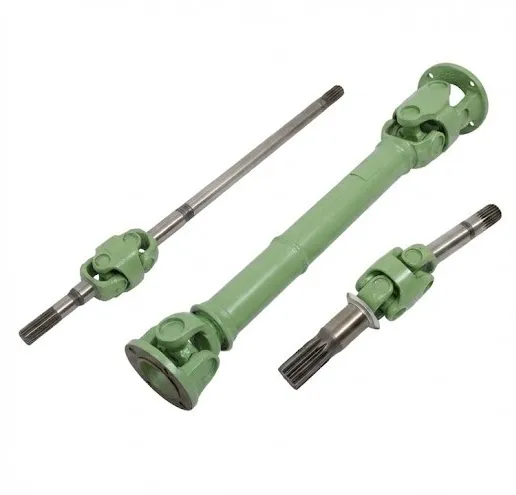 Power take-off (PTO) shafts are rotating mechanical assemblies designed to transfer torque and rotational energy from a primary drive source — typically an electric motor, hydraulic power unit, or combustion engine — to a secondary system or attachment. In automatic forklift applications, the industrial shaft is the mechanical link between the vehicle’s power plant and the functional attachment mounted at the fork carriage. Without this component, no hydraulic rotator, clamp mechanism, sweeper head, or drum handler could receive the mechanical energy it requires. The shaft must transmit this power smoothly, without vibration spikes or velocity irregularities, regardless of the instantaneous operating angle between the drive and driven components at any point in the working cycle.
What Automation Changes
Modern automatic forklifts — including laser-guided AGVs, vision-guided robotic trucks, and conventionally operated machines fitted with intelligent control units — impose demanding requirements on their industrial drive shafts that have no direct equivalent in older equipment designs. The integrated control systems of these vehicles depend on angular position feedback from encoders and resolvers sensitive to even sub-millimetre shaft deflection. Backlash as small as 0.5 degrees of arc at the attachment coupling point can generate position errors that trigger fault halts in the vehicle’s PLC, interrupting the automated cycle and requiring manual reset. High-cycle operations — where a forklift attachment may complete 300 to 500 powered cycles per shift — also place extreme fatigue demands on universal joints, spline connections, and protective covers that are simply not present in low-duty applications.
Key Sub-Assemblies
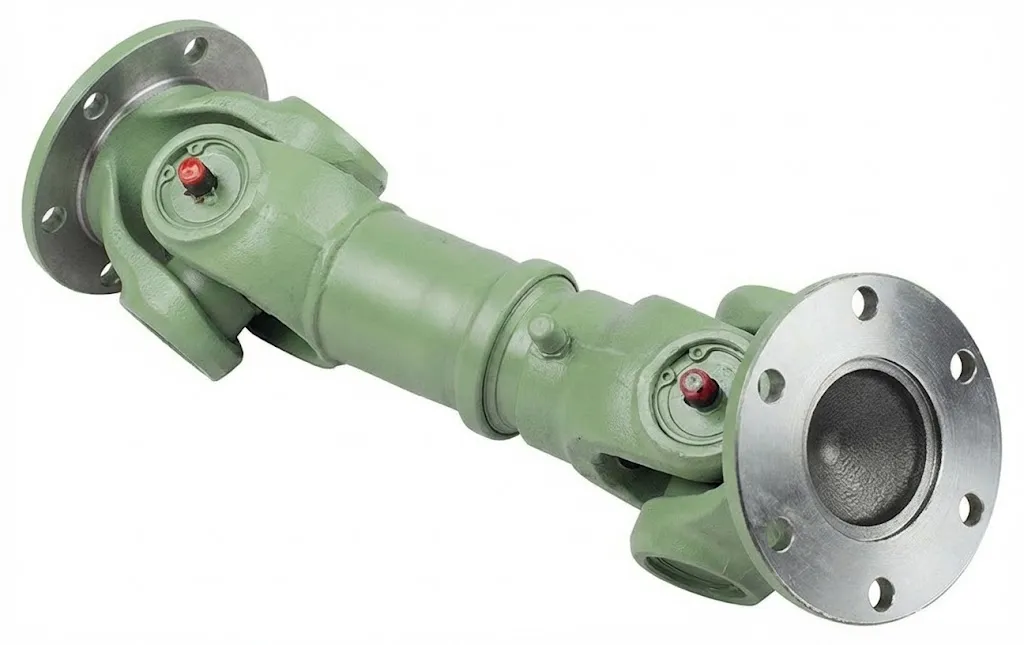
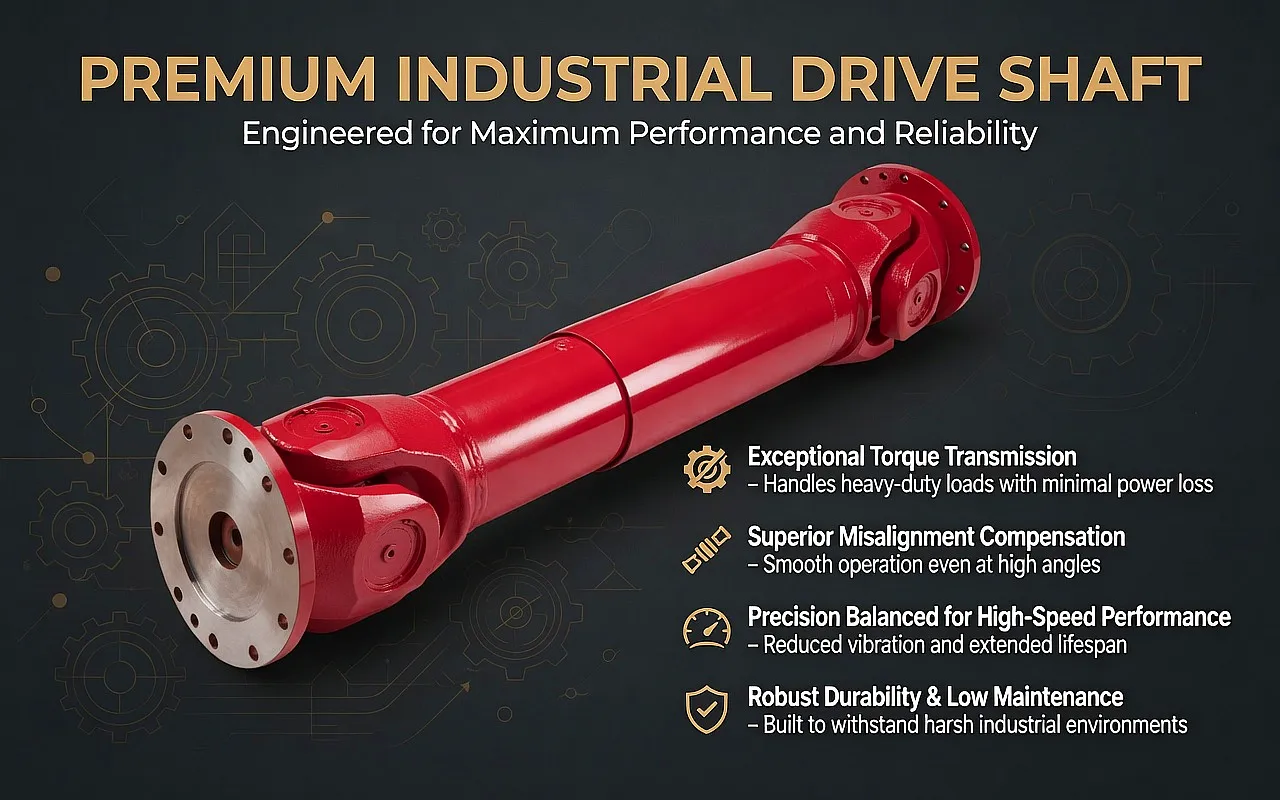
A properly designed industrial shaft for automatic forklift use integrates several sub-assemblies working in concert. The cross-and-bearing universal joint (Cardan joint) provides angular flexibility when the mast tilts or the attachment swings. The telescopic slip-yoke assembly — the inner tube sliding within the outer profile tube — accommodates the length variation as the mast raises and lowers. The torque limiter or overrun coupling protects the entire drivetrain — the forklift gearbox, the attachment gearbox, and the shaft itself — from the sudden torque spikes that occur when a load jams or an obstacle is encountered at speed. These elements must be engineered to matched specifications if the shaft is to deliver reliable service across a meaningful operating life in a busy warehouse environment.
Technical Performance Specifications
Standard parameters for industrial shafts supplied through pto-drive-shafts.com for automatic forklift applications. Custom specifications available on request — contact [email protected] for project-specific engineering support.
Material Science & Engineering Principles Behind Every Shaft
Metallurgy · Heat Treatment · Quality Assurance
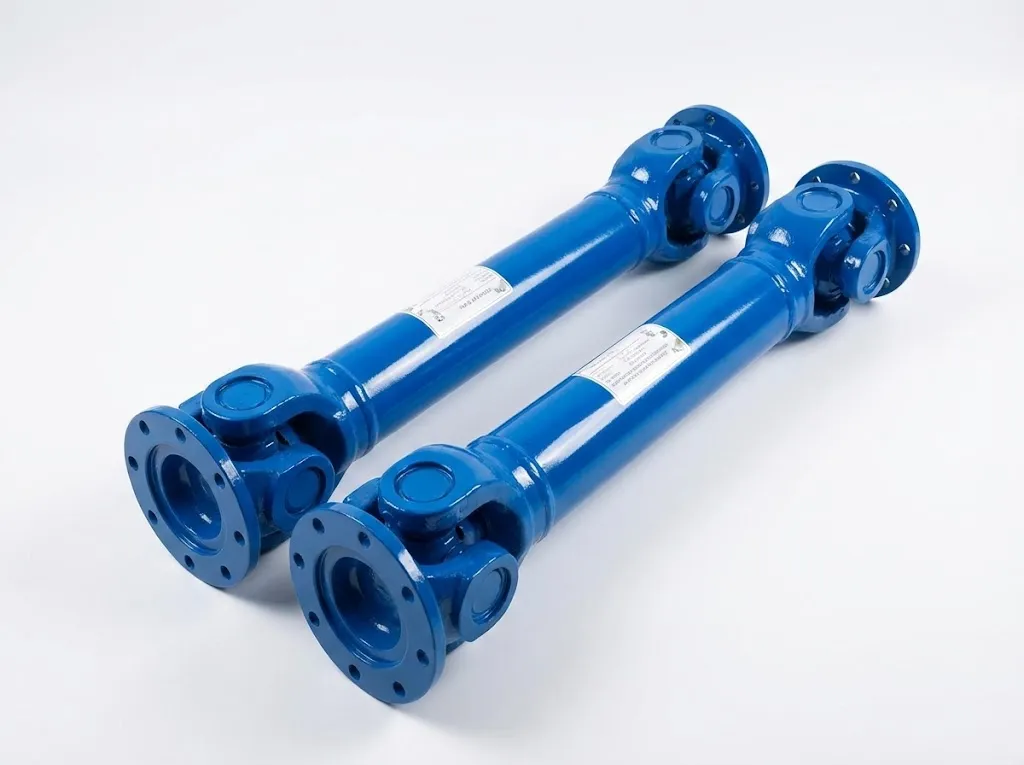 The engineering excellence behind a high-quality industrial shaft for automatic forklift systems begins at the material selection stage, long before any metal is cut. Our shafts are manufactured from two principal alloy steel grades — 42CrMo4 for heavy-duty and ultra-heavy series components, and 20CrMnTi for the case-hardened cross-and-bearing assemblies — both offering the combination of tensile strength, impact toughness, and machinability that continuous-duty warehouse applications demand. The 42CrMo4 grade, when heat-treated to the T condition, achieves a minimum tensile strength of 1,000 MPa combined with a Charpy impact energy of 50 J at -20°C, making it suitable for cold-storage applications where conventional carbon steels would become dangerously brittle during a night cycle in a chill chamber operating below -15°C.
Spline connections — the primary mechanical interface between the industrial shaft and the forklift gearbox output or the attachment input shaft — are produced by CNC gear-hobbing to ISO 14 and DIN 5480 standards and subjected to magnetic particle inspection (MPI) as a standard quality step within our manufacturing process. This is applied to every shaft before assembly, because spline-root cracking is one of the two most common failure modes in high-cycle industrial shaft applications — the other being bearing-cage fatigue in the cross-and-bearing universal joint. Our heat-treatment sequence — carburising followed by controlled quenching and low-temperature tempering — delivers a case hardness of 58–64 HRC at wear surfaces while maintaining a tough ductile core with a minimum hardness of 32 HRC. This dual-hardness profile allows the splines to resist fretting corrosion and surface fatigue across millions of engagement cycles while simultaneously absorbing the torsional shock loads generated when an automated forklift attachment encounters an unexpected mechanical stop during an automated pick cycle.
The outer tube assembly uses a seamless cold-drawn steel profile rather than a longitudinally welded section. The weld seam in a welded tube creates a linear stress concentration that runs the full length of the component — and under rotating bending loads, which are present in any industrial shaft installation with a non-zero operating angle, that stress concentration can initiate a fatigue crack at a fraction of the load that would cause failure in a seamless tube. All finished shafts receive a corrosion protection treatment appropriate to the intended service environment: hot-dip galvanising for outdoor or damp indoor applications, and a two-part epoxy primer topped with a polyurethane topcoat in RAL 7016 Anthracite Grey for food-industry and pharmaceutical warehouse environments where chemical resistance to industrial cleaning agents is a compliance requirement.
Six Reasons UK Operators Choose Our Industrial Drive Shafts
Engineering advantages that translate directly into lower operating costs, fewer fault-halt incidents, and higher fleet availability across automated warehouse environments.
Ultra-Low Backlash Design
Our precision-ground universal joint components are assembled to a maximum backlash specification of 0.3° of arc at the shaft ends, compared with the 1.5°–2.5° typical of standard-grade components. This level of torsional precision is essential for automated forklift position control systems relying on encoder feedback. Lower backlash means fewer false fault conditions, shorter cycle times, and better positioning repeatability across the full working life of the shaft — translating directly into higher OEE scores for the automated systems in which these shafts operate.
Integrated Torque Limiters
Every industrial shaft supplied through our range includes an integral torque-limiting device as standard. When an automated forklift attachment encounters a mechanical stop or an over-torque event — situations that can generate instantaneous loads many times higher than the rated shaft torque — the limiter disengages at a pre-set trip value, protecting the shaft universal joints, the forklift gearbox output bearing, and the attachment input shaft from potentially catastrophic overload damage. Trip torque values are factory-set, clearly stamped on the limiter body, and reset manually within seconds of activation.
Full Custom Configuration
No two automatic forklift systems are identical. Our engineering team supports fully custom industrial shaft development: overall length, spline bore size and tooth count, joint series and bearing selection, tube diameter and wall thickness, torque limiter trip point, and coating specification. Custom shafts can be developed and first-article inspected within 10–15 working days from receipt of your technical specification or sample component — a practical lead time for both new machine development projects and urgent replacement scenarios where the OEM’s spare parts channel has let you down.
IP67 & IP69K Sealing
For UK food processing plants, pharmaceutical warehouses, and cold-storage facilities — environments where high-pressure hot-water washdowns are routine — our IP67 and IP69K shaft configurations provide the water and chemical ingress protection that standard industrial shafts cannot offer. The protective boot system uses glass-fibre reinforced polymer guard cones with stainless-steel clamp bands and PTFE-lined inner profiles that maintain smooth telescopic action even in sub-zero storage environments where standard elastomers become brittle and fail at their clamped joints.
Fast UK Despatch
UK customers benefit from our stocked inventory of standard bore sizes (25 mm through 50 mm) across all four shaft series, allowing same-day despatch on orders placed before 14:00 on UK working days. For the most common automatic forklift shaft sizes, our UK logistics partner provides next-day delivery to all mainland England, Scotland, and Wales postcodes, with 48-hour service to Northern Ireland and the Scottish Highlands. A shaft failure on a Monday morning does not have to translate into a Tuesday afternoon repair queue — providing your bore size is within our stocked range.
Dedicated UK Technical Support
Our UK technical support team — staffed by application engineers with hands-on experience in forklift drivetrain systems — assists with shaft selection, installation torque specifications, alignment verification, and failure analysis on returned components. We maintain a field service capability for major accounts, with site visits available across the Midlands, North West, Yorkshire, South East, and Scotland. New customers receive a complimentary application review benchmarking their current component against our performance database to identify service-life improvement opportunities.
Application Scenarios: Where UK Industry Relies on Precision Industrial Shafts
E-Commerce · Food & Beverage · Automotive · Cold-Chain Logistics
Customer Success Cases
Real applications across UK industry. Measurable results that demonstrate how the right industrial shaft for automatic forklift applications delivers lasting operational improvement.
★★★★★
“The improvement in shaft service life has genuinely transformed our maintenance planning. We have gone from reactive emergency repairs to scheduled 12-month intervals. The cost saving alone justified the switch within the first six months.”
— Fleet Maintenance Manager, 3PL Distribution Centre, Coventry
★★★★★
“Operating at -22°C means we simply cannot tolerate sealing failures. The cold-chain specification shaft has been running for nearly two years without a single issue. Their technical team understood our application from the very first phone call.”
— Site Engineering Manager, Temperature-Controlled DC, Livingston, West Lothian
★★★★★
“We had been adjusting software parameters for months trying to fix the fault-halt issue. Turned out the root cause was shaft backlash all along. The new shafts resolved in a weekend what controls engineering could not fix in three months.”
— Automation Systems Engineer, Tier-1 Automotive Supplier, Birmingham
Manufacturing & Custom Development
Factory Capabilities & Custom Industrial Shaft Engineering
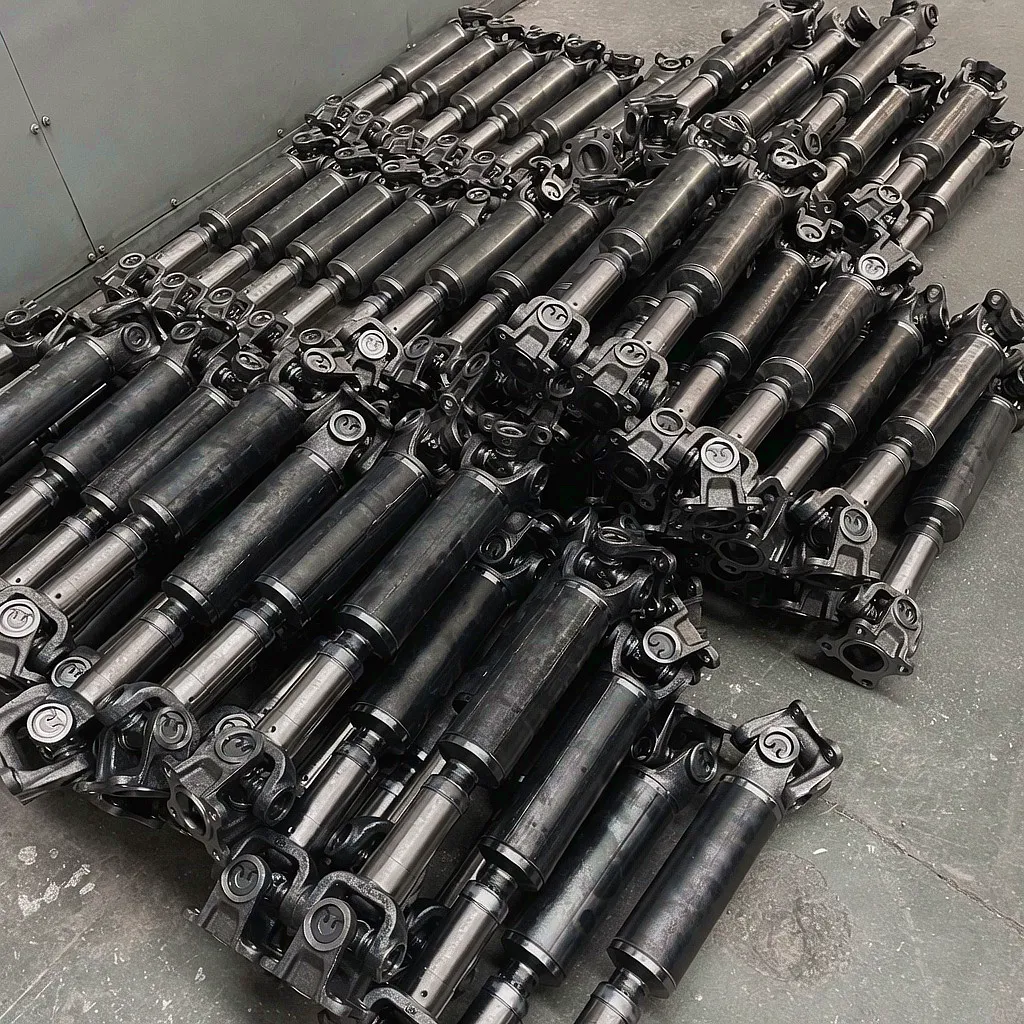 Our manufacturing facility operates under ISO 9001:2015 accreditation and is equipped with 5-axis CNC machining centres, automated induction hardening lines, and a dedicated metrology laboratory staffed by CMM-qualified measurement engineers. For UK industrial buyers requiring non-standard industrial shaft configurations — whether that means a custom overall length, an unusual joint operating angle, a specific spline count and module, an application requiring ATEX (explosive atmosphere) compliance, or a shaft designed around a legacy forklift model whose OEM parts supply has been discontinued — our in-house engineering team can develop a complete technical specification and produce a first-article component within 10–15 working days from confirmation of order. We do not treat custom projects as a premium service with a premium lead time: bespoke shaft engineering is our everyday business model, not an occasional deviation from catalogue supply.
18+
Years of specialist industrial shaft application engineering for industrial forklift drivetrains
ISO 9001:2015
Manufacturing quality certification with full melt-traceable material documentation on every component
10–15
Working days from enquiry confirmation to first-article delivery on custom shaft specifications
Next-Day
UK delivery on stocked standard bore sizes to all mainland UK postcodes — order before 14:00
Supplying Industrial Drive Shafts Across the United Kingdom
Whether your automatic forklift fleet operates in a bonded warehouse near Heathrow, a food-processing plant in Lancashire, an NHS logistics facility in Cardiff, or an engineering workshop in Aberdeen, we have the shaft stock, the technical resource, and the delivery infrastructure to support your operation efficiently. Our UK-based sales and technical team has direct experience working with distribution centre operators, plant engineers, and procurement managers across every major industrial region — and we understand the pressures of UK warehouse operation well enough to know that a quick answer and a next-day delivery are worth as much as an impressive technical specification sheet.
🏭 East Midlands
Nottingham, Leicester, Derby, Northampton, Coventry — the UK’s most concentrated region for e-commerce distribution and 3PL operations.
🔧 West Midlands
Birmingham, Wolverhampton, Solihull, Coventry — automotive, aerospace, and general engineering with precision-drive requirements.
🌿 Yorkshire & Lancashire
Leeds, Bradford, Sheffield, Manchester, Preston — food and beverage manufacturers requiring IP-rated industrial shafts for high-hygiene environments.
🏴 Scotland
Edinburgh, Glasgow, Dundee, Aberdeen — cold-chain logistics, food production, and offshore supply chain operators needing low-temperature shaft specifications.
🏴 Wales & South West
Cardiff, Swansea, Bristol, Exeter, Plymouth — manufacturing, NHS logistics, and retail distribution with 48-hour service to all Welsh postcodes.
⚙️ North East
Sunderland, Newcastle, Middlesbrough, Gateshead — automotive and manufacturing clusters with high concentrations of automated forklift fleets requiring precision drive shaft supply.
よくある質問
Industrial Shafts for Automatic Forklifts — UK Buyer Reference
Ready to Upgrade Your Automatic Forklift Fleet Performance?
Contact our UK technical sales team today for a no-obligation application review and quotation. We have industrial drive shafts in stock for same-day despatch — and a custom engineering team ready to solve the applications that catalogue shafts cannot handle. Speak to a specialist who understands forklift drivetrains, not just a catalogue.
gzlによる編集























