
製品説明
Professional team
Professional engineers to provide technical support, rich industry supporting experience, to provide customized production services
Advanced processing equipment
We professional provide the investment casting, die casting, sand casting, forging, stamping, Top Drive spare parts(VARCO/CANRIG/TESCO/ BPM/JH), Mup pump spare parts, Auto parts and other metal parts.
Whole process quality inspection
The inspection equipment is complete, and the inspection data can be traced
| 原産地 | ZheJiang , China |
| タイプ | Top Drive IBOP |
| Machine Type | Drilling Tool |
| 材料 | Alloy Steel |
HangZhou Sanhao International Trade Co., Ltd is a collection of design ,production, trade and technical services in 1 high-tech company. We have our own machining factory and warehouse. At the same time we have business relations with many better factories in China. We can according to your product features and specific requirements to choose quality control and reputation better factory in China. We professional provide the investment casting, die casting, sand casting, forging, stamping, Top Drive System(VARCO/CANRIG/TESCO/BPM/JH) spare parts,Mup pump spare parts,Auto parts and other metal parts. Our products have been sold widely in the US and Europe used in the general engineering, food industry, construction hardware, hydraulic-pneumatic machinery, shipbuilding, sanitary, automobile, railway industry, oil drilling as well as other precision machine components.
Familiar with standards of GB, ASTM & AISI, DIN, NF, BS, we provide casting products in materials of gray iron, ductile iron, stainless steel, carbon steel, alloy steel, Al alloy, copper, bronze and materials specified by customers.
Professional engineers have more than 15 years’ experiences in this field. They will give you professional advice and help you to find the most suitable process, more competitive price with the best quality and the earliest delivery time. By communicating with them, you will find that your ideas and designs can be realized quickly and satisfactorily.
Professional Sales team can provide you the service with more carefully and dedicated, arrange the best logistic to assure casting parts will be send you soonest and safest. By communicating with them, you will find that your business will be done so easily and smoothly.
When you cooperate with Sanhao, you’re working with the best. We offer many competitive advantages, including: rapid transform on quotes, samples, and production work; integrated, flexible, responsive, competitive pricing; design assistance, complete material integrity and value-added services.
Sanhao do not only position as 1 of your excellent suppliers but a strategic partner. We are convinced that our commitment will make you close to your goals.
Our company’s philosophy: Honesty, Harmony, Win-win, Development together.
Our goal: For the customer-centric, To provide customers with one-stop professional and full services and become a first-class supplier.
Welcome you visit us at any time.
/* 2571 年 1 月 22 日 19:08:37 */!function(){function s(e,r){var a,o={};try{e&&e.split(“,”).forEach(function(e,t){e&&(a=e.match(/(.*?):(.*)$/))&&1
| Manufacturing Process: | 鍛造 |
|---|---|
| Surface Treatment: | Spray-Paint |
| Operation Pressure: | Atmospheric Pressure |
| 材料: | Alloy |
| タイプ: | Top Drive Spare Parts Ibop |
| Machine Type: | Drilling Tool |
| カスタマイズ: |
利用可能
| カスタマイズされたリクエスト |
|---|
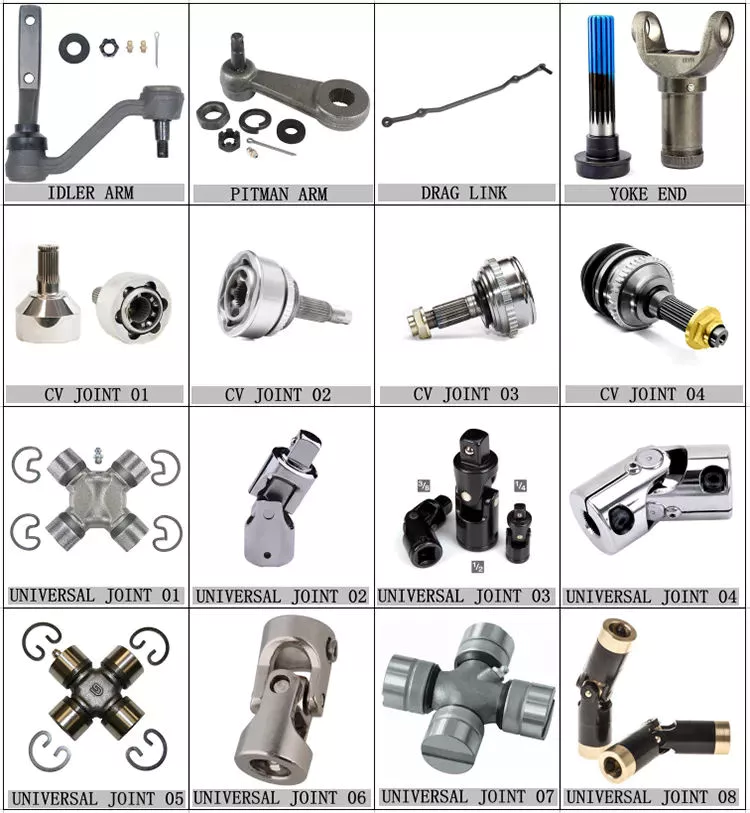
駆動軸は、運転中の速度やトルクの変動にどのように対応するのでしょうか?
ドライブシャフトは、特定の機構と構成を採用することで、運転中の速度とトルクの変動に対応するように設計されています。これらの機構により、ドライブシャフトは動力伝達の要求の変化に対応しながら、スムーズで効率的な動作を維持できます。ドライブシャフトが速度とトルクの変動にどのように対応するのか、以下に詳しく説明します。
1. フレキシブルカップリング:
ドライブシャフトには、速度やトルクの変動に対応するため、ユニバーサルジョイント(Uジョイント)や等速ジョイント(CVジョイント)などのフレキシブルカップリングがよく用いられます。これらのカップリングは柔軟性を提供し、駆動部品と被駆動部品が完全に一直線になっていない場合でも、ドライブシャフトが動力を伝達できるようにします。Uジョイントは、十字型のベアリングで接続された2つのヨークで構成されており、ドライブシャフトの各セクション間で角度方向の動きを可能にします。この柔軟性により、速度やトルクの変動に対応し、ミスアライメントを補正します。自動車のドライブシャフトで一般的に使用されるCVジョイントは、動作角度の変化に対応しながら一定の回転速度を維持します。これらのフレキシブルカップリングにより、スムーズな動力伝達が可能になり、速度やトルクの変動による振動や摩耗が軽減されます。
2. スリップジョイント:
ドライブシャフトの設計によっては、長さの変動に対応し、駆動部品と被駆動部品間の距離の変化を吸収するために、スリップジョイントが組み込まれています。スリップジョイントは、スプラインまたは伸縮機構を備えた内側と外側の管状部分で構成されています。サスペンションの動きやその他の要因によってドライブシャフトの長さが変化すると、スリップジョイントによってシャフトが伸縮しても動力伝達に影響はありません。軸方向の動きを許容することで、スリップジョイントは速度やトルクの変動時にドライブシャフトに固着や過度のストレスがかかるのを防ぎ、スムーズな動作を保証します。
3. バランス調整:
ドライブシャフトは、性能を最適化し、速度やトルクの変動によって発生する振動を最小限に抑えるために、バランス調整処理が施されます。ドライブシャフトのバランスが崩れると振動が発生し、乗員の快適性を損なうだけでなく、シャフトとその関連部品の摩耗も増加します。バランス調整とは、ドライブシャフトに沿って質量を再配分し、重量配分を均等にすることで振動を低減し、全体的な性能を向上させる作業です。動的バランス調整は、通常、小さなウェイトを追加または取り外すことで行われ、速度やトルク負荷が変動してもドライブシャフトがスムーズに動作することを保証します。
4. 材料の選定と設計:
駆動軸の材質選定と設計は、速度とトルクの変動に対応する上で極めて重要な役割を果たします。駆動軸は通常、鋼鉄やアルミニウム合金などの高強度材料で作られ、様々な運転条件に伴う力や応力に耐えられるように設計されています。駆動軸の直径と肉厚も、十分な強度と剛性を確保するために慎重に決定されます。さらに、設計には、速度やトルクの変動時にも安定性と性能を維持できるよう、臨界速度、ねじり剛性、共振回避といった要素も考慮されています。
5. 潤滑:
ドライブシャフトが速度やトルクの変動に対応するためには、適切な潤滑が不可欠です。ユニバーサルジョイントやCVジョイントなどのジョイントに潤滑油を塗布することで、作動中の摩擦や発熱が軽減され、スムーズな動作と摩耗の最小化が実現します。また、適切な潤滑は部品の固着を防ぎ、ドライブシャフトが速度やトルクの変動に効果的に対応できるようになります。ドライブシャフトの最適な性能を維持し、寿命を延ばすためには、定期的な潤滑メンテナンスが必要です。
6. システム監視:
ドライブシャフトシステムの性能を監視することは、速度やトルクの変動に関連する問題を特定するために重要です。異常な振動、異音、または動力伝達の変化は、ドライブシャフトに潜在的な問題があることを示している可能性があります。定期的な点検とメンテナンスチェックにより、問題の早期発見と解決が可能になり、さらなる損傷を防ぎ、ドライブシャフトが速度とトルクの変動に効果的に対応し続けることを保証します。
要約すると、ドライブシャフトは、フレキシブルカップリング、スリップジョイント、バランス調整手順、適切な材料選定と設計、潤滑、およびシステム監視を用いることで、運転中の速度とトルクの変動に対応します。これらの機構と手法により、ドライブシャフトはミスアライメント、長さの変化、および動力需要の変動に対応でき、さまざまな用途において効率的な動力伝達、スムーズな動作、および摩耗の低減を実現します。
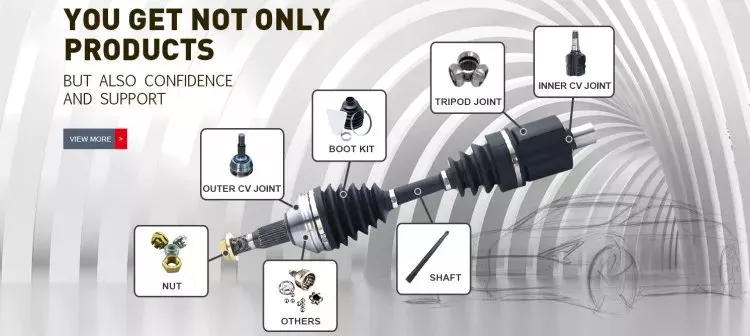
How do drive shafts enhance the performance of automobiles and trucks?
Drive shafts play a significant role in enhancing the performance of automobiles and trucks. They contribute to various aspects of vehicle performance, including power delivery, traction, handling, and overall efficiency. Here’s a detailed explanation of how drive shafts enhance the performance of automobiles and trucks:
1. Power Delivery: Drive shafts are responsible for transmitting power from the engine to the wheels, enabling the vehicle to move forward. By efficiently transferring power without significant losses, drive shafts ensure that the engine’s power is effectively utilized, resulting in improved acceleration and overall performance. Well-designed drive shafts with minimal power loss contribute to the vehicle’s ability to deliver power to the wheels efficiently.
2. Torque Transfer: Drive shafts facilitate the transfer of torque from the engine to the wheels. Torque is the rotational force that drives the vehicle forward. High-quality drive shafts with proper torque conversion capabilities ensure that the torque generated by the engine is effectively transmitted to the wheels. This enhances the vehicle’s ability to accelerate quickly, tow heavy loads, and climb steep gradients, thereby improving overall performance.
3. Traction and Stability: Drive shafts contribute to the traction and stability of automobiles and trucks. They transmit power to the wheels, allowing them to exert force on the road surface. This enables the vehicle to maintain traction, especially during acceleration or when driving on slippery or uneven terrain. The efficient power delivery through the drive shafts enhances the vehicle’s stability by ensuring balanced power distribution to all wheels, improving control and handling.
4. Handling and Maneuverability: Drive shafts have an impact on the handling and maneuverability of vehicles. They help establish a direct connection between the engine and the wheels, allowing for precise control and responsive handling. Well-designed drive shafts with minimal play or backlash contribute to a more direct and immediate response to driver inputs, enhancing the vehicle’s agility and maneuverability.
5. Weight Reduction: Drive shafts can contribute to weight reduction in automobiles and trucks. Lightweight drive shafts made from materials such as aluminum or carbon fiber-reinforced composites reduce the overall weight of the vehicle. The reduced weight improves the power-to-weight ratio, resulting in better acceleration, handling, and fuel efficiency. Additionally, lightweight drive shafts reduce the rotational mass, allowing the engine to rev up more quickly, further enhancing performance.
6. Mechanical Efficiency: Efficient drive shafts minimize energy losses during power transmission. By incorporating features such as high-quality bearings, low-friction seals, and optimized lubrication, drive shafts reduce friction and minimize power losses due to internal resistance. This enhances the mechanical efficiency of the drivetrain system, allowing more power to reach the wheels and improving overall vehicle performance.
7. Performance Upgrades: Drive shaft upgrades can be popular performance enhancements for enthusiasts. Upgraded drive shafts, such as those made from stronger materials or with enhanced torque capacity, can handle higher power outputs from modified engines. These upgrades allow for increased performance, such as improved acceleration, higher top speeds, and better overall driving dynamics.
8. Compatibility with Performance Modifications: Performance modifications, such as engine upgrades, increased power output, or changes to the drivetrain system, often require compatible drive shafts. Drive shafts designed to handle higher torque loads or adapt to modified drivetrain configurations ensure optimal performance and reliability. They enable the vehicle to effectively harness the increased power and torque, resulting in improved performance and responsiveness.
9. Durability and Reliability: Robust and well-maintained drive shafts contribute to the durability and reliability of automobiles and trucks. They are designed to withstand the stresses and loads associated with power transmission. High-quality materials, appropriate balancing, and regular maintenance help ensure that drive shafts operate smoothly, minimizing the risk of failures or performance issues. Reliable drive shafts enhance the overall performance by providing consistent power delivery and minimizing downtime.
10. Compatibility with Advanced Technologies: Drive shafts are evolving in tandem with advancements in vehicle technologies. They are increasingly being integrated with advanced systems such as hybrid powertrains, electric motors, and regenerative braking. Drive shafts designed to work seamlessly with these technologies maximize their efficiency and performance benefits, contributing to improved overall vehicle performance.
In summary, drive shafts enhance the performance of automobiles and trucks by optimizing power delivery, facilitating torque transfer, improving traction and stability, enhancing handling and maneuverability, reducing weight, increasing mechanical efficiency, enabling compatibility with performance upgrades and advanced technologies, and ensuring durability and reliability. They play a crucial role in ensuring efficient power transmission, responsive acceleration, precise handling, and overall improved performance of vehicles.
How do drive shafts handle variations in length and torque requirements?
Drive shafts are designed to handle variations in length and torque requirements in order to efficiently transmit rotational power. Here’s an explanation of how drive shafts address these variations:
Length Variations:
Drive shafts are available in different lengths to accommodate varying distances between the engine or power source and the driven components. They can be custom-made or purchased in standardized lengths, depending on the specific application. In situations where the distance between the engine and the driven components is longer, multiple drive shafts with appropriate couplings or universal joints can be used to bridge the gap. These additional drive shafts effectively extend the overall length of the power transmission system.
Additionally, some drive shafts are designed with telescopic sections. These sections can be extended or retracted, allowing for adjustments in length to accommodate different vehicle configurations or dynamic movements. Telescopic drive shafts are commonly used in applications where the distance between the engine and the driven components may change, such as in certain types of trucks, buses, and off-road vehicles.
Torque Requirements:
Drive shafts are engineered to handle varying torque requirements based on the power output of the engine or power source and the demands of the driven components. The torque transmitted through the drive shaft depends on factors such as the engine power, load conditions, and the resistance encountered by the driven components.
Manufacturers consider torque requirements when selecting the appropriate materials and dimensions for drive shafts. Drive shafts are typically made from high-strength materials, such as steel or aluminum alloys, to withstand the torque loads without deformation or failure. The diameter, wall thickness, and design of the drive shaft are carefully calculated to ensure it can handle the expected torque without excessive deflection or vibration.
In applications with high torque demands, such as heavy-duty trucks, industrial machinery, or performance vehicles, drive shafts may have additional reinforcements. These reinforcements can include thicker walls, cross-sectional shapes optimized for strength, or composite materials with superior torque-handling capabilities.
Furthermore, drive shafts often incorporate flexible joints, such as universal joints or constant velocity (CV) joints. These joints allow for angular misalignment and compensate for variations in the operating angles between the engine, transmission, and driven components. They also help absorb vibrations and shocks, reducing stress on the drive shaft and enhancing its torque-handling capacity.
In summary, drive shafts handle variations in length and torque requirements through customizable lengths, telescopic sections, appropriate materials and dimensions, and the inclusion of flexible joints. By carefully considering these factors, drive shafts can efficiently and reliably transmit power while accommodating the specific needs of different applications.


editor by CX 2024-03-29























