
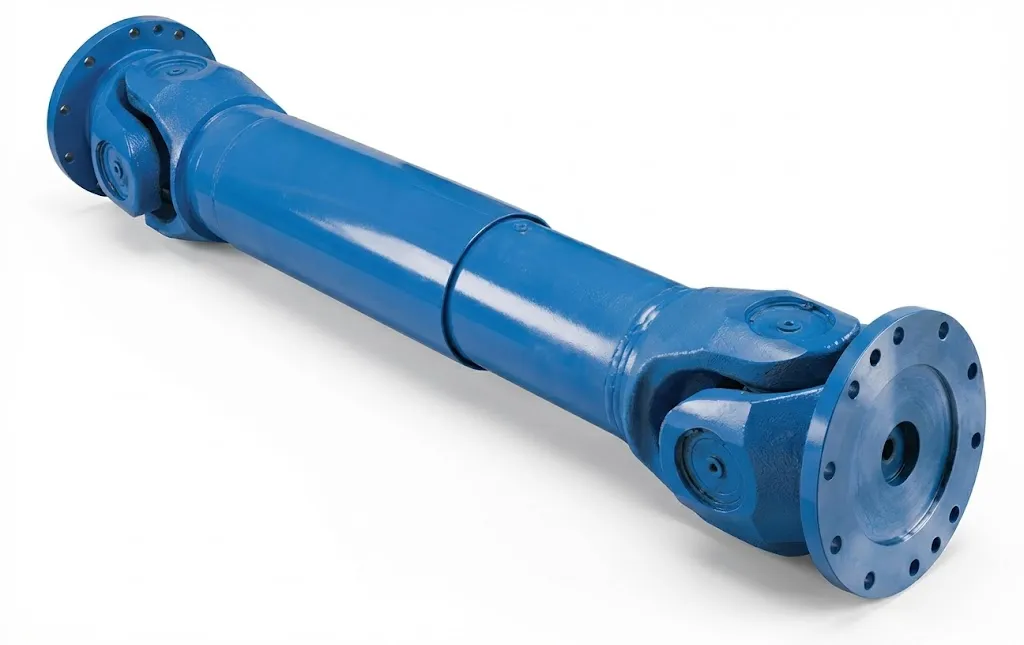
Solving the “Chatter Mark” Crisis in Tire Cord Production
In the highly competitive tire manufacturing industry—from the industrial heartland of Birmingham to the specialized rubber processing plants of Manchester—the precision of calender machines is paramount and cannot be compromised. Calender machines, whether “inverted L-type,” “Z-type,” or “S-type” (three-roll or four-roll), are core equipment in the rubber coating process. However, a persistent problem continues to plague production quality: uneven thickness and vibration marks (transverse stripes) appearing on the steel cord or textile fabric.
For factory managers and reliability engineers, the root cause of problems often lies within the drive system. Standard industrial universal joints, when subjected to complex motions such as “roll crossing” and “roll bending” adjustments, produce non-linear speed fluctuations. When these fluctuations resonate with the natural frequency of the stacking system, they leave noticeable defects on the rubber sheets. This is not merely a cosmetic issue; it is a structural failure that leads to increased scrap rates and downtime.
Field Engineer’s Log: Project R-204 (Leeds Facility)
On a damp Tuesday morning, we arrived on-site. The client, a major top-tier tire supplier, reported a persistent 15-micron periodic thickness error in their passenger car radial tire production line. Due to the significant roller cross-operation required for their new silica compound material, their existing driveshaft (a modified heavy-duty agricultural machinery component) was operating at a 12-degree angle. The universal joint was generating secondary torque variations, which the standard damping system was unable to absorb. We not only replaced the driveshaft but also redesigned the motion mechanism, employing a double universal joint structure with central phase alignment to eliminate the velocity error. The result? Upon restart, the “shaking” phenomenon disappeared immediately.
Kinematics of Roll Crossing & Drive Shaft Selection
Calendering is unique because the rolls move. To control the crown (profile) of the rubber sheet, the rolls are mechanically skewed (Roll Crossing) or bent (Roll Bending). This movement changes the relative position of the drive motor and the roll journal in real-time.
The Geometry Problem
In a standard fixed drive, the shaft alignment is static. In a calender, the drive shaft must accommodate:
- Variable Angular Misalignment: As the roll crosses, the shaft angle changes, often exceeding 10°.
- Plunging (Length Compensation): The skewing action alters the distance between the gearbox and the roll, requiring a high-stroke slip spline.
- Densità di coppia: Rubber calendering involves massive torque at low speeds (high plasticity viscosity), requiring a high service factor (often > 2.5).
Our Series-C Heavy Industry Shafts are engineered specifically for this dynamic environment. Unlike off-the-shelf agricultural PTOs, these units feature hardened involute splines with a molybdenum-disulfide coating to prevent fretting corrosion during constant plunging under load.
UK Regulatory Framework: PUWER & Safety
Operating heavy rotating machinery in the United Kingdom requires strict adherence to the Provision and Use of Work Equipment Regulations 1998 (PUWER). Specifically, Regulation 30 addresses the hazards of drive shafts. A seizing universal joint can cause the shaft to flail, posing a catastrophic risk to personnel and adjacent machinery.
Compliance Checklist for UK Plant Managers
1. Guarding Standards: All rotating shafts must be enclosed. We supply custom telescopic guarding that meets BS EN ISO 14120 requirements, ensuring visibility for inspection while preventing physical access.
2. UKCA Marking: Post-Brexit, machinery components entering the GB market must meet UK Conformity Assessed standards. Our shafts are fully certified, with technical files available for your HSE audit trail.
3. Vibration Monitoring: We recommend and supply shafts with machined collars for accelerometer mounting, enabling Condition Based Maintenance (CBM) strategies compatible with Industry 4.0 protocols.
Technical Specification Matrix: Series-C Calender Drives
Below is the engineering data for our core range applicable to 24″ to 32″ Calender lines common in UK factories.
| ID parametro | Specifiche / Caratteristiche | Valore / Intervallo | Note |
|---|---|---|---|
| TS-01 | Coppia nominale (Tn) | 25 kNm – 180 kNm | Scalable based on roll diameter |
| TS-02 | Fatigue Torque (Tf) | 1,5 x Tn | Infinite life rating |
| TS-03 | Angolo di articolazione massimo | 25 Degrees | Crucial for Roll Crossing |
| TS-04 | Diametro flangia | 225 mm – 435 mm | DIN / SAE Standard Interfaces |
| TS-05 | Tipo spline | Involuta, rivestita in Rilsan | Low friction plunging |
| TS-06 | Grado del materiale (Girello) | 42CrMo4 V (Forged) | Temperato e Rinforzato |
| TS-07 | Grado del materiale (tubo) | St52-3 / DOM High Strength | Tubo di precisione senza saldatura |
| TS-08 | Grado di bilanciamento | G6.3 a 1500 giri/min | Norma ISO 1940-1 |
| TS-09 | Durata del cuscinetto (L10) | > 50.000 ore | Under nominal load |
| TS-10 | Intervallo di lubrificazione | 250 Hours / Extended | Complesso di litio EP2 |
| TS-11 | Tipo di sigillo | Double-lip Viton | High temp resistance (120°C) |
| TS-12 | Intervallo di temperatura di esercizio | da -20°C a +130°C | Near steam-heated rolls |
| TS-13 | Rigidità torsionale | 1.85 x 10^5 Nm/rad | High stiffness model |
| TS-14 | Compensazione della lunghezza | 120mm – 450mm | Long stroke available |
| TS-15 | Shock Factor (K) | 2.0 – 3.0 | Rubber mixing application |
| TS-16 | Specifiche della vernice | C4-High Marine Grade | Oil & Chemical resistant |
| TS-17 | Cross Kit Design | Maintenance Free Option | Sealed for life avail. |
| TS-18 | Flange Bolt Grade | 12.9 Metric | Rivestimento Dacromet |
| TS-19 | Peso totale | 45kg – 350kg | Dependent on series |
| TS-20 | Diametro del tubo | 90mm – 280mm | Wall thickness variable |
| TS-21 | Velocità critica | 3200 RPM | Dipendente dalla lunghezza |
| TS-22 | Safety Coupling | Shear Pin / Torque Limiter | Optional Integration |
| TS-23 | Inspection Protocol | Ultrasonic (UT) + MPI | 100% Yoke inspection |
| TS-24 | Identification | Laser Etched + Metal Tag | Traceable to Heat No. |
| TS-25 | Paese di origine | Global Mfg / UK Assembly | ISO 9001:2015 |
| TS-26 | Garanzia | 24 mesi | Standard Operational |
| TS-27 | Retrofit Capability | Direct drop-in | Custom flanges machined |
Case Study: Midlands Conveyor Belt Manufacturer
La sfida: A prominent manufacturer of steel-cord conveyor belts in the West Midlands was experiencing premature failure of the universal joints on their 4-Roll “Z” Calender. The environment was harsh—high ambient heat (60°C+) and abrasive carbon black dust. The OEM shafts were failing every 6-8 months, causing unscheduled downtime costing approximately £15,000 per hour.
La diagnosi: Our analysis revealed that the OEM shafts were undersized for the peak torque experienced during “cold start” conditions on Monday mornings. Furthermore, the standard seals were degrading rapidly due to the ozone generated by adjacent electrical equipment.
La soluzione: We specified a Series-C 350 Heavy Duty Shaft with:
1. Upgraded Cross Kits featuring Triple-Lip Viton seals (ozone resistant).
2. A 30% increase in journal diameter to handle cold-start torque spikes.
3. A specialized “Glide-Coat” spline to reduce axial thrust loads on the roll bearings.
Il risultato: The new shafts have been in operation for 28 months with zero failures. Maintenance intervals were extended from weekly greasing to monthly, reducing labor costs.
Optimizing the Drive Train: Planetary Gearbox Integration
The drive shaft is responsible for transmitting power, while the gearbox is responsible for multiplying torque. In modern rubber calendering production lines, the trend is shifting from bulky floor-mounted parallel-shaft gearboxes to compact shaft-mounted planetary gearboxes. As a comprehensive power transmission solution provider, we not only manufacture drive shafts but also design matching gearbox solutions.
Why Planetary Gearboxes for Calenders?
The “High Torque, Low Speed” nature of rubber processing is the ideal playground for planetary gearing. Unlike helical gears which distribute load on a single tooth contact patch, planetary systems distribute the load across 3 or 4 planet gears. This results in:
- Higher Power Density: A smaller footprint for the same torque output, essential when trying to fit drives onto closely spaced calender rolls.
- Shock Load Resistance: The multiple contact points absorb the shock of “biting” into a fresh rubber pig much better than single-shaft designs.
- Thermal Stability: In the UK’s variable climate, managing heat dissipation is key. Our gearboxes feature integrated oil cooling circuits that interface directly with plant water systems.
Our Recommended Gearbox Series: The “Titan-P” Range
Designed to mate perfectly with our Series-C drive shafts, the Titan-P range offers:
1. Modular Output Flanges: The output face of the gearbox is pre-drilled to accept the DIN/SAE flange of our drive shafts, eliminating the need for adapter plates that introduce runout.
2. Integrated Lubrication Monitoring: Since calender drives are often hard to access, our gearboxes come with IoT-ready oil sensors measuring particle count and moisture. This is critical in steam-heavy calendering halls.
3. Backstop Capabilities: For inclined conveyor feeds leading into the calender, we integrate mechanical backstops to prevent rollback during power loss.
Selection Guide for Gearboxes
When pairing a gearbox with your calender drive shaft, consider the Thermal Rating over the Mechanical Rating. Rubber processing is continuous. A gearbox might be mechanically strong enough to handle the torque, but if it cannot shed the heat, the oil film will break down. We calculate the thermal dissipation based on your specific duty cycle—whether you are running continuous ply sheeting or batch runs.
Spare Parts & Consumables
To support your Total Cost of Ownership (TCO), we maintain a UK stock of critical spares:
- Gear Sets: Sun and Planet gears, case-hardened.
- Seal Kits: Complete overhaul kits including O-rings, shaft seals, and shims.
- Breathers: Desiccant breathers to prevent moisture ingress.
- Couplings: Fluid couplings for soft-start applications between the motor and gearbox.
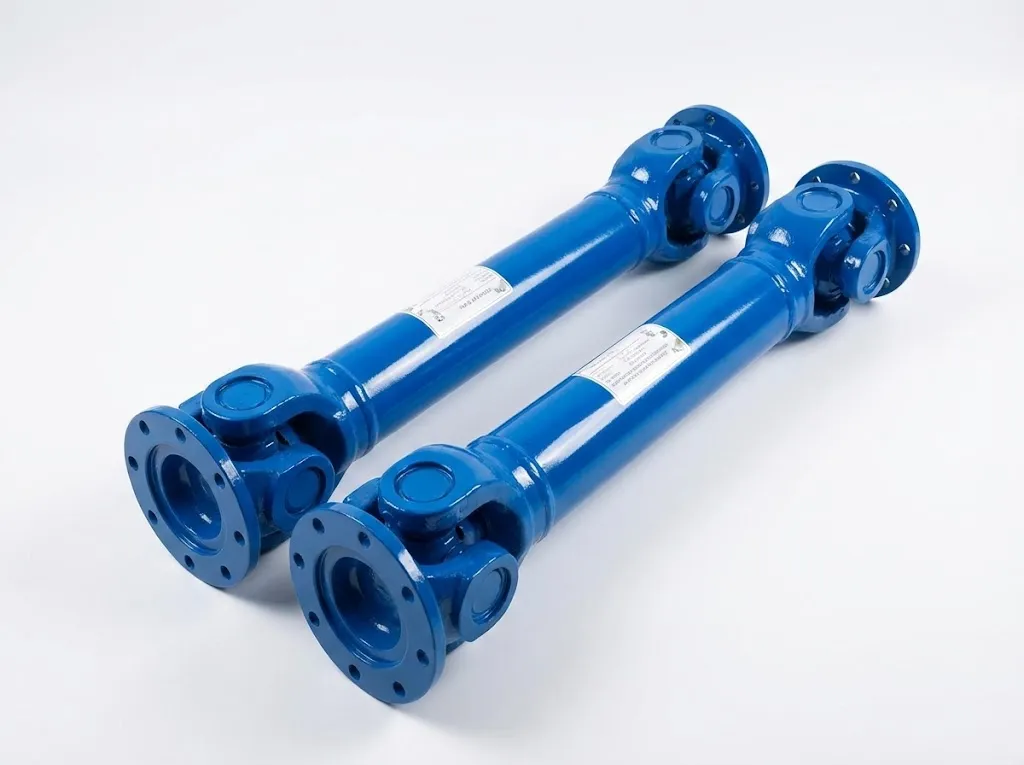
Integrating a new gearbox with a precision albero motore requires careful alignment. We provide laser alignment services across the UK to ensure the perfect handshake between these two critical components.
Compatibility & Brand Cross-Reference
We understand that many UK facilities are running legacy equipment fitted with components from other major European manufacturers. Our engineering team has developed a comprehensive cross-reference database to facilitate seamless upgrades.
Technical Compatibility Note:
We offer direct dimensional replacements for series commonly found in the UK market, including equivalent specifications to:
- GKN / Uni-Cardan (Series 390, 392)
- Voith (R-Series, S-Series)
- Elba (0.100 Series)
- Dana / Spicer (GWB Series)
Disclaimer: All manufacturer names, trademarks, part numbers, and descriptions used here (such as GKN, Voith, Elbe, Dana) are for reference and identification purposes only. UK pto-drive-shafts.com Co.,Ltd and UK pto-drive-shafts.com Co.,Ltd. are independent manufacturers and are not affiliated with, endorsed by, or sponsored by these original equipment manufacturers (OEMs). Our parts are engineered alternatives, not original OEM parts.
Serving the UK Industrial Heartland
Our commitment extends beyond product supply. We are deeply integrated into the UK’s industrial supply chain. From the Advanced Manufacturing Park in Rotherham to the logistics hubs in Felixstowe, we understand the local nuances of logistics and support.
Regional Focus: North West England
The Northwest region remains a vital hub for the chemicals and polymers processing industry. We have established a rapid response network in the Greater Manchester and Liverpool city regions, providing 24-hour emergency bearing assessment services to our customers. We are also closely monitoring the progress of regulations related to the Liverpool City Region Freeport to ensure our customers can benefit from simplified customs procedures for imported alloys and components.
News from the Industry:
Recent reports from the British Rubber and Polyurethane Products Association (BRPPA) highlight a surge in demand for high-temperature resistant compounds for the EV (Electric Vehicle) market. This shift requires calenders to run at higher temperatures and pressures, placing even greater stress on drive trains. Our “Series-C” shafts are fully rated for these next-generation production requirements.
Domande frequenti
Q: How do I measure a albero motore for a retrofit on an old 3-Roll Calender?
A: You need to measure the compressed length (Lt), the flange diameter (A), and the bolt circle diameter (C). Crucially, check the “plunge” required—move the roll to its maximum and minimum positions to ensure the new shaft won’t bottom out or disengage.
Q: Can you repair my existing shafts instead of replacing them?
A: Yes. Our UK service center in Suffolk offers a full refurbishment service. We strip, clean, NDT crack-test the yokes, replace the cross kits, and dynamically re-balance the shaft. We provide a “Condition Report” before any work begins.
Q: What is the lead time for a custom heavy-duty shaft?
A: For emergency breakdowns, we can often assemble standard components within 48-72 hours. For fully custom forged components, typical lead times are 3-4 weeks, which is significantly faster than the 12-week industry standard.
modificato da gzl























