
Deskripsi Produk
Deskripsi Produk
Bacia Info.
| Model NO. | Parts | Auto Parts For Center Support Bearing | ||||||||
| Specification | Bearing ID 20-85mm | Trademark | YTK or Customized | |||||||
| Price | Negotiable | Transport Packing | Neutral Packing & Customized | |||||||
| Exportation | ZheJiang Port | Bearing Quality | ZV3 Level | |||||||
| Jaminan | One Year or Above | Laser Mark | Tersedia | |||||||
| Applicable Models | Production Capacity | 60, | Φ30 | CB | Φ35 Φ40 | 3535730 | Φ60 | |||
| Φ60 | Φ60 | 6 | Φ65 |
-FAQ:
Q1. What is your terms of packing?
Generally, we pack our goods in neutral boxes and brown cartons or as your demand.
If you have legally registered patent,we can pack the goods in your branded boxes after getting your authorization letters.
Q2. What is your terms of delivery?
EXW, FOB, CIF, CFR
Q3. How about your delivery time?
Generally, it will take 10 to 30 days after receiving your advance payment.
The specific delivery time depends on the items and the quantity of your order.
/* 22 Januari 2571 19:08:37 */!function(){function s(e,r){var a,o={};try{e&&e.split(“,”).forEach(function(e,t){e&&(a=e.match(/(.*?):(.*)$/))&&1
| Layanan Purna Jual: | 1 Year |
|---|---|
| Kondisi: | Baru |
| Color: | Black |
| Sertifikasi: | ISO |
| Bahan: | Rubber |
| Transport Package: | as Your Demand |
| Contoh: |
US$ 0.1/Piece
1 Buah (Minimum Pemesanan) | |
|---|
| Kustomisasi: |
Tersedia
| Permintaan Khusus |
|---|
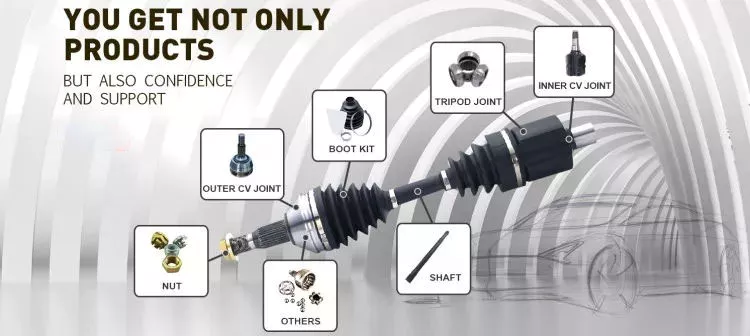
How do drive shafts ensure efficient power transfer while maintaining balance?
Drive shafts employ various mechanisms to ensure efficient power transfer while maintaining balance. Efficient power transfer refers to the ability of the drive shaft to transmit rotational power from the source (such as an engine) to the driven components (such as wheels or machinery) with minimal energy loss. Balancing, on the other hand, involves minimizing vibrations and eliminating any uneven distribution of mass that can cause disturbances during operation. Here’s an explanation of how drive shafts achieve both efficient power transfer and balance:
1. Material Selection:
The material selection for drive shafts is crucial for maintaining balance and ensuring efficient power transfer. Drive shafts are commonly made from materials such as steel or aluminum alloys, chosen for their strength, stiffness, and durability. These materials have excellent dimensional stability and can withstand the torque loads encountered during operation. By using high-quality materials, drive shafts can minimize deformation, flexing, and imbalances that could compromise power transmission and generate vibrations.
2. Design Considerations:
The design of the drive shaft plays a significant role in both power transfer efficiency and balance. Drive shafts are engineered to have appropriate dimensions, including diameter and wall thickness, to handle the anticipated torque loads without excessive deflection or vibration. The design also considers factors such as the length of the drive shaft, the number and type of joints (such as universal joints or constant velocity joints), and the use of balancing weights. By carefully designing the drive shaft, manufacturers can achieve optimal power transfer efficiency while minimizing the potential for imbalance-induced vibrations.
3. Balancing Techniques:
Balance is crucial for drive shafts as any imbalance can cause vibrations, noise, and accelerated wear. To maintain balance, drive shafts undergo various balancing techniques during the manufacturing process. Static and dynamic balancing methods are employed to ensure that the mass distribution along the drive shaft is uniform. Static balancing involves adding counterweights at specific locations to offset any weight imbalances. Dynamic balancing is performed by spinning the drive shaft at high speeds and measuring any vibrations. If imbalances are detected, additional adjustments are made to achieve a balanced state. These balancing techniques help minimize vibrations and ensure smooth operation of the drive shaft.
4. Universal Joints and Constant Velocity Joints:
Drive shafts often incorporate universal joints (U-joints) or constant velocity (CV) joints to accommodate misalignment and maintain balance during operation. U-joints are flexible joints that allow for angular movement between shafts. They are typically used in applications where the drive shaft operates at varying angles. CV joints, on the other hand, are designed to maintain a constant velocity of rotation and are commonly used in front-wheel-drive vehicles. By incorporating these joints, drive shafts can compensate for misalignment, reduce stress on the shaft, and minimize vibrations that can negatively impact power transfer efficiency and balance.
5. Maintenance and Inspection:
Regular maintenance and inspection of drive shafts are essential for ensuring efficient power transfer and balance. Periodic checks for wear, damage, or misalignment can help identify any issues that may affect the drive shaft’s performance. Lubrication of the joints and proper tightening of fasteners are also critical for maintaining optimal operation. By adhering to recommended maintenance procedures, any imbalances or inefficiencies can be addressed promptly, ensuring continued efficient power transfer and balance.
In summary, drive shafts ensure efficient power transfer while maintaining balance through careful material selection, thoughtful design considerations, balancing techniques, and the incorporation of flexible joints. By optimizing these factors, drive shafts can transmit rotational power smoothly and reliably, minimizing energy losses and vibrations that can impact performance and longevity.

Bisakah Anda memberikan contoh nyata kendaraan dan mesin yang menggunakan poros penggerak?
Poros penggerak banyak digunakan pada berbagai kendaraan dan mesin untuk mentransmisikan daya dari mesin atau sumber daya ke roda atau komponen yang digerakkan. Berikut beberapa contoh nyata kendaraan dan mesin yang menggunakan poros penggerak:
1. Mobil:
Poros penggerak (drive shaft) umumnya ditemukan pada mobil, terutama yang menggunakan sistem penggerak roda belakang atau penggerak empat roda. Pada kendaraan ini, poros penggerak mentransfer daya dari transmisi atau kotak transfer ke diferensial belakang atau diferensial depan. Hal ini memungkinkan daya mesin didistribusikan ke roda, sehingga mendorong kendaraan maju.
2. Truk dan Kendaraan Komersial:
Poros penggerak merupakan komponen penting pada truk dan kendaraan komersial. Poros ini digunakan untuk mentransfer daya dari transmisi atau kotak transfer ke gandar belakang atau beberapa gandar pada truk tugas berat. Poros penggerak pada kendaraan komersial dirancang untuk menangani beban torsi yang lebih tinggi dan seringkali lebih besar dan lebih kuat daripada yang digunakan pada mobil penumpang.
3. Peralatan Konstruksi dan Penggalian Tanah:
Berbagai jenis peralatan konstruksi dan penggalian tanah, seperti ekskavator, loader, bulldozer, dan grader, bergantung pada poros penggerak untuk transmisi daya. Mesin-mesin ini biasanya memiliki sistem penggerak yang kompleks yang menggunakan poros penggerak untuk mentransfer daya dari mesin ke roda atau trek, sehingga memungkinkan mereka untuk melakukan tugas-tugas berat di lokasi konstruksi atau operasi pertambangan.
4. Mesin Pertanian:
Mesin pertanian, termasuk traktor, mesin pemanen gabungan, dan mesin pemanen, menggunakan poros penggerak untuk mentransmisikan daya dari mesin ke roda atau komponen yang digerakkan. Poros penggerak pada mesin pertanian seringkali mengalami kondisi yang berat dan mungkin memiliki fitur tambahan seperti bagian teleskopik untuk mengakomodasi jarak yang bervariasi antar komponen.
5. Mesin Industri:
Mesin-mesin industri, seperti peralatan manufaktur, generator, pompa, dan kompresor, seringkali menggabungkan poros penggerak dalam sistem transmisi dayanya. Poros penggerak ini mentransfer daya dari motor listrik, mesin, atau sumber daya lainnya ke berbagai komponen yang digerakkan, sehingga memungkinkan mesin untuk melakukan tugas-tugas spesifik di lingkungan industri.
6. Kapal Laut:
Dalam aplikasi kelautan, poros penggerak umumnya digunakan untuk mentransmisikan daya dari mesin ke baling-baling pada perahu, kapal, dan kendaraan air lainnya. Poros penggerak kelautan biasanya lebih panjang dan dirancang untuk menahan tantangan unik yang ditimbulkan oleh lingkungan air, termasuk ketahanan terhadap korosi dan mekanisme penyegelan yang sesuai.
7. Kendaraan Rekreasi (RV) dan Motorhome:
Kendaraan rekreasi (RV) dan motorhome sering menggunakan poros penggerak sebagai bagian dari sistem penggeraknya. Poros penggerak ini mentransfer daya dari transmisi ke gandar belakang, memungkinkan kendaraan untuk bergerak dan memberikan tenaga dorong. Poros penggerak pada RV mungkin memiliki fitur tambahan seperti peredam atau komponen peredam getaran untuk meningkatkan kenyamanan selama perjalanan.
8. Kendaraan Off-Road dan Balap:
Kendaraan off-road, seperti SUV, truk, dan kendaraan segala medan (ATV), serta kendaraan balap, sering menggunakan poros penggerak. Poros penggerak ini dirancang untuk menahan kerasnya kondisi off-road atau balap performa tinggi, mentransmisikan daya secara efisien ke roda dan memastikan traksi serta performa yang optimal.
9. Sarana Perkeretaapian:
Dalam sistem perkeretaapian, poros penggerak digunakan pada lokomotif dan beberapa jenis gerbong. Poros ini mentransfer daya dari mesin lokomotif ke roda atau sistem penggerak, memungkinkan kereta untuk bergerak di sepanjang rel. Poros penggerak kereta api biasanya jauh lebih panjang dan mungkin memiliki fitur tambahan untuk mengakomodasi sifat artikulasi atau fleksibel dari beberapa konfigurasi kereta.
10. Turbin Angin:
Turbin angin skala besar yang digunakan untuk menghasilkan listrik menggabungkan poros penggerak dalam sistem transmisi dayanya. Poros penggerak mentransfer energi rotasi dari bilah turbin ke generator, di mana energi tersebut diubah menjadi daya listrik. Poros penggerak pada turbin angin dirancang untuk menangani torsi dan gaya rotasi yang signifikan yang dihasilkan oleh angin.
Contoh-contoh ini menunjukkan beragam kendaraan dan mesin yang bergantung pada poros penggerak untuk transmisi daya dan penggerak yang efisien. Poros penggerak merupakan komponen penting dalam berbagai industri, memungkinkan transfer daya dari sumber ke komponen yang digerakkan, yang pada akhirnya memfasilitasi pergerakan, pengoperasian, atau pelaksanaan tugas-tugas tertentu.

Can you explain the different types of drive shafts and their specific applications?
Drive shafts come in various types, each designed to suit specific applications and requirements. The choice of drive shaft depends on factors such as the type of vehicle or equipment, power transmission needs, space limitations, and operating conditions. Here’s an explanation of the different types of drive shafts and their specific applications:
1. Solid Shaft:
A solid shaft, also known as a one-piece or solid-steel drive shaft, is a single, uninterrupted shaft that runs from the engine or power source to the driven components. It is a simple and robust design used in many applications. Solid shafts are commonly found in rear-wheel-drive vehicles, where they transmit power from the transmission to the rear axle. They are also used in industrial machinery, such as pumps, generators, and conveyors, where a straight and rigid power transmission is required.
2. Tubular Shaft:
Tubular shafts, also called hollow shafts, are drive shafts with a cylindrical tube-like structure. They are constructed with a hollow core and are typically lighter than solid shafts. Tubular shafts offer benefits such as reduced weight, improved torsional stiffness, and better damping of vibrations. They find applications in various vehicles, including cars, trucks, and motorcycles, as well as in industrial equipment and machinery. Tubular drive shafts are commonly used in front-wheel-drive vehicles, where they connect the transmission to the front wheels.
3. Constant Velocity (CV) Shaft:
Constant Velocity (CV) shafts are specifically designed to handle angular movement and maintain a constant velocity between the engine/transmission and the driven components. They incorporate CV joints at both ends, which allow flexibility and compensation for changes in angle. CV shafts are commonly used in front-wheel-drive and all-wheel-drive vehicles, as well as in off-road vehicles and certain heavy machinery. The CV joints enable smooth power transmission even when the wheels are turned or the suspension moves, reducing vibrations and improving overall performance.
4. Slip Joint Shaft:
Slip joint shafts, also known as telescopic shafts, consist of two or more tubular sections that can slide in and out of each other. This design allows for length adjustment, accommodating changes in distance between the engine/transmission and the driven components. Slip joint shafts are commonly used in vehicles with long wheelbases or adjustable suspension systems, such as some trucks, buses, and recreational vehicles. By providing flexibility in length, slip joint shafts ensure a constant power transfer, even when the vehicle chassis experiences movement or changes in suspension geometry.
5. Double Cardan Shaft:
A double Cardan shaft, also referred to as a double universal joint shaft, is a type of drive shaft that incorporates two universal joints. This configuration helps to reduce vibrations and minimize the operating angles of the joints, resulting in smoother power transmission. Double Cardan shafts are commonly used in heavy-duty applications, such as trucks, off-road vehicles, and agricultural machinery. They are particularly suitable for applications with high torque requirements and large operating angles, providing enhanced durability and performance.
6. Composite Shaft:
Composite shafts are made from composite materials such as carbon fiber or fiberglass, offering advantages such as reduced weight, improved strength, and resistance to corrosion. Composite drive shafts are increasingly being used in high-performance vehicles, sports cars, and racing applications, where weight reduction and enhanced power-to-weight ratio are critical. The composite construction allows for precise tuning of stiffness and damping characteristics, resulting in improved vehicle dynamics and drivetrain efficiency.
7. PTO Shaft:
Power Take-Off (PTO) shafts are specialized drive shafts used in agricultural machinery and certain industrial equipment. They are designed to transfer power from the engine or power source to various attachments, such as mowers, balers, or pumps. PTO shafts typically have a splined connection at one end to connect to the power source and a universal joint at the other end to accommodate angular movement. They are characterized by their ability to transmit high torque levels and their compatibility with a range of driven implements.
8. Marine Shaft:
Marine shafts, also known as propeller shafts or tail shafts, are specifically designed for marine vessels. They transmit power from the engine to the propeller, enabling propulsion. Marine shafts are usually long and operate in a harsh environment, exposed to water, corrosion, and high torque loads. They are typically made of stainless steel or other corrosion-resistant materials and are designed to withstand the challenging conditions encountered in marine applications.
It’simportant to note that the specific applications of drive shafts may vary depending on the vehicle or equipment manufacturer, as well as the specific design and engineering requirements. The examples provided above highlight common applications for each type of drive shaft, but there may be additional variations and specialized designs based on specific industry needs and technological advancements.


editor by CX 2024-05-14























