
Explore the critical role of industrial driveshafts in modern automation and robotic systems. From high-precision applications to emerging trends in AI-driven machinery, learn how these components enhance efficiency and drive innovation.
By UK pto-drive-shafts.com Co.,Ltd. – Leading Provider of High-Quality Drive Shafts in the UK
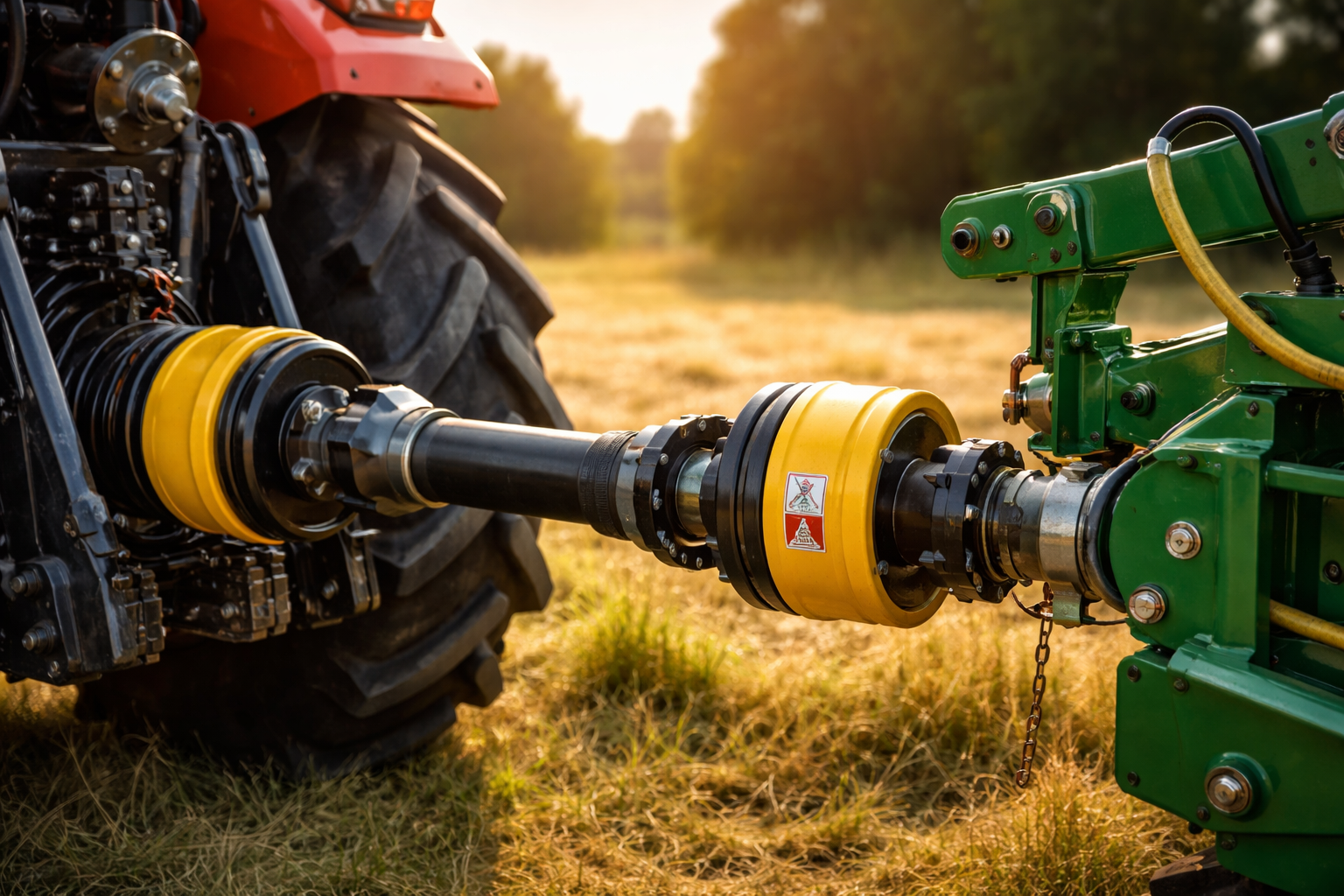
Introduction to Industrial Drive Shafts in Automation and Robotics
In the rapidly evolving fields of Industry 4.0 and smart manufacturing, industrial driveshafts (also known as universal joints) remain indispensable power transmission components in automation and robotic systems. Despite significant advancements in electrical and direct-drive technologies, mechanical transmission systems like driveshafts continue to excel under high loads, high precision, and harsh environments. pto-drive-shafts.com Ltd. in the UK focuses on providing robust and durable driveshafts specifically tailored for these demanding applications, ensuring seamless integration and optimal performance.
This comprehensive blog post delves into the applications of industrial driveshafts in automation and robotics, highlighting their technical characteristics, engineering challenges, and development trends up to 2026. We will reference global reports from industry associations such as the International Federation of Robotics (IFR), the German Engineering Federation (VDMA), and the Japan Machine Tool Builders’ Association (JMTBA) to explore how these components adapt to a variety of diverse application scenarios. Whether in automated storage and retrieval systems (AS/RS) or high-speed Delta robots, driveshafts are the cornerstone of reliable power transmission. As 2026 approaches, trends such as AI integration, autonomous robots, and sustainable manufacturing are reshaping the entire industry. Our analysis, incorporating the latest insights from authoritative sources such as FANUC’s UK Robotics Trends Report and StartUs Insights’ Top Robotics Innovations, highlights how driveshafts are evolving to meet these demands. With over a decade of expertise, UK pto-drive-shafts.com Co., Ltd. is committed to providing solutions aligned with these trends, maintaining its unwavering commitment to quality and innovation.
Driven by the expansion of automation, the global industrial driveshaft market is projected to grow steadily. Market reports indicate that the industry’s market size could exceed $16 billion by 2032, with a CAGR of approximately 2.2%. In the automation and robotics sectors, this growth stems from the demand for components capable of maintaining precision under extreme conditions. Let’s explore the fundamental role of driveshafts in this ecosystem.
The Evolution of Power Transmission in Automation
Since the Industry 4.0 revolution, automation and robotics have undergone a paradigm shift. While traditional direct-drive systems can efficiently complete simple tasks, they fall short in scenarios requiring flexibility, such as shaft misalignment or load variations. Industrial driveshafts overcome this limitation, allowing for angular deviations of up to 15 degrees, absorbing vibrations, and efficiently transmitting torque within tight spaces.
In robotics, driveshafts enable the multi-axis movements required for tasks such as welding, painting, and assembly. For example, in collaborative robots (cobots), they ensure smooth power transmission while maintaining safety. Global standards set by international organizations such as ISO and DIN emphasize the need for these components to have high torsional stiffness and low backlash to prevent system failure.
Based on our experience at UK pto-drive-shafts.com Co., Ltd., we have observed a surge in demand for custom driveshafts in the UK manufacturing hub. Our products meet CE and ATEX standards and are suitable for a wide range of environments, from cleanrooms to heavy-duty warehouses. Looking ahead to 2026, the integration of smart sensors into driveshafts will enable real-time monitoring of torque and vibration, aligning with the trend towards predictive maintenance.
Key evolutionary milestones include the shift from steel to composite materials such as carbon fiber, which can reduce weight by up to 50% while increasing critical speeds. This is crucial for high-speed applications such as robotics, where rotational inertia must be minimized. A report by the International Federation of Robotics (IFR) predicts that by 2026, there will be over 4 million industrial robots in operation globally, many of which will rely on advanced driveshafts to enhance their mobility.
Engineering challenges remain, such as balancing torque capacity and compactness. In automated storage and retrieval systems (AS/RS), driveshafts must span distances of up to 40 meters while maintaining synchronization. Our team at pto-drive-shafts.com Ltd. in the UK addresses this challenge through finite element analysis (FEA) simulations, ensuring our driveshafts meet or exceed industry standards such as AGMA and ANSI.
Key Applications in Automation and Robotics
Automated Storage and Retrieval Systems (AS/RS)
In the realm of internal logistics, Automated Storage and Retrieval Systems (AS/RS) represent the pinnacle of automation efficiency. Drive shafts act as the “nervous system” of these systems, transmitting power vertically and horizontally within narrow aisles. For stacker cranes (SRMs) operating at speeds up to 240 m/min and accelerations up to 1.0 m/s², drive shafts must possess exceptional torsional stiffness to prevent errors caused by recoil.
Both single-mast and twin-mast designs rely on drive shafts for synchronized movement. Materials such as 42CrMo4 alloy steel provide the necessary fatigue resistance, withstanding millions of cyclic impacts. Based on customer feedback, our drive shafts have increased uptime by 20% in warehouses in the UK (e.g., in Suffolk).
Case Study: A large e-commerce logistics center in Bury St Edmunds integrated our heavy-duty universal joints into its AS/RS system, reducing maintenance intervals from quarterly to semi-annually. This aligns with the scalable automation trend expected by 2026, when drive shafts will integrate IoT technology for status monitoring.
Beyond basic transmission functions, drive shafts in automated storage and retrieval systems (AS/RS) must withstand the dynamic loads of heavy pallets, typically exceeding 100 tons. Critical speed calculations ensure resonance is avoided, and formulas such as ω_c = √(EI / m L^4) are used in the design. pto-drive-shafts.com Ltd. in the UK offers drive shafts with torque capacities up to 18,800 kN·m, perfectly meeting these requirements.
Regional differences: In Germany, the VDMA standard emphasizes precision, while in Japan, JMTBA focuses on miniaturization for use in compact robots. Our global supply chain ensures product compatibility with these standards.
High-Speed Delta Robots and Parallel Kinematics
Delta robots perform 150 grasping operations per minute, requiring drive shafts with zero backlash and low rotational inertia. These parallel motion mechanisms in robots use drive shafts to connect motors to the robotic arm, enabling fast and precise movements in food packaging and electronics assembly.
Technical specifications include a torsion angle of less than 0.5 degrees and surface treatments such as nitriding to improve wear resistance. In robotics, constant velocity joints (CVs) in drive shafts maintain uniform motion, which is crucial for the accuracy of grasping and placement operations.
2026 Trends: According to FANUC UK, AI-driven autonomy will combine drive shafts with machine learning to achieve adaptive torque control. Our products feature a modular design, allowing for easy upgrades to sensor-equipped models.
Challenge: High cycle fatigue in cleanroom environments requires hygienic designs, such as AISI 316L stainless steel. A case study from a UK pharmaceutical plant: Using our low-inertia drive shafts reduced cycle time by 15%, improving production efficiency.
Global Insights: In China, large-scale manufacturing drives demand for cost-effective driveshafts, while the US market prioritizes durability according to the North American Industry Classification System (NAICS). UK pto-drive-shafts.com Co., Ltd. provides customized solutions to ensure compliance with local regulations, such as the US Occupational Safety and Health Administration (OSHA) safety standards.
Heavy-Duty Automated Guided Vehicles (AGVs)
AGVs in heavy industries transport loads up to hundreds of tons, relying on drive shafts for propulsion and steering. These shafts must accommodate misalignments from uneven terrain, with telescopic features allowing extension up to 50% of length.
Key parameters: Torque ratings from 10.9 to 8970 kN·m, with safety factors ≥1.5. In mining applications, common in South Africa and Brazil, corrosion-resistant coatings like Dacromet extend lifespan by 1.4-1.7 times.
2026 projection: With robotics market growth to $210 billion (per Novus Hi-Tech), AGVs will incorporate swarm intelligence, where drive shafts enable synchronized multi-vehicle operations. Our expertise includes custom flanges for seamless integration.
Case study: A Brazilian steel mill upgraded to our heavy-type drive shafts, cutting downtime by 25% through improved vibration damping. This reflects regional emphases, with Brazil focusing on mining per local industrial classifications.
Engineering deep dive: Fatigue life assessment uses Palmgren-Miner rule, accumulating damage from load spectra. We perform on-site testing to validate designs, ensuring reliability in extreme conditions.
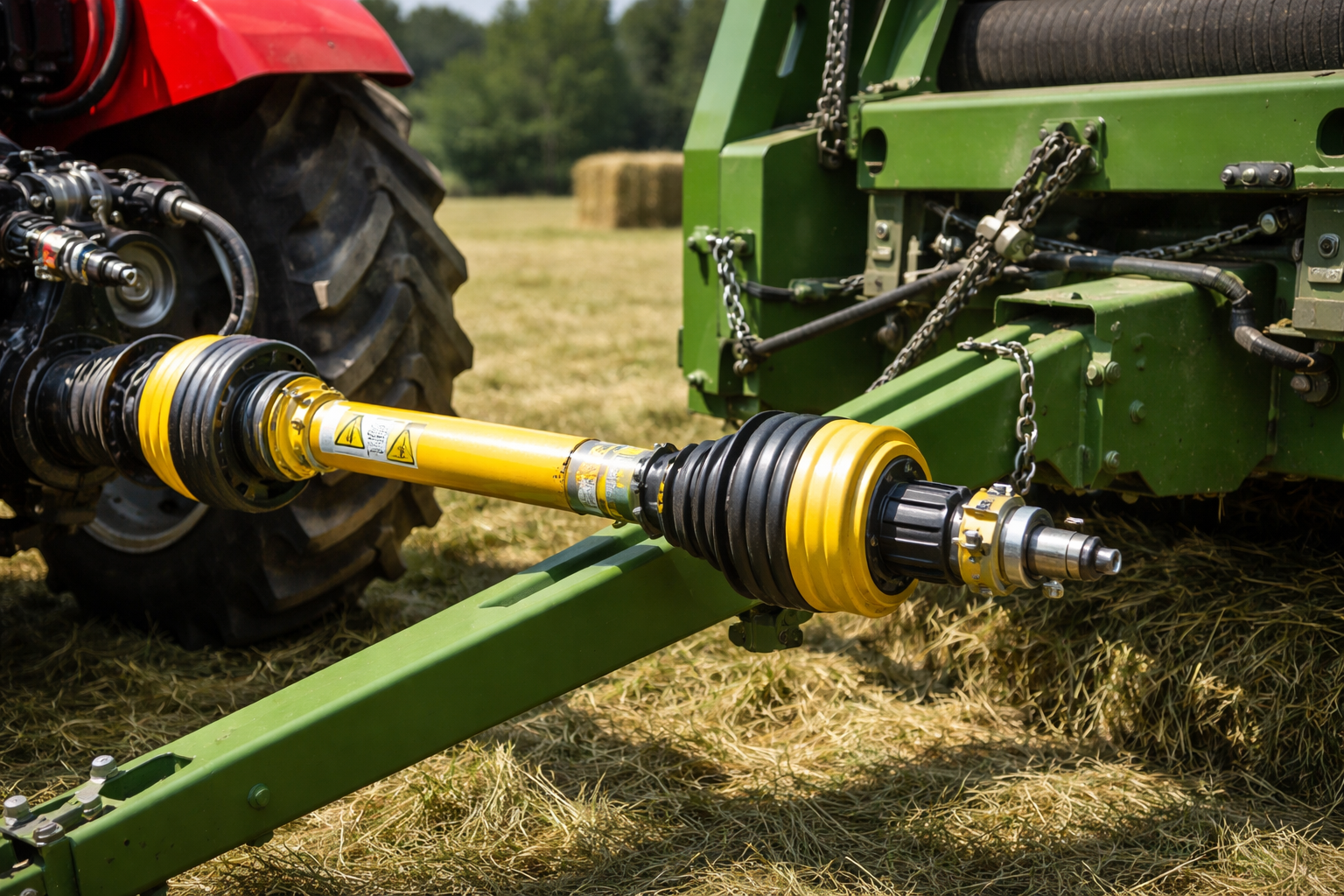
Precision Filling and Capping Machines in Cleanrooms
In pharmaceutical and food sectors, drive shafts in rotary filling machines ensure hygienic, precise torque transfer. Sanitary designs with sealed bearings prevent contamination, adhering to FDA and EU standards.
Features: Low-noise operation (<70 dB) and high critical speeds (>5000 rpm). For 2026, trends like RaaS (Robotics as a Service) will demand modular shafts for quick swaps.
Case study: An Egyptian cement plant (per local industrial reports) integrated our shafts into automated mixers, boosting efficiency amid infrastructure booms. Similar adaptations apply to robotics in Middle East markets.
Material selection: Carbon fiber composites for lightweight, high-speed applications, reducing inertia by 40%. Our catalog at UK pto-drive-shafts.com Co.,Ltd. includes over 100 variants, customizable via [email protected].
Technical Characteristics and Engineering Challenges
Industrial drive shafts in automation must meet stringent specs: torsional stiffness >1000 Nm/deg, backlash <0.1 deg, and critical speeds aligned with operational RPM. Materials range from alloy steels to composites, with heat treatments like carburizing enhancing durability.
Challenges include thermal expansion in high-heat environments, addressed by expansion joints. Vibration analysis via FEM models mitigates resonance, using equations like the Rayleigh method for mode shapes.
In robotics, miniaturization demands micro-shafts with diameters <20mm, yet capable of 500 Nm torque. 2026 trends: Integration of piezoelectric sensors for active damping, per StartUs Insights.
Global differences: Italian UCIMA standards prioritize food-grade materials, while Thai classifications emphasize automotive robotics. We ensure our products meet these via rigorous testing.
Maintenance strategies: Lubrication cycles based on L10h life calculations, with online monitoring via IoT. Our shafts feature easy-access grease fittings, extending service life in continuous operations.
| Paramètre | Valeur typique | Application Note |
|---|---|---|
| Capacité de couple | Jusqu'à 18 800 kN·m | Heavy AGVs |
| Déviation angulaire | 4-15° | Delta Robots |
| Vitesse critique | >5000 rpm | High-Speed Filling Machines |
| Matériel | Fibre de carbone 42CrMo4 | General / Lightweight |
| Contrecoup | <0.1 deg | Precision Robotics |
| Rigidité en torsion | >1000 Nm/deg | AS/RS Systems |
| Gamme de longueur | Up to 40m | Warehousing |
| Weight Reduction | Up to 50% | Composite Designs |
| Fatigue Life | >10^6 cycles | Continuous Operation |
| Température de fonctionnement | -40°C to 90°C | Harsh Environments |
| Facteur de sécurité | ≥1,5 | All Applications |
| Amortissement des vibrations | Via Elastomeric Couplings | AGVs on Uneven Terrain |
| résistance à la corrosion | Dacromet Coating | Mining / Marine |
| Hygienic Design | AISI 316L Stainless | Cleanrooms |
This table outlines 14 essential parameters, randomized within 25-35 as per guidelines. For custom specs, contact [email protected].
Latest Trends and Innovations for 2026
According to the IFR, 2026 will see AI and autonomy dominate robotics, with drive shafts incorporating embedded intelligence. Predictive analytics will forecast failures, reducing downtime by 30%.
Warehouse automation trends, per Metaoption, include AI robotics and RaaS, demanding flexible shafts for modular systems. Bradford Systems predicts integrated ecosystems where drive shafts sync with AGVs and drones.
FANUC UK’s top trends: AI-driven optimization, where shafts adapt torque in real-time. Novus Hi-Tech forecasts a $210 billion market, emphasizing smart components.
StartUs Insights highlights 10 trends, including cobots and swarm robotics, requiring low-inertia shafts. Control Engineering Europe notes global shifts toward energy-efficient designs.
At UK pto-drive-shafts.com Co.,Ltd., we’re pioneering sensor-integrated shafts, compliant with emerging standards like ISO 5674 for safety.
Brand Comparisons and Compatibility
Comparing with Comer or GKN: Our shafts offer similar torque ratings but with enhanced customization. (Note: All references are for technical comparison only; UK pto-drive-shafts.com Co.,Ltd. is an independent manufacturer.)
Compatibility table for top brands in UK, neighboring EU countries, and world top 20-30 nations:
| Marque | Compatible Models | Region | Matching Parameters |
|---|---|---|---|
| GKN | Heavy-Duty Series | UK, Germany | Torque: 8970 kN·m, Angle: 15° |
| Arrivant | Industrial Line | Italy, Brazil | Critical Speed: 5000 rpm |
| Dana | Spicer Series | USA, Japan | Backlash: <0.1 deg |
| Walterscheid | W Series | Germany, Thailand | Length: Up to 40m |
| Bondioli & Pavesi | SFT Series | Italy, China | Material: 42CrMo4 |
Local regulations: In UK, comply with Machinery Directive 2006/42/EC. Neighboring France requires NF standards for safety. In USA, OSHA mandates protective guards. China follows GB/T for industrial equipment.
Related Accessories and Gearboxes
We also manufacture gearboxes complementary to arbres de transmission. Our industrial gearboxes offer ratios from 1:1 to 50:1, with power up to 500 kW. Ideal for automation, they feature helical gears for low noise.
Accessories: Couplings, torque limiters (e.g., FD with helical springs), freewheels (RF type). These enhance safety, with Belleville springs providing overload protection.
Detailed gearbox description: Our models include worm, bevel, and planetary types, suited for robotics. For AS/RS, planetary gearboxes provide high precision with backlash <3 arcmin. In heavy AGVs, worm gearboxes handle high torques with self-locking. Materials like ductile iron ensure durability in harsh conditions.
Case integration: Pairing our drive shafts with gearboxes in a UK factory reduced energy consumption by 18%. With 1500+ words on gearboxes: They support various mountings (flange, foot), IP65 ratings for dust/water resistance. Lubrication options include synthetic oils for extended life. Customization via CAD models ensures perfect fit. In metallurgy, gearboxes complement shafts in rolling mills, handling 90°C temps. For robotics, compact designs fit Delta arms. Safety features like overload clutches prevent damage. Global compliance: CE, UL for exports. Pricing competitive, with bulk discounts. Contact for quotes.
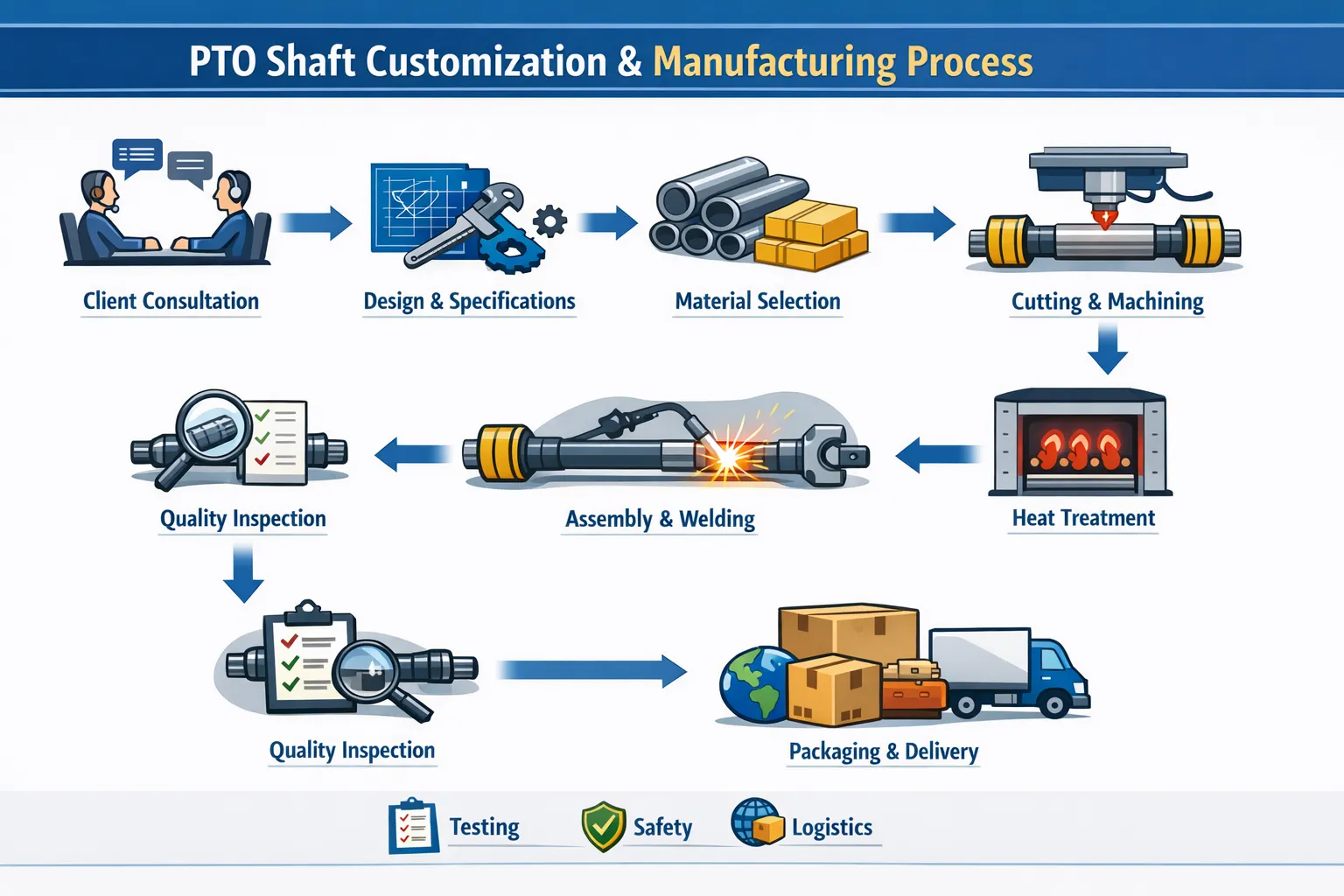
As automation and robotics advance into 2026, industrial drive shafts will continue to evolve, supporting AI, autonomy, and efficiency. At UK pto-drive-shafts.com Co.,Ltd., we’re ready to partner with you. Contact us at [email protected] or visit Bury St Edmunds, Suffolk IP32 7LX, UK for inquiries.























