
Industrial Drive Shaft Engineering · Port Automation Series
Industrial Drive Shafts for Port Automation: Engineering Drive Solutions for Straddle Carriers and AGV Systems in UK Terminals
Marine-grade · Shock-rated · Custom-designed · Serving Felixstowe, Southampton, London Gateway & Beyond
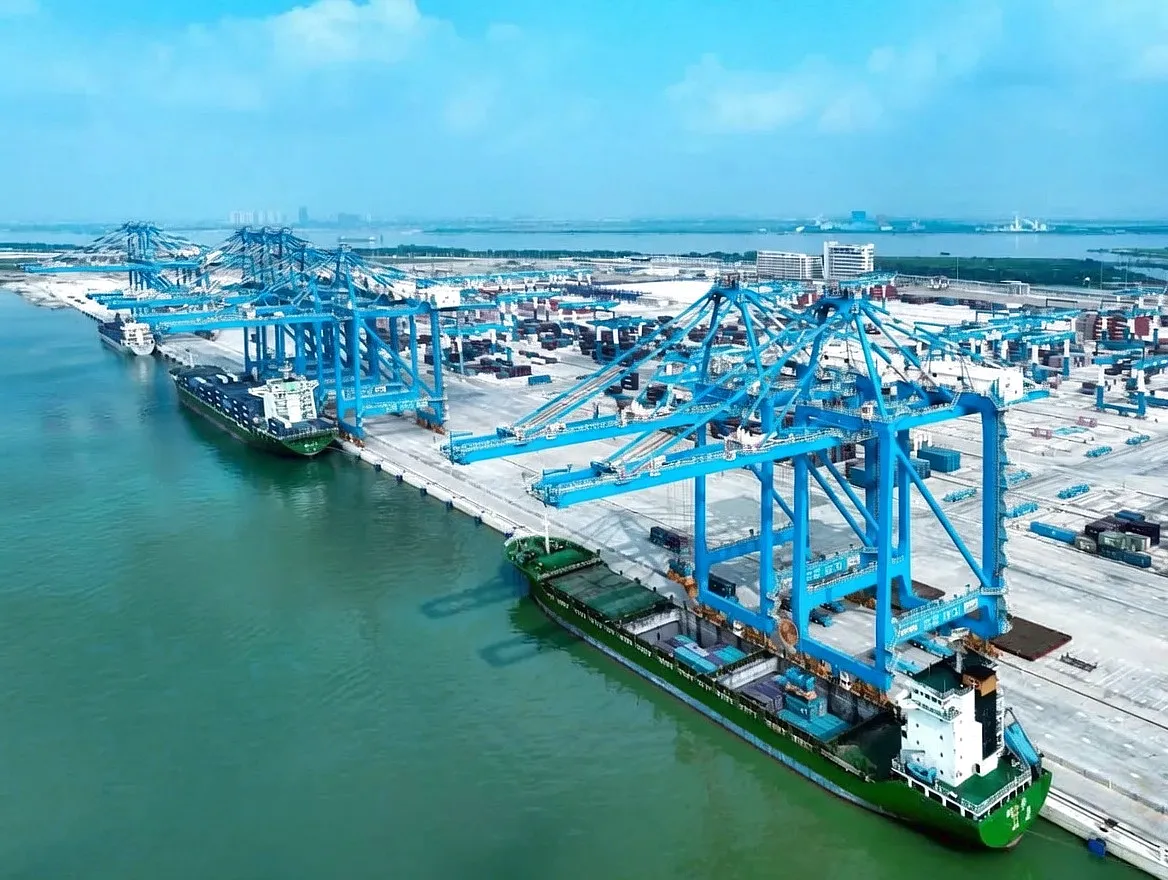 Container ports across the United Kingdom — from the Port of Felixstowe and Southampton to London Gateway and Tilbury — are undergoing a profound transformation. Automated straddle carriers glide between towering stacks of containers, while AGV fleets navigate complex terminal layouts with millimetre precision, operating continuously around the clock, 365 days a year. Behind every wheel turn, every load cycle, and every precise positioning manoeuvre lies a critical component that most observers never notice: the PTO drive shaft. In port automation environments, these shafts are not simply transmission components — they are the mechanical backbone of the entire operation, absorbing shock loads that can spike to three or four times rated torque in a fraction of a second, resisting relentless corrosion from coastal salt spray, and maintaining dimensional accuracy across temperature swings that range from sub-zero British winters to summer heat build-up inside enclosed terminal structures.
When a drive shaft fails in a manual terminal, a single machine goes offline. When one fails in a fully automated terminal, the consequences cascade through an entire logistics chain. This article draws on more than 18 years of field experience supplying industrial shafts for port automation worldwide, examining the specific engineering demands of straddle carriers and AGV systems, the materials and sealing technologies that keep them running, and how UK terminal operators can specify the right drive shaft solution for their fleets.
Why Port Automation Pushes Every Industrial Shaft to Its Limits
 A conventional agricultural or construction industrial shaft operates in broadly predictable load cycles: steady rotation, occasional reversals, periodic idle periods. Port automation equipment plays by an entirely different rulebook. An automated straddle carrier might complete more than 200 container lifts per shift, each generating an instantaneous torque spike the moment the spreader locks onto a steel box weighing up to 45 tonnes. The drive shaft connecting the prime mover to the drive axle must absorb this impulse without allowing any angular displacement to exceed the joint’s designed limits — otherwise fatigue cracks propagate at the yoke, and catastrophic failure becomes a matter of time rather than possibility. Salt-laden coastal air compounds every vulnerability. Standard carbon steel surfaces can show measurable corrosion degradation within 18 months of coastal port service. And unlike a farm machine that rests at night, a fully automated terminal’s AGV fleet accumulates fatigue cycles without interruption throughout every hour of every season.
Salt, Moisture & Coastal Exposure
UK port terminals sit at the intersection of land and sea. Salt-laden air deposits chloride ions on every metal surface within hours. Without marine-grade surface treatments — electroless nickel plating, hot-dip galvanising, or specialist polymer coatings — standard industrial shaft components can lose structural integrity well ahead of their planned service intervals. Our port shafts are specified to withstand a minimum of 1,000 hours of salt-spray exposure under ISO 9227, a documented performance standard that procurement teams can reference in asset lifecycle planning records and maintenance budget submissions.
Extreme Shock & Cyclic Impact Loading
Container grab-and-place operations generate shock loads that dwarf steady-state rated torque. During misalignment corrections in AGV docking sequences, lateral torque spikes can reach 3.5 times nominal values in under 50 milliseconds. The sliding spline section must accommodate axial displacement while the universal joints simultaneously handle angular deviation — without binding or backlash that would defeat the precision positioning sensors embedded in the AGV control system. Every shaft we supply to port clients undergoes dynamic impact testing at 120% rated overload before despatch, with results logged on the accompanying test certificate.
24/7 Continuous Operation Demands
Automated terminals observe no shift breaks. The expectation is that a industrial shaft installed in a straddle carrier or AGV will operate continuously for 8,000 to 12,000 hours between planned maintenance intervals — more than a full year of non-stop service. This is only achievable when every lubrication pathway, every seal lip, and every bearing race has been engineered for extended drain intervals. Our port-specification shafts include grease nipples positioned for robotic auto-lubrication compatibility, and cross-bearings rated for 15,000-hour L10 life at maximum load under ISO 281.
The Engineering Principles & Materials Behind Port-Grade Industrial Shafts
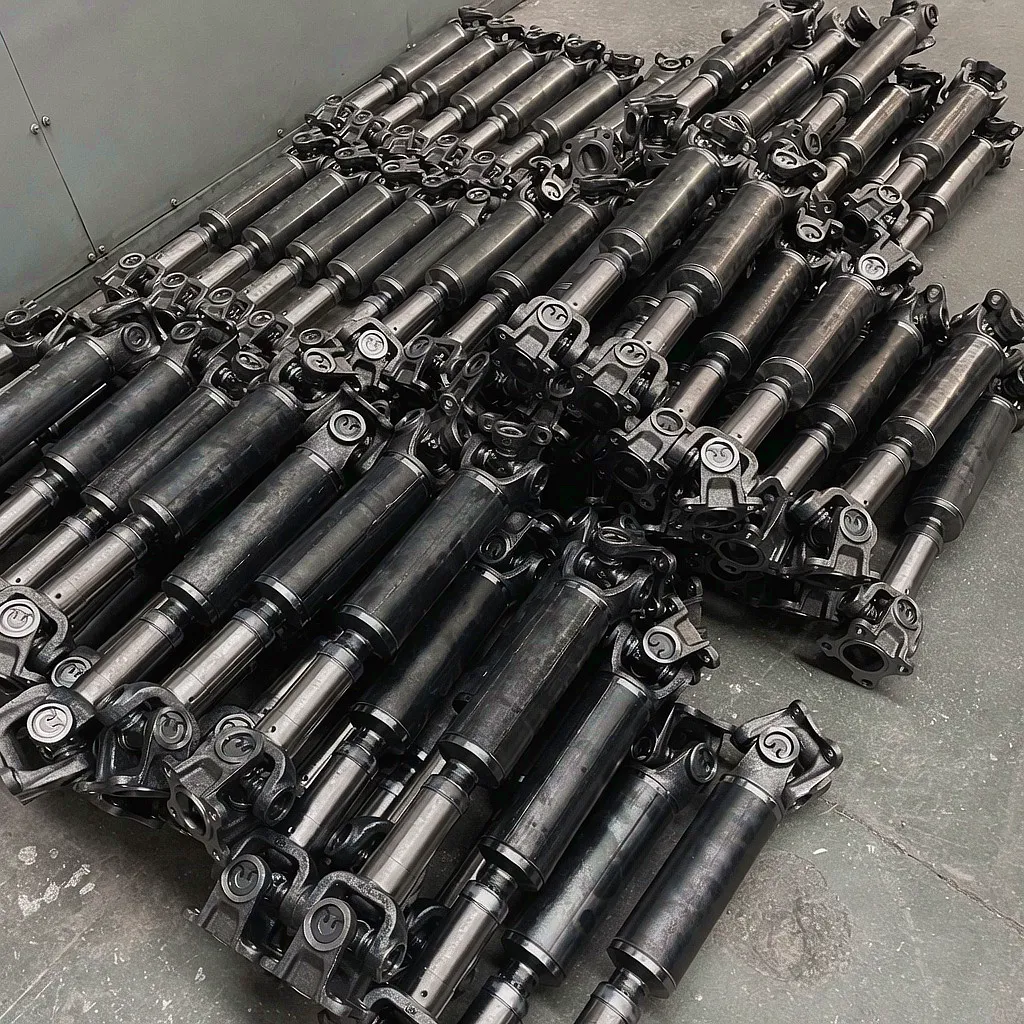 Understanding how a industrial shaft performs in an automated port environment requires looking beyond the component in isolation and examining the entire drivetrain load path. Torque generated by the prime mover — whether diesel-hydraulic, electric, or hybrid — passes through the input flange, into the tube assembly, across the sliding spline coupling, and out through the output yoke to the wheel end. At every junction, the design must balance rotational stiffness (to preserve positional accuracy for automated navigation systems) with controlled torsional compliance (to absorb spikes without transmitting destructive impulse loads downstream to gearboxes or wheel motors). Material selection and sealing architecture determine whether that balance is achieved in practice or only on a datasheet.
⚙ Universal Joint Assembly
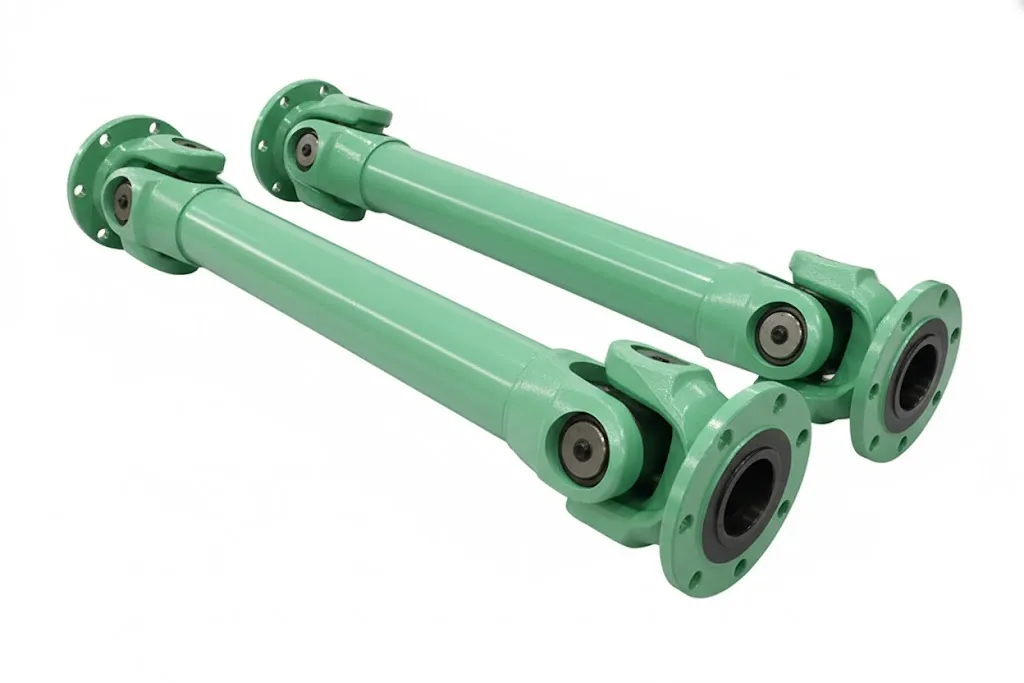
Forged from 20CrMnTi or 42CrMo4 alloy steel, the cross-piece transmits torque through four needle-roller bearing cups. For port shafts, the needles are packed with NLGI Grade 2 marine grease and protected by multi-lip labyrinth seals that exclude salt water even under pressure washing. Each yoke is induction-hardened to 58–62 HRC at the trunnion contact surfaces, extending fatigue life under the cyclic shock loading that characterises container-handling operations throughout every operating season.
🔧 Sliding Spline & Tube Section
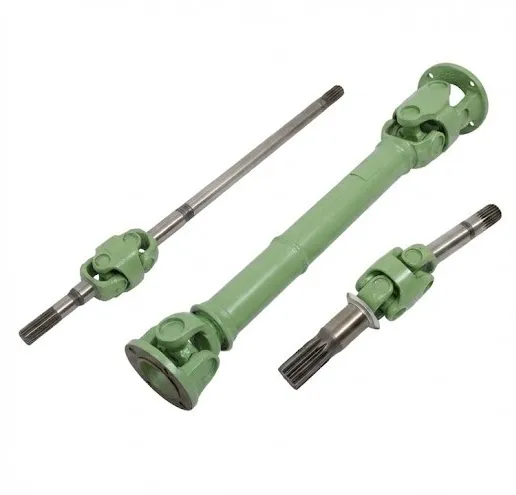
The telescope section accommodates drivetrain length variations as vehicle suspension articulates over uneven terminal surfaces. For AGV applications, spline profiles are precision-ground to DIN 5480 tolerances with maximum backlash of 0.05 mm — preventing positioning errors that would otherwise accumulate and defeat laser-guided navigation. Spline surfaces are phosphated and coated with molybdenum disulphide (MoS2) paste, providing both corrosion resistance and the low-friction sliding characteristics required for high-cycle duty.
📶 Hirth Serration Flanges
Flange connections on port-grade industrial shafts frequently use Hirth serration (face gear) profiles rather than conventional flat-face bolted flanges. The interlocking tooth pattern transmits torque through mechanical form engagement rather than bolt-clamp friction alone, distributing container-grab impact loads across dozens of serration teeth simultaneously. This approach is particularly effective at resisting the cyclic reversal loads generated when an AGV brakes and accelerates in rapid succession during dock approach sequences, where conventional bolt arrangements would progressively loosen.
📋 Three-Layer Surface Protection
Our marine-grade surface system layers multiple barrier technologies: hot-dip zinc galvanising (85 µm minimum) forms the primary sacrificial layer; an epoxy intermediate coat provides chemical resistance to terminal cleaning fluids; a polyurethane topcoat in customer-specified RAL colours completes the stack. This three-layer system meets ISO 12944 Corrosivity Category C5-M — the standard demanded by UK port operators sourcing drivetrain components for coastal terminal environments where single-layer treatments have repeatedly proven inadequate.
Technical Specifications: Port Automation PTO Drive Shaft Series
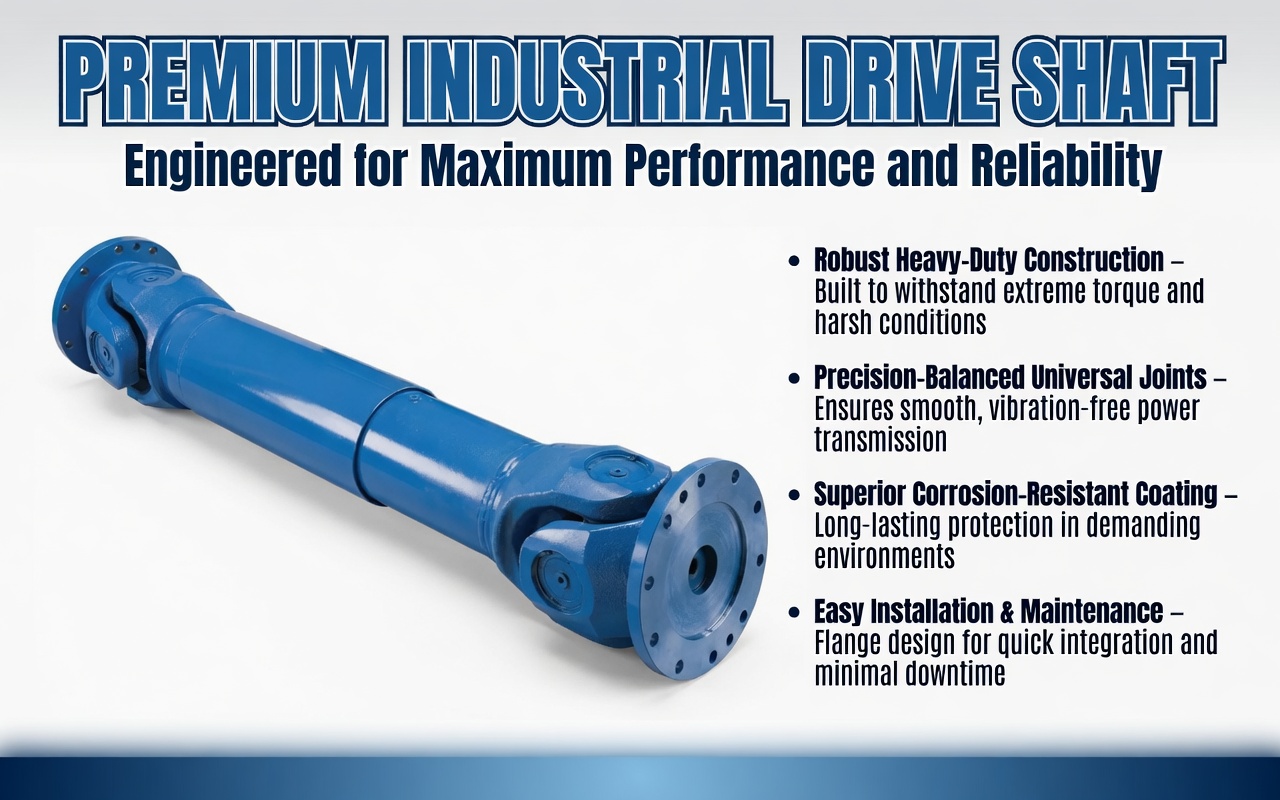 The parameters below outline the core specification range for our port-automation industrial shaft series. Custom configurations beyond these values are routinely engineered — contact our team for bespoke designs sized precisely to your AGV or straddle carrier drivetrain requirements.
| Paramètre | Standard Grade | Port Automation Grade | Unit / Reference |
|---|---|---|---|
| Plage de couple nominal | 500 – 8,000 | 2,000 – 35,000 | Nm |
| Peak Shock Torque Capacity | Up to 2.5x nominal | Up to 3.8x nominal | – |
| Maximum Operating Speed | Up to 1,500 | Up to 2,200 | tr/min |
| Working Angle (per joint) | Up to 25° | Up to 35° | Diplômes |
| Spline Backlash Tolerance | ≤ 0.20 mm | ≤ 0.05 mm | DIN 5480 |
| Salt-Spray Resistance | 480 hours | 1,000 hours minimum | ISO 9227 |
| Cross-Bearing Seal Type | Single-lip contact seal | Multi-layer labyrinth seal | – |
| Bearing L10 Service Life | 5,000 – 8,000 hrs | 15,000 hrs (rated load) | ISO 281 |
| Surface Treatment Standard | ISO 12944 C3 | ISO 12944 C5-M | ISO 12944 |
| Primary Tube Material | S355J2 structural steel | 42CrMo4 / 20CrMnTi alloy | EN 10083 |
| Niveau d'équilibre dynamique | G6.3 | G2.5 | ISO 1940 |
| Flange Connection Option | Standard friction flange | Hirth serration (face gear) | – |
Application Scenarios: Where Our Port-Spec Industrial Shafts Perform
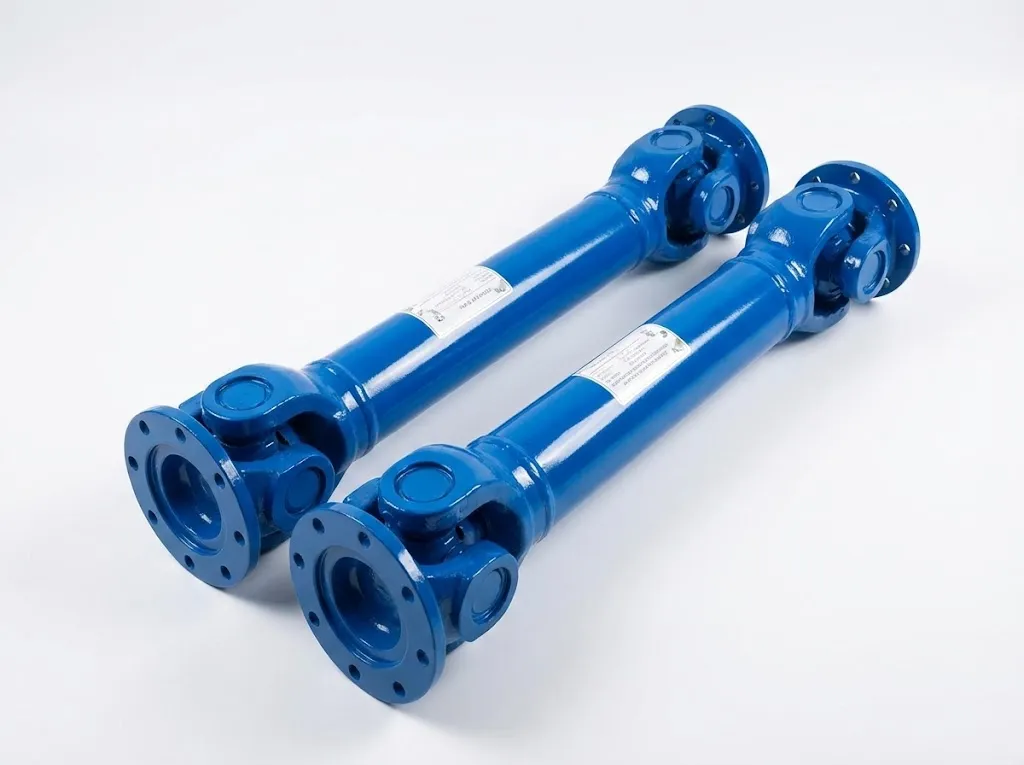 Port automation encompasses a surprisingly wide range of machine types, each presenting its own specific drivetrain challenge. Rather than supplying a single generic “port shaft” product, our engineering team analyses each vehicle category in depth, tailoring shaft geometry, joint rating, and sealing specification to the precise operational profile of each machine type. The following scenarios represent the most common applications we encounter when working with UK terminal operators and the OEMs that supply into British port infrastructure.
Why UK Port Operators Specify Our PTO Drive Shafts
After 18 years of field deployments across multiple continents and dozens of terminal configurations, patterns emerge in what separates a drive shaft that genuinely performs in port automation service from one that merely meets a specification on paper. The following six advantages reflect engineering decisions made at the design and manufacturing stage that pay dividends throughout the shaft’s entire operational life — often the difference between a planned replacement at 15,000 hours and an emergency shutdown at 4,000.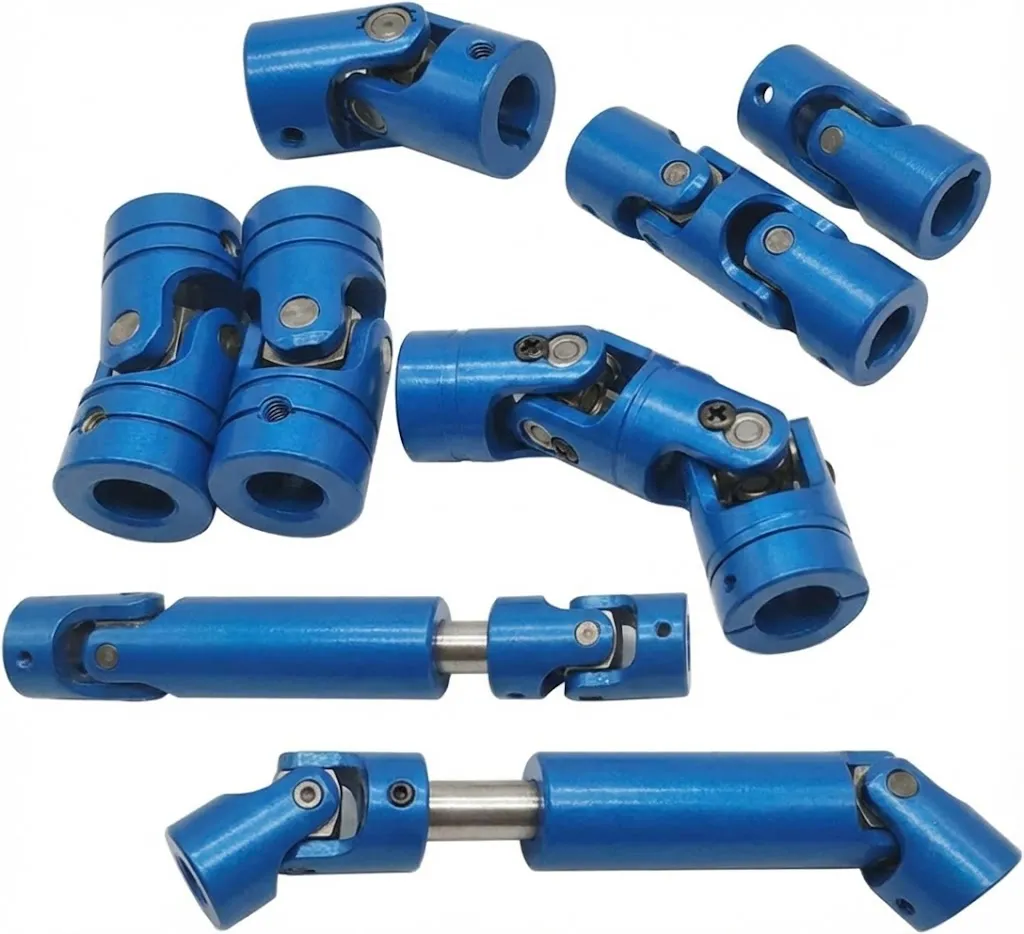
Marine-Grade Corrosion Protection
ISO 12944 C5-M compliant three-layer coating system: hot-dip zinc (85 µm minimum), epoxy intermediate, polyurethane topcoat. Tested to 1,000+ hours salt spray. Documented corrosion performance for asset management records and QMS audits.
Multi-Layer Labyrinth Sealing
Patented multi-lip labyrinth seals on all cross-bearing units exclude salt water, sand, and high-pressure wash-down jets without requiring seal replacement at every service interval — a significant operational saving across large AGV fleets.
Hirth Serration Flange Connections
Face-gear engagement distributes container-grab shock loads across multiple tooth contacts simultaneously, eliminating bolt-shear failures that recur in conventional bolted flanges under the cyclic reversal loading of high-intensity port operations.
15,000-Hour Bearing Life Rating
All port-grade cross bearings rated to ISO 281 L10 life of 15,000 hours at maximum load — exceeding standard commercial shaft bearings by up to three times — reducing planned maintenance frequency and associated terminal downtime costs across an entire fleet lifecycle.
Robotic Auto-Lube Compatibility
Grease nipple positions and lubricant specification confirmed compatible with Groeneveld, Lincoln, and SKF automatic lubrication systems used across major UK terminal operators’ maintenance programmes — eliminating manual greasing from the AGV maintenance cycle entirely.
Complete Documentation Package
Each shaft ships with full material traceability documentation, dynamic balance test report, dimensional inspection certificate, and installation torque data — meeting UK port operators’ QA requirements and supporting CE or UKCA marking processes where applicable under British standards.
Customer Success: Rotterdam AGV Fleet Retrofit
Client: ECT (Europe Container Terminals), Rotterdam, Netherlands — one of the largest container terminals in Europe, handling approximately 5 million TEUs annually with a mixed fleet of diesel-electric and fully electric AGVs supplied by two separate OEMs.
Challenge: The terminal’s existing AGV drive shafts were achieving average bearing life of only 3,200 hours before cross-bearing failure — requiring emergency replacement during active terminal operations. Each unplanned shaft failure caused an average of 4.5 hours of single-AGV downtime. In peak periods, AGV availability dropped to 89%, below the contractual 95% threshold. Salt-spray corrosion was visibly compromising shaft surfaces within the first winter season, and OEM replacement lead times of 14 to 18 weeks were creating acute spare-parts exposure that the terminal’s engineering director flagged as a boardroom-level risk.
Solution: Working with ECT’s maintenance engineering team over a 6-week specification period, our engineers designed a drop-in replacement shaft meeting OEM mounting dimensions while upgrading to marine-grade labyrinth-seal bearings, 42CrMo4 alloy tube construction, and ISO 12944 C5-M surface treatment. Shaft geometry was reviewed using FEA modelling of the actual AGV load cycle profile provided by ECT, allowing optimisation of wall thickness and spline length for the specific duty rather than applying conservative over-engineering across the board. A phased retrofit programme replaced all 62 AGV drive shafts across 8 weeks of scheduled maintenance windows, with zero impact on terminal productivity targets.
Result: After 24 months of operation, average cross-bearing life had risen to 14,800 hours — a 340% improvement. Surface corrosion was undetected at all inspection points. Terminal AGV availability rose consistently above 97.2%, and ECT estimates annual drive shaft maintenance cost savings of approximately €480,000. The programme’s success led ECT’s engineering director to recommend our port-grade shafts to two sister terminals within the Hutchison Ports network.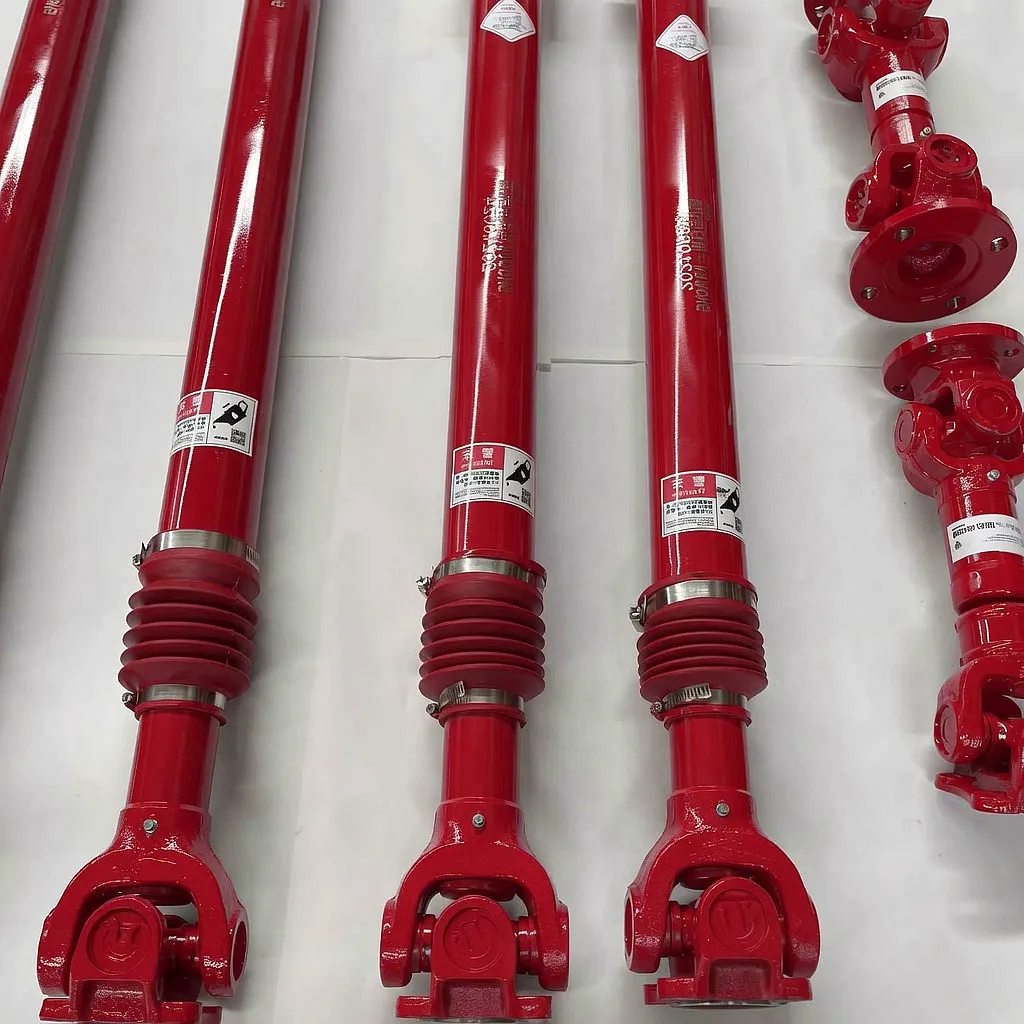
What Terminal Operators Say
“We’ve been running their port-spec puits industriels on our straddle carrier fleet at Felixstowe for three seasons now. The labyrinth seals hold up through our winter maintenance washing cycles without any sign of water ingress. The documentation package met our ISO 9001 QMS requirements straight out of the box — no back-and-forth with suppliers chasing test certificates. Lead times are consistent, and they answer technical queries with genuine engineering knowledge, not sales scripts.”
“Specifying replacement drive shafts for our AGV retrofit was genuinely difficult — most suppliers couldn’t meet the backlash tolerance our positioning system required, or couldn’t deliver on our timeline. This team reviewed our duty cycle data in detail and came back with a proposal that addressed every constraint. The shafts have been in service for 14 months with zero unplanned replacements. For an operation running 24 hours a day, 365 days a year, that reliability translates directly to revenue.”
“Our challenge was a non-standard mounting interface on terminal tractors operating within an automated zone at Southampton. No catalogue shaft would fit. The customisation service is genuinely impressive — they took our interface drawings, proposed a design within 5 working days, and had prototypes in our workshop for fit-testing within 3 weeks. Production shafts followed 6 weeks later. The whole process felt like working with an in-house engineering team rather than an external supplier halfway around the world.”
Manufacturing Excellence & Full Custom Design Capability
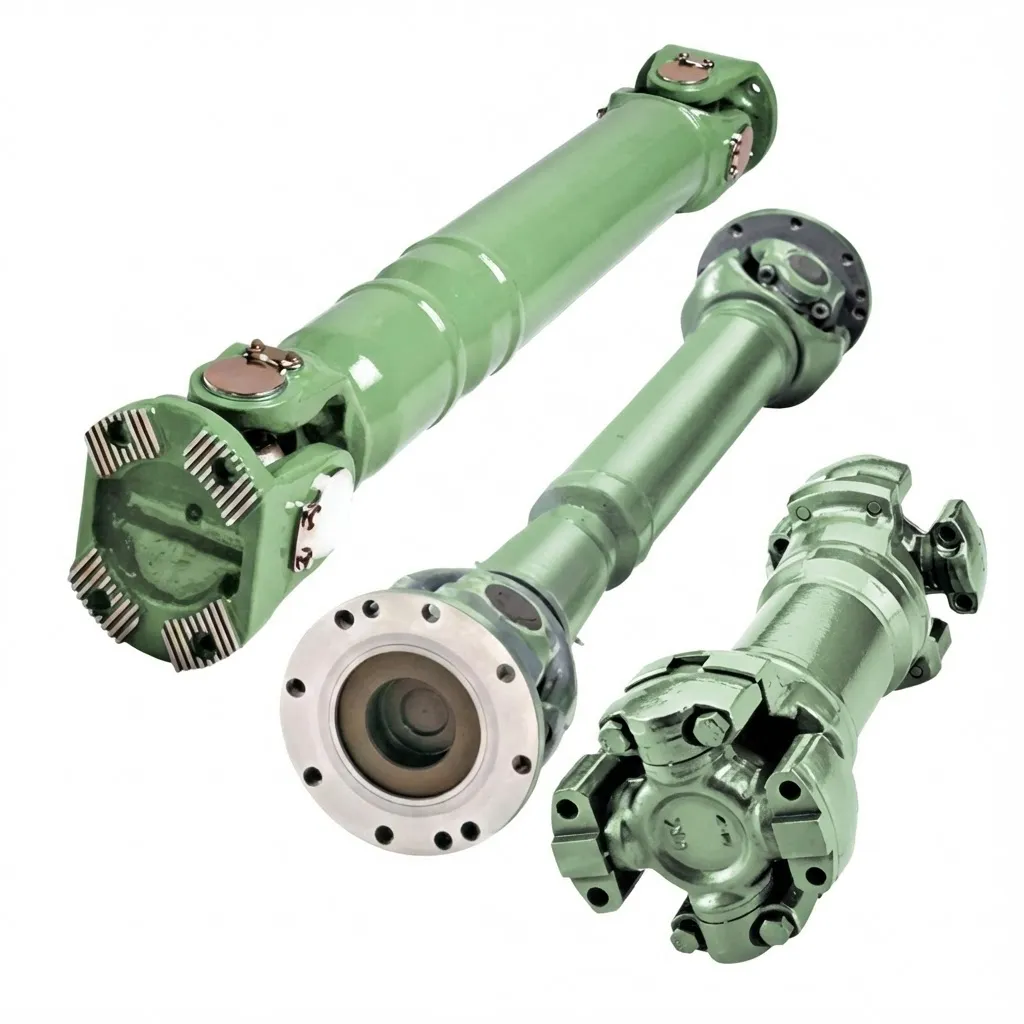 Our manufacturing facility operates under ISO 9001:2015 quality management certification, with dedicated production lines for heavy-duty industrial and port-specification drive shafts. Every shaft begins life as fully traceable raw material — heat number documented from mill certificate through to finished product — machined on CNC turning centres to H7/h6 tolerances, dynamically balanced to ISO 1940 Grade G2.5, and inspected against a 24-point quality checklist before despatch. The combination of in-house forging capability, heat treatment, CNC machining, surface treatment, and final assembly means that every stage of the manufacturing process is controlled under a single quality system. No critical operations are subcontracted.
What genuinely distinguishes our service from catalogue suppliers is the depth of custom engineering capability we bring to every port project. Port automation equipment rarely conforms to standard shaft dimensions: mounting flanges carry non-standard bolt circles, shaft lengths fall between catalogue sizes, and torque ratings don’t align with any off-the-shelf designation. Our engineering team works directly from customer interface drawings and drivetrain load data — using FEA stress analysis and dynamic simulation to design shafts that meet the precise requirements of the application rather than simply accommodating the nearest standard product. We treat every port project as a bespoke engineering exercise, not a catalogue selection exercise. Custom shaft projects from initial enquiry to first article inspection complete in 4 to 8 weeks, depending on complexity and customer input response times.
For UK port operators and OEMs supplying into British terminals, we maintain a dedicated engineering liaison function. All technical communication is handled in English, drawings are issued in ISO first-angle projection, documentation uses metric SI units throughout, and commercial paperwork is structured for straightforward UK import procedures. Stock of common cross-bearing assemblies and tube sections is held at our European distribution point, enabling urgent replacement shaft deliveries to UK port addresses within 3 to 5 working days for most standard configurations — covering Felixstowe, Southampton, London Gateway, and Tilbury within overnight courier range.
🏭 Production Range
⏳ UK Delivery Lead Times
Serving UK Port Terminals: From Felixstowe to Bristol
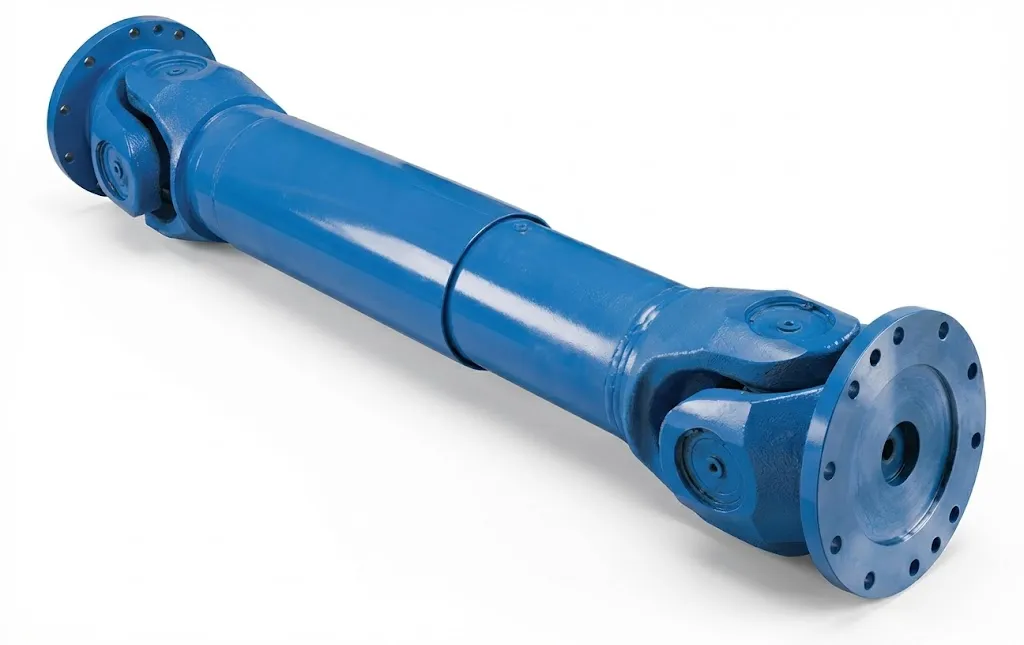 The United Kingdom operates some of the most strategically significant container terminals in northern Europe. The Port of Felixstowe — handling approximately 40% of Britain’s containerised trade — is in the middle of a sustained automation investment programme that has placed straddle carrier and AGV drive shaft specification at the top of maintenance teams’ procurement agendas. DP World’s Southampton terminal operates one of the country’s most advanced automated terminal management systems, while London Gateway, designed with automation as a foundational principle, represents the new benchmark for UK port infrastructure. Tilbury, Immingham, and Bristol’s Royal Portbury Dock complete a port estate that faces growing throughput pressure against a backdrop of labour availability challenges and net-zero emissions mandates from the UK Department for Transport.
For PTO drive shaft procurement in UK port projects, supply chain resilience and documentation compliance have become board-level considerations since recent years exposed single-source dependencies in critical port equipment supply chains. Our European distribution capability, English-language technical communication, ISO first-angle projection drawings, and SI-unit documentation mean UK port procurement teams engage with us as they would with a domestic supplier — without the communication overhead that often accompanies sourcing industrial components internationally. We actively support UK terminal operators in building dual-source supply arrangements for critical drive shaft components, reducing the risk of extended downtime caused by single-supplier lead time failures.
Foire aux questions
Ready to Specify the Right Industrial Shaft for Your Port Project?
Our engineering team is available to review your straddle carrier or AGV drivetrain requirements and recommend the optimal industrial shaft specification — with no obligation. We supply port automation operators, OEMs, and terminal maintenance teams across the UK, Europe, and worldwide. Send us your drawings and duty cycle data today.
📧 Get a Quote: [email protected]
édité par gzl























