
Description du produit
Description du produit
Drive Shaft for FS160 FS220 FS280 Grass Trimmer
| Name | Brush Cutter Drive Shaft |
| Fit Machine | Fit FS160 FS220 FS280 |
| Couleur | Silver |
| Matériel | Iron |
Detailed Photos
Packaging & Shipping
Profil de l'entreprise
Customer Feedback
We Can do READY TO SHIP
1.24 HOURS SHIPPMENT
2.MIN. ORDER:1 PIECE
3.MORE THAN 10000 PARTS IN STOCK
FAQ
1.WHAT IS YOUR WARRANTY TERM?
Our company offer 1% free spare parts to FCL order.There is a 12months warranty for our export products
from the date of the shipment.If warranty has run out,our customer should pay for the replacement parts.
2.IS THE SAMPLE AVAILABLE?
YES,Usually we send the samples by TNT,DHL,FEDEX or UPS,it will take around 3 days for our customers
to receive them,but customer will charge all cost related to the samples,such as sample cost and airmail
freight.We will refund our customer the sample cost after receiving its order
3.WHAT IS YOUR MOQ?
The minimum order amount should be at last USD5,000.00
4.CAN I USE MY OWN LOGO AND DESIGN ON PRODUCTS?
YES,OEM is welcomed
5.HOW LONG IS THE DELIVERY TIME?
A:2-7 days for the sample order
B:20-30 days for LCL or FCL order
About PARADISE
HangZhou Paradise Garden Tools Co., Ltd. is a global manufacturer in the outdoor power equipment parts industry Since 2013, Our Product Line covers most of the well- known O E M’s in the market. The replacement spare parts fits for chainsaw, brush cutter, earth auger, Sprayer, lawn mover, water pump, generator, High pressure washer, Compressor, Welding machine, Construction machine and other garden tools.
Paradise garden warehouse have more than 30000 pcs different parts in stock, can ship fast. The products are exported to more than 60 countries and regions including South Korea, Vietnam, India, Thailand, Russia, the United Kingdom, Canada, the United States, Brazil, Mexico, Ukraine. Besides offering great prices and product to the wholesale customer, we are also continuing to focus on the Small Business Owner. We continue to ship most orders within 1 business day and offer significant savings.
All Paradise products benefit from the latest technology in their design and manufacture, providing excellent ergonomics, outstanding performance, efficiency. engineered for durability and best cost performance. We continue to offer the same superior customer service that we did over 12 years ago and treat each order with the same utmost care and respect as we did with the very first order.
With production inspect system and development teams, Paradise are become 1 of the leader for garden tools spare parts supplier in China.
/* March 10, 2571 17:59:20 */!function(){function s(e,r){var a,o={};try{e&&e.split(“,”).forEach(function(e,t){e&&(a=e.match(/(.*?):(.*)$/))&&1
| Certification: | CE |
|---|---|
| Power Source: | Gasoline |
| Taper: | Brush Cutter Spare Parts |
| Fit Model: | FS160 FS220 FS280 |
| Packing: | 1PC/Poly Bag |
| Feature: | Replacement Brush Cutter Parts |
| Exemples : |
US$ 0/Piece
1 pièce (commande minimale) | |
|---|
| Personnalisation : |
Disponible
| Demande personnalisée |
|---|
Comment les arbres de transmission gèrent-ils les variations de vitesse et de couple en cours de fonctionnement ?
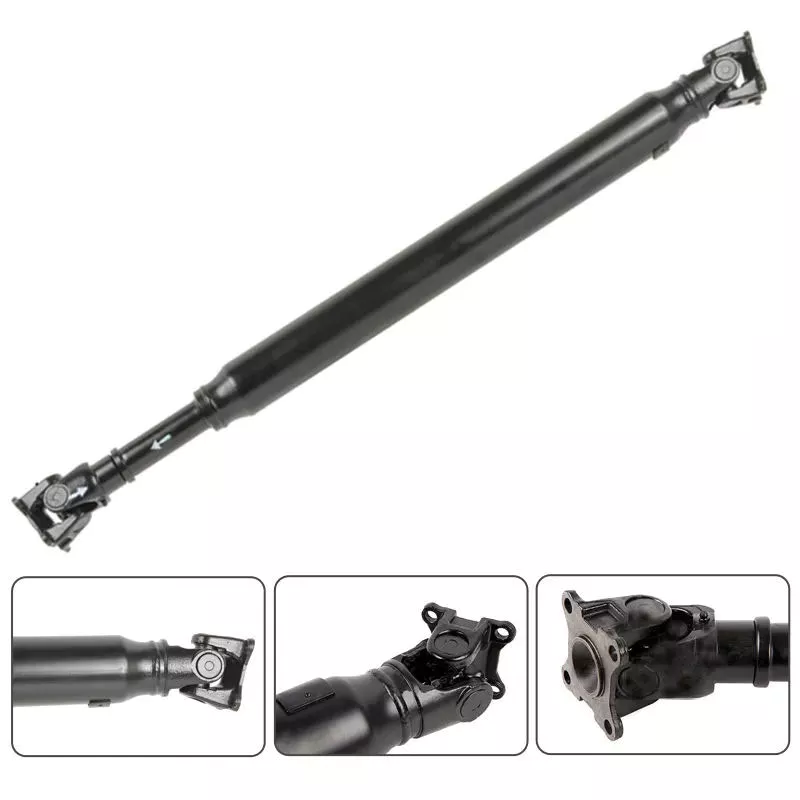
Les arbres de transmission sont conçus pour supporter les variations de vitesse et de couple en fonctionnement grâce à des mécanismes et des configurations spécifiques. Ces mécanismes leur permettent de s'adapter aux exigences changeantes de la transmission de puissance tout en assurant un fonctionnement fluide et efficace. Voici une explication détaillée du fonctionnement des arbres de transmission face aux variations de vitesse et de couple :
1. Accouplements flexibles :
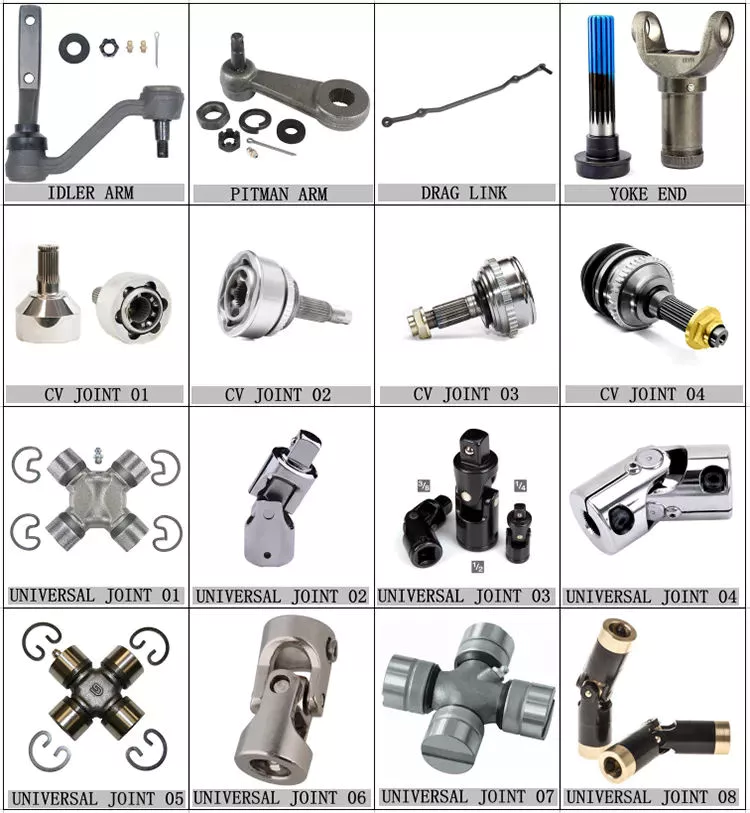
Les arbres de transmission intègrent souvent des accouplements flexibles, tels que des joints de cardan ou des joints homocinétiques, pour compenser les variations de vitesse et de couple. Ces accouplements offrent une certaine flexibilité et permettent à l'arbre de transmission de transmettre la puissance même lorsque les composants menant et mené ne sont pas parfaitement alignés. Les joints de cardan sont constitués de deux étriers reliés par un palier en forme de croix, permettant un mouvement angulaire entre les sections de l'arbre de transmission. Cette flexibilité compense les variations de vitesse et de couple ainsi que les défauts d'alignement. Les joints homocinétiques, couramment utilisés dans les arbres de transmission automobiles, maintiennent une vitesse de rotation constante tout en s'adaptant aux variations d'angles de fonctionnement. Ces accouplements flexibles permettent une transmission de puissance fluide et réduisent les vibrations et l'usure dues aux variations de vitesse et de couple.
2. Joints coulissants :
Dans certaines conceptions d'arbres de transmission, des joints coulissants sont intégrés pour compenser les variations de longueur et s'adapter aux changements de distance entre les composants menant et mené. Un joint coulissant est constitué d'une section tubulaire intérieure et extérieure, munie de cannelures ou d'un mécanisme télescopique. Lorsque l'arbre de transmission subit des variations de longueur dues aux mouvements de la suspension ou à d'autres facteurs, le joint coulissant permet à l'arbre de s'allonger ou de se raccourcir sans affecter la transmission de puissance. En autorisant un mouvement axial, les joints coulissants contribuent à prévenir le blocage ou les contraintes excessives sur l'arbre de transmission lors des variations de vitesse et de couple, garantissant ainsi un fonctionnement fluide.
3. Équilibrer :
Les arbres de transmission sont équilibrés afin d'optimiser leurs performances et de minimiser les vibrations dues aux variations de vitesse et de couple. Un déséquilibre de l'arbre de transmission peut engendrer des vibrations qui affectent le confort des occupants du véhicule et augmentent l'usure de l'arbre et de ses composants. L'équilibrage consiste à redistribuer la masse le long de l'arbre de transmission pour obtenir une répartition uniforme du poids, réduisant ainsi les vibrations et améliorant les performances globales. L'équilibrage dynamique, qui consiste généralement à ajouter ou à retirer de petites masses, garantit un fonctionnement optimal de l'arbre de transmission, même sous des charges de vitesse et de couple variables.
4. Sélection des matériaux et conception :
Le choix des matériaux et la conception des arbres de transmission sont essentiels pour gérer les variations de vitesse et de couple. Ces arbres sont généralement fabriqués à partir de matériaux à haute résistance, tels que l'acier ou les alliages d'aluminium, choisis pour leur capacité à supporter les forces et les contraintes liées aux variations des conditions de fonctionnement. Le diamètre et l'épaisseur de paroi de l'arbre sont également déterminés avec précision afin de garantir une résistance et une rigidité suffisantes. De plus, la conception prend en compte des facteurs tels que la vitesse critique, la rigidité en torsion et la prévention des résonances, contribuant ainsi au maintien de la stabilité et des performances lors des variations de vitesse et de couple.
5. Lubrification :
Une lubrification adéquate est essentielle pour que les arbres de transmission supportent les variations de vitesse et de couple. La lubrification des articulations, telles que les joints de cardan ou les joints homocinétiques, réduit la friction et la chaleur générées en fonctionnement, assurant un mouvement fluide et minimisant l'usure. Une lubrification appropriée contribue également à prévenir le grippage des composants, permettant à l'arbre de transmission de mieux absorber les variations de vitesse et de couple. Un entretien régulier de la lubrification est nécessaire pour garantir des performances optimales et prolonger la durée de vie de l'arbre de transmission.
6. Surveillance du système :
Il est important de surveiller les performances du système d'arbre de transmission afin de déceler tout problème lié aux variations de vitesse et de couple. Des vibrations inhabituelles, des bruits anormaux ou des changements dans la transmission de puissance peuvent indiquer des problèmes potentiels au niveau de l'arbre de transmission. Des inspections et des contrôles d'entretien réguliers permettent de détecter et de résoudre rapidement les problèmes, contribuant ainsi à prévenir d'autres dommages et à garantir que l'arbre de transmission continue de supporter efficacement les variations de vitesse et de couple.
En résumé, les arbres de transmission supportent les variations de vitesse et de couple en fonctionnement grâce à l'utilisation d'accouplements flexibles, de joints coulissants, de procédures d'équilibrage, d'une sélection et d'une conception appropriées des matériaux, d'une lubrification et d'une surveillance du système. Ces mécanismes et pratiques permettent à l'arbre de transmission de compenser les défauts d'alignement, les variations de longueur et les fluctuations de la demande de puissance, garantissant ainsi une transmission de puissance efficace, un fonctionnement régulier et une usure réduite dans diverses applications.
Can drive shafts be customized for specific vehicle or equipment requirements?
Yes, drive shafts can be customized to meet specific vehicle or equipment requirements. Customization allows manufacturers to tailor the design, dimensions, materials, and other parameters of the drive shaft to ensure compatibility and optimal performance within a particular vehicle or equipment. Here’s a detailed explanation of how drive shafts can be customized:
1. Dimensional Customization:
Drive shafts can be customized to match the dimensional requirements of the vehicle or equipment. This includes adjusting the overall length, diameter, and spline configuration to ensure proper fitment and clearances within the specific application. By customizing the dimensions, the drive shaft can be seamlessly integrated into the driveline system without any interference or limitations.
2. Material Selection:
The choice of materials for drive shafts can be customized based on the specific requirements of the vehicle or equipment. Different materials, such as steel alloys, aluminum alloys, or specialized composites, can be selected to optimize strength, weight, and durability. The material selection can be tailored to meet the torque, speed, and operating conditions of the application, ensuring the drive shaft’s reliability and longevity.
3. Joint Configuration:
Drive shafts can be customized with different joint configurations to accommodate specific vehicle or equipment requirements. For example, universal joints (U-joints) may be suitable for applications with lower operating angles and moderate torque demands, while constant velocity (CV) joints are often used in applications requiring higher operating angles and smoother power transmission. The choice of joint configuration depends on factors such as operating angle, torque capacity, and desired performance characteristics.
4. Torque and Power Capacity:
Customization allows drive shafts to be designed with the appropriate torque and power capacity for the specific vehicle or equipment. Manufacturers can analyze the torque requirements, operating conditions, and safety margins of the application to determine the optimal torque rating and power capacity of the drive shaft. This ensures that the drive shaft can handle the required loads without experiencing premature failure or performance issues.
5. Balancing and Vibration Control:
Drive shafts can be customized with precision balancing and vibration control measures. Imbalances in the drive shaft can lead to vibrations, increased wear, and potential driveline issues. By employing dynamic balancing techniques during the manufacturing process, manufacturers can minimize vibrations and ensure smooth operation. Additionally, vibration dampers or isolation systems can be integrated into the drive shaft design to further mitigate vibrations and enhance overall system performance.
6. Integration and Mounting Considerations:
Customization of drive shafts takes into account the integration and mounting requirements of the specific vehicle or equipment. Manufacturers work closely with the vehicle or equipment designers to ensure that the drive shaft fits seamlessly into the driveline system. This includes adapting the mounting points, interfaces, and clearances to ensure proper alignment and installation of the drive shaft within the vehicle or equipment.
7. Collaboration and Feedback:
Manufacturers often collaborate with vehicle manufacturers, OEMs (Original Equipment Manufacturers), or end-users to gather feedback and incorporate their specific requirements into the drive shaft customization process. By actively seeking input and feedback, manufacturers can address specific needs, optimize performance, and ensure compatibility with the vehicle or equipment. This collaborative approach enhances the customization process and results in drive shafts that meet the exact requirements of the application.
8. Compliance with Standards:
Customized drive shafts can be designed to comply with relevant industry standards and regulations. Compliance with standards, such as ISO (International Organization for Standardization) or specific industry standards, ensures that the customized drive shafts meet quality, safety, and performance requirements. Adhering to these standards provides assurance that the drive shafts are compatible and can be seamlessly integrated into the specific vehicle or equipment.
In summary, drive shafts can be customized to meet specific vehicle or equipment requirements through dimensional customization, material selection, joint configuration, torque and power capacity optimization, balancing and vibration control, integration and mounting considerations, collaboration with stakeholders, and compliance with industry standards. Customization allows drive shafts to be precisely tailored to the needs of the application, ensuring compatibility, reliability, and optimal performance.

What benefits do drive shafts offer for different types of vehicles and equipment?
Drive shafts offer several benefits for different types of vehicles and equipment. They play a crucial role in power transmission and contribute to the overall performance, efficiency, and functionality of various systems. Here’s a detailed explanation of the benefits that drive shafts provide:
1. Efficient Power Transmission:
Drive shafts enable efficient power transmission from the engine or power source to the wheels or driven components. By connecting the engine or motor to the driven system, drive shafts efficiently transfer rotational power, allowing vehicles and equipment to perform their intended functions. This efficient power transmission ensures that the power generated by the engine is effectively utilized, optimizing the overall performance and productivity of the system.
2. Versatility:
Drive shafts offer versatility in their applications. They are used in various types of vehicles, including cars, trucks, motorcycles, and off-road vehicles. Additionally, drive shafts are employed in a wide range of equipment and machinery, such as agricultural machinery, construction equipment, industrial machinery, and marine vessels. The ability to adapt to different types of vehicles and equipment makes drive shafts a versatile component for power transmission.
3. Torque Handling:
Drive shafts are designed to handle high levels of torque. Torque is the rotational force generated by the engine or power source. Drive shafts are engineered to efficiently transmit this torque without excessive twisting or bending. By effectively handling torque, drive shafts ensure that the power generated by the engine is reliably transferred to the wheels or driven components, enabling vehicles and equipment to overcome resistance, such as heavy loads or challenging terrains.
4. Flexibility and Compensation:
Drive shafts provide flexibility and compensation for angular movement and misalignment. In vehicles, drive shafts accommodate the movement of the suspension system, allowing the wheels to move up and down independently. This flexibility ensures a constant power transfer even when the vehicle encounters uneven terrain. Similarly, in machinery, drive shafts compensate for misalignment between the engine or motor and the driven components, ensuring smooth power transmission and preventing excessive stress on the drivetrain.
5. Réduction du poids :
Drive shafts contribute to weight reduction in vehicles and equipment. Compared to other forms of power transmission, such as belt drives or chain drives, drive shafts are typically lighter in weight. This reduction in weight helps improve fuel efficiency in vehicles and reduces the overall weight of equipment, leading to enhanced maneuverability and increased payload capacity. Additionally, lighter drive shafts contribute to a better power-to-weight ratio, resulting in improved performance and acceleration.
6. Durability and Longevity:
Drive shafts are designed to be durable and long-lasting. They are constructed using materials such as steel or aluminum, which offer high strength and resistance to wear and fatigue. Drive shafts undergo rigorous testing and quality control measures to ensure their reliability and longevity. Proper maintenance, including lubrication and regular inspections, further enhances their durability. The robust construction and long lifespan of drive shafts contribute to the overall reliability and cost-effectiveness of vehicles and equipment.
7. Safety:
Drive shafts incorporate safety features to protect operators and bystanders. In vehicles, drive shafts are often enclosed within a protective tube or housing, preventing contact with moving parts and reducing the risk of injury in the event of a failure. Similarly, in machinery, safety shields or guards are commonly installed around exposed drive shafts to minimize the potential hazards associated with rotating components. These safety measures ensure the well-being of individuals operating or working in proximity to vehicles and equipment.
In summary, drive shafts offer several benefits for different types of vehicles and equipment. They enable efficient power transmission, provide versatility in various applications, handle torque effectively, offer flexibility and compensation, contribute to weight reduction, ensure durability and longevity, and incorporate safety features. By providing these advantages, drive shafts enhance the performance, efficiency, reliability, and safety of vehicles and equipment across a wide range of industries.


editor by CX 2024-02-17























