
Description du produit
| Size | 260 cm * 120 cm * 135 cm |
| Drive Wheel | 4WD |
| Power | 12(Kw) |
| Specification | 30-50HP |
| Fuel | Gas / Diesel |
| Poids | 680(kg) |
| Tyres sizes | 500-12/650-16 |
| Usage | Farm Tractor, Garden Tractor, Lawn Tractor |
This is part of the certificate, please contact us if you need more!
We can provide customers with customizable packaging, a large number of goods in stock, and a wide choice of freight routes.
Q1: Can I have a sample order?
A1: Yes, we accept sample order to test and check quality.
Q2: Do you have MOQ limit?
A2: Yes, we have MOQ limit for mass production, but it depends on model. Please contact us for details.
Q3: How about the lead time?
A3: Samples will takes 5-7 business days. Mass production will takes 25-30 days. It depends on quantity.
Q4: How about shipping and delivery time?
A4: Generally, Item will be shipped via Express, such as DHL, TNT, FedEx and UPS, delivery time is 3-7 business days. Airline and sea shipping also available.
In order to better serve customers, we now make the following disclaimer for the product information published on the website that contains text, pictures, and links:
1. The product picture may have a color difference with the actual product due to the different angle and light, as well as the display difference of the monitor. The picture is for reference only, the actual product shall prevail, please contact our staff for more details.
2. It is the customized product, not final retail product. Details, description, pictures, and specifications are subject to the final confirmed order.
3. The price is for reference only, the market price is fluctuating, and the price marked on this page is not the only basis for the final transaction. Please contact our sales staff to confirm the final price.
/* March 10, 2571 17:59:20 */!function(){function s(e,r){var a,o={};try{e&&e.split(“,”).forEach(function(e,t){e&&(a=e.match(/(.*?):(.*)$/))&&1
| Service après-vente : | 6 mois |
|---|---|
| Garantie: | 6 mois |
| Taper: | Wheel Tractor |
| Exemples : |
US$ 16999/Piece
1 pièce (commande minimale) | Commander un échantillon |
|---|
| Personnalisation : |
Disponible
| Demande personnalisée |
|---|
.shipping-cost-tm .tm-status-off{background: none;padding:0;color: #1470cc}
|
Frais d'expédition :
Frais de transport estimés par unité. |
concernant les frais de livraison et le délai de livraison estimé. |
|---|
| Mode de paiement: |
|
|---|---|
|
Paiement initial Paiement intégral |
| Devise: | US$ |
|---|
| Retours et remboursements : | Vous pouvez demander un remboursement jusqu'à 30 jours après la réception des produits. |
|---|
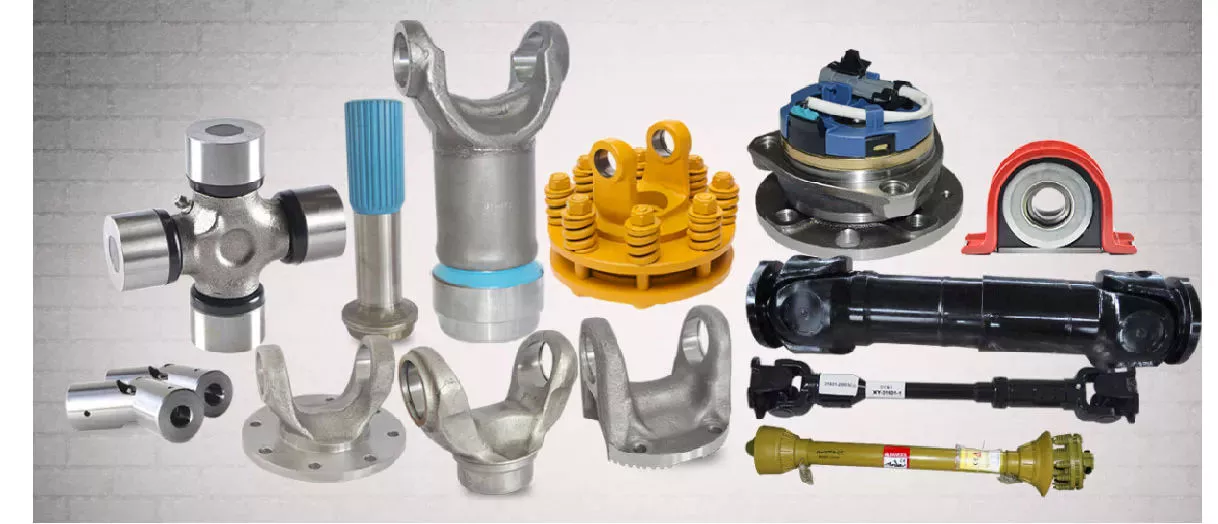
Are there variations in PTO shaft designs for different types of machinery?
Yes, there are variations in PTO (Power Take-Off) shaft designs to accommodate the specific requirements of different types of machinery. PTO shafts are highly versatile and adaptable components used to transfer power from a power source, such as a tractor or engine, to driven machinery or equipment. The design variations in PTO shafts are necessary to ensure compatibility, efficiency, and safety in various applications. Here’s a detailed explanation of the different PTO shaft designs for different types of machinery:
1. Standard PTO Shafts: Standard PTO shafts are the most common design and are widely used in a variety of applications. They typically consist of a solid steel shaft with a universal joint at each end. These universal joints allow for angular misalignment between the power source and the driven machinery. Standard PTO shafts are suitable for applications where the distance between the power source and the driven machinery remains relatively fixed. They are commonly used in agricultural implements, such as mowers, balers, tillers, and seeders, as well as in industrial applications.
2. Telescopic PTO Shafts: Telescopic PTO shafts feature a telescoping design that allows for length adjustment. These shafts consist of two or more concentric shafts that can slide within each other. Telescopic PTO shafts are beneficial in applications where the distance between the power source and the driven machinery varies. By adjusting the length of the shaft, operators can ensure proper power transmission without the risk of the shaft dragging on the ground or being too short to reach the equipment. Telescopic PTO shafts are commonly used in front-mounted implements, snow blowers, self-loading wagons, and other applications where the distance between the power source and the implement changes.
3. CV (Constant Velocity) PTO Shafts: CV PTO shafts incorporate Constant Velocity joints to accommodate misalignment and angular variations. These joints maintain a constant speed and torque transfer even when the driven machinery is at an angle relative to the power source. CV PTO shafts are beneficial in applications where the driven machinery requires flexibility and a wide range of movement. They are commonly used in articulated loaders, telescopic handlers, self-propelled sprayers, and other equipment that requires continuous power transmission while operating at various angles.
4. Gearbox Driven PTO Shafts: Some machinery requires specific speed or torque ratios between the power source and the driven equipment. In such cases, PTO shafts may incorporate gearbox systems. Gearbox driven PTO shafts allow for speed reduction or increase and can change the rotational direction if necessary. The gear ratios in the gearbox can be adjusted to match the speed and torque requirements of the driven machinery. These PTO shafts are commonly used in applications where the power source operates at a different speed or torque level than the equipment it drives, such as in certain industrial manufacturing processes and specialized machinery.
5. High-Torque PTO Shafts: Some heavy-duty machinery requires high torque levels for power transmission. High-torque PTO shafts are designed to handle these demanding applications. They are constructed with reinforced components, including larger diameter shafts and heavier-duty universal joints, to withstand the increased torque requirements. High-torque PTO shafts are commonly used in equipment such as wood chippers, crushers, and heavy-duty agricultural implements that require substantial power and torque for their operation.
6. Safety PTO Shafts: Safety is a crucial consideration when using PTO shafts. Safety PTO shafts incorporate mechanisms to reduce the risk of accidents and injuries. One common safety feature is the use of protective guards that cover the rotating shaft to prevent accidental contact. These guards are typically made of metal or plastic and are designed to shield the rotating components while allowing the necessary movement for power transmission. Safety PTO shafts are used in various applications where the risk of entanglement or accidental contact with the rotating shaft is high, such as in grass mowers, rotary cutters, and other equipment used in landscaping and agriculture.
These are some of the key variations in PTO shaft designs for different types of machinery. The specific design used depends on factors such as the application requirements, power source characteristics, torque levels, movement flexibility, and safety considerations. PTO shaft manufacturers offer a range of designs to ensure compatibility and efficient power transmission in diverse industries and applications.

Can you provide real-world examples of equipment that use PTO shafts?
Power Take-Off (PTO) shafts are extensively used in various industries, particularly in agriculture and construction. They provide a reliable power source for a wide range of equipment, enabling efficient operation and increased productivity. Here are some real-world examples of equipment that commonly use PTO shafts:
1. Agricultural Machinery:
- Tractor Implements: A wide array of tractor-mounted implements rely on PTO shafts for power transfer. These include:
- Mowers and rotary cutters
- Balers and hay equipment
- Tillers and cultivators
- Seeders and planters
- Sprayers
- Manure spreaders
- Harvesters, such as combine harvesters and forage harvesters
- Stationary Equipment: PTO shafts are also used in stationary agricultural equipment, including:
- Feed grinders and mixers
- Silo unloaders
- Grain augers and elevators
- Irrigation pumps
- Wood chippers and shredders
- Stump grinders
2. Construction and Earthmoving Equipment:
- Backhoes and Excavators: PTO shafts can be found in backhoes and excavators, powering attachments such as augers, hydraulic hammers, and brush cutters.
- Post Hole Diggers: Post hole diggers used for fence installation often rely on PTO shafts to transfer power to the digging mechanism.
- Trenchers: Trenching machines equipped with PTO shafts efficiently dig trenches for utility installations, drainage systems, or irrigation lines.
- Stump Grinders: Stump grinders used in land clearing and tree removal operations often utilize PTO shafts to power their cutting blades.
- Soil Stabilizers and Road Reclaimers: These machines use PTO shafts to drive the rotor and milling drums, which pulverize and mix materials for road construction and maintenance.
3. Forestry Equipment:
- Wood Chippers: Wood chippers used for processing tree branches and logs into wood chips are commonly powered by PTO shafts.
- Brush Cutters and Mulchers: PTO-driven brush cutters and mulchers are employed to clear vegetation and maintain forested areas.
- Log Splitters: Log splitters that split logs into firewood often utilize PTO shafts to power the splitting mechanism.
4. Utility Equipment:
- Generators: Some generators are designed to be driven by PTO shafts, providing an auxiliary power source for various applications in remote locations or during power outages.
- Pumps: PTO-driven pumps are commonly used for agricultural irrigation, water transfer, and dewatering applications.
5. Specialty Equipment:
- Ice Resurfacers: PTO shafts are employed in ice resurfacing machines used in ice rinks to maintain a smooth ice surface for ice hockey and figure skating.
- Air Compressors: Some air compressors are driven by PTO shafts, providing a source of compressed air for various applications.
These examples represent a range of equipment that extensively relies on PTO shafts for power transfer. PTO shafts enable the efficient operation of these machines, increasing productivity and versatility across various industries.

Comment les arbres de prise de force gèrent-ils les variations de vitesse et de couple requis ?
Les arbres de prise de force (PDF) sont conçus pour gérer les variations de vitesse et de couple entre la source d'énergie (tracteur, moteur, etc.) et la machine ou l'équipement entraîné. Ils intègrent divers mécanismes et composants pour assurer une transmission de puissance efficace tout en s'adaptant aux différentes exigences de vitesse et de couple. Voici une explication détaillée du fonctionnement des arbres de prise de force en matière de variations de vitesse et de couple :
1. Systèmes de boîtes de vitesses : Les prises de force (PDF) intègrent souvent des réducteurs pour adapter la vitesse et le couple entre la source d'énergie et la machine entraînée. Ces réducteurs permettent de réduire ou d'augmenter la vitesse et peuvent également inverser le sens de rotation si nécessaire. Grâce à différents rapports de transmission, les PDF adaptent la vitesse de rotation et le couple aux besoins spécifiques de l'équipement entraîné. Les réducteurs permettent ainsi aux PDF d'assurer la compatibilité de puissance et de vitesse requise entre la source d'énergie et la machine entraînée.
2. Mécanismes de boulonnage par cisaillement : Certains arbres de prise de force, notamment dans les applications exposées à des surcharges ou des chocs soudains, utilisent des mécanismes de boulons de cisaillement. Ces mécanismes sont conçus pour protéger les composants de la transmission en désengageant l'arbre de prise de force en cas de couple excessif ou de résistance soudaine. Les boulons de cisaillement sont conçus pour se rompre à un seuil de couple spécifique, garantissant ainsi la séparation de l'arbre de prise de force avant que les composants de la transmission ne soient endommagés. Grâce à l'intégration de mécanismes de boulons de cisaillement, les arbres de prise de force peuvent supporter les variations de couple et constituent un dispositif de sécurité pour la protection de l'équipement.
3. Embrayages à friction : Les arbres de prise de force peuvent intégrer des systèmes d'embrayage à friction pour assurer un engagement et un désengagement progressifs de la transmission de puissance. Ces embrayages utilisent un mécanisme à disque et plateau de pression pour contrôler la transmission de puissance. L'opérateur peut engager ou désengager la transmission de puissance en ajustant la pression exercée sur le disque de friction. Cette caractéristique permet un contrôle précis de la transmission du couple, s'adaptant aux variations de couple requises tout en minimisant les à-coups sur les composants de la transmission. Les embrayages à friction sont couramment utilisés dans les applications où un engagement de puissance en douceur est essentiel, comme dans les pompes hydrauliques, les générateurs et les mélangeurs industriels.
4. Joints homocinétiques (CV) : Lorsque la machine entraînée nécessite une grande amplitude de mouvement ou d'articulation, les arbres de prise de force peuvent intégrer des joints homocinétiques (CV). Ces joints permettent à l'arbre de prise de force de compenser les défauts d'alignement et les variations angulaires sans affecter la transmission de puissance. Ils assurent ainsi un transfert de puissance fluide et constant, même lorsque la machine entraînée est inclinée par rapport à la source d'énergie. Les joints homocinétiques sont couramment utilisés dans des applications telles que les chargeuses articulées, les chariots télescopiques et les pulvérisateurs automoteurs, où la machine requiert flexibilité et une grande amplitude de mouvement.
5. Modèles télescopiques : Certains arbres de prise de force (PDF) sont télescopiques et permettent un réglage de leur longueur. Ces arbres sont composés de deux ou plusieurs tubes concentriques coulissant l'un dans l'autre, ce qui permet d'allonger ou de raccourcir l'arbre de PDF selon les besoins. La conception télescopique compense les variations de distance entre la source d'énergie et la machine entraînée. En ajustant la longueur de l'arbre de PDF, les opérateurs peuvent garantir une transmission de puissance optimale sans risque de frottement au sol ni d'impossibilité d'atteindre l'équipement. Les arbres de PDF télescopiques sont couramment utilisés dans les applications où la distance entre la source d'énergie et l'outil est variable, comme pour les outils frontaux, les souffleuses à neige et les remorques autochargeuses.
Grâce à l'intégration de ces mécanismes et conceptions, les arbres de prise de force (PDF) gèrent efficacement les variations de vitesse et de couple. Ils offrent la flexibilité, la sécurité et le contrôle nécessaires pour garantir une transmission de puissance optimale entre la source d'énergie et la machine entraînée. Les arbres de prise de force jouent un rôle essentiel dans l'adaptation de la puissance aux besoins spécifiques des différents équipements et applications.


editor by CX 2024-01-31























