
Description du produit
Introducing the Exciting and Spirited Agriculture Machinery Pto Drive Shaft for Tractor Parts!
Are you ready to take your farming game to the next level? Look no further! HangZhou CZPT Industry Co., Ltd. proudly presents our top-of-the-line Pto Drive Cardan Transmission Shaft, designed specifically for agriculture machinery. With our Ce Certificate, you can trust that you’re getting a high-quality product that meets all the necessary standards.
Let’s dive into the amazing features of this drive shaft. First off, we offer a variety of tubes or pipes to suit your needs. Whether you’re looking for a Triangular profile tube or a Lemon profile tube, we’ve got you covered. And if that’s not enough, we even have star tubes, splined tubes, and other profile tubes available CZPT request. Just provide us with your drawings or pictures, and we’ll make it happen!
But that’s not all – we also offer a range of end yokes to ensure a perfect fit. Our collection includes quick release yokes and plain bore yokes. Don’t worry if you can’t find your desired item in our catalog, simply send us your drawings or pictures, and we’ll find a solution for you.
Safety is our top priority, which is why we provide a variety of safety devices or clutches. From Free wheel (RA) to Ratchet torque limiter (SA), Shear bolt torque limiter (SB), and even 3 types of friction torque limiter (FF, FFS, FCS), we’ve got you covered. And let’s not forget about our overrunning couplers (adapters) (FAS) – they’re a game-changer!
If you have any special requirements, such as a plastic guard, specific connection method, color of painting, or package, don’t hesitate to let us know. We’re here to make your dreams come true!
Now, let’s talk about why our product stands out from the rest. Our drive shaft, steering coupler shaft, and universal joints have been designed and manufactured with utmost precision. They have been exported to the USA, Europe, Australia, and many other countries for years, proving their reliability and durability. No matter the general mechanical situation, our products are ready to tackle any challenge. They boast high intensity and rigidity, making them perfect for heavy-duty tasks. Plus, they are heat resistant and acid resistant, ensuring their longevity even in the toughest conditions.
And here’s the best part – we welcome OEM orders! So, if you have any specific requirements or ideas, we’re more than happy to bring them to life.
Don’t miss out on this incredible opportunity to enhance your agricultural machinery. Get your hands on our Agriculture Machinery Pto Drive Shaft for Tractor Parts today!
Introducing Our Exciting PTO Shaft Yoke and Universal Joint!
Get ready to experience the thrill of top-notch manufacturing with our leading factory, HangZhou CZPT Industry Co., Ltd.! We are the go-to manufacturer for PTO shaft yokes and universal joints that will blow your mind.
Our high-quality PTO yokes are designed to fit various vehicles, construction machinery, and equipment. With our products, you can expect nothing but the best. We take pride in constructing them with rotating lighter, ensuring optimal performance and durability.
But wait, there’s more! We are not just limited to 1 region – we are taking the world by storm. Our products are being exported to North America, South America, Europe, and Russia. That’s right, we are making waves globally!
If you’re as excited as we are about our incredible PTO shaft yokes and universal joints, don’t hesitate to reach out to us. HangZhou CZPT Industry Co., Ltd. is ready to become your trusted supplier. Get in touch with us now and let’s embark on this thrilling journey together!
FAQ:
Introducing Our Exciting Agriculture Machinery Pto Drive Shaft for Tractor Parts!
Are you ready to take your farming game to the next level? Look no further! HangZhou CZPT Industry Co., Ltd. is here to provide you with the highest quality Agriculture Machinery Pto Drive Shaft for Tractor Parts. As a factory, we offer the most competitive prices and unbeatable quality that will leave you thrilled!
Caractéristiques principales :
- Drive Shaft/Pto Shaft/Pto Cardan Shaft/Drive Shaft Pto/Pto Shaft Drive/Spline Pto Shaft/Universal Joint Pto Shaft/Rotavator Pto Shaft/Pto Drive Shaft/Drive Shaft Weld Yoke/Agricultural Pto Shaft/Pto Drive Shaft Tube/Tractor Parts/Cardan Transmission/Tractor Parts Pto Drive Shaft/Agriculture Machinery/Drive Shaft Tube/Drive Shaft for Agriculture Machinery/OEM Pto Drive Shaft/ODM Pto Cardan Shaft
- Material: Carbon Steel
- Perfect for Agricultural Products Processing, Farmland Infrastructure, Tillage, Harvester, Planting and Fertilization, Grain Threshing, Cleaning and Drying
Why Choose Our Agriculture Machinery Pto Drive Shaft?
- Unbeatable Price: As a manufacturer, we offer the most competitive prices in the market. You won’t find a better deal anywhere else!
- Superior Quality: Our drive shafts are made with the highest quality carbon steel, ensuring durability and long-lasting performance. Say goodbye to frequent replacements!
- Expert Support: Our team of technical engineers is here to provide you with the best support and guidance. We’ll help you find the perfect drive shaft for your specific needs.
- OEM Available: Need a customized drive shaft? No problem! We offer OEM services to meet your unique requirements.
- Quick Delivery: With our rich stock and efficient delivery system, you can expect your order to arrive in no time. Say goodbye to long waiting times!
How to Order:
If you can’t find the product you’re looking for on our website, don’t worry! Simply send us an inquiry with product pictures and drawings by email or any other convenient way, and our team will check it out for you. We’re here to make your farming dreams come true!
Don’t miss out on this incredible opportunity to enhance your farming equipment. Order our Agriculture Machinery Pto Drive Shaft for Tractor Parts today and experience the difference it makes in your farming operations!
| Taper: | Fourchette |
|---|---|
| Usage: | Transformation des produits agricoles, infrastructures agricoles, travail du sol, moissonneuses-batteuses, semis et fertilisation, battage, nettoyage et séchage des céréales |
| Matériel: | Acier au carbone |
| Power Source: | Pto Shaft Tube |
| Transport Package: | Standard Sea Worthy Package |
| Specification: | ISO |
| Personnalisation : |
Disponible
| Demande personnalisée |
|---|
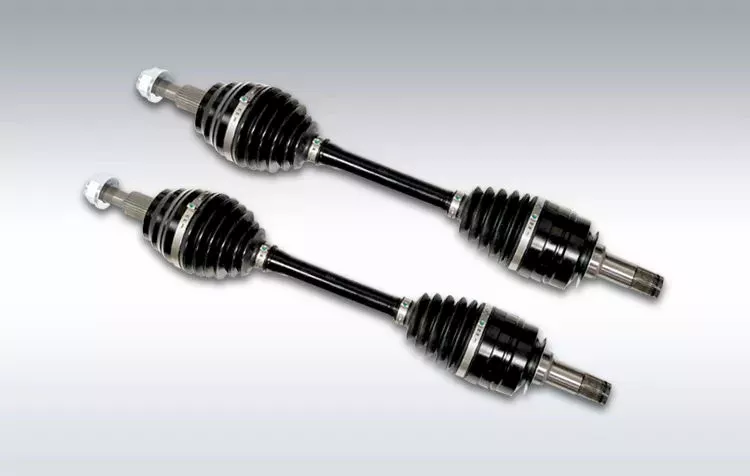
How do manufacturers ensure the compatibility of drive shafts with different equipment?
Manufacturers employ various strategies and processes to ensure the compatibility of drive shafts with different equipment. Compatibility refers to the ability of a drive shaft to effectively integrate and function within a specific piece of equipment or machinery. Manufacturers take into account several factors to ensure compatibility, including dimensional requirements, torque capacity, operating conditions, and specific application needs. Here’s a detailed explanation of how manufacturers ensure the compatibility of drive shafts:
1. Application Analysis:
Manufacturers begin by conducting a thorough analysis of the intended application and equipment requirements. This analysis involves understanding the specific torque and speed demands, operating conditions (such as temperature, vibration levels, and environmental factors), and any unique characteristics or constraints of the equipment. By gaining a comprehensive understanding of the application, manufacturers can tailor the design and specifications of the drive shaft to ensure compatibility.
2. Customization and Design:
Manufacturers often offer customization options to adapt drive shafts to different equipment. This customization involves tailoring the dimensions, materials, joint configurations, and other parameters to match the specific requirements of the equipment. By working closely with the equipment manufacturer or end-user, manufacturers can design drive shafts that align with the equipment’s mechanical interfaces, mounting points, available space, and other constraints. Customization ensures that the drive shaft fits seamlessly into the equipment, promoting compatibility and optimal performance.
3. Torque and Power Capacity:
Drive shaft manufacturers carefully determine the torque and power capacity of their products to ensure compatibility with different equipment. They consider factors such as the maximum torque requirements of the equipment, the expected operating conditions, and the safety margins necessary to withstand transient loads. By engineering drive shafts with appropriate torque ratings and power capacities, manufacturers ensure that the shaft can handle the demands of the equipment without experiencing premature failure or performance issues.
4. Material Selection:
Manufacturers choose materials for drive shafts based on the specific needs of different equipment. Factors such as torque capacity, operating temperature, corrosion resistance, and weight requirements influence material selection. Drive shafts may be made from various materials, including steel, aluminum alloys, or specialized composites, to provide the necessary strength, durability, and performance characteristics. The selected materials ensure compatibility with the equipment’s operating conditions, load requirements, and other environmental factors.
5. Joint Configurations:
Drive shafts incorporate joint configurations, such as universal joints (U-joints) or constant velocity (CV) joints, to accommodate different equipment needs. Manufacturers select and design the appropriate joint configuration based on factors such as operating angles, misalignment tolerances, and the desired level of smooth power transmission. The choice of joint configuration ensures that the drive shaft can effectively transmit power and accommodate the range of motion required by the equipment, promoting compatibility and reliable operation.
6. Quality Control and Testing:
Manufacturers implement stringent quality control processes and testing procedures to verify the compatibility of drive shafts with different equipment. These processes involve conducting dimensional inspections, material testing, torque and stress analysis, and performance testing under simulated operating conditions. By subjecting drive shafts to rigorous quality control measures, manufacturers can ensure that they meet the required specifications and performance criteria, guaranteeing compatibility with the intended equipment.
7. Compliance with Standards:
Manufacturers ensure that their drive shafts comply with relevant industry standards and regulations. Compliance with standards, such as ISO (International Organization for Standardization) or specific industry standards, provides assurance of quality, safety, and compatibility. Adhering to these standards helps manufacturers meet the expectations and requirements of equipment manufacturers and end-users, ensuring that the drive shafts are compatible and can be seamlessly integrated into different equipment.
8. Collaboration and Feedback:
Manufacturers often collaborate closely with equipment manufacturers, OEMs (Original Equipment Manufacturers), or end-users to gather feedback and incorporate their specific requirements into the drive shaft design and manufacturing processes. This collaborative approach ensures that the drive shafts are compatible with the intended equipment and meet the expectations of the end-users. By actively seeking input and feedback, manufacturers can continuously improve their products’ compatibility and performance.
In summary, manufacturers ensure the compatibility of drive shafts with different equipment through a combination of application analysis, customization, torque and power capacity considerations, material selection, joint configurations, quality control and testing, compliance with standards, and collaboration with equipment manufacturers and end-users. These efforts enable manufacturers to design and produce drive shafts that seamlessly integrate with various equipment, ensuring optimal performance, reliability, and compatibility in different applications.
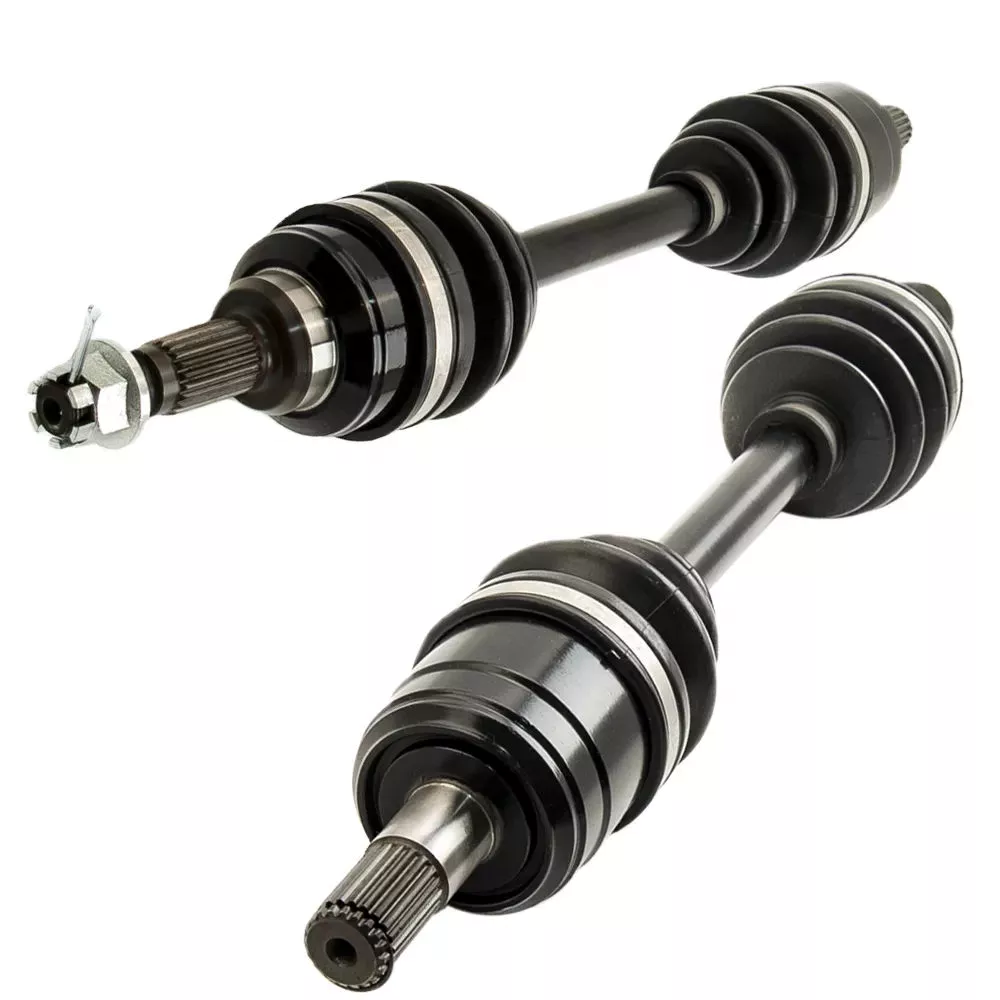
Comment les arbres de transmission gèrent-ils les variations de charge et de vibrations en fonctionnement ?
Les arbres de transmission sont conçus pour supporter les variations de charge et de vibrations en fonctionnement grâce à divers mécanismes et caractéristiques. Ces mécanismes contribuent à assurer une transmission de puissance fluide, à minimiser les vibrations et à préserver l'intégrité structurelle de l'arbre de transmission. Voici une explication détaillée du fonctionnement des arbres de transmission face aux variations de charge et de vibrations :
1. Sélection et conception des matériaux :
Les arbres de transmission sont généralement fabriqués à partir de matériaux à haute résistance et rigidité, tels que les alliages d'acier ou les matériaux composites. Le choix des matériaux et la conception tiennent compte des charges prévues et des conditions de fonctionnement de l'application. Grâce à l'utilisation de matériaux appropriés et à l'optimisation de la conception, les arbres de transmission peuvent supporter les variations de charge attendues sans subir de déformation excessive.
2. Capacité de couple :
Les arbres de transmission sont conçus pour supporter un couple spécifique adapté aux charges prévues. Ce couple tient compte de facteurs tels que la puissance de la source d'entraînement et les besoins en couple des composants entraînés. En choisissant un arbre de transmission doté d'un couple suffisant, on peut absorber les variations de charge sans dépasser ses limites et risquer ainsi une panne ou un dommage.
3. Équilibrage dynamique :
Lors de la fabrication, les arbres de transmission peuvent subir un équilibrage dynamique. Un déséquilibre de l'arbre peut engendrer des vibrations en fonctionnement. Le processus d'équilibrage consiste à ajouter ou retirer stratégiquement des masses afin d'assurer une rotation régulière de l'arbre et de minimiser les vibrations. L'équilibrage dynamique contribue à atténuer les effets des variations de charge et réduit le risque de vibrations excessives.
4. Amortisseurs et contrôle des vibrations :
Les arbres de transmission peuvent intégrer des amortisseurs ou des mécanismes de contrôle des vibrations afin de minimiser davantage ces dernières. Ces dispositifs sont généralement conçus pour absorber ou dissiper les vibrations pouvant résulter de variations de charge ou d'autres facteurs. Les amortisseurs peuvent prendre la forme d'amortisseurs de torsion, d'isolateurs en caoutchouc ou d'autres éléments absorbant les vibrations, placés stratégiquement le long de l'arbre de transmission. En gérant et en atténuant les vibrations, les arbres de transmission garantissent un fonctionnement fluide et améliorent les performances globales du système.
5. Joints homocinétiques :
Les joints homocinétiques sont fréquemment utilisés dans les arbres de transmission pour compenser les variations d'angles de fonctionnement et maintenir une vitesse constante. Ils permettent à l'arbre de transmission de transmettre la puissance même lorsque les composants menant et mené sont inclinés différemment. En compensant ces variations d'angles, les joints homocinétiques contribuent à minimiser l'impact des variations de charge et à réduire les vibrations potentielles dues aux modifications de la géométrie de la transmission.
6. Lubrification et entretien :
Une lubrification adéquate et un entretien régulier sont essentiels pour que les arbres de transmission supportent efficacement les variations de charge et de vibrations. La lubrification contribue à réduire le frottement entre les pièces mobiles, minimisant ainsi l'usure et la production de chaleur. Un entretien régulier, comprenant l'inspection et la lubrification des joints, garantit le maintien de l'arbre de transmission en parfait état, réduisant ainsi le risque de panne ou de dégradation des performances due aux variations de charge.
7. Rigidité structurelle :
Les arbres de transmission sont conçus pour présenter une rigidité structurelle suffisante afin de résister aux forces de flexion et de torsion. Cette rigidité contribue à préserver l'intégrité de l'arbre de transmission face aux variations de charge. En minimisant la déformation et en maintenant son intégrité structurelle, l'arbre de transmission peut transmettre efficacement la puissance et supporter les variations de charge sans compromettre ses performances ni générer de vibrations excessives.
8. Systèmes de contrôle et rétroaction :
Dans certaines applications, les arbres de transmission peuvent être équipés de systèmes de contrôle qui surveillent et ajustent en temps réel des paramètres tels que le couple, la vitesse et les vibrations. Ces systèmes utilisent des capteurs et des mécanismes de rétroaction pour détecter les variations de charge ou de vibrations et effectuer des ajustements en temps réel afin d'optimiser les performances. En gérant activement les variations de charge et les vibrations, les arbres de transmission peuvent s'adapter aux conditions de fonctionnement changeantes et assurer un fonctionnement régulier.
En résumé, les arbres de transmission supportent les variations de charge et de vibrations en fonctionnement grâce à une sélection et une conception rigoureuses des matériaux, à la prise en compte du couple admissible, à un équilibrage dynamique, à l'intégration d'amortisseurs et de mécanismes de contrôle des vibrations, à l'utilisation de joints homocinétiques, à une lubrification et un entretien appropriés, à une rigidité structurelle et, dans certains cas, à des systèmes de contrôle et de rétroaction. L'intégration de ces caractéristiques et mécanismes garantit une transmission de puissance fiable et efficace tout en minimisant l'impact des variations de charge et des vibrations sur les performances globales du système.

Are there variations in drive shaft designs for different types of machinery?
Yes, there are variations in drive shaft designs to cater to the specific requirements of different types of machinery. The design of a drive shaft is influenced by factors such as the application, power transmission needs, space limitations, operating conditions, and the type of driven components. Here’s an explanation of how drive shaft designs can vary for different types of machinery:
1. Automotive Applications:
In the automotive industry, drive shaft designs can vary depending on the vehicle’s configuration. Rear-wheel-drive vehicles typically use a single-piece or two-piece drive shaft, which connects the transmission or transfer case to the rear differential. Front-wheel-drive vehicles often use a different design, employing a drive shaft that combines with the constant velocity (CV) joints to transmit power to the front wheels. All-wheel-drive vehicles may have multiple drive shafts to distribute power to all wheels. The length, diameter, material, and joint types can differ based on the vehicle’s layout and torque requirements.
2. Industrial Machinery:
Drive shaft designs for industrial machinery depend on the specific application and power transmission requirements. In manufacturing machinery, such as conveyors, presses, and rotating equipment, drive shafts are designed to transfer power efficiently within the machine. They may incorporate flexible joints or use a splined or keyed connection to accommodate misalignment or allow for easy disassembly. The dimensions, materials, and reinforcement of the drive shaft are selected based on the torque, speed, and operating conditions of the machinery.
3. Agriculture and Farming:
Agricultural machinery, such as tractors, combines, and harvesters, often requires drive shafts that can handle high torque loads and varying operating angles. These drive shafts are designed to transmit power from the engine to attachments and implements, such as mowers, balers, tillers, and harvesters. They may incorporate telescopic sections to accommodate adjustable lengths, flexible joints to compensate for misalignment during operation, and protective shielding to prevent entanglement with crops or debris.
4. Construction and Heavy Equipment:
Construction and heavy equipment, including excavators, loaders, bulldozers, and cranes, require robust drive shaft designs capable of transmitting power in demanding conditions. These drive shafts often have larger diameters and thicker walls to handle high torque loads. They may incorporate universal joints or CV joints to accommodate operating angles and absorb shocks and vibrations. Drive shafts in this category may also have additional reinforcements to withstand the harsh environments and heavy-duty applications associated with construction and excavation.
5. Marine and Maritime Applications:
Drive shaft designs for marine applications are specifically engineered to withstand the corrosive effects of seawater and the high torque loads encountered in marine propulsion systems. Marine drive shafts are typically made from stainless steel or other corrosion-resistant materials. They may incorporate flexible couplings or dampening devices to reduce vibration and mitigate the effects of misalignment. The design of marine drive shafts also considers factors such as shaft length, diameter, and support bearings to ensure reliable power transmission in marine vessels.
6. Mining and Extraction Equipment:
In the mining industry, drive shafts are used in heavy machinery and equipment such as mining trucks, excavators, and drilling rigs. These drive shafts need to withstand extremely high torque loads and harsh operating conditions. Drive shaft designs for mining applications often feature larger diameters, thicker walls, and specialized materials such as alloy steel or composite materials. They may incorporate universal joints or CV joints to handle operating angles, and they are designed to be resistant to abrasion and wear.
These examples highlight the variations in drive shaft designs for different types of machinery. The design considerations take into account factors such as power requirements, operating conditions, space constraints, alignment needs, and the specific demands of the machinery or industry. By tailoring the drive shaft design to the unique requirements of each application, optimal power transmission efficiency and reliability can be achieved.


editor by CX 2023-12-06























