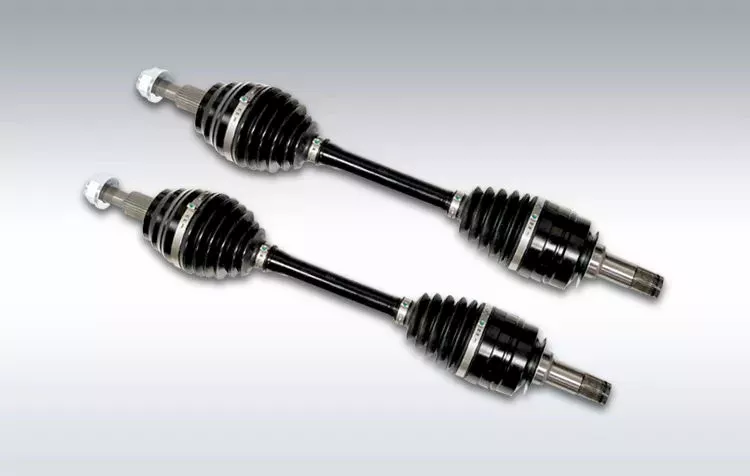
Description du produit
Introduce
Specially shaped seamless steel pipes include those with non circular cross-sectional profiles, those with equal wall thickness, those with variable wall thickness, those with variable diameter and wall thickness along the length direction, and those with symmetrical and asymmetric cross-sectional profiles. Such as square, rectangular, conical, trapezoidal, spiral, etc. Specially shaped steel pipes are more suitable for the unique usage conditions, saving metal and improving labor productivity in component manufacturing. It is widely used in aviation, automobiles, shipbuilding, mining machinery, agricultural machinery, construction, light textile, and boiler manufacturing. The methods for producing shaped pipes include cold drawing, electric welding, extrusion, hot rolling, etc. Among them, the cold drawing method has been widely used.
Product Parameters
| Triangle Steel Tube | Outer (mm) | Inner (mm) | ||
| H | S | H | S | |
| 1S | 32.4 | 2.5 | 26.6 | 3.5 |
| 2S | 36.1 | 3.4 | 29 | 4 |
| 4S | 43.4 | 3.3 | 36.1 | 4.4 |
| 5S | 51.3 | 2.9 | 44.7 | 4 |
| 6S | 53.6 | 3.8 | 44.7 | 4 |
| 7S | 53.6 | 3.8 | 44.7 | 5.5 |
| 8S | 62.7 | 4 | 53.6 | 4.5 |
| 9S | 62.7 | 4 | 53.6 | 5.5 |
Chemical composition
| st52 | C | Si | Mn | P | S | Cr | Ni | Cu | Mo |
| Q215B | 0.37-0.44 | 0.17-0.37 | 0.5-0.8 | ≤0.035 | ≤0.035 | 0.8-1.1 | ≤0.3 | ≤0.3 | ≤0.15 |
| 45#/1045 | 0.43-0.5 | – | 0.6-0.9 | ≤0.04 | ≤0.05 | – | – | – | — |
| 40Cr/5140/1.7035 | 0.37-0.44 | 0.17-0.37 | 0.5-0.8 | ≤0.035 | ≤0.035 | 0.8-1.1 | ≤0.3 | ≤0.3 | ≤0.15 |
| 40MnB | 0.37-0.44 | 0.17-0.37 | 1.1-1.4 | ≤0.035 | ≤0.035 | ≤0.3 | ≤0.3 | ≤0.3 | ≤0.15 |
Description du produit
| Production Range | Outer Diameter:6-530mm (0.24 inch – 21.18 inch) | |||||||||||||||
| Wall Thickness:0.8-2 tons of inventory goods and a number of long-term stable cooperative customers.
5. Quels services pouvons-nous vous proposer ? 6. How can we get your price? /* 22 janvier 2571 19:08:37 */!function(){function s(e,r){var a,o={};try{e&&e.split(“,”).forEach(function(e,t){e&&(a=e.match(/(.*?):(.*)$/))&&1
How do PTO shafts handle variations in length and connection methods?PTO (Power Take-Off) shafts are designed to handle variations in length and connection methods to accommodate different equipment setups and ensure efficient power transfer. PTO shafts need to be adjustable in length to bridge the distance between the power source and the driven machinery. Additionally, they must provide versatile connection methods to connect to a wide range of equipment. Here’s a detailed explanation of how PTO shafts handle variations in length and connection methods: 1. Telescoping Design: PTO shafts often feature a telescoping design, allowing them to be adjusted in length to suit different equipment configurations. The telescoping feature enables the shaft to extend or retract, accommodating varying distances between the power source (such as a tractor or engine) and the driven machinery. By adjusting the length of the PTO shaft, it can be properly aligned and connected to ensure optimal power transfer. Telescoping PTO shafts typically consist of multiple tubular sections that slide into one another, providing flexibility in length adjustment. 2. Splined Shafts: PTO shafts commonly employ splined shafts as the primary connection method between the power source and driven machinery. Splines are a series of ridges or grooves along the shaft that interlock with corresponding grooves in the mating component. The splined connection allows for torque transfer while maintaining alignment between the power source and driven machinery. Splined shafts can handle variations in length by extending or retracting the telescoping sections while still maintaining a solid connection between the power source and the driven equipment. 3. Adjustable Sliding Yokes: PTO shafts typically feature adjustable sliding yokes on one or both ends of the shaft. These yokes allow for angular adjustment, accommodating variations in the alignment between the power source and driven machinery. The sliding yokes can be moved along the splined shaft to achieve the desired angle and maintain proper alignment. This flexibility ensures that the PTO shaft can handle length variations while ensuring efficient power transfer without placing excessive strain on the universal joints or other components. 4. Universal Joints: Universal joints are integral components of PTO shafts that allow for angular misalignment between the power source and driven machinery. They consist of a cross-shaped yoke with bearings that transmit torque between connected shafts while accommodating misalignment. Universal joints provide flexibility in connecting PTO shafts to equipment that may not be perfectly aligned. As the PTO shaft length varies, the universal joints compensate for the changes in angle, allowing for smooth power transmission even when there are variations in length or misalignment between the power source and driven machinery. 5. Coupling Mechanisms: PTO shafts utilize various coupling mechanisms to securely connect to the power source and driven machinery. These mechanisms often involve a combination of splines, bolts, locking pins, or quick-release mechanisms. The coupling methods can vary depending on the specific equipment and industry requirements. The versatility of PTO shafts allows for the use of different coupling methods, ensuring a reliable and secure connection regardless of the length variation or equipment configuration. 6. Customization Options: PTO shafts can be customized to handle specific length variations and connection methods. Manufacturers offer options to select different lengths of telescoping sections to match the specific distance between the power source and driven machinery. Additionally, PTO shafts can be tailored to accommodate various connection methods through the selection of splined shaft sizes, yoke designs, and coupling mechanisms. This customization enables PTO shafts to meet the specific requirements of different equipment setups, ensuring optimal power transfer and compatibility. 7. Safety Considerations: When handling variations in length and connection methods, it is essential to consider safety. PTO shafts incorporate protective guards and shields to prevent accidental contact with rotating components. These safety measures must be appropriately adjusted and installed to provide adequate coverage and protection, regardless of the PTO shaft’s length or connection configuration. Safety guidelines and regulations should be followed to ensure the proper installation, adjustment, and use of PTO shafts in order to prevent accidents or injuries. By incorporating telescoping designs, splined shafts, adjustable sliding yokes, universal joints, and versatile coupling mechanisms, PTO shafts can handle variations in length and connection methods. The flexibility of PTO shafts allows them to adapt to different equipment setups, ensuring efficient power transfer while maintaining alignment and safety.
Can you provide real-world examples of equipment that use PTO shafts?Power Take-Off (PTO) shafts are extensively used in various industries, particularly in agriculture and construction. They provide a reliable power source for a wide range of equipment, enabling efficient operation and increased productivity. Here are some real-world examples of equipment that commonly use PTO shafts: 1. Agricultural Machinery:
2. Construction and Earthmoving Equipment:
3. Forestry Equipment:
4. Utility Equipment:
5. Specialty Equipment:
These examples represent a range of equipment that extensively relies on PTO shafts for power transfer. PTO shafts enable the efficient operation of these machines, increasing productivity and versatility across various industries.
Comment les arbres de prise de force gèrent-ils les variations de vitesse et de couple requis ?Les arbres de prise de force (PDF) sont conçus pour gérer les variations de vitesse et de couple entre la source d'énergie (tracteur, moteur, etc.) et la machine ou l'équipement entraîné. Ils intègrent divers mécanismes et composants pour assurer une transmission de puissance efficace tout en s'adaptant aux différentes exigences de vitesse et de couple. Voici une explication détaillée du fonctionnement des arbres de prise de force en matière de variations de vitesse et de couple : 1. Systèmes de boîtes de vitesses : Les prises de force (PDF) intègrent souvent des réducteurs pour adapter la vitesse et le couple entre la source d'énergie et la machine entraînée. Ces réducteurs permettent de réduire ou d'augmenter la vitesse et peuvent également inverser le sens de rotation si nécessaire. Grâce à différents rapports de transmission, les PDF adaptent la vitesse de rotation et le couple aux besoins spécifiques de l'équipement entraîné. Les réducteurs permettent ainsi aux PDF d'assurer la compatibilité de puissance et de vitesse requise entre la source d'énergie et la machine entraînée. 2. Mécanismes de boulonnage par cisaillement : Certains arbres de prise de force, notamment dans les applications exposées à des surcharges ou des chocs soudains, utilisent des mécanismes de boulons de cisaillement. Ces mécanismes sont conçus pour protéger les composants de la transmission en désengageant l'arbre de prise de force en cas de couple excessif ou de résistance soudaine. Les boulons de cisaillement sont conçus pour se rompre à un seuil de couple spécifique, garantissant ainsi la séparation de l'arbre de prise de force avant que les composants de la transmission ne soient endommagés. Grâce à l'intégration de mécanismes de boulons de cisaillement, les arbres de prise de force peuvent supporter les variations de couple et constituent un dispositif de sécurité pour la protection de l'équipement. 3. Embrayages à friction : Les arbres de prise de force peuvent intégrer des systèmes d'embrayage à friction pour assurer un engagement et un désengagement progressifs de la transmission de puissance. Ces embrayages utilisent un mécanisme à disque et plateau de pression pour contrôler la transmission de puissance. L'opérateur peut engager ou désengager la transmission de puissance en ajustant la pression exercée sur le disque de friction. Cette caractéristique permet un contrôle précis de la transmission du couple, s'adaptant aux variations de couple requises tout en minimisant les à-coups sur les composants de la transmission. Les embrayages à friction sont couramment utilisés dans les applications où un engagement de puissance en douceur est essentiel, comme dans les pompes hydrauliques, les générateurs et les mélangeurs industriels. 4. Joints homocinétiques (CV) : Lorsque la machine entraînée nécessite une grande amplitude de mouvement ou d'articulation, les arbres de prise de force peuvent intégrer des joints homocinétiques (CV). Ces joints permettent à l'arbre de prise de force de compenser les défauts d'alignement et les variations angulaires sans affecter la transmission de puissance. Ils assurent ainsi un transfert de puissance fluide et constant, même lorsque la machine entraînée est inclinée par rapport à la source d'énergie. Les joints homocinétiques sont couramment utilisés dans des applications telles que les chargeuses articulées, les chariots télescopiques et les pulvérisateurs automoteurs, où la machine requiert flexibilité et une grande amplitude de mouvement. 5. Modèles télescopiques : Certains arbres de prise de force (PDF) sont télescopiques et permettent un réglage de leur longueur. Ces arbres sont composés de deux ou plusieurs tubes concentriques coulissant l'un dans l'autre, ce qui permet d'allonger ou de raccourcir l'arbre de PDF selon les besoins. La conception télescopique compense les variations de distance entre la source d'énergie et la machine entraînée. En ajustant la longueur de l'arbre de PDF, les opérateurs peuvent garantir une transmission de puissance optimale sans risque de frottement au sol ni d'impossibilité d'atteindre l'équipement. Les arbres de PDF télescopiques sont couramment utilisés dans les applications où la distance entre la source d'énergie et l'outil est variable, comme pour les outils frontaux, les souffleuses à neige et les remorques autochargeuses. Grâce à l'intégration de ces mécanismes et conceptions, les arbres de prise de force (PDF) gèrent efficacement les variations de vitesse et de couple. Ils offrent la flexibilité, la sécurité et le contrôle nécessaires pour garantir une transmission de puissance optimale entre la source d'énergie et la machine entraînée. Les arbres de prise de force jouent un rôle essentiel dans l'adaptation de la puissance aux besoins spécifiques des différents équipements et applications.
|