
Tuotekuvaus
custom large aisi 4340 cast iron long mild steel rolling mill transmission propeller pto drive shaft
The drive shaft and the passive shaft shall be a pair of directly adjacent shafts connected by transmission pairs (gears, pulleys, sprockets, etc.). driving shaft is closer to the power source .on the contrary, the passive shaft is similar to the working shaft, it is mainly used in lathes, milling machines, fans, conveyors, injection molding machines, processing centers, steam turbines, drilling machines, hydraulic turbines, machinery industry, etc.
We are manufacture main shaft,transmission shaft, rotor shaft,propeller shaft,wind power shaft,passive shaft, support roller shaft,gear shaft,eccentric shaft,custom and oem are accepted.
|
Tuotteen nimi |
OEM machining forged 42CrMo steel thread axis shaft |
||
|
Materiaali |
ZG45,ZG42CrMo,35CrMo,ect |
||
|
Structure |
Casting or forging |
||
|
Käsitellä |
Lathing, milling,grinding |
||
|
Max.diameter |
2000mm |
||
|
Max.length |
8000mm |
||
|
Max.tolerance |
±0.3 |
||
|
Type |
According to drawings |
||
|
Paketti |
Seaworthy packing |
||
|
Delivery time |
15-45 days |
||
|
Sertifiointi |
SGS,ISO |
||
process equipment list
| equipment | process part size | määrä | model |
| gantry milling machine | 6000*2300*1600 | 1 | BX2571 |
| gantry milling machine | 3000*1200*800 | 1 | XQ2012 |
| CNC centre | 1000*600 | 1 | 1060 |
| CNC centre | 1300*700 | 1 | 1370 |
| CNC centre | 4300*2700 | 1 | 4370 |
| vertical milling machine | 1500 | 1 | X53T |
| gantry boring and milling | 1800*4000 | 1 | B**2018 |
| horizontal milling machine | 960*1200*1200 | 1 | TP *611B |
| horizontal lathe | dia300*3000 | 4 | CW6163E |
| saw machine | dia5—300 | 4 | |
| grinding machine | 1000*300 | 1 | M71304 |
| grinding macnine for outer dia | 1500*3200 | 1 | M1332B |
| gantry CNC centre | 4000*2700 | 1 | YR4571 |
| common lathe | dia20–1280,L 20–5000 | 6 | |
| common drilling machine | dia2–80 | 6 | |
| plasma cut machine | 4000*12000 | 1 | SXL-400 |
| arc welding machine | 2 | 500-2 | |
| co2 welding machine | 14 | 350 500 | |
| other common machine | common milling ,lathe , driling and milling machine etc | ||
Usein kysytyt kysymykset
Q1: Are you a factory or trading company?
A:We are a factory and have more years manufacture and sales experience.
Q2: What is your sample policy?
A:We can supply the sample if we have , but the customers have to pay the sample cost and the courier cost.If sample quantity is more than our regular one, we will extra collect sample cost.
Q3: Can you produce according to the samples?
A:Yes, we can produce by your samples or technical drawings. We can build the molds.
Q4: What’s your delivery time?
A:For regular products, we keep them in stock. The specific delivery time depends on the items and the quantity of your order,usually15-20 days
K5: Mitkä ovat maksuehtosi?
A:T/T 30% as deposit, and 70% before delivery.
Q6:Do you test all your goods before delivery?
A:Yes, we have 100% test before delivery.
| Materiaali: | hiiliteräs |
|---|---|
| Load: | Vetoakseli |
| Stiffness & Flexibility: | Stiffness / Rigid Axle |
| Journal Diameter Dimensional Accuracy: | IT6-IT9 |
| Axis Shape: | Straight Shaft |
| Shaft Shape: | Stepped Shaft |
| Samples: |
US$ 2000/Piece
1 Piece(Min.Order) | |
|---|
| Mukauttaminen: |
Saatavilla
| Mukautettu pyyntö |
|---|
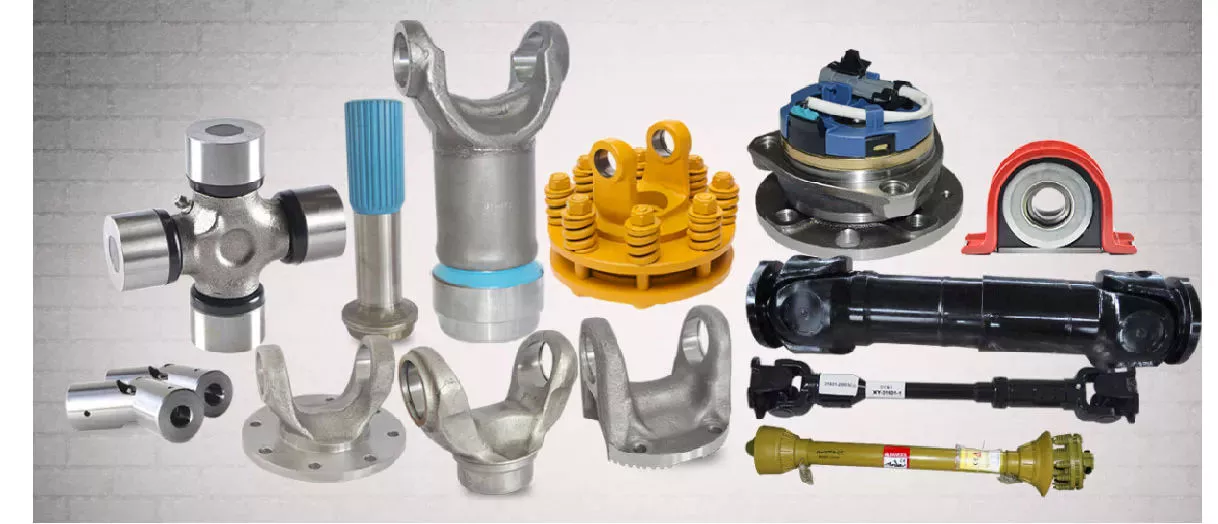
Are there variations in PTO shaft designs for different types of machinery?
Yes, there are variations in PTO (Power Take-Off) shaft designs to accommodate the specific requirements of different types of machinery. PTO shafts are highly versatile and adaptable components used to transfer power from a power source, such as a tractor or engine, to driven machinery or equipment. The design variations in PTO shafts are necessary to ensure compatibility, efficiency, and safety in various applications. Here’s a detailed explanation of the different PTO shaft designs for different types of machinery:
1. Standard PTO Shafts: Standard PTO shafts are the most common design and are widely used in a variety of applications. They typically consist of a solid steel shaft with a universal joint at each end. These universal joints allow for angular misalignment between the power source and the driven machinery. Standard PTO shafts are suitable for applications where the distance between the power source and the driven machinery remains relatively fixed. They are commonly used in agricultural implements, such as mowers, balers, tillers, and seeders, as well as in industrial applications.
2. Telescopic PTO Shafts: Telescopic PTO shafts feature a telescoping design that allows for length adjustment. These shafts consist of two or more concentric shafts that can slide within each other. Telescopic PTO shafts are beneficial in applications where the distance between the power source and the driven machinery varies. By adjusting the length of the shaft, operators can ensure proper power transmission without the risk of the shaft dragging on the ground or being too short to reach the equipment. Telescopic PTO shafts are commonly used in front-mounted implements, snow blowers, self-loading wagons, and other applications where the distance between the power source and the implement changes.
3. CV (Constant Velocity) PTO Shafts: CV PTO shafts incorporate Constant Velocity joints to accommodate misalignment and angular variations. These joints maintain a constant speed and torque transfer even when the driven machinery is at an angle relative to the power source. CV PTO shafts are beneficial in applications where the driven machinery requires flexibility and a wide range of movement. They are commonly used in articulated loaders, telescopic handlers, self-propelled sprayers, and other equipment that requires continuous power transmission while operating at various angles.
4. Gearbox Driven PTO Shafts: Some machinery requires specific speed or torque ratios between the power source and the driven equipment. In such cases, PTO shafts may incorporate gearbox systems. Gearbox driven PTO shafts allow for speed reduction or increase and can change the rotational direction if necessary. The gear ratios in the gearbox can be adjusted to match the speed and torque requirements of the driven machinery. These PTO shafts are commonly used in applications where the power source operates at a different speed or torque level than the equipment it drives, such as in certain industrial manufacturing processes and specialized machinery.
5. High-Torque PTO Shafts: Some heavy-duty machinery requires high torque levels for power transmission. High-torque PTO shafts are designed to handle these demanding applications. They are constructed with reinforced components, including larger diameter shafts and heavier-duty universal joints, to withstand the increased torque requirements. High-torque PTO shafts are commonly used in equipment such as wood chippers, crushers, and heavy-duty agricultural implements that require substantial power and torque for their operation.
6. Safety PTO Shafts: Safety is a crucial consideration when using PTO shafts. Safety PTO shafts incorporate mechanisms to reduce the risk of accidents and injuries. One common safety feature is the use of protective guards that cover the rotating shaft to prevent accidental contact. These guards are typically made of metal or plastic and are designed to shield the rotating components while allowing the necessary movement for power transmission. Safety PTO shafts are used in various applications where the risk of entanglement or accidental contact with the rotating shaft is high, such as in grass mowers, rotary cutters, and other equipment used in landscaping and agriculture.
These are some of the key variations in PTO shaft designs for different types of machinery. The specific design used depends on factors such as the application requirements, power source characteristics, torque levels, movement flexibility, and safety considerations. PTO shaft manufacturers offer a range of designs to ensure compatibility and efficient power transmission in diverse industries and applications.

Are there any limitations or disadvantages associated with PTO shafts?
While PTO (Power Take-Off) shafts offer numerous advantages in terms of power transfer and versatility, they also have certain limitations and disadvantages. It’s important to consider these factors when using PTO shafts to ensure safe and efficient operation. Here’s a detailed explanation of some limitations and disadvantages associated with PTO shafts:
1. Safety Hazards: One of the primary concerns with PTO shafts is the potential for safety hazards. PTO shafts rotate at high speeds and can pose a significant risk if not properly guarded or handled. Accidental contact with an exposed or inadequately shielded PTO shaft can result in severe injuries, including entanglement, amputation, or even fatalities. It is crucial to follow safety guidelines, implement proper guarding, and ensure that operators are well-trained on safe handling practices to mitigate these risks.
2. Maintenance and Lubrication: PTO shafts require regular maintenance and lubrication to ensure optimal performance and longevity. The moving parts, such as universal joints and splines, need to be inspected, cleaned, and lubricated at recommended intervals. Neglecting maintenance can lead to premature wear, decreased efficiency, and potential failures. Proper maintenance practices, including regular inspections and timely lubrication, are essential to mitigate these issues.
3. Alignment and Angles: PTO shafts rely on proper alignment and angles to ensure efficient power transfer. Misalignment or excessive angles between the power source and driven machinery can cause increased wear and strain on the components, leading to premature failure. Ensuring proper alignment and angle adjustment, using adjustable sliding yokes or other means, is important to prevent excessive stress on the PTO shaft and associated equipment.
4. Length Limitations: PTO shafts have limitations on their maximum and minimum length due to engineering constraints. The telescoping design allows for some adjustment, but there is a practical limit to how much the shaft can extend or retract. If the distance between the power source and driven machinery exceeds the maximum or falls below the minimum length of the PTO shaft, alternative solutions or modifications may be required. In some cases, additional components such as drive shaft extensions or gearboxes may be necessary to bridge the distance.
5. Compatibility: While manufacturers strive to ensure compatibility, there can still be challenges in finding the right PTO shaft for specific equipment configurations. Equipment may have unique requirements in terms of spline sizes, torque ratings, or connection methods that may not be readily available or compatible with off-the-shelf PTO shafts. Customization may be required to address these compatibility issues, which can result in increased costs or lead times.
6. Noise and Vibrations: PTO shafts in operation can generate significant noise and vibrations, especially at higher speeds. This can be a nuisance for operators and may require additional measures to reduce noise levels or dampen vibrations. Excessive vibrations can also affect the overall performance and lifespan of the PTO shaft and connected equipment. Implementing vibration dampeners or using flexible couplings can help mitigate these issues.
7. Power Limits: PTO shafts have specific power limits based on their design, materials, and components. Exceeding these power limits can lead to premature wear, component failures, or even shaft breakage. It is crucial to understand and adhere to the recommended power ratings for PTO shafts to ensure safe and reliable operation. In some cases, upgrading to a higher-capacity PTO shaft or implementing additional power transmission components may be necessary to accommodate higher power requirements.
8. Complex Installation and Removal: Installing and removing PTO shafts can be a complex process, especially in confined spaces or when dealing with heavy equipment. It may require aligning splines, engaging couplings, and securing locking mechanisms. Improper installation or removal techniques can lead to damage to the shaft or associated equipment. Proper training, handling equipment, and following manufacturer guidelines are essential to simplify and ensure the safe installation and removal of PTO shafts.
Despite these limitations and disadvantages, PTO shafts remain widely used and valuable components for power transfer in various industries. By addressing these considerations and implementing proper safety measures, maintenance practices, and alignment procedures, the potential drawbacks of PTO shafts can be effectively mitigated, allowing for safe and efficient operation.

Miten nivelakselit edistävät voimansiirtoa traktoreista työkoneisiin?
Voimanottoakselit ovat ratkaisevassa roolissa voiman siirtämisessä traktoreista työkoneisiin maatalous- ja teollisuusympäristöissä. Ne tarjoavat luotettavan ja tehokkaan voimansiirtotavan, jonka avulla traktorit voivat käyttää erilaisia työkoneita ja suorittaa monenlaisia tehtäviä. Tässä on yksityiskohtainen selitys siitä, miten voimanottoakselit edistävät voimansiirtoa traktoreista työkoneisiin:
Virtalähde: Traktoreissa on tehokkaat moottorit, jotka on suunniteltu tuottamaan huomattavia määriä mekaanista tehoa. Tätä tehoa käytetään traktorin pyörien käyttämiseen ja hydraulijärjestelmien käyttämiseen sekä työkoneiden kiinnittämiseen voimanlähteenä nivelakselin kautta. Nivelakseli kytketään tyypillisesti traktorin takaosaan tai sivuun, missä voimanottomekanismi sijaitsee. Voimanotto saa tehon suoraan traktorin moottorista tai vaihteistosta, mikä mahdollistaa tehokkaan voimansiirron nivelakselille.
Voimanottoakselin rakenne: Nivelakselit on suunniteltu voimansiirron osiksi, jotka välittävät pyörimisvoimaa ja vääntömomenttia traktorin voimanotosta työkoneeseen. Ne koostuvat ontosta metalliputkesta, jonka molemmissa päissä on nivelet. Nivelet kompensoivat kulmapoikkeamia ja mahdollistavat voimansiirron voimanottoakselin kautta, vaikka traktori ja työkone eivät olisi täysin linjassa. Nivelakseli on myös varustettu suojakilvellä, joka estää vahingossa tapahtuvan kosketuksen pyörivään akseliin ja varmistaa käyttäjän turvallisuuden käytön aikana.
Voimanottoakselin kytkentä: Voiman siirtämiseksi traktorista työkoneeseen on kytkettävä voimanottoakseli päälle. Traktoreissa on voimanoton kytkinmekanismi, jonka avulla käyttäjä voi kytkeä voimanottoakselin päälle tai pois tarpeen mukaan. Kun voimanoton kytkin on kytkettynä, voima virtaa traktorin moottorista voimanottomekanismin kautta voimanottoakseliin. Tämä pyörimisvoima välittyy sitten voimanottoakselin kautta työkoneeseen, joka käyttää sen työosia.
Pyörivä voimansiirto: Traktorin moottorin tuottama pyörimisvoima siirretään voimanottoakselille voimanottomekanismin kautta. Voimanottoon suoraan kytketty voimanottoakseli pyörii samalla nopeudella kuin moottori. Tämä pyörimisvoima välittyy sitten voimanottoakselilta työkoneen voimansiirtoon tai vaihteistoon. Työkoneen voimansiirto puolestaan jakaa voiman työkoneen työosille, kuten terille, kairoille tai pumpuille, jolloin ne voivat suorittaa tehtävänsä.
Nopeuden ja tehon vastaavuus: Voimanottoakselit on suunniteltu vastaamaan erilaisten työkoneiden pyörimisnopeutta ja tehovaatimuksia. Traktoreissa on usein useita voimanottoakselin nopeusasetuksia, joiden avulla käyttäjät voivat valita sopivan nopeuden käytettävälle työkoneelle. Eri työkoneet saattavat vaatia eri pyörimisnopeuksia toimiakseen optimaalisesti, ja voimanottoakseli mahdollistaa helpon säätämisen näiden vaatimusten mukaisesti. Lisäksi traktorin moottorin tuottama teho välittyy voimanottoakselin kautta, mikä tarjoaa tarvittavan vääntömomentin työkoneen työosien tehokkaaseen käyttämiseen.
Monipuolisuus ja tehokkuus: Nivelakselit tarjoavat merkittävää monipuolisuutta ja tehokkuutta maatalous- ja teollisuuskäytössä. Niiden avulla traktorit voivat käyttää monenlaisia työkoneita, kuten ruohonleikkureita, paalaimia, jyrsimiä, ruiskuja ja viljankuljettimia. Liittämällä työkoneet suoraan traktorin virtalähteeseen kuljettajat voivat nopeasti vaihtaa tehtävien välillä ilman erillisiä generaattoreita tai moottoreita. Tämä monipuolisuus ja tehokkuus virtaviivaistavat työnkulkua, vähentävät kustannuksia ja lisäävät kokonaistuottavuutta maatalous- ja teollisuusympäristöissä.
Turvallisuusnäkökohdat: Vaikka nivelakselit ovat välttämättömiä voimansiirrolle, ne voivat aiheuttaa turvallisuusriskejä, jos niitä käsitellään väärin. Pyörivä akseli ja murrosnivelet voivat aiheuttaa vakavia vammoja, jos käyttäjät joutuvat kosketuksiin niiden kanssa käytön aikana. Siksi nivelakseleissa on suojalevyjä tahattoman kosketuksen estämiseksi. Käyttäjän on aina varmistettava, että suojalevyt ovat paikoillaan ja kiinnitettyinä ennen nivelakselin kytkemistä. Asianmukainen koulutus, turvallisuusohjeiden noudattaminen sekä nivelakseleiden ja niihin liittyvien turvaominaisuuksien säännöllinen huolto ovat ratkaisevan tärkeitä turvallisen käytön varmistamiseksi.
Yhteenvetona voidaan todeta, että nivelakselit ovat elintärkeitä osia, jotka mahdollistavat voimansiirron traktoreista työkoneisiin maatalous- ja teollisuussovelluksissa. Ne tarjoavat luotettavan ja tehokkaan voimansiirtotavan, jonka avulla traktorit voivat käyttää erilaisia työkoneita ja suorittaa monenlaisia tehtäviä. Kytkemällä voimanottoakselin kytkimen ja siirtämällä pyörimisvoimaa voimanottoakselin kautta traktorit käyttävät työkoneiden työosia, mikä tarjoaa monipuolisuutta, tehokkuutta ja tuottavuutta maatalous- ja teollisuuskäytössä.


editor by CX 2023-09-15























