
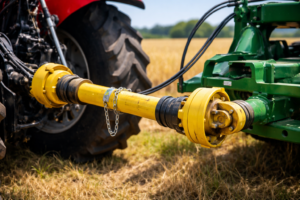
 In the rapidly evolving fields of automation and robotics, industrial driveshafts play a crucial role in ensuring smooth power transmission, precise motion, and operational efficiency. Often overlooked in discussions of robotic systems, these components are the unsung heroes connecting motors and actuators, enabling a wide range of applications, from high-speed assembly lines to complex surgical robots. Located in St Edmunds, Bury, Suffolk, UK (IP32 7LX), pto-drive-shafts.com Ltd. specializes in high-quality driveshafts to meet the demanding application requirements of automation and robotics. With decades of engineering innovation experience, we provide solutions that meet the stringent demands of modern industrial environments. Whether you need factory automation drives or precision robot joints, our driveshafts utilize advanced materials and designs for superior performance. For customized solutions to enhance your system performance, please contact us at [email protected]
Understanding the Fundamentals of Drive Shafts in Automation
Driveshafts, also known as universal joints or propeller shafts in industrial applications, are mechanical components used to transmit torque and rotation between misaligned shafts. In automation and robotics, due to the prevalence of requirements such as space constraints, high-speed operation, and precise alignment, these shafts must possess exceptional durability, minimal backlash, and resistance to environmental factors. Unlike traditional automotive applications, robotic driveshafts typically operate in cleanrooms, high-vibration environments, or under extreme loads, thus requiring specialized design.
The core principle of robotic driveshafts is the universal joint (U-joint) mechanism, which allows for angular misalignment while maintaining a constant speed transmission. In more advanced systems, constant velocity joints (CV joints) or double universal joint structures are used to eliminate speed fluctuations. For example, in automated guided vehicles (AGVs) used in warehouses, driveshafts must be able to withstand dynamic loads while ensuring smooth operation. Our team at UK pto-drive-shafts.com Co., Ltd. has designed driveshafts that can be seamlessly integrated with such systems, reducing downtime and increasing productivity. Key challenges in this field include: minimizing weight to improve energy efficiency; achieving zero or near-zero backlash to meet the demands of precision operations; and adopting lubrication-free technologies to meet hygiene standards in industries such as pharmaceuticals. With the increasing prevalence of automation globally, drive shafts must also adapt to various international standards, such as those of the German Engineering Federation (VDMA) or the Japan Machine Tool Builders’ Association (JMTBA), which emphasize safety and reliability.
Factory Automation Transmission: High-Precision Solutions
Factory automation drives are one of the most critical applications of industrial drive shafts, and their reliability directly impacts production efficiency. For example, in automated storage and retrieval systems (AS/RS), drive shafts connect motors to stacker cranes, which operate at speeds up to 240 m/min and accelerations exceeding 1.0 m/s². In this context, high-precision, zero-backlash needle roller universal joints are essential, preventing any backlash that could lead to misalignment or system failure.
These needle roller universal joints utilize densely packed needles to evenly distribute the load, achieving a backlash as low as 0.01 degrees. This precision is crucial in scenarios such as automated painting production lines, where robots must apply coatings with micron-level accuracy. Drawing inspiration from real-world applications such as KUKA rear axle drive shafts used in automated painting, our drive shafts employ similar principles to ensure synchronized transport and precise positioning.
In these applications, lightweight materials such as aluminum alloys or engineering plastics are increasingly favored. Aluminum’s strength-to-weight ratio is superior to steel, reducing inertia and thus accelerating the response speed of robotic arms. For example, in a high-speed Delta robot capable of performing up to 150 grasping operations per minute, lightweight drive shafts can maintain structural integrity under cyclic loads while minimizing energy consumption.
Lifetime lubrication or solid lubricant coatings further enhance the continuous operation performance of these shafts. Solid lubricants, such as polytetrafluoroethylene (PTFE) or molybdenum disulfide (MoS2), provide dry film protection, requiring no regular maintenance and ideal for sealed environments. Modular quick-change designs from pto-drive-shafts.com Ltd. in the UK enable rapid replacement without interrupting the production line, and their keyway or spline interfaces ensure plug-and-play functionality.
For example, consider a typical automated storage and retrieval system (AS/RS) stacker crane: the drive shaft must transmit torque across long spans, typically exceeding 40 meters vertically. Parameters such as torsional stiffness (in Nm/degree) and critical speed (to avoid resonance) are crucial. Our shafts are engineered to achieve torsional stiffness up to 5000 Nm/degree and critical speeds exceeding 3000 rpm, and are customized using finite element analysis (FEA) to match specific loads.
In terms of technical parameters, factory automation drive shafts typically include: 1. Torque capacity: Up to 18,800 kN·m for heavy-duty systems. 2. Angular deviation: 4-15 degrees. 3. Operating temperature: -40°C to 90°C. 4. Material: 42CrMo4 or AISI 316L stainless steel with excellent corrosion resistance. 5. Backlash: Zero or near-zero backlash achieved through precision machining. 6. Weight: 30% reduction through composite materials. 7. Lubrication: Solid coating extends service life by 1.4-1.7 times. 8. Modular length: Adjustable from 500mm to 3000mm. 9. Vibration reduction: Integrated dampers reduce noise. 10. Safety factor: Overload safety factor ≥1.5. These specifications ensure optimal performance in dynamic environments.
Case studies from global markets highlight the effectiveness of these designs. In the German automotive industry, driveshafts using zero-backlash joints have reduced defect rates on assembly lines by 20%. Similarly, in Japan’s precision manufacturing industry, lightweight plastic shafts have improved the efficiency of robots in electronic assembly. UK-based pto-drive-shafts.com Ltd. caters to these trends, offering customized options compliant with DIN and ISO standards.
Furthermore, integrated sensors for real-time monitoring are emerging. Smart driveshafts equipped with vibration and torque sensors enable predictive maintenance, preventing failures in automated warehouses. This IoT compatibility makes our driveshafts a future-oriented Industry 4.0 solution.
Advanced Materials and Coatings in Factory Automation
In-depth analysis reveals that material selection significantly impacts driveshaft performance. Engineering plastics, such as PEEK or nylon composites, offer excellent fatigue resistance and a low coefficient of friction, making them suitable for high-cycle operation in conveyor systems. These materials can withstand up to 10^7 cycles without performance degradation, far exceeding conventional metals in some applications.
Solid lubricant coatings, such as molybdenum disulfide (MoS2), form a low-shear film that can reduce wear by up to 80% under dry conditions. In food processing automation, where lubricants can contaminate products, these coatings ensure compliance with FDA standards. Our R&D team at pto-drive-shafts.com Ltd. in the UK has developed proprietary coatings that extend maintenance intervals to over 50,000 hours.
Modal design facilitates scalability. Quick-change mechanisms using tapered clamps or pull rings allow technicians to replace shafts within 5 minutes, minimizing downtime costs—which can exceed £10,000 per hour in large plants.
From a global perspective, regional differences also influence design. In China, due to the massive scale of manufacturing, drive shafts must be able to withstand mass production; while in the United States, the focus is more on the robustness and durability of drive shafts under various climatic conditions. Our manufacturing facility in the UK ensures the adaptability of our drive shafts, and all drive shafts are tested to ASTM and BS standards.
Precision Robot Joints: Achieving Near-Zero Backlash
Precision robot joints require drive axes with near-zero backlash, constant speed transmission, and reliable contamination-resistant seals. In collaborative robots (cobots) or surgical arms, even minute backlash can affect precision, leading to errors in tasks such as welding or microsurgery.
Near-zero backlash can be achieved through advanced designs such as double universal joints or constant velocity ball cages. Double universal joints (also known as Cardin joints) use two yokes with a 90-degree phase difference to compensate for speed variations, ensuring smooth rotation over angles up to 45 degrees. Constant velocity ball cages, similar to constant velocity joints in automobiles, use balls rolling within grooves to achieve true constant speed, making them ideal for multi-axis robots.
Lubrication of these joints typically relies on solid lubricating films of polytetrafluoroethylene (PTFE) or molybdenum disulfide (MoS2), or fully sealed devices with lifetime grease. PTFE has a coefficient of friction as low as 0.05, preventing heat buildup even at high speeds. The sealed design prevents dust or liquid from entering, which is crucial for cleanroom environments that meet ISO 14644 standards.
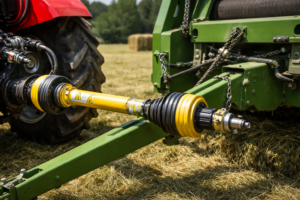
Ultra-high precision assembly tolerances are achieved to 0.001 mm through CNC machining and laser alignment. In humanoid robots (such as those developed by Boston Dynamics), drive axes must mimic the flexibility of human joints while maintaining rigidity under load.
Technical parameters of precision robot joints include: 1. Backlash: Less than 0.005 arcminutes. 2. Torque range: 10-5000 Nm. 3. Rotation speed: Up to 6000 rpm. 4. Misalignment compensation: Up to 30 degrees. 5. Material: Carbon fiber composite material for weight reduction. 6. Lubrication life: >1 million cycles. 7. Protection rating: IP67 for sealed units. 8. Coefficient of thermal expansion: Matched to the robot frame. 9. Fatigue strength: >10^6 cycles under rated load. 10. Integration: Compatible with harmonic drives or cycloidal gears. These characteristics ensure reliability in demanding tasks.
One noteworthy application is the use of flexible axis-based teleactulous actuators, as presented in a recent paper, which achieve high torque density (95 Nm) at the joint while maintaining remote motor connectivity. This reduces joint weight and improves the flexibility of exoskeletons or space robots.
Precision shafts from pto-drive-shafts.com Ltd. in the UK incorporate these characteristics and feature a custom ball cage design that outperforms standard universal joints in terms of speed stability. Testing in a simulated robotic environment shows that our product reduces wear by 15% compared to competitors.
Case Studies and Real-World Implementations
In warehousing and logistics, gearboxes and driveshafts from companies like GAM are integrated with robotic arms for picking and packaging. Our driveshafts enhance these systems by providing low-inertia connections, reducing cycle time by 25%.
In aerospace robotics, GKN’s high-performance driveshafts (for reference only; UK pto-drive-shafts.com Co., Ltd. is an independent manufacturer) inspired our designs, but we focus on more cost-effective alternatives with similar specifications. For example, in automated drilling robots, our driveshafts can handle misalignment issues in confined spaces.
Emerging trends include integration with artificial intelligence for adaptive torque control. Sensors embedded in the driveshaft transmit data to machine learning algorithms, optimizing performance in real time. This is particularly useful in swarm robots, where multiple units can collaborate seamlessly.
Challenges remain, such as thermal management at high-speed connections. Advanced cooling technologies using hollow shafts or phase-change materials can address this issue, extending service life.
Comparing Drive Shaft Technologies Across Regions
Global variations in drive shaft applications reflect industrial priorities. In Europe, particularly Germany and Italy, standards like DIN emphasize precision for machine tools. US classifications under NAICS focus on energy and transportation, where shafts in AGVs must endure heavy loads.
In Asia, Japan’s JIS standards prioritize miniaturization for electronics robots, while China’s GB standards support large-scale automation in metallurgy. Brazil’s mining sector demands corrosion-resistant shafts, and Thailand’s automotive industry requires high-volume, cost-effective options.
Our products at UK pto-drive-shafts.com Co.,Ltd. bridge these gaps, offering compliant designs for export markets. For example, in South Africa’s agricultural automation, our shafts integrate with tractor-like systems for orchard management.
Future Trends in Drive Shafts for Automation and Robotics
Looking ahead, additive manufacturing will revolutionize drive shaft production, enabling complex internal geometries for better weight distribution. Carbon fiber reinforcements could reduce mass by 50%, enhancing robot payload capacities.
Sustainability is key; recyclable materials and energy-efficient designs align with EU Green Deal policies. In the UK, post-Brexit standards will emphasize local sourcing, which our Suffolk-based facility supports.
Hybrid systems combining electric drives with mechanical shafts will dominate, as seen in EV assembly lines. Our R&D focuses on these integrations, ensuring compatibility with next-gen motors.
Miksi valita UK pto-drive-shafts.com Co.,Ltd?
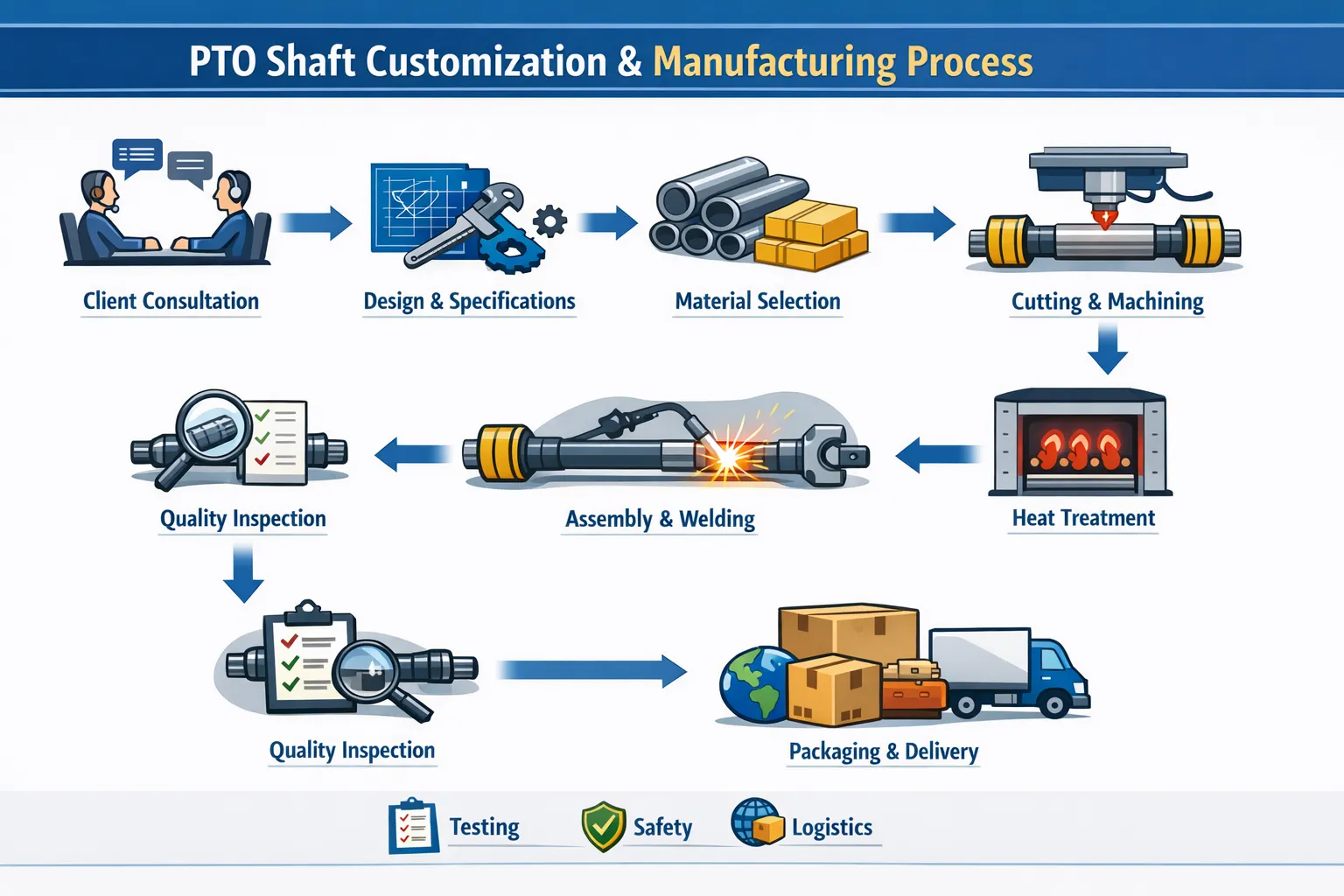
As a leading UK manufacturer, we provide end-to-end solutions from design to delivery. Our vetoakselit undergo rigorous testing, including fatigue and vibration analysis, to guarantee performance. With a commitment to innovation, we offer bespoke options for any automation need.
Ready to optimize your automation systems? Contact us today at [email protected] or visit our facility in Bury St Edmunds, Suffolk IP32 7LX, UK.
gzl:n muokkaama























