
Descripción del Producto
Descripción del Producto
| Product name | Drive shaft |
| Applicable model | 20509 |
| Material | Steel |
| Característica | High hardness, high wear resistance |
| Manufacturing Technology | Forging/casting |
| certification | ISO9001 |
The company focuses on the loader of the whole vehicle accessories,
the major models of accessories in sufficient supply,
can provide a one-stop procurement program.
If you have any questions about our products or technologies,
please feel free to contact us.
Certificaciones
Perfil de la empresa
The company undertakes all kinds of engineering machin- ery pin shaftbushing production.All the processes of the products are made by our company,which can support all kinds of materials and customized processes.The company has complete quality inspection equipmentcan provide you with a complete quality inspection process report.Our company adheres to product quality as the primarystandard,after-sales service as the first criterion. and strictly control the delivery period, looking CZPT to cooperating with you.
Manufacturing Technique
Total workshop covers an area of 6000 square meters, more than 80 sets of professional equipment,with strong production capacity.
Company garden
and workshop
display.
Our office building, the middle- level staff has 15, can provide quality service for your products.
Quality inspection area, we have 3 professional quality inspectors, has a strict quality inspection system and full inspection process.
Equipment demonstration
Product packaging
About product packaging and transport packaging
We will according to customer requirements to custom packaging,in general,we will do a good job rust-proof products,then wrapped with a layer of plastic bags,the last set of anti-collision net to ensure product transportation.The second way is to wrap the oil paperusing our tape seal,and put on the collision net.
(we will listen to the relevant advice if the customer requests)
The use of fumigated wooden box as the outer packaging,solid and reliable,fully in line with international transport requirements.
Have a complete quality inspection system
and advanced quality inspection equipment
Quality assurance is our top priorityin this regard we have advanced coordinate measuring instrument,internal diameter Rockwell hardness and metallographic examination.
In addition to high-quality equipment,we must be strict with the requirements of quality inspectors,careful,decisive.
Do a good job quality inspection process for your product quality escort!
Preguntas frecuentes
1. What do we do?
The company mainly engaged in various manufacturers of various series of loader, excavator whole car accessories, and many large machinery manufacturing companies cooperation for many years, sufficient supply, quality assurance, can provide you with different quotation procurement methods, as well as one-stop procurement services.
Among them, all the loader pins, bushings are independently developed and produced by our company, can provide customized services, and there are various series of models in stock.
2. How do we ensure quality and output?
First of all, we have cooperated with many large machinery parts manufacturing companies in mainland China for many years, these companies are complete in qualifications, quality assurance, sufficient supply, we also have professional technical quality personnel regular inspection, to ensure the provision of high-quality products.
Secondly, we have more than 90 sets of professional production equipment, 63 employees, and 3 professional engineers to escort you. In the aspect of heat treatment, we have high quality carburizing quenching equipment, medium frequency induction quenching and modulation processing equipment, can provide you with all process quality control management report, the company passed the IOS9001 quality system management certification, has 12 years of production and processing experience, for your quality and delivery escort.
3. What can you buy from us?
The company mainly engaged in various series of loader parts, can provide one-stop procurement services
We have all the major Chinese loader main engine factory pin shaft, bushing auxiliary parts inventory, and support custom and OEM.
4. What are the advantages of buying from our company?
A. Sufficient supply and quality assurance
B, professional technical team, can provide professional technical services
C. Rich experience, can guarantee the quality and delivery time
D. Excellent after-sales service
5. What services can we provide?
Accepted delivery terms :FOB, CFR, CIF, EXW, FAS, CIP, FCA, CPT, DEQ, DDP, DDU, Express, DAF, DES;
Payment currency accepted: US dollar, Euro, Japanese yen, Canadian dollar, Australian dollar, Hong Kong dollar, British pound, RMB, Swiss Franc;
Payment methods accepted: Telegraphic transfer, letter of credit, D/A, Moneygram, credit card, PayPal, Western Union, cash, escrow;
Languages: English, Chinese, Spanish, Japanese, Portuguese, German, Arabic, French, Russian, Korean, Hindi, Italian.
Now we sell these goods directly to everyone at Alibaba, so that everyone can enjoy the same product quality at a lower price!
| Servicio postventa: | Provided |
|---|---|
| Warranty: | 6 Months |
| Tipo: | Transmission System |
| Muestras: |
US$ 100/Piece
1 pieza (pedido mínimo) | Solicitar muestra |
|---|
| Personalización: |
Disponible
| Solicitud personalizada |
|---|
.shipping-cost-tm .tm-status-off{fondo: ninguno;relleno:0;color: #1470cc}
|
Costo de envío:
Flete estimado por unidad. |
Sobre el costo de envío y el tiempo estimado de entrega. |
|---|
| Método de pago: |
|
|---|---|
|
Pago inicial Pago completo |
| Divisa: | US$ |
|---|
| Devoluciones y reembolsos: | Puede solicitar un reembolso hasta 30 días después de la recepción de los productos. |
|---|
¿Cómo gestionan los ejes de transmisión las variaciones de velocidad y par durante el funcionamiento?
Los ejes de transmisión están diseñados para soportar variaciones de velocidad y par durante su funcionamiento mediante mecanismos y configuraciones específicas. Estos mecanismos permiten que los ejes de transmisión se adapten a las cambiantes demandas de transmisión de potencia, manteniendo un funcionamiento suave y eficiente. A continuación, se explica detalladamente cómo los ejes de transmisión soportan las variaciones de velocidad y par:
1. Acoplamientos flexibles:
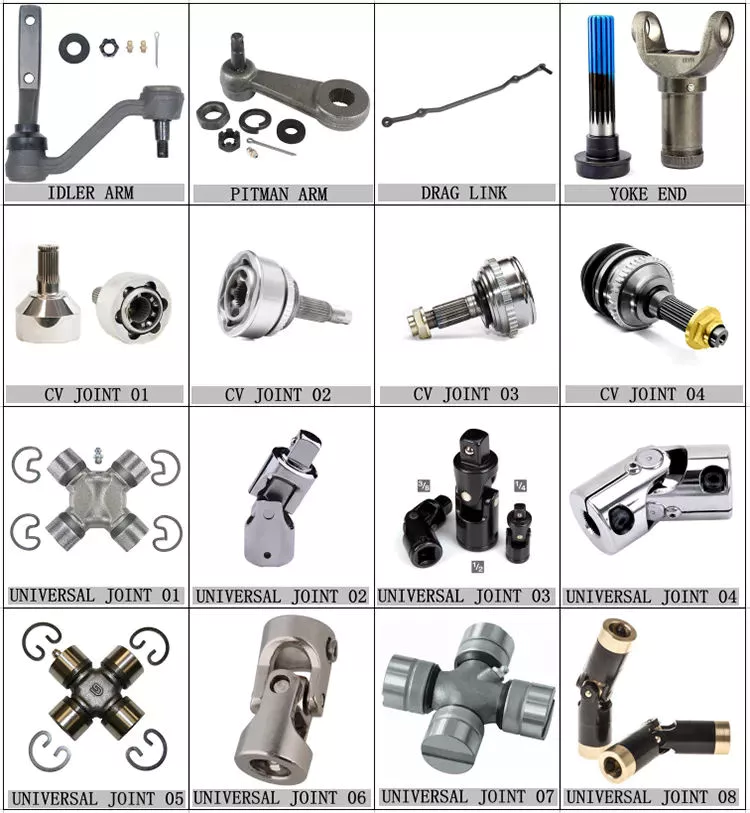
Los ejes de transmisión suelen incorporar acoplamientos flexibles, como juntas universales (juntas U) o juntas homocinéticas (juntas CV), para gestionar las variaciones de velocidad y par. Estos acoplamientos proporcionan flexibilidad y permiten que el eje transmita potencia incluso cuando los componentes motriz y accionado no están perfectamente alineados. Las juntas universales constan de dos horquillas conectadas por un cojinete en forma de cruz, lo que permite el movimiento angular entre las secciones del eje de transmisión. Esta flexibilidad compensa las variaciones de velocidad y par y corrige la desalineación. Las juntas homocinéticas, comúnmente utilizadas en ejes de transmisión de automóviles, mantienen una velocidad de rotación constante a la vez que se adaptan a los cambios en los ángulos de operación. Estos acoplamientos flexibles permiten una transmisión de potencia suave y reducen las vibraciones y el desgaste causados por las variaciones de velocidad y par.
2. Juntas deslizantes:
En algunos diseños de ejes de transmisión, se incorporan juntas deslizantes para compensar las variaciones de longitud y adaptarse a los cambios de distancia entre los componentes motriz y accionado. Una junta deslizante consta de una sección tubular interior y otra exterior con estrías o un mecanismo telescópico. Cuando el eje de transmisión experimenta cambios de longitud debido al movimiento de la suspensión u otros factores, la junta deslizante permite que el eje se extienda o comprima sin afectar la transmisión de potencia. Al permitir el movimiento axial, las juntas deslizantes ayudan a prevenir el bloqueo o la tensión excesiva en el eje de transmisión durante las variaciones de velocidad y par, garantizando un funcionamiento suave.
3. Equilibrio:
Los ejes de transmisión se someten a procesos de equilibrado para optimizar su rendimiento y minimizar las vibraciones causadas por las variaciones de velocidad y par. Los desequilibrios en el eje de transmisión pueden generar vibraciones que no solo afectan la comodidad de los ocupantes del vehículo, sino que también aumentan el desgaste del eje y sus componentes. El equilibrado consiste en redistribuir la masa a lo largo del eje para lograr una distribución uniforme del peso, reduciendo las vibraciones y mejorando el rendimiento general. El equilibrado dinámico, que generalmente implica añadir o quitar pequeños contrapesos, garantiza que el eje de transmisión funcione con suavidad incluso bajo variaciones de velocidad y par.
4. Selección y diseño de materiales:
La selección de materiales y el diseño de los ejes de transmisión son cruciales para gestionar las variaciones de velocidad y par. Estos ejes suelen fabricarse con materiales de alta resistencia, como acero o aleaciones de aluminio, elegidos por su capacidad para soportar las fuerzas y tensiones propias de las diferentes condiciones de funcionamiento. El diámetro y el espesor de la pared del eje también se determinan cuidadosamente para garantizar la resistencia y rigidez necesarias. Además, el diseño incorpora consideraciones como la velocidad crítica, la rigidez torsional y la prevención de resonancias, lo que contribuye a mantener la estabilidad y el rendimiento durante las variaciones de velocidad y par.
5. Lubricación:
Una lubricación adecuada es esencial para que los ejes de transmisión soporten las variaciones de velocidad y par. La lubricación de las juntas, como las juntas universales o las juntas homocinéticas, reduce la fricción y el calor generados durante el funcionamiento, garantizando un movimiento suave y minimizando el desgaste. Una lubricación suficiente también ayuda a prevenir el agarrotamiento de los componentes, permitiendo que el eje de transmisión se adapte con mayor eficacia a las variaciones de velocidad y par. El mantenimiento regular de la lubricación es necesario para garantizar un rendimiento óptimo y prolongar la vida útil del eje de transmisión.
6. Monitoreo del sistema:
Es fundamental supervisar el funcionamiento del sistema de transmisión para identificar cualquier problema relacionado con las variaciones de velocidad y par. Vibraciones inusuales, ruidos o cambios en la transmisión de potencia pueden indicar posibles problemas en el eje de transmisión. Las inspecciones y revisiones de mantenimiento periódicas permiten la detección y resolución temprana de problemas, lo que ayuda a prevenir daños mayores y garantiza que el eje de transmisión siga gestionando eficazmente las variaciones de velocidad y par.
En resumen, los ejes de transmisión gestionan las variaciones de velocidad y par durante el funcionamiento mediante acoplamientos flexibles, juntas deslizantes, procedimientos de equilibrado, selección y diseño adecuados de los materiales, lubricación y monitorización del sistema. Estos mecanismos y prácticas permiten que el eje de transmisión se adapte a la desalineación, los cambios de longitud y las variaciones en la demanda de potencia, garantizando una transmisión de potencia eficiente, un funcionamiento suave y un menor desgaste en diversas aplicaciones.

How do drive shafts handle variations in load and vibration during operation?
Drive shafts are designed to handle variations in load and vibration during operation by employing various mechanisms and features. These mechanisms help ensure smooth power transmission, minimize vibrations, and maintain the structural integrity of the drive shaft. Here’s a detailed explanation of how drive shafts handle load and vibration variations:
1. Material Selection and Design:
Drive shafts are typically made from materials with high strength and stiffness, such as steel alloys or composite materials. The material selection and design take into account the anticipated loads and operating conditions of the application. By using appropriate materials and optimizing the design, drive shafts can withstand the expected variations in load without experiencing excessive deflection or deformation.
2. Torque Capacity:
Drive shafts are designed with a specific torque capacity that corresponds to the expected loads. The torque capacity takes into account factors such as the power output of the driving source and the torque requirements of the driven components. By selecting a drive shaft with sufficient torque capacity, variations in load can be accommodated without exceeding the drive shaft’s limits and risking failure or damage.
3. Dynamic Balancing:
During the manufacturing process, drive shafts can undergo dynamic balancing. Imbalances in the drive shaft can result in vibrations during operation. Through the balancing process, weights are strategically added or removed to ensure that the drive shaft spins evenly and minimizes vibrations. Dynamic balancing helps to mitigate the effects of load variations and reduces the potential for excessive vibrations in the drive shaft.
4. Dampers and Vibration Control:
Drive shafts can incorporate dampers or vibration control mechanisms to further minimize vibrations. These devices are typically designed to absorb or dissipate vibrations that may arise from load variations or other factors. Dampers can be in the form of torsional dampers, rubber isolators, or other vibration-absorbing elements strategically placed along the drive shaft. By managing and attenuating vibrations, drive shafts ensure smooth operation and enhance overall system performance.
5. CV Joints:
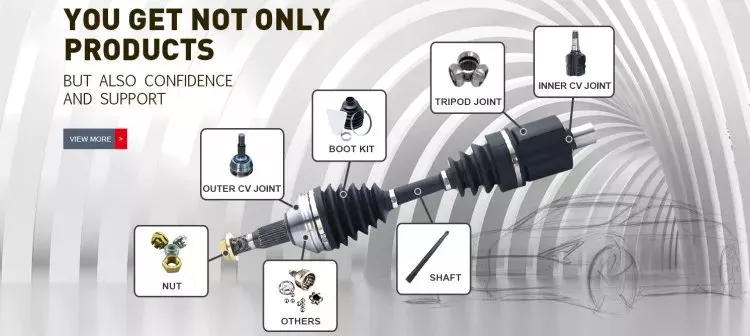
Constant Velocity (CV) joints are often used in drive shafts to accommodate variations in operating angles and to maintain a constant speed. CV joints allow the drive shaft to transmit power even when the driving and driven components are at different angles. By accommodating variations in operating angles, CV joints help minimize the impact of load variations and reduce potential vibrations that may arise from changes in the driveline geometry.
6. Lubrication and Maintenance:
Proper lubrication and regular maintenance are essential for drive shafts to handle load and vibration variations effectively. Lubrication helps reduce friction between moving parts, minimizing wear and heat generation. Regular maintenance, including inspection and lubrication of joints, ensures that the drive shaft remains in optimal condition, reducing the risk of failure or performance degradation due to load variations.
7. Structural Rigidity:
Drive shafts are designed to have sufficient structural rigidity to resist bending and torsional forces. This rigidity helps maintain the integrity of the drive shaft when subjected to load variations. By minimizing deflection and maintaining structural integrity, the drive shaft can effectively transmit power and handle variations in load without compromising performance or introducing excessive vibrations.
8. Control Systems and Feedback:
In some applications, drive shafts may be equipped with control systems that actively monitor and adjust parameters such as torque, speed, and vibration. These control systems use sensors and feedback mechanisms to detect variations in load or vibrations and make real-time adjustments to optimize performance. By actively managing load variations and vibrations, drive shafts can adapt to changing operating conditions and maintain smooth operation.
In summary, drive shafts handle variations in load and vibration during operation through careful material selection and design, torque capacity considerations, dynamic balancing, integration of dampers and vibration control mechanisms, utilization of CV joints, proper lubrication and maintenance, structural rigidity, and, in some cases, control systems and feedback mechanisms. By incorporating these features and mechanisms, drive shafts ensure reliable and efficient power transmission while minimizing the impact of load variations and vibrations on overall system performance.
How do drive shafts handle variations in length and torque requirements?
Drive shafts are designed to handle variations in length and torque requirements in order to efficiently transmit rotational power. Here’s an explanation of how drive shafts address these variations:
Length Variations:
Drive shafts are available in different lengths to accommodate varying distances between the engine or power source and the driven components. They can be custom-made or purchased in standardized lengths, depending on the specific application. In situations where the distance between the engine and the driven components is longer, multiple drive shafts with appropriate couplings or universal joints can be used to bridge the gap. These additional drive shafts effectively extend the overall length of the power transmission system.
Additionally, some drive shafts are designed with telescopic sections. These sections can be extended or retracted, allowing for adjustments in length to accommodate different vehicle configurations or dynamic movements. Telescopic drive shafts are commonly used in applications where the distance between the engine and the driven components may change, such as in certain types of trucks, buses, and off-road vehicles.
Torque Requirements:
Drive shafts are engineered to handle varying torque requirements based on the power output of the engine or power source and the demands of the driven components. The torque transmitted through the drive shaft depends on factors such as the engine power, load conditions, and the resistance encountered by the driven components.
Manufacturers consider torque requirements when selecting the appropriate materials and dimensions for drive shafts. Drive shafts are typically made from high-strength materials, such as steel or aluminum alloys, to withstand the torque loads without deformation or failure. The diameter, wall thickness, and design of the drive shaft are carefully calculated to ensure it can handle the expected torque without excessive deflection or vibration.
In applications with high torque demands, such as heavy-duty trucks, industrial machinery, or performance vehicles, drive shafts may have additional reinforcements. These reinforcements can include thicker walls, cross-sectional shapes optimized for strength, or composite materials with superior torque-handling capabilities.
Furthermore, drive shafts often incorporate flexible joints, such as universal joints or constant velocity (CV) joints. These joints allow for angular misalignment and compensate for variations in the operating angles between the engine, transmission, and driven components. They also help absorb vibrations and shocks, reducing stress on the drive shaft and enhancing its torque-handling capacity.
In summary, drive shafts handle variations in length and torque requirements through customizable lengths, telescopic sections, appropriate materials and dimensions, and the inclusion of flexible joints. By carefully considering these factors, drive shafts can efficiently and reliably transmit power while accommodating the specific needs of different applications.


editor by CX 2023-11-06























