
Descripción del Producto
Descripción del Producto
| Business type | Factory/manufacturer |
|
Service |
CNC machining |
| Turning and milling | |
| CNC turning | |
| OEM parts | |
|
Material |
(1) Aluminum:AL 6061-T6,6063,7075-T |
| (2)Stainless steel:303,304,316L,17-4(SUS630) | |
| (3)Steel:4140,Q235,Q345B,20#,45# | |
| (4)Titanium:TA1,TA2/GR2,TA4/GR5,TC4,TC18 | |
| (5)Brass:C36000(HPb62),C37700(HPb59),C26800(H68) | |
| (6)Copper, bronze, magnesium alloy, Delan, POM, acrylic, PC, etc. | |
| Service | OEM/ODM avaliable |
|
Finish |
Sandblasting, anodizing, Blackenning, zinc/Nickl plating, Poland |
| Powder coating, passivation PVD plating titanium, electrogalvanization | |
| Chrome plating, electrophoresis, QPQ | |
| Electrochemical polishing, chrome plating, knurling, laser etching Logo | |
| Major equipment | CNC machining center (milling machine), CNC lathe, grinding machine |
| Cylindrical grinding machine, drilling machine, laser cutting machine | |
| Graphic format | STEP, STP, GIS, CAD, PDF, DWG, DXF and other samples |
| Tolerance | +/-0.003mm |
| Surface roughness | Ra0.1~3.2 |
| Inspección | Complete testing laboratory with micrometer, optical comparator, caliper vernier, CMM |
| Depth caliper vernier, universal protractor, clock gauge, internal Celsius gauge |
Fotos detalladas
Parámetros del producto
| MATERIAL AVAILABLE | |||||
| Aluminum | Stainless Steel | Brass | Copper | Plastic | Hierro |
| AL2571 | SS201 | C22000 | C15710 | POM | Q235 |
| ALA380 | SS301 | C24000 | C11000 | PEEK | Q345B |
| AL5052 | SS303 | C26000 | C12000 | PVC | 1214 / 1215 |
| AL6061 | SS304 | C28000 | C12200 | ABS | 45# |
| AL6063 | SS316 | C35600 | etc. | Nylon | 20# |
| AL6082 | SS416 | C36000 | PP | 4140 / 4130 | |
| AL7075 | etc. | C37000 | Delrin | 12L14 | |
| etc. | etc. | etc. | etc. | ||
| SURFACE TREATMENT | |||||
| Aluminum Parts | Stainless Steel Parts | Steel Parts | Brass Parts | ||
| Clear Anodized | Polishing | Zinc Plating | Nickel Plating | ||
| Color Anodized | Passivating | Oxide black | chrome plating | ||
| Sandblast Anodized | Sandblasting | Nickel Plating | Electrophoresis black | ||
| Chemical Film | Laser engraving | Powder Coated | Powder coated | ||
| Brushing | Electrophoresis black | Heat treatment | Gold plating | ||
| Polishing | Oxide black | Chrome Plating | etc. | ||
| Chroming | etc | etc | |||
| etc | |||||
| TOLERANCE | |||||
| The smallest tolerance can reach +/-0.001mm or as per drawing request. | |||||
| DRAWING FORMAT | |||||
| PFD | Step | Igs | CAD | Solid | etc |
Embalaje y envío
Perfil de la empresa
HangZhou Shinemotor Co.,Ltd located in HangZhou City, ZheJiang Province of China.
Mainly specializes in developing, manufacturing and selling all kinds of customized metal and plastic parts.
Our factory pass SGS, ISO9001/ ISO9001/ ISO14001 verification, parts can be widely used in the fields of automobile,
medical instruments, electronic communications, industrial and consumer applications and so on.
We have introduced a series of advanced and high performance production equipment imported from Japan and ZheJiang :
High precision cnc lathes, 5/6 axis cnc machining centers, plane grinding & centerless grinding machines,
stamping machines, wire cut machines, EDM and many other high-precision CNC equipment.
Our inspection equipment includes: projector, 2D, 2.5D, CMM, hardness testing machine, tool microscope, etc.
We dedicated to developing and producing kinds of brass, aluminum, steel, stainless steel
And plastic machining parts, stamping parts, and also mould design and manufacturing.
We firmly hold the concept of ” customer is the first, honesty is the basic, accrete win-win “.
Dedicated to providing you with high-quality products and excellent service!
We sincerely look CHINAMFG to creating a better future by mutually beneficial cooperation with you.
Preguntas frecuentes
1. Are you a factory or a trading company?
A: We are a factory which has been specialized in cnc machining & automatic manufacturing for more than 10 years.
2. Where is your factory and how can I visit it?
A: Our factory is located in HangZhou city and you can get more detailed information by browsing our website.
3. How long can I get some samples for checking and what about the price?
A: Normally samples will be done within 1-2 days (automatic machining parts) or 3-5 day (cnc machining parts).
The sample cost depends on all information (size, material, finish, etc.).
We will return the sample cost if your order quantity is good.
4. How is the warranty of the products quality control?
A: We hold the tightend quality controlling from very begining to the end and aim at 100% error free.
5.How to get an accurate quotation?
♦ Drawings, photos, detailed sizes or samples of products.
♦ Material of products.
♦ Ordinary purchasing quantity.
♦ Quotation within 1~6 hours
| Material: | Carbon Steel |
|---|---|
| Carga: | Eje de transmisión |
| Rigidez y flexibilidad: | Rigidez / Eje rígido |
| Precisión dimensional del diámetro del muñón: | IT6-IT9 |
| Forma del eje: | Soft Wire Shaft |
| Forma del eje: | Eje real |
| Muestras: |
US$ 100/Piece
1 pieza (pedido mínimo) | |
|---|
| Personalización: |
Disponible
| Solicitud personalizada |
|---|
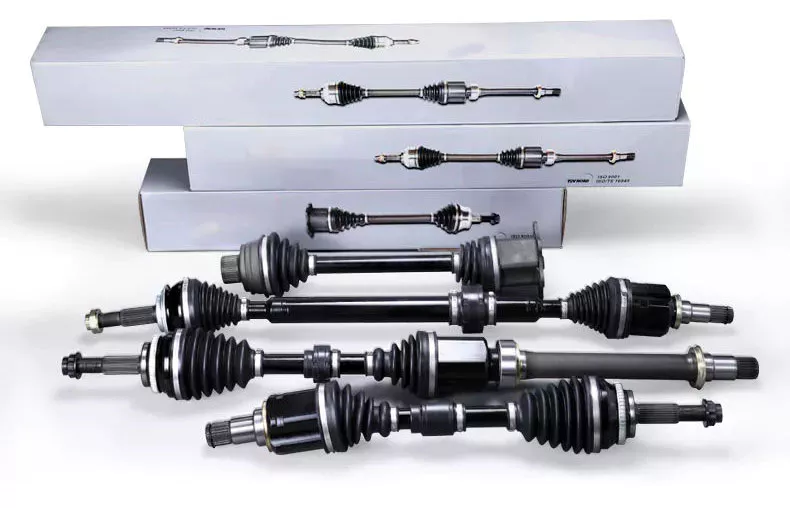
¿Cómo garantizan los ejes de la toma de fuerza una transferencia de potencia eficiente sin comprometer la seguridad?
Los ejes de toma de fuerza (TDF) desempeñan un papel crucial para garantizar una transferencia de potencia eficiente desde la fuente de energía a la maquinaria o el equipo accionado, manteniendo al mismo tiempo la seguridad. Estos ejes están diseñados con diversas características y mecanismos para optimizar la eficiencia de la transmisión de potencia y mitigar los riesgos potenciales. A continuación, se explica detalladamente cómo los ejes de TDF logran una transferencia de potencia eficiente priorizando la seguridad:
1. Transmisión de potencia mecánica: Los ejes de toma de fuerza (TDF) actúan como enlaces mecánicos entre la fuente de energía, generalmente un tractor o un motor, y la maquinaria accionada. Transmiten la potencia rotacional desde la fuente de energía al equipo, lo que permite una transferencia eficiente de energía. El diseño mecánico de los ejes de TDF, incluyendo su diámetro, longitud y composición del material, está optimizado para minimizar las pérdidas de potencia durante la transmisión, asegurando que una parte significativa de la potencia generada por la fuente se transmita eficazmente a la maquinaria.
2. Juntas universales y acoplamientos flexibles: Los ejes de la toma de fuerza (TDF) están equipados con juntas universales y acoplamientos flexibles que permiten la desalineación angular y una mayor flexibilidad de movimiento. Las juntas universales compensan las variaciones en la alineación entre la fuente de energía y la maquinaria accionada, lo que permite una transmisión de potencia fluida incluso cuando ambos componentes no están perfectamente alineados. Los acoplamientos flexibles ayudan a compensar pequeñas desalineaciones, reducen las vibraciones y evitan tensiones excesivas en el eje y los componentes conectados, mejorando así la eficiencia y reduciendo el riesgo de fallos o daños mecánicos.
3. Juntas de velocidad constante (CV): Las juntas homocinéticas se utilizan frecuentemente en ejes de toma de fuerza (TDF) para mantener una velocidad y un par constantes, especialmente en aplicaciones donde la maquinaria accionada requiere flexibilidad o funciona en diferentes ángulos. Estas juntas permiten una transmisión de potencia fluida y sin fluctuaciones significativas, incluso cuando la maquinaria accionada se encuentra en ángulo con respecto a la fuente de energía. Al minimizar las variaciones de velocidad y la pérdida de potencia debida a los cambios de ángulo, las juntas homocinéticas contribuyen a una transferencia de potencia eficiente, garantizando un rendimiento constante y reduciendo la probabilidad de tensión mecánica o desgaste prematuro.
4. Protectores y escudos de seguridad: La seguridad es una consideración primordial en el diseño de los ejes de toma de fuerza (TDF). Se instalan protectores y cubiertas para proteger el eje giratorio y otras piezas móviles. Estos protectores actúan como barreras físicas para evitar el contacto accidental con los componentes giratorios, reduciendo significativamente el riesgo de atrapamiento, lesiones o daños. Los protectores de seguridad suelen estar fabricados con materiales duraderos como metal o plástico y están diseñados para permitir el movimiento necesario para la transmisión de potencia, a la vez que proporcionan una protección adecuada. La inspección y el mantenimiento periódicos de estos protectores son cruciales para garantizar su eficacia en el mantenimiento de la seguridad.
5. Mecanismos de perno de seguridad o embrague deslizante: Los ejes de la toma de fuerza (TDF) suelen incorporar pernos de seguridad o embragues deslizantes como elementos de protección para salvaguardar los componentes de la transmisión y evitar daños en caso de torsión excesiva o resistencia repentina. Los pernos de seguridad están diseñados para romperse cuando la torsión supera un umbral predeterminado, desconectando el eje de la TDF de la fuente de alimentación. Esto ayuda a prevenir daños en el eje, la maquinaria accionada y la fuente de alimentación. Los embragues deslizantes funcionan de manera similar, permitiendo que el eje de la TDF se deslice cuando se encuentra una resistencia excesiva, protegiendo así los componentes de sobrecargas. Estos mecanismos actúan como medidas de seguridad para mantener la integridad del eje de la TDF y el equipo asociado, minimizando el riesgo de fallos mecánicos o accidentes.
6. Cumplimiento de las normas de seguridad: Los ejes de toma de fuerza (TDF) están diseñados y fabricados para cumplir con las normas y regulaciones de seguridad pertinentes. Los fabricantes siguen las directrices y los requisitos establecidos por organizaciones como la Sociedad Americana de Ingenieros Agrícolas y Biológicos (ASABE) u otras autoridades regionales de seguridad. El cumplimiento de estas normas garantiza que los ejes de TDF cumplan con criterios de seguridad específicos, incluyendo la capacidad de torsión, el diseño de la protección y otras consideraciones de seguridad. Los usuarios pueden confiar en ejes de TDF estandarizados que han sido sometidos a pruebas y certificación, lo que proporciona una garantía adicional sobre su seguridad y rendimiento.
7. Formación y capacitación del operador: Para garantizar un funcionamiento seguro y eficiente, es fundamental que los operarios reciban la formación y capacitación adecuadas sobre los ejes de toma de fuerza (TDF). Deben conocer las características de seguridad específicas, los requisitos de mantenimiento y los procedimientos de operación seguros de los ejes de TDF que utilizan en sus aplicaciones. Esto incluye comprender la importancia de usar el equipo de protección personal adecuado, inspeccionar periódicamente el equipo para detectar desgaste o daños y seguir los programas de mantenimiento recomendados. La concienciación y el cumplimiento de los protocolos de seguridad por parte de los operarios contribuyen significativamente a mantener un entorno de trabajo seguro y a maximizar la eficiencia de la transmisión de potencia.
En resumen, los ejes de toma de fuerza (TDF) garantizan una transferencia de potencia eficiente y segura gracias a su diseño mecánico, la incorporación de juntas universales y juntas homocinéticas, la instalación de protecciones y cubiertas de seguridad, la implementación de mecanismos de embrague deslizante o de perno de seguridad, el cumplimiento de las normas de seguridad y la capacitación del operador. Al combinar estas características y prácticas, los ejes de TDF proporcionan una transmisión de potencia fiable y segura, minimizando las pérdidas de potencia y los riesgos potenciales asociados a su funcionamiento.

How do PTO shafts enhance the performance of tractors and agricultural machinery?
Power Take-Off (PTO) shafts play a crucial role in enhancing the performance of tractors and agricultural machinery. By providing a reliable power transfer mechanism, PTO shafts enable these machines to operate efficiently, effectively, and with increased versatility. Here’s a detailed explanation of how PTO shafts enhance the performance of tractors and agricultural machinery:
1. Transferencia de potencia: PTO shafts facilitate the transfer of power from the tractor’s engine to various agricultural implements and machinery. The rotating power generated by the engine is transmitted through the PTO shaft to drive the connected equipment. This direct power transfer eliminates the need for separate engines or motors on each implement, reducing complexity, weight, and maintenance requirements. PTO shafts ensure a consistent and reliable power supply, enabling agricultural machinery to perform tasks with optimal efficiency and effectiveness.
2. Versatilidad: PTO shafts provide tractors and agricultural machinery with increased versatility. Since PTO shafts have standardized dimensions and connection methods, a wide range of implements can be easily attached and powered by the same tractor. This versatility allows farmers to quickly switch between different tasks, such as mowing, tilling, planting, and harvesting, without the need for multiple specialized machines. The ability to use a single power unit for various operations reduces costs, saves storage space, and improves overall operational efficiency.
3. Improved Productivity: PTO shafts contribute to improved productivity in agricultural operations. By harnessing the power of tractors, agricultural machinery can operate at higher speeds and with greater efficiency compared to manual or alternative power methods. PTO-driven implements, such as mowers, balers, and harvesters, can cover larger areas and complete tasks more quickly, reducing the time required to perform agricultural operations. This increased productivity allows farmers to accomplish more within a given timeframe, leading to higher crop yields and improved overall farm efficiency.
4. Reduced Labor Requirements: PTO shafts help reduce labor requirements in agricultural operations. By utilizing mechanized equipment powered by PTO shafts, farmers can minimize manual labor and the associated physical effort. Tasks such as plowing, tilling, and harvesting can be performed more efficiently and with less reliance on human labor. This reduction in labor requirements allows farmers to allocate resources more effectively, focus on other essential tasks, and potentially reduce labor costs.
5. Precision and Accuracy: PTO shafts contribute to precision and accuracy in agricultural operations. The consistent power supply from the tractor’s engine ensures uniform operation and performance of the connected machinery. This precision is crucial for tasks such as seed placement, fertilizer or chemical application, and crop harvesting. PTO-driven equipment can provide consistent rotations per minute (RPM) and maintain the necessary operational parameters, resulting in precise and accurate agricultural practices. This precision leads to improved crop quality, reduced waste, and optimized resource utilization.
6. Adaptability to Various Tasks: PTO shafts enhance the adaptability of tractors and agricultural machinery to perform various tasks. With the ability to connect different implements, such as mowers, seeders, sprayers, or balers, via PTO shafts, farmers can quickly transform their tractors into specialized machines for specific operations. This adaptability allows for efficient utilization of equipment across different stages of crop production, enabling farmers to respond to changing needs and conditions in a cost-effective manner.
7. Enhanced Safety: PTO shafts contribute to enhanced safety in agricultural operations. Many PTO shafts are equipped with safety features, such as shields or guards, to protect operators from potential hazards associated with rotating components. These safety measures help prevent entanglement accidents and reduce the risk of injuries. Additionally, by using PTO-driven machinery, farmers can keep a safe distance from certain hazardous tasks, such as mowing or shredding, further improving overall safety on the farm.
8. Integration with Technology: PTO shafts can be integrated with advanced technology and automation systems in modern tractors and agricultural machinery. This integration allows for precise control, data monitoring, and optimization of machine performance. For example, precision guidance systems can be synchronized with PTO-driven implements to ensure accurate seed placement or chemical application. Furthermore, data collection and analysis can provide insights into fuel efficiency, maintenance needs, and overall equipment performance, leading to optimized operation and improved productivity.
In summary, PTO shafts enhance the performance of tractors and agricultural machinery by enabling efficient power transfer, increasing versatility, improving productivity, reducing labor requirements, ensuring precision and accuracy, facilitating adaptability, enhancing safety, and integrating with advanced technologies. These benefits contribute to overall operational efficiency, cost-effectiveness, and the ability of farmers to effectively manage theiragricultural operations.
What is a PTO shaft and how is it used in agricultural and industrial equipment?
A power take-off (PTO) shaft is a mechanical component used in agricultural and industrial equipment to transfer power from a power source, such as an engine or motor, to another machine or implement. It is a driveline shaft that transmits rotational power and torque, allowing the connected equipment to perform various tasks. PTO shafts are commonly used in agricultural machinery, such as tractors, as well as in industrial equipment, including generators, pumps, and construction machinery. Here’s a detailed explanation of what a PTO shaft is and how it is used:
Structure and Components: A typical PTO shaft consists of a hollow metal tube with universal joints at each end. The hollow tube allows the shaft to rotate freely, while the universal joints accommodate angular misalignments between the power source and the driven equipment. The universal joints consist of a cross-shaped yoke with needle bearings, providing flexibility and allowing the transmission of power at varying angles. Some PTO shafts may also include a telescopic section to adjust the length for different equipment setups or to accommodate varying distances between the power source and the driven machine.
Power Transfer: The primary function of a PTO shaft is to transfer power and torque from the power source to the driven equipment. The power source, typically an engine or motor, drives the PTO shaft through a mechanical connection, such as a gearbox or a clutch. As the power source rotates, it transmits rotational force to the PTO shaft. The PTO shaft, in turn, transfers this rotational power and torque to the driven equipment, enabling it to perform its intended function. The torque and rotational speed transmitted through the PTO shaft depend on the power source’s characteristics and the gear ratio or clutch engagement.
Agricultural Applications: In agriculture, PTO shafts are commonly used in tractors to power various implements and attachments. The PTO shaft is connected to the tractor’s power take-off, a rotating drive shaft located at the rear of the tractor. By engaging the PTO clutch, the tractor’s engine power is transferred through the PTO shaft to the attached implements. Agricultural machinery, such as mowers, balers, tillers, sprayers, and grain augers, often rely on PTO shafts to receive power for their operation. The PTO shaft allows the implements to be powered directly by the tractor’s engine, eliminating the need for separate power sources and increasing the versatility and efficiency of agricultural operations.
Industrial Applications: PTO shafts also find extensive use in various industrial applications. Industrial equipment, such as generators, pumps, compressors, and industrial mixers, often incorporate PTO shafts to receive power from engines or electric motors. The PTO shaft connects the power source to the driven equipment, allowing it to operate and perform its intended function. In construction machinery, PTO shafts can be found in equipment like concrete mixers, hydraulic hammers, and post hole diggers, enabling the transfer of power from the machinery’s engine to the specific attachment or tool being used.
Safety Considerations: It is important to note that PTO shafts can pose safety risks if not handled properly. The rotating shaft can cause serious injuries if operators come into contact with it while it is in operation. To ensure safety, PTO shafts are often equipped with shielding or guards that cover the rotating shaft and universal joints, preventing accidental contact. It is crucial to maintain and inspect these safety features regularly to ensure their effectiveness. Additionally, operators should receive proper training on PTO shaft operation, including safe attachment and detachment procedures, as well as the use of personal protective equipment when working near PTO-driven machinery.
In summary, a PTO shaft is a mechanical component used in agricultural and industrial equipment to transmit power and torque from a power source to a driven machine or implement. It enables the direct power transfer from engines or motors to various equipment, increasing efficiency and versatility in agricultural and industrial operations. While PTO shafts offer significant benefits, operators must be aware of the associated safety considerations and take appropriate precautions to prevent accidents and injuries.


editor by CX 2023-11-17























