
Descripción del Producto
Descripción del Producto
Product name: Auto Parts Metal Driving Shaft Axle Drive shaft Joint Drive Axle Shaft For SAIC CZPT T60 OEM C05713
OEM Number: C05713
Application: For SAIC CZPT T60
| Car Fitment | Model | Year |
|---|---|---|
| MAXUS (SAIC MOTOR) | T60 Pickup | 2016- |
Package: Original genuine packing, Brand packing, Neutral packing with parts number label
MOQ:1 PC
Delivery time:1-7days
Place: HangZhou China
TIPS: The adaptation of parts is very complex, you need to provide chassis VIN number or car details {model, capacity, year of production (not buy) year} to customer service, and according to the customer service recommend to choose the appropriate type.
Fotos detalladas
Embalaje y envío
Shipping by Sea: containers goods,
Sample order by air: China Post, aliexpress standard shipping, E-pocket, EMS,UPS,TNT,DHL,Fedex, etc
Perfil de la empresa
Nuestras ventajas
1. One-stop service to supply all jac motors spare parts (JAC motors j2 j3 j4 j5 j6, s2 /T40,s3/ T5 ,s5/ T6 ,JAC refine ,JAC sunray ,JAC pickup T6 T8,JAC Truck … )
SAIC MG, CZPT Parts, CZPT spare parts
Chery, Changan, BYD, CZPT GWM, Brillance, Geely, Xihu (West Lake) Dis.feng spare parts
Mercedes Benz Parts,
Gates Auto Parts, Phc Parts
2. MOQ: 1PC
3. We will reply you for your inquiry in 24 hours.
4. after sending, we will track the products for you once every 2 days, until you get the products. When you got the goods, and give us a feedback.If you have any questions about the problem, contact with us, we will offer the solve way for you.
Preguntas frecuentes
Q1. What is your terms of packing?
A: Generally, we pack our goods in neutral boxes, original OE cartons or brands AQBP packages
Q2. how to do the order if your need parts have not in this shop?
A: if in this shop has no the parts you need, please tell us, and we will find it from our big warehouse, take photos and send price to you.
Q3. how much you should pay money if buy some items together?
A: after buying some items together, there will be different shipping fees and different goods price, so we can discuss how to do the best shipping way.
Q4. How about your delivery time?
A: Generally, it will take 30 to 60 days after receiving your advance payment. The specific delivery time depends on shipping way and different countries.
Q5. Can you produce according to the samples?
A: Yes, we can produce by your samples or technical drawings. We can build the molds and fixtures.
Q6: How do you make our business long-term and good relationship?
A:1. We keep good quality and competitive price to ensure our customers benefit;
2. We respect every customer as our friend and we sincerely do business and make friends with them, no matter where they come from.
/* 22 de enero de 2571 19:08:37 */!function(){function s(e,r){var a,o={};try{e&&e.split(“”,).forEach(function(e,t){e&&(a=e.match(/(.*?):(.*)$/))&&1
| Condición: | Nuevo |
|---|---|
| Color: | Black |
| Tipo: | Front Drive Axle Shaft |
| Personalización: |
Disponible
| Solicitud personalizada |
|---|
.shipping-cost-tm .tm-status-off{fondo: ninguno;relleno:0;color: #1470cc}
|
Costo de envío:
Flete estimado por unidad. |
Sobre el costo de envío y el tiempo estimado de entrega. |
|---|
| Método de pago: |
|
|---|---|
|
Pago inicial Pago completo |
| Divisa: | US$ |
|---|
| Devoluciones y reembolsos: | Puede solicitar un reembolso hasta 30 días después de la recepción de los productos. |
|---|
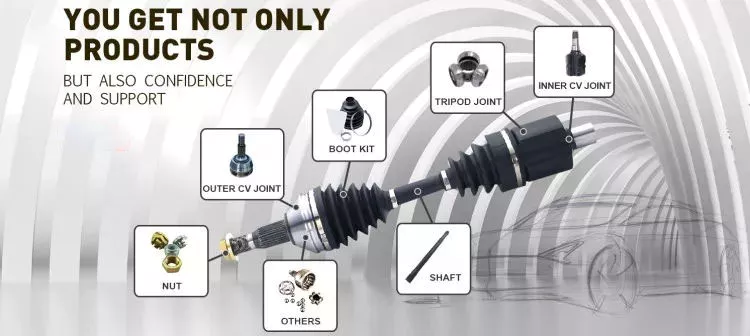
How do drive shafts ensure efficient power transfer while maintaining balance?
Drive shafts employ various mechanisms to ensure efficient power transfer while maintaining balance. Efficient power transfer refers to the ability of the drive shaft to transmit rotational power from the source (such as an engine) to the driven components (such as wheels or machinery) with minimal energy loss. Balancing, on the other hand, involves minimizing vibrations and eliminating any uneven distribution of mass that can cause disturbances during operation. Here’s an explanation of how drive shafts achieve both efficient power transfer and balance:
1. Material Selection:
The material selection for drive shafts is crucial for maintaining balance and ensuring efficient power transfer. Drive shafts are commonly made from materials such as steel or aluminum alloys, chosen for their strength, stiffness, and durability. These materials have excellent dimensional stability and can withstand the torque loads encountered during operation. By using high-quality materials, drive shafts can minimize deformation, flexing, and imbalances that could compromise power transmission and generate vibrations.
2. Design Considerations:
The design of the drive shaft plays a significant role in both power transfer efficiency and balance. Drive shafts are engineered to have appropriate dimensions, including diameter and wall thickness, to handle the anticipated torque loads without excessive deflection or vibration. The design also considers factors such as the length of the drive shaft, the number and type of joints (such as universal joints or constant velocity joints), and the use of balancing weights. By carefully designing the drive shaft, manufacturers can achieve optimal power transfer efficiency while minimizing the potential for imbalance-induced vibrations.
3. Balancing Techniques:
Balance is crucial for drive shafts as any imbalance can cause vibrations, noise, and accelerated wear. To maintain balance, drive shafts undergo various balancing techniques during the manufacturing process. Static and dynamic balancing methods are employed to ensure that the mass distribution along the drive shaft is uniform. Static balancing involves adding counterweights at specific locations to offset any weight imbalances. Dynamic balancing is performed by spinning the drive shaft at high speeds and measuring any vibrations. If imbalances are detected, additional adjustments are made to achieve a balanced state. These balancing techniques help minimize vibrations and ensure smooth operation of the drive shaft.
4. Universal Joints and Constant Velocity Joints:
Drive shafts often incorporate universal joints (U-joints) or constant velocity (CV) joints to accommodate misalignment and maintain balance during operation. U-joints are flexible joints that allow for angular movement between shafts. They are typically used in applications where the drive shaft operates at varying angles. CV joints, on the other hand, are designed to maintain a constant velocity of rotation and are commonly used in front-wheel-drive vehicles. By incorporating these joints, drive shafts can compensate for misalignment, reduce stress on the shaft, and minimize vibrations that can negatively impact power transfer efficiency and balance.
5. Maintenance and Inspection:
Regular maintenance and inspection of drive shafts are essential for ensuring efficient power transfer and balance. Periodic checks for wear, damage, or misalignment can help identify any issues that may affect the drive shaft’s performance. Lubrication of the joints and proper tightening of fasteners are also critical for maintaining optimal operation. By adhering to recommended maintenance procedures, any imbalances or inefficiencies can be addressed promptly, ensuring continued efficient power transfer and balance.
In summary, drive shafts ensure efficient power transfer while maintaining balance through careful material selection, thoughtful design considerations, balancing techniques, and the incorporation of flexible joints. By optimizing these factors, drive shafts can transmit rotational power smoothly and reliably, minimizing energy losses and vibrations that can impact performance and longevity.

¿Cómo mejoran los ejes de transmisión el rendimiento de los automóviles y camiones?
Los ejes de transmisión desempeñan un papel fundamental en la mejora del rendimiento de automóviles y camiones. Contribuyen a diversos aspectos del desempeño del vehículo, como la entrega de potencia, la tracción, el manejo y la eficiencia general. A continuación, se presenta una explicación detallada de cómo los ejes de transmisión mejoran el rendimiento de automóviles y camiones:
1. Suministro de energía: Drive shafts are responsible for transmitting power from the engine to the wheels, enabling the vehicle to move forward. By efficiently transferring power without significant losses, drive shafts ensure that the engine’s power is effectively utilized, resulting in improved acceleration and overall performance. Well-designed drive shafts with minimal power loss contribute to the vehicle’s ability to deliver power to the wheels efficiently.
2. Transferencia de par: Los ejes de transmisión facilitan la transferencia del par motor a las ruedas. El par motor es la fuerza de rotación que impulsa el vehículo hacia adelante. Los ejes de transmisión de alta calidad con una adecuada capacidad de conversión de par garantizan que el par generado por el motor se transmita eficazmente a las ruedas. Esto mejora la capacidad del vehículo para acelerar rápidamente, remolcar cargas pesadas y subir pendientes pronunciadas, optimizando así su rendimiento general.
3. Tracción y estabilidad: Los ejes de transmisión contribuyen a la tracción y estabilidad de automóviles y camiones. Transmiten potencia a las ruedas, permitiéndoles ejercer fuerza sobre la superficie de la carretera. Esto permite que el vehículo mantenga la tracción, especialmente durante la aceleración o al circular por terrenos resbaladizos o irregulares. La eficiente transmisión de potencia a través de los ejes de transmisión mejora la estabilidad del vehículo al garantizar una distribución equilibrada de la potencia a todas las ruedas, lo que optimiza el control y la maniobrabilidad.
4. Manejo y maniobrabilidad: Los ejes de transmisión influyen en el manejo y la maniobrabilidad de los vehículos. Establecen una conexión directa entre el motor y las ruedas, lo que permite un control preciso y una respuesta ágil. Los ejes de transmisión bien diseñados, con una holgura mínima, contribuyen a una respuesta más directa e inmediata a las acciones del conductor, mejorando la agilidad y la maniobrabilidad del vehículo.
5. Reducción de peso: Los ejes de transmisión pueden contribuir a la reducción de peso en automóviles y camiones. Los ejes de transmisión ligeros, fabricados con materiales como aluminio o compuestos reforzados con fibra de carbono, reducen el peso total del vehículo. Esta reducción de peso mejora la relación potencia-peso, lo que se traduce en una mejor aceleración, manejo y eficiencia de combustible. Además, los ejes de transmisión ligeros reducen la masa rotacional, lo que permite que el motor acelere más rápidamente, mejorando aún más el rendimiento.
6. Eficiencia mecánica: Los ejes de transmisión eficientes minimizan las pérdidas de energía durante la transmisión de potencia. Al incorporar características como rodamientos de alta calidad, sellos de baja fricción y lubricación optimizada, los ejes de transmisión reducen la fricción y minimizan las pérdidas de potencia debidas a la resistencia interna. Esto mejora la eficiencia mecánica del sistema de transmisión, permitiendo que llegue más potencia a las ruedas y optimizando el rendimiento general del vehículo.
7. Mejoras de rendimiento: Drive shaft upgrades can be popular performance enhancements for enthusiasts. Upgraded drive shafts, such as those made from stronger materials or with enhanced torque capacity, can handle higher power outputs from modified engines. These upgrades allow for increased performance, such as improved acceleration, higher top speeds, and better overall driving dynamics.
8. Compatibilidad con modificaciones de rendimiento: Las modificaciones de rendimiento, como las mejoras del motor, el aumento de la potencia o los cambios en el sistema de transmisión, suelen requerir ejes de transmisión compatibles. Los ejes de transmisión diseñados para soportar mayores cargas de torsión o adaptarse a configuraciones de transmisión modificadas garantizan un rendimiento y una fiabilidad óptimos. Permiten que el vehículo aproveche eficazmente la mayor potencia y el par motor, lo que se traduce en un mejor rendimiento y una mayor capacidad de respuesta.
9. Durabilidad y fiabilidad: Los ejes de transmisión robustos y bien mantenidos contribuyen a la durabilidad y fiabilidad de automóviles y camiones. Están diseñados para soportar las tensiones y cargas asociadas a la transmisión de potencia. Los materiales de alta calidad, el equilibrado adecuado y el mantenimiento regular garantizan un funcionamiento suave de los ejes de transmisión, minimizando el riesgo de fallos o problemas de rendimiento. Los ejes de transmisión fiables mejoran el rendimiento general al proporcionar una entrega de potencia constante y minimizar el tiempo de inactividad.
10. Compatibilidad con tecnologías avanzadas: Los ejes de transmisión evolucionan a la par de los avances en la tecnología automotriz. Cada vez se integran más con sistemas avanzados como los sistemas de propulsión híbridos, los motores eléctricos y el frenado regenerativo. Los ejes de transmisión diseñados para funcionar a la perfección con estas tecnologías maximizan su eficiencia y rendimiento, contribuyendo a una mejora general del desempeño del vehículo.
In summary, drive shafts enhance the performance of automobiles and trucks by optimizing power delivery, facilitating torque transfer, improving traction and stability, enhancing handling and maneuverability, reducing weight, increasing mechanical efficiency, enabling compatibility with performance upgrades and advanced technologies, and ensuring durability and reliability. They play a crucial role in ensuring efficient power transmission, responsive acceleration, precise handling, and overall improved performance of vehicles.
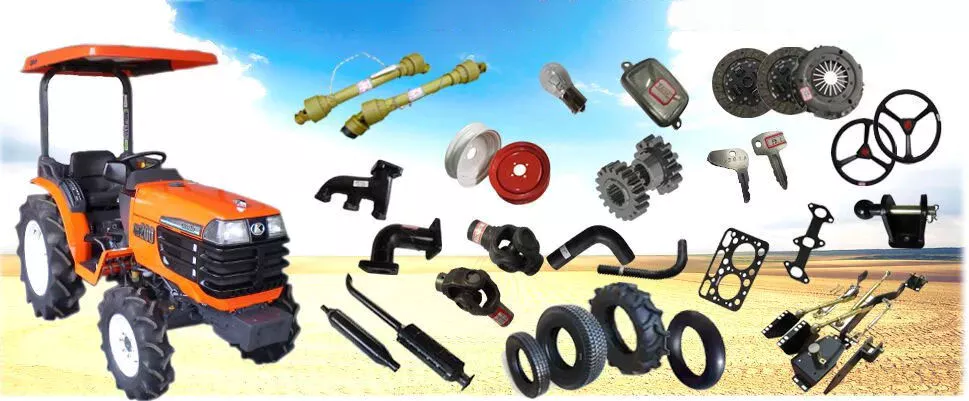
Are there variations in drive shaft designs for different types of machinery?
Yes, there are variations in drive shaft designs to cater to the specific requirements of different types of machinery. The design of a drive shaft is influenced by factors such as the application, power transmission needs, space limitations, operating conditions, and the type of driven components. Here’s an explanation of how drive shaft designs can vary for different types of machinery:
1. Automotive Applications:
In the automotive industry, drive shaft designs can vary depending on the vehicle’s configuration. Rear-wheel-drive vehicles typically use a single-piece or two-piece drive shaft, which connects the transmission or transfer case to the rear differential. Front-wheel-drive vehicles often use a different design, employing a drive shaft that combines with the constant velocity (CV) joints to transmit power to the front wheels. All-wheel-drive vehicles may have multiple drive shafts to distribute power to all wheels. The length, diameter, material, and joint types can differ based on the vehicle’s layout and torque requirements.
2. Industrial Machinery:
Drive shaft designs for industrial machinery depend on the specific application and power transmission requirements. In manufacturing machinery, such as conveyors, presses, and rotating equipment, drive shafts are designed to transfer power efficiently within the machine. They may incorporate flexible joints or use a splined or keyed connection to accommodate misalignment or allow for easy disassembly. The dimensions, materials, and reinforcement of the drive shaft are selected based on the torque, speed, and operating conditions of the machinery.
3. Agriculture and Farming:
Agricultural machinery, such as tractors, combines, and harvesters, often requires drive shafts that can handle high torque loads and varying operating angles. These drive shafts are designed to transmit power from the engine to attachments and implements, such as mowers, balers, tillers, and harvesters. They may incorporate telescopic sections to accommodate adjustable lengths, flexible joints to compensate for misalignment during operation, and protective shielding to prevent entanglement with crops or debris.
4. Construction and Heavy Equipment:
Construction and heavy equipment, including excavators, loaders, bulldozers, and cranes, require robust drive shaft designs capable of transmitting power in demanding conditions. These drive shafts often have larger diameters and thicker walls to handle high torque loads. They may incorporate universal joints or CV joints to accommodate operating angles and absorb shocks and vibrations. Drive shafts in this category may also have additional reinforcements to withstand the harsh environments and heavy-duty applications associated with construction and excavation.
5. Marine and Maritime Applications:
Drive shaft designs for marine applications are specifically engineered to withstand the corrosive effects of seawater and the high torque loads encountered in marine propulsion systems. Marine drive shafts are typically made from stainless steel or other corrosion-resistant materials. They may incorporate flexible couplings or dampening devices to reduce vibration and mitigate the effects of misalignment. The design of marine drive shafts also considers factors such as shaft length, diameter, and support bearings to ensure reliable power transmission in marine vessels.
6. Mining and Extraction Equipment:
In the mining industry, drive shafts are used in heavy machinery and equipment such as mining trucks, excavators, and drilling rigs. These drive shafts need to withstand extremely high torque loads and harsh operating conditions. Drive shaft designs for mining applications often feature larger diameters, thicker walls, and specialized materials such as alloy steel or composite materials. They may incorporate universal joints or CV joints to handle operating angles, and they are designed to be resistant to abrasion and wear.
These examples highlight the variations in drive shaft designs for different types of machinery. The design considerations take into account factors such as power requirements, operating conditions, space constraints, alignment needs, and the specific demands of the machinery or industry. By tailoring the drive shaft design to the unique requirements of each application, optimal power transmission efficiency and reliability can be achieved.


editor by CX 2024-04-25























