
Descripción del Producto
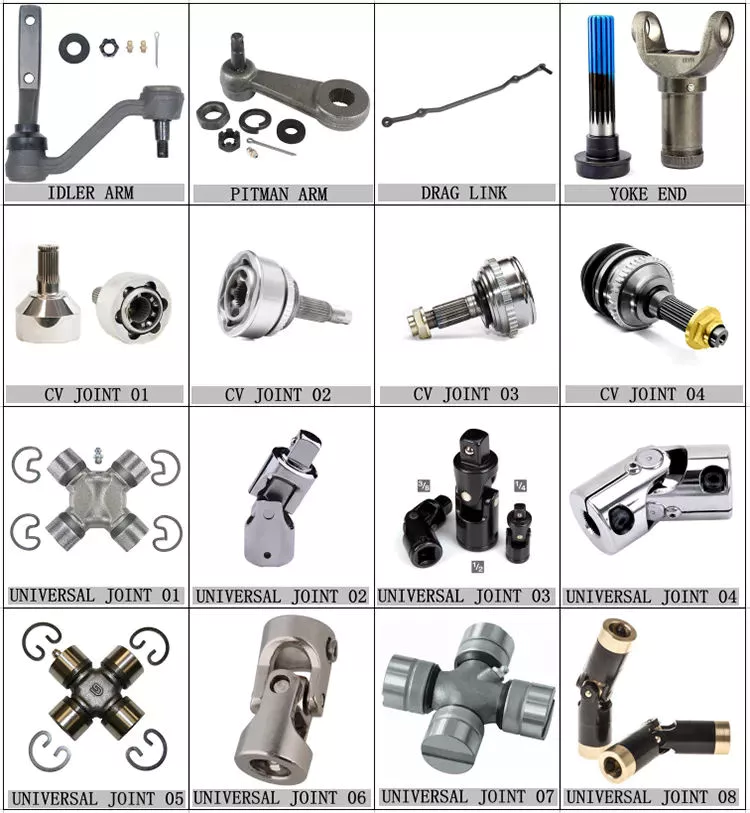
Our company produce more difference Russian car drive shafts and compoents, including to GAZ, MTZ, KAMAZ, UAZ, LADA, please contact us if you need anything.
/* 22 de enero de 2571 19:08:37 */!function(){function s(e,r){var a,o={};try{e&&e.split(“”,).forEach(function(e,t){e&&(a=e.match(/(.*?):(.*)$/))&&1
| Condición: | Nuevo |
|---|---|
| Proceso de dar un título: | ISO |
| Tipo: | Universal Joint |
| Material: | Alloy |
| Automatic: | Automatic |
| Transport Package: | Export Packing |
| Muestras: |
US$ 1/Piece
1 pieza (pedido mínimo) | |
|---|
| Personalización: |
Disponible
| Solicitud personalizada |
|---|
¿Cómo gestionan los ejes de transmisión las variaciones de velocidad y par durante el funcionamiento?
Los ejes de transmisión están diseñados para soportar variaciones de velocidad y par durante su funcionamiento mediante mecanismos y configuraciones específicas. Estos mecanismos permiten que los ejes de transmisión se adapten a las cambiantes demandas de transmisión de potencia, manteniendo un funcionamiento suave y eficiente. A continuación, se explica detalladamente cómo los ejes de transmisión soportan las variaciones de velocidad y par:
1. Acoplamientos flexibles:
Los ejes de transmisión suelen incorporar acoplamientos flexibles, como juntas universales (juntas U) o juntas homocinéticas (juntas CV), para gestionar las variaciones de velocidad y par. Estos acoplamientos proporcionan flexibilidad y permiten que el eje transmita potencia incluso cuando los componentes motriz y accionado no están perfectamente alineados. Las juntas universales constan de dos horquillas conectadas por un cojinete en forma de cruz, lo que permite el movimiento angular entre las secciones del eje de transmisión. Esta flexibilidad compensa las variaciones de velocidad y par y corrige la desalineación. Las juntas homocinéticas, comúnmente utilizadas en ejes de transmisión de automóviles, mantienen una velocidad de rotación constante a la vez que se adaptan a los cambios en los ángulos de operación. Estos acoplamientos flexibles permiten una transmisión de potencia suave y reducen las vibraciones y el desgaste causados por las variaciones de velocidad y par.
2. Juntas deslizantes:
En algunos diseños de ejes de transmisión, se incorporan juntas deslizantes para compensar las variaciones de longitud y adaptarse a los cambios de distancia entre los componentes motriz y accionado. Una junta deslizante consta de una sección tubular interior y otra exterior con estrías o un mecanismo telescópico. Cuando el eje de transmisión experimenta cambios de longitud debido al movimiento de la suspensión u otros factores, la junta deslizante permite que el eje se extienda o comprima sin afectar la transmisión de potencia. Al permitir el movimiento axial, las juntas deslizantes ayudan a prevenir el bloqueo o la tensión excesiva en el eje de transmisión durante las variaciones de velocidad y par, garantizando un funcionamiento suave.
3. Equilibrio:
Los ejes de transmisión se someten a procesos de equilibrado para optimizar su rendimiento y minimizar las vibraciones causadas por las variaciones de velocidad y par. Los desequilibrios en el eje de transmisión pueden generar vibraciones que no solo afectan la comodidad de los ocupantes del vehículo, sino que también aumentan el desgaste del eje y sus componentes. El equilibrado consiste en redistribuir la masa a lo largo del eje para lograr una distribución uniforme del peso, reduciendo las vibraciones y mejorando el rendimiento general. El equilibrado dinámico, que generalmente implica añadir o quitar pequeños contrapesos, garantiza que el eje de transmisión funcione con suavidad incluso bajo variaciones de velocidad y par.
4. Selección y diseño de materiales:
La selección de materiales y el diseño de los ejes de transmisión son cruciales para gestionar las variaciones de velocidad y par. Estos ejes suelen fabricarse con materiales de alta resistencia, como acero o aleaciones de aluminio, elegidos por su capacidad para soportar las fuerzas y tensiones propias de las diferentes condiciones de funcionamiento. El diámetro y el espesor de la pared del eje también se determinan cuidadosamente para garantizar la resistencia y rigidez necesarias. Además, el diseño incorpora consideraciones como la velocidad crítica, la rigidez torsional y la prevención de resonancias, lo que contribuye a mantener la estabilidad y el rendimiento durante las variaciones de velocidad y par.
5. Lubricación:
Una lubricación adecuada es esencial para que los ejes de transmisión soporten las variaciones de velocidad y par. La lubricación de las juntas, como las juntas universales o las juntas homocinéticas, reduce la fricción y el calor generados durante el funcionamiento, garantizando un movimiento suave y minimizando el desgaste. Una lubricación suficiente también ayuda a prevenir el agarrotamiento de los componentes, permitiendo que el eje de transmisión se adapte con mayor eficacia a las variaciones de velocidad y par. El mantenimiento regular de la lubricación es necesario para garantizar un rendimiento óptimo y prolongar la vida útil del eje de transmisión.
6. Monitoreo del sistema:
Es fundamental supervisar el funcionamiento del sistema de transmisión para identificar cualquier problema relacionado con las variaciones de velocidad y par. Vibraciones inusuales, ruidos o cambios en la transmisión de potencia pueden indicar posibles problemas en el eje de transmisión. Las inspecciones y revisiones de mantenimiento periódicas permiten la detección y resolución temprana de problemas, lo que ayuda a prevenir daños mayores y garantiza que el eje de transmisión siga gestionando eficazmente las variaciones de velocidad y par.
En resumen, los ejes de transmisión gestionan las variaciones de velocidad y par durante el funcionamiento mediante acoplamientos flexibles, juntas deslizantes, procedimientos de equilibrado, selección y diseño adecuados de los materiales, lubricación y monitorización del sistema. Estos mecanismos y prácticas permiten que el eje de transmisión se adapte a la desalineación, los cambios de longitud y las variaciones en la demanda de potencia, garantizando una transmisión de potencia eficiente, un funcionamiento suave y un menor desgaste en diversas aplicaciones.

What safety precautions should be followed when working with drive shafts?
Working with drive shafts requires adherence to specific safety precautions to prevent accidents, injuries, and damage to equipment. Drive shafts are critical components of a vehicle or machinery’s driveline system and can pose hazards if not handled properly. Here’s a detailed explanation of the safety precautions that should be followed when working with drive shafts:
1. Personal Protective Equipment (PPE):
Always wear appropriate personal protective equipment when working with drive shafts. This may include safety goggles, gloves, steel-toed boots, and protective clothing. PPE helps protect against potential injuries from flying debris, sharp edges, or accidental contact with moving parts.
2. Lockout/Tagout Procedures:
Before working on a drive shaft, ensure that the power source is properly locked out and tagged out. This involves isolating the power supply, such as shutting off the engine or disconnecting the electrical power, and securing it with a lockout/tagout device. This prevents accidental engagement of the drive shaft while maintenance or repair work is being performed.
3. Vehicle or Equipment Support:
When working with drive shafts in vehicles or equipment, use proper support mechanisms to prevent unexpected movement. Securely block the vehicle’s wheels or utilize support stands to prevent the vehicle from rolling or shifting during drive shaft removal or installation. This helps maintain stability and reduces the risk of accidents.
4. Proper Lifting Techniques:
When handling heavy drive shafts, use proper lifting techniques to prevent strain or injuries. Lift with the help of a suitable lifting device, such as a hoist or jack, and ensure that the load is evenly distributed and securely attached. Avoid lifting heavy drive shafts manually or with improper lifting equipment, as this can lead to accidents and injuries.
5. Inspection and Maintenance:
Prior to working on a drive shaft, thoroughly inspect it for any signs of damage, wear, or misalignment. If any abnormalities are detected, consult a qualified technician or engineer before proceeding. Regular maintenance is also essential to ensure the drive shaft is in good working condition. Follow the manufacturer’s recommended maintenance schedule and procedures to minimize the risk of failures or malfunctions.
6. Proper Tools and Equipment:
Use appropriate tools and equipment specifically designed for working with drive shafts. Improper tools or makeshift solutions can lead to accidents or damage to the drive shaft. Ensure that tools are in good condition, properly sized, and suitable for the task at hand. Follow the manufacturer’s instructions and guidelines when using specialized tools or equipment.
7. Controlled Release of Stored Energy:
Some drive shafts, particularly those with torsional dampers or other energy-storing components, can store energy even when the power source is disconnected. Exercise caution when working on such drive shafts and ensure that the stored energy is safely released before disassembly or removal.
8. Training and Expertise:
Work on drive shafts should only be performed by individuals with the necessary training, knowledge, and expertise. If you are not familiar with drive shafts or lack the required skills, seek assistance from qualified technicians or professionals. Improper handling or installation of drive shafts can lead to accidents, damage, or compromised performance.
9. Follow Manufacturer’s Guidelines:
Always follow the manufacturer’s guidelines, instructions, and warnings specific to the drive shaft you are working with. These guidelines provide important information regarding installation, maintenance, and safety considerations. Deviating from the manufacturer’s recommendations may result in unsafe conditions or void warranty coverage.
10. Disposal of Old or Damaged Drive Shafts:
Dispose of old or damaged drive shafts in accordance with local regulations and environmental guidelines. Improper disposal can have negative environmental impacts and may violate legal requirements. Consult with local waste management authorities or recycling centers to ensure appropriate disposal methods are followed.
By following these safety precautions, individuals can minimize the risks associated with working with drive shafts and promote a safe working environment. It is crucial to prioritize personal safety, use proper equipment and techniques, and seek professional help when needed to ensure the proper handling and maintenance of drive shafts.

How do drive shafts contribute to transferring rotational power in various applications?
Drive shafts play a crucial role in transferring rotational power from the engine or power source to the wheels or driven components in various applications. Whether it’s in vehicles or machinery, drive shafts enable efficient power transmission and facilitate the functioning of different systems. Here’s a detailed explanation of how drive shafts contribute to transferring rotational power:
1. Vehicle Applications:
In vehicles, drive shafts are responsible for transmitting rotational power from the engine to the wheels, enabling the vehicle to move. The drive shaft connects the gearbox or transmission output shaft to the differential, which further distributes the power to the wheels. As the engine generates torque, it is transferred through the drive shaft to the wheels, propelling the vehicle forward. This power transfer allows the vehicle to accelerate, maintain speed, and overcome resistance, such as friction and inclines.
2. Machinery Applications:
In machinery, drive shafts are utilized to transfer rotational power from the engine or motor to various driven components. For example, in industrial machinery, drive shafts may be used to transmit power to pumps, generators, conveyors, or other mechanical systems. In agricultural machinery, drive shafts are commonly employed to connect the power source to equipment such as harvesters, balers, or irrigation systems. Drive shafts enable these machines to perform their intended functions by delivering rotational power to the necessary components.
3. Power Transmission:
Drive shafts are designed to transmit rotational power efficiently and reliably. They are capable of transferring substantial amounts of torque from the engine to the wheels or driven components. The torque generated by the engine is transmitted through the drive shaft without significant power losses. By maintaining a rigid connection between the engine and the driven components, drive shafts ensure that the power produced by the engine is effectively utilized in performing useful work.
4. Acoplamiento flexible:
One of the key functions of drive shafts is to provide a flexible coupling between the engine/transmission and the wheels or driven components. This flexibility allows the drive shaft to accommodate angular movement and compensate for misalignment between the engine and the driven system. In vehicles, as the suspension system moves or the wheels encounter uneven terrain, the drive shaft adjusts its length and angle to maintain a constant power transfer. This flexibility helps prevent excessive stress on the drivetrain components and ensures smooth power transmission.
5. Torque and Speed Transmission:
Drive shafts are responsible for transmitting both torque and rotational speed. Torque is the rotational force generated by the engine or power source, while rotational speed is the number of revolutions per minute (RPM). Drive shafts must be capable of handling the torque requirements of the application without excessive twisting or bending. Additionally, they need to maintain the desired rotational speed to ensure the proper functioning of the driven components. Proper design, material selection, and balancing of the drive shafts contribute to efficient torque and speed transmission.
6. Length and Balance:
The length and balance of drive shafts are critical factors in their performance. The length of the drive shaft is determined by the distance between the engine or power source and the driven components. It should be appropriately sized to avoid excessive vibrations or bending. Drive shafts are carefully balanced to minimize vibrations and rotational imbalances, which can affect the overall performance, comfort, and longevity of the drivetrain system.
7. Safety and Maintenance:
Drive shafts require proper safety measures and regular maintenance. In vehicles, drive shafts are often enclosed within a protective tube or housing to prevent contact with moving parts, reducing the risk of injury. Safety shields or guards may also be installed around exposed drive shafts in machinery to protect operators from potential hazards. Regular maintenance includes inspecting the drive shaft for wear, damage, or misalignment, and ensuring proper lubrication of the U-joints. These measures help prevent failures, ensure optimal performance, and extend the service life of the drive shaft.
In summary, drive shafts play a vital role in transferring rotational power in various applications. Whether in vehicles or machinery, drive shafts enable efficient power transmission from the engine or power source to the wheels or driven components. They provide a flexible coupling, handle torque and speed transmission, accommodate angular movement, and contribute to the safety and maintenance of the system. By effectively transferring rotational power, drive shafts facilitate the functioning and performance of vehicles and machinery in numerous industries.


editor by CX 2024-04-23























