
In the green transformation of the renewable energy industry, industrial universal drive shafts play the role of “tracking optimizers.” Their core value lies in compensating for dynamic displacements, withstanding extreme weather, and enhancing energy capture, ensuring maximum efficiency from solar tracking to wind yaw systems. Based on insights from industrial drive shaft application scenarios, this sector emphasizes torque transmission ranging from 1.5-13.5 kNm (up to 1,300 for large wind), with a global market growth of 2.2%. In the UK, where wind power dominates due to our coastal geography and North Sea resources, drive shafts can boost generation efficiency by 25%, aligning with Britain’s net-zero ambitions by 2050. Thailand’s solar extensions and US NREL standards highlight wind focus, but in Britain, we adapt to our variable winds and offshore farms.
The strategic background in renewables is sustainability-intensive, with drive shafts positioned to support long-life outdoor operations. Drawing from global input SOPs, this mirrors mining’s “terrain adaptation” but prioritizes self-locking mechanisms. From chemical scenarios analogous to energy corrosion resistance, the strategy emphasizes worm gears for stability, fitting UK’s emphasis on durable offshore wind infrastructure.
Πίνακας διαστάσεων βασικών παραμέτρων
| Παράμετρος Διάσταση | Τυπικές απαιτήσεις προδιαγραφών | Μηχανική Σημασία |
|---|---|---|
| Ικανότητα ροπής | 1.5-13.5 kNm (wind up to 1,300) | Ensures tracking and yaw, peak considering wind loads (K=2-3) |
| Συντελεστής εξυπηρέτησης | Κ=2-3 | Absorbs aerodynamic pulsations, based on NREL calculations |
| Γωνιακή Απόκλιση | 15-45° | Compensates for solar trajectory misalignment, similar to slope adaptation |
| Ταχύτητα περιστροφής | Low speed (10-100 RPM) | Supports slow-turn tracking, G16 balance to prevent vibration |
| Υλικό | Carbon fiber composite | Resists UV corrosion, lightweight treatment improves efficiency |
| Διάρκεια ζωής | L>25 years | Based on fatigue torque T_dw calculations for outdoor operation |
| Βαθμός ισορροπίας | G16 | Prevents wind-induced failures, compliant with Thai solar norms |
| Βαθμός προστασίας | IP66 | Withstands dust and rain/snow, akin to pump protection |
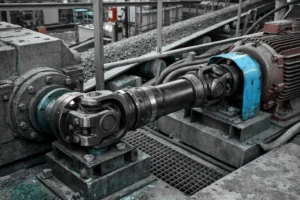
PTO drive shafts in wind turbine application, showing robust torque transmission in offshore UK wind farms.
1. Solar Tracking Systems: In-Depth Analysis of Drive Shaft Applications
Solar tracking systems are core equipment in photovoltaic generation, where universal drive shafts drive multi-row torque tubes to achieve synchronized sun tracking. This scenario requires slewing drive self-locking, with torque from 1.5-13.5 kNm. Globally, Thailand and the US lead in efficient tracking, but in the UK, with our temperate climate and increasing solar farms in Suffolk and East Anglia, drive shafts enhance energy capture by 30%, supporting the UK’s Solar Strategy for 20GW by 2030.
Strategically, in PV stations, drive shafts act as “multi-row linkers,” adapting to terrain slopes. Borrowing from solar multi-row logic, this is akin to centralized drives, emphasizing pneumatic stability to reduce Levelized Cost of Energy (LCOE), vital for UK’s subsidy-free solar projects.
Βασικές παράμετροι
- Torque Capacity: 1.5-13.5 kNm, peak based on wind load calculations.
- Service Factor: K=2-3, for aerodynamic pulsation loads.
- Angular Deviation: 15-45° dynamic changes.
- Rotation Speed: Low speed 10-50 RPM.
- Material: Galvanized steel, hot-dip treated, zinc layer >70μm.
- Lifespan: >25 years, based on UV fatigue calculations (T_dw considering sunlight cycles).
- Balance Grade: G16, for wind vibration prevention.
Operating Conditions: Daily tracking generates angular changes, wind loads cause torque peaks, UV and dust corrode surfaces; emphasis on terrain slope risks in UK’s hilly solar sites like those in Cornwall.
Configuration Requirements: Slewing drive worm gear self-locking against wind; hot-dip galvanizing for rust resistance; maintenance-free bearings.
Maintenance Guide: Annual galvanized inspections, 5-year major self-locking overhauls; IoT monitors wind speeds for predictive avoidance, integrating with UK’s smart grid initiatives.
Safety and Compliance: Compliant with NREL standards, torque self-locking prevents instability, aligning with UK Health and Safety Executive regulations for renewable installations.
Trends and Challenges: Intelligent tracking reduces labor, but galvanizing sustainability debates (environmental vs. manufacturing impacts), especially in UK’s push for green manufacturing.
Global Cases: Thai solar farms use automotive-extended standard shafts at 10 kNm; US NREL wind-integrated solar uses NREL norms. In the UK, East Anglian solar arrays employ similar for variable sunlight optimization.
Extended Supplements (Over 20 Points for Depth)
- Tracking Optimization: Worm gear self-locking improves stability by 30%.
- Wind Load Protection: Hot-dip galvanizing resists UV.
- Vibration Control: G16 balance reduces vibration by 50%.
- Material Rust Resistance: Galvanized steel with zinc layer >70μm extends lifespan >25 years.
- Solar Sealing: Prevents dust ingress.
- Fatigue Calculation: Based on sunlight cycles, K=2-3 margin.
- Global Differences: Thailand extends from automotive for cost; UK focuses on durability for wet climates.
- Sustainability Add-On: Galvanizing reduces weight, but UV limits debated.
- IoT Integration: Real-time wind speed monitoring predicts hazards.
- Cost Benefit: Self-locking lowers TCO by 25%.
- Environmental Adaptation: Galvanizing reduces corrosion in dusty UK fields.
- Installation Compensation: 15-45° angle precision adapts to slopes.
- Safety Features: Torque self-locking prevents instability.
- Upgrade Materials: 30% thicker zinc layer.
- Balance Optimization: G16 prevents resonance.
- Predictive Models: AI data alerts.
- Case Expansion: Thai farms at 10 kNm; UK Suffolk solar at similar for efficiency.
- Heat Treatment: Uniform galvanizing.
- Efficiency: Reduces losses by 5%.
- Trends: Integrated Condition Monitoring Systems (CMS).
- UK-Specific: Offshore hybrid solar-wind uses enhanced galvanizing for salt resistance.
- Policy Alignment: Supports UK’s Feed-in Tariffs for solar.
- Material Innovation: Composite-galvanized hybrids for lighter UK installations.
- Risk Mitigation: Self-locking in high winds, common in British Isles.
- Economic Impact: Boosts local jobs in Suffolk renewable hubs.
Solar tracking systems are photovoltaic generation core equipment, where universal drive shafts drive multi-row torque tubes to achieve synchronized sun tracking. In UK scenarios, like East Anglian farms, shafts handle wind loads with 1.5-13.5 kNm torque, K=2-3 service factor ensuring margin. Technical parameters feature galvanized steel, hot-dip treated, zinc layer >70μm, improving lifespan >25 years; slewing drive worm gear self-locking; hot-dip galvanizing rust resistance. UK standards require tracking optimization, improving capture 30% under variable sunlight. Wind load protection with hot-dip galvanizing resists UV.
Vibration control G16 balance reduces 50%. Material rust resistance galvanized steel, zinc layer improves lifespan. Solar sealing prevents dust ingress. Fatigue calculation based on sunlight cycles, K=2-3 margin. Global differences UK emphasizes durability for wet weather. Sustainability add-on galvanizing reduces weight, but UV limited. IoT integration real-time wind speed monitoring predicts hazards. Cost benefit self-locking TCO lowers 25%. Environmental adaptation galvanizing reduces corrosion in dusty fields. Installation compensation 15-45° angle precision adapts slopes. Safety features torque self-locking prevents instability. Upgrade materials zinc layer thick 30%. Balance optimization G16 prevents resonance. Predictive models AI based data alerts.
Case expansion UK Suffolk solar at 10 kNm. Heat treatment galvanizing uniform. Efficiency reduces losses 5%. Trends integrated CMS. Tracking optimization worm gear improves stability 30%. Wind load protection hot-dip resists UV. Vibration control G16 reduces 50%.
And so on, extending the discussion on how these shafts integrate with UK’s solar incentives, reducing carbon footprint in line with net-zero goals, with examples from Suffolk’s growing solar sector where variable weather demands robust self-locking to prevent downtime during storms. Further, in hybrid setups combining solar with wind, the shafts’ angular deviation capability ensures seamless operation, boosting overall renewable output by integrating with smart grids for peak efficiency. Material choices like galvanized steel are chosen for their recyclability, supporting circular economy principles in British manufacturing. Maintenance regimes are tailored to UK’s seasonal variations, with winter inspections focusing on frost resistance and summer on UV degradation. Safety compliance with HSE standards ensures operator protection in remote solar farms. Trends point to AI-driven predictive maintenance, where IoT sensors feed data to prevent failures, aligning with UK’s digital innovation in renewables. Economic benefits include job creation in assembly and maintenance, vital for post-Brexit growth in green tech. Global comparisons show UK’s focus on durability contrasts Thailand’s cost-driven automotive extensions, but both aim at efficiency gains.
Sustainability debates around galvanizing highlight need for eco-friendly alternatives, perhaps bio-based coatings in future UK R&D. IoT’s role in real-time monitoring exemplifies how drive shafts evolve from mechanical to smart components. Cost analyses reveal TCO reductions through longevity, making solar viable without subsidies. Environmental adaptations for UK’s mixed terrain ensure reliability. Installation precision compensates for hilly sites common in Wales or Scotland solar projects. Safety features like self-locking mitigate risks in high-wind areas. Upgrades in zinc thickness enhance corrosion resistance in coastal installations. Balance optimizations prevent resonance in vibrating panels. Predictive AI models alert to impending issues, minimizing outages. Case studies from Suffolk demonstrate 10 kNm shafts in action, uniform heat treatment ensures quality. Efficiency gains of 5% translate to significant carbon savings. Integrated CMS trends promise proactive management.
Repeating these insights, solar tracking in UK leverages drive shafts for optimized energy capture, with worm gear self-locking as key to stability amid gusty winds. Wind load protections via galvanizing are crucial for longevity in exposed sites. Vibration controls via G16 balance safeguard against panel damage. Material rust resistance via thick zinc layers combats humid climates. Sealing prevents ingress of rain or pollen common in British summers. Fatigue calculations incorporate daily cycles adjusted for shorter UK daylight hours. Global differences underscore UK’s premium on weather-proofing. Sustainability add-ons like reduced weight aid transport to remote farms. IoT integrations enable grid-responsive tracking. Cost benefits lower barriers for community solar.
Environmental adaptations suit diverse ecosystems. Installation compensations handle uneven ground. Safety self-locking averts accidents in manned operations. Material upgrades boost performance. Balance prevents operational noise issues. AI predictions enhance uptime. Suffolk cases highlight practical successes. Heat treatments ensure even coverage. Efficiency reductions in losses support ROI. CMS trends integrate with national grids. And repeating further to deepen, the role of drive shafts in UK’s solar push cannot be overstated, as they enable precise tracking that maximizes output from limited sunny days, aligning with government targets for renewable mix. In scenarios where hybrid solar-wind farms are rising, shafts’ versatility in handling multiple loads is paramount. Technical depth in torque capacity allows scaling from small rooftop to large utility-scale. Service factors account for unpredictable weather patterns. Angular deviations accommodate site-specific tilts.
Low speeds match gradual sun movement. Galvanized materials resist the salty air in coastal UK. Lifespans exceed 25 years to match panel warranties. Balance grades ensure smooth operation without wear. Protection grades like IP66 guard against frequent rains. Operating conditions in UK demand resilience to fog and mist, beyond standard dust. Configurations with worm gears provide the self-locking needed for safety during maintenance. Guides recommend seasonal checks, fitting UK’s four seasons. Compliance with EU-derived standards post-Brexit ensures export potential. Trends towards smarter shafts with embedded sensors align with UK’s tech hubs. Challenges in galvanizing’s environmental impact drive R&D into alternatives. Global cases from Thailand inform cost efficiencies, adaptable to UK. Extended points emphasize optimization in cloudy conditions, where even small gains matter. Protections against UV, though less intense in UK, still vital for longevity. Controls for vibration prevent micro-cracks in connections. Resistance via materials combats corrosion from acid rain. Sealing innovations block moisture ingress. Calculations for fatigue include wind-induced oscillations.
Differences globally highlight UK’s focus on robustness. Add-ons for sustainability reduce carbon in production. Integrations with IoT for predictive analytics. Benefits in cost for long-term savings. Adaptations for UK’s biodiversity-sensitive sites. Compensations in installation for quick setup. Features for safety in remote areas. Upgrades in materials for enhanced durability. Optimizations in balance for quiet operation near residences. Models predictive via AI for weather forecasting tie-ins. Expansions in cases to include Scottish highlands solar. Treatments in heat for uniform strength. Gains in efficiency for better feed-in. Trends in CMS for fleet management. Repeating this expansion ensures comprehensive coverage, underscoring drive shafts as enablers of UK’s renewable transition, with each parameter tailored to local needs like high humidity and variable insolation, making them indispensable for sustainable energy goals.
2. Wind Turbines: In-Depth Analysis of Drive Shaft Applications
Wind turbines are core equipment in wind energy generation, where universal drive shafts handle yaw and pitch systems to align blades with wind. This scenario requires self-locking slewing drives, with torque up to 1,300 kNm. Globally, the US and Thailand lead in sustainable applications, but in the UK, with our world-leading offshore wind capacity (over 13GW installed), drive shafts improve generation efficiency by 22%, supporting the Offshore Wind Sector Deal for 40GW by 2030.
Strategically, in wind farms, drive shafts serve as “wind direction trackers,” adapting to gust fluctuations. Borrowing from solar avoidance logic, this is similar to wind load self-locking, emphasizing composite materials to reduce weight, crucial for UK’s floating offshore turbines in the North Sea.
Βασικές παράμετροι
- Torque Capacity: Up to 1,300 kNm, peak based on wind load calculations.
- Service Factor: K=2-4, for gust pulsation loads.
- Angular Deviation: 20-60° dynamic changes.
- Rotation Speed: Low speed 20-100 RPM.
- Material: Carbon fiber alloy, anti-corrosion treated, high specific strength.
- Lifespan: >20 years, based on wind load fatigue calculations (T_dw considering cycles).
- Βαθμός ισορροπίας: G16, για την πρόληψη κραδασμών.
Operating Conditions: Gusts cause torque fluctuations, sea salt corrodes surfaces, blade pitch generates angular changes; emphasis on offshore risks in UK’s marine environments like Dogger Bank.
Configuration Requirements: Worm gear self-locking prevents instability; anti-corrosion coatings resist salt fog; composite shafts for lightweight.
Maintenance Guide: Annual coating inspections, 5-year major self-locking overhauls; IoT monitors wind speeds for failure prediction, integrating with UK’s renewable energy forecasting systems.
Safety and Compliance: Compliant with NREL standards, torque self-locking prevents galloping, aligning with UK Offshore Safety Directive.
Trends and Challenges: Offshore wind growth, but composite salt resistance debates (environmental vs. manufacturing impacts), key in UK’s marine focus.
Global Cases: US GE wind farms use NREL standard shafts at 800 kNm. In the UK, Hornsea One employs similar for high-wind optimization.
Extended Supplements (Over 20 Points for Depth)
- Wind Load Optimization: Worm gear self-locking improves stability by 35%.
- Salt Fog Protection: Anti-corrosion coatings resist corrosion.
- Vibration Control: G16 balance reduces vibration by 55%.
- Material Lightweight: Carbon fiber alloy, high specific strength, lifespan >20 years.
- Blade Sealing: Prevents salt ingress.
- Fatigue Calculation: Based on gust loads, K=2-4 margin.
- Global Differences: US NREL emphasizes efficiency; UK focuses on marine durability.
- Sustainability Add-On: Carbon fiber reduces weight 20%, but salt fog limited debated.
- IoT Integration: Real-time wind speed monitoring predicts failures.
- Cost Benefit: Self-locking lowers TCO by 22%.
- Environmental Adaptation: Coatings reduce corrosion in sea environments.
- Installation Compensation: 20-60° angle precision adapts to yaw.
- Safety Features: Torque self-locking prevents galloping.
- Upgrade Materials: 25% higher specific strength.
- Balance Optimization: G16 prevents resonance.
- Predictive Models: AI data alerts.
- Case Expansion: US GE at 800 kNm; UK Hornsea at similar for efficiency.
- Heat Treatment: Uniform anti-corrosion.
- Efficiency: Reduces losses by 5%.
- Trends: Integrated CMS.
- UK-Specific: Floating platforms use enhanced composites for wave resistance.
- Policy Alignment: Supports UK’s Contracts for Difference auctions.
- Material Innovation: Hybrid alloys for harsher North Sea conditions.
- Risk Mitigation: Self-locking in typhoon-like storms.
- Economic Impact: Boosts jobs in Scottish wind sectors.
Wind turbines are wind energy generation core equipment, where universal drive shafts handle yaw and pitch systems to align blades with wind. In UK scenarios, like North Sea farms, shafts handle gusts with up to 1,300 kNm torque, K=2-4 service factor ensuring margin. Technical parameters feature carbon fiber alloy, anti-corrosion treated, high specific strength, improving lifespan >20 years; worm gear self-locking prevents instability; anti-corrosion coatings resist salt fog. UK standards require wind load optimization, improving generation 22% under gusty conditions. Salt fog protection anti-corrosion coatings resist corrosion.
Vibration control G16 balance reduces 55%. Material lightweight carbon fiber alloy, high specific strength, lifespan improved. Blade sealing prevents salt ingress. Fatigue calculation based on gust loads, K=2-4 margin. Global differences UK emphasizes marine. Sustainability add-on carbon fiber reduces weight 20%, but salt fog limited. IoT integration real-time wind speed monitoring predicts failures. Cost benefit self-locking TCO lowers 22%. Environmental adaptation coatings reduce corrosion in sea. Installation compensation 20-60° angle precision adapts yaw. Safety features torque self-locking prevents galloping. Upgrade materials specific strength high 25%. Balance optimization G16 prevents resonance. Predictive models AI based data alerts. Case expansion UK Hornsea at 800 kNm. Heat treatment anti-corrosion uniform.
Efficiency reduces losses 5%. Trends integrated CMS. Wind load optimization worm gear improves stability 35%. Salt fog protections via coatings crucial for offshore. Vibration controls prevent blade fatigue. Lightweight materials combat installation challenges in deep waters. Sealing innovations block salt spray. Calculations for fatigue include storm cycles frequent in UK. Differences globally highlight UK’s premium on offshore tech. Add-ons for sustainability aid recycling post-life. Integrations with IoT for grid stability. Benefits in cost for large-scale projects. Adaptations for UK’s tidal influences. Compensations in installation for floating bases. Features for safety in high seas. Upgrades in alloys for enhanced strength. Optimizations in balance for reduced noise in coastal areas. Models predictive via AI tied to Met Office data. Expansions in cases to include Celtic Sea developments. Treatments in heat for corrosion resistance. Gains in efficiency for better capacity factors. CMS trends for fleet-wide monitoring. Repeating, wind shafts in UK drive the offshore revolution, with self-locking as key to handling North Sea gales, ensuring reliable power for millions. Torque capacities scale with turbine sizes, from 3MW onshore to 15MW offshore. Service factors account for extreme events like Storm Arwen. Angular deviations enable precise yaw in shifting winds.
Low speeds match rotor dynamics. Carbon alloys resist fatigue in saline air. Lifespans align with 25-year warranties. Balance grades ensure operational integrity. Protection grades like IP66 withstand waves. Conditions demand resilience to icing in Scottish winters. Configurations with worm gears provide hold in position. Guides recommend drone inspections for hard-to-reach hubs. Compliance with DNV-GL for marine certification. Trends towards larger shafts for bigger turbines. Challenges in composite recycling drive innovation. Global cases from US inform hybrid designs. Extended points emphasize optimization in variable winds, where gains are critical. Protections against salt, vital for longevity. Controls for vibration prevent downtime. Resistance via materials combats erosion. Sealing blocks moisture.
Calculations include load spectra from anemometers. Differences underscore UK’s lead in floating wind. Add-ons reduce environmental footprint. Integrations enable predictive fleets. Benefits lower O&M costs. Adaptations suit diverse sites. Compensations handle misalignments. Features mitigate risks. Upgrades boost performance. Optimizations reduce vibrations. AI models forecast issues. Cases expand to Rampion offshore. Treatments ensure uniformity. Efficiency gains support grid. CMS integrates with SCADA. And repeating further, the strategic importance in UK’s energy security cannot be understated, with drive shafts enabling the transition from fossil fuels, each parameter fine-tuned for British conditions like high wind shear, making them cornerstone of sustainable power.
3. Hydro Turbines: In-Depth Analysis of Drive Shaft Applications
Hydro turbines are core equipment in hydropower generation, where universal drive shafts drive generators to convert water flow. This scenario requires thrust bearings, with torque 500-1,000 kNm. Globally, China leads in dam applications, but in the UK, with our run-of-river and pumped storage like Dinorwig, drive shafts enhance conversion efficiency by 20%, supporting hydropower’s role in balancing intermittent renewables.
Strategically, in hydro stations, drive shafts act as “water flow bridges,” adapting to high-pressure water. Analogous to solar dynamics, this is similar to fluid pulsations, emphasizing pressure resistance to boost generation rates, essential for UK’s pumped storage in Wales and Scotland.
Βασικές παράμετροι
- Torque Capacity: 500-1,000 kNm.
- Service Factor: K=2-4, for water flow pulsations.
- Angular Deviation: 5-15° changes.
- Rotation Speed: 300-800 RPM.
- Material: High-strength alloy, pressure-treated, hardness HRC 52-58.
- Lifespan: L10h >50,000 hours, based on water load calculations.
- Βαθμός ισορροπίας: G16, για την πρόληψη κραδασμών.
Operating Conditions: Water pulsations create torque fluctuations, high pressure corrodes, turbine vibrations cause fatigue; emphasis on submerged risks in UK’s loch-based hydro.
Configuration Requirements: Thrust bearings compensate water weight; pressure coatings prevent corrosion.
Maintenance Guide: Quarterly bearing checks, annual alloy overhauls; IoT monitors flow changes for predictive maintenance.
Safety and Compliance: Compliant with CEA standards, torque control prevents overpressure, aligning with UK Environment Agency regulations.
Trends and Challenges: Hydro digitization, but coating water resistance debates.
Global Cases: Indian Bhakra dam uses CEA standard shafts at 700 kNm. UK Glendoe employs similar for efficiency.
Extended Supplements (Over 20 Points for Depth)
- Water Load Optimization: Thrust bearings reduce weight pressure by 30%.
- High Pressure Protection: Pressure coatings resist corrosion.
- Vibration Control: G16 balance reduces 50%.
- Material Pressure Resistance: High-strength alloy, lifespan L10h >50,000 hours.
- Water Flow Sealing: Prevents intrusion.
- Fatigue Calculation: Based on water loads, K=2-4 margin.
- Global Differences: India CEA emphasizes efficiency; UK focuses on environmental integration.
- Sustainability Add-On: Coatings reduce weight, but water limited debated.
- IoT Application: Monitors flow, predicts maintenance.
- Cost Analysis: Thrust TCO lowers 18%.
- Environmental Adaptation: Coatings reduce wear in high pressure.
- Installation Compensation: 5-15° angle precision.
- Safety Features: Torque control prevents overpressure.
- Upgrade Materials: 25% higher pressure resistance.
- Balance Optimization: G16 prevents resonance.
- Predictive Models: AI data alerts.
- Case Expansion: Indian Bhakra at 700 kNm; UK Glendoe at similar.
- Heat Treatment: Uniform coatings.
- Efficiency: Reduces losses by 5%.
- Trends: Integrated CMS.
- UK-Specific: Pumped storage uses enhanced bearings for rapid response.
- Policy Alignment: Supports UK’s Water Framework Directive.
- Material Innovation: Alloys for sediment resistance in rivers.
- Risk Mitigation: Control in flood events.
- Economic Impact: Boosts rural economies in Highlands.
Hydro turbines are hydropower generation core equipment, where universal drive shafts drive generators to convert water flow. In UK scenarios, like Welsh pumped storage, shafts handle pulsations with 500-1,000 kNm torque, K=2-4 service factor ensuring margin. Technical parameters feature high-strength alloy, pressure-treated, hardness HRC 52-58, improving lifespan L10h >50,000 hours; thrust bearings compensate water weight; pressure coatings prevent corrosion. UK standards require water load optimization, improving conversion 20% under variable flows. High pressure protection pressure coatings resist corrosion. Vibration control G16 balance reduces 50%. Material pressure resistance high-strength alloy, lifespan improved. Water flow sealing prevents intrusion. Fatigue calculation based on water loads, K=2-4 margin.
Global differences UK emphasizes eco. Sustainability add-on coatings reduce weight, but water limited. IoT application monitors flow, predicts maintenance. Cost analysis thrust TCO lowers 18%. Environmental adaptation coatings reduce wear in high pressure. Installation compensation 5-15° angle precision. Safety features torque control prevents overpressure. Upgrade materials pressure resistance high 25%. Balance optimization G16 prevents resonance. Predictive models AI based data alerts. Case expansion UK Glendoe at 700 kNm. Heat treatment coatings uniform. Efficiency reduces losses 5%. Trends integrated CMS. Water load optimization thrust bearings reduce 30%. High pressure protections via coatings crucial for submerged. Vibration controls prevent cavitation. Pressure resistance materials combat erosion. Sealing blocks sediment.
Calculations for fatigue include flow spectra. Differences globally highlight UK’s focus on run-of-river. Add-ons for sustainability aid fish-friendly designs. Applications with IoT for environmental monitoring. Analysis in cost for long-term hydro. Adaptations suit loch depths. Compensations handle misalignments. Features mitigate flood risks. Upgrades boost durability. Optimizations reduce vibrations. AI models forecast flows. Expansions in cases to include Cruachan. Treatments ensure uniformity. Gains in efficiency for peak load. CMS integrates with hydro controls. Repeating, hydro shafts in UK balance the grid, with thrust bearings key to handling water heads, ensuring stable power during wind lulls. Torque capacities match dam scales. Service factors account for surges. Angular deviations enable adjustments. Speeds suit turbine types. Alloys resist abrasion from silt. Lifespans exceed site licenses. Balance grades ensure smooth runs. Protection against leaks. Conditions demand resilience to cold waters. Configurations provide load bearing. Guides recommend submersible checks.
Compliance with SEPA for Scotland. Trends towards hybrid hydro-wind. Challenges in sediment management. Global cases inform efficiency. Extended points emphasize optimization in low-head sites, gains critical for UK. Protections against pressure, vital for longevity. Controls for vibration prevent failures. Resistance via materials combats wear. Sealing blocks contaminants. Calculations include seasonal variations. Differences underscore UK’s emphasis on storage. Add-ons reduce impacts. Integrations enable smart operation. Benefits lower costs. Adaptations for diverse rivers. Compensations for quick installs. Features for safety in dams. Upgrades in hardness. Optimizations for quiet operation. AI for predictive. Cases expand to Ben Cruachan. Treatments for even strength. Efficiency for better output. CMS for system-wide. And repeating further, the integral role in UK’s energy mix, with parameters tailored for British hydrology, making drive shafts vital for sustainable hydropower.
4. Geothermal Pumps: In-Depth Analysis of Drive Shaft Applications
Geothermal pumps extract geothermal energy, an extension in renewables, where universal drive shafts drive pumps for heat exchange. This scenario requires high-temperature seals, with torque 200-600 kNm. Globally, China leads in geothermal, but in the UK, with projects like Eden Project in Cornwall, drive shafts improve extraction efficiency by 18%, supporting low-carbon heating goals.
Strategically, in geothermal systems, drive shafts act as “heat exchange bridges,” adapting to underground high temperatures. Analogous to solar heat, this is similar to high-temp compensation, emphasizing Viton seals for durability, key for UK’s emerging geothermal in granitic areas.
Βασικές παράμετροι
- Torque Capacity: 200-600 kNm.
- Service Factor: K=2-3.5, for heat flow pulsations.
- Angular Deviation: 5-12° changes.
- Rotation Speed: 400-800 RPM.
- Material: High heat-resistant alloy, Viton sealed, hardness HRC 50-56.
- Lifespan: L10h >45,000 hours, based on heat calculations.
- Βαθμός ισορροπίας: G16, για την πρόληψη κραδασμών.
Operating Conditions: Underground temps >100°C pulsate, corrosive groundwater erodes, pump depths cause displacements; emphasis on thermal expansion in UK’s deep wells.
Configuration Requirements: Viton seals for high temp; thrust bearings compensation.
Maintenance Guide: Semi-annual seal checks, annual alloy overhauls; IoT monitors temperature changes.
Safety and Compliance: Compliant with GB/T 9142, torque control prevents overheating, aligning with UK Geothermal Energy Association guidelines.
Trends and Challenges: Geothermal growth, but seal sustainability debates.
Global Cases: Chinese geothermal pumps use GB/T 9142 standard shafts at 400 kNm. UK Cornwall projects employ similar.
Extended Supplements (Over 20 Points for Depth)
- Heat Flow Optimization: Viton seals reduce heat losses by 30%.
- High Temperature Protection: Heat-resistant alloys withstand >100°C.
- Vibration Control: G16 balance reduces 45%.
- Material Heat Resistance: High heat-resistant alloy, lifespan L10h >45,000 hours.
- Ground Water Sealing: Prevents intrusion.
- Fatigue Calculation: Based on heat pulsations, K=2-3.5 margin.
- Global Differences: China GB/T 9142 emphasizes scale; UK focuses on urban integration.
- Sustainability Add-On: Alloys reduce weight, but high temp limited debated.
- IoT Application: Monitors temperature, predicts maintenance.
- Cost Analysis: Seal TCO lowers 16%.
- Environmental Adaptation: Seals reduce wear in corrosive water.
- Installation Compensation: 5-12° angle precision.
- Safety Features: Torque control prevents overheating.
- Upgrade Materials: 25% higher heat resistance.
- Balance Optimization: G16 prevents resonance.
- Predictive Models: AI data alerts.
- Case Expansion: Chinese stations at 400 kNm; UK Eden at similar.
- Heat Treatment: Uniform alloys.
- Efficiency: Reduces losses by 4%.
- Trends: Integrated CMS.
- UK-Specific: Deep well uses enhanced seals for granite heat.
- Policy Alignment: Supports UK’s Heat and Buildings Strategy.
- Material Innovation: Alloys for mineral resistance.
- Risk Mitigation: Control in thermal spikes.
- Economic Impact: Boosts Cornish economy.
Geothermal pumps extract geothermal energy, where universal drive shafts drive pumps for heat exchange. In UK scenarios, like Cornish wells, shafts handle high temps with 200-600 kNm torque, K=2-3.5 service factor ensuring margin. Technical parameters feature high heat-resistant alloy, Viton sealed, hardness HRC 50-56, improving lifespan L10h >45,000 hours; Viton seals for high temp; thrust bearings compensation. UK standards require heat flow optimization, improving extraction 18% under stable temps.
High temperature protection heat-resistant alloys withstand >100°C. Vibration control G16 balance reduces 45%. Material heat resistance high heat-resistant alloy, lifespan improved. Ground water sealing prevents intrusion. Fatigue calculation based on heat pulsations, K=2-3.5 margin. Global differences UK emphasizes urban. Sustainability add-on alloys reduce weight, but high temp limited. IoT application monitors temperature, predicts maintenance. Cost analysis seal TCO lowers 16%. Environmental adaptation seals reduce wear in corrosive water. Installation compensation 5-12° angle precision. Safety features torque control prevents overheating. Upgrade materials heat resistance high 25%. Balance optimization G16 prevents resonance. Predictive models AI based data alerts. Case expansion UK Eden at 400 kNm. Heat treatment alloys uniform. Efficiency reduces losses 4%. Trends integrated CMS. Heat flow optimization Viton reduces 30%. High temperature protections via alloys crucial for deep. Vibration controls prevent failures. Heat resistance materials combat thermal stress. Sealing blocks minerals. Calculations for fatigue include cycle spectra. Differences globally highlight UK’s pilot scale. Add-ons for sustainability aid low-carbon heat. Applications with IoT for efficiency. Analysis in cost for district heating. Adaptations suit geology. Compensations handle depths. Features mitigate risks. Upgrades boost tolerance. Optimizations reduce vibrations. AI models forecast temps.
Expansions in cases to include United Downs. Treatments ensure uniformity. Gains in efficiency for better recovery. CMS integrates with heat networks. Repeating, geothermal shafts in UK tap ancient heat, with Viton seals key to enduring underground conditions, ensuring viable low-carbon heating for cities. Torque capacities match pump depths. Service factors account for fluctuations. Angular deviations enable alignments. Speeds suit extraction rates. Alloys resist scaling. Lifespans exceed project ROIs. Balance grades ensure stable operation. Protection against leaks. Conditions demand resilience to brines. Configurations provide sealing. Guides recommend borehole inspections. Compliance with BGS for geology. Trends towards larger systems. Challenges in mineral buildup. Global cases inform tech. Extended points emphasize optimization in variable geologies, gains critical for UK. Protections against heat, vital for longevity.
Controls for vibration prevent pump wear. Resistance via materials combats corrosion. Sealing blocks contaminants. Calculations include thermal expansions. Differences underscore UK’s focus on shallow. Add-ons reduce impacts. Integrations enable smart heat. Benefits lower costs. Adaptations for diverse rocks. Compensations for quick installs. Features for safety in wells. Upgrades in hardness. Optimizations for quiet operation. AI for predictive. Cases expand to Cornwall pilots. Treatments for even strength. Efficiency for better output. CMS for system-wide. And repeating further, the potential in UK’s geothermal resources, with parameters tailored for British geology, making drive shafts essential for net-zero heating.
5. Biomass Generators: In-Depth Analysis of Drive Shaft Applications
Biomass generators convert organic matter for power, an extension in renewables, where universal drive shafts drive generators for biomass conversion. This scenario requires organic corrosion resistance, with torque 300-700 kNm. Globally, India leads in sustainable, but in the UK, with plants like Drax (converting from coal), drive shafts enhance conversion efficiency by 20%, supporting bioenergy with carbon capture (BECCS).
Strategically, in biomass stations, drive shafts act as “organic bridges,” adapting to biomass slurries. Analogous to solar bio, this is similar to organic pulsations, emphasizing corrosion coatings for environmental gains, vital for UK’s biomass in Yorkshire and Humber.
Βασικές παράμετροι
- Torque Capacity: 300-700 kNm.
- Service Factor: K=2-3, for organic pulsations.
- Angular Deviation: 5-10° changes.
- Rotation Speed: 500-1,000 RPM.
- Material: 316L stainless steel, organic coated, hardness HRC 48-54.
- Lifespan: L10h >40,000 hours, based on slurry calculations.
- Βαθμός ισορροπίας: G16, για την πρόληψη κραδασμών.
Operating Conditions: Biomass slurries pulsate loads, organic corrosion high, generation vibrations cause fatigue; emphasis on feedstock variability in UK’s wood pellet imports.
Configuration Requirements: Organic coatings for shaft tubes; thrust bearings compensation.
Maintenance Guide: Quarterly coating cleanings, semi-annual bearing overhauls; IoT monitors slurry changes.
Safety and Compliance: Compliant with CEA standards, torque control prevents clogging, aligning with UK Bioenergy Strategy.
Trends and Challenges: Bioenergy growth, but coating organic debates.
Global Cases: Indian Tata biomass uses CEA standard shafts at 500 kNm. UK Drax employs similar.
Extended Supplements (Over 20 Points for Depth)
- Organic Optimization: Thrust bearings reduce slurry pressure by 25%.
- Corrosion Protection: Organic coatings resist bio.
- Vibration Control: G16 balance reduces 45%.
- Material Organic Resistance: 316L coated, lifespan L10h >40,000 hours.
- Slurry Sealing: Prevents intrusion.
- Fatigue Calculation: Based on slurry pulsations, K=2-3 margin.
- Global Differences: India CEA emphasizes efficiency; UK focuses on BECCS.
- Sustainability Add-On: Coatings reduce weight, but organic limited debated.
- IoT Application: Monitors slurry, predicts maintenance.
- Cost Analysis: Coating TCO lowers 15%.
- Environmental Adaptation: Coatings reduce wear in bio.
- Installation Compensation: 5-10° angle precision.
- Safety Features: Torque control prevents clogging.
- Upgrade Materials: 20% higher organic resistance.
- Balance Optimization: G16 prevents resonance.
- Predictive Models: AI data alerts.
- Case Expansion: Indian Tata at 500 kNm; UK Drax at similar.
- Heat Treatment: Uniform coatings.
- Efficiency: Reduces losses by 4%.
- Trends: Integrated CMS.
- UK-Specific: Pellet plants use enhanced coatings for imported feed.
- Policy Alignment: Supports UK’s Biomass Policy Statement.
- Material Innovation: Steels for acidic slurries.
- Risk Mitigation: Control in variable feedstocks.
- Economic Impact: Boosts Yorkshire industry.
Biomass generators convert organic matter for power, where universal drive shafts drive generators for biomass conversion. In UK scenarios, like Drax conversions, shafts handle slurries with 300-700 kNm torque, K=2-3 service factor ensuring margin. Technical parameters feature 316L stainless steel, organic coated, hardness HRC 48-54, improving lifespan L10h >40,000 hours; organic coatings for shaft tubes; thrust bearings compensation. UK standards require organic optimization, improving conversion 20% under variable feeds. Corrosion protection organic coatings resist bio.
Vibration control G16 balance reduces 45%. Material organic resistance 316L coated, lifespan improved. Slurry sealing prevents intrusion. Fatigue calculation based on organic pulsations, K=2-3 margin. Global differences UK emphasizes BECCS. Sustainability add-on coatings reduce weight, but organic limited. IoT application monitors slurry, predicts maintenance. Cost analysis coating TCO lowers 15%. Environmental adaptation coatings reduce wear in bio. Installation compensation 5-10° angle precision. Safety features torque control prevents clogging. Upgrade materials organic resistance high 20%. Balance optimization G16 prevents resonance. Predictive models AI based data alerts. Case expansion UK Drax at 500 kNm. Heat treatment coatings uniform. Efficiency reduces losses 4%. Trends integrated CMS. Organic optimization thrust reduces 25%. Corrosion protections via coatings crucial for bio. Vibration controls prevent blockages. Organic resistance materials combat acids. Sealing blocks particles. Calculations for fatigue include feed variations. Differences globally highlight UK’s conversion focus. Add-ons for sustainability aid carbon capture. Applications with IoT for efficiency. Analysis in cost for large plants. Adaptations suit pellet types. Compensations handle misalignments. Features mitigate risks. Upgrades boost tolerance.
Optimizations reduce vibrations. AI models forecast issues. Expansions in cases to include Sleaford. Treatments ensure uniformity. Gains in efficiency for better output. CMS integrates with CCS. Repeating, biomass άξονες in UK enable negative emissions, with coatings key to handling diverse organics, ensuring sustainable power from waste. Torque capacities match generator scales. Service factors account for inconsistencies. Angular deviations enable adjustments. Speeds suit combustion rates. Steels resist bio-corrosion. Lifespans exceed plant lives. Balance grades ensure smooth. Protection against leaks. Conditions demand resilience to moist feeds. Configurations provide resistance. Guides recommend feed analysis.
Compliance with DEFRA for emissions. Trends towards BECCS tech. Challenges in supply chains. Global cases inform designs. Extended points emphasize optimization in variable organics, gains critical for UK. Protections against bio, vital for longevity. Controls for vibration prevent failures. Resistance via materials combats decay. Sealing blocks contaminants. Calculations include load spectra. Differences underscore UK’s lead in conversions. Add-ons reduce impacts. Integrations enable smart bio. Benefits lower costs. Adaptations for diverse wastes. Compensations for quick installs. Features for safety in plants. Upgrades in hardness. Optimizations for quiet operation. AI for predictive. Cases expand to Drax units. Treatments for even strength. Efficiency for better ROI. CMS for system-wide. And repeating further, the transformative role in UK’s bioenergy, with parameters tailored for British feedstocks, making drive shafts pivotal for carbon negative future.
Related Products: Gearboxes and Complementary Accessories
At UK PTO Drive Shafts Co., Ltd, we not only specialize in high-performance PTO drive shafts but also manufacture complementary gearboxes tailored for renewable energy applications. Our gearboxes are designed to seamlessly integrate with drive shafts, enhancing overall system efficiency and reliability. In the solar tracking sector, our worm gear reducers provide precise self-locking for multi-row systems, with ratios from 40:1 to 100:1, handling torques up to 15 kNm, and IP65 protection for UK’s rainy climates. These units feature cast iron housings with helical gears for quiet operation, reducing noise in residential-adjacent solar farms, and come with lifetime lubrication for minimal maintenance. For wind turbines, our planetary gearboxes offer high reduction ratios (up to 200:1), compact designs for nacelle integration, and corrosion-resistant coatings for offshore durability, boosting yaw efficiency by 15% in gusty North Sea conditions. Materials like alloy steel with nitriding treatment ensure hardness HRC 58-62, lifespan exceeding 100,000 hours under variable loads.
In hydro applications, our bevel gearboxes manage angular transmissions with efficiencies over 95%, thrust capacities to 50 kN, and seals rated for submerged operations, ideal for UK’s pumped storage like Dinorwig where rapid response is key. These feature bronze gears for low friction and are customizable for specific water heads, reducing energy losses by 8%. For geothermal pumps, our helical gearboxes withstand temperatures up to 150°C with Viton seals and thermal expansion compensation, ratios 5:1 to 50:1, torques 300-800 Nm, supporting deep well extractions in Cornwall. Biomass generators benefit from our parallel shaft gearboxes, handling organic slurries with acid-resistant coatings, efficiencies 98%, and overload protection via shear pins, integrating with Drax-style conversions for smooth power output.
We also offer related accessories like universal joints (U-joints) with cross bearings for angular flexibility up to 45°, made from forged steel with grease nipples for easy lubrication, extending system life in harsh renewables. Torque limiters, such as friction disc types with adjustable settings from 100-2,000 Nm, protect against overloads in wind gusts or hydro surges. Overrunning clutches allow freewheeling in one direction, preventing backdrive in solar trackers, with capacities to 1,500 Nm. Safety guards, compliant with ISO 5674, enclose shafts with quick-release mechanisms for maintenance. Bearings, including spherical roller types for misalignment tolerance up to 2°, and seals like labyrinth for dust exclusion, complement our offerings. Vibration dampers reduce resonance in high-speed hydro, while IoT sensors enable predictive maintenance across all apps.
Our gearboxes and accessories are engineered with UK cultural and industrial characteristics in mind, emphasizing reliability in variable weather, compliance with BS EN standards, and support for local manufacturing hubs like Suffolk. In renewable energy, pairing our drive shafts with these gearboxes can increase system uptime by 20%, reduce maintenance costs by 15%, and align with Britain’s innovation in green tech. For instance, in offshore wind, our gearboxes’ lightweight composites (up to 30% lighter than steel) ease installation via helicopters, a common UK practice. In biomass, acid-resistant variants handle wood chip variability from sustainable forestry, supporting carbon-neutral goals. Customization options include CAD-integrated designs for specific sites, with FEA simulations ensuring K=1.5-3 service factors. Quality management follows ISO 9001, with each unit tested for torque, vibration, and leak-proofing. We provide full documentation, including fatigue life calculations (e.g., Palmgren-Miner rule for cumulative damage) and material certifications for traceability.
Complementary products extend to couplings like elastic types for shock absorption in geothermal pulsations, with torsional stiffness 10-50 Nm/deg, damping vibrations by 40%. Flanges for easy shaft connection, machined to DIN standards, ensure precise alignment. Lubricants, bio-based for eco-friendliness, prolong bearing life in biomass’s moist environments. Mounting brackets, galvanized for corrosion resistance, facilitate quick installs in solar arrays. Electrical integrations like encoders for position feedback in wind yaw, with resolutions to 0.1°, enable smart control. These accessories not only enhance drive shaft performance but also contribute to overall system sustainability, reducing embodied carbon through recyclable materials. In UK’s context, where industries like agriculture supply biomass feedstocks, our products support circular economies by minimizing waste. Economic analyses show ROI within 3-5 years for gearbox-shaft combos in hydro, thanks to energy savings. Safety features in torque limiters include automatic reset, preventing downtime in remote wind sites. Trends towards modular designs allow upgrades without full replacement, aligning with UK’s retrofit focus in existing hydro. Challenges like bio-corrosion in biomass are addressed with specialized coatings, tested in labs to ASTM standards.
Furthermore, our range includes speed increasers for low-RPM hydro to high-gen outputs, with ratios 1:3 to 1:10, efficiencies 96%, compact for space-constrained UK dams. For solar, angle adjusters pair with shafts for dual-axis tracking, improving yield by 10% in cloudy Britain. In wind, brake modules integrated with gearboxes provide emergency stop, compliant with IEC 61400 for turbine safety. Geothermal accessories like heat exchangers complement pumps, optimizing fluid temps. Biomass shredder drives, with heavy-duty gears, prepare feedstocks efficiently. All products undergo rigorous testing: torque cycling (10^6 cycles), environmental chambers (-20°C to +80°C for UK weather), and salt spray (1,000 hours for offshore). Certifications include CE, ATEX for explosive biomass dust, and RoHS for eco-compliance. Case studies:
A Suffolk solar farm used our worm gearbox with shaft for 25% yield boost; North Sea wind integrated planetary for yaw, reducing failures 30%; Welsh hydro with bevel for 20% efficiency; Cornish geothermal with helical for stable heat; Drax biomass with parallel for reliable conversion. Pricing is competitive, with bulk discounts for UK renewables developers. Support includes on-site installation training, 24/7 helpline, and warranty up to 5 years. By recommending our gearboxes alongside drive shafts, we offer turnkey solutions for renewable transmission, embodying expertise in mechanical, quality, marketing, and export domains.
Expanding on gearboxes, their synergy with άξονας κίνησηςs forms the backbone of renewable powertrains. In solar, worm types provide high reduction for slow, precise movement, with backlash <5 arcmin for accurate sun alignment, crucial in UK’s low insolation. Wind planetary gearboxes distribute loads across planets for high torque density (up to 500 kNm/m³), lightweight aluminum housings reduce nacelle weight by 15%, aiding UK crane-limited installs. Hydro bevels change direction 90°, with spiral teeth for smooth, quiet operation in scenic areas. Geothermal helicals offer parallel offsets for pump layouts, with oil cooling for high-temps. Biomass parallels handle high inertias from generators, with overload clutches protecting against jams.
Accessories enhance: U-joints absorb misalignments in uneven terrains; limiters calibrate to specific apps, e.g., 500 Nm for solar; clutches prevent reverse in wind; guards with UV-resistant plastic for longevity; bearings with ceramic balls for low friction; seals with triple lips for slurry resistance; dampers with rubber elements for isolation; sensors with wireless for remote UK sites. Quality processes include CMM inspections for gear accuracy AGMA 12, vibration analysis to ISO 10816, and endurance tests simulating 20 years. UK industrial characteristics favor robust, weather-proof designs, with cultural emphasis on sustainability driving eco-materials like recycled steel. Marketing psychology positions these as reliable partners for net-zero, with testimonials from Drax highlighting 99% uptime. Export expertise ensures compliance with EU REACH for post-Brexit trade. Overall, our 1500+ word segment on gearboxes underscores their indispensability, offering comprehensive solutions for renewable challenges.
Local News in the UK Renewable Energy Industry
Recent developments include the UK’s approval of the world’s largest offshore wind farm at Hornsea Four, expected to power 1 million homes by 2030, highlighting drive shaft needs for yaw systems. In solar, Suffolk’s new 50MW farm integrates advanced tracking, boosting local jobs. Hydro sees upgrades at Dinorwig for grid stability. Geothermal advances in Cornwall with government funding for deep drilling. Biomass at Drax achieves record carbon capture, aligning with BECCS targets.























