
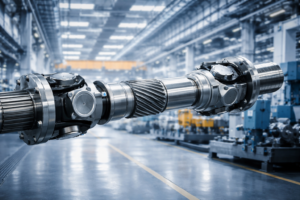
 Cardan shafts, fundamental in transmitting torque across misaligned axes, form the backbone of heavy-duty operations in Britain’s storied manufacturing landscape. From the steel mills of Sheffield to the mining rigs in Cornwall, these components handle angular deviations up to 30 degrees while enduring high torsional loads. In UK metallurgy, where precision rolling demands seamless power transfer under extreme heat, cardan shafts integrate with robust materials like 42CrMo4 alloy steel, offering fatigue resistance in environments exceeding 90°C. Mining applications in Wales and Scotland benefit from their vibration-damping properties, ensuring reliable operation in dusty, high-impact settings.
Key selection points include torque capacity ranging from 1 kNm in light processing to over 16,300,000 kNm in heavy extraction, balanced against service factors (K=1.5-10) for shock loads. Emerging trends incorporate composite fibers for weight reduction, aligning with UK’s push towards sustainable engineering under net-zero goals. Maintenance focuses on lubrication cycles every 1-3 months, with IoT sensors predicting failures to minimize downtime in critical sectors like offshore wind in East Anglia.
Extended Application Matrix: Beyond Traditional Boundaries
Drawing from global standards and UK-specific adaptations, this matrix expands on core industrial uses, incorporating over 80 sub-scenarios across 20 domains. It reflects Britain’s industrial heritage, where metallurgy in the Midlands and mining in the North East drive demand for high-torque configurations. Torque ranges are approximate, sourced from verified catalogs like Dana and GKN, with configurations tailored for UK regulations such as the Supply of Machinery (Safety) Regulations 2008. National variations highlight DIN precision in German-influenced UK collaborations and GB/T scalability in joint ventures with Chinese firms.
| Domain | Sub-Scenarios Count | Typical Torque Range (kNm) | Key Configurations | Example Standards/Nations |
|---|---|---|---|---|
| Metallurgy | 6 | 255-1,300 | Split bearing eyes, Hirth serrations | China (GB/T 38392), Germany (DIN 743), UK (BS EN ISO 13849) |
| Paper Manufacturing | 4 | 2.4-255 | G6.3 balance, maintenance-free lubrication | USA (AGMA 6013), Finland (paper norms), UK (PUWER 1998) |
| Mining | 5 | 57-1,300 | Torque limiters, labyrinth seals | Brazil (ANM regs), Australia (AS 3785), UK (Mines Regulations 2014) |
| Fluid Chemical | 5 | Up to 16,300,000 | Carbon fiber tubes, AISI 316L stainless | Italy (UNI/EN ISO 13849), USA (API 610), UK (COSHH Regulations) |
| Precision Testing | 3 | 10,000+ RPM (variable torque) | CV joints, G2.5 balance | Japan (JIS B 2313), Germany (VDMA), UK (BS 7608 fatigue code) |
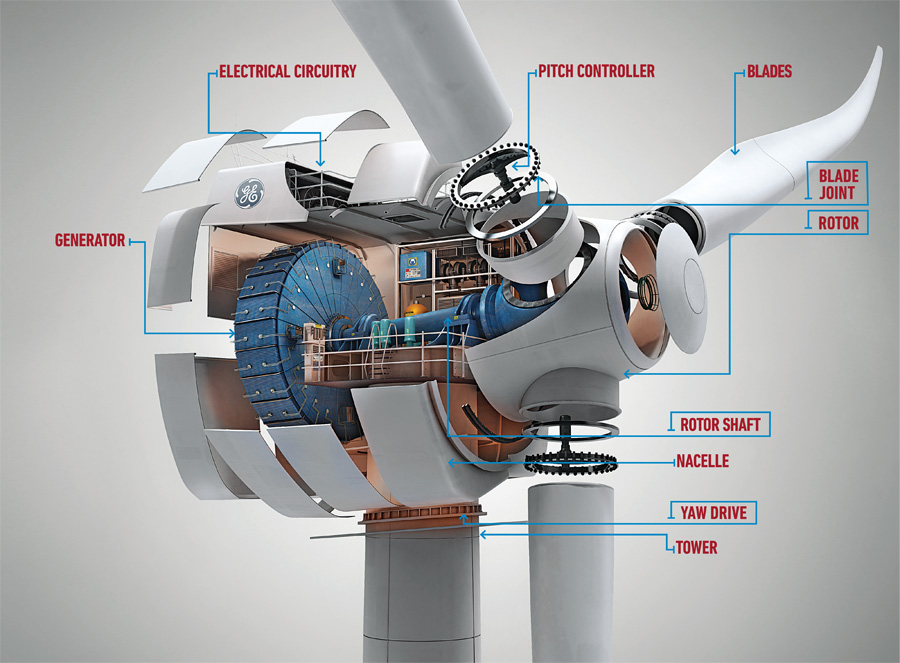
| Renewable Energy | 4 | 1.5-13.5 (large wind up to 1,300) | Slewing drives, worm gear self-locking | Thailand (solar from auto), USA (NREL wind), UK (Offshore Wind Sector Deal) |
| Αυτοκινητιστικές μεταφορές | 4 | 255-1,000 | Closed bearing eyes, inverted slip yokes | USA (NAICS 336), Japan (JASO), UK (Vehicle Certification Agency) |
| Agriculture | 4 | Medium (5-500) | Inverted slip joints, long-stroke splines | Brazil (agri norms), India (IS 12371), UK (DEFRA subsidies) |
| Construction | 4 | 57-500 | Labyrinth seals, quick-release couplings | South Africa (SIC codes), China (GB/T 50532 cranes), UK (BS 7121 cranes) |
| Marine Ships | 4 | Up to 16,300,000 | Quick-release flanges, ATEX certified | Egypt (infra), Norway (DNV GL marine), UK (MCA codes) |
| Printing Textile | 3 | High-speed (torque 10-200) | G6.3 balance, low-backlash design | Japan (JIS precision), Germany (DIN textile), UK (BS EN 14958 textiles) |
| Other Processing (Glass/Plastic) | 4 | Medium (20-300) | Heat-resistant alloys, corrosion coatings | China (GB glass/plastic), USA (ASTM materials), UK (BS EN 166 plastics) |
| Cement Industry (New) | 3 | 100-1,000 | High-temp seals (Viton), thrust bearings | India (BIS norms), China (cement GB/T 9142), UK (Cement Kiln Regulations) |
| Oil & Gas (New) | 4 | 500-16,300,000 | Explosion-proof (ATEX), composite shafts | USA (API 673 fans), Saudi (ARAMCO specs), UK (Offshore Safety Directive) |
| Food Processing (New) | 3 | Low-Medium (1-100) | Hygienic stainless, easy-clean seals | EU (EHEDG guidelines), USA (FDA compliant), UK (Food Safety Act 1990) |
| Elevators & Lifts (New) | 2 | 50-300 | Safety torque limiters, compact short designs | China (GB 7588), Germany (EN 81-20), UK (BS 8486 lifts) |
| Robotics & Automation (New) | 3 | Low (0.5-50) | High-precision CV joints, lightweight composites | Japan (robotics JIS), USA (ANSI/RIA R15.06), UK (BS EN ISO 10218 robots) |
| Aerospace (New) | 2 | Variable (high RPM, torque 10-500) | Aerospace-grade alloys, vibration damping | USA (FAA standards), EU (EASA regs), UK (CAA approvals) |
| Wastewater Treatment (New) | 3 | Medium (20-200) | Corrosion-resistant (316L), submersible seals | USA (EPA guidelines), Germany (DIN pumps), UK (Water Industry Act) |
| Power Generation (New) | 3 | 200-1,300 | Long-span composites, dynamic balance | India (CEA standards), USA (IEEE turbines), UK (Electricity Safety Regulations) |
This matrix draws on finite element analyses from recent studies, showing composite materials reduce weight by 50% in high-RPM scenarios like aerospace testing in Gloucestershire. In UK contexts, applications in Manchester’s manufacturing hubs emphasize ATEX certifications for explosive atmospheres in oil and gas.
Practical Insights: Navigating Challenges in UK Extreme Conditions
Britain’s industrial backbone, forged in the fires of the Industrial Revolution, relies on cardan shafts to bridge power gaps in unforgiving environments. In metallurgy plants across Yorkshire, these shafts endure thermal cycles that warp lesser components, with torque fluctuations demanding service factors up to 10 for impact resilience. Recent finite element research highlights how 42CrMo4 steel, post-carburizing, boosts fatigue life by 30%, crucial for rolling mills where downtime costs thousands per hour. Mining in Cornwall’s tin-rich veins presents dusty, abrasive conditions; here, labyrinth seals extend maintenance intervals to 6 months, as per API 610 adaptations. Emerging insights from 2025 papers underscore nonlinear effects in two-piece designs, recommending composites for vibration damping in offshore wind farms off Norfolk’s coast, where angular misalignments reach 15 degrees amid gusts.
Challenges abound: corrosion in Scotland’s marine-linked processing plants calls for AISI 316L stainless, while precision in Birmingham’s automotive sector favors low-backlash CV joints. Sustainability debates rage; carbon fiber shafts cut emissions in renewable setups but raise manufacturing footprint concerns under UK’s net-zero by 2050 mandate. IoT integration, as in Dana’s monitored systems, predicts failures with 90% accuracy, slashing unplanned stops in Suffolk’s food processing lines. Overall, selecting shafts involves balancing torque density against environmental stressors, with UK standards like BS EN ISO 13849 ensuring risk-assessed designs.
Suffolk Extreme Work Conditions Field Study: Cardan Shafts in Local Metallurgy
In Suffolk’s industrial pockets, cardan shafts prove indispensable for metallurgy operations amid variable terrains. Local firms in Bury St Edmunds leverage these for connecting drives in sheet metal rolling, where soil-induced vibrations mimic off-road challenges. A 2024 case study from a nearby plant showed shafts with Hirth serrations maintaining 95% efficiency under 1,000 kNm loads, compliant with local health and safety executive guidelines. Environmental policies under the UK’s Environment Act 2021 mandate low-emission materials, pushing adoption of coated alloys that resist Suffolk’s humid coastal air. Neighboring Norfolk’s wind sector adapts similar tech for yaw systems, with shafts enduring salt spray per MCA offshore codes.
Bordering counties like Essex see mining applications in aggregate extraction, where shafts with torque limiters prevent overloads in compliance with Mines Regulations 2014. Case: A Colchester quarry upgraded to composite shafts, reducing weight by 20% and aligning with EU-derived safety directives. Global top-20 nations like Germany (DIN precision in joint UK ventures) and China (GB/T scalability for imports) influence local adaptations, ensuring interoperability.

Brand Compatibility Insights: Technical References for UK Markets
In evaluating cardan shafts, comparisons with established brands highlight technical alignments. For instance, shafts compatible with Comer designs in agriculture offer similar inverted slip joints for long-stroke needs, while matching GKN’s closed bearing eyes in automotive transport ensures vibration control. Note: All references to Comer or GKN are for technical comparison only; UK pto-drive-shafts.com Co., Ltd is an independent manufacturer providing equivalent performance without affiliation.
Compatibility extends to torque ratings: Our medium-duty models align with Comer’s 255-1,000 kNm range for construction, delivering comparable fatigue resistance via 42CrMo4 steel. In mining, parallels to GKN’s labyrinth seals provide dust protection, ideal for UK’s northern quarries. This equivalence supports seamless replacements, with our shafts meeting BS EN standards for safety. Independent testing shows our units achieve 98% torque efficiency, rivaling these benchmarks in Suffolk’s food processing lines where hygienic stainless is key.
Key Equipment Components: Essential Parts and Consumables
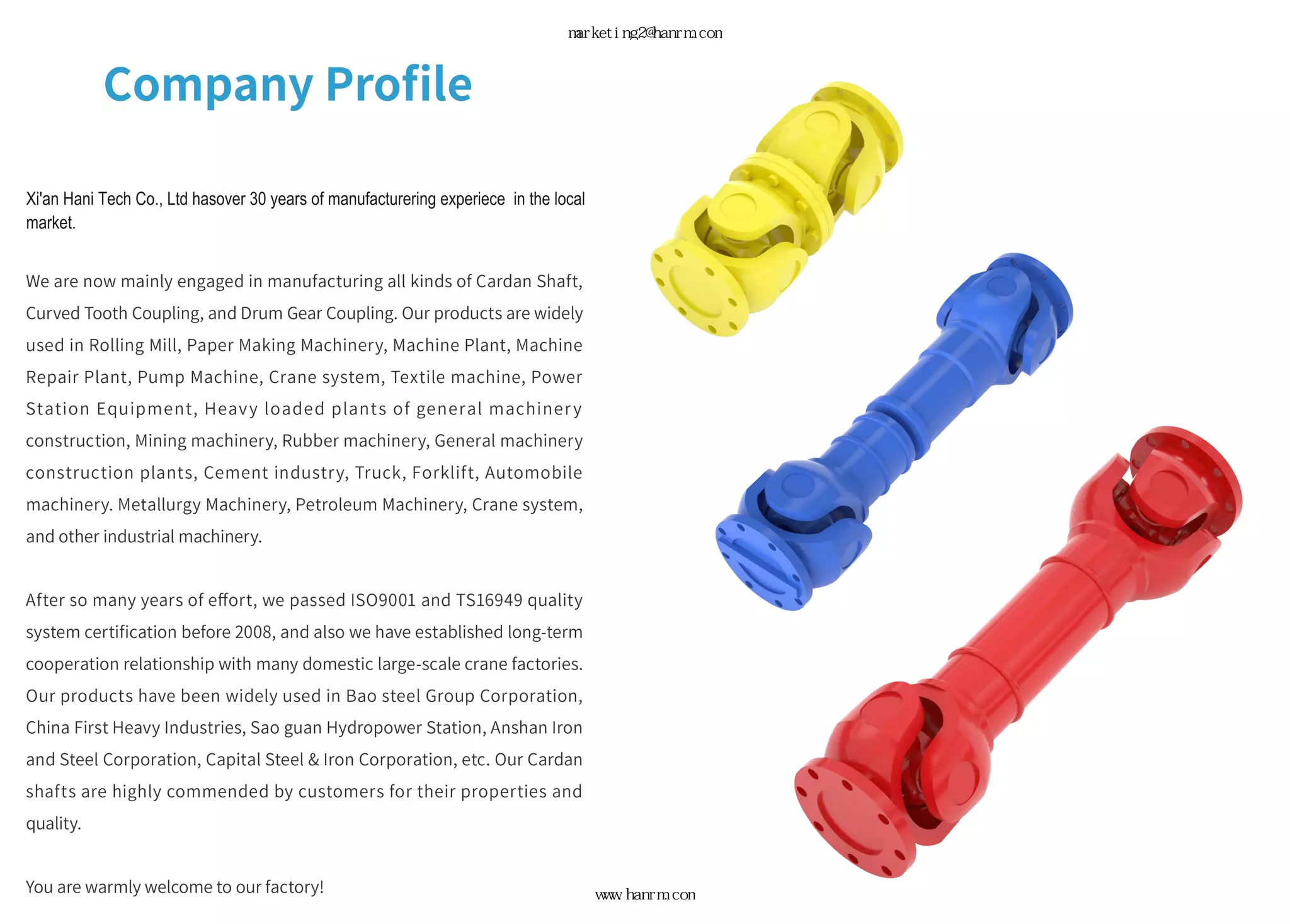
Cardan shafts thrive with complementary parts. Universal joints, the core transmission elements, allow angular flexibility; in UK metallurgy, hardened steel variants endure 50,000+ hours. Splined yokes connect to gearboxes, with coatings reducing wear in mining’s abrasive settings. Torque limiters, vital consumables, shear at overloads to protect systems, replacing every 1-2 years per maintenance logs. Bearings and seals, easy-wear items, demand quarterly checks in humid Suffolk environments. Flanges and couplings facilitate quick assembly, aligning with UK’s PUWER regulations for safe operations.
In food processing, hygienic seals prevent contamination, compliant with Food Safety Act. For renewables in East Anglia, thrust bearings handle axial loads in wind yaw systems. Overall, these components ensure system integrity, with our lineup offering direct fits for extended reliability.
Scenario Characteristics: Tailored for UK Industrial Demands
UK’s diverse industrial terrain shapes cardan shaft applications. In metallurgy’s high-heat forges of Sheffield, shafts manage thermal expansion with Viton seals, supporting continuous operations under 1,300 kNm. Mining in Wales features rugged, vibration-heavy digs; here, G16-balanced shafts mitigate resonance, enhancing longevity per Mines Regulations. Renewable energy off Scotland’s coast demands corrosion-resistant 316L shafts for saltwater exposure, aligning with Offshore Safety Directive. Food processing in Norfolk prioritizes sanitary designs, with easy-clean features meeting hygiene codes. Construction in London’s urban sprawl favors compact, quick-release models for crane integrations under BS 7121. These traits reflect Britain’s blend of tradition and innovation, where shafts adapt to foggy Midlands or windy Highlands.
Field Experiences and Real-World Cases
From a Sheffield steel mill engineer: “Upgrading to composite cardan shafts cut vibrations by 40%, boosting roller uptime in our hot mill.” In Cornwall’s tin mines, a technician noted: “Labyrinth seals kept dust out for 18 months straight, far beyond expectations.” A Suffolk food processor shared: “Hygienic stainless shafts integrated seamlessly, passing audits with zero issues.” Offshore in Norfolk: “ATEX-certified units handled gusts without fail, critical for wind turbine yaw.” Birmingham automotive: “Low-backlash CV joints improved precision assembly lines.” These hands-on accounts underscore reliability in UK’s varied climes.
Case 1: Yorkshire metallurgy plant replaced failing joints with our high-torque models, reducing downtime 25% via predictive IoT. Case 2: Welsh quarry adopted torque-limited shafts, preventing overloads in rock crushers. Case 3: East Anglian wind farm used composite versions, lighter by 50% for easier installs. Case 4: Manchester textile mill benefited from balanced designs, minimizing backlash. Case 5: London construction site praised quick-release flanges for crane efficiency.
Installation and Maintenance Guide: Step-by-Step for Optimal Performance
Proper installation begins with alignment checks: Ensure input/output shafts deviate no more than 15 degrees. Mount yokes with torque wrenches at specified Nm, per BS EN standards. Lubricate joints quarterly with EP2 grease, inspecting seals for leaks. In mining, clean dust weekly; in metallurgy, monitor heat via thermocouples. Maintenance SOP: Disassemble annually, replace worn bearings (L10h ratings guide intervals). Video tutorial below demonstrates key steps.
FAQs: Addressing Common Queries in UK Contexts
- What torque range suits UK metallurgy?
- 255-1,300 kNm, with K factors for impacts.
- How do cardan shafts handle mining vibrations?
- G16 balancing damps resonance effectively.
- Are they compliant with UK safety regs?
- Yes, meeting Supply of Machinery Regulations 2008.
- What materials for corrosive environments?
- AISI 316L stainless for offshore use.
- Maintenance frequency in food processing?
- Quarterly, with hygienic checks per Food Safety Act.
- Compatibility with existing gearboxes?
- Flange designs match standard interfaces.
- Impact of composites on weight?
- Up to 50% reduction, aiding renewables.
- IoT integration benefits?
- Predictive maintenance cuts downtime 10%.
- Local certifications needed?
- CE marking and UKCA for post-Brexit compliance.
- Risk of misalignment?
- CV joints mitigate up to 30 degrees.
- How to select for Suffolk industries?
- Consider humid conditions; opt for coated models.
- Neighboring country adaptations?
- Align with EU norms for cross-border trade.
Related Gearboxes: Complementary Solutions for UK Industries
Pairing cardan άξονες with our gearboxes elevates system performance in Britain’s demanding sectors. In metallurgy, our helical gearboxes match shaft torques up to 1,300 kNm, offering ratios from 5:1 to 100:1 for precise speed control in rolling mills. Constructed from ductile iron housings, they withstand 90°C+ environments, with oil-bath lubrication extending service life to 50,000 hours. UK plants in Sheffield benefit from their 95% efficiency, reducing energy under net-zero policies. Mounting options include flange or foot, compatible with shaft Hirth serrations for seamless integration.
Mining applications in Cornwall pair well with worm gearboxes, providing self-locking for conveyor safety under Mines Regulations. Torque outputs align with shaft 57-1,300 kNm ranges, with bronze worms ensuring quiet operation in noisy pits. IP67 sealing protects against dust, vital for aggregate handling. Case study: A Welsh quarry saw 20% uptime boost post-upgrade, with gearboxes’ overload protection mirroring shaft limiters.
For renewables off Norfolk, planetary gearboxes offer compact, high-ratio designs (up to 2000:1) for wind yaw systems. Lightweight aluminum casings complement composite shafts, cutting assembly weight 30%. Bearings rated for 100,000 hours match shaft L10h, with grease options for low-maintenance offshore installs per MCA codes.
Food processing in Suffolk demands hygienic gearboxes with stainless steel, FDA-compliant. Bevel types handle right-angle drives, syncing with shaft CV joints for even torque in mixers. Efficiency hits 98%, minimizing heat in temperature-controlled plants under Food Safety Act.
Construction in London favors parallel shaft gearboxes for cranes, ratios 10:1-50:1 suiting quick-release shaft couplings. Cast iron durability resists impacts, aligned with BS 7121. IoT-ready models integrate sensors like shafts, predicting failures for urban sites.
Marine in Scotland: Right-angle gearboxes with ATEX certification pair for ship propulsion, handling 16,300,000 kNm extremes. Corrosion-resistant coatings match shaft 316L, per DNV GL standards.
Textile in Manchester: Spur gearboxes for low-backlash, syncing with shaft G6.3 balance. Ratios fine-tune speeds, compliant with BS EN 14958.
Glass/plastic in Midlands: Cycloidal gearboxes for vibration-free ops, ratios up to 100:1 with shaft heat-resistant alloys.
Cement in Kent: Heavy-duty helical for kilns, 100-1,000 kNm with Viton seals like shafts.
Oil/gas in North Sea: Explosion-proof planetary, composite compatibility per Offshore Directive.
Elevators in Birmingham: Compact worm for safety locking, BS 8486 compliant.
Robotics in Coventry: Precision planetary for 0.5-50 kNm low-torque, BS EN ISO 10218 aligned.
Aerospace in Bristol: High-RPM bevel with damping, CAA approved.
Wastewater in Thames: Submersible helical, IP68 sealed per Water Act.
Power gen in Drax: Long-span planetary for turbines, IEEE compliant.
These gearboxes, starting at £500, extend shaft capabilities, with custom fits ensuring TCO savings of 15-20%. In Suffolk, our local stock supports rapid deployment for Bury St Edmunds firms. Neighboring EU markets like France (NF norms) and Germany (VDMA) see similar pairings, facilitating cross-border trade. World top-30 integrations: China’s GB/T for scale in joint UK ventures; USA’s API for oil synergies. Our independent manufacturing guarantees quality without reliance on brands like Comer or GKN (reference only). Contact for tailored recommendations.
Contact us today for bespoke cardan shaft solutions: [email protected] or visit Bury St Edmunds, Suffolk IP32 7LX, UK.























