
Produktbeschreibung
Produktbeschreibung
Produktbeschreibung
SWC BH Cardan Shaft Basic Parameter And Main Dimension
Cardan shaft is widely used in rolling mill, punch, straightener, crusher, ship drive, paper making equipment, common machinery, water pump equipment, test bench, and other mechanical applications.
Advantage:
1. Low life-cycle costs and long service life;
2. Increase productivity;
3. Professional and innovative solutions;
4. Reduce carbon dioxide emissions, and environmental protection;
5. High torque capacity even at large deflection angles;
6. Easy to move and run smoothly;
Detaillierte Fotos
Produktparameter
| Model | Tn kN • m |
T. |
P (.) |
LS mm |
Lmin | Size mm |
I kg. m2 | m kg |
|||||||||||
| Di js11 |
d2 H7 |
Da | Lm | n-d | k | t | b h9 |
g | Lmin | 100mm | Lmin | 100mm | |||||||
| SWC58BH | 58 | 0.15 | 0.075 | ≤22 | 35 | 325 | 47 | 30 | 38 | 35 | 4-5 | 3.5 | 1.5 | – | – | – | – | 2.2 | – |
| SWC65BH | 65 | 0.25 | 0.125 | ≤22 | 40 | 360 | 52 | 35 | 42 | 46 | 4-6 | 4.5 | 1.7 | – | – | – | – | 3.0 | – |
| SWC75BH | 75 | 0.50 | 0.25 | ≤22 | 40 | 395 | 62 | 42 | 50 | 58 | 6-6 | 5.5 | 2.0 | – | – | – | – | 5.0 | – |
| SWC90BH | 90 | 1.0 | 0.50 | ≤22 | 45 | 435 | 74.5 | 47 | 54 | 58 | 4-8 | 6.0 | 2.5 | – | – | – | – | 6.6 | – |
| SWC100BH | 100 | 1.5 | 0.75 | ≤25 | 55 | 390 | 84 | 57 | 60 | 58 | 6-9 | 7 | 2.5 | – | – | 0.0044 | 0.00019 | 6.1 | 0.35 |
| SWC120BH | 120 | 2.5 | 1.25 | ≤25 | 80 | 485 | 102 | 75 | 70 | 68 | 8-11 | 8 | 2.5 | – | – | 0.5719 | 0.00044 | 10.8 | 0.55 |
| SWC150BH | 150 | 5 | 2.5 | ≤25 | 80 | 590 | 13.0 | 90 | 89 | 80 | 8-13 | 10 | 3.0 | – | – | 0.0423 | 0.00157 | 24.5 | 0.85 |
| SWC160BH | 160 | 10 | 5 | ≤25 | 80 | 660 | 137 | 100 | 95 | 110 | 8-15 | 15 | 3.0 | 20 | 12 | 0.1450 | 0.0060 | 68 | 1.72 |
| SWC180BH | 180 | 20 | 10 | ≤25 | 100 | 810 | 155 | 105 | 114 | 130 | 8-17 | 17 | 5.0 | 24 | 14 | 0.1750 | 0.0070 | 70 | 2.8 |
| SWC200BH | 200 | 32 | 16 | ≤15 | 110 | 860 | 170 | 120 | 127 | 135 | 8-17 | 19 | 5.0 | 28 | 16 | 0.3100 | 0.0130 | 86 | 3.6 |
| SWC225BH | 225 | 40 | 20 | ≤15 | 140 | 920 | 196 | 135 | 152 | 120 | 8-17 | 20 | 5.0 | 32 | 9.0 | 0.5380 | 0.5714 | 122 | 4.9 |
| SWC250BH | 250 | 63 | 31.5 | ≤15 | 140 | 1035 | 218 | 150 | 168 | 140 | 8-19 | 25 | 6.0 | 40 | 12.5 | 0.9660 | 0.5717 | 172 | 5.3 |
| SWC285BH | 285 | 90 | 45 | ≤15 | 140 | 1190 | 245 | 170 | 194 | 160 | 8-21 | 27 | 7.0 | 40 | 15.0 | 2.0110 | 0.571 | 263 | 6.3 |
| SWC315BH | 315 | 125 | 63 | ≤15 | 140 | 1315 | 280 | 185 | 219 | 180 | 10-23 | 32 | 8.0 | 40 | 15.0 | 3.6050 | 0.571 | 382 | 8.0 |
| SWC350BH | 350 | 180 | 90 | ≤15 | 150 | 1410 | 310 | 210 | 267 | 194 | 10-23 | 35 | 8.0 | 50 | 16.0 | 7.571 | 0.2219 | 582 | 15.0 |
| SWC390BH | 390 | 250 | 125 | ≤15 | 170 | 1590 | 345 | 235 | 267 | 215 | 10-25 | 40 | 8.0 | 70 | 18.0 | 12.164 | 0.2219 | 738 | 15.0 |
| SWC440BH | 440 | 355 | 180 | ≤15 | 190 | 1875 | 390 | 255 | 325 | 260 | 16-28 | 42 | 10 | 80 | 20.0 | 21.420 | 0.4744 | 1190 | 21.7 |
| SWC490BH | 490 | 500 | 250 | ≤15 | 190 | 1985 | 435 | 275 | 325 | 270 | 16-31 | 47 | 12 | 90 | 22.5 | 32.860 | 0.4744 | 1452 | 21.7 |
| SWC550BH | 550 | 710 | 355 | ≤15 | 240 | 2300 | 492 | 320 | 426 | 305 | 16-31 | 50 | 12 | 100 | 22.5 | 68.920 | 1.3570 | 2380 | 34 |
Verpackung & Versand
Unternehmensprofil
HangZhou CHINAMFG Machinery Manufacturing Co., Ltd. is a high-tech enterprise specializing in the design and manufacture of various types of coupling. There are 86 employees in our company, including 2 senior engineers and no fewer than 20 mechanical design and manufacture, heat treatment, welding, and other professionals.
Advanced and reasonable process, complete detection means. Our company actively introduces foreign advanced technology and equipment, on the basis of the condition, we make full use of the advantage and do more research and innovation. Strict to high quality and operate strictly in accordance with the ISO9000 quality certification system standard mode.
Our company supplies different kinds of products. High quality and reasonable price. We stick to the principle of “quality first, service first, continuous improvement and innovation to meet the customers” for the management and “zero defect, zero complaints” as the quality objective.
Our Services
1. Design Services
Our design team has experience in Cardan shafts relating to product design and development. If you have any needs for your new product or wish to make further improvements, we are here to offer our support.
2. Product Services
raw materials → Cutting → Forging →Rough machining →Shot blasting →Heat treatment →Testing →Fashioning →Cleaning→ Assembly→Packing→Shipping
3. Samples Procedure
We could develop the sample according to your requirement and amend the sample constantly to meet your need.
4. Research & Development
We usually research the new needs of the market and develop new models when there are new cars in the market.
5. Quality Control
Every step should be a particular test by Professional Staff according to the standard of ISO9001 and TS16949.
Häufig gestellte Fragen
Q 1: Are you a trading company or a manufacturer?
A: We are a professional manufacturer specializing in manufacturing
various series of couplings.
Q 2:Can you do OEM?
Yes, we can. We can do OEM & ODM for all customers with customized PDF or AI format artwork.
Q 3:How long is your delivery time?
Generally, it is 20-30 days if the goods are not in stock. It is according to quantity.
Q 4: Do you provide samples? Is it free or extra?
Yes, we could offer the sample but not for free. Actually, we have an excellent price principle, when you make the bulk order the cost of the sample will be deducted.
Q 5: How long is your warranty?
A: Our Warranty is 12 months under normal circumstances.
Q 6: What is the MOQ?
A: Usually our MOQ is 1pcs.
Q 7: Do you have inspection procedures for coupling?
A:100% self-inspection before packing.
Q 8: Can I have a visit to your factory before the order?
A: Sure, welcome to visit our factory.
Q 9: What’s your payment?
A:1) T/T.
♦Kontaktieren Sie uns
Web: huadingcoupling
Add: No.11 HangZhou Road,Chengnan park,HangZhou City,ZheJiang Province,China
| Zustand: | Neu |
|---|---|
| Color: | as Required |
| Zertifizierung: | ISO |
| Typ: | Kardangelenk |
| Material: | Carbon Steel or as Required |
| Size: | Standard Size |
| Anpassung: |
Verfügbar
| Kundenspezifische Anfrage |
|---|
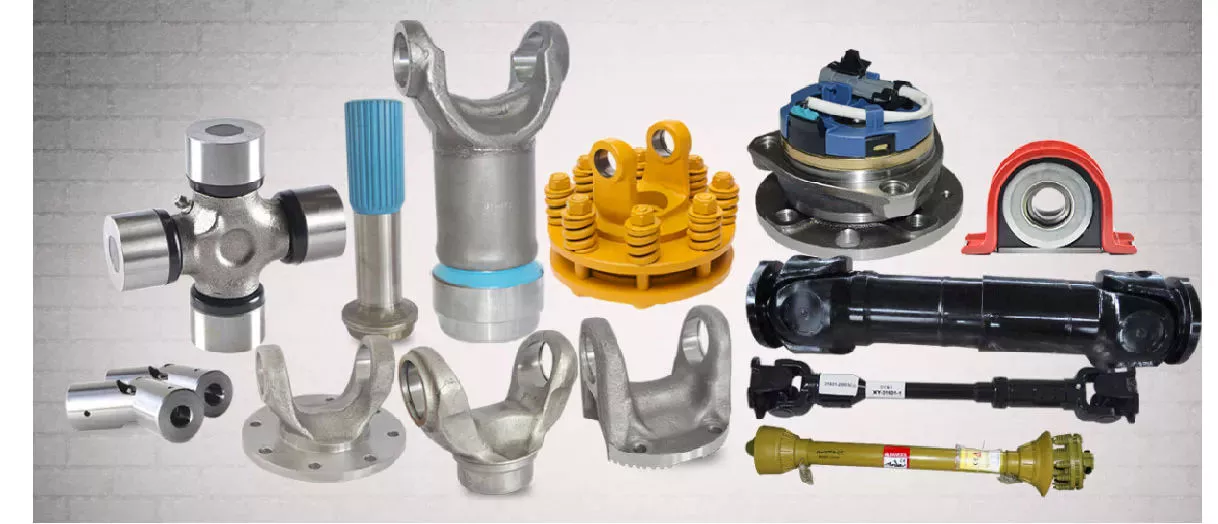
Are there variations in PTO shaft designs for different types of machinery?
Yes, there are variations in PTO (Power Take-Off) shaft designs to accommodate the specific requirements of different types of machinery. PTO shafts are highly versatile and adaptable components used to transfer power from a power source, such as a tractor or engine, to driven machinery or equipment. The design variations in PTO shafts are necessary to ensure compatibility, efficiency, and safety in various applications. Here’s a detailed explanation of the different PTO shaft designs for different types of machinery:
1. Standard PTO Shafts: Standard PTO shafts are the most common design and are widely used in a variety of applications. They typically consist of a solid steel shaft with a universal joint at each end. These universal joints allow for angular misalignment between the power source and the driven machinery. Standard PTO shafts are suitable for applications where the distance between the power source and the driven machinery remains relatively fixed. They are commonly used in agricultural implements, such as mowers, balers, tillers, and seeders, as well as in industrial applications.
2. Telescopic PTO Shafts: Telescopic PTO shafts feature a telescoping design that allows for length adjustment. These shafts consist of two or more concentric shafts that can slide within each other. Telescopic PTO shafts are beneficial in applications where the distance between the power source and the driven machinery varies. By adjusting the length of the shaft, operators can ensure proper power transmission without the risk of the shaft dragging on the ground or being too short to reach the equipment. Telescopic PTO shafts are commonly used in front-mounted implements, snow blowers, self-loading wagons, and other applications where the distance between the power source and the implement changes.
3. CV (Constant Velocity) PTO Shafts: CV PTO shafts incorporate Constant Velocity joints to accommodate misalignment and angular variations. These joints maintain a constant speed and torque transfer even when the driven machinery is at an angle relative to the power source. CV PTO shafts are beneficial in applications where the driven machinery requires flexibility and a wide range of movement. They are commonly used in articulated loaders, telescopic handlers, self-propelled sprayers, and other equipment that requires continuous power transmission while operating at various angles.
4. Gearbox Driven PTO Shafts: Some machinery requires specific speed or torque ratios between the power source and the driven equipment. In such cases, PTO shafts may incorporate gearbox systems. Gearbox driven PTO shafts allow for speed reduction or increase and can change the rotational direction if necessary. The gear ratios in the gearbox can be adjusted to match the speed and torque requirements of the driven machinery. These PTO shafts are commonly used in applications where the power source operates at a different speed or torque level than the equipment it drives, such as in certain industrial manufacturing processes and specialized machinery.
5. High-Torque PTO Shafts: Some heavy-duty machinery requires high torque levels for power transmission. High-torque PTO shafts are designed to handle these demanding applications. They are constructed with reinforced components, including larger diameter shafts and heavier-duty universal joints, to withstand the increased torque requirements. High-torque PTO shafts are commonly used in equipment such as wood chippers, crushers, and heavy-duty agricultural implements that require substantial power and torque for their operation.
6. Safety PTO Shafts: Safety is a crucial consideration when using PTO shafts. Safety PTO shafts incorporate mechanisms to reduce the risk of accidents and injuries. One common safety feature is the use of protective guards that cover the rotating shaft to prevent accidental contact. These guards are typically made of metal or plastic and are designed to shield the rotating components while allowing the necessary movement for power transmission. Safety PTO shafts are used in various applications where the risk of entanglement or accidental contact with the rotating shaft is high, such as in grass mowers, rotary cutters, and other equipment used in landscaping and agriculture.
These are some of the key variations in PTO shaft designs for different types of machinery. The specific design used depends on factors such as the application requirements, power source characteristics, torque levels, movement flexibility, and safety considerations. PTO shaft manufacturers offer a range of designs to ensure compatibility and efficient power transmission in diverse industries and applications.
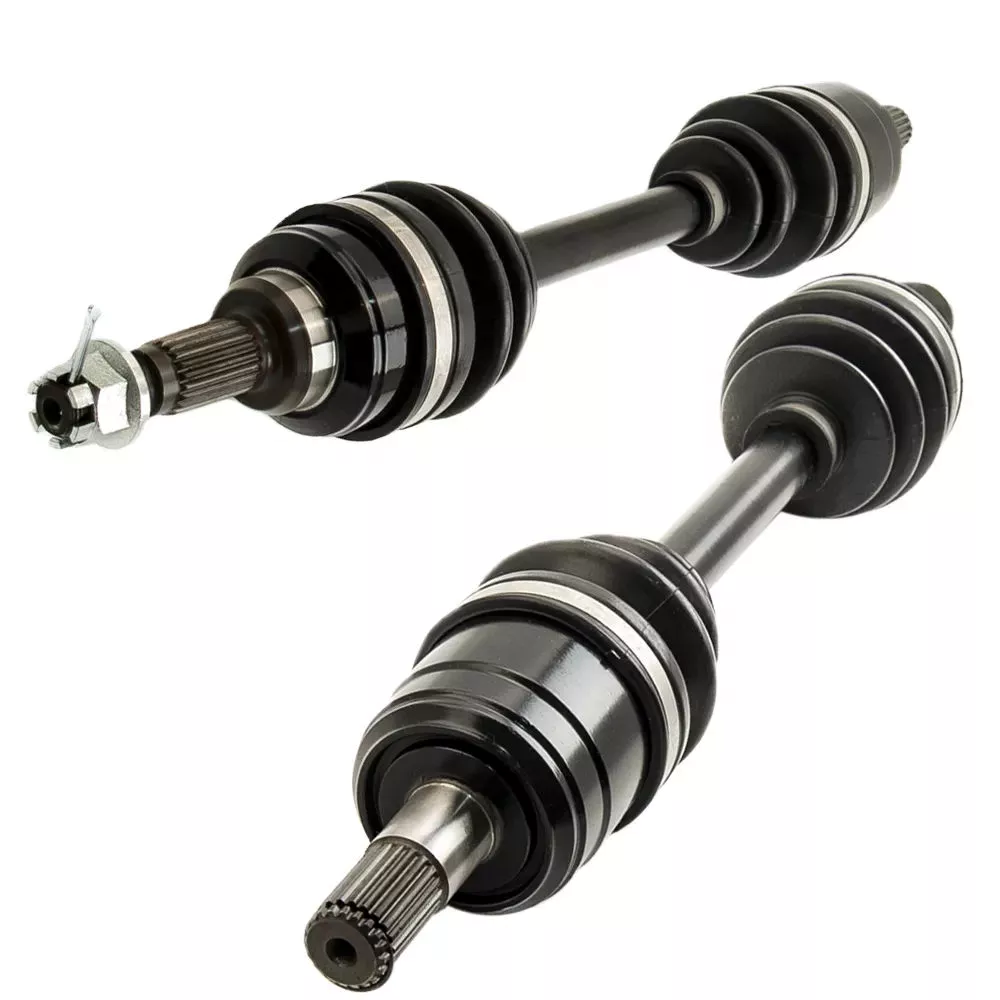
Können Zapfwellen an spezifische Maschinen und Leistungsanforderungen angepasst werden?
Ja, Zapfwellen (PTO-Wellen) lassen sich individuell an die spezifischen Maschinen- und Leistungsanforderungen verschiedener Anwendungen anpassen. Hersteller bieten verschiedene Anpassungsmöglichkeiten, um sicherzustellen, dass die Zapfwellen präzise auf die Antriebsquelle, die angetriebene Maschine und den jeweiligen Anwendungszweck abgestimmt sind. Hier finden Sie eine detaillierte Erklärung zur individuellen Anpassung von Zapfwellen:
1. Schaftlänge: Zapfwellen lassen sich hinsichtlich ihrer Länge an unterschiedliche Maschinenkonfigurationen anpassen. Die Länge der Zapfwelle ist entscheidend für die korrekte Ausrichtung und Verbindung zwischen Antriebsquelle und angetriebener Maschine. Hersteller bieten Zapfwellen mit verstellbarer oder fester Länge an, um flexibel auf spezifische Längenanforderungen eingehen zu können. Durch die Anpassung der Wellenlänge wird sichergestellt, dass die Zapfwelle optimal zur Maschine passt, die Kraftübertragungseffizienz optimiert und das Risiko von Fehlausrichtung oder übermäßiger Belastung reduziert wird.
2. Keilwellengrößen: Zapfwellen sind mit unterschiedlichen Verzahnungsgrößen erhältlich, passend zu den Ein- und Ausgangswellen verschiedener Maschinen. Durch die Anpassung der Verzahnungsgröße lässt sich die Zapfwelle nahtlos mit der Antriebsquelle und der angetriebenen Maschine verbinden. Hersteller bieten verschiedene Verzahnungskonfigurationen an, z. B. 1-3/8 Zoll, 1-3/4 Zoll oder metrische Größen, um spezifischen Maschinenanforderungen gerecht zu werden. Die Anpassung der Verzahnungsgröße gewährleistet einen passgenauen Sitz und eine sichere Verbindung und ermöglicht so eine effiziente Kraftübertragung ohne zusätzliche Adapter oder Modifikationen.
3. Jochdesigns: Zapfwellen lassen sich mit verschiedenen Jochkonstruktionen an die Anschlusspunkte von Antriebsquelle und angetriebener Maschine anpassen. Das Joch verbindet die Welle mit dem Gerät. Hersteller bieten verschiedene Jochkonstruktionen an, z. B. runde, dreieckige oder Keilwellenjoche, um die Kompatibilität mit spezifischen Maschinen zu gewährleisten. Die individuelle Anpassung des Jochdesigns ermöglicht eine sichere und zuverlässige Verbindung, richtet die Zapfwelle mit den Ein- und Ausgangswellen des Geräts aus und optimiert die Kraftübertragung.
4. Drehmomentwerte: Zapfwellen lassen sich an die spezifischen Drehmomentanforderungen der jeweiligen Anwendung anpassen. Das Drehmoment ist die Rotationskraft, die die Zapfwelle von der Antriebsquelle auf die angetriebene Maschine übertragen muss. Hersteller können Zapfwellen mit unterschiedlichen Drehmomentwerten konstruieren, indem sie geeignete Materialien, Abmessungen und Verstärkungstechniken verwenden. Die Anpassung des Drehmomentwerts gewährleistet, dass die Zapfwelle die erforderlichen Leistungsstufen sicher und zuverlässig ohne vorzeitigen Verschleiß oder Ausfall bewältigt.
5. Kopplungsmechanismen: Zapfwellen lassen sich mit verschiedenen Kupplungsmechanismen an die Anschlussanforderungen spezifischer Maschinen anpassen. Kupplungsmechanismen verbinden und trennen die Zapfwelle von der Antriebsquelle und der angetriebenen Maschine. Hersteller bieten verschiedene Kupplungsoptionen an, wie z. B. Schnellkupplungen, Scherbolzenkupplungen oder mechanische Verriegelungskupplungen, um unterschiedlichen Maschinenkonstruktionen und Betriebsanforderungen gerecht zu werden. Die Anpassung des Kupplungsmechanismus gewährleistet einfache Handhabung, sicheren Halt und bei Bedarf schnelles Lösen.
6. Schutzfunktionen: Zapfwellen lassen sich mit zusätzlichen Schutzvorrichtungen ausstatten, um Sicherheit und Langlebigkeit zu erhöhen. Zu diesen Vorrichtungen gehören beispielsweise Schutzbleche, Sicherheitsabdeckungen oder Rutschkupplungen. Schutzbleche und Sicherheitsabdeckungen schützen die rotierende Welle, indem sie sie umschließen und versehentlichen Kontakt verhindern, wodurch das Verletzungsrisiko reduziert wird. Rutschkupplungen bieten Überlastschutz, indem sie die Zapfwelle bei zu hohem Drehmoment oder Widerstand durchrutschen oder auskuppeln lassen und so Schäden an der Welle und den zugehörigen Anlagen verhindern. Die individuelle Anpassung der Schutzvorrichtungen gewährleistet die Einhaltung der Sicherheitsvorschriften und erfüllt die spezifischen Sicherheitsanforderungen der jeweiligen Maschine oder Anwendung.
7. Materialauswahl: Zapfwellen lassen sich je nach Anwendungsfall aus verschiedenen Materialien fertigen. Hersteller bieten eine breite Palette an Werkstoffoptionen an, darunter Stahl, Aluminium oder Verbundwerkstoffe mit unterschiedlichen Festigkeits-, Gewichts- und Korrosionsbeständigkeitseigenschaften. Durch die individuelle Materialauswahl kann die Leistung der Zapfwelle optimiert werden, wobei Faktoren wie Betriebsbedingungen, Umwelteinflüsse und Gewichtsbeschränkungen berücksichtigt werden.
Durch die Bereitstellung von Anpassungsoptionen wie Wellenlänge, Keilwellengröße, Jochkonstruktion, Drehmomentwerte, Kupplungsmechanismen, Schutzfunktionen und Materialauswahl können Hersteller sicherstellen, dass Zapfwellen optimal auf die Maschinen- und Leistungsanforderungen verschiedener Anwendungen zugeschnitten sind. Kundenspezifische Zapfwellen ermöglichen eine nahtlose Integration, effiziente Kraftübertragung und zuverlässigen Betrieb und steigern so die Gesamtleistung und Produktivität der Anlagen.
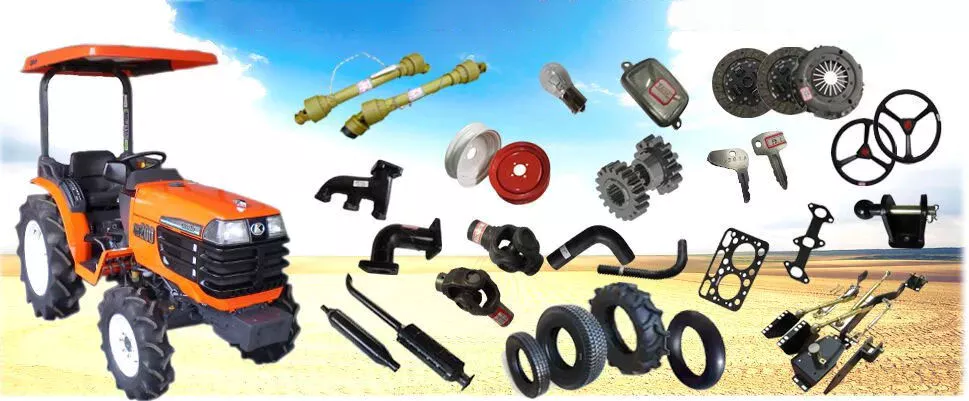
How do PTO shafts handle variations in speed and torque requirements?
PTO shafts (Power Take-Off shafts) are designed to handle variations in speed and torque requirements between the power source (such as a tractor or engine) and the driven machinery or equipment. They incorporate various mechanisms and components to ensure efficient power transmission while accommodating the different speed and torque demands. Here’s a detailed explanation of how PTO shafts handle variations in speed and torque requirements:
1. Gearbox Systems: PTO shafts often incorporate gearbox systems to match the speed and torque requirements between the power source and the driven machinery. Gearboxes allow for speed reduction or increase and can also change the rotational direction if necessary. By using different gear ratios, PTO shafts can adapt the rotational speed and torque output to suit the specific requirements of the driven equipment. Gearbox systems enable PTO shafts to provide the necessary power and speed compatibility between the power source and the machinery they drive.
2. Shear Bolt Mechanisms: Some PTO shafts, particularly in applications where sudden overloads or shock loads are expected, use shear bolt mechanisms. These mechanisms are designed to protect the driveline components from damage by disconnecting the PTO shaft in case of excessive torque or sudden resistance. Shear bolts are designed to break at a specific torque threshold, ensuring that the PTO shaft separates before the driveline components suffer damage. By incorporating shear bolt mechanisms, PTO shafts can handle variations in torque requirements and provide a safety feature to protect the equipment.
3. Friction Clutches: PTO shafts may incorporate friction clutch systems to enable smooth engagement and disengagement of power transfer. Friction clutches use a disc and pressure plate mechanism to control the transmission of power. Operators can gradually engage or disengage the power transfer by adjusting the pressure on the friction disc. This feature allows for precise control over torque transmission, accommodating variations in torque requirements while minimizing shock loads on the driveline components. Friction clutches are commonly used in applications where smooth power engagement is essential, such as in hydraulic pumps, generators, and industrial mixers.
4. Constant Velocity (CV) Joints: In cases where the driven machinery requires a significant range of movement or articulation, PTO shafts may incorporate Constant Velocity (CV) joints. CV joints allow the PTO shaft to accommodate misalignment and angular variations without affecting power transmission. These joints provide a smooth and constant power transfer even when the driven machinery is at an angle relative to the power source. CV joints are commonly used in applications such as articulated loaders, telescopic handlers, and self-propelled sprayers, where the machinery requires flexibility and a wide range of movement.
5. Telescopic Designs: Some PTO shafts feature telescopic designs that allow for length adjustment. These shafts consist of two or more concentric shafts that slide within each other, providing the ability to extend or retract the PTO shaft as needed. Telescopic designs accommodate variations in the distance between the power source and the driven machinery. By adjusting the length of the PTO shaft, operators can ensure proper power transmission without the risk of the shaft dragging on the ground or being too short to reach the equipment. Telescopic PTO shafts are commonly used in applications where the distance between the power source and the implement varies, such as in front-mounted implements, snow blowers, and self-loading wagons.
By incorporating these mechanisms and designs, PTO shafts can handle variations in speed and torque requirements effectively. They provide the necessary flexibility, safety, and control to ensure efficient power transmission between the power source and the driven machinery. PTO shafts play a critical role in adapting power to meet the specific needs of various equipment and applications.


editor by CX 2023-11-07























