
PTO Shaft Components Explained:
Yokes, Tubes, Crosses & Guards
A complete engineering guide for procurement specialists, fleet engineers, and machinery managers across the United Kingdom — covering every critical component of modern PTO drive shaft systems.
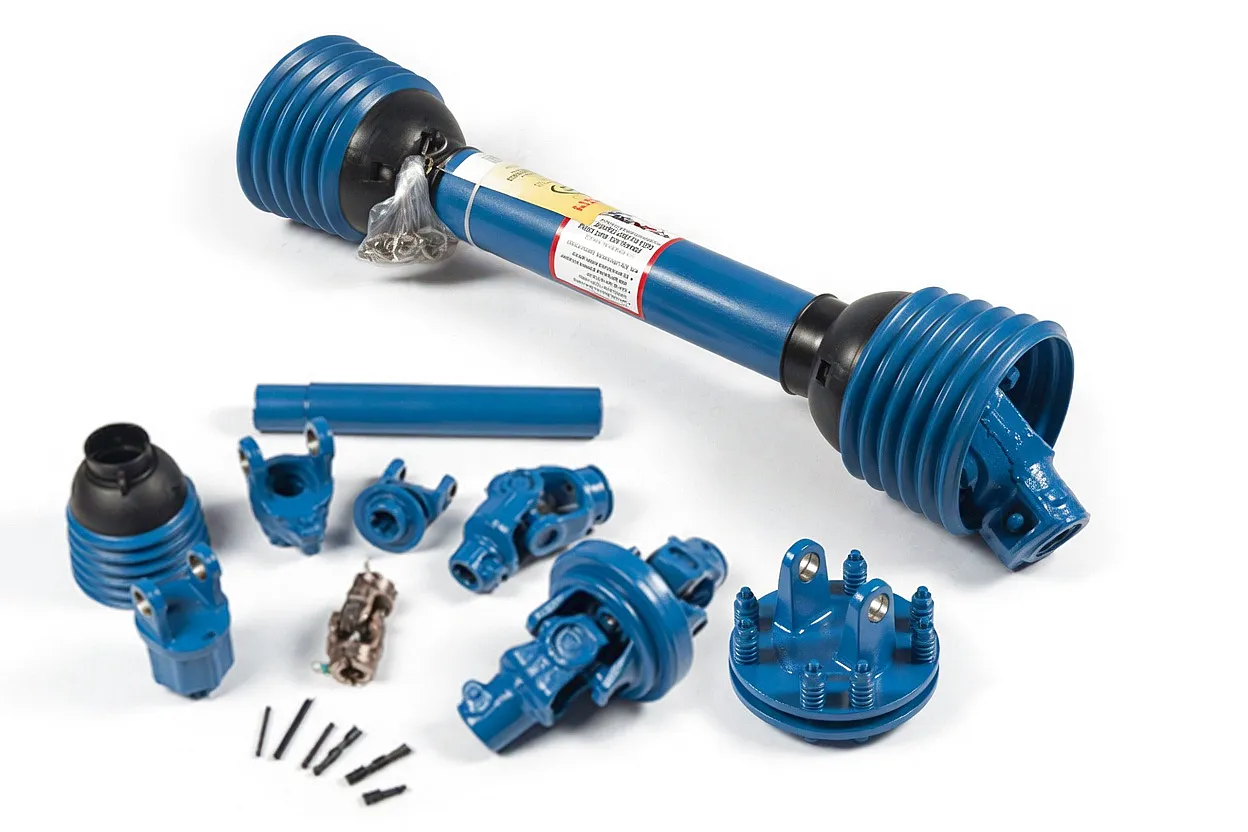 Behind every efficient tractor, agricultural implement, or industrial machine operating across the UK’s farmlands and heavy manufacturing belts lies an assembly most operators take for granted — the PTO shaft. Formally known as the Power Take-Off shaft, this rotating drive mechanism bridges engine power to driven equipment, and its reliability hinges not on luck, but on the precise engineering of each internal component. Whether you’re managing a fleet of combine harvesters in East Anglia, running a civil engineering operation near Sheffield, or sourcing replacement parts for construction machinery in Birmingham, understanding what makes up a PTO drive shaft — and what quality looks like — can mean the difference between seamless productivity and expensive, unplanned downtime.
What Exactly Is a PTO Shaft & How Does It Work?
The Working Principle
A PTO shaft operates on the principle of rotational power transmission — it takes the mechanical output from a tractor’s or vehicle’s gearbox and channels it to a secondary driven piece of equipment such as a mower, pump, baler, or generator. The shaft itself spins at standardised speeds — typically 540 RPM or 1,000 RPM in agricultural settings — and relies on a series of interconnected components working in harmony to transmit torque efficiently across variable angular misalignments. The beauty of the universal joint system within a PTO drive shaft is its ability to maintain consistent power delivery even when the tractor turns or the implement flexes, accommodating angular variations of up to 25 degrees in well-engineered assemblies. Without this capability, even slight misalignment would cause catastrophic vibration and component failure within minutes of operation.
UK Industry Context
Across the UK, PTO drive shafts are essential in sectors ranging from arable farming in Yorkshire and the East Midlands, to construction and civil engineering operations in Birmingham and Sheffield. The West Midlands manufacturing corridor alone accounts for a significant proportion of the nation’s powered machinery, with thousands of units requiring periodic PTO shaft servicing or complete replacement annually. British machine operators and procurement managers are increasingly specifying higher-grade PTO shaft assemblies capable of handling heavier operational cycles, particularly as modern tractors push beyond 200 horsepower and implements grow correspondingly larger. Understanding the anatomy of these assemblies is therefore not academic — it is operationally and commercially critical for anyone responsible for fleet uptime in the UK’s industrial landscape.
The Four Critical Components of a PTO Shaft Assembly
🔧
Component 1: PTO Yokes — The Connection Interface
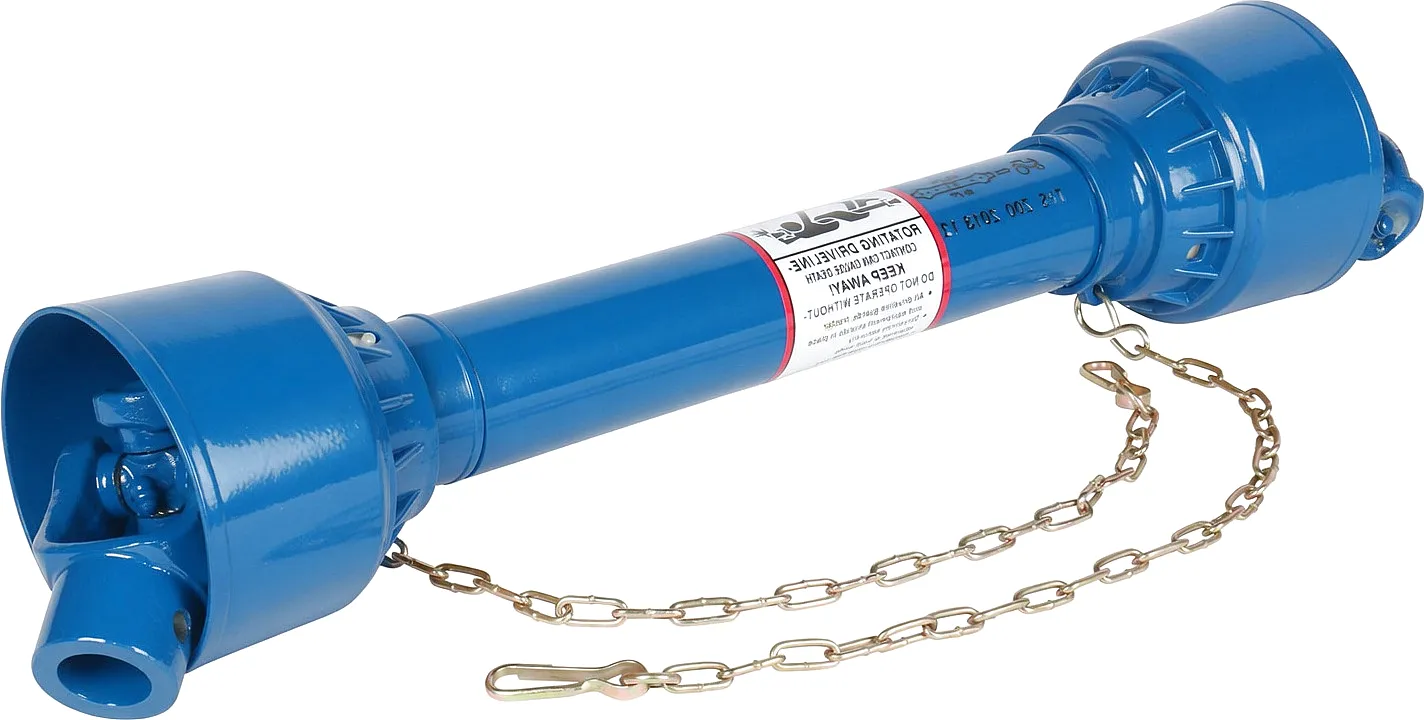
The yoke is arguably the most structurally important element in a PTO shaft assembly because it serves as the mechanical interface between the shaft itself and the drive or driven equipment. In practical terms, there are two yokes in any PTO drive shaft — one at each end. The tractor-end yoke connects directly to the tractor’s PTO output stub, while the implement-end yoke attaches to the input shaft of whatever equipment is being driven. The quality of the yoke’s bore, its spline specification, and the precision of its cross-bearing seat directly determine how much torque can be reliably transmitted and for how long.
Yokes are manufactured in several configurations: weld yokes (permanently welded to the tube), slip yokes (allowing telescopic movement), and flange yokes (bolted to mating flanges on heavy industrial equipment). For UK agricultural applications, the most commonly specified types conform to the CAT series standards — CAT 1 through CAT 6 — which define the physical dimensions, bore size, and torque ratings appropriate to different tractor power classes. Modern precision-forged yokes, as supplied by Ever Power, undergo CNC machining to tolerances of ±0.01 mm on bearing seats, ensuring near-zero radial play that dramatically extends bearing life and reduces operational vibration across all service conditions.
📦
Component 2: PTO Tubes — The Torque-Carrying Backbone
The tubular section of a PTO drive shaft is where the actual torque transfer occurs over the operational length of the assembly. PTO shaft tubes are precision-formed components that must simultaneously meet conflicting engineering demands: they need to be strong enough to withstand peak torque loads — sometimes several thousand Newton-metres in heavy agricultural or industrial settings — yet light enough not to introduce excessive rotational inertia that would stress bearings and joints at operating speeds. This balance is achieved through careful selection of tube diameter, wall thickness, and material grade.
The most common tube profile for PTO shafts is a profiled or non-circular cross-section — lemon-shaped, star-shaped, or multi-lobe profiles — which allows the inner and outer tubes to telescope smoothly while preventing rotation between them. This slip-and-slide functionality accommodates the changes in effective shaft length that occur as implements rise, fall, or pivot during operation. Standard profiles across the UK market include the lemon (D-type), star, and triangular series, each suited to different torque and speed combinations.
Tube materials are predominantly cold-drawn seamless steel with carbon content in the 0.35–0.45% range, heat-treated to achieve surface hardness of 58–62 HRC on sliding surfaces while retaining a tough, ductile core. For particularly demanding applications — such as continuous-operation slurry tanker pumps on Yorkshire farms or high-cycle road-milling machines in the Midlands — Ever Power supplies tubes from alloy steels (42CrMo4 grade) that deliver superior fatigue resistance under dynamic loading cycles.
✚
Component 3: Cross Joints — Engineering the Angular Flexibility
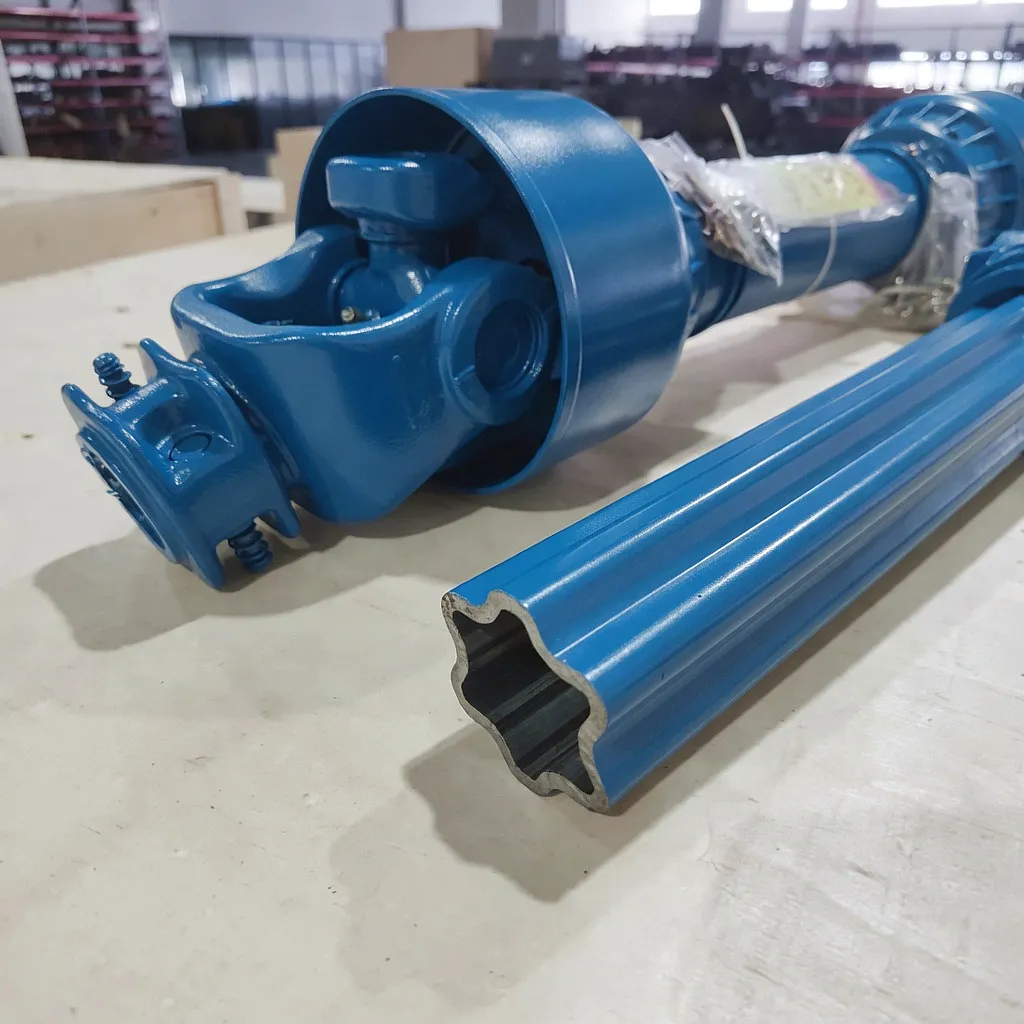 The cross joint — also called the universal joint or U-joint — is the component that gives a PTO shaft its defining ability to transmit rotation across an angle. Structurally, it consists of a precision-machined steel cross (or “spider”) with four trunnions arranged at 90 degrees, each fitted into a cup-shaped bearing race held within the yoke ears. The needle roller bearings within each cup allow free rotation of the cross relative to the yoke, enabling the shaft to operate across a range of angular misalignments without interrupting torque delivery.
What many operators across the UK maintenance sector fail to appreciate is that universal joints introduce a cyclic velocity variation into the shaft’s rotation whenever they operate at an angle. At any given joint angle, the output speed fluctuates twice per revolution relative to the input speed — a phenomenon known as secondary couple imbalance. In single-joint PTO shafts operating at angles above about 8 degrees, this pulsation becomes significant enough to cause vibration, accelerated wear, and potential implement damage. Well-engineered double-joint PTO shafts, with two U-joints phased at 180 degrees, cancel out this pulsation, delivering smooth, constant-velocity output even at large operating angles. For operators in hilly terrain — such as the Peak District margins or the rolling landscapes of Cumbria — this double-joint design is not a luxury; it is an engineering necessity.
🛡
Component 4: PTO Guards — Safety, Compliance & Longevity
No PTO shaft assembly discussion is complete without a serious treatment of the guard system. In the UK, PTO shaft guarding is a legal requirement under the Provision and Use of Work Equipment Regulations (PUWER 1998) and is additionally governed by the Machinery Safety Directive as transposed into British law post-Brexit. Any unguarded rotating PTO shaft presents one of the most serious entanglement hazards in agricultural and industrial environments, and both the Health and Safety Executive (HSE) and farm safety organisations regularly report fatalities and severe injuries linked to inadequate or missing shaft guarding.
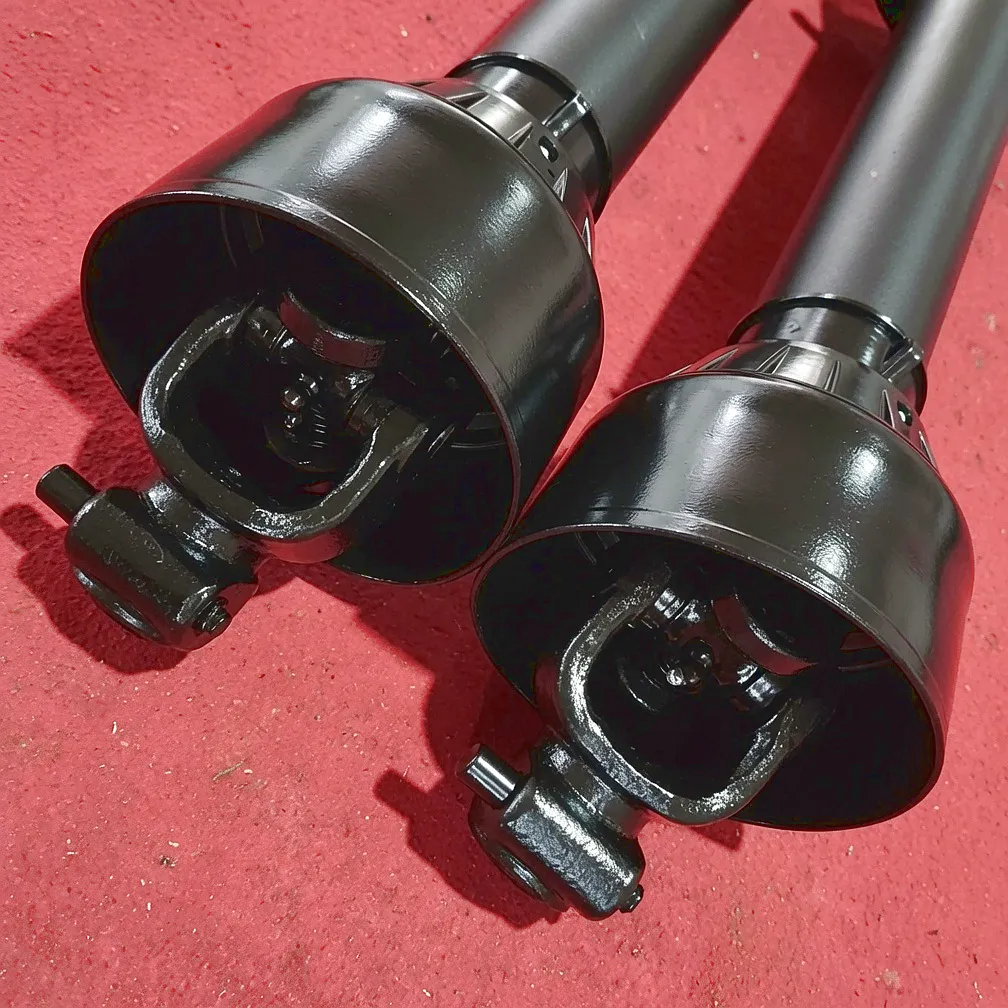
PTO shaft guards typically comprise a two-part plastic or composite shroud that encases the rotating shaft and universal joints, with a non-rotating outer profile that stays stationary (or rotates only under contact) relative to the spinning shaft beneath. The guard is anchored at one or both ends via friction cones or anchor chains that prevent it rotating with the shaft. Modern guard materials include UV-stabilised polypropylene and high-impact polyethylene, selected for their ability to survive constant field exposure, impact from stones and debris, and prolonged UV radiation without becoming brittle.
Beyond operator safety, the guard also serves an engineering function: it protects the universal joints and bearing assemblies from ingress of mud, crop material, and moisture — all of which are present in abundance on UK farms and construction sites. Well-sealed guards fitted with integral grease nipples extend shaft service intervals significantly and are a mark of a quality PTO drive shaft assembly.
Core Materials in PTO Shaft Manufacturing
The longevity and reliability of any PTO drive shaft assembly are determined at the material selection stage, long before a single cut is made on the shop floor. The challenge for engineers is that different components within the same shaft are subject to radically different stress states — the cross joints experience multi-axial contact stress at needle bearing surfaces, the tubes carry combined torsional and bending loads, and the yokes must absorb shock loading from sudden engagement or terrain-induced impacts. Meeting these varied demands requires a sophisticated material palette and precise heat treatment.
20CrMnTi Alloy Steel
Used for cross joints and yoke bodies. Carburised and case-hardened to achieve surface hardness of 58–64 HRC while maintaining a tough ductile core. Exceptional resistance to fatigue crack propagation under cyclic loading.
42CrMo4 Chromoly Steel
Preferred for high-torque tube sections and heavy industrial yokes. Delivers tensile strength exceeding 1,000 MPa after quench and tempering. Ideal for continuous-duty applications such as road milling and quarrying equipment.
Cold-Drawn Seamless Tube Steel
DIN 2391 / EN 10305-1 compliant seamless tube stock. Cold-drawing process aligns grain structure, dramatically improving torsional strength-to-weight ratio. Wall thickness precisely controlled via CNC cold-forming.
UV-Stabilised Polypropylene
Specified for guard systems. High-impact modified PP with UV stabilisers rated for 10+ years of outdoor British weather exposure. Non-conductive, corrosion-resistant, and meeting CE conformity for PTO guard assemblies.
PTO Shaft Technical & Performance Specifications
The table below consolidates key technical parameters across the standard PTO shaft series. These values represent typical production specifications; Ever Power’s engineering team provides customised performance data sheets for all bespoke and high-specification orders. For direct procurement inquiries, contact [email protected].
| Series / Category | Max Torque (Nm) | Geschwindigkeit (U/min) | Max Joint Angle (deg) | Rohrprofil | Primary Material | Typische Anwendung |
|---|---|---|---|---|---|---|
| CAT 1 (Series 4) | 460 | 540 / 1000 | 25 | Lemon (D-type) | 20CrMnTi / PP guard | Small tractors, rotary mowers |
| CAT 2 (Series 6) | 880 | 540 / 1000 | 25 | Star / Lemon | 42CrMo4 / PP guard | Mid-range tractors, balers |
| CAT 3 (Series 8) | 1,500 | 540 / 1000 | 25 | Star / Triangular | 42CrMo4 / PE guard | Heavy tractors, slurry tankers |
| Wide-Angle CV (WA) | 1,200 | 540 | 80 | Star / Double | 20CrMnTi + 42CrMo4 | Front loaders, compact tractors |
| Industrial Heavy-Duty | 4,500+ | Up to 2,000 | 15 | Triangular / Hex | 42CrMo4 / 34CrNiMo6 | Road millers, quarry conveyors |
| Custom / Bespoke | To specification | To specification | To specification | Custom profile | Material on request | Any industrial application |
Why High-Quality PTO Drive Shaft Assemblies Outperform
Extended Service Life
Precision-ground bearing seats, optimised needle roller geometries, and superior surface finishes combine to extend cross joint and bearing life by 30–50% compared to standard market alternatives — verified through accelerated life-cycle testing protocols.
Peak Torque Transmission Efficiency
Optimised tube profile geometries and low-friction surface treatments ensure over 98% mechanical efficiency across the rated operational range, minimising parasitic power loss and reducing fuel consumption in tractor-driven applications — a measurable benefit for any UK farm business managing operational costs.
Overload Protection Integration
Slip clutches, shear bolt hubs, and cam-type torque limiters can be integrated directly into the PTO shaft assembly, providing automatic overload protection that safeguards both the implement gearbox and the tractor’s transmission — dramatically reducing the risk of catastrophic drive train failures during field obstructions.
Full Compliance & Certification
All PTO shaft assemblies supplied to UK customers carry full CE marking, comply with the Supply of Machinery (Safety) Regulations, and where applicable meet ISO 500-1 standards for agricultural PTO shaft dimensions. Documentation packages including material certificates, test reports, and PPAP are available for quality-critical procurement.
PTO Shaft Application Scenarios Across UK Industries
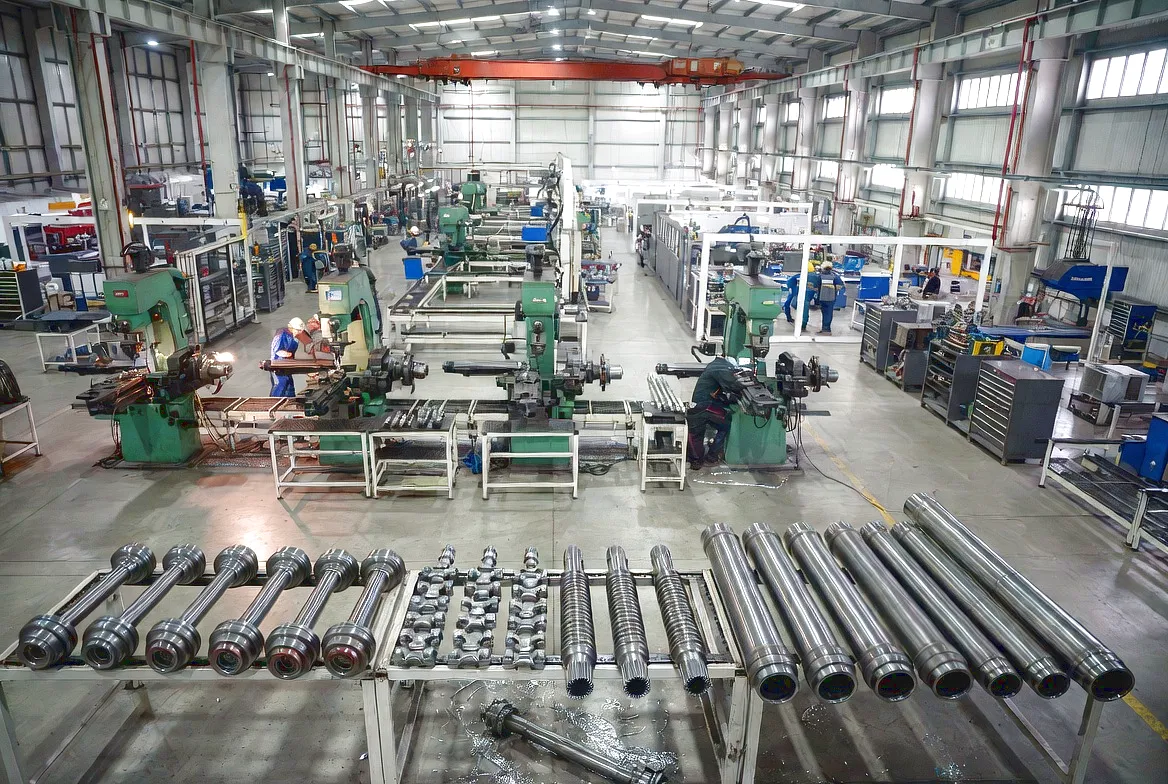
PTO drive shafts are among the most versatile power transmission components in use today, appearing across a remarkably wide range of industries and machinery types throughout the United Kingdom. From the combine harvesters rolling across the flatlands of Lincolnshire to the industrial mixers operating in Sheffield’s steel fabrication facilities, the PTO shaft is the invisible workhorse making it all possible. Understanding where and how these shafts are deployed helps procurement managers match the right specification to the right application — avoiding the costly mistakes that come from under- or over-specifying.
🌿
The single largest application sector for PTO shaft assemblies in the UK. Implements driven via PTO shafts include rotary mowers, balers, forage harvesters, slurry tankers, seed drills, and combine harvester headers. Shaft series range from CAT 1 assemblies for compact utility tractors right through to heavy-duty CAT 3 or CAT 4 configurations for high-horsepower machines working intensive arable rotations. Seasonal demand peaks — particularly during silage and harvest months — mean that supply chain reliability and rapid delivery from UK-based stockists are of paramount operational importance.
🏗
The construction sector centred on Birmingham, Sheffield, and the broader West Midlands and Yorkshire industrial belts generates substantial demand for heavy-duty PTO shaft assemblies. Road planers and cold milling machines, trenchers, wood chippers, and compactors all rely on robust PTO drive shafts capable of handling high sustained torque at relatively low speeds. These applications typically demand industrial-grade assemblies with alloy steel tubes, reinforced universal joints, and sealed bearing arrangements designed to exclude the concrete dust, grit, and moisture common on construction sites. Shaft replacement intervals in this sector are often driven by maintenance schedules tied to machine hire contracts.
🔋
Local councils and grounds maintenance contractors across the UK use PTO drive shafts extensively in roadside mowing, park maintenance, leaf vacuuming, and salt spreading operations. The wide geographic spread of UK local authority operations — from remote Scottish councils to dense urban centres — places emphasis on the availability of standard replacement components as well as quick turnaround on bespoke lengths for non-standard municipal machinery. Ever Power’s stocked range of CAT 1 and CAT 2 PTO shaft assemblies with next-day dispatch capability serves this market efficiently.
🏭
Food processing facilities across the Midlands and Northern England increasingly employ tractor-powered or stationary engine-driven PTO shaft assemblies to drive screw conveyors, augers, and large-capacity pumps. In these environments, the requirement for stainless steel or food-grade protective coatings on external surfaces of shaft guards is common, alongside the need for smooth-running assemblies that do not transmit vibration into sensitive weighing or metering equipment. Ever Power provides stainless-compatible guard systems and low-vibration balanced shaft options for this sector.
Ever Power: Precision Manufacturing & Custom PTO Shaft Solutions
Ever Power has built its reputation over decades as a specialist precision manufacturer of PTO drive shaft assemblies and power transmission components, with a manufacturing infrastructure that combines advanced CNC machining centres, dedicated heat treatment lines, and rigorous quality assurance systems to deliver products that meet the demands of the most challenging global and UK industrial applications. The facility operates to ISO 9001 quality management standards, with full material traceability from incoming raw steel to finished assembly — providing procurement managers with the documentation confidence they need for quality-critical supply chains.
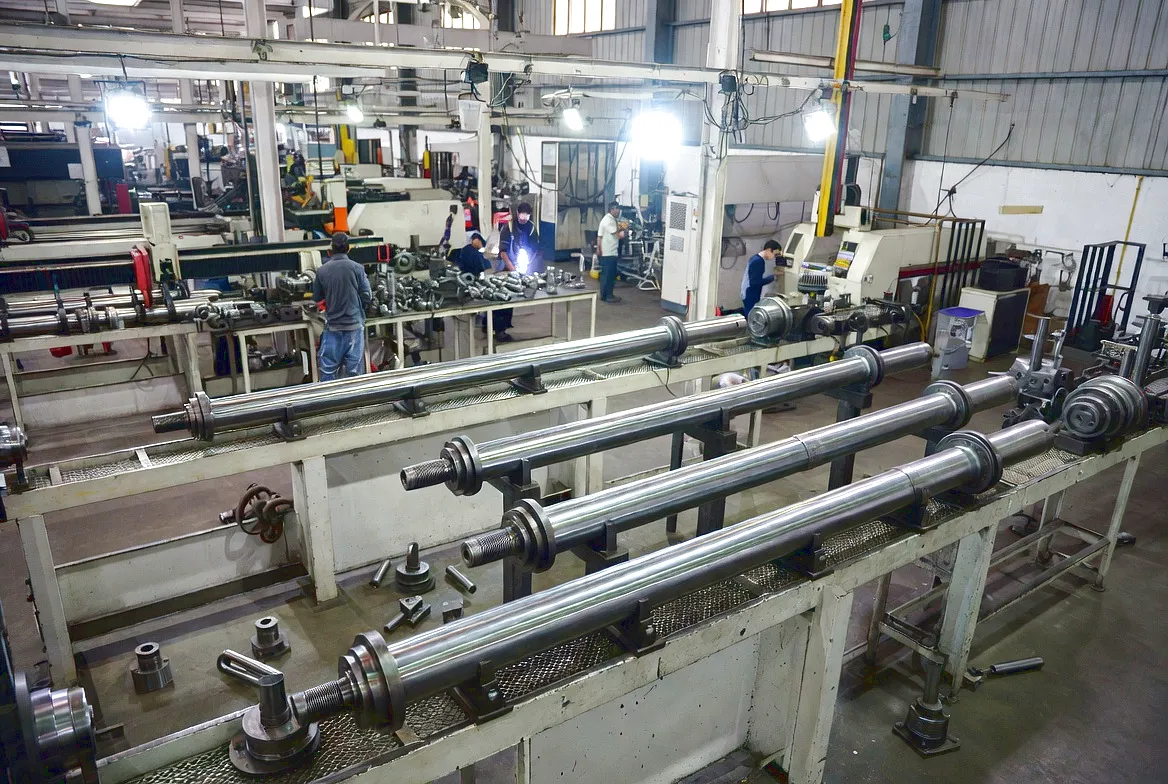
Where Ever Power genuinely differentiates itself from commodity suppliers is in its customisation capability. The engineering team handles non-standard shaft lengths from 300 mm to over 3,000 mm, custom profile combinations that mix standard inner and outer tube profiles to meet unusual dimensional constraints, special yoke bore specifications for obsolete or proprietary implement input shafts, and custom torque limiter integration. Orders with custom specifications are processed through a dedicated project engineering workflow, with technical drawings issued for customer approval before production commences — ensuring that what arrives on a UK customer’s receiving dock is exactly what was specified.
Ready to Discuss Your Custom PTO Shaft Requirement?
Our engineering team handles bespoke specifications, replacements for obsolete shafts, and large-volume supply agreements.
Customer Success Story: Sheffield Steel & Civil Contractors
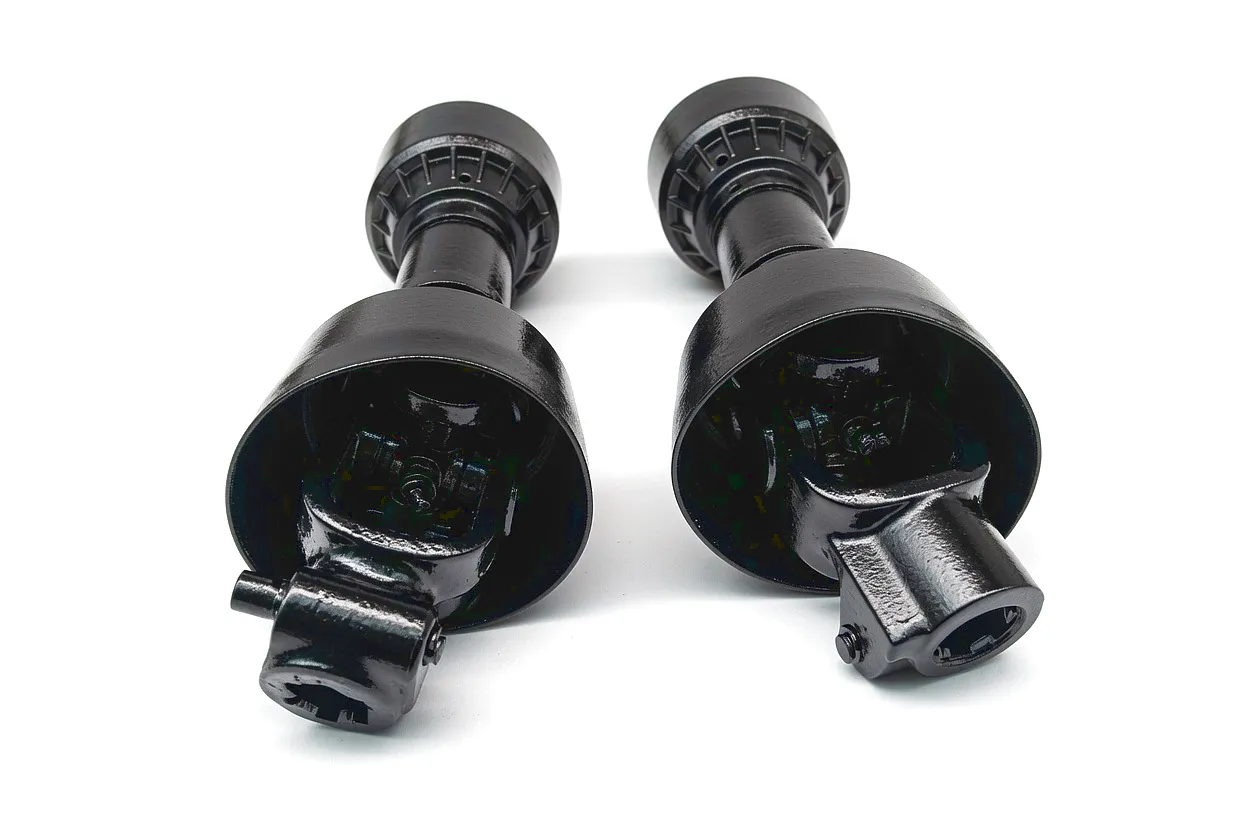 Hallam Civil & Groundworks Ltd., a well-established civil engineering contractor operating primarily across South Yorkshire and the wider Sheffield city region, came to Ever Power in early 2024 facing a persistent and costly problem. Their fleet of five tracked planers and two tractor-mounted cold milling machines was experiencing PTO shaft failures at rates that were causing significant project delays — shaft assemblies sourced from a lower-cost supplier were lasting an average of just six weeks under the continuous high-torque demands of asphalt and concrete milling operations, where shock loading and vibration are constant operational realities.
After an initial technical consultation with Ever Power’s engineering team, a root cause analysis identified two failure modes: inadequate cross joint surface hardness allowing premature needle bearing wear, and under-rated tube wall thickness causing fatigue cracking at the weld-yoke junction under shock loads. Ever Power proposed a custom industrial-grade Zapfwelle specification using 42CrMo4 alloy steel tubes with increased wall thickness, cross joints heat-treated to 62 HRC, and a double-sealed bearing arrangement to exclude the silica-rich dust generated during concrete milling. The yoke-to-tube joints were changed from welded to interference-fit plus pinned configuration, eliminating the fatigue stress concentration that had caused previous failures.
Twelve months after switching to Ever Power’s custom assemblies, Hallam reported zero in-field PTO shaft failures across the entire fleet. Average shaft service intervals extended from six weeks to over nine months, and the engineering team at Hallam estimated the combined saving from reduced parts costs, labour time, and eliminated project delays at over £47,000 across the twelve-month period — representing a return on the premium specification investment of well over 600%.
What Our UK Customers Say
“We’ve tried four different PTO shaft suppliers over the past decade, and Ever Power is the only one that actually took the time to analyse our failure mode before quoting. The custom 42CrMo4 shafts they designed for our milling fleet have been running for nine months without a single replacement — that’s absolutely extraordinary compared to what we experienced before.”
“As a machinery dealer covering the East Midlands, we need a PTO shaft supplier who can turn around standard stock items quickly and handle custom lengths without drama. Ever Power delivers on both counts — their 48-hour dispatch on stocked items keeps our customers happy, and I’ve never had a quality complaint on any shaft they’ve supplied.”
“We run a large slurry and spreading operation across North Yorkshire, and our PTO drive shafts take an absolute battering through the back-end season. Ever Power’s wide-angle CV shafts with the sealed bearing arrangement have transformed our maintenance overhead — we used to replace shafts twice a season and now we’re getting through the full year on one set. The quality difference is immediately obvious the moment you handle them.”
Frequently Asked Questions About PTO Shaft Components
Real questions from UK machinery operators, procurement managers, and engineers — answered with technical accuracy.
How do I know which PTO shaft yoke series is compatible with my tractor’s PTO output here in the UK?
The correct yoke series is determined by your tractor’s PTO category — which corresponds to the diameter and spline count of the output stub shaft. UK tractors typically use CAT 1 (28.6 mm, 6 splines), CAT 2 (34.9 mm, 21 splines), or CAT 3 (44.5 mm, 20 splines) stubs, conforming to ISO 500-1 standards. Check your tractor’s operator manual for the PTO category, or measure the stub shaft directly. If you’re unsure, Ever Power’s team can advise the correct yoke specification from your tractor model and year.
What is the typical cost or price of a replacement PTO shaft cross joint for an agricultural baler operating in Yorkshire?
Replacement cross joint kits for standard CAT 2 agricultural applications typically range from around £18 to £55 per joint depending on the brand quality tier and whether the kit includes the bearing cups and snap rings. Heavy-duty industrial cross joints for larger CAT 3 assemblies or specialist applications can range from £60 to £200 or above. For accurate pricing on your specific cross joint series, contact [email protected] with the cross dimensions or PTO shaft series reference for a same-day quotation.
Where can I find a reliable PTO shaft supplier in Birmingham or the West Midlands who can quote for bespoke lengths?
For bespoke PTO shaft lengths and custom specifications serving customers in Birmingham and the wider West Midlands, Ever Power provides direct supply with competitive delivery lead times to the region. Custom length assemblies can be quoted within 24 hours of receiving your specification — shaft collapsed and extended lengths, series, yoke types, and any torque limiter requirements. Email the technical details to [email protected] and our engineering team will respond with a full technical and commercial quotation.
How often should PTO shaft cross joints be greased and what happens when the guard or tube is damaged on a working farm in the UK?
Standard agricultural PTO shaft cross joints should be greased every 8 operating hours or at the start of each major working session — whichever comes sooner. Use a lithium-complex multi-purpose grease rated NLGI 2 and inject through the grease nipples on each cross trunnion until fresh grease appears from the bearing seal. A damaged guard must be replaced immediately under UK PUWER regulations — operating with a damaged or missing guard is both a legal violation and a serious safety risk. A damaged sliding tube that shows surface scoring or cracking should trigger shaft replacement, as continued operation risks catastrophic failure under load.
Which PTO shaft tube profile should I specify for a high-torque slurry tanker pump application on heavy clay soils in Northern England?
For high-torque continuous-duty applications such as slurry tanker pumps operating on heavy clay soils typical of Northern England’s pastoral regions, the triangular or star tube profile is the preferred specification. These profiles offer greater torque capacity per unit weight than the lemon (D-type) profile and provide more even load distribution across the sliding contact surface, which is critical when the pump load is sustained over long periods. Combine this with a CAT 3 or heavy-duty series cross joint and a 42CrMo4 alloy tube, and the assembly will reliably handle the sustained high-torque demands of large-capacity slurry operations throughout the full season.
Who is the best PTO drive shaft manufacturer or supplier to get a bulk quote from for a construction equipment hire fleet based in Sheffield?
For bulk procurement servicing a construction equipment hire fleet in the Sheffield region, Ever Power is equipped to handle framework supply agreements covering both standard stocked items and custom specifications. Hire fleet operators typically benefit from scheduled delivery arrangements, pre-agreed pricing over a contract period, and access to an engineering consultation service for failure analysis when a shaft fails prematurely in the field. Volume-based pricing significantly reduces per-unit cost compared to spot buying. Reach out to [email protected] with your fleet size and estimated annual volume for a tailored supply proposal.
Ready to Source High-Performance PTO Shaft Components?
Whether you need standard agricultural PTO shaft assemblies, custom industrial specifications, or high-volume supply agreements for your UK operation — Ever Power’s engineering and commercial team is ready to help.
Ever Power — Precision PTO Drive Shaft & Power Transmission Components | Serving Agricultural, Construction & Industrial Customers Across the United Kingdom | CE Marked & ISO 9001 Certified Manufacturer
bearbeitet von gzl























