
Daily, Weekly, and Monthly Maintenance Routines
for PTO Shafts
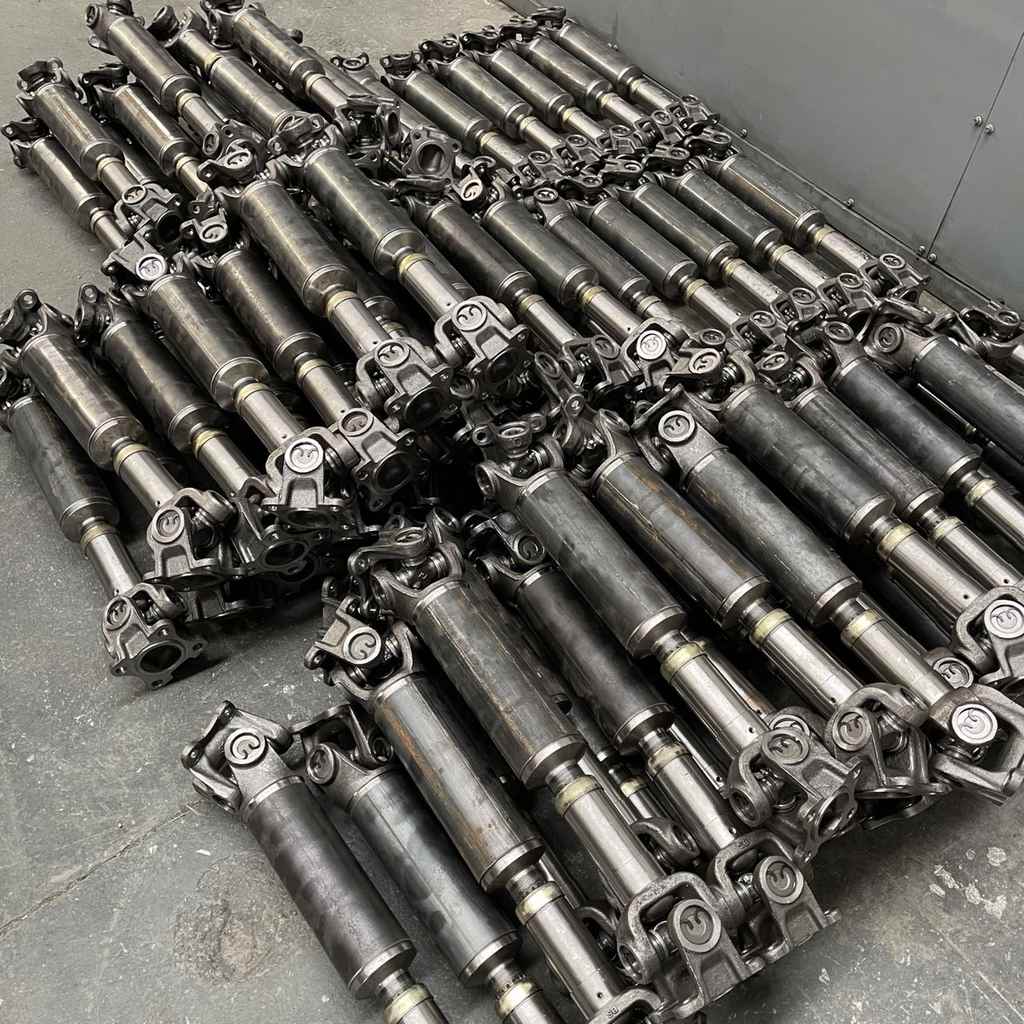 A Power Take-Off (PTO) shaft is one of the most mechanically stressed components in agricultural and industrial machinery. Transmitting rotational torque from a primary power source — a tractor or stationary engine — to a driven implement, the PTO drive shaft operates under constant cyclic loading, angular displacement, and exposure to harsh environmental conditions. For British farmers, construction contractors in Sheffield, and manufacturing plant operators in Birmingham, a properly maintained PTO shaft is not merely a best practice — it is the single most effective strategy for preventing catastrophic drivetrain failure, reducing unplanned downtime, and extending the operational life of expensive equipment. This guide sets out a rigorous maintenance framework structured across daily, weekly, and monthly intervals, giving you the technical depth and practical detail needed to protect your investment and keep your operations running efficiently throughout the year.
Need a custom PTO shaft solution for your UK operation? Our engineers are ready to assist.
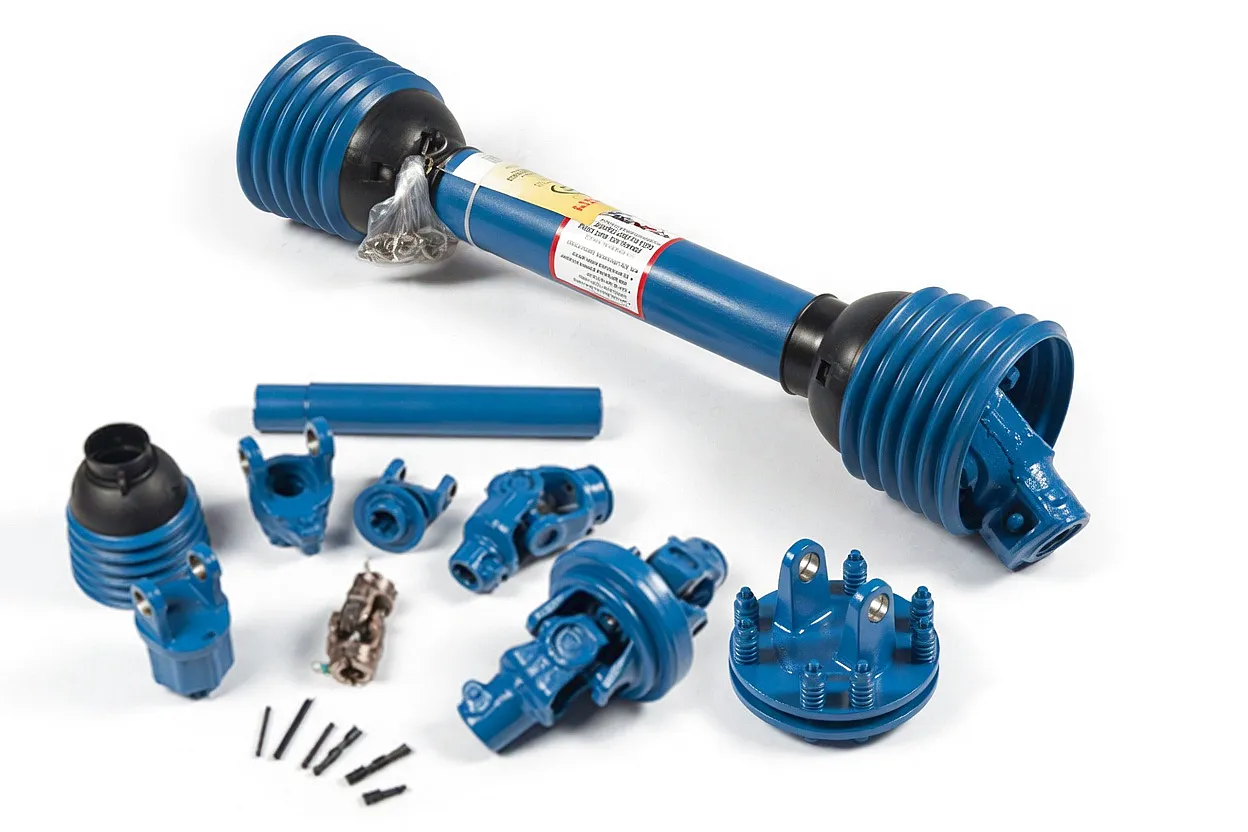
Why a Structured PTO Shaft Maintenance Plan Changes Everything
The Cost of Neglect
A single failed PTO shaft during peak harvest season can cost a UK arable farm tens of thousands of pounds in lost productivity, emergency contractor fees, and expedited part replacement. In the manufacturing corridors of the West Midlands, an unexpected driveline failure on a production line can halt output for an entire shift. When the internal spline teeth wear excessively, universal joints seize due to dry corrosion, or the protective guard cracks and detaches, the result is far more than inconvenience — it becomes a direct liability event. Research consistently shows that mechanical failures in power transmission components are disproportionately caused not by inherent design flaws, but by inadequate or irregular servicing. A clearly defined maintenance schedule, executed with discipline and documented accurately, eliminates the vast majority of these failures before they manifest.
Safety Obligations Under UK Law
Under the Provision and Use of Work Equipment Regulations 1998 (PUWER), UK employers are legally required to maintain work equipment — including PTO shafts and their protective guarding — in a safe and efficient state. The Health and Safety Executive (HSE) has specifically identified unguarded or poorly maintained PTO shafts as a leading cause of severe agricultural injuries each year across England, Wales, and Scotland. Maintaining the shaft’s plastic guard in an undamaged and properly secured condition is therefore not optional. Written maintenance records, inspection logs, and replacement part documentation serve a dual purpose: they protect workers from harm and provide essential evidence of due diligence in the event of an HSE investigation or insurance claim. A structured daily, weekly, and monthly maintenance routine is the most practical way to comply with these legal duties.
Daily PTO Shaft Maintenance Checklist
Daily pre-operation and post-operation checks are the foundation of any serious PTO shaft maintenance programme. These checks take no more than five to ten minutes and are designed to catch acute damage, unexpected contamination, and lubricant loss before they cause secondary failures. In UK agricultural settings — where early morning moisture, clay-heavy soils in the East Midlands, and near-constant vibration on uneven ground accelerate wear — a daily habit of visual and tactile inspection pays enormous dividends. Industrial users in processing plants across Yorkshire and Lancashire should equally enforce these checks at every shift changeover, particularly when multiple operators share the same equipment.
Visual Guard Inspection
Before each use, walk the entire length of the PTO shaft and visually inspect the plastic guard for cracks, splits, missing sections, or distortion from heat or impact. Confirm that the bearing cone retainers at each end are seated correctly and that the safety chain is attached at both ends — to the guard and to a fixed, non-rotating anchor point on both the tractor and the implement. A guard that rotates freely indicates the bearing cone has failed. Any guard showing structural damage must be replaced immediately, not at the next service interval. Under no circumstances should a PTO shaft be engaged without a fully intact guard in place. This single daily check prevents the most severe category of PTO-related injuries recorded by HSE each year.
Grease Nipple Check
On heavy-duty or continuous-operation PTO shaft configurations — such as those driving large slurry pumps, silage choppers, or industrial compressors — daily greasing of the universal joints via their grease nipples is standard practice. Apply a lithium-complex or moly-based grease until fresh lubricant begins to purge from the joint seals, which confirms the old, contaminated grease has been displaced. Do not over-grease, as excessive pressure can rupture the bearing seals. After greasing, wipe the nipple clean to prevent soil and debris from adhering, which would otherwise introduce abrasive particles on the next application. For lighter-duty or less frequent applications, confirm visually that no grease leakage has occurred from compromised seals, as this indicates immediate joint service is needed.
Connection Point Integrity
Check both connection ends — the tractor-side splined shaft and the implement input — for correct engagement and positive retention. A PTO shaft that has not clicked fully onto the tractor stub, or whose quick-release collar is partially depressed, can disengage under vibration or shock loading. This results in sudden, violent disconnection at speed and can cause serious machine damage or personal injury. For shafts that use a pin-and-groove retention method rather than a spring-latch, verify that the retaining pin is fully inserted and the locking clip is engaged. After any implement change, this check is non-negotiable. Also note any unusual axial play or rotational looseness in the connection, as this indicates spline wear that must be flagged for detailed weekly assessment.
Post-Operation Temperature Check
Immediately after stopping, and once the PTO shaft has come to a complete standstill, carefully place the back of your hand near (not on) each universal joint housing. A correctly lubricated and properly aligned joint will feel warm but never uncomfortably hot. Excessive heat — typically above 60 to 70 degrees Celsius — indicates either a dry or contaminated joint bearing, a bent or misaligned shaft imposing abnormal angular loading, or a collapsed bearing. Similarly, check the telescoping section for abnormal heat, which may signal that the shaft is operating outside its recommended extension range, causing the inner and outer tubes to bind. Documenting these observations in a simple field log gives a trend record that makes predicting component failure significantly more reliable over the medium and long term.
Weekly PTO Shaft Inspection Protocol
Weekly checks are more involved than their daily counterparts — they move beyond surface-level visual assessment into hands-on mechanical evaluation of key wear surfaces, lubricant condition, and structural alignment. For farmers in Lincolnshire running continuous grass or arable programmes, or engineering firms in Sheffield operating PTO-driven pump stations, the weekly service interval is the most practical window in which emerging faults can be caught and corrected before they require major components replacement. Allocate thirty to forty minutes for a proper weekly check, work methodically from one end of the shaft to the other, and always service the shaft with the machine completely stationary, the engine off, and the tractor key removed from the ignition.
Universal Joint Cross-Play Assessment
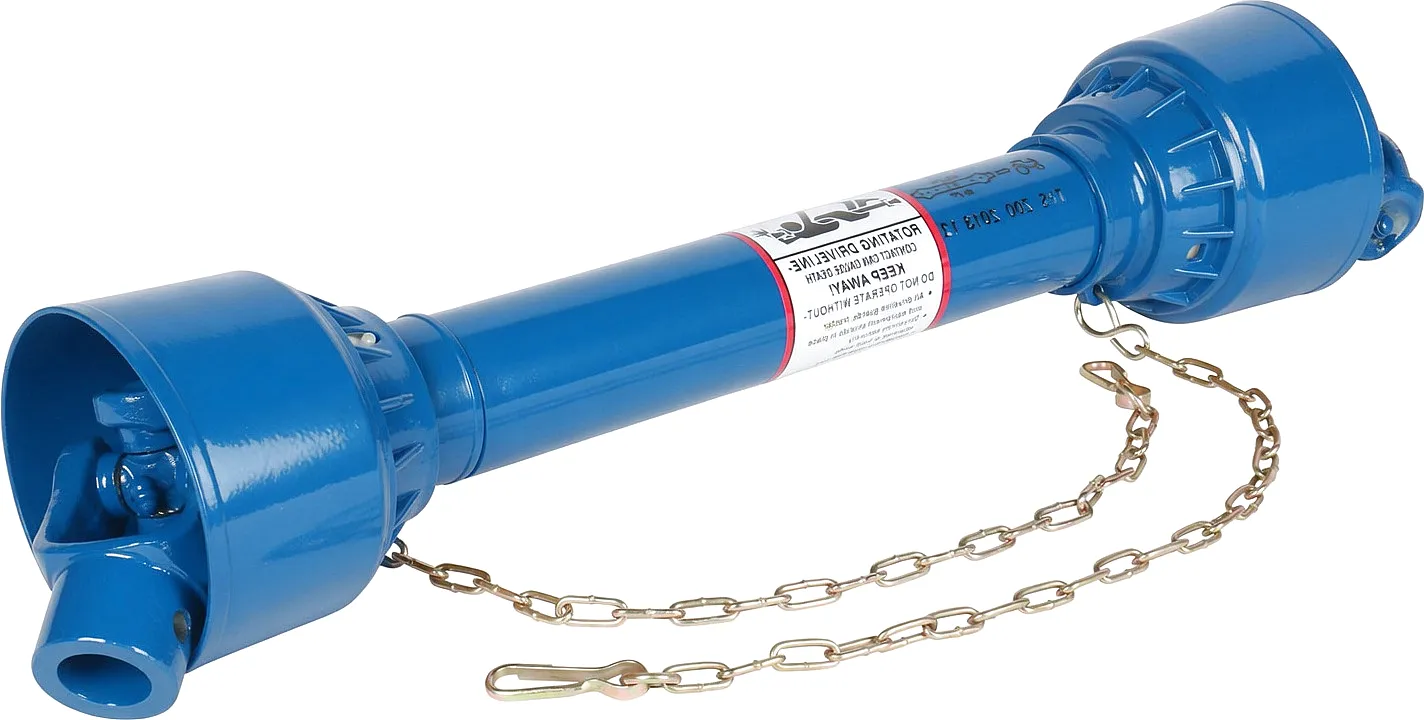
With the shaft disconnected and secured on a workbench, grip each yoke of every universal joint and apply a firm rocking force in all four rotational directions. There should be minimal detectable play. Any perceptible free movement — particularly a clunking feel rather than smooth rotation — indicates that the needle roller bearings within the cross journal have worn beyond acceptable limits. At this stage the cross kit (comprising the spider cross, four bearing cups, needle rollers, and seals) requires replacement. Many UK agricultural engineers recommend replacing cross kits in pairs — both ends simultaneously — to maintain consistent torsional behaviour and prevent uneven vibration signatures from developing in the shaft assembly.
Telescoping Tube Inspection and Lubrication
Fully extend and retract the telescoping section through its complete operational range, feeling for stiffness, binding, or irregular resistance. If the inner profile tube does not slide smoothly inside the outer tube, or if there is a pronounced squealing or scraping sound, the internal bearing slide or profile lubrication requires immediate attention. Remove the guard, clean the entire telescoping section with a dry brush to remove packed soil and crop debris — a particular concern in the peat-rich fields of the Fens in Cambridgeshire — then apply a thin, even coating of the manufacturer-recommended grease to the full length of the inner tube profile. Reassemble the guard and perform a manual extension-retraction test to confirm smooth operation before returning the shaft to service.
🔩 Spline Condition and Wear Measurement
The splined ends of the PTO shaft are subjected to high torsional stress at every engagement event, and progressive spline wear is one of the most common causes of PTO shaft failure in heavy-duty agricultural and industrial service. During the weekly check, remove the shaft from the tractor and implement, clean the male spline ends, and inspect them under good lighting for rounding of the tooth flanks, material pick-up or galling on the tooth faces, and any visible cracks running across the root of the teeth. A new splined connection should have sharp, square tooth profiles. When the corners become noticeably rounded or when you can feel step wear with your thumbnail, plan for imminent replacement. Continuing to operate with worn splines causes further damage to the mating female bore and can result in torque loss or violent disengagement under shock load.
📏 Operating Length Verification
An often-overlooked but critical weekly check involves verifying that the PTO shaft is operating within its designed length range when connected between the tractor and implement. Connect the shaft to both machines, lower the implement to its working position, and measure the exposed length of the inner tube beyond the outer tube. Most manufacturers specify a minimum overlap of 150 to 200 millimetres — the actual figure will be stated in your shaft’s documentation. If the shaft is near or at full extension in its working position, there is a serious risk of complete disengagement when the implement pitches forward over uneven terrain. Conversely, if the shaft is too short for the tractor-to-implement distance even when the telescoping section is fully collapsed, the U-joints will operate at dangerously acute angles and will fail prematurely. Resolve any length discrepancy by sourcing the correct shaft length rather than improvising a fix.
🧲 Overrunning Clutch Function Test
Many PTO shaft assemblies used on mowers, flail attachments, and bale handlers incorporate an overrunning clutch (also known as a freewheel device) at the implement end. This clutch decouples the implement’s rotational inertia from the tractor’s PTO shaft when the tractor decelerates rapidly, preventing the implement from continuing to drive the tractor gearbox backwards. A weekly functional test takes under a minute: with the shaft disconnected, hold the outer housing of the overrunning clutch stationary in one hand and attempt to rotate the inner splined element in both directions. It should rotate freely in one direction (the overrunning direction) and lock solidly in the other (the driving direction). If it locks in both directions, the one-way mechanism has failed. If it slips in both directions, the clutch is completely stripped. Either condition demands immediate replacement.
Monthly Deep-Service and Comprehensive PTO Shaft Overhaul
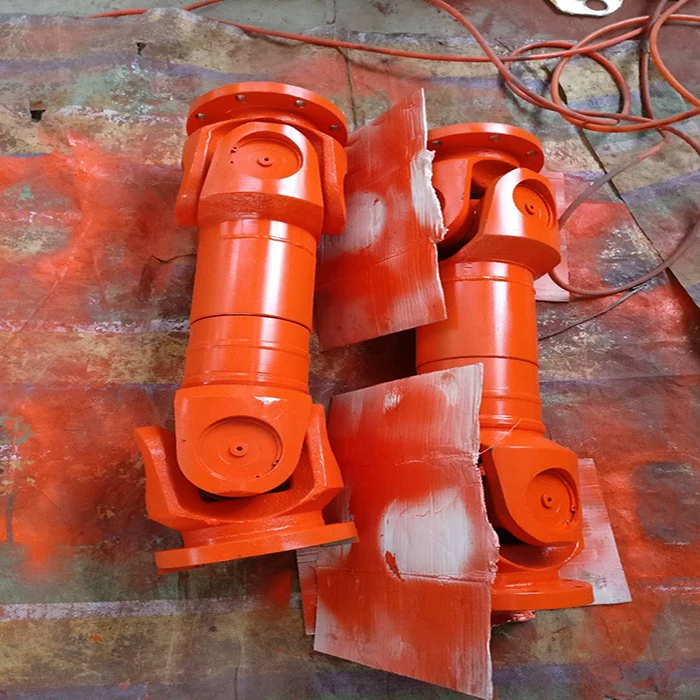 The monthly service represents the most thorough level of field-level PTO shaft maintenance and is the appropriate interval at which to take a systemic view of the shaft’s overall condition and remaining service life. This session should involve full disassembly of the guard assembly, a detailed measurement campaign using workshop tools, an assessment of the torque limiter (where fitted), and a comprehensive lubrication of every component according to specification. For operators in heavy-duty sectors such as the quarrying and aggregates industry in the Peak District, or the timber processing operations across mid-Wales and the Scottish Borders, monthly overhauls are the only way to manage the extreme duty cycles these shafts endure. The goal is not just to fix what is broken — it is to predict and prevent what will break next.
PTO Shaft Technical & Performance Parameters Reference
| Parameter | Standard Range | Heavy Duty Range | Maintenance Action Threshold |
|---|---|---|---|
| Rated Torque Capacity | 500 – 2,000 Nm | 2,000 – 8,000 Nm | Replace if operating 15%+ above rating |
| Max Operating Speed | 540 RPM / 1,000 RPM | 1,000 – 1,400 RPM | Check balance if vibration at >900 RPM |
| Maximum U-Joint Angle | 15° – 25° | 25° – 35° (CV joint) | Realign if >max continuous angle |
| Outer Tube Material | Cold-drawn steel (S355) | Alloy steel / Cr-Mo steel | Replace on visible corrosion pitting >0.5mm |
| U-Joint Cross Material | Case-hardened alloy steel | Through-hardened 20CrMnTi | Replace at first detectable play |
| Telescoping Tube Overlap | Min. 150 mm | Min. 200 mm (heavy shock load) | Resize shaft if overlap < minimum |
| Guard Plastic Material | HDPE / PP | Reinforced HDPE | Replace immediately on any crack |
| Grease Type (U-Joint) | Lithium complex EP NLGI 2 | Moly EP lithium NLGI 2 | Re-grease every 8 operating hours |
| Drehmomentbegrenzer-Einstellung | 110% – 130% rated torque | Up to 150% (cam clutch type) | Recheck setting every 50 operating hours |
| Oberflächenbehandlung | Hot-dip galvanised or painted | Zinc-nickel plated / powder coat | Touch up bare metal monthly |
Complete Guard Disassembly and Cleaning
Remove the entire guard assembly — both the tractor-side and implement-side half-guards — from the shaft. Power-wash the guard interior to remove packed soil, crop residue, and old lubricant. Inspect the bearing cones at each end for cracking of the cone race, fragmentation of the bearing cage, and loss of the sealing lip. Damaged bearing cones allow the guard to begin rotating, immediately creating a snagging hazard. Inspect the safety chain clips and D-rings for corrosion and deformation. If the guard’s length has been manually cut in the field to approximate a non-standard shaft length — a practice that is unfortunately common — this must be rectified by obtaining a correctly-sized replacement guard. Reassemble the guard with fresh bearing cone grease on the retention surfaces before refitting to the shaft.
Torque Limiter Calibration and Slip Test
Where the PTO shaft incorporates a friction disc torque limiter, shear bolt clutch, or cam-overrunning combination unit, the monthly service is the ideal time to verify its calibration and functional condition. Over time, spring-loaded friction disc units lose their set torque value as the disc surface glazes or the springs relax. A simple test involves locking the implement input shaft and applying a known torque to the PTO side using a calibrated torque wrench — the limiter should slip cleanly at the specified value. If the slip torque is significantly above the design value, the disc faces require cleaning with a solvent-damp cloth, and the spring pressure must be re-adjusted to the manufacturer’s specification. A properly set torque limiter is the last line of defence against catastrophic driveline failure when the implement hits a buried obstacle or jams unexpectedly — it protects both the PTO shaft and the tractor gearbox simultaneously.
Corrosion Assessment and Surface Treatment Renewal
The UK climate — characterised by persistent rainfall, high humidity, and salt-laden coastal air in regions from Cornwall to the Humber Estuary — is exceptionally aggressive towards unprotected steel surfaces. On the outer tube, look for rust breakthroughs under the painted or galvanised finish, paying particular attention to areas around welded yokes, threaded spigots, and any location where paint has been mechanically abraded by guard contact. Clean all affected areas back to bare metal using wire brush or abrasive pad, treat with a suitable zinc-rich cold galvanising primer, and apply a topcoat in the appropriate colour. For tube sections showing corrosion pitting deeper than 0.5 mm across a significant area, tube replacement rather than patch treatment is the correct course of action. Monthly corrosion management prevents the gradual undermining of structural integrity that eventually leads to catastrophic mid-shaft fracture under torsional load.
Seasonal Storage Preparation: Protecting Your PTO Shaft During Lay-Up
In the UK agricultural calendar, many implements are stored for weeks or months between seasons — mowers are laid up in autumn, balers are stored over winter, and silage equipment may sit from October through April. Improper storage is one of the leading causes of accelerated PTO shaft degradation, as static corrosion, bearing damage from vibration-free periods, and UV-induced guard embrittlement all occur during inactivity. Following a correct lay-up procedure at the end of each operating season protects your investment and ensures the shaft is ready for immediate productive use when the next season begins.
Full Clean-Down
Pressure-wash the complete shaft assembly and guard, removing all soil, crop residue, oil contamination, and biological matter. Allow to dry completely before proceeding. Do not store a wet shaft — moisture trapped under the guard promotes aggressive corrosion of both the steel components and the plastic guard’s inner surface.
Full Re-Lubrication
Before storage, re-grease all universal joints to capacity, ensuring fresh lubricant completely displaces any water-contaminated or emulsified grease within the bearing cups. Apply a thin coating of anti-corrosion grease or corrosion-inhibiting spray (such as ACF-50 or Waxoyl, both widely available from UK agricultural suppliers) to all exposed steel surfaces, splined ends, and the inner profile tube surface.
Correct Storage Orientation
Store the PTO shaft horizontally, supported at both ends on padded wooden blocks or a proprietary shaft storage bracket. Vertical storage places sustained load on the lower U-joint bearing and can cause permanent deformation of the needle rollers over a long lay-up period. Cover the shaft with a breathable storage sleeve — avoid non-breathable plastic wrapping which traps condensation — and store in a dry, frost-free location such as a farm building or machinery shed.
Pre-Season Recommissioning Check
When bringing a stored PTO shaft back into service, conduct a full pre-season inspection covering all the daily and weekly check points described in this guide before first use. Pay particular attention to guard condition — plastic can become brittle after prolonged UV exposure even in a shed — and check for any bearing damage caused by rodent access or impact during storage. Replace consumables such as grease nipples that have corroded solid, and test-run the shaft at low speed with no load before engaging the implement under full working conditions.
How a Sheffield Engineering Contractor Reduced Driveline Downtime by 80%
 Meridian Groundworks Ltd, a civil engineering subcontractor based in Sheffield’s Lower Don Valley, operates a fleet of compact tractors driving PTO-powered soil stabilisation and compaction attachments on infrastructure projects across Yorkshire and Derbyshire. Prior to partnering with Ever Power in 2023, the company was experiencing an average of four to five PTO shaft-related stoppages per month — costing the business approximately £2,400 per incident in labour, hire equipment, and schedule overruns on time-sensitive contracts.
The root cause analysis conducted by Ever Power’s application engineering team identified two systemic problems. The standard off-the-shelf shafts Meridian had been using were not rated for the shock load characteristic of their soil mixing application — repeated impacts from embedded stones and concrete rubble were regularly tripping the standard friction limiters at below-operating torque, yet still transmitting sufficient shock to damage the universal joints. The shaft lengths were also not optimised for Meridian’s specific tractor-to-implement geometry, causing the telescoping sections to operate at the extreme end of their travel range, resulting in premature tube wear and seal failure.
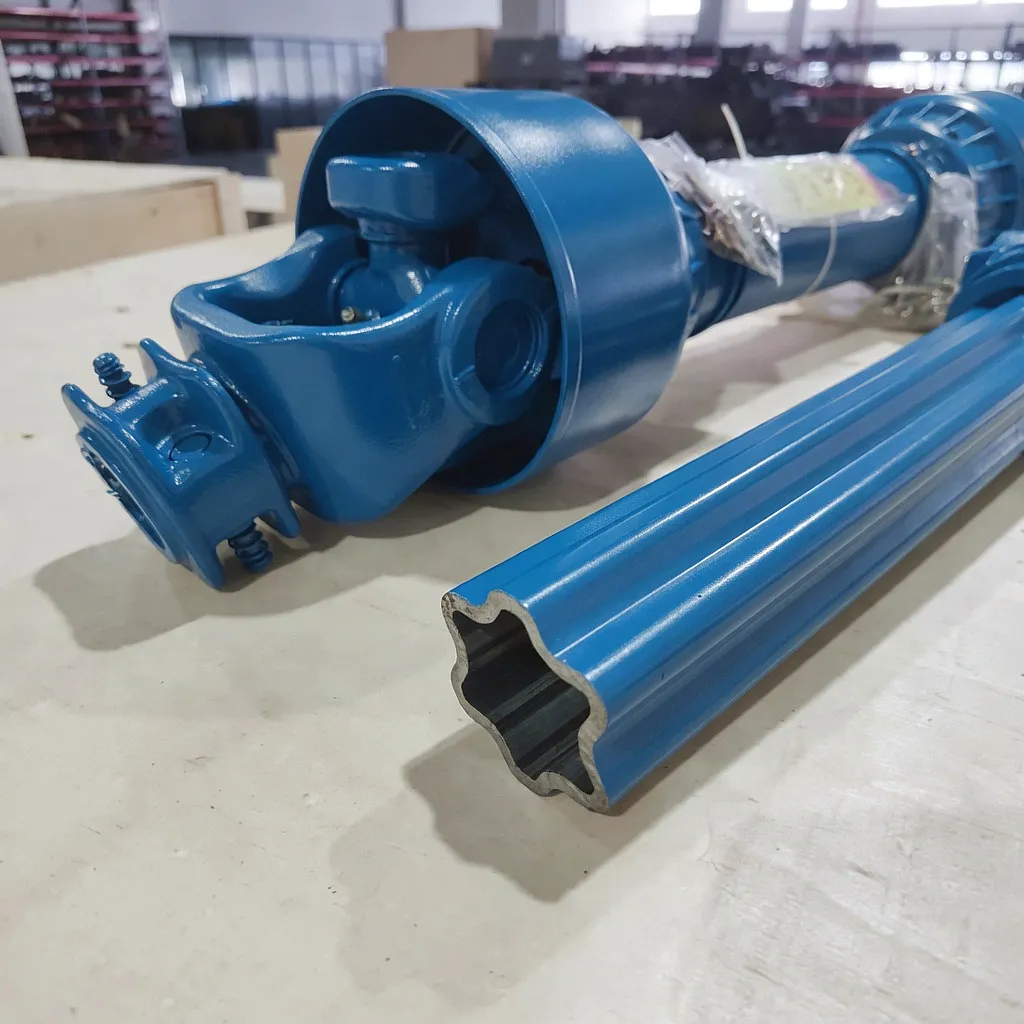
Ever Power supplied a batch of custom-length PTO shafts featuring heavy-duty cross kits rated to 3,800 Nm, cam-type overrunning clutches calibrated to Meridian’s specific implement inertia, and extended-length guard assemblies suited to the operating geometry. Crucially, Ever Power’s team provided a written maintenance schedule — directly informing the daily, weekly, and monthly framework Meridian now uses — along with a supply of cross kits and guard bearing cones held in a local stockholder in Sheffield. Within three months of implementation, PTO-related stoppages had dropped to fewer than one per quarter, and Meridian’s fleet manager reported a measurable improvement in implement performance consistency across all active project sites.
What Our UK Customers Say About Ever Power PTO Shafts
“We’ve run Ever Power shafts on our baler and disc mower combination for two seasons without a single cross-kit failure. The maintenance schedule Ever Power provided is straightforward and our team sticks to it. The torque limiter calibration has been spot-on — it’s protected the baler input twice already when we’ve hit buried debris in the field.”
“The customisation service from Ever Power was exactly what we needed for our non-standard pump station configuration in Birmingham. Standard catalogue shafts simply didn’t fit the geometry. Ever Power’s engineers specified the correct length and U-joint angle combination within 48 hours, and the lead time to delivery was better than anything else we’d been quoted. Four months on, the shaft performs flawlessly under continuous daily operation.”
“We operate PTO-driven timber saws across three sites in the Scottish Borders and the wear life of the Ever Power cross kits has easily doubled what we were getting from our previous supplier. The guard quality is noticeably better — thicker HDPE, better fitting bearing cones, and the safety chains have proper marine-grade clips rather than the cheap S-hooks we’d been used to. We also appreciate that spare parts are stocked and available quickly from Ever Power’s UK distribution contact.”
Frequently Asked Questions About PTO Shaft Maintenance in the UK
Need a PTO Shaft That Supports Your Maintenance Programme?
Whether you need a direct replacement, a custom-engineered solution for a non-standard application, or a bulk supply agreement for your UK operations, Ever Power’s engineering team is ready to assist. Tell us your requirements and receive a detailed technical proposal and competitive quote.
bearbeitet von gzl























