
Produktbeschreibung
Produktbeschreibung
SWC BH Cardan Shaft Basic Parameter And Main Dimension
Cardan shaft is widely used in rolling mill, punch, straightener, crusher, ship drive, paper making equipment, common machinery, water pump equipment, test bench, and other mechanical applications.
Advantage:
1. Low life-cycle costs and long service life;
2. Increase productivity;
3. Professional and innovative solutions;
4. Reduce carbon dioxide emissions, and environmental protection;
5. High torque capacity even at large deflection angles;
6. Easy to move and run smoothly;
Detaillierte Fotos
Produktparameter
| Model | Tn kN • m |
T. |
P (.) |
LS mm |
Lmin | Size mm |
I kg. m2 | m kg |
|||||||||||
| Di js11 |
d2 H7 |
Da | Lm | n-d | k | t | b h9 |
g | Lmin | 100mm | Lmin | 100mm | |||||||
| SWC58BH | 58 | 0.15 | 0.075 | ≤22 | 35 | 325 | 47 | 30 | 38 | 35 | 4-5 | 3.5 | 1.5 | – | – | – | – | 2.2 | – |
| SWC65BH | 65 | 0.25 | 0.125 | ≤22 | 40 | 360 | 52 | 35 | 42 | 46 | 4-6 | 4.5 | 1.7 | – | – | – | – | 3.0 | – |
| SWC75BH | 75 | 0.50 | 0.25 | ≤22 | 40 | 395 | 62 | 42 | 50 | 58 | 6-6 | 5.5 | 2.0 | – | – | – | – | 5.0 | – |
| SWC90BH | 90 | 1.0 | 0.50 | ≤22 | 45 | 435 | 74.5 | 47 | 54 | 58 | 4-8 | 6.0 | 2.5 | – | – | – | – | 6.6 | – |
| SWC100BH | 100 | 1.5 | 0.75 | ≤25 | 55 | 390 | 84 | 57 | 60 | 58 | 6-9 | 7 | 2.5 | – | – | 0.0044 | 0.00019 | 6.1 | 0.35 |
| SWC120BH | 120 | 2.5 | 1.25 | ≤25 | 80 | 485 | 102 | 75 | 70 | 68 | 8-11 | 8 | 2.5 | – | – | 0.5719 | 0.00044 | 10.8 | 0.55 |
| SWC150BH | 150 | 5 | 2.5 | ≤25 | 80 | 590 | 13.0 | 90 | 89 | 80 | 8-13 | 10 | 3.0 | – | – | 0.0423 | 0.00157 | 24.5 | 0.85 |
| SWC160BH | 160 | 10 | 5 | ≤25 | 80 | 660 | 137 | 100 | 95 | 110 | 8-15 | 15 | 3.0 | 20 | 12 | 0.1450 | 0.0060 | 68 | 1.72 |
| SWC180BH | 180 | 20 | 10 | ≤25 | 100 | 810 | 155 | 105 | 114 | 130 | 8-17 | 17 | 5.0 | 24 | 14 | 0.1750 | 0.0070 | 70 | 2.8 |
| SWC200BH | 200 | 32 | 16 | ≤15 | 110 | 860 | 170 | 120 | 127 | 135 | 8-17 | 19 | 5.0 | 28 | 16 | 0.3100 | 0.0130 | 86 | 3.6 |
| SWC225BH | 225 | 40 | 20 | ≤15 | 140 | 920 | 196 | 135 | 152 | 120 | 8-17 | 20 | 5.0 | 32 | 9.0 | 0.5380 | 0.5714 | 122 | 4.9 |
| SWC250BH | 250 | 63 | 31.5 | ≤15 | 140 | 1035 | 218 | 150 | 168 | 140 | 8-19 | 25 | 6.0 | 40 | 12.5 | 0.9660 | 0.5717 | 172 | 5.3 |
| SWC285BH | 285 | 90 | 45 | ≤15 | 140 | 1190 | 245 | 170 | 194 | 160 | 8-21 | 27 | 7.0 | 40 | 15.0 | 2.0110 | 0.571 | 263 | 6.3 |
| SWC315BH | 315 | 125 | 63 | ≤15 | 140 | 1315 | 280 | 185 | 219 | 180 | 10-23 | 32 | 8.0 | 40 | 15.0 | 3.6050 | 0.571 | 382 | 8.0 |
| SWC350BH | 350 | 180 | 90 | ≤15 | 150 | 1410 | 310 | 210 | 267 | 194 | 10-23 | 35 | 8.0 | 50 | 16.0 | 7.571 | 0.2219 | 582 | 15.0 |
| SWC390BH | 390 | 250 | 125 | ≤15 | 170 | 1590 | 345 | 235 | 267 | 215 | 10-25 | 40 | 8.0 | 70 | 18.0 | 12.164 | 0.2219 | 738 | 15.0 |
| SWC440BH | 440 | 355 | 180 | ≤15 | 190 | 1875 | 390 | 255 | 325 | 260 | 16-28 | 42 | 10 | 80 | 20.0 | 21.420 | 0.4744 | 1190 | 21.7 |
| SWC490BH | 490 | 500 | 250 | ≤15 | 190 | 1985 | 435 | 275 | 325 | 270 | 16-31 | 47 | 12 | 90 | 22.5 | 32.860 | 0.4744 | 1452 | 21.7 |
| SWC550BH | 550 | 710 | 355 | ≤15 | 240 | 2300 | 492 | 320 | 426 | 305 | 16-31 | 50 | 12 | 100 | 22.5 | 68.920 | 1.3570 | 2380 | 34 |
Verpackung & Versand
Unternehmensprofil
HangZhou CZPT Machinery Manufacturing Co., Ltd. is a high-tech enterprise specializing in the design and manufacture of various types of coupling. There are 86 employees in our company, including 2 senior engineers and no fewer than 20 mechanical design and manufacture, heat treatment, welding, and other professionals.
Advanced and reasonable process, complete detection means. Our company actively introduces foreign advanced technology and equipment, on the basis of the condition, we make full use of the advantage and do more research and innovation. Strict to high quality and operate strictly in accordance with the ISO9000 quality certification system standard mode.
Our company supplies different kinds of products. High quality and reasonable price. We stick to the principle of “quality first, service first, continuous improvement and innovation to meet the customers” for the management and “zero defect, zero complaints” as the quality objective.
Our Services
1. Design Services
Our design team has experience in Cardan shafts relating to product design and development. If you have any needs for your new product or wish to make further improvements, we are here to offer our support.
2. Product Services
raw materials → Cutting → Forging →Rough machining →Shot blasting →Heat treatment →Testing →Fashioning →Cleaning→ Assembly→Packing→Shipping
3. Samples Procedure
We could develop the sample according to your requirement and amend the sample constantly to meet your need.
4. Research & Development
We usually research the new needs of the market and develop new models when there are new cars in the market.
5. Quality Control
Every step should be a particular test by Professional Staff according to the standard of ISO9001 and TS16949.
Häufig gestellte Fragen
Q 1: Are you a trading company or a manufacturer?
A: We are a professional manufacturer specializing in manufacturing
various series of couplings.
Q 2:Can you do OEM?
Yes, we can. We can do OEM & ODM for all customers with customized PDF or AI format artwork.
Q 3:How long is your delivery time?
Generally, it is 20-30 days if the goods are not in stock. It is according to quantity.
Q 4: Do you provide samples? Is it free or extra?
Yes, we could offer the sample but not for free. Actually, we have an excellent price principle, when you make the bulk order the cost of the sample will be deducted.
Q 5: How long is your warranty?
A: Our Warranty is 12 months under normal circumstances.
Q 6: What is the MOQ?
A: Usually our MOQ is 1pcs.
Q 7: Do you have inspection procedures for coupling?
A:100% self-inspection before packing.
Q 8: Can I have a visit to your factory before the order?
A: Sure, welcome to visit our factory.
Q 9: What’s your payment?
A:1) T/T.
♦Kontaktieren Sie uns
Web: huadingcoupling
Add: No.11 HangZhou Road,Chengnan park,HangZhou City,ZheJiang Province,China
/* 22. Januar 2571 19:08:37 */!function(){function s(e,r){var a,o={};try{e&&e.split(“,“).forEach(function(e,t){e&&(a=e.match(/(.*?):(.*)$/))&&1
| Standard Or Nonstandard: | Standard |
|---|---|
| Shaft Hole: | as Your Requirement |
| Torque: | as Your Requirement |
| Anpassung: |
Verfügbar
| Kundenspezifische Anfrage |
|---|
.shipping-cost-tm .tm-status-off{background: none;padding:0;color: #1470cc}
|
Versandkosten:
Geschätzte Frachtkosten pro Einheit. |
über Versandkosten und voraussichtliche Lieferzeit. |
|---|
| Zahlungsmethode: |
|
|---|---|
|
Erste Zahlung Vollständige Zahlung |
| Währung: | US$ |
|---|
| Rückgabe & Erstattung: | Sie können bis zu 30 Tage nach Erhalt der Produkte eine Rückerstattung beantragen. |
|---|
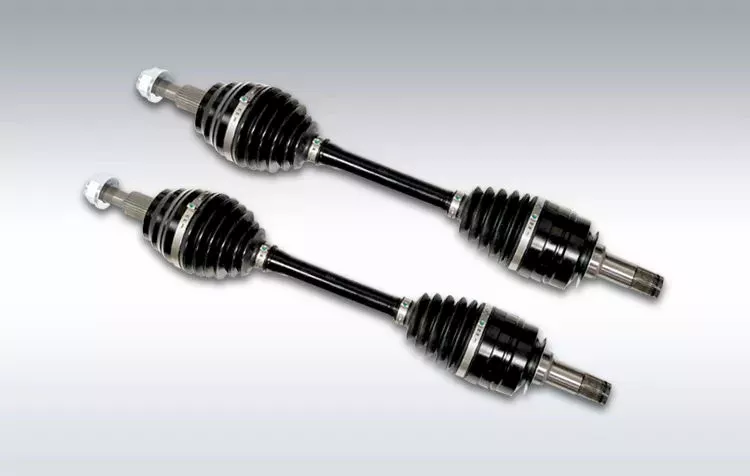
How do manufacturers ensure the compatibility of drive shafts with different equipment?
Manufacturers employ various strategies and processes to ensure the compatibility of drive shafts with different equipment. Compatibility refers to the ability of a drive shaft to effectively integrate and function within a specific piece of equipment or machinery. Manufacturers take into account several factors to ensure compatibility, including dimensional requirements, torque capacity, operating conditions, and specific application needs. Here’s a detailed explanation of how manufacturers ensure the compatibility of drive shafts:
1. Application Analysis:
Manufacturers begin by conducting a thorough analysis of the intended application and equipment requirements. This analysis involves understanding the specific torque and speed demands, operating conditions (such as temperature, vibration levels, and environmental factors), and any unique characteristics or constraints of the equipment. By gaining a comprehensive understanding of the application, manufacturers can tailor the design and specifications of the drive shaft to ensure compatibility.
2. Customization and Design:
Manufacturers often offer customization options to adapt drive shafts to different equipment. This customization involves tailoring the dimensions, materials, joint configurations, and other parameters to match the specific requirements of the equipment. By working closely with the equipment manufacturer or end-user, manufacturers can design drive shafts that align with the equipment’s mechanical interfaces, mounting points, available space, and other constraints. Customization ensures that the drive shaft fits seamlessly into the equipment, promoting compatibility and optimal performance.
3. Torque and Power Capacity:
Drive shaft manufacturers carefully determine the torque and power capacity of their products to ensure compatibility with different equipment. They consider factors such as the maximum torque requirements of the equipment, the expected operating conditions, and the safety margins necessary to withstand transient loads. By engineering drive shafts with appropriate torque ratings and power capacities, manufacturers ensure that the shaft can handle the demands of the equipment without experiencing premature failure or performance issues.
4. Material Selection:
Manufacturers choose materials for drive shafts based on the specific needs of different equipment. Factors such as torque capacity, operating temperature, corrosion resistance, and weight requirements influence material selection. Drive shafts may be made from various materials, including steel, aluminum alloys, or specialized composites, to provide the necessary strength, durability, and performance characteristics. The selected materials ensure compatibility with the equipment’s operating conditions, load requirements, and other environmental factors.
5. Joint Configurations:
Drive shafts incorporate joint configurations, such as universal joints (U-joints) or constant velocity (CV) joints, to accommodate different equipment needs. Manufacturers select and design the appropriate joint configuration based on factors such as operating angles, misalignment tolerances, and the desired level of smooth power transmission. The choice of joint configuration ensures that the drive shaft can effectively transmit power and accommodate the range of motion required by the equipment, promoting compatibility and reliable operation.
6. Quality Control and Testing:
Manufacturers implement stringent quality control processes and testing procedures to verify the compatibility of drive shafts with different equipment. These processes involve conducting dimensional inspections, material testing, torque and stress analysis, and performance testing under simulated operating conditions. By subjecting drive shafts to rigorous quality control measures, manufacturers can ensure that they meet the required specifications and performance criteria, guaranteeing compatibility with the intended equipment.
7. Einhaltung von Standards:
Manufacturers ensure that their drive shafts comply with relevant industry standards and regulations. Compliance with standards, such as ISO (International Organization for Standardization) or specific industry standards, provides assurance of quality, safety, and compatibility. Adhering to these standards helps manufacturers meet the expectations and requirements of equipment manufacturers and end-users, ensuring that the drive shafts are compatible and can be seamlessly integrated into different equipment.
8. Collaboration and Feedback:
Manufacturers often collaborate closely with equipment manufacturers, OEMs (Original Equipment Manufacturers), or end-users to gather feedback and incorporate their specific requirements into the drive shaft design and manufacturing processes. This collaborative approach ensures that the drive shafts are compatible with the intended equipment and meet the expectations of the end-users. By actively seeking input and feedback, manufacturers can continuously improve their products’ compatibility and performance.
In summary, manufacturers ensure the compatibility of drive shafts with different equipment through a combination of application analysis, customization, torque and power capacity considerations, material selection, joint configurations, quality control and testing, compliance with standards, and collaboration with equipment manufacturers and end-users. These efforts enable manufacturers to design and produce drive shafts that seamlessly integrate with various equipment, ensuring optimal performance, reliability, and compatibility in different applications.
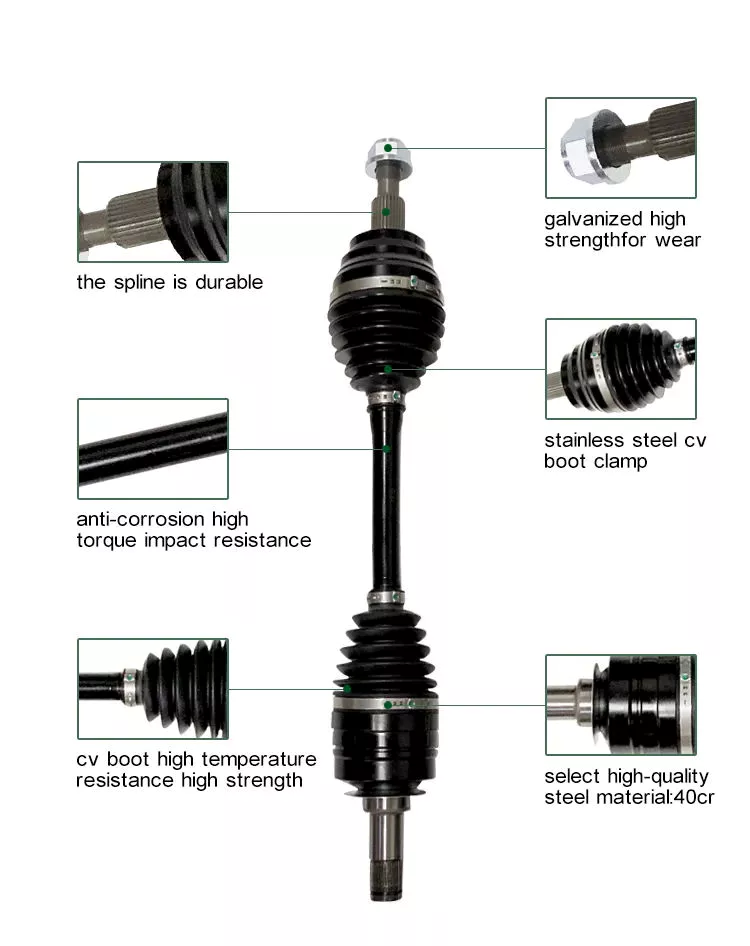
Wie verbessern Antriebswellen die Leistung von Pkw und Lkw?
Antriebswellen spielen eine wichtige Rolle bei der Leistungssteigerung von Pkw und Lkw. Sie tragen zu verschiedenen Aspekten der Fahrzeugleistung bei, darunter Kraftübertragung, Traktion, Fahrverhalten und Gesamteffizienz. Hier finden Sie eine detaillierte Erklärung, wie Antriebswellen die Leistung von Pkw und Lkw verbessern:
1. Stromversorgung:
Antriebswellen übertragen die Kraft des Motors auf die Räder und ermöglichen so die Vorwärtsbewegung des Fahrzeugs. Durch die effiziente Kraftübertragung ohne nennenswerte Verluste gewährleisten sie eine optimale Nutzung der Motorleistung, was zu verbesserter Beschleunigung und Gesamtleistung führt. Gut konstruierte Antriebswellen mit minimalen Leistungsverlusten tragen wesentlich dazu bei, dass das Fahrzeug die Kraft effizient auf die Räder übertragen kann.
2. Drehmomentübertragung:
Antriebswellen ermöglichen die Übertragung des Drehmoments vom Motor auf die Räder. Drehmoment ist die Rotationskraft, die das Fahrzeug antreibt. Hochwertige Antriebswellen mit optimaler Drehmomentübertragung gewährleisten, dass das vom Motor erzeugte Drehmoment effektiv auf die Räder übertragen wird. Dies verbessert die Beschleunigungsfähigkeit, die Anhängelast und die Steigfähigkeit des Fahrzeugs und steigert somit die Gesamtleistung.
3. Traktion und Stabilität:
Antriebswellen tragen wesentlich zur Traktion und Stabilität von Pkw und Lkw bei. Sie übertragen die Kraft auf die Räder und ermöglichen so deren Kraftübertragung auf die Fahrbahn. Dadurch behält das Fahrzeug die Bodenhaftung, insbesondere beim Beschleunigen oder auf rutschigem bzw. unebenem Untergrund. Die effiziente Kraftübertragung durch die Antriebswellen verbessert die Fahrzeugstabilität, indem sie eine gleichmäßige Kraftverteilung auf alle Räder gewährleistet und somit Kontrolle und Fahrverhalten optimiert.
4. Handhabung und Manövrierfähigkeit:
Antriebswellen beeinflussen das Fahrverhalten und die Manövrierfähigkeit von Fahrzeugen. Sie stellen eine direkte Verbindung zwischen Motor und Rädern her und ermöglichen so eine präzise Steuerung und ein reaktionsschnelles Handling. Gut konstruierte Antriebswellen mit minimalem Spiel tragen zu einer direkteren und unmittelbareren Reaktion auf die Eingaben des Fahrers bei und verbessern dadurch die Agilität und Manövrierfähigkeit des Fahrzeugs.
5. Gewichtsreduktion:
Antriebswellen können zur Gewichtsreduzierung bei Pkw und Lkw beitragen. Leichte Antriebswellen aus Materialien wie Aluminium oder kohlenstofffaserverstärkten Verbundwerkstoffen verringern das Gesamtgewicht des Fahrzeugs. Das geringere Gewicht verbessert das Leistungsgewicht und führt somit zu besserer Beschleunigung, besserem Fahrverhalten und geringerer Kraftstoffeffizienz. Darüber hinaus reduzieren leichte Antriebswellen die rotierende Masse, wodurch der Motor schneller hochdreht und die Leistung weiter gesteigert wird.
6. Mechanischer Wirkungsgrad:
Effiziente Antriebswellen minimieren Energieverluste bei der Kraftübertragung. Durch den Einsatz hochwertiger Lager, reibungsarmer Dichtungen und optimierter Schmierung reduzieren Antriebswellen die Reibung und minimieren Leistungsverluste aufgrund von Innenwiderstand. Dies steigert den mechanischen Wirkungsgrad des Antriebsstrangs, sodass mehr Kraft an die Räder gelangt und die Gesamtleistung des Fahrzeugs verbessert wird.
7. Leistungsverbesserungen:
Die Aufrüstung der Antriebswelle ist eine beliebte Leistungssteigerungsmaßnahme für Enthusiasten. Verstärkte Antriebswellen, beispielsweise aus widerstandsfähigeren Materialien oder mit höherer Drehmomentkapazität, können die höhere Leistung von modifizierten Motoren bewältigen. Diese Aufrüstungen ermöglichen eine Leistungssteigerung, wie z. B. verbesserte Beschleunigung, höhere Endgeschwindigkeiten und ein insgesamt optimiertes Fahrverhalten.
8. Kompatibilität mit Leistungsmodifikationen:
Leistungsmodifikationen wie Motor-Upgrades, Leistungssteigerungen oder Änderungen am Antriebsstrang erfordern häufig kompatible Antriebswellen. Antriebswellen, die für höhere Drehmomentbelastungen ausgelegt sind oder sich an modifizierte Antriebsstrangkonfigurationen anpassen, gewährleisten optimale Leistung und Zuverlässigkeit. Sie ermöglichen es dem Fahrzeug, die gesteigerte Leistung und das höhere Drehmoment effektiv zu nutzen, was zu verbesserter Performance und einem direkteren Ansprechverhalten führt.
9. Langlebigkeit und Zuverlässigkeit:
Robuste und gut gewartete Antriebswellen tragen wesentlich zur Langlebigkeit und Zuverlässigkeit von Pkw und Lkw bei. Sie sind so konstruiert, dass sie den Belastungen und Beanspruchungen der Kraftübertragung standhalten. Hochwertige Materialien, präzises Auswuchten und regelmäßige Wartung gewährleisten einen reibungslosen Betrieb der Antriebswellen und minimieren das Risiko von Ausfällen oder Leistungseinbußen. Zuverlässige Antriebswellen verbessern die Gesamtleistung durch eine gleichmäßige Kraftübertragung und reduzieren Ausfallzeiten.
10. Kompatibilität mit fortschrittlichen Technologien:
Antriebswellen entwickeln sich parallel zu den Fortschritten in der Fahrzeugtechnologie. Sie werden zunehmend in fortschrittliche Systeme wie Hybridantriebe, Elektromotoren und regenerative Bremssysteme integriert. Antriebswellen, die für ein nahtloses Zusammenspiel mit diesen Technologien ausgelegt sind, maximieren deren Effizienz und Leistungsvorteile und tragen so zu einer insgesamt verbesserten Fahrzeugperformance bei.
Zusammenfassend lässt sich sagen, dass Antriebswellen die Leistung von Pkw und Lkw verbessern, indem sie die Kraftübertragung optimieren, die Drehmomentübertragung erleichtern, Traktion und Stabilität erhöhen, das Handling und die Manövrierfähigkeit verbessern, das Gewicht reduzieren, die mechanische Effizienz steigern und die Kompatibilität mit Leistungssteigerungen und fortschrittlichen Technologien ermöglichen. Sie spielen eine entscheidende Rolle für eine effiziente Kraftübertragung, ein reaktionsschnelles Beschleunigungsverhalten, ein präzises Handling und eine insgesamt verbesserte Fahrzeugleistung.
What benefits do drive shafts offer for different types of vehicles and equipment?
Drive shafts offer several benefits for different types of vehicles and equipment. They play a crucial role in power transmission and contribute to the overall performance, efficiency, and functionality of various systems. Here’s a detailed explanation of the benefits that drive shafts provide:
1. Efficient Power Transmission:
Drive shafts enable efficient power transmission from the engine or power source to the wheels or driven components. By connecting the engine or motor to the driven system, drive shafts efficiently transfer rotational power, allowing vehicles and equipment to perform their intended functions. This efficient power transmission ensures that the power generated by the engine is effectively utilized, optimizing the overall performance and productivity of the system.
2. Vielseitigkeit:
Drive shafts offer versatility in their applications. They are used in various types of vehicles, including cars, trucks, motorcycles, and off-road vehicles. Additionally, drive shafts are employed in a wide range of equipment and machinery, such as agricultural machinery, construction equipment, industrial machinery, and marine vessels. The ability to adapt to different types of vehicles and equipment makes drive shafts a versatile component for power transmission.
3. Torque Handling:
Drive shafts are designed to handle high levels of torque. Torque is the rotational force generated by the engine or power source. Drive shafts are engineered to efficiently transmit this torque without excessive twisting or bending. By effectively handling torque, drive shafts ensure that the power generated by the engine is reliably transferred to the wheels or driven components, enabling vehicles and equipment to overcome resistance, such as heavy loads or challenging terrains.
4. Flexibility and Compensation:
Drive shafts provide flexibility and compensation for angular movement and misalignment. In vehicles, drive shafts accommodate the movement of the suspension system, allowing the wheels to move up and down independently. This flexibility ensures a constant power transfer even when the vehicle encounters uneven terrain. Similarly, in machinery, drive shafts compensate for misalignment between the engine or motor and the driven components, ensuring smooth power transmission and preventing excessive stress on the drivetrain.
5. Gewichtsreduktion:
Drive shafts contribute to weight reduction in vehicles and equipment. Compared to other forms of power transmission, such as belt drives or chain drives, drive shafts are typically lighter in weight. This reduction in weight helps improve fuel efficiency in vehicles and reduces the overall weight of equipment, leading to enhanced maneuverability and increased payload capacity. Additionally, lighter drive shafts contribute to a better power-to-weight ratio, resulting in improved performance and acceleration.
6. Durability and Longevity:
Drive shafts are designed to be durable and long-lasting. They are constructed using materials such as steel or aluminum, which offer high strength and resistance to wear and fatigue. Drive shafts undergo rigorous testing and quality control measures to ensure their reliability and longevity. Proper maintenance, including lubrication and regular inspections, further enhances their durability. The robust construction and long lifespan of drive shafts contribute to the overall reliability and cost-effectiveness of vehicles and equipment.
7. Safety:
Drive shafts incorporate safety features to protect operators and bystanders. In vehicles, drive shafts are often enclosed within a protective tube or housing, preventing contact with moving parts and reducing the risk of injury in the event of a failure. Similarly, in machinery, safety shields or guards are commonly installed around exposed drive shafts to minimize the potential hazards associated with rotating components. These safety measures ensure the well-being of individuals operating or working in proximity to vehicles and equipment.
In summary, drive shafts offer several benefits for different types of vehicles and equipment. They enable efficient power transmission, provide versatility in various applications, handle torque effectively, offer flexibility and compensation, contribute to weight reduction, ensure durability and longevity, and incorporate safety features. By providing these advantages, drive shafts enhance the performance, efficiency, reliability, and safety of vehicles and equipment across a wide range of industries.


editor by CX 2024-03-20























