
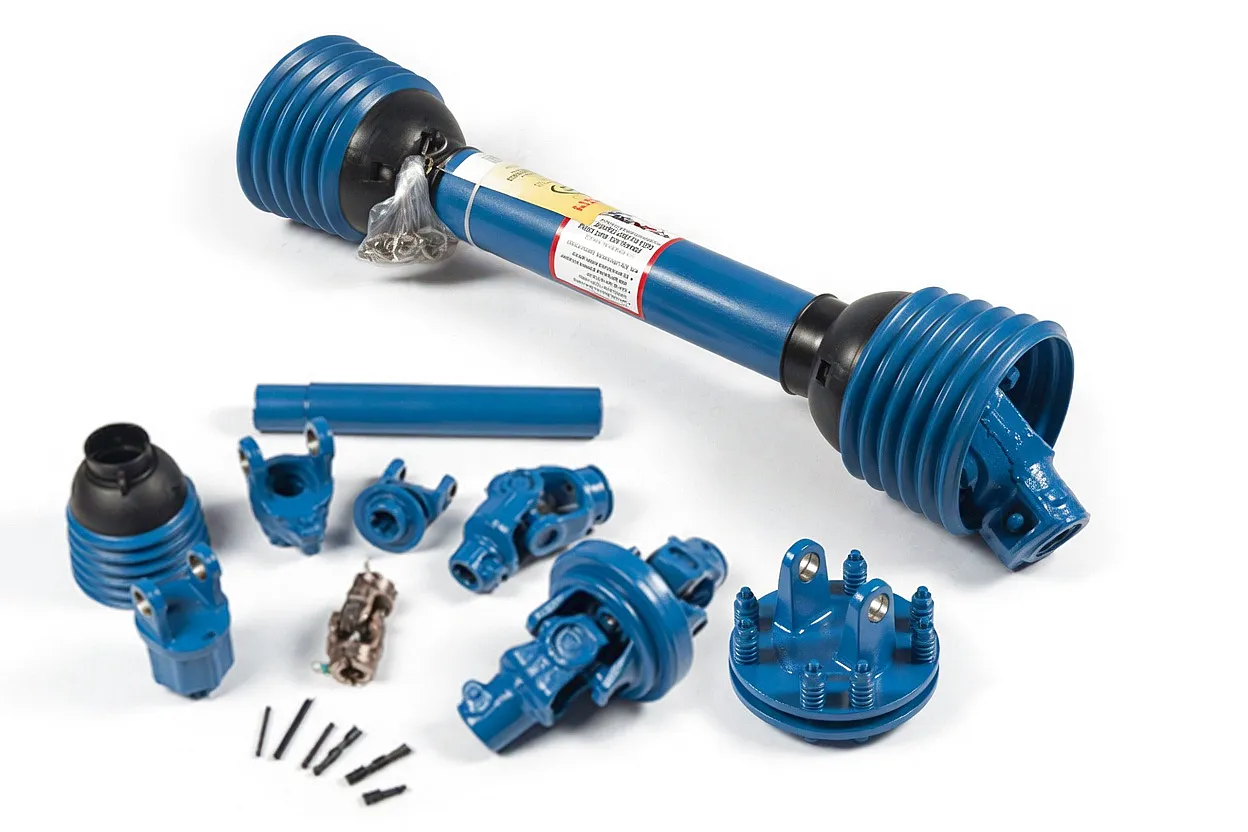
 In virtually every sector of British industry — from the sprawling cereal farms of Lincolnshire to the heavy manufacturing corridors of Sheffield and Wolverhampton — the PTO shaft stands as one of the most mechanically critical yet frequently underestimated components in powered equipment. A Power Take-Off shaft transmits torque from a primary power source, typically a tractor or industrial engine, to driven machinery such as pumps, balers, rotary tillers, wood chippers and hydraulic generators. Its function is deceptively simple; its failure consequences are anything but. According to longstanding Health and Safety Executive guidance in the UK, entanglement incidents involving unguarded or poorly maintained PTO shafts remain among the most serious categories of agricultural and industrial machinery accidents. A robust, scheduled PTO shaft safety inspection programme is not merely a best practice — it is a legal and moral obligation for every operator, fleet manager and plant engineer across the United Kingdom.
Ever Power PTO drive shaft — engineered for precision power transmission
What Quality PTO Shafts Are Made From — A Material Science Perspective
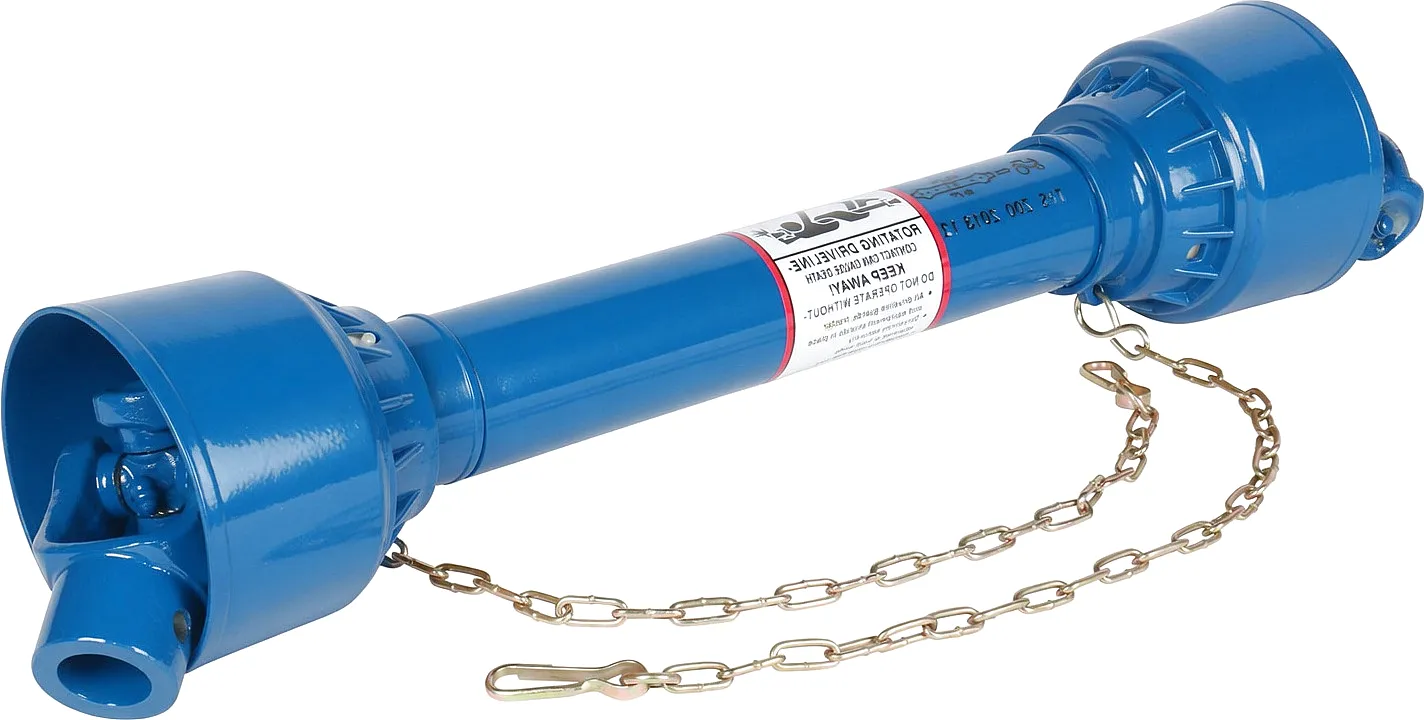
The material specification of a PTO shaft determines not only its mechanical performance envelope but also the nature of the faults that will appear during safety inspection. Premium-grade PTO drive shafts are constructed from cold-drawn seamless steel tubing — most commonly SAE 1020 or SAE 1045 carbon steel — precision-formed into the hexagonal, triangular or lemon-profile cross-sections that allow telescoping while resisting torsional deformation. The choice between these profiles depends heavily on the torque rating: triangular profiles offer greater surface contact and are preferred for high-torque agricultural and construction applications common across Yorkshire’s large-scale combinable crop enterprises and the heavy plant operations of the East Midlands.
Universal joints — the most fatigue-prone components in any PTO assembly — are typically manufactured from case-hardened alloy steel, with 20CrMnTi and 20CrNiMo being popular grades for high-cycle applications. The case hardening treatment, achieved through carburising followed by quenching and tempering, creates a hard wear-resistant surface layer of 58–64 HRC while maintaining a tough ductile core. This metallurgical duality is essential: surface hardness resists the constant abrasive contact between cross journals and bearing cups, while core ductility prevents brittle fracture under shock loads — a scenario frequently encountered when a slip clutch engages abruptly or a heavy implement strikes an obstacle.
The protective guard assemblies — functionally the most critical safety components — are manufactured from high-density polyethylene (HDPE) or reinforced polypropylene. These polymers are selected for impact resistance, UV stability and their critically important property of not generating sharp metal fragments if fractured. An inspector must understand that a cracked plastic guard is not merely a cosmetic issue: it signals a structural failure of the primary entanglement barrier. In UK workplaces governed by the Provision and Use of Work Equipment Regulations 1998 (PUWER) and the Agricultural (Tractor Cabs) Act legacy framework, an unguarded or inadequately guarded PTO shaft constitutes an immediately reportable risk.
Shaft Tubes
Cold-drawn SAE 1020/1045 seamless steel; hexagonal, triangular or lemon profile
Universal Joints
20CrMnTi / 20CrNiMo alloy steel; case-hardened 58–64 HRC surface
Guard Assembly
HDPE or reinforced polypropylene; UV-stabilised, non-fracture-sharding design
Yokes & Flanges
Forged or cast ductile iron / medium-carbon steel; precision-bored to ISO 5674 spline spec
PTO Shaft Technical & Performance Parameters Table
| Parameter | Standard Series | Heavy-Duty Series | Notes / Standards |
|---|---|---|---|
| Rated Torque | 200 – 1,000 N·m | 1,000 – 8,500 N·m | ISO 5674 / DIN 9611 |
| Max Operating Speed | 540 RPM / 1000 RPM | Up to 1,500 RPM | Tractor PTO standard speeds |
| Maksimal driftsvinkel | 15° | Up to 25° (wide-angle joint) | Per universal joint type |
| Tube Profile Options | Hex, Triangle, Lemon | Star, Square (high-torque) | Custom profiles available |
| Shaft Tube Material | SAE 1020 / SAE 1045 | SAE 1045 / 42CrMo4 | Cold-drawn seamless |
| U-Joint Hardness | 58 – 62 HRC (surface) | 60 – 64 HRC (surface) | Case-hardened alloy steel |
| Guard Material | HDPE | Reinforced PP composite | PUWER 1998 compliant |
| Slip Clutch Rating | Adjustable; 150–600 N·m | Adjustable; 500–4,000 N·m | Protects gearboxes from shock loads |
| Telescoping Stroke | 100 – 400 mm | Up to 600 mm custom | Application-dependent |
| Spline Standard | 6-spline, 1-3/8″ (35mm) | 21-spline, 1-3/4″ (45mm) | ISO 5674 / ASAE S20.1 |
The Step-by-Step PTO Shaft Safety Inspection Protocol
Follow this structured framework before every season, after any overload event, and at routine service intervals.
Pre-Inspection Safety Lockout
Ensure the primary power source — whether a tractor, stationary engine or industrial gearbox — is completely switched off and the PTO engagement lever is in the neutral or disengaged position. Apply a physical lockout/tagout device to the PTO engagement control in accordance with HSE guidance. Allow a minimum of 90 seconds for residual inertia to dissipate before touching any rotating element. Never assume the shaft has stopped because the engine sound has ceased; heavy flywheels and loaded gear trains can store enough rotational energy to sustain dangerous spin for several minutes. For operations across multi-shift environments in Coventry or Stoke-on-Trent manufacturing plants, a formal written lockout procedure must accompany every routine PTO shaft inspection.
Visual Guard & Shield Inspection
Walk the entire length of the PTO drive shaft and examine the outer guard from cone-to-cone. Check for cracks, splits, deep abrasions, missing sections or deformities in the guard tube. Verify that the bearing support at both ends — which allows the guard to remain stationary while the shaft rotates inside — spins freely and shows no wobble or seizure. Confirm that the retaining chains or anchor straps at each guard cone are intact and anchored correctly to the implement frame or tractor drawbar, preventing the guard from rotating with the shaft. In the UK, HSE Farm Sheet 52 specifies that PTO guards must cover the shaft from the tractor end yoke to the implement input yoke, with no gap greater than 25mm in the covered section under normal operating geometry.
Universal Joint & Bearing Inspection
Remove the guard temporarily to expose the universal joints. Grasp the shaft firmly at the yoke and attempt to rock it radially — any detectable play of more than 0.5mm in the needle roller bearings indicates replacement is overdue. Listen for clicking or knocking when manually rotating the shaft through its full angular range; these sounds indicate worn cross journals. Inspect bearing cups for rust discolouration or corrosion pitting, which drastically reduces fatigue life in the wet and humid conditions that characterise UK agricultural seasons from October through March. Check all grease nipples — also called Zerk fittings in some British workshops — to confirm they are present, undamaged, and accepting grease without bypass, which would indicate a blocked or seized internal circuit.
Telescoping Tube & Spline Assessment
Collapse and extend the telescoping section manually through its full designed stroke range. The motion should be smooth and require consistent, moderate effort throughout. Excessive stiffness indicates contaminated or dried-out spline lubrication; excessive looseness or lateral play suggests spline wear beyond acceptable tolerances. Industry convention for agricultural PTO shaft drives holds that radial freeplay at the splined joint should not exceed 2° of angular backlash. Apply fresh NLGI 2 extreme-pressure lithium grease through the spline grease point if present. Confirm that minimum and maximum shaft length marks — critical safety markers that prevent the shaft from being driven too short or too long and separating under dynamic conditions — are clearly legible and that the operating geometry keeps the shaft within these limits at all draft positions.
Slip Clutch & Overrun Clutch Testing
Where the PTO shaft incorporates a slip clutch — standard in most agricultural applications and increasingly common in industrial drives used across the manufacturing facilities of Dudley and Walsall — verify that the clutch slips at the rated torque value by reference to the manufacturer’s specification plate. Inspect friction disc surfaces through the inspection slots if accessible; glazing, bluing or uneven wear patterns indicate the clutch requires service. Test overrun clutch function by rotating the implement-side yoke in the driven direction: it should rotate with modest resistance. Rotating in the reverse direction should produce free-wheeling with a ratcheting feel. A locked overrun clutch creates dangerous back-torque conditions; a clutch that slips in the drive direction fails to transmit rated power and masks deeper mechanical inefficiencies.
Connection Hardware & Locking Pin Verification
Examine both implement-end and tractor-end yoke connections carefully. Confirm that quick-release locking collars are fully engaged — the locking groove on the PTO stub must be fully seated in the release mechanism. Test the quick-release by attempting to withdraw the yoke without operating the release mechanism: it must resist this pull with positive retention. Verify that all shear bolts or spring-loaded locking pins are present, undamaged and operating correctly. When bolted flange connections are used — common in industrial applications interfacing with hydraulic pumps or generators in Sheffield’s remaining steel-support industries — verify that all fasteners are torqued to specification and that thread-locking compound has been applied to vibration-prone joints. Document all findings on a signed inspection record sheet, retaining this for a minimum of three years as recommended by UK HSE enforcement guidance.
Recommended PTO Shaft Inspection & Maintenance Intervals
| Inspection Task | Pre-Season | Every 50 hrs | Every 250 hrs | Annually |
|---|---|---|---|---|
| Guard visual check | ✓ | ✓ | ✓ | ✓ |
| U-joint play check | ✓ | – | ✓ | ✓ |
| Greasing (U-joints) | ✓ | ✓ | ✓ | ✓ |
| Spline lubrication | ✓ | – | ✓ | ✓ |
| Slip clutch torque check | ✓ | – | – | ✓ |
| Locking pin / collar check | ✓ | ✓ | ✓ | ✓ |
| Full shaft replacement review | – | – | – | ✓ |
Where PTO Shaft Safety Inspections Are Critically Important Across UK Industry
Product Advantage Highlights
Why High-Quality PTO Shafts Make Inspection Easier and Results More Reliable
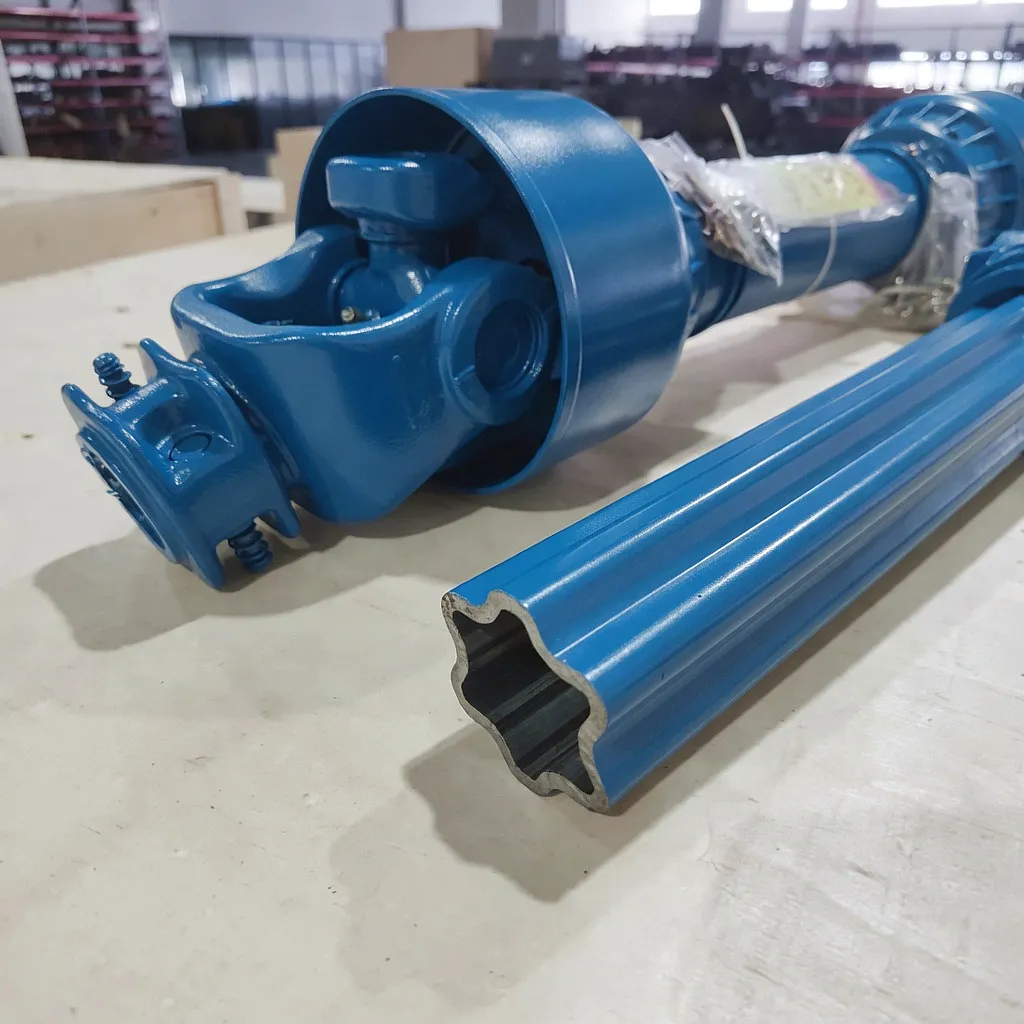 A precision-manufactured PTO drive shaft makes safety inspection significantly more straightforward. When dimensional tolerances are held to within ±0.05mm, wear patterns are consistent and interpretable. Corrosion-resistant surface coatings — such as phosphate-and-oil or hot-dip galvanising applied to exposed steel components — slow the deterioration that makes visual inspection ambiguous. Well-designed guard systems with clearly marked replacement intervals remove guesswork from guard life assessment. The relationship between product quality and inspection reliability is direct and quantifiable: cheaply-made PTO shafts develop irregular wear, stress-cracking in unexpected locations and guard failures that are difficult to diagnose with confidence, leading to either false reassurance or unnecessary downtime from over-cautious replacement decisions.
PUWER 1998 Ready
CE / UKCA Marked
Most Common PTO Shaft Defects Found During Inspection
Understanding these failure patterns helps maintenance teams prioritise inspection effort and recognise borderline conditions that merit immediate corrective action rather than deferred maintenance.
⚠
Worn or Seized U-Joint Bearings
Detected by radial play >0.5mm, clicking under manual rotation, or rust discolouration at bearing cups. Primary cause of shaft vibration and fatigue fracture in yoke arms.
⚠
Cracked or Missing Guard
Immediate safety risk under PUWER 1998. Causes: impact damage, UV embrittlement over time, or operation without retaining straps allowing the guard to contact the ground.
⚠
Spline Wear & Backlash
Angular play exceeding 2° in the telescoping joint indicates advanced spline profile wear. Leads to torsional shock cycling under load reversals and eventual tube separation.
⚠
Mis-Calibrated Slip Clutch
A clutch set too high fails to protect the implement gearbox; set too low, it slips under normal load, causing heat build-up, friction disc glazing and incomplete power delivery.
⚠
Corrosion on Yoke Surfaces
Surface rust on forged yokes can mask fatigue crack propagation. Wire-brush lightly and inspect for cracks radiating from spigot bore or bolt holes — critical stress concentration areas.
⛭
ISO 9001:2015
Quality Certified
🏠
CNC Precision
±0.05mm Tolerance
⚙
Full Customisation
From CAD to Delivery
🚚
UK Delivery
4–6 Week Lead Time
📋
CE / UKCA
Compliance Ready
Sheffield Steelworks Support Contractor Reduces Downtime by 38% with Ever Power Custom PTO Shafts
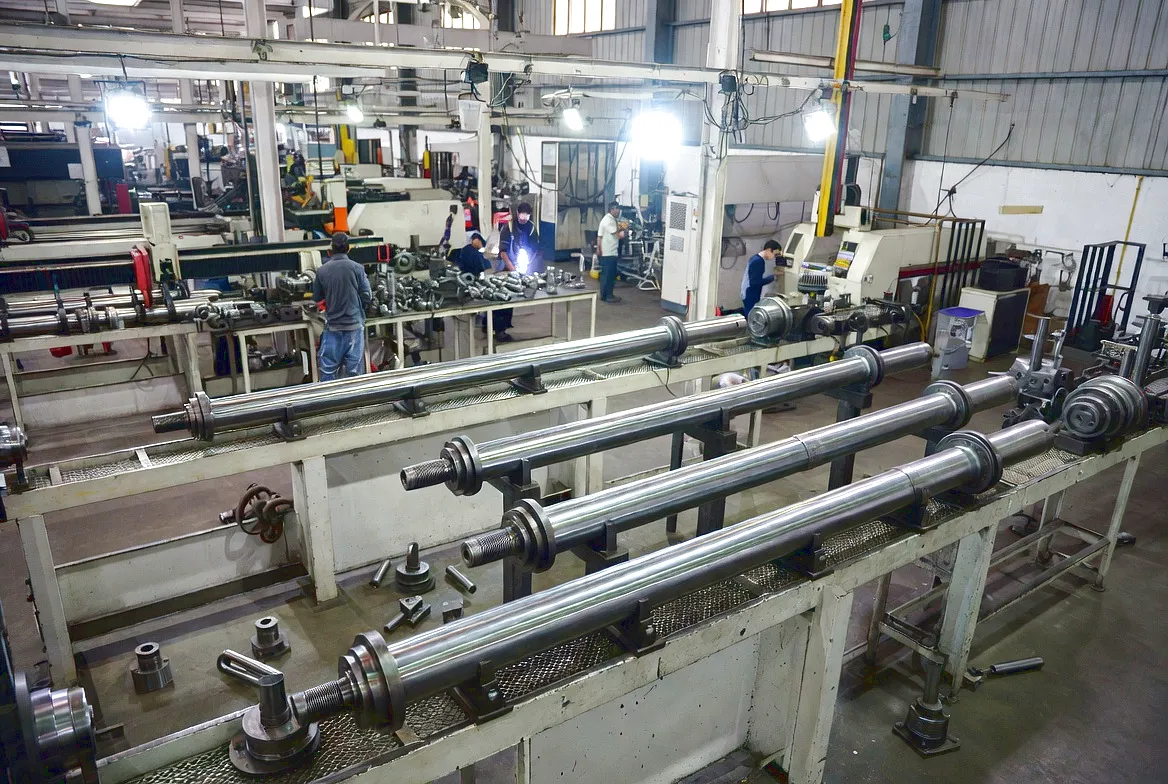 Background: Meridian Process Engineering Ltd, a specialist mechanical contractor based in Sheffield and serving the region’s remaining specialty steel processing sector, was experiencing persistent, costly failures in the PTO shaft assemblies powering tractor-driven hydraulic power units (HPUs) used for press maintenance operations at three local processing facilities. The PTO shafts — sourced from a domestic distributor carrying generic-grade stock — were failing at the U-joints on average every six to eight weeks, creating unplanned maintenance windows that cascaded into production line delays and penalty clause exposure for Meridian under their fixed-price maintenance contract.
Challenge: Meridian’s operations manager, having conducted a systematic inspection and failure analysis of the broken shafts, identified two contributing factors. First, the operating angle of the HPU drives — necessitated by site layout constraints — regularly exceeded 18 degrees, placing the standard U-joints well into their fatigue limit zone during sustained operation. Second, the generic slip clutches fitted to the OEM shafts were calibrated conservatively low, meaning they were slipping under normal load peaks and generating heat that was accelerating grease breakdown in the nearby bearing assemblies. The cumulative effect was a failure cycle that standard inspection and lubrication practices alone could not break.
Ever Power Solution: Working from Meridian’s dimensional drawings and duty-cycle data, Ever Power’s engineering team specified a bespoke PTO drive shaft utilising wide-angle Cardan joints rated to 25 degrees continuous operation, 42CrMo4 alloy steel tubes for enhanced fatigue resistance, and a heavy-duty slip clutch recalibrated to 180% of the original setting to match the actual peak torque demands measured during the failure investigation. A phosphate-and-oil corrosion treatment package was specified given the slightly acidic atmosphere within the steel plant buildings. The shafts were manufactured, assembled and despatch-tested within five weeks of order placement.
Results: In the twelve months following the switch to Ever Power custom PTO shafts, Meridian recorded zero U-joint failures across all three sites — a complete elimination of the previous failure mode. Unplanned downtime attributable to PTO shaft faults dropped from an average of 14 hours per quarter to zero. The structured inspection intervals recommended by Ever Power as part of the supply package were integrated into Meridian’s PPM calendar, and the longer inspection intervals now possible with the upgraded shafts delivered an estimated 38% reduction in direct shaft maintenance costs over the twelve-month period. The operations manager credited the combination of accurate duty-cycle engineering, correct material specification and properly calibrated protective devices as the key differentiators in achieving this outcome.
What Our UK Clients Say About Ever Power PTO Shafts
James Hartley
Fleet Maintenance Manager, Lincolnshire Farming Group
“We’ve trialled a number of PTO shaft suppliers over the years, and the difference with Ever Power’s custom-built shafts is immediately apparent at inspection. The U-joint bearing quality means we’re genuinely finding no play at our 250-hour checks, which was unheard of with our previous supplier’s product. Their technical team understood our telescoping stroke requirements precisely and the fitment was perfect first time.”
Sarah Thornton
Procurement Director, Midlands Construction Plant Ltd, Birmingham
“Sourcing heavy-duty PTO shafts for our plant hire fleet used to mean accepting long lead times or compromising on specification. Ever Power delivered custom assemblies within five weeks, fully documented for our PUWER compliance records. The guard design on these shafts is noticeably more robust than anything we’ve sourced domestically — our site safety officers have commented on it without prompting, which says everything.”
Mark Woodward
Technical Services Lead, Yorkshire Food Processing Co.
“The corrosion protection on Ever Power’s food industry PTO shafts has genuinely changed our maintenance intervals. We operate in a washdown environment with daily chemical cleaning cycles, and the surface treatment on these shafts shows virtually no deterioration after nine months. The slip clutch settings were factory-calibrated exactly to our specified torque limit — no adjustment required on arrival, which saved our engineering team considerable commissioning time.”
Frequently Asked Questions About PTO Shaft Safety Inspections in the UK
Real questions, straight answers — from UK operators, fleet managers and plant engineers.























