
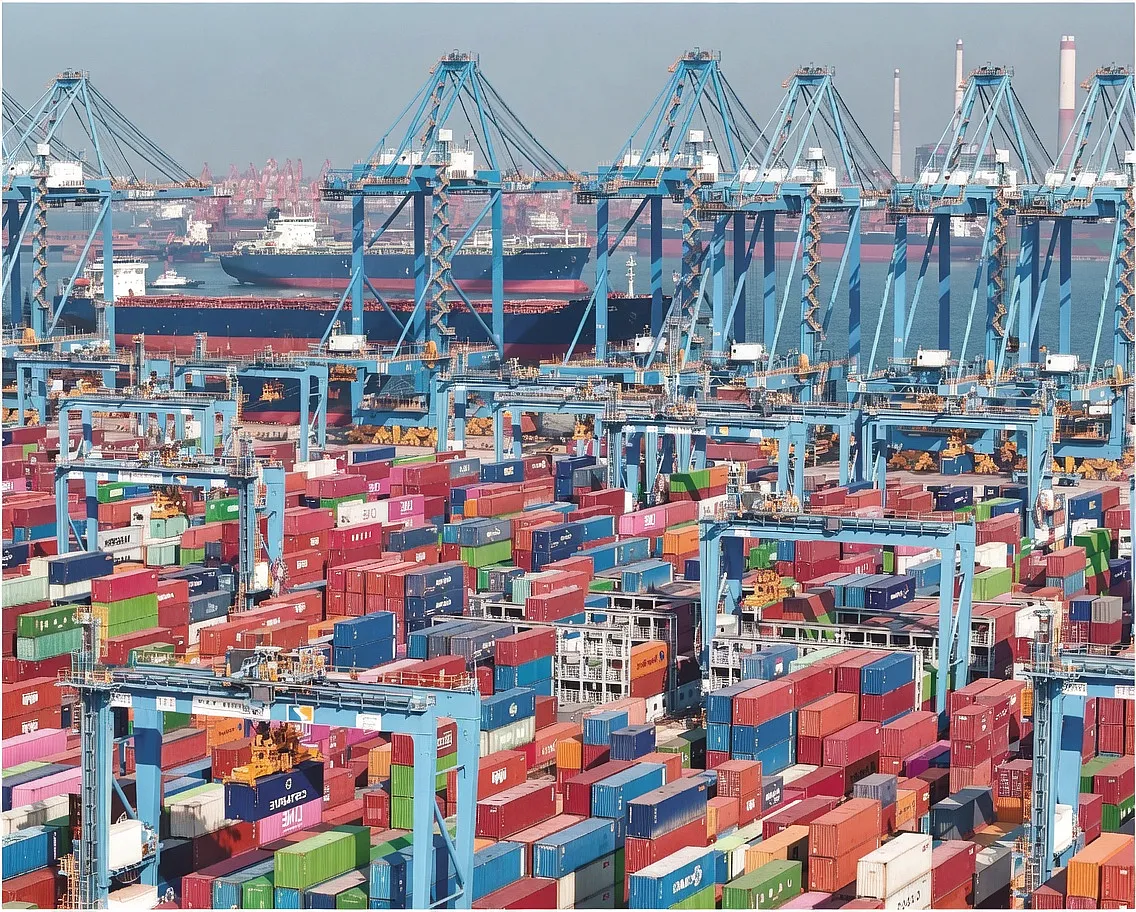
 Port automation has fundamentally changed the economics and operational demands of container terminal logistics across the United Kingdom. At Felixstowe — the UK’s busiest container port, processing well over four million TEU annually — alongside Southampton, Tilbury, and the rapidly expanding DP World London Gateway, terminal operators are deploying fleets of Automated Straddle Carriers and Automated Guided Vehicles to achieve throughput rates that human-operated equipment simply cannot match. These machines run around the clock, every day of the year, exposed to salt-laden sea air, tidal humidity, and the mechanical brutality of lifting and repositioning steel containers that weigh as much as a fully loaded articulated lorry. In this relentless environment, every single component in the drivetrain is under unrelenting stress — and none more so than the PTO drive shaft that transfers engine or motor torque to driven axles and hydraulic pump circuits powering each machine’s core operating functions.
At pto-drive-shafts.com, our engineering team brings over 18 years of hands-on experience designing and manufacturing transmission solutions for the world’s most punishing industrial environments. Port automation sits at the crossroads of marine engineering, heavy-duty industrial design, and precision motion control — and our PTO drive shaft assemblies are built to honour every one of those disciplines simultaneously. The shafts we supply for straddle carriers and AGVs are not adapted from agricultural or general industrial catalogues. They are purpose-engineered from the specification stage, validated against actual site duty cycles, and manufactured to tolerances that reflect the precision these automated systems demand from every rotating component.
This article explores the technical challenges unique to port automation drive systems, the engineering choices that separate a reliable shaft from a liability, and why terminal operators across Britain and continental Europe are increasingly choosing us for both standard supply and fully bespoke shaft solutions tailored to their exact fleet requirements.
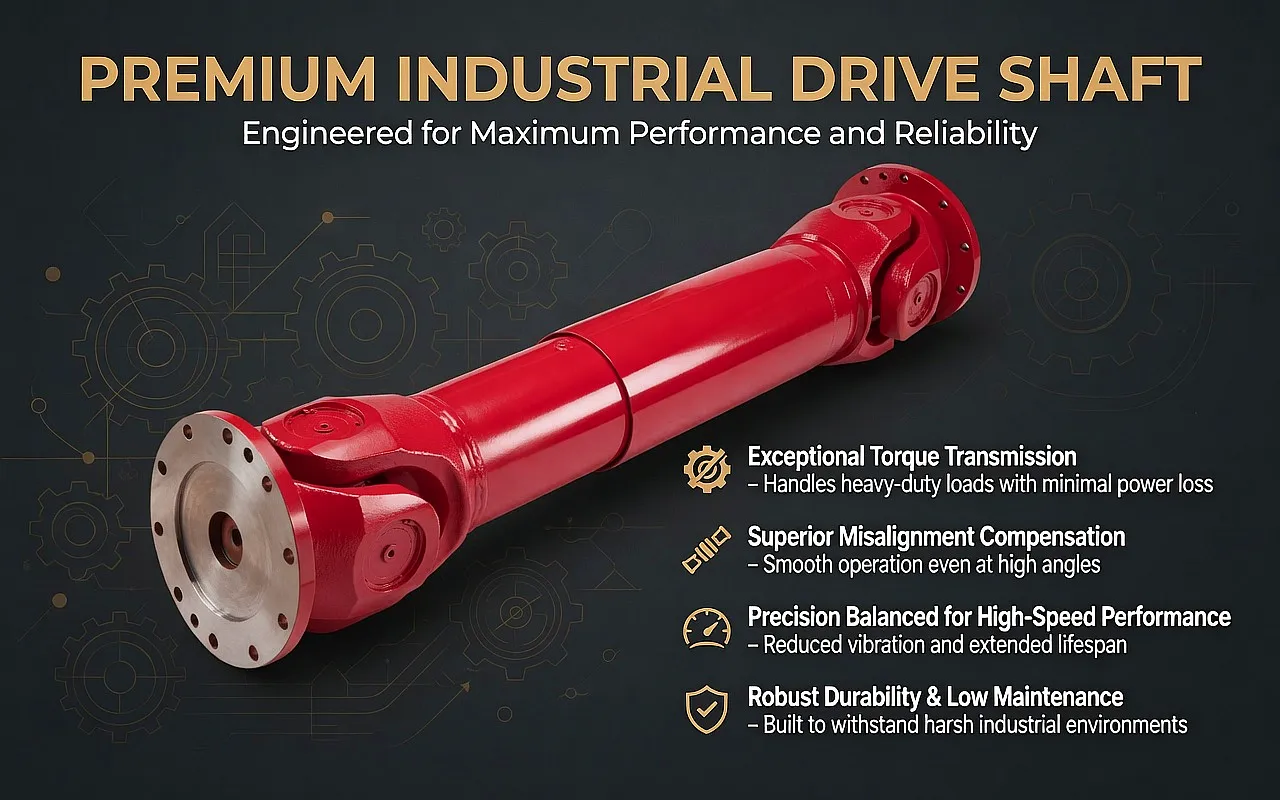
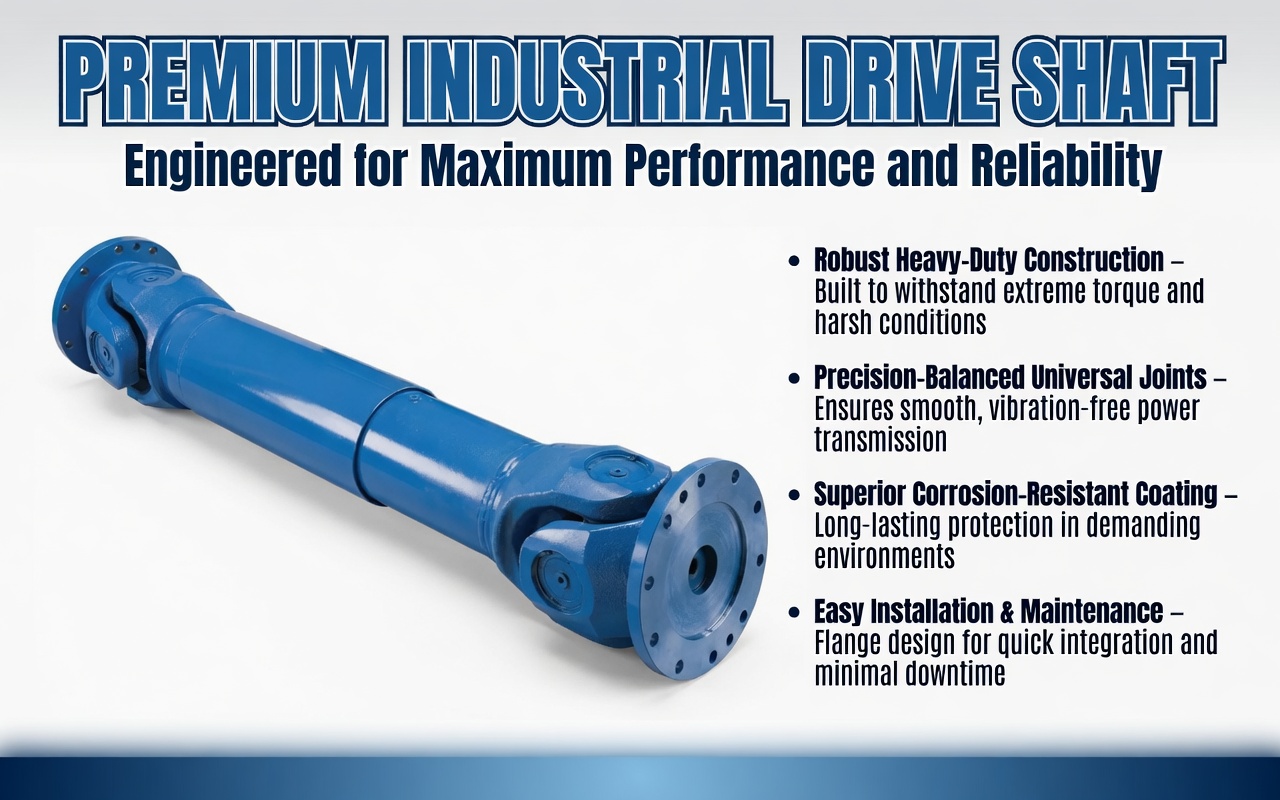
Purpose-engineered PTO drive shafts with Hirth Serration flanges and multi-layer labyrinth seals — built to survive the UK port marine environment with zero compromise
Why Port Automation Sets the Highest Bar for Industrial Shaft Engineering
Most industrial drive shaft applications present one or two critical engineering challenges. Port automation presents them all, simultaneously, with no margin for error. A terminal operator cannot choose between corrosion resistance and shock-load capacity — both are non-negotiable, on the same shaft, in the same operating cycle. Understanding each challenge in detail is the foundation for specifying a industrial shaft assembly that actually delivers the service life the application demands.
Marine Corrosion Environment
UK container terminals operate in some of the most aggressively corrosive conditions found in European heavy industry. Salt spray carried by tidal winds penetrates every exposed surface on the berth apron. Condensation cycling between cold North Sea nights and the operational heat of running hydraulics creates electrolytic corrosion pathways between dissimilar metals at every interface. A drive shaft meeting standard industrial corrosion protection ratings will visibly degrade within months under these conditions. Port-specification PTO drive shafts require hot-dip galvanised or specialist epoxy-coated yoke forgings, stainless or marine-alloy fasteners throughout, and sealed bearing assemblies rated to marine immersion standards. Every exposed surface must be treated as though it will be submerged — because in the salt fog environment of an active UK container berth, functionally, it is. Our assemblies are validated in accelerated salt spray chamber testing to BS EN ISO 9227 at over 5,000 hours of continuous exposure, representing years of real terminal conditions compressed into a traceable certification test.
Shock Impulse and Cyclic Loading
Every time an automated straddle carrier engages or releases a container, the drivetrain experiences a shock impulse that can briefly exceed eight to ten times the nominal operating torque rating. In a single shift, this type of event occurs hundreds of times. AGVs navigating dock edge transitions, ramp gradients, and precision docking manoeuvres generate high-frequency cyclic load reversals that fatigue conventional shaft assemblies well ahead of their rated service intervals. A industrial shaft operating in this context must absorb and dissipate impulses without transmitting damaging torque peaks upstream to gearboxes or downstream to electric traction motors. This demands precise torsional compliance engineering — balancing the rigidity needed for power transmission efficiency against the elasticity required for impulse absorption. Achieving this balance cannot be done by applying a standard safety factor to a catalogue torque rating. It requires FEA-validated prototype testing against the actual duty cycle torque-time history, captured from real operating equipment on a real terminal. That is exactly our approach, and it is why our port drive shaft assemblies deliver the service life they are specified for rather than the service life hoped for.
Continuous 24/7 Operational Demand
Unlike agricultural PTO applications that run seasonally or manufacturing lines with scheduled downtime, port automation equipment is expected to operate continuously — 365 days per year — with planned maintenance windows measured in hours rather than days. A straddle carrier or AGV taken offline for an unplanned shaft replacement disrupts terminal operations, delays vessel loading, and triggers contractual penalty clauses for the terminal operator. The financial exposure from a single unplanned drivetrain failure during a live berthing window at a major UK port can run to tens of thousands of pounds when crane idle time, penalty costs, and recovery labour are combined. Industrial shafts in this context must demonstrate Mean Time Between Failures values exceeding 25,000 hours under actual combined load conditions — not just laboratory ratings achieved in benign test environments. This demands precision balancing to ISO 21940-11 G2.5 or better, premium-grade bearing steel, and sealed grease retention systems that remain effective through the entire planned service interval without field re-lubrication. Every one of these requirements is standard on our port specification assemblies, not an optional upgrade.
Technical Performance Parameters: Port Automation Industrial Shaft Range
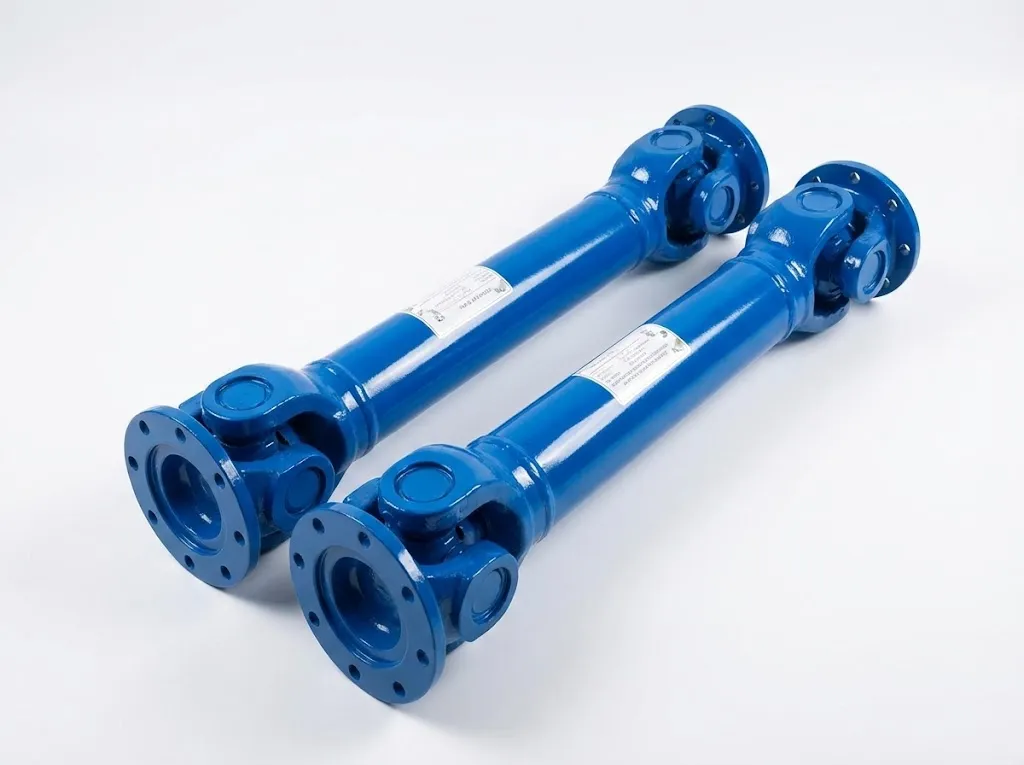 The following table presents validated engineering parameters for our port automation PTO drive shaft configurations. All figures reflect actual deployed installation performance, not theoretical maximum ratings. Bespoke configurations for non-standard requirements are available — contact our engineering team with your application data for a site-specific analysis and commercial proposal.
The Engineering That Makes It Work: Hirth Serration Flanges and Multi-Layer Labyrinth Seals
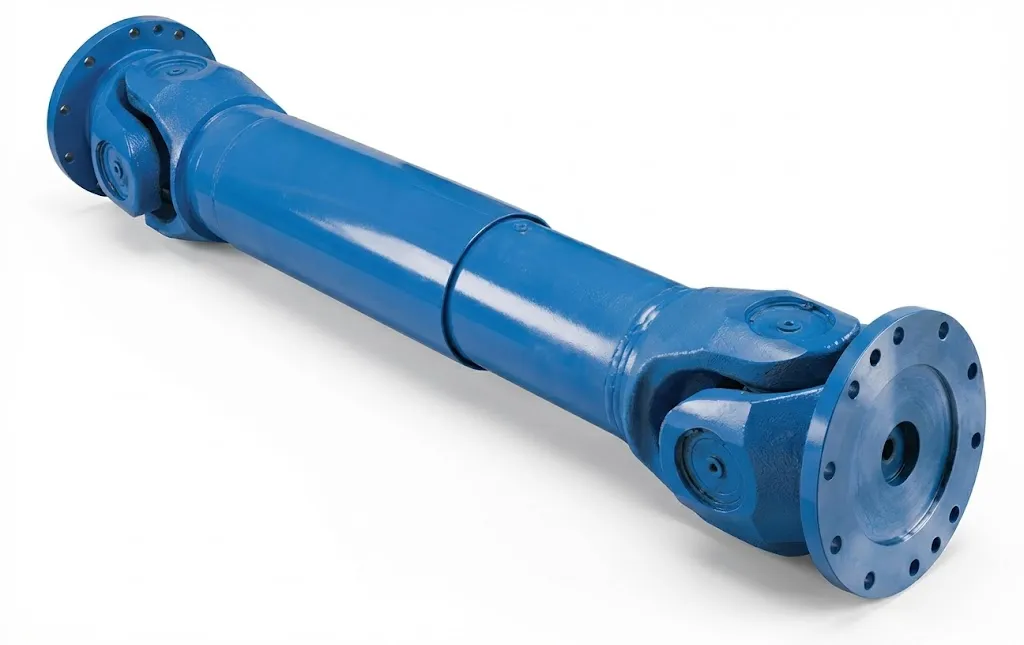 Two design features define the engineering character of a port-grade industrial shaft more than any other: the flange connection system and the cross bearing seal arrangement. Getting these right eliminates the two most common failure modes that bring conventional drive shafts to grief in marine terminal environments. Understanding why they matter is worth spending time on, because the explanation reveals exactly why a shaft that performs flawlessly in a factory or farm environment can fail within weeks in a port application.
Six Reasons UK Terminal Engineers Specify Our PTO Drive Shafts
Validated in UK Port Conditions
Tested to BS EN ISO 9227 salt spray at 5,000+ hours. Designed specifically for the North Sea and English Channel coast microclimate — not adapted from inland industrial product lines where corrosion requirements are an order of magnitude less severe.
FEA-Validated for Every Bespoke Build
Every non-standard port shaft assembly is modelled through finite element analysis against the actual duty cycle — specific shock torque profile, operating speed distribution, misalignment angle, and thermal regime — before a single component enters production. Safety factors alone do not guarantee field performance; verified design does.
Premium Alloy Steel — No Substitutions
Shaft tubes from 42CrMo4 alloy steel, induction-hardened for surface fatigue resistance and through-tempered for core toughness. Yoke and cross assemblies from 20CrMnTi or EN36C case-hardening steel with full material traceability certificates from mill to finished assembly.
G2.5 Dynamic Balancing as Standard
All port-specification industrial shafts balanced to ISO 21940-11 G2.5 as the standard grade — G1.0 available on request. Eliminating vibration-induced fretting at connection interfaces also protects the sensitive positioning encoders and guidance sensors that automated vehicles depend on for millimetre-accuracy docking.
OEM-Compatible and Retrofit-Ready
Dimensional compatibility with Kalmar, Konecranes, Gottwald, and Terex straddle carrier OEM specifications. AGV platform retrofit solutions engineered to match existing interface geometry and space envelope with zero structural modification to the host vehicle required — critical for minimising retrofit downtime.
Full Compliance Documentation
Every assembly ships with a complete documentation package: material traceability certificates, dynamic balance report, dimensional inspection records, surface treatment certification, and duty cycle analysis. Meets requirements of UK Port Equipment Safety Regulations and the Machinery Directive 2006/42/EC.
Where Our PTO Drive Shafts Are Deployed: Application Scenarios in Detail
 The phrase “port automation” describes a broader family of vehicle and equipment types than is often appreciated in procurement discussions. Each sub-application carries a distinct mechanical duty cycle that translates into a different engineering brief for the industrial shaft. The following detail is drawn from actual installation and commissioning experience across multiple UK and European terminal projects over the past decade.
Customer Success: Felixstowe Terminal Operator Ends Two Years of Repeat Industrial Shaft Failures
Client
Meridian Port Engineering Ltd
Location
Port of Felixstowe, Suffolk, UK
Application
14-unit Automated Straddle Carrier Fleet
Period
2022 – Present
The Challenge
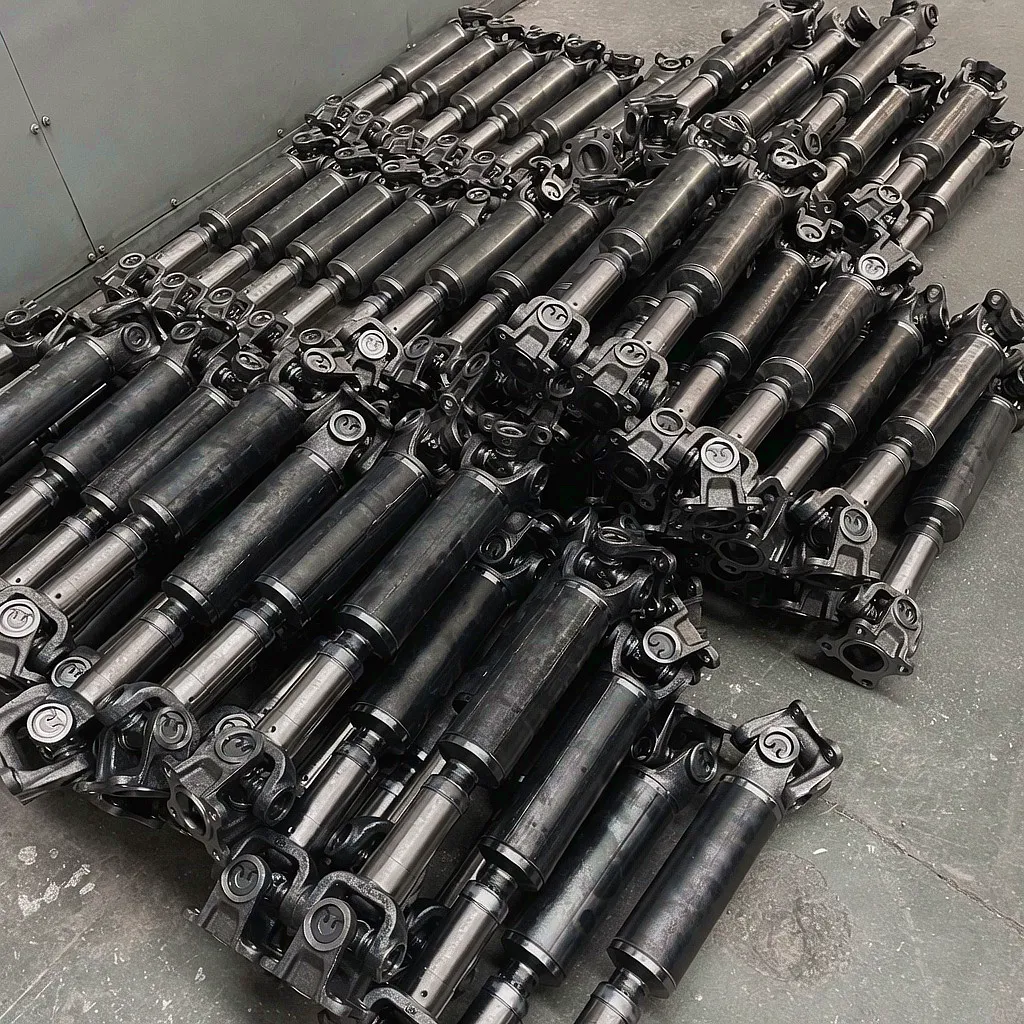 Meridian Port Engineering was experiencing an average of 3.2 industrial shaft failures per quarter across their 14-unit automated straddle carrier fleet at Felixstowe’s tidal berth. The failures — principally cross bearing seizure caused by salt-water ingress and progressive flange bolt loosening leading to face fretting — were generating unplanned downtime windows averaging 7.5 hours per incident. With crane and berth costs at a major UK port, each failure event was calculated to cost the terminal operation approximately GBP 26,000 in direct and consequential losses. The original shafts, sourced from a general industrial distributor’s catalogue, had never been validated against the salt-spray exposure and shock impulse profile of an active Felixstowe berth. The seals were single-lip rubber, and the flanges were standard bolted-face designs with conventional M16 class 10.9 fasteners — adequate for the load conditions they had been designed for, but not for a port straddle carrier picking up and releasing containers under automated spreader engagement.
Our Engineering Response
We conducted a full site survey at Felixstowe, including torque logging instrumentation on three representative carriers across one complete operational week. The data captured the actual shock impulse distribution across the spreader engagement cycle, the operating speed profile during transit moves, and the ambient temperature-humidity cycle across the berth. From this dataset, our engineers developed a bespoke port industrial shaft assembly featuring: Hirth Serration flanges rated to 15,000 Nm peak torque; three-channel labyrinth seals with marine-grade lithium-complex grease retention; a 42CrMo4 shaft tube with induction-hardened and PTFE-lined spline section; hot-dip galvanised yoke forgings; and G2.5 dynamic balance certification. All 14 carriers were retrofitted during a single planned maintenance window without any modification to the vehicle structure or attachment interfaces — a constraint we had designed to from the outset of the specification work.
The Outcome
0
Unplanned shaft failures in 27 months post-retrofit
GBP 352k
Estimated avoided downtime cost over 27 months
+22%
Extension of planned maintenance interval
10 days
Full 14-vehicle fleet retrofit completed
What Our Clients Say
“We had treated quarterly industrial shaft failures as an unavoidable operating cost for two full years. After the retrofit, we have gone over two years without a single unplanned drivetrain event. The engineering team handled the duty cycle analysis and specification work thoroughly, and the documentation satisfied our insurance surveyor with no amendments required.”
James Whitfield
Head of Engineering, Meridian Port Engineering Ltd — Port of Felixstowe, UK
“Our AGV fleet at the Rotterdam expansion terminal needed a bespoke shaft solution compatible with existing axle geometry. The team conducted a proper duty cycle analysis rather than just quoting from a catalogue, and the resulting assemblies have now accumulated over 19,000 hours without bearing or seal degradation. This is what a genuine engineering supplier looks like.”
Pieter van den Berg
Terminal Technology Manager, North Sea Terminal Solutions — Rotterdam, Netherlands
“Finding a supplier who understands that a port application is categorically different from a standard industrial one is genuinely difficult. This team recommended Hirth Serration flanges where we had specified conventional bolted flanges — and four years of operation at Southampton with zero bolt-loosening failures proves they were right. The technical conversation at the specification stage was exactly what we needed.”
Sarah Morrish
Procurement Director, Atlantic Container Logistics — Southampton, UK
Serving UK Container Terminals from Felixstowe to Liverpool: Our British Market Commitment
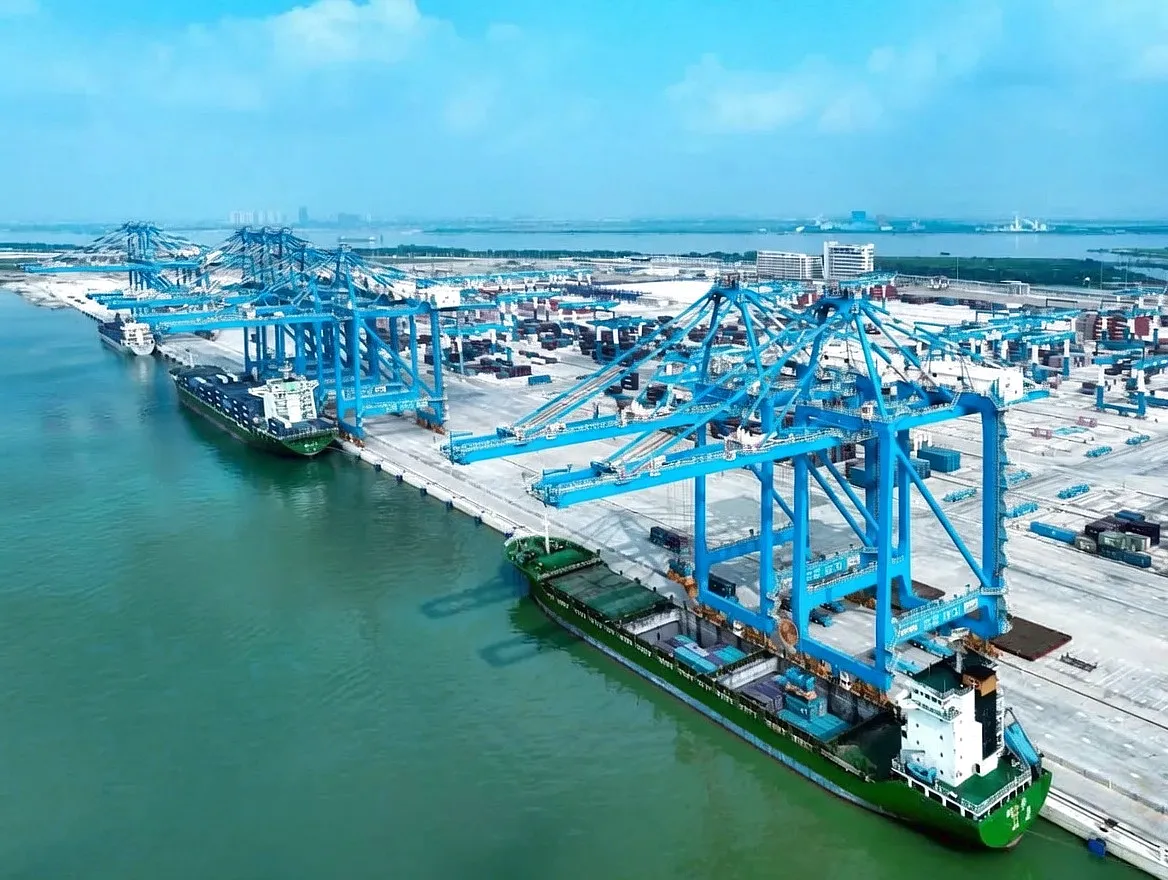
 The United Kingdom operates some of the highest-throughput container terminals in Northern Europe, and the drive toward automation is accelerating across every major port in the country. Felixstowe — handling over four million TEU annually and representing the UK’s single largest port — has been at the forefront of automated straddle carrier deployment. Southampton’s expanding automated container operations, DP World London Gateway’s continued yard automation programme, and the Port of Tilbury’s ongoing infrastructure investment all represent significant and growing demand for port-specification PTO drive shafts that can survive the British marine environment year-round without compromise.
The UK port environment presents a compound corrosion challenge that is distinct even from other European coastal locations. British winter conditions — persistent salt spray from tidal surges, near-freezing temperatures that thicken standard lubricants and increase bearing loads, and the high diurnal humidity cycles generated by alternating inland air masses and sea breezes — create an accelerated degradation environment for mechanical assemblies that are not specifically engineered to resist it. Our supply capability for UK terminals includes in-country technical support from engineers with hands-on familiarity with the specific straddle carrier and AGV fleets operating at British ports.
We maintain exchange stock of the most commonly specified port-automation shaft configurations for UK terminals, enabling rapid supply in unplanned maintenance situations where lead time directly translates into berthing delay costs. Our documentation packages are structured to meet the requirements of UK port health and safety legislation including the Docks Regulations, Port Equipment Safety Regulations, and LOLER where applicable. Whether the requirement is for a new terminal build specification, an existing fleet upgrade, or emergency stock for a critical berthing window at Felixstowe, Southampton, Liverpool, or elsewhere in the UK, we have the engineering capability and the supply responsiveness to deliver.
Our Manufacturing Capability: Bespoke Engineering at Industrial Scale
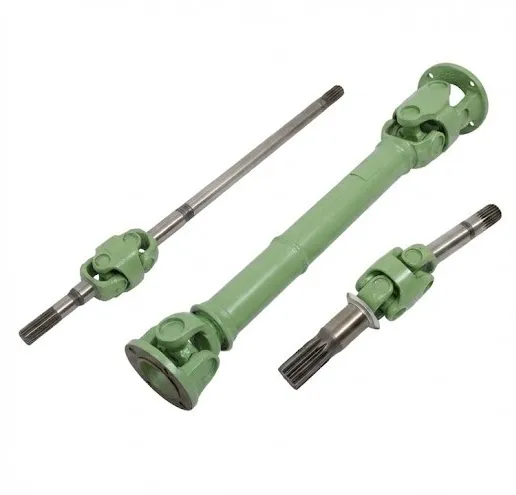
 Our manufacturing facility operates a vertically integrated production model encompassing all critical process stages in-house: bar steel procurement with full material traceability, CNC turning and grinding of shaft tubes and yokes, gear hobbing for Hirth Serration teeth to DIN 7967 tolerance, heat treatment with dedicated furnace and quench facilities, dynamic balancing on ISO 21940-11 certified equipment, and final assembly in a controlled environment. This end-to-end production control means that a port terminal operator requiring a industrial shaft to a non-standard specification — a replacement for a discontinued OEM part number, or a bespoke configuration for a new platform — receives an assembly manufactured to the same exacting standards as any catalogue item, engineered precisely for their application rather than adapted from the nearest available size.
Our product customisation capability for port automation applications encompasses: non-standard tube diameters and wall thicknesses beyond the standard range; proprietary flange interface geometries to match any host vehicle’s existing attachment pattern; specialist protective coatings beyond our standard marine duplex system for particularly aggressive environments; extended tube lengths for chassis configurations with non-standard axle spacing; integrated speed measurement provisions for ABS compatibility; and factory-installed vibration monitoring provisions to support predictive maintenance programmes. Wherever port engineering takes you, our manufacturing capability follows. A concept becomes a fully certified assembly within a lead time that reflects the urgency of terminal operations rather than the convenience of a standard production schedule.
🏭
18+
Years Manufacturing Industrial Drive Shafts
🌎
40+
Countries Supplied Including UK, EU, USA, ANZ
🔧
100%
In-House from Raw Steel to Certified Assembly
📌
72 hrs
Engineering Response for Bespoke Specifications
Get a Quote → [email protected]
Engineering team available for technical consultation · Proposals typically within 24–72 hours
Frequently Asked Questions
Questions from UK terminal engineers and procurement teams — answered by our specialist application engineers.
Ready to Eliminate Unplanned Industrial Shaft Downtime at Your Terminal?
Speak with a port automation drive shaft application engineer. We deliver technical consultation, full duty cycle analysis, and commercial proposals to UK terminal operators within 24–72 hours of receiving your enquiry.
© pto-drive-shafts.com | Marine-Grade PTO Drive Shafts for UK Port Automation | edit by gzl























